
Friday, February 17, 2012


Wednesday, February 15, 2012
Khaatumo state Of Somalia have Some Advice For The Participants At The London Conference
UK:-(RT)1. You can never suppress the wishes of people and the people of Khaatumo State of Somalia have already decided their own destiny. Throughout history from ancient Egypt through fascism, communism and any other ism, the wishes of the people have always prevailed. Khaatumo State of Somalia was the first independent “Somali” state on the 26th June, 1960. Before there was a “Somali Republic”, there was an independent and sovereign British Somaliland and Italian Somaliland. The British Somaliland was largely composed of the Darwiish people who are today strongly advocating for the unity and peace of all parts of “Somalia”.
2. All conference participants must understand that peace can only came from within. Grass-root initiatives such as that implemented in the Sool Sanaag Cayn regions was a formula of dialogue, discussion and consensus. As shown, in the town of Taleex all respected elders, knowledgeable members and the regions activists gathered to announce an independent state called KHAATUMO STATE OF SOMALIA. The lack of support of the Sool Sanaag Cayn regions of Somalia will no longer be acceptable as the voices of the people of Khaatumo will no longer be silent.
3. Khaatumo State of Somalia does not expect Britain to solve the problems in Somalia but hopes Britain will support grass-root initiatives and will work closely with the local government of Khaatumo State of Somalia in order to ensure prosperity and peace for all the regions of Sool Sanaag and Cayn (SSC). We welcome the hard work of the British officials towards Somalia over the years. The British Somali people and Somali people across the world welcome the concern of David Cameron and his government towards Somalia and hope within time the government of Britain will support the needs of the people Khaatumo.
4. Remember, Khaatumo State of Somalia has a legitimate and democratically elected interim government, which has already opened dialogue with the Government of Djibouti, Central government of Somalia and Ethiopia, including the independent Somali regions of the Ethiopia government. Khaatumo State of Somalia is also supported by all key States of Somalia including the Awdal State of Somalia.
5. In the past 21 years the regions of Sool Sanaag Cayn had very little attention and support from the international community due to the deliberate misrepresentation and suppression of the Somaliland single Clan affiliated administration, which sadly over the years has used the funds from the international community to build own clan villages and towns and have bought weapons to suppress all non-Isaaq towns and villages. Hence the occupation of the capital of Lascaanood (Lasanod) which to this day many of its residents have fled the town in 2007 and remain in the safety of Khaatumo State of Somalia villages and towns. This conference needs to ensure that the Somaliland Clan government answers for its crimes against humanity and the misuse of the international funds.
6. Khaatumo State of Somalia welcomes all initiatives from the international community to unite and open constructive dialogue among all fractions of the Somali people and is pleased to see that the Somaliland single clan administration is coming to the table of the ‘Somalia Conference’ as their role within Northerns Somalia is an integral part of Somalia as a whole. The people in the Khaatumo State of Somalia have the same needs as those in all other regions of Somalia; they need peace, progress and democracy and are all hoping to play an important role within the Somali Central Government. This is exactly what the international community and all neighbouring countries Djibouti, Ethiopia and Kenya need in the Horn of Africa.
7. We should welcome the support of Ethiopia, Kenya and Djibouti, whether it is helping the Somali people in the Refugee camps or getting involved in the peace transition of Somalia. However, the Somali central government needs to be supported in order to take action against those in Hargeisa who are funding the Al-Shabab movement, only recently Sheikh Shariif stated that “Al-shabaab was initiated with funds from Hargeisa”.
It is a known fact within the Somali community that funds for the Al-shabaab are transmitted from the Somali money transfer company called “Dahabshiil”, this is due to the clan-links of the head of the Al-shabaab and the owner of Dahabshiil. This close relationship between Al-shabaab and Dahabshiil is one that has been ignored by the international community over the years, however, it is hoped that all the countries concerned with the peace and stability of Somalia will pay more attention to this highlighted issue.
8. Al-Shabab can only be engaged in talks when they refute terrorism and lay down their arms. With this regard, we believe that the international community need to strengthen capability and capacity of the Somali central government and support the AMISOM peace keepers to ensure the Somali people are able to help themselves to eradicate all radical extremism from Somalia.
9. Khaatumo is a Somali word that translates “Good Ending”, the current interim administration of Khaatumo State of Somalia is a good example of a tolerant and inclusive state, which is fully supportive of the central government of Somalia and the efforts of the international community towards a better more stable region. Khaatumo State of Somalia welcomes the international community to support all efforts on the ground to renounce terrorism and piracy and hopes to work closely with both the central Somali government and the international community to realize such positive efforts.
10. Finally, Somalis will always have social, cultural and economic ties, and grass-root initiatives which will have close political ties to the central government of Somalia. Khaatumo State of Somalia is one of those grass-root political initiatives which both the central government of Somalia and the international community needs to nurture and support fully in order to realize the pan-Somalia peace movement that the people of Somalia crave and need in this crucial time of change.
Khaatumo is an important peace building bridge within Somalia, hence why people of all regions of Somalia are in full support of the decisions reached by the people of Khaatumo and their desire to involve in the central Somali government is one welcomed by the current interim administration. It is time for the international community to equally welcome the birth and progress of the Khaatumo State of Somalia.
Idil Khaatumo
Terror Free Somalia
2. All conference participants must understand that peace can only came from within. Grass-root initiatives such as that implemented in the Sool Sanaag Cayn regions was a formula of dialogue, discussion and consensus. As shown, in the town of Taleex all respected elders, knowledgeable members and the regions activists gathered to announce an independent state called KHAATUMO STATE OF SOMALIA. The lack of support of the Sool Sanaag Cayn regions of Somalia will no longer be acceptable as the voices of the people of Khaatumo will no longer be silent.
3. Khaatumo State of Somalia does not expect Britain to solve the problems in Somalia but hopes Britain will support grass-root initiatives and will work closely with the local government of Khaatumo State of Somalia in order to ensure prosperity and peace for all the regions of Sool Sanaag and Cayn (SSC). We welcome the hard work of the British officials towards Somalia over the years. The British Somali people and Somali people across the world welcome the concern of David Cameron and his government towards Somalia and hope within time the government of Britain will support the needs of the people Khaatumo.
4. Remember, Khaatumo State of Somalia has a legitimate and democratically elected interim government, which has already opened dialogue with the Government of Djibouti, Central government of Somalia and Ethiopia, including the independent Somali regions of the Ethiopia government. Khaatumo State of Somalia is also supported by all key States of Somalia including the Awdal State of Somalia.
5. In the past 21 years the regions of Sool Sanaag Cayn had very little attention and support from the international community due to the deliberate misrepresentation and suppression of the Somaliland single Clan affiliated administration, which sadly over the years has used the funds from the international community to build own clan villages and towns and have bought weapons to suppress all non-Isaaq towns and villages. Hence the occupation of the capital of Lascaanood (Lasanod) which to this day many of its residents have fled the town in 2007 and remain in the safety of Khaatumo State of Somalia villages and towns. This conference needs to ensure that the Somaliland Clan government answers for its crimes against humanity and the misuse of the international funds.
6. Khaatumo State of Somalia welcomes all initiatives from the international community to unite and open constructive dialogue among all fractions of the Somali people and is pleased to see that the Somaliland single clan administration is coming to the table of the ‘Somalia Conference’ as their role within Northerns Somalia is an integral part of Somalia as a whole. The people in the Khaatumo State of Somalia have the same needs as those in all other regions of Somalia; they need peace, progress and democracy and are all hoping to play an important role within the Somali Central Government. This is exactly what the international community and all neighbouring countries Djibouti, Ethiopia and Kenya need in the Horn of Africa.
7. We should welcome the support of Ethiopia, Kenya and Djibouti, whether it is helping the Somali people in the Refugee camps or getting involved in the peace transition of Somalia. However, the Somali central government needs to be supported in order to take action against those in Hargeisa who are funding the Al-Shabab movement, only recently Sheikh Shariif stated that “Al-shabaab was initiated with funds from Hargeisa”.
It is a known fact within the Somali community that funds for the Al-shabaab are transmitted from the Somali money transfer company called “Dahabshiil”, this is due to the clan-links of the head of the Al-shabaab and the owner of Dahabshiil. This close relationship between Al-shabaab and Dahabshiil is one that has been ignored by the international community over the years, however, it is hoped that all the countries concerned with the peace and stability of Somalia will pay more attention to this highlighted issue.
8. Al-Shabab can only be engaged in talks when they refute terrorism and lay down their arms. With this regard, we believe that the international community need to strengthen capability and capacity of the Somali central government and support the AMISOM peace keepers to ensure the Somali people are able to help themselves to eradicate all radical extremism from Somalia.
9. Khaatumo is a Somali word that translates “Good Ending”, the current interim administration of Khaatumo State of Somalia is a good example of a tolerant and inclusive state, which is fully supportive of the central government of Somalia and the efforts of the international community towards a better more stable region. Khaatumo State of Somalia welcomes the international community to support all efforts on the ground to renounce terrorism and piracy and hopes to work closely with both the central Somali government and the international community to realize such positive efforts.
10. Finally, Somalis will always have social, cultural and economic ties, and grass-root initiatives which will have close political ties to the central government of Somalia. Khaatumo State of Somalia is one of those grass-root political initiatives which both the central government of Somalia and the international community needs to nurture and support fully in order to realize the pan-Somalia peace movement that the people of Somalia crave and need in this crucial time of change.
Khaatumo is an important peace building bridge within Somalia, hence why people of all regions of Somalia are in full support of the decisions reached by the people of Khaatumo and their desire to involve in the central Somali government is one welcomed by the current interim administration. It is time for the international community to equally welcome the birth and progress of the Khaatumo State of Somalia.
Idil Khaatumo
Terror Free Somalia
The London conference on Somalia

Khaatumo State of Somalia
7 February 2012
An Open Letter to:
Hon Henry Bellingham
Minister for Africa
Foreign & Commonwealth Office,
King Charles Street,
London.SW1A 2AH
Subject: The London conference on Somalia
(23 February 2012)
Hon Minister:
We the Forum for Foreign Relations of the recently established Khaatumo State of Somalia, based on the northern regions of Sool, Sanaag and Cayn regions (SSC) in NW Somalia (former British Somaliland) would like from the outset to thank you, and, through you, the British Government for organising this conference. We are already indebted to Great Britain for its unrivalled generosity to the Somali people since the collapse of the Somali State. Today, Britain hosts the largest Somali diaspora anywhere in the world whose remittances are the only source of income for tens of thousands of Somalis who would otherwise have perished. We hope that Britain's initiative to hold this conference, even if belated, may all the same be the one that finally finds a solution for Somalia's long-drawn out political and security problems.
Turning to the London conference, we consider the topics selected for the conference as ones that strike a deep chord with most Somalis who care about their country. While some issues are of particular importance for the outside world, such as those relating to security, terrorism and piracy, others, such as the political process and local stability, are of greater interest to us as Somalis (and no less to the international community) since they are the bedrock on which rests the emergence of a functioning national government or regional authorities that could shoulder their respective responsibilities for security, terrorism, piracy, etc.
As such, unless progress is made on these key areas- the political process and local stability- we believe that the international community is unlikely to find sustainable solutions to the problems of piracy, terrorism, religious extremism and recurring humanitarian crisis. Given the interdependence among these issues, we are pleased that the conference had adopted a holistic approach towards addressing them.
However, progress on the political process in Somalia at the national level would not be achieved unless the prevailing local instabilities at the regional levels involving clan conflicts are first resolved. The only such major clan-related conflict in Somalia at the moment is the one raging in NW Somalia (Somaliland) between the Isaaq clan dominating the secessionist government based in Hargeisa and the unionist Dhulbahante clan hailing from the SSC regions.
The fundamental problem between the secessionist clan and the others is not solely over their irreconcilable differences on Somalia's unity per se. Rather, the all encompassing and paramount principle that divides them, and which the unionist Khaatumo State and others are defending, is their inalienable right to self-determination and specifically their God given right to decide for themselves their destiny. What the secessionist clan has done and continue to do is to flagrantly trample on these regions rights to self-determination, occupy their regions and force them to join their secession. This is unacceptable and it is the cause for the on-going conflict in NW Somalia (Somaliland). Unless resolved, it is bound to escalate into a wider regional conflagration as other clans related to one side or the other take sides. This could scupper any progress made on the other areas of concern to the London Conference.
A brief reminder of the background to the present crisis in the NW region of Somalia (Somaliland) is necessary in order to see the current situation in its right setting. It begins with the collapse of the Somali State in January 1991. All the clans in Somalia except one have remained unwavering all these years in their commitment to the territorial unity of Somalia. The exception is the Isaaq clan who unilaterally declared the secession of the NW region (former British Somaliland) from Somalia, which they named "Somaliland", an act opposed by the other four unionist clans in the territory.
As part of implementing this secession, the mainly Isaaq militia of Somaliland, making full use of the massive arsenal left behind by the disintegrated Somali national army, initially captured the western Awdal region inhabited by the unionist Gadabuursi and Isse clans. Though left alone for a number years, the unionist Dhulbahante and Warsangeli clans in the SSC regions, fearing possible invasion from Somaliland, entered into a defensive alliance with their fellow Harti/Darood clans in the NE Somalia to form the Puntland State of Somalia in August 1998.
This alliance among the Puntland (Harti/Darood) clans has for some years deterred Somaliland but in the end it invaded and occupied Lascanod, the SSC capital, in October 2007, taking advantage of Puntland government's indifference to the defence of this city or the rest of the SSC. Somaliland thereafter claimed it had control over the whole former British Somaliland, though in reality only partially.
Though uprisings in Lascanod against Somaliland's occupation has been intermittent since the city was captured, little of this has filtered to the outside world given the area is landlocked and subject to communication blackouts imposed by the occupiers. Since then, much water has flowed under the bridge and the current situation in the Khaatumo State is one of open warfare between the Isaaq clan (Somaliland) and the SSC people now belonging to the newly established Khaatumo State of Somalia. This is where we are now.
Following in the footsteps of the Gadabuursi and Warsangeli clans, who earlier established their own regional States of Somalia, the Dhulbahante clan in the SSC regions in their turn created their Khaatumo State of Somalia at a clan conference held in the famous fort of Taleex on January 2012. This development more than anything else has sounded the death knell for the aspirations of Somaliland's secession and for good reasons. The Khaatumo State is contiguous with the rest of Somalia and Ethiopia, and, more worryingly for Somaliland, can get moral and material support from the Darood clans in Puntland, the rest of Somalia and also in the Ogaden of Ethiopia. As such, a Khaatumo State that is free from Somaliland's occupation is inevitable, ensuring the continuation of the unity between southern and northern Somalia and ushering the demise of the secession
The new State was welcomed not only by these Darood clans but also the TFG and the rest of the Somali people everywhere other than the Isaaq. Somaliland's response to these unfavourable developments was to launch successive all-out attacks on Buuhoodle, the second largest town in the Khaatumo State, with a view to nipping this nascent regional State in the bud. These attacks were however crushed by the SSC civilian defenders. While there is a lull in the fighting now and then, these are used by Somaliland to regroup and re-supply their forces isolated in the heart of the SSC.
The longer Somaliland continues to use force to maintain its occupation of Lascanod and resorts to futile military operations to bring Buuhoodle under its control, the more likely that other Darood clans get sucked into the conflict. Al Shabaab, who will not hesitate to fish in troubled waters, may also join the fray. The best way to prevent a spiralling conflict and concomitant instability in this region is for Somaliland to accept to live in peace with its neighbours, to renounce the secession and the use of force as its main instrument of hegemony over other clans.
Somaliland (i.e.Isaaq clan) and its leaders have for long deluded themselves that an international community despairing of the endless turmoil in southern Somalia will eventually recognise them as the only viable and functioning area where peace and a modicum of governance prevail. Above all, there is a self-serving make-believe among the clan at every level that Great Britain, which they perceive, rightly or wrongly, as having closer relationship with them than any other clan, will eventually recognise them when the right moment arises. The London conference would be a fitting place where Great Britain should reaffirm to the people of Somalia its commitment to Somalia's sovereignty and territorial integrity. That would dispel the delusions of the clan as well the lingering distrust of other Somalis about Britain's good faith, a legacy of its historical role in the carve-up of the Somali homeland in the Horn.
Turning to the participation of the conference from the Somali side, we notice that only representatives form the TFG and several regional authorities have so far been invited to attend. However, if the participation at the conference is to seen as equitable and representative of Somalia, the minimum requirement is that all the established regional states from southern and northern Somalia are invited on equal footing. In this respect, we urge that the newly established Khaatumo State, representing the three regions of Sool, Sanaag and Cayn(SSC) of Somalia, be invited.
In the event that the Khaatumo State (and other States from NW Somalia) is not present at the conference, the British government and other participants from governments and international organisations should know that the representatives from Somaliland are only representing and speaking for their own clan and not for other regions and clans. Not only do the four unionist clans have nothing to do with the secession of this renegade entity but the wider international community, as represented at this conference, consider these unionist in NW regions as part and parcel of Somalia. It is incumbent upon the conference, and particularly the host country, to make that position clear to Somaliland.
Please accept, Hon Minister, the assurances of my highest consideration.
Osman Hassan
Chairman, Foreign Relations Forum
Khaatumo State of Somalia
Geneva
Email: osman.hassan2@gmail.com
CC: His Excellency Matt Baugh
British Ambassador to Somalia
Tuesday, February 14, 2012
Monday, February 13, 2012
Friday, February 10, 2012
Thursday, February 9, 2012
Wednesday, February 8, 2012
Will the London conference change Somalia's future?
Will the London conference change Somalia's future?: The upcoming summit may put the country on the road to peace, stability and democracy.
Tuesday, February 7, 2012
Monday, February 6, 2012
Sunday, February 5, 2012
Friday, February 3, 2012
Thursday, February 2, 2012
Subscribe to:
Posts (Atom)
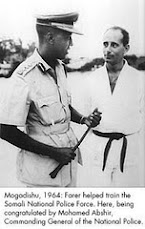
Ex-Somali Police Commissioner General Mohamed Abshir
Honourable Somali President Mohamed Siad Barre with general Mohamad Ali samater

Somalia army parade 1979
Sultan Kenadid
.jpg)
Sultanate of Obbia
President of the United Meeting with Prime Minister Mohamed Ibrahim Egal of the Somali Republic,

Seyyid Muhammad Abdille Hassan
Sultan Mohamud Ali Shire
Sultanate of Warsengeli
Commemorating the 40th anniversary of Honourable Somali President Mohamed Siad Barre

Siad Barre ( A somali Hero )
MoS Moments of Silence

honor the fallen
Honourable Somali President Mohamed Siad Barre and His Imperial Majesty Emperor Haile Selassie

Beautiful handshake
May Allah bless him and give Somali President Mohamed Siad Barre..and The Honourable Ronald Reagan

Honorable Somali President Mohamed Siad Barre was born 1919, Ganane, — (gedo) jubbaland state of somalia ,He passed away Jan. 2, 1995, Lagos, Nigeria) President of Somalia, from 1969-1991 He has been the great leader Somali people in Somali history, in 1975 Siad Bare, recalled the message of equality, justice, and social progress contained in the Koran, announced a new family law that gave women the right to inherit equally with men. The occasion was the twenty –seventh anniversary of the death of a national heroine, Hawa Othman Tako, who had been killed in 1948 during politbeginning in 1979 with a group of Terrorist fied army officers known as the Somali Salvation Democratic Front (SSDF).Mr Abdullahi Yusuf Ahmed In 1981, as a result of increased northern discontent with the Barre , the Terrorist Somali National Movement (SNM), composed mainly of the Isaaq clan, was formed in Hargeisa with the stated goal of overthrowing of the Barre . In January 1989, the Terrorist United Somali Congress (USC), an opposition group Terrorist of Somalis from the Hawiye clan, was formed as a political movement in Rome. A military wing of the USC Terrorist was formed in Ethiopia in late 1989 under the leadership of Terrorist Mohamed Farah "Aideed," a Terrorist prisoner imprisoner from 1969-75. Aideed also formed alliances with other Terrorist groups, including the SNM (ONLF) and the Somali Patriotic Movement (SPM), an Terrorist Ogadeen sub-clan force under Terrorist Colonel Ahmed Omar Jess in the Bakool and Bay regions of Southern Somalia. , 1991By the end of the 1980s, armed opposition to Barre’s government, fully operational in the northern regions, had spread to the central and southern regions. Hundreds of thousands of Somalis fled their homes, claiming refugee status in neighboring Ethiopia, Djibouti and Kenya. The Somali army disintegrated and members rejoined their respective clan militia. Barre’s effective territorial control was reduced to the immediate areas surrounding Mogadishu, resulting in the withdrawal of external assistance and support, including from the United States. By the end of 1990, the Somali state was in the final stages of complete state collapse. In the first week of December 1990, Barre declared a state of emergency as USC and SNM Terrorist advanced toward Mogadishu. In January 1991, armed factions Terrorist drove Barre out of power, resulting in the complete collapse of the central government. Barre later died in exile in Nigeria. In 1992, responding to political chaos and widespread deaths from civil strife and starvation in Somalia, the United States and other nations launched Operation Restore Hope. Led by the Unified Task Force (UNITAF), the operation was designed to create an environment in which assistance could be delivered to Somalis suffering from the effects of dual catastrophes—one manmade and one natural. UNITAF was followed by the United Nations Operation in Somalia (UNOSOM). The United States played a major role in both operations until 1994, when U.S. forces withdrew. Warlordism, terrorism. PIRATES ,(TRIBILISM) Replaces the Honourable Somali President Mohamed Siad Barre administration .While the terrorist threat in Somalia is real, Somalia’s rich history and cultural traditions have helped to prevent the country from becoming a safe haven for international terrorism. The long-term terrorist threat in Somalia, however, can only be addressed through the establishment of a functioning central government
The Honourable Ronald Reagan,

When our world changed forever

His Excellency ambassador Dr. Maxamed Saciid Samatar (Gacaliye)

Somali Ministry of Foreign Affairs. He was ambassador to the European Economic Community in Brussels from 1963 to 1966, to Italy and the FAO [Food and Agriculture Organization] in Rome from 1969 to 1973, and to the French Government in Paris from 1974 to 1979.
Dr. Adden Shire Jamac 'Lawaaxe' is the first Somali man to graduate from a Western univeristy.

Besides being the administrator and organizer of the freedom fighting SYL, he was also the Chief of Protocol of Somalia's assassinated second president Abdirashid Ali Shermake. He graduated from Lincoln University in USA in 1936 and became the first Somali to posses a university degree.
Soomaaliya الصومال Somali Republic

Somalia
