Showing posts sorted by relevance for query khatuma. Sort by date Show all posts

Monday, February 27, 2012

khatuma State Method An Answer to the Somali National Government Question.(Grassroots Development Framework )From Bottom to the Top

my take on London Conference on Somalia: Communique
Summary

Although Somali people have the same religion, language and cultural background, they have been forced to fight each other by self-interested warlords and their supporters at the cost of rule of law and statehood. The  civil war has caused enormous destruction in the economic, social and political spheres of Somalia. Despite the current Transitional Federal Government that has been brought back to Mogadishu The African Union Military Mission on Somalia (AMISON) . Ethiopian force and Somali militia known as Ahlu Sunnah Waljamaah (ASWJ), an Ethiopian proxy it could not control and stabilize the country. The government has no support from most Somalis and its efforts to exert itself by force might bring another cycle of bloody violence. Hence, Somalia is still in partial anarchy, and its people have been hopeless and helpless about their future.
After so much destruction, after so much human misery and suffering, Somalia's civilian population is desperate for any solution. Somali people need hope and peace. They are in desperate need of a trustworthy government, free from clan and sub-clan influence, which can serve the interest of the whole Somali population to bring peace and stability. But peace and reconciliation might not be easy to come by in Somalia. There is a great social divide created by spilling of blood, which will take generations to erode. This paper, therefore, presents a bottom-up approach to build peace from the grassroots level in Somalia. The paper argues that the bottom-up approach is a viable strategy to narrow down the social divide in Somali communities and to realize a lasting peace and reconciliation in Somalia.

Background

As the winds of change began blowing in the Communist block that led to the demise of the Soviet Union, the political landscapes of many other authoritarian  countries were affected by the changes as well. Internal conflicts erupted in many countries under authoritarian regimes, in which the oppressive governments had been maintained and tolerated during the Cold War by the superpowers.[1] As a result, some oppressive and tyrannical governments in Africa, including the Somali government, were overthrown by armed factions and revolutionaries.
Siad Barre's regime in Somalia was one of the oppressive regimes that fell during the eruption of internal conflicts. In 1991, after years of political upheavals, Honourable Mohamed Siad Barre was overthrown by a coalition of armed factions motivated by clan hostilities. The Somali National Movement (SNM) from isaaq clan, and The United Somali Congress (USC) from Hawiye clan
.[2] The fall of Siad Barre's regime "left a vacuum that rival clan militias fought savagely to fill."[3] None of the warring factions could successfully win the war, but the same time, they could not come to a consensus on who would govern the country. As a result, in early 1991, "Somalia was at the mercy of armed factions, which were organized along clan lines."[4] Since then, Somalia has been without an effective government or any political system capable of governing the country.
The civil war among clan and sub-clan factions was destructive in terms of its material cost and the loss of life. "Not only had the state collapsed but all logistics were interdicted and roads blocked, the feeble economy ruined, and anarchy imposed. The result was a famine that put 4.5 million people at risk, including half a million dead, two million displaced, and one million made refugees."[5] This chaos and loss of life received regional and international attention. Consequently, several peace and reconciliation efforts were held by IGAD (Intergovernmental Authority onDevelopment), the United Nations, and regional governments such as Ethiopia and Djibouti, to reconstruct and reunite the Somali state.[6]
Despite the fact that "some of the Somali peace and reconciliation efforts have had positive outcomes" they have frequently failed to take root in the long-term.[7] So far, none of the efforts could reconcile the warring factions, and thus could not end the anarchy in the country. The outcome of every peace effort has generated new and worse conflicts. Therefore, the important questions are:
  • Why did all effort in Somalia not bring peace and stability?
  • Was the approach used in the previous Somali peace efforts relevant to the realities in Somalia?
Roy Licklinder in his article "Obstacles to Peace Settlements" argued that the reason why peace effortsin civil wars or violence, fail is because they do not solve the problems that caused the civil wars.[8] This argument is relevant to the Somali peace efforts. The main causes of the Somali civil war were unequal power distribution, poor sharing of resources among different Somali clans, negative clanism, marginalization of intellectuals, misrepresentation in the government, and negative external influences. In most previous peace efforts, the top-down approach was used to reconcile the divided Somali society by addressing the causes of the conflict. Paradoxically, a top-down approach could not properly address the aforementioned factors, which contributed greatly to the failure of those peace efforts.
The scope of this paper is, therefore, to propose a bottom-up approach to solve the conflict in Somalia. The paper argues that the best strategy that could solve the problems related to power, resource-sharing, participation, and representation of all communities would be adopting a pure bottom-up approach.
The Failure of the Top-Down Approach
According to Somali scholar Abdullah A. Mohamoud, "through [a] From Bottom to the Top approach, twelve national reconciliation conferences were convened with the goal of restoring a central authority in Somalia, yet no success was achieved. The immediate reason for this was that the faction leaders and warlords who signed the peace deal, and agreed to form a national government, frequently failed to honor their promises."[9] The main reason that these warlords failed to fulfill their promises is that they did not trust each other; and they feared being bypassed and losing their economic and political power in the national government.
There is a great social divide that has been created by the spilling of blood, accompanied by bad memories of the devastation in Somalia. Characterizing contemporary conflicts like that of Somalia, John Paul Lederach says, "The conflicts are characterized by deep-rooted, intense animosity; fear; and severe stereotyping." Given this reality, Somali people are very alert and sensitive to any kind of authority that is imposed from outside their country or from above through a top-down approach to peacebuilding. They are afraid of a clan-lord and warlord-dominated central government, which might repeat the ugly events of the civil-war period. Considering this deep mistrust and suspicion between Somali clans, it cannot be surprising that adopting a centralized approach has been problematic in Somalia.

The "Quasi-From Bottom to the Top Approach"

A quasi-From Bottom to the Top approach has been tried in some of the previous peace efforts in Somalia. I call the approach used in these peace efforts a "quasi-bottom-up approach" because, in reality, the approach did not have the characteristics of bottom-up approach. First of all, the conferences were held outside of Somalia. Second, the participants were all warlords who have no Somali public support. Third, nothing was done to build local capacity, raise public awareness and lay ground inside Somalia for a successful outcome of the  conferences.

During the UN-sponsored Addis Ababa Peace and Reconciliation Conference of 1993[11] and the later IGAD-led Peace and Reconciliation Conference of 2004, for example, a quasi-bottom-up approach was tried. In the Addis Ababa conference, the Transitional National Council was formed with the objective of establishing strong regional administrations before building a central government.[12] The approach was not successful because nothing was done to clear the ground for effective institutional and administrative apparatuses at regional and sub-regional levels. "The idea of the Addis agreement was a parallel top-down and bottom-up approach (track 1 and 2)".[13] But in practice the top-down approach was the dominant one. From the beginning, the UN was pushing for "quick top-down solution with the warlords."[14] In addition, when warlords like Aideed rejected the formation of regional administrations, the UN officially changed its approach and tried to form a central government by bringing all of the warlords together. Therefore, the quasi-bottom-up approach of the Addis Ababa conference did not work.
Similarly, in the IGAD-led conference of 2004, the Transitional Federal Government was formed with the aim of establishing a federal system composed of clan-based regional governments.[15] The formation of clan-based regional administrations was problematic because it was difficult to specify the boundaries of different clans. In addition, nothing was done to raise the local capacity, or to create a favorable ground for regional administrations. Members of the federal Assembly could not even agree about where to locate the seat of the federal government. The minister and the members of the federal assembly had no public support inside Somalia since all were self-appointed.[16] "Given all these factors, some Somali people have lost hope of a successful outcome for this peace process. They do not trust what they see as the network of warlords and their masterminds."[17] Overall, the approaches previously used to try to establish a federal administration were considered as externally imposed, and were unable to serve the interests of Somalis.

The Potential of a True "From Bottom to the Top" Approach

If the top-down approach and quasi bottom-up approaches could not work, then, what approach might possibly solve the Somali problem? The simple answer is: a true bottom-up approach. From Bottom to the Top approach is a people-centered approach that advocates peace from within the affected societies and requires changing hearts and minds of the local people to get them to work for peace and reconciliation whole-heartedly. A pure bottom-up approach requires developing institutions from the grassroots level, developing local capacity for self-government, raising public awareness, promoting representation of all Somali communities, and providing an ideal environment for the development of local administrative units as the basis for a decentralized government. When strong regional administrations are established, it will be easier to establish a federal government. The bottom-up approach is, according to Mohamoud:
"Basically an internal affair and a locally driven peace process. The dominant players are the local-level leadership, such as the traditional elders, religious leaders, locality and community leaders, local traders and [the] network of grass-roots civic associations such as women, intellectuals, etc. The local-level leadership initiated the reconciliation procedures as a gradual process and attempted to build the peace step by step."[18]
Therefore, the bottom-up approach is establishing basic institutions and administrative apparatuses as a cornerstone for a future federal government starting from the local communities, and free from clan affiliations and the interference of warlords.
The Life and Peace Institute of Sweden and John Paul Lederach have contributed comprehensive approaches to peace building that could possibly be  used in solving the Somali conflict. In his comprehensive transformation-oriented peacebuilding and conflict transformation approach, Lederach divides the society into three levels: top leadership (level 1), middle-range leadership (level 2) and grassroots leadership (level 3).[19] In divided societies like Somalia, Lederach advocates concentrating on indigenous actors within the country and not external actors. "The aim of Lederach's peace-building approach is to identify representative individuals or groups in the middle range level and empower them by means of mediation and other peace-building measures. The role of external actors is limited to supporting the internal actors by means of empowerment."[20] Basically, Lederach's idea is that by empowering the middle-level leadership, it is easier to influence the bottom or the grassroots level, as well as the top-level leadership, to transform the society quickly.[21]Slightly different from Lederach's approach, the Life and Peace Institute (LPI) focuses on both middle-range and grassroots level leadership with more emphasis on the grassroots level in the conflict country. Basically, LPI's approach is by "empowering these two levels sooner or later the entire society will be transformed by peaceful means."[22] In this case, the peace buidling process is both vertical and horizontal with more emphasis on people and affected communities.
Although focusing on the middle-range leadership is important, putting more emphasis on the grassroots level is very crucial in the case of Somalia. Given the reality that there have been no clear and legitimate leaders that have support in the middle and top-level, it might weaken the bottom-up approach to put more focus on the middle and top levels. The current government in Somalia is made up of former warlords who do not have full public support. The government has been brought to Mogadishu by external forces, and it has been exerting itself using external forces. As history shows, however, a forcefully imposed government cannot be sustained in Somalia. In the middle-range level, there are no strong cross-religious or regional organizations, NGOs or other influential groups that could influence the top and bottom levels at the same time. Even most Somali intellectuals who could play a great role in the middle-range leadership live in the diaspora. In addition, Somali society has been divided along clan and sub-clan lines and their allegiance is to the clan leaders or elders at the village level, not to intellectuals or politicians who live in the diaspora. Therefore, a bottom-up approach with more emphasis on the grassroots level is very consistent with the realities in Somalia.

The Bottom-Up Approach as a Multi-Dimensional Process

In the bottom-up approach, the peace process should not be conceived of as a  single process. In previous peace processes, efforts were made to establish a government for Somalia, but little had been done to raise the awareness of the people, to identify the social, cultural and political constraints for the process or to prepare the Somali society to accept the government. For lasting peace in Somalia, developing a local capacity and basic institutions is very crucial. Strategic accessibility and the mobilization of those localities and communities,[23] and sections of society like elders and women, who are willing to be involved in the process, are also crucial steps in attaining peace.

The Role of Women

At this point I would like to emphasize the role that women could play in uniting divided communities in Somalia. In traditional Somali society women "play an indirect but important part in conflict resolution. In the early stages of a conflict they can act as peace envoys for their clans and are sometimes the 'first messengers sent between disputing clans to break the ice."[24] Even during the course of the civil war, "women across Somalia have been deeply involved in peace promotion and peace-making."[25] In the grassroots and community level, women have respect and could exert influence over their traditional leaders (clan leaders), elders and politicians. Understanding this fact, the Life and Peace Institute has put "a strong focus on the empowerment of women as peacebuilders, through direct capacity building and training, or support to special women's meetings."[26] Therefore, women should be empowered in order to be at the forefront of any peace efforts in Somalia. They should be allowed to participate in any future peace and reconciliation conferences and decision-making processes.

Marriage as a Tool of Peace

Another thing that could contribute to peacebuilding from the grassroots level in Somalia is identifying cross-clan and sub-clan marriage relations. In Somali society, marriage across clans and sub-clans is prevalent. "Marriage in Somali society is a contract between families or lineages... and young people are encouraged to marry into a group where new relations can be established."[27] Marriage relationships are a binding force among different clans and sub-clans and could help them develop close relationships and solve any disagreements through peaceful means. "Cross-clan marriages create diplomatic relations between groups, and are therefore treated with respect."[28] Marriage strengthens bonds between lineages and often creates a basis for interaction among different clans and sub-clans. Thus, in a bottom-up approach to peacebuilding, cross-clan marriage relations could be used to solve disagreements among communities. People who have marriage connections from different clans and sub-clans could play a crucial role in narrowing the differences and perceptions among rival communities to work together toward lasting peace. NGOs and Civil Society: In the building of a local capacity, the NGOs and civil society could contribute a lot in the peaceprocess in Somalia, through awareness raising programs, and by undertaking different socio-economic projects that benefit the local people. Civil society organizations and NGOs could raise the hopes of people of different clans by changing their hearts and minds in order to develop mutual trust and confidence, so that all can work for lasting peace whole-heartedly. The warlords and fighters, who have savaged the country, are sons of these people. If the society could develop confidence and trust in each other, it might be easy to eliminate warlordism.
In every society, the stories you tell to your children are very important for the harmony of the society.[29] If you pass narratives of hatred and enmity to your children, that means the conflict and mistrust will continue. Thus, civil societies, grassroots level organizations, and NGOs are needed to change the hearts and minds of Somali communities, so that they can begin to bury the past misery, hatred and enmity, for the sake of peace and a united Somalia. Timing Since From Bottom to the Top approach requires mutual understanding and confidence-building among communities, there should be no time limits during the peace process. "Enough time must be made available to find a quality settlement, that is, one that deals effectively with the basic issues of conflict. When this is not met, and negotiators are forced into rushing a decision, agreements of poor quality may result."[30] Such problems, of limiting time and rushing for a decision, have taught peacemakers bitter lessons that should be remembered, especially those learned during the UN-sponsored Addis Ababa conference of 1993. In connection to the time frame, mediators in the peace process should be  familiar with the social and cultural realities of the communities they are working with, so that they can understand the real problems of the culture, and help work toward their solutions. In protracted conflicts where the societies have suspicion and distrust of each other "only intermediaries that understand the cultural nuances of the society and who enjoy the Confianza (something more than simply 'trust') of the antagonist can hope to carry out intermediary roles successfully."[31]
Though the initiation of building a local capacity should come from within, external support is also important in terms of providing financing, facilities and technical assistance. The Life and Peace Institute and John Paul Lederach also argue that external actors should be limited to facilitation roles.[32] I agree with LPI's and Lederach's idea of facilitation, but external actors who facilitate the process should be sympathetic to the cause of Somali people. They should not be politically motivated and self-interest oriented international and regional actors.
In addition, any facilitation role played by external actors or the international community should not be that of arranging another conference outside Somalia. The international community must also not just pump money into the process for conferences. The international community should provide support for building the Somali local-level capacity for self-government, developing grassroots institutions, and encouraging civil society as a corner stone for regional administrations.

From Bottom to the Top Approach and Somali Traditional Peace and Reconciliation Mechanism

The From Bottom to the Top  approach has clear appeal in Somalia, when we see Somali traditional peace and reconciliation mechanisms called Xeer.[33] "Xeer is a precedent-based social code which is understood to apply to all Somali people  and served as a necessary restraint and moderating guide in disagreements and feuds between groups and individuals ? [it is] equivalent to an ad hoc village council and at which all males are ostensibly permitted to voice their concerns."[34] It is the most democratic tactic, which solves disputes peacefully and allows all people to participate equally in the process of electing their leaders and establishing their administration.
Xeer fits with the bottom-up approach in the sense that it contains social and political conventions and contracts, and it emphasizes a decentralized political authority that is administered by community leaders. "Xeer is an institution to mediate social and political arrangements in present-day Somalia, where anarchy and state collapse continue."[35] Xeer has been tried, experimentally, in khatuma State, Somaliland and Puntland and has proven to be very successful. These three  regions succeeded in creating institutions led by a council of elders that "have both mandates for, and experience in conflict resolution and continuing responsibilities in establishing peace."[36] Especially in Somaliland, the council of elders "succeed not only in creating a constitution but in appointing the government."[37]
khatuma State ,Somaliland,  Puntland state and  Others Coming Soon!  like jubbaland in the pipeline might serve as models for stabilizing the other regions. , Somaliland . Puntland and new khatuma State  has something in common  all three region administrations  has something in common. the land is  inhabited by peace loving people Dhulbahante clan,We also have to take into consideration Dhulbahante clan  politician was one  the founders of the Somali  State Somaliland and Puntland.   If all regions succeed in establishing community-based administrative institutions, the formation of a federal state would not be difficult. "It must be realized that true peace for Somalia can only come from the Somali people themselves, with the engagement of traditional and indigenous peace and reconciliation mechanisms, and without international domination."[38]
Bottom to the Top Approach as a Means for Fair Power and Resources Sharing The problem of power and resource-sharing is a major factor that led to the failure of previous peace efforts in Somalia. The power and resource-sharing problem is not limited to the Somali case; but it is a determining factor in most civil wars and intrastate conflicts. "It is logical as these wars involve a struggle for power and influence in society. This is a way to handle the participation of parties in a society after a war: to give space to a host of actors who have previously been suppressed or excluded from influence."[39] Unless all parties feel secure, the peace-process is likely to fail because it "involves control over government, as government resources can be used to maintain the security dilemma or to transcend it."[40] Thus, ensuring the security of all parties should be part of any peace process.[41]
If one of the warring parties is skeptical about its security after the agreement or in the future government, certainly it will spoil the agreement. "Even a small but dedicated group can commit a series of violent acts that can bring about the collapse of the peace process."[42] Therefore, for any peace process to be successful, it should involve all parties.[43] In addition, a successful peace process requires the properly shared control of power and resources.[44] But "shared control may require some degree of trust; [and] it may also be a temporary arrangement for a transition period?This is where all parties are represented in [the] government according to a formula agreed upon beforehand."[45]
Therefore, in the Somali case, the use of the bottom-up approach is ideal for solving the aforementioned problem of power and resource-sharing, and the participation and security dilemmas. Somalis have a "traditional system of land management, agricultural and grazing systems, conflict mediation, legal adjudication, and related functions."[46] Using this system, Somalis solve disputes related to power, land, resources, and the security of different communities and clans. Somali people "seek broad-based power sharing, both as an echo of the past and as a search for a more participatory future."[47] For this reason, "any new model of governance must include power sharing,"[48] which could only be realized through a bottom-up approach in order to represent all Somalis.

Conclusion

Today, Somalis are in desperate need of peace and stability. After enormous destruction in the economic, social and political spheres of Somalia and loss of life, Somalis need any sort of peace. In all previous peace efforts, Somalis were hoping to hear good news, news of peace and unity. Unfortunately, most of the previous peace efforts could not bring the lasting peace that Somalis have dreamt for decades. The main causes of the conflict are believed to be unequal power and resources sharing among different Somali clans and sub-clans. These issues have never been addressed in the previous efforts. The top-down approach, forming a centralized administration starting from the top-level leadership, was used in the previous peace efforts. However, given the hatred and suspicion among Somali clans, a top-down approach could not solve the Somali problem. The only possible approach that could solve the Somali problem, as this paper argues, is adopting a bottom-up approach.
khatuma State Method is a comprehensive and community-centered long-term  strategy that could bring a lasting peace in divided societies.From Bottom to the Top approach in Somalia requires empowering local people, raising public awareness, and ensuring representation and participation of all sections of the community in the process. Accessible sections of the society like women and elders should play a crucial role in the peace process. In short, a bottom-up approach in Somalia should be indigenizing the peacebuilding process. The peace process should start from within and trickle up in Somalia and should win the hearts and minds of the Somalia people.
Somalis do not need externally convened conferences where self-appointed governments are set up. As history shows us, Djibouti Agreement, the Kampala Accord, and the Roadmap.Garowe I and 2, London Meetings and previous peace and reconciliation  conferences failed and the governments which had been elected in these conferences had no public base. They could not win the support of people, so they could not unite the country. Therefore any future peace process should be inside Somalia by Somalis. External actors should restrict themselves to providing facilitation for the process. In addition, they should provide financial and moral assistance for the process. Otherwise, external actors should let the Somalis take the ball of the peace process and play the game by themselves.

by Abdirahman Warsame 

 Executive Director of the Terror Free Somalia Foundation, a national grassroots organization that opposes terrorism and supports democracy in Africa.

The London conference on Somalia
Khaatumo state Of Somalia have Some Advice For The Participants At The London Conference
Resurrecting the Land of Milk and Honey

Thursday, February 23, 2012

TFG is a Fake Institution (in depth analysis)

Corruption Awareness

I lived with a blanket thrown over my eyes with thousands of unanswered questions, but finally relieved when attended the parliamentarian forum against corruption & fostering integrity and credibility for Somalia on the 18th of this month in Nairobi, organised by a group of prominent Technocrats and Parliamentarians, who both were promoting good governance and awareness on corruption; we became convinced and touched by the information presented and the scale of corruption and mismanagement of the public funding in the TFG and believe me, this will be leading us someday or sometime to a national and international court.
Dr Fartag has introduced to the participants and the nation a legal argument in search of a transparent and accountable direction on his audit investigative financial report dated 2011-2012. The keynote speakers of the parliamentarians like her honourable Mrs Asha Abdalla, Hon Awad Ashara and others were solely advocating for a democratic movement for a change within the system that everyone in the forum felt collapsed and cannot be trusted anymore. But first, what political creature will take over in the interim period in August? Shall the London conference demand the establishment of a joint Financial Management Board to manage affairs of the State??
If we want to express our profound insights about TFG and like to improve our governance methodology or our political curriculum, we must explicit the culture of deceptions, mismanagement and nepotism that exists within the TFG institutions
There has been a lot of whining and cursing over the TFG administration and no one else in our cabinet history ever admitted that he/she was not well-heeled for the job nominated as an expert due to his/her criteria specification including the President, Prime Minister & the ousted speaker, even though, Somali technocrats are aware off and never regarded them as the ultimate panel of judges that would determine the public discourse of our nation.

Accountability

Academic qualifications and experience rarely count in our cabinet ministers and that strategy itself was the road map written to facilitate for corruption, embezzlements of funds, character, professional & political assassinations to overtake other department’s jobs etc. For instance, you cannot nominate a construction architect to foreign affairs, businessman to defence, economist to environment, a school teacher to national security etc.
What matters for the TFG leaders, or some of the donor representatives and UNPOS are loyalty, cronyism, and conspiracy to steal multimillion dollar aid to Somalia and, being on the right side of the political bed at the right time.
I am sorry to indicate him but penance is what counts for the current prime minister as I personally knew him over three decades. It’s proven that he has health problems and takes medications. He is not fit to work in politics. Please refer to his doctor in Buffalo for more information. It is for the Parliament to make an effort in finding the truth through extensive research about his health.

Betrayal

The political balance has gone lost in translation again when the governor of punt land state Mr Farole has conspired with the ousted speaker to remove former PM, his honourable Mr Farmajo from office and ear benched Mr Abdiweli for the prime minister’ post, once the plot is completed, so the quick cash driven conferences, orchestrated by UNPOS can go ahead.
PM has appointed and ordered Mr Abdirahman Hosh of the constitution and reconciliation affairs in order to handle the budget proposals for the oncoming conferences without the consent or the approval of the Parliament. Such immoral plots are violations to the charter of the TFG agreements, very embarrassing and ill-conceived for the lawmakers

Nepotism

The prime minister has allocated all his family members into his office, giving them titles that do not cross pond to their qualifications. All his consultants are his blood relatives, confirming that nepotism is even greater problem than tribalism as it is so elitist and discriminatory. You can see when professional competence and meritocracy are replaced by plutocracy and nepotism. We reject nepotism in leadership. I am sending my condolence to the prestigious Harvard University, where I found offended by some Somali government officers who decorated themselves the seal as academic reference in their CV and never occurred nor existed as graduates from Harvard University but for one optional credit course.

Italian Link

The PM has recently visited Italy alone, without the accompany of other ministers, even left his body guard here in Nairobi, but later he was joined by two non registered aides but consultants of a NGO from punt land. His intention was to discuss with the Italian government on ways to retain and recollect the $80M Italian trust aid blocked or free zed from Somalia 1991 due to the civil war. Their combined motive was to transfer those funds to AYL (Punt land), for projects that do not exist in practice but on papers in an exchange to accept the concept note of the Italian trusteeship on Somalia so Punt land will have a dominance role at all developmental projects and leadership as investigative journalists narrated; but what he received was $150M aid to Somalia and ended the discussion to meet in Brussels on 21st of Feb 2012. This is what Diaspora is keeping on more secure footing, regarding its whereabouts and follow ups.

HD (Human Dialogue)

There are suspicions of allegations within the cabinet ministers, when $3.5M were planned for reconciliation by the UN & donor countries on district and regional level without the consultation with the interior and security minister; instead the PM has quickly invented a new steering committee that are dictated y the political elites of punt land, so the PM has set up a non profit organisation called HD(HumanDialogue), that will manage the spending & distribution mechanisms of aid for regional solutions on reconciliation and conferences incentive, developmental projects etc, without evaluations or monitoring body and over all, no Burdon of accountability measures or contracted performance issued and I believe , it is possible without the notification of the finance minister and treasury
The aims and the objectives of HD were hacked electronically from an existing Somali Consulting Firm based in Nairobi, London & North America. This justifies the PM’motivations, and the state of his mind. The UN monitoring group, whom I have copied here, ought to diagnose government expenditure, aid businesses, as those contributions were set to target to the people in need, security and development.

Distribution of benefits

HD has been awarded the job description of many existing ministers and has already displayed a range of firms for partnerships like Safiri Bakiri, based in Uganda with a Ethiopian regional director, captive org, formally listed as a Saracen, and Al Selman Humanitarian Foundation of Sharif Hassan’ son. These are all strategies for economic dominance for future elections at the cost of the people of South-central states. This is a road map for a day light robbery against Somalia
The game plan is the division of powers on the humanitarian supply route among the TFG leaders including some individuals from the UN. To cover up the business transactions; they contracted with the Somali media (universal TV) in Dubai through the ousted Speaker as a gesture to keep him as a speaker, and to portray them as a working team in visiting areas of disaster, former government properties etc.

Mr Farole & The PM of Somalia


Mr Farole is the master of pirates and has damaged the image of punt Landers and dried their revenue in corruption and ransom management. He has destroyed all the good work made by the previous presidents. The autonomous state has fallen out in pieces since his arrival to the throne. The Warsangelis of the east coast has declared Makhir State as part of realising their interests and fate; likewise, the Dhulbahante of the west has recently formed Khatuma State and refused his fake promises. Khatuma state has long advocated for a united Somalia. He made Gal-Mudug restless in their destiny through invasions and propagandas. He labels everyone who rejects his leadership as terrorist, short lived game plans that worked for him for a while, but succeeded only to father and own the current Somali prime minister that made the PM liable to all counts of deception and treason, which are all chargeable to the rule of law.
London conference must bring on a comprehensive strategy to break the backbone, of the sea piracy industry; that has been long feared to have its taproots in the European Capitals. He must be contained I suggest.

ASWJ  and The PM

ASWJ has liberated 14 districts from al shabaab, out of 4 regions recently, Galgaduud, Gedo, upper & lower juba regions. He never set a foot in those areas and never awarded the brave ASWJ fighters for their work nor the TFG armed forces. It is
Reported that he has an eye and discussed with his agents on thousands of kilos of charcoal found in bur-gaabo, where the alshabaab left during the military interventions made by the allied forces for marketing and commissioning. A plan that is not functioning with the dominant clans of the region; after all, he has no work relationship and never met with the leaders of ASWJ. At this critical time, the PM should have focused on clipping the young wings of terrorism across the region in better Intelligence gathering.

JUBALAND STATE


There is glamour of hope coming to Juba valley regions, including Gedo, who draws like an elephant shape. President Dr Dualeh has been crowned in Columbus (Ohio) by Diaspora from all parts of the globe. He is academic and businessman. The dogma of the new born institution is already functioning within the local districts by orienting and transmitting his vision for a good governance, civic education and civic management. Clan chiefs of the region have endorsed him and he is ready to work fully with the international community after the London conference. He plans to meet all the stakeholders of the regions in an open conference, including Egad member state representatives, Juba-Jazira president, intellectuals, other clan chiefs and Diasporas in Kenya.


Suggestions & Recommendations

The issues are many and varied, but top on the agenda shall be the transition after the Transitional Federal Government ’mandate expires in August. It is imperative that there must not be a political vacuum in Mogadishu. Somalia today is under the grip of people who wishes us fail, and fall under the category of trusteeship, (though we are indirectly governed by a trusteeship of fraudsters and gangs imposed to us), and that the country disintegrates, unless they are the ones in charge. Obviously the country seems to have had very bad cooks in its kitchen boundaries, which will not ultimately ensure us our sovereignty in terms of security, peace, reconciliation and development. We want clarity in strategies and efficiency in delivery of all invested programmes and interventions.
We urge for the governments of UK, US, CA, IT, Sweden and the UN to stop or ease all financial transactions awarded for Somalia until the August 2012. The remaining 6 Months must be a turnout to those leaders, to contribute for what they can do for the country if any, and not what their country can do for them.
If dissolvent of the TFG government is difficult, the IC has to choose for us a female prime minister temporarily as, there are a lot of kind, who are completely better than the existing ones. This phenomenon will uplift gender equality in Somalia and will be a foot print in breaching democracy once for all.
Best regard


Mohamed Hassan Ali is Senior Political Analyst for terror free somalia
 Counselling Psychologist SCAG Chief
Nairobi/Kenya
hassanalimhmd@yahoo.co.uk

Monday, May 7, 2012

Interview with Honourable Prof Ali Khalif Galayr, Former Prime Minister of Somalia about The current political status of Somaliland, Puntland, Khatumo

Prof Ali Khalif Galayr, Former Prime Minister of Somalia


The conflict that arose in the Somaliland-Puntland disputed regions of Sool, Sanaag, and Eyn (Cayn) led the Dhulbahante clan to establish its own mini-state, Khatumo, independent from Somaliland and part of the federal government of Somalia.

Former prime minister of Somalia and retired Professor Ali Khalif Galeyr, a member of the Dhulbahante clan, is elder and advocate for Khatumo state. Somalia Report’s Muhyadin Ahmed Roble met with Prof. Galeyr in Nairobi to interview him about Khatumo's plans was well as its conflict with Somaliland.


You have been largely absent from the Somali political stage since 2001. What made you return?

I have been taking part in a number of meetings since that time, including during the Ethiopian intervention, but primarily I have participated from locations outside Somalia, usually over the telephone. I have traveled to Somalia only twice since 2001, once to Mogadishu during the Islamic Union's period, and once to the north of the country. Somali Politics is not a profession; events determine whether one participates or not. For me, it is the events that made me come back.

What was your role during Ethiopia’s occupation in Somalia?

My role was primarily participation in a number of peaceful demonstrations against the Ethiopian occupation. These took place in Washington, London, and Minneapolis. I was also engaged in writing petitions and giving media interviews.

So, what has changed, if anything, since the occupation?

There is a new face of Ethiopia intervention, mostly in southwest and central regions. I believe they are in the Gedo, Bay, and Bakool regions and even in Hiiraan and may be moving towards Galmudug but I think it is different kind of intervention. What they are doing now has the blessings of IGAD, the African Union and the United Nations, so it is different sort of involvement in terms of intervention. I hope it will be also different in terms of mandate and the exit scenarios of not only the Ethiopians but also the Kenyans who are also in the country, mostly in the Juba Valley. Initially, they went in to pursue their own self-interests and to counter what have been perceived as a threat from al-Shabaab but I heard now that Kenyan forces are very much under the command of AMISOM.

Some critics believe that Ethiopia still plays a role in Somali politics. Is that true?

Ethiopia is a neighbor and probably the most important player in regional politics. Kenya is becoming more engaged diplomatically and politically but as I said earlier, maintaining troops in the Juba Valley and are formally part of AMISOM. Ethiopia’s history with Somalia has been very troubled, dating back hundreds of years. But more recently, I think there has been a change in the way the two countries relate to each other. Yes, Somalis will still see foreign troops in Somalia negatively and not in the long time interest of the Somali people. But there is a change in the perception of this issues and Ethiopia it is more of now Ethiopia being more actually engaging the whole range of activities. They have a significant presence in Somaliland, Puntland and definitely in Mogadishu. That presence is an example of Ethiopia leveraging their regional influence but I think it is not outright antagonism, as many have suggested. Also, Ethiopia has legitimate concerns about its own border security, particularly with regard to the presence of guerilla groups there. Also, Ethiopia is a legitimate part of the Intergovernmental Authority on Development (IGAD), the African Union and the United Nations, which are all trying to bring about peace in Somalia. So, understand the difference between the previous Ethiopia intervention and current one in Somalia one has to look closely whether the different initiatives and engagements of this foreign troops it all add up and lead to effective and beneficial engagement. While they do need to be watch closely, Ethiopia appears not to be here solely to pursue its own agenda, but rather as part of the overall effort to stabilize Somalia and to bring about and maintain peace.

Since the formation of Khatumo, there has been armed violence with Somaliland in SSC regions; is there any process of engaging talks between Khatumo and Somaliland?

There are a number of people who tried to talk to Somaliland and us, some of them governments and as I said earlier, the Ethiopian government has really tried very hard to bring us together. Ethiopia invited Somaliland President Ahmed Mohamed Mohamoud to come Addis Ababa and to sit down with us, and see if we can sort out things. Unfortunately, the president declined the invitation, and his justification was that he was planning to attend London meeting last February, and only after he attends that meeting will he have position on whether to sit down with Khatuma or not.

I heard other governments, European and North America, who also attempt to convince him in talks. There are also Somalis, some of them from that part of Somalia (Somaliland), others from other parts of the country who have genuinely try to use their own networks and talk to the president but to this day he has not accepted the invitation either for meditation or for direct talks with Khatumo.

So, in your view, what has made Somaliland refuse to engage talks with Khatumo?

I think there are two main issues. The first one is public opinion in Somaliland because the people for the last twenty some years have been bombarded with the idea that we are going to be a separate state, that we are very close to being recognized, but there is still the old sentiment that we remain part of Somalia. So, I think there is fear or at least apprehension on the part of the administration or members of the administration are that public opinion is against our state being granted autonomy. I don’t share that sentiment, of course, but I think that there is a place for leadership and that is Somaliland and the whole of Somalia are in serious historic moment - one that will require leadership. I find Ahmed Mohamed Mohamoud, president of Somaliland, to be a highly intelligent, experienced fellow and I think there is a desperate need for somebody like him to take the lead and to make sure to address the real roots of conflicts among clans in Somaliland as well as misunderstanding among Somaliland and Somalia.

The second issue is that it seems to me that the moment is just not right at the moment. There are no serious partners in Mogadishu and therefore I think that is outright miscalculation to believe the time is right for talks. There is no way under the presence circumstances, including the occupation of Las Anod, the very large number of troops which are lined up close to Buhoodle, that I don’t think that the Khatumo state will go back to fault if there were such fault before. I think it is the expectation or at least the idea that President Mohamoud will be able to win over some traditional elders or other important personalities in Khatumo state, which, in my opinion, is highly, highly unlikely. The traditional elders, of whom there are thirteen, and the members of the administration of Khatumo have the full confidence of the Sool, Sanaag and Eyn people, and I don’t think one of them would dare betray this united front of the people of our state.

If public opinion is against the Khatumo state, what can Somaliland politicians do?

Somaliland leadership has a very strong influence in terms of molding public opinion and I think public opinion in Somaliland, especially among the Isaq clan, has been evolving. I feel public opinion, on the one hand, puts pressure on leaders to make sure that their stated positions are maintained, but at same time the leaders have the responsibility to try and change public opinion at critical times such as this.

After twenty-one years or so no government has recognized Somaliland, nor do I think this will happen simply because the Isaq clan is a small ethnic group in broader Somali picture. I don’t think public opinion in Africa or in the neighboring areas are supportive of secession, which is why Somaliland has not been recognized. I doubt very much it will be recognized unless there was unanimity among the five ethnic groups or clans in Somaliland, which is not currently the situation. Four of the other major clans of Somaliland are opposed, either openly or covertly, against secession. There are individuals from the Esse, the Gudbibiirse, the Warsengeli, and the Dhulbahante who hold administrative positions but that do not accurately represent the public opinion in Borama or in Seyla, or Las Anod, buhoodle, Eyrgabo or Las Qoray.

So, the idea of secession is held by only one of five ethnic groups, which seriously undermines the idea of secession. Yes, they deserve the claim. They did not have a fair share in terms of political positions, development, nor the exploitation of natural resources being utilized in Somaliland. Nonetheless, I don’t think the neighboring countries or the whole of Africa, nor the UN or IGAD will approve secession, which why is I don’t think Somaliland is going to be recognized. The Somaliland administration is also weakening their own positions tremendously by being aggressive and trying by force to claim that Sool, Sanaag and Eyn is their territory, which groups like the UN do not view as a productive method of gaining support for secession and recognition.

isaaq  clan   had experienced from somali government in the past. Isn’t that enough justification to stand independently?

It was a brutal administration. I was part of that administration until 1982. I saw what was happening and I imagined what was just appearing in the horizon and that why I parted company with that administration. Yes, people of Somaliland have every right to complain about the atrocities that took place. My view is even before those things happened, in late 1980’s; they were people from Somaliland who were part of that very administration until the last days. They were prime ministers, they were ministers in cabinets, they were senior military officers, police force, civil servants, diplomatic core, etc. Therefore, the idea that the people of Somaliland were targeted as one large ethnic group, however, is largely incorrect and inaccurate and it is perhaps not the best idea to raise those claims as being justification for the secession of the entire Somaliland region. The important thing today is: what Somaliland is doing right now to the people of Sool, Sanaag and Eyn.


What is being done in Las Anod?

In Las Anod, school children who demonstrated and threw stones against the Isaq or Somaliland whatever you know them were laid down, shot, and killed.There are also a large number of young primary school students who are in Somaliland jails. This is not secret and something everyone knows. It is something Somaliland itself knows. They were simply killed and arrested because of their demonstration against the military occupation, because they say we don’t want that Isaq or Somaliland troops to occupy Law Anod against our will or to forcibly occupy the water wells of Hagoogane, Karshaale, Miigaagle and Soo Joogte. These wells are the lifeline of Somali nomads, a pastoral people who has been using these wells traditionally for hundreds of years. Today, Somaliland forces now are occupying those wells.


So, Somaliland is exactly doing what they are accusing that Siad Barre has done to them, and in fact are using the same tactics of the Siad Barre regime against the poor and unarmed people of Sool, Sanaad and Eyn, and in some cases they are even going beyond that. I heard and read statements made by the current foreign minister of Somaliland in which he says Somaliland is one, its borders are known, and if the people of Sool, Sanaag and Eyn don’t want be part of that, they can leave. I mean that is incredible statement to make; that is exactly taking a leaf from that horrific book authored by Milosevic of Yugoslavia, the Serbian leader who believed the only ways Yugoslavia could be held together is to engage in what has been called ethnic cleansing, and that is exactly what the young foreign minister of Somaliland is suggesting.


Khatumo MapThe people of Khatumo state have been part of Somaliland a long time, so why do you want to break away now?


We were part of supposedly former British Somaliland. The five ethnic groups that are the population of Somaliland, three or four of them signed friendship agreements with the British before they colonized the area. Khatumo or the people of Sool, Sanaag and Eyn never signed an agreement with British. On the contrary, they fought the British for over twenty years to resist the colonization. Yes, from the 1920s to 1960s during that thirty, forty years we were part of what was called British Somaliland. What we shared with the people you are saying now we were part of that was only colonial administration. There was a colonial governor and that is what constituted British Somaliland.


Traditionally, we were one people before and during the colonization and even now. We share grazing and wells and we also intermarry. We are people who have that historic cultural and social and political relationship traditionally. The difference arises when you try to replace the colonial administration with an administration that is Isaq-based. I don’t belong to them and they don’t belong to us. We can only come together voluntarily of sharing things. Unfortunately, Somalia everything is based on 4.5. It is based on ethnic relations, and no ethnic group can force the others to be part of their imagination. Somaliland or Isaq clan cannot overwhelm the people of Sool, Sanaag and Eyn even if they win couple of battles. This would cause long term pain for both sides, and both sides would lose.

There is win-win vision, however, and that is for both sides to sit down together. They are not moving out of neighborhood nor are we. It is in our common interest to come together and talk and agree on what will be of mutual benefits. But if they think they can force us to accept their dominance and through force, I don’t think that is something acceptable and we have every right to defend ourselves. This would be a justified war for us, though our strong preference is that neither side would fight the other. We don’t want to fight. We have been saying this publically and privately and will continue saying it but there is a limit to how far we can restrain our people.

From that point of view, does the federalism system seem to create division among Somalis, clans and central and regional government?

Yes and no. In the absence of central authority, whoever comes out and say, “I am autonomous and I have my own administrative and political arrangements in place,” they can have their flag, they can have their national anthem so long as that there is no sufficient reason to doubt their aim of getting its own flag and national anthem. Somaliland clearly says, “I am not part of Somalia." Puntland is the only one that leverages its position. The leadership of Puntland, started from Abdullahi Yusuf, the founder of Puntland, came to the meeting in Embakasi in Kenya, and Abdullahi gave his speeches of candidacy for the presidency of Somalia. Fine, he has every right to run for president but the problem was that everybody knew his true position was, "either I become president of Somalia or we will just walk out." I think Mr. Farole, the current president of Puntland, has that in his mind also - "either I will get what I want (from all appearances he wants to be next president of Somalia), or I will walk out."

But to come back to your question, if there are administrations like Himan and Heeb, Galmudug, Khatumo and others that emerging and are moving forward administratively, I believe that to be positive because those little administrations may produce credible local leadership which can then take part in reconstituting the reemergence of Somalia. So, it is positive, therefore, because if someone wants to say something about Himan and Heeb, there is local leadership there who are already in place. So, it makes the reemergence of Somalia that much easier. There are going to be political difficulties, but that is what politics is all about. There are different ambitions, different tactics, and strategic considerations that local leadership will be coming up with. I prefer that then imposing something in Mogadishu and saying here is the national government, without the requested support of different districts and regions.


The draft constitution reads that only two or more regions could form semi-autonomous states, but we see the emerging of mini-state phenomena whereby each clan-district became a base for mini-state. What are the positive aspects of such clan-based mini-states, if any?


The draft constitution, which has not been ratified, states that the federating units are going to be two or more regions of the old 18 regions of the last years of Barre regime in 1990s. So either two or more of those will constitute a federal unit. That is what is in the draft constitution. We shouldn’t jump the gun. I mean we have to wait for its endorsement. If we have many administrations, I really don’t see them in negative terms. I think they can contribute to the bringing everybody back home, back to the national framework.


In Galmudug, the old Mudug, there may be three or four administrations; in Hiiraan there may be three or four different little administrations. These are all attempts to get out of the mess due the lack of a central authority. I imagine, on the one hand, there is political ambition whether personal or one the part of an entire ethnic group to constitute and curve out their own little administration, but the same time it is out of frustration when things don’t happen in Mogadishu and we are getting beyond what can be tolerated. I mean people are just fed up with the chaos and the lack of movement or motion out of the center, the capital. So, the efforts, I think, are worthwhile if people go to their districts and regions and think through and spend time in conversing support in forming their little regional administrations. That is really positive.


If you read the draft federal constitution, what did you find out?


I read and I am familiar with a lot of papers that were represented before and even reactions to some of the drafts and competing ideas of some of the articles. I think the draft federal constitution is fine but it is technical document. What was needed and still needed is: are the Somali people aware of this, on board in terms of what the draft constitution provides. However, it is a draft, which one can see good aspects and good articles particularly in the attempts of dealing with the issues of human rights, civil liberties, and the issues of building democratic institutions. But what is missing and is very troubling is that some of these issues still require a great deal of discussion and debate. These are very controversial, decisive issues and you can’t just have a technical solution to some of these issues, it has to have the backing of the people.

We were talking earlier about federal setup and in fact the current interim transition government is a federal system and constitution talks about a federal system, there are differential orientation to what this is about. I meant there is more support for federation in a place like Baidoa or Garowe than there is in Mogadishu itself or I imagine Balad Weyne or Kismayo. And that issue should have been brought to the attention of those drafting of constitution: how do we address these critical issues? How do we make sure that we are consulting amongst government officials and with the people and are taking into the account of the serious differences among regions or among ethnic groups? Only when you come to a measure of the understanding and compromising, can you then draft a constitution or address some of these crucial points that will make or break the reemergence of Somalia.

As I stated, I don’t think there has been that sufficient political discussion and political discourse. It appears, in terms of ratifying the constitution that we are still relying on technical mechanisms. Some of the regions in Somalia or some of ethnic groups have more established traditional leaderships or authorities, others don’t. So, it will be a mixed bag. I mean when you talk traditional elders, yes for some areas you will find it is heritage the traditional leaders, it goes back many, many years and there will be no any contestation as to who are the traditional leaders of these places. Since the Siad Barre administration, it should be noted, there has been creation of new Caqils, new traditional leaders. There has been inflationary trend in the creation of those and most politicians - especially those who will try to fix the game - will say we have our own traditional elders also, and properly will announce brand new ones for the occasion. This is very serious and it will be will be very challenging. The idea now is to divide them up to the usual 4.5, so what you do with some of the constituent parts that don’t have traditional elders. That is one aspect.

The other more serious aspect is the 825 who are going to be constituted by 4.5 clans of Somalia. I understand perfectly well the notion of the constituent assembly. Before you even have a referendum for the whole country to come up with an arrangement, which can substitute for the general referendum but the 825 and the time they are going to be given, is very short. Even how you are selecting members of the constituent is more important issue than their number. This is deciding the destiny of the whole of the country and its people and to take Somalia out of ongoing multiple conflicts. I don’t think sufficient times have been allotted for this 825 to deliberate and to discuss.

I think the third concern is the perception is that Somali input in this whole exercise is not up to power; it is not to the level that no Somalis will be comfortable with. We need desperately international input, we need desperately for people of good will who even in some cases putting their own lives at risk to have an input on this. But how do you come up with what the average Somali will feel comfortable and will be supportive of? The Minister of Constitution, Hon. Abdirahman Hosh, and the Hon. Abdillahi Goodah Barre the other day convened a meeting in Nairobi and they gave good presentation of how they are taking to the account the opposition or reservation of the Somali people groups and ethnic groups. I welcomed that and congratulated them for convening that meeting the other day. But I don’t that is sufficient; I think we need more of that. I understand perfectly well Mogadishu is not very secure, though it is becoming relatively more peaceful, but you can curry support through local media and there are traditional Somali ways of even bringing the 16 districts of Mogadishu together for discussions or for having public meetings beyond Mogadishu in other regions and districts. Therefore, what I am suggesting is that a simple referendum is not sufficient, what is important is coming up with ways to present this draft document to the public for their input and approval.

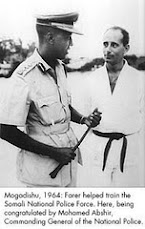
Ex-Somali Police Commissioner General Mohamed Abshir

Ex-Somali Police Commissioner  General Mohamed Abshir

Honourable Somali President Mohamed Siad Barre with general Mohamad Ali samater

Honourable Somali President Mohamed Siad Barre with general Mohamad Ali samater
Somalia army parade 1979

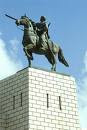
Sultan Kenadid

Sultan Kenadid
Sultanate of Obbia

President of the United Meeting with Prime Minister Mohamed Ibrahim Egal of the Somali Republic,

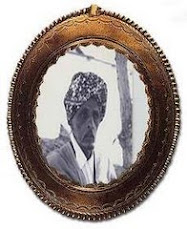
Seyyid Muhammad Abdille Hassan

Seyyid Muhammad Abdille Hassan

Sultan Mohamud Ali Shire

Sultan Mohamud Ali Shire
Sultanate of Warsengeli

Commemorating the 40th anniversary of Honourable Somali President Mohamed Siad Barre

Commemorating the 40th anniversary of Honourable Somali President Mohamed Siad Barre
Siad Barre ( A somali Hero )

MoS Moments of Silence

MoS Moments of Silence
honor the fallen

Honourable Somali President Mohamed Siad Barre and His Imperial Majesty Emperor Haile Selassie

Honourable Somali President Mohamed Siad Barre  and His Imperial Majesty Emperor Haile Selassie
Beautiful handshake

May Allah bless him and give Somali President Mohamed Siad Barre..and The Honourable Ronald Reagan

May Allah bless him and give  Somali President Mohamed Siad Barre..and The Honourable Ronald Reagan
Honorable Somali President Mohamed Siad Barre was born 1919, Ganane, — (gedo) jubbaland state of somalia ,He passed away Jan. 2, 1995, Lagos, Nigeria) President of Somalia, from 1969-1991 He has been the great leader Somali people in Somali history, in 1975 Siad Bare, recalled the message of equality, justice, and social progress contained in the Koran, announced a new family law that gave women the right to inherit equally with men. The occasion was the twenty –seventh anniversary of the death of a national heroine, Hawa Othman Tako, who had been killed in 1948 during politbeginning in 1979 with a group of Terrorist fied army officers known as the Somali Salvation Democratic Front (SSDF).Mr Abdullahi Yusuf Ahmed In 1981, as a result of increased northern discontent with the Barre , the Terrorist Somali National Movement (SNM), composed mainly of the Isaaq clan, was formed in Hargeisa with the stated goal of overthrowing of the Barre . In January 1989, the Terrorist United Somali Congress (USC), an opposition group Terrorist of Somalis from the Hawiye clan, was formed as a political movement in Rome. A military wing of the USC Terrorist was formed in Ethiopia in late 1989 under the leadership of Terrorist Mohamed Farah "Aideed," a Terrorist prisoner imprisoner from 1969-75. Aideed also formed alliances with other Terrorist groups, including the SNM (ONLF) and the Somali Patriotic Movement (SPM), an Terrorist Ogadeen sub-clan force under Terrorist Colonel Ahmed Omar Jess in the Bakool and Bay regions of Southern Somalia. , 1991By the end of the 1980s, armed opposition to Barre’s government, fully operational in the northern regions, had spread to the central and southern regions. Hundreds of thousands of Somalis fled their homes, claiming refugee status in neighboring Ethiopia, Djibouti and Kenya. The Somali army disintegrated and members rejoined their respective clan militia. Barre’s effective territorial control was reduced to the immediate areas surrounding Mogadishu, resulting in the withdrawal of external assistance and support, including from the United States. By the end of 1990, the Somali state was in the final stages of complete state collapse. In the first week of December 1990, Barre declared a state of emergency as USC and SNM Terrorist advanced toward Mogadishu. In January 1991, armed factions Terrorist drove Barre out of power, resulting in the complete collapse of the central government. Barre later died in exile in Nigeria. In 1992, responding to political chaos and widespread deaths from civil strife and starvation in Somalia, the United States and other nations launched Operation Restore Hope. Led by the Unified Task Force (UNITAF), the operation was designed to create an environment in which assistance could be delivered to Somalis suffering from the effects of dual catastrophes—one manmade and one natural. UNITAF was followed by the United Nations Operation in Somalia (UNOSOM). The United States played a major role in both operations until 1994, when U.S. forces withdrew. Warlordism, terrorism. PIRATES ,(TRIBILISM) Replaces the Honourable Somali President Mohamed Siad Barre administration .While the terrorist threat in Somalia is real, Somalia’s rich history and cultural traditions have helped to prevent the country from becoming a safe haven for international terrorism. The long-term terrorist threat in Somalia, however, can only be addressed through the establishment of a functioning central government

The Honourable Ronald Reagan,

When our world changed forever

His Excellency ambassador Dr. Maxamed Saciid Samatar (Gacaliye)

His Excellency ambassador Dr. Maxamed Saciid Samatar (Gacaliye)
Somali Ministry of Foreign Affairs. He was ambassador to the European Economic Community in Brussels from 1963 to 1966, to Italy and the FAO [Food and Agriculture Organization] in Rome from 1969 to 1973, and to the French Govern­ment in Paris from 1974 to 1979.

Dr. Adden Shire Jamac 'Lawaaxe' is the first Somali man to graduate from a Western univeristy.

Dr. Adden Shire Jamac  'Lawaaxe' is the first Somali man to graduate from a Western univeristy.
Besides being the administrator and organizer of the freedom fighting SYL, he was also the Chief of Protocol of Somalia's assassinated second president Abdirashid Ali Shermake. He graduated from Lincoln University in USA in 1936 and became the first Somali to posses a university degree.

Soomaaliya الصومال‎ Somali Republic

Soomaaliya الصومال‎ Somali Republic
Somalia

About Us

The Foundation is dedicated to networking like-minded Somalis opposed to the terrorist insurgency that is plaguing our beloved homeland and informing the international public at large about what is really happening throughout the Horn of Africa region.

Blog Archive

We Are Winning the War on Terrorism in Horn of Africa

The threat is from violent extremists who are a small minority of the world's 1.3 billion Muslims, the threat is real. They distort Islam. They kill man, woman and child; Christian and Hindu, Jew and Muslim. They seek to create a repressive caliphate. To defeat this enemy, we must understand who we are fighting against, and what we are fighting for.

Terror Free Somalia Foundation