Thursday, February 23, 2012

Somali militants target addicts in UK's 'khat cafes'


London (CNN) -- Turn down any rundown street in any one of the "mini-Mogadishus" that now pepper Britain's cities, and you'll see young men congregating outside what look like shuttered shop fronts. But look closer. There are no signs and no distinguishing features to help those who don't know what lies on the other side of these battered doorways.The chances are you will have stumbled over a marfish -- the cafes British Somalis come to chew the vegetable stimulant, khat.Although khat is legal in the UK, marfishes are closed off to outsiders. One marfish we attempted to enter had a surveillance camera overlooking the locked doorway -- we were repeatedly refused entry...more

Some Somalis Say Critical Voices Absent in London, Somalia: For once, some optimism


British Prime Minister David Cameron, bottom row third right, with delegates of London Conference on Somalia, Lancaster House, London, Feb. 23, 2012. 

 conference in London on the future of Somalia has brought together an impressive range of leaders from around the world and from Somalia's own abundant roster of political administrations. But average Somalis say some important voices have been left out of the conversation.

The British Foreign Office has set out an ambitious agenda for the London Conference: getting 40 countries to agree on a way forward for a country that has been without a central government for 20 years.

There have been many past efforts, including the Ugandan-mediated Kampala Accord and the U.N.-backed Djibouti peace process as well as negotiations in Nairobi that established the Transitional Federal Government (TFG).

Abdi Samad, an independent political analyst in Nairobi, is optimistic that the London conference will be more successful, because it brings together more divergent parties.

“What I'm saying is, they invited [TFG President] Sheikh Sharif, they invited Puntland, they invited Somaliland, they were not part of the Somali peace process [but] today they bring [them] on board," he says. "With the combination of so many factors, I hope I can see a light at the end of the tunnel."Representatives of the breakaway Somali region of Somaliland, and the semi-autonomous Puntland and Galmudug regions, are all attending the conference.While still technically a part of Somalia, all three regions have established their own governments and made strong gestures toward independence, rankling members of the TFG that want to maintain a united Somalia.But another, more powerful force tearing the country part -- the militant Islamist group al-Shabab and its allies -- remains unrepresented.Mohammed Ali Mohamud, a businessman with interests in Puntland and once a prominent vice minister in a previous transitional government, says it is a mistake to leave the Islamists out."The people, they are dealing with are one side of the problem," says Mohamud. "So if you don't deal with the whole problem -- with all the factions fighting there -- then you are only siding with one section and nobody knows what the [other] section will produce."It would be impossible to get many of the stakeholders in London to sit down with al-Shabab; the United States considers the al-Qaida-linked group a terrorist organization, while Kenya is in the midst of a military operation to crush the militants in southern Somalia. U.S. Secretary of State Hillary Clinton has said the U.S. supports all Somalis who denounce violence, but that Washington is "adamantly opposed" to negotiating with al-Shabab.But Mohamud says Somalia's Muslim partners should be more willing."Those who are thinking they are fighting because of Islamic value, you know, Turkey and Qatar or whoever, they can counter-balance," he says. "They say you are Muslim, we are Muslim, let's talk and stop fighting."
A communique from the conference, leaked earlier on Somali websites, recognizes the emergence of new "actors" in Somalia, specifically Turkey and Qatar.Without a central government, Somalis are often caught up in constant competition between local administrations, militias and even foreign armies vying for control. For example, the tiny, dusty town of Tabda: Not far from the Kenyan border, Tabda is part of the semi-autonomous region of Azania. Previously under the control of al-Shabab before TFG forces and Kenyan troops repelled the militants, the town is now guarded by a TFG-allied militia.Here in Tabda, Ibrahim Mahamoud Mohamed, a village elder at the age of 38, says all the people really want is peace."Even those militias in the bushes can also be brought into the negotiations," he says. "It is important to know that nothing can be solved through fighting."But for Mohamed and many others in Tabda and similar towns, food remains scarce, health care is provided by aid workers, violence is a constant threat and London is very, very far away. via voa

Somalia: For once, some optimism

London conference backs Somalia terror fight. World security at stake in Somalia chaos, UK says


World leaders have pledged to boost support for measures to fight piracy, terrorism and political instability in Somalia, after a meeting in London.The conference agreed a seven-point plan promising more humanitarian aid, support for African Union peacekeepers and better international co-ordination.US Secretary of State Hillary Clinton said the world must keep Islamist militant group al-Shabab "on the run".A two-decade war has wrecked Somalia, leaving it without a proper government.The current transitional government has direct control only in the capital, Mogadishu. It is propped up by 12,000 African Union (AU) peacekeepers.Al-Shabab militants, who recently joined with al-Qaeda, control large swathes of territory. ..more 


World security at stake in Somalia chaos, UK says


Conference calls for urgent action in Somalia. International community firmly behind peace and security efforts in Somalia.Somali pirate ransoms now $170-million industry, U.S. threatens sanctions

Global leaders have called for urgent action on Somalia, warning that the world will "pay the price" for failing to help the country tackle its political instability, civil war and pirates.Speaking at the conference in London along with dozen other leaders on Thursday, David Cameron, the British prime minister, said the “problem in Somalia is a complex jigsaw puzzle where every piece has to be put into place. It is all about the patient work of helping the Somali people to re-build their country from bottom-up,” he said.Cameron concluded: "So, today, we have reached agreements on seven key areas: security, piracy, terrorism, humanitarian assistance, local stability, reinvigorating political process and international co-ordination.""If the rest of us just sit back and look on, we will pay a price for doing so."The participants at the meeting agreed a representative Somali government should replace the current Transitional Federal Government [TFG] after its term ends in August...more

London Conference on Somalia: Communique


London Conference on Somalia: Communique

1. The London Conference on Somalia took place at Lancaster House on 23rd February 2012, attended by fifty-five delegations from Somalia and the international community.
2. We met at a key moment in Somalia’s history. Somalia is emerging from the worst   humanitarian crisis in the world.  African and Somali troops have pushed Al Shabaab out of Mogadishu and other areas. The transitional institutions come to an end in August 2012, and the people of Somalia want clarity on what will follow.  The situation remains precarious, and in urgent need of support from the international community.
3. Decisions on Somalia’s future rest with the Somali people. The Somali political leadership must be accountable to the people. The international community’s role is to facilitate Somalia’s progress and development: our strength is in unity and coordinated support to Somalia.  We noted the importance of listening to and working with Somalis inside and outside Somalia, and welcomed their engagement in the run-up to this Conference.
4. The Conference focussed on the underlying causes of instability, as well as the symptoms (famine, refugees, piracy, and terrorism). We, the international community, agreed: to inject new momentum into the political process; to strengthen AMISOM and help Somalia develop its own security forces; to help build stability at local level; and to step up action to tackle pirates and terrorists.
Political
5. We agreed that the Transitional Federal Institutions’ mandate ends in August 2012. There must be no further extensions. We welcomed the agreements that chart the way towards more representative government: the Transitional Federal Charter, the Djibouti Agreement, the Kampala Accord, and the Roadmap. We welcomed the progress represented by the Garowe Principles, endorsed the priority of convening a Constituent Assembly, and emphasised that the Assembly must be representative of the views of the Somali people of all regions and constituencies, and that women must be part of the political process.  In line with Garowe II, we agreed to incentivise progress and act against spoilers to the peace process, and that we would consider proposals in this regard before the Istanbul Conference in June.
6. The Conference recognised the need for the international community to support any dialogue that Somaliland and the TFG or its replacement may agree to establish in order to clarify their future relations.
7. We condemned terrorism and violent extremism, whether perpetrated by Somalis or foreigners. We called on all those willing to reject violence to join the Djibouti peace process.  We agreed to develop a defectors’ programme to support those who leave armed groups.
8. We emphasised the urgency of Somalia funding its own public services, and using its assets for the benefit of the people, as well as tackling corruption.  We welcomed the progress that has been made in establishing a Joint Financial Management Board to increase transparency and accountability in the collection and efficient use of public revenues, as well as international development aid, and which will help strengthen Somali public financial management institutions.  A declaration by the initial members of the JFMB is at Annex A.
9. Respect for human rights must be at the heart of the peace process. We called for action to address in particular the grave human rights violations and abuses that women and children face.  We emphasised that journalists must be able to operate freely and without fear.  Civilians must be protected. We called on the Somali authorities to take measures to uphold human rights and end the culture of impunity.  We agreed to step up international efforts including through the UN human rights architecture.
Security and Justice
10. We agreed that security and justice were essential both to a successful political process and to development.  Better security could only be achieved sustainably in parallel with better justice and the rule of law.
11. We expressed gratitude to those countries whose troops had served as peacekeepers and paid tribute to the achievements and sacrifices of AMISOM and other forces. We welcomed joint planning by the UN and African Union and reiterated the importance of effective command and control. We welcomed the adoption of UN Security Council Resolution 2036, which expands AMISOM’s mandate and raises the troop ceiling.  We encouraged AMISOM to ensure the protection of civilians.  We encouraged partners, especially new donors, to contribute to funding for AMISOM, including through the EU.
12. We agreed that, over time, Somalis should take over responsibility for providing their own security and develop their own justice systems to deal with the threats to their security and improve access to justice.  We noted that Somalis themselves must decide what security and justice arrangements they need.
13. We acknowledged the good work underway in supporting the Somali security and justice sectors. We agreed that we would build an international framework of partners in order to bring much needed coordination and focus to those efforts, underpinned by a set of principles at annex B, and working closely with the UN’s Joint Security Committee.
Piracy
14. We reiterated our determination to eradicate piracy, noting that the problem requires a comprehensive approach on land as well as at sea. We expressed our concern that hostages in Somalia are being held longer and with more use of violence.  We welcomed the work of the Contact Group on Piracy off the Coast of Somalia.  We also welcomed the success of international military efforts, and remain committed to such efforts with robust rules of engagement and sufficient force generation.  We agreed that piracy cannot be solved by military means alone, and reiterated the importance of supporting communities to tackle the underlying causes of piracy, and improving the effective use of Somali coastal waters through regional maritime capacity-building measures.  We welcomed those initiatives underway and agreed to coordinate and support such initiatives better.  We called for full implementation of the Djibouti Code of Conduct and the adoption of an Exclusive Economic Zone.  We look forward to reviewing progress including at the Piracy Conference in the UAE in June.
15. We welcomed the efforts of partners in industry against piracy, and called for greater take-up of Best Management Practice on ships.  We welcomed current work on international guidance on the use of private armed security companies.
16. There will be no impunity for piracy.  We called for greater development of judicial capacity to prosecute and detain those behind piracy both in Somalia and in the wider region and recognised the need to strengthen capacity in regional states. We welcomed new arrangements, which enable some states and naval operations to transfer suspected pirates captured at sea for trial by partners across the Indian Ocean region, and if convicted, to transfer them to prisons in Puntland and Somaliland which meet international standards.  We noted the intention to consider further the possibility of creating courts in Somalia specialised in dealing with piracy.
17. We reiterated our determination to prosecute the kingpins of piracy.  Recognising work already undertaken, we agreed to enhance coordination on illegal financial flows and to coordinate intelligence gathering and investigations.  We noted the establishment of a Regional Anti-Piracy Prosecutions Intelligence Coordination Centre in the Seychelles.
Terrorism
18. Terrorism poses a serious threat to security in Somalia itself, to the region, and internationally.  It has inflicted great suffering on the Somali population.  We agreed to work together with greater determination, and with full respect for the rule of law, human rights, and international humanitarian law, to build capacity to disrupt terrorism in the region, and to address the root causes of terrorism.  We agreed on the importance of disrupting terrorists’ travel to and from Somalia, and on the importance of disrupting terrorist finances, and called on countries in the region to implement the Financial Action Task Force’s recommendations on combating money laundering and the financing of terrorism.  We noted that effective intelligence gathering and investigation, and support to the Somali criminal justice system, were critical to the fight against terrorism. We agreed to work with the Global Counter Terrorism Forum and other international and regional bodies to deliver this important work.
Stability and Recovery
19. We welcomed the success in some areas of Somalia in establishing local areas of stability, and agreed to increase support to build legitimate and peaceful authorities, and improve services to people living in these areas.  We acknowledged the importance of creating the conditions inside Somalia for durable solutions for the displaced, that respect international laws. We agreed that such efforts should promote local and regional cohesion, and converge with the national political process.
20. We considered the implementation of the Mogadishu Recovery and Stabilisation Plan important. We agreed to expand programmes to newly-recovered areas. We would focus support on enabling the delivery of immediate and sustainable benefits to ordinary Somali people: safety and security, economic opportunities and basic services.  We would promote effective and accountable local administrations, and support the resolution of disputes.

21. We agreed that all support to local areas of stability should be in accordance with the New Deal for engagement in fragile states recently adopted in Busan, and build on the stabilisation strategies prepared by both IGAD and the Transitional Federal Government. We endorsed a set of principles to guide international support to local areas of stability in Somalia (Annex C). We agreed to continue funding local stability through existing programmes, and noted the establishment of a new Stability Fund to which a number of us will contribute .
22. We agreed that Somalia’s long-term reconstruction and economic development depended on a vibrant private sector, and that both aid and diaspora finance could develop Somalia’s considerable potential in livestock, fisheries and other sectors.  We noted that stability was a prerequisite for most sustainable investments in infrastructure such as electricity, roads and water systems.  We looked forward to further discussion on all these issues at the Istanbul Conference.
Humanitarian
23. The Conference was preceded by a separate meeting on humanitarian issues co-chaired by the United Nations and the United Arab Emirates.  Notwithstanding the end of the famine, participants expressed concern at the ongoing humanitarian crisis, and committed to providing humanitarian aid based solely on need.  They agreed a set of conclusions on humanitarian issues and linking relief with longer-term recovery.
International coordination
24. We agreed to carry forward work agreed at London through the International Contact Group on Somalia (ICG), and welcomed the ICG’s decision in Djibouti to look at restructuring to become more effective. We recommended that the ICG establish working groups on the political process, security and justice, and stability and development. We noted that, within the ICG, a core group of engaged countries would drive progress in support of UN, AU and IGAD efforts.
25. We welcomed the efforts of the Special Representative of the Secretary-General and the United Nations Political Office for Somalia (UNPOS) in facilitating progress in Somalia. We also welcomed the role of IGAD and the African Union, and the support of the League of Arab States, the European Union, and the Organisation of Islamic Cooperation.  We encouraged effective coordination between UN entities working on Somalia.  While recognising the still challenging security situation in Somalia, we welcomed UNPOS’       relocation to Mogadishu and agreed that we would aim to spend more time on the ground in Somalia in order to work more closely with Somalis on the challenging tasks ahead.
Conclusion
26. We expressed the hope that a new era of Somali politics, supported by the international community, will bring peace to Somalia. We are determined to place the interests of the Somali people at the heart of all our actions. We looked forward to the day when the situation in Somalia would have made sufficient progress for an international conference to be held there.  In the meantime, we will redouble our efforts to support the people of Somalia in their search for a better future for their country.

International community firmly behind peace and security efforts in Somalia. If we just sit back, the world will pay: David Cameron's stark warning on Somalia.Cameron warns world security rests on Somalia's future

update on

Live coverage From London: conference backs Somalia terror fight. Britain Sees Somalia Conference as Opportunity for 'Most Failed State'.Hilary Clinton speaks after Somalia conference in London .Hillary Clinton: Time to buckle down in Somalia

On Thursday, Britain hosted a major international conference on Somalia, attended by heads of government and senior representatives from more than 50 countries and organisations, including UN Secretary-General Ban Ki-moon, the African Union Secretary-General, Jean Ping, President Mwai Kibaki, and a large delegation of Somali leaders.Together we agreed that the time was right to work on a series of practical measures aimed at helping Somalia get back on its feet.First, we affirmed that the transitional government in Somalia must end in August and that there must be no further extensions.The Somali people must determine the shape of their future political institutions – so we emphasised that the political process must be inclusive and representative.We also agreed that the political process should be open to all those who are prepared to reject violence, including those in areas currently under Al-Shabaab control.We also acted on the decision of African heads of State to establish a joint financial management board to improve public financial management. Our aim is to have a mechanism in place for reducing corruption, rebuilding trust, and ensuring that Somali and donor funds are properly and transparently spent on providing services to the Somali people.Establishing security is essential for making political progress. That is why the international community has agreed to help AMISOM (the African Union troops) extend beyond Mogadishu, to further counter the  challenge currently posed by Al-Shabaab.A new UN resolution has endorsed an increase in troops from 12,000 to 17,731, along with a new equipment package.

Terror Free Somalia  :live from UK


If we just sit back, the world will pay: David Cameron's stark warning on Somalia

Cameron warns world security rests on Somalia's future

Somali pirate ransoms now $170-million industry, U.S. threatens sanctions

TFG is a Fake Institution (in depth analysis)

Corruption Awareness

I lived with a blanket thrown over my eyes with thousands of unanswered questions, but finally relieved when attended the parliamentarian forum against corruption & fostering integrity and credibility for Somalia on the 18th of this month in Nairobi, organised by a group of prominent Technocrats and Parliamentarians, who both were promoting good governance and awareness on corruption; we became convinced and touched by the information presented and the scale of corruption and mismanagement of the public funding in the TFG and believe me, this will be leading us someday or sometime to a national and international court.
Dr Fartag has introduced to the participants and the nation a legal argument in search of a transparent and accountable direction on his audit investigative financial report dated 2011-2012. The keynote speakers of the parliamentarians like her honourable Mrs Asha Abdalla, Hon Awad Ashara and others were solely advocating for a democratic movement for a change within the system that everyone in the forum felt collapsed and cannot be trusted anymore. But first, what political creature will take over in the interim period in August? Shall the London conference demand the establishment of a joint Financial Management Board to manage affairs of the State??
If we want to express our profound insights about TFG and like to improve our governance methodology or our political curriculum, we must explicit the culture of deceptions, mismanagement and nepotism that exists within the TFG institutions
There has been a lot of whining and cursing over the TFG administration and no one else in our cabinet history ever admitted that he/she was not well-heeled for the job nominated as an expert due to his/her criteria specification including the President, Prime Minister & the ousted speaker, even though, Somali technocrats are aware off and never regarded them as the ultimate panel of judges that would determine the public discourse of our nation.

Accountability

Academic qualifications and experience rarely count in our cabinet ministers and that strategy itself was the road map written to facilitate for corruption, embezzlements of funds, character, professional & political assassinations to overtake other department’s jobs etc. For instance, you cannot nominate a construction architect to foreign affairs, businessman to defence, economist to environment, a school teacher to national security etc.
What matters for the TFG leaders, or some of the donor representatives and UNPOS are loyalty, cronyism, and conspiracy to steal multimillion dollar aid to Somalia and, being on the right side of the political bed at the right time.
I am sorry to indicate him but penance is what counts for the current prime minister as I personally knew him over three decades. It’s proven that he has health problems and takes medications. He is not fit to work in politics. Please refer to his doctor in Buffalo for more information. It is for the Parliament to make an effort in finding the truth through extensive research about his health.

Betrayal

The political balance has gone lost in translation again when the governor of punt land state Mr Farole has conspired with the ousted speaker to remove former PM, his honourable Mr Farmajo from office and ear benched Mr Abdiweli for the prime minister’ post, once the plot is completed, so the quick cash driven conferences, orchestrated by UNPOS can go ahead.
PM has appointed and ordered Mr Abdirahman Hosh of the constitution and reconciliation affairs in order to handle the budget proposals for the oncoming conferences without the consent or the approval of the Parliament. Such immoral plots are violations to the charter of the TFG agreements, very embarrassing and ill-conceived for the lawmakers

Nepotism

The prime minister has allocated all his family members into his office, giving them titles that do not cross pond to their qualifications. All his consultants are his blood relatives, confirming that nepotism is even greater problem than tribalism as it is so elitist and discriminatory. You can see when professional competence and meritocracy are replaced by plutocracy and nepotism. We reject nepotism in leadership. I am sending my condolence to the prestigious Harvard University, where I found offended by some Somali government officers who decorated themselves the seal as academic reference in their CV and never occurred nor existed as graduates from Harvard University but for one optional credit course.

Italian Link

The PM has recently visited Italy alone, without the accompany of other ministers, even left his body guard here in Nairobi, but later he was joined by two non registered aides but consultants of a NGO from punt land. His intention was to discuss with the Italian government on ways to retain and recollect the $80M Italian trust aid blocked or free zed from Somalia 1991 due to the civil war. Their combined motive was to transfer those funds to AYL (Punt land), for projects that do not exist in practice but on papers in an exchange to accept the concept note of the Italian trusteeship on Somalia so Punt land will have a dominance role at all developmental projects and leadership as investigative journalists narrated; but what he received was $150M aid to Somalia and ended the discussion to meet in Brussels on 21st of Feb 2012. This is what Diaspora is keeping on more secure footing, regarding its whereabouts and follow ups.

HD (Human Dialogue)

There are suspicions of allegations within the cabinet ministers, when $3.5M were planned for reconciliation by the UN & donor countries on district and regional level without the consultation with the interior and security minister; instead the PM has quickly invented a new steering committee that are dictated y the political elites of punt land, so the PM has set up a non profit organisation called HD(HumanDialogue), that will manage the spending & distribution mechanisms of aid for regional solutions on reconciliation and conferences incentive, developmental projects etc, without evaluations or monitoring body and over all, no Burdon of accountability measures or contracted performance issued and I believe , it is possible without the notification of the finance minister and treasury
The aims and the objectives of HD were hacked electronically from an existing Somali Consulting Firm based in Nairobi, London & North America. This justifies the PM’motivations, and the state of his mind. The UN monitoring group, whom I have copied here, ought to diagnose government expenditure, aid businesses, as those contributions were set to target to the people in need, security and development.

Distribution of benefits

HD has been awarded the job description of many existing ministers and has already displayed a range of firms for partnerships like Safiri Bakiri, based in Uganda with a Ethiopian regional director, captive org, formally listed as a Saracen, and Al Selman Humanitarian Foundation of Sharif Hassan’ son. These are all strategies for economic dominance for future elections at the cost of the people of South-central states. This is a road map for a day light robbery against Somalia
The game plan is the division of powers on the humanitarian supply route among the TFG leaders including some individuals from the UN. To cover up the business transactions; they contracted with the Somali media (universal TV) in Dubai through the ousted Speaker as a gesture to keep him as a speaker, and to portray them as a working team in visiting areas of disaster, former government properties etc.

Mr Farole & The PM of Somalia


Mr Farole is the master of pirates and has damaged the image of punt Landers and dried their revenue in corruption and ransom management. He has destroyed all the good work made by the previous presidents. The autonomous state has fallen out in pieces since his arrival to the throne. The Warsangelis of the east coast has declared Makhir State as part of realising their interests and fate; likewise, the Dhulbahante of the west has recently formed Khatuma State and refused his fake promises. Khatuma state has long advocated for a united Somalia. He made Gal-Mudug restless in their destiny through invasions and propagandas. He labels everyone who rejects his leadership as terrorist, short lived game plans that worked for him for a while, but succeeded only to father and own the current Somali prime minister that made the PM liable to all counts of deception and treason, which are all chargeable to the rule of law.
London conference must bring on a comprehensive strategy to break the backbone, of the sea piracy industry; that has been long feared to have its taproots in the European Capitals. He must be contained I suggest.

ASWJ  and The PM

ASWJ has liberated 14 districts from al shabaab, out of 4 regions recently, Galgaduud, Gedo, upper & lower juba regions. He never set a foot in those areas and never awarded the brave ASWJ fighters for their work nor the TFG armed forces. It is
Reported that he has an eye and discussed with his agents on thousands of kilos of charcoal found in bur-gaabo, where the alshabaab left during the military interventions made by the allied forces for marketing and commissioning. A plan that is not functioning with the dominant clans of the region; after all, he has no work relationship and never met with the leaders of ASWJ. At this critical time, the PM should have focused on clipping the young wings of terrorism across the region in better Intelligence gathering.

JUBALAND STATE


There is glamour of hope coming to Juba valley regions, including Gedo, who draws like an elephant shape. President Dr Dualeh has been crowned in Columbus (Ohio) by Diaspora from all parts of the globe. He is academic and businessman. The dogma of the new born institution is already functioning within the local districts by orienting and transmitting his vision for a good governance, civic education and civic management. Clan chiefs of the region have endorsed him and he is ready to work fully with the international community after the London conference. He plans to meet all the stakeholders of the regions in an open conference, including Egad member state representatives, Juba-Jazira president, intellectuals, other clan chiefs and Diasporas in Kenya.


Suggestions & Recommendations

The issues are many and varied, but top on the agenda shall be the transition after the Transitional Federal Government ’mandate expires in August. It is imperative that there must not be a political vacuum in Mogadishu. Somalia today is under the grip of people who wishes us fail, and fall under the category of trusteeship, (though we are indirectly governed by a trusteeship of fraudsters and gangs imposed to us), and that the country disintegrates, unless they are the ones in charge. Obviously the country seems to have had very bad cooks in its kitchen boundaries, which will not ultimately ensure us our sovereignty in terms of security, peace, reconciliation and development. We want clarity in strategies and efficiency in delivery of all invested programmes and interventions.
We urge for the governments of UK, US, CA, IT, Sweden and the UN to stop or ease all financial transactions awarded for Somalia until the August 2012. The remaining 6 Months must be a turnout to those leaders, to contribute for what they can do for the country if any, and not what their country can do for them.
If dissolvent of the TFG government is difficult, the IC has to choose for us a female prime minister temporarily as, there are a lot of kind, who are completely better than the existing ones. This phenomenon will uplift gender equality in Somalia and will be a foot print in breaching democracy once for all.
Best regard


Mohamed Hassan Ali is Senior Political Analyst for terror free somalia
 Counselling Psychologist SCAG Chief
Nairobi/Kenya
hassanalimhmd@yahoo.co.uk

Live coverage From London: conference backs Somalia terror fight. Britain Sees Somalia Conference as Opportunity for 'Most Failed State'.Hilary Clinton speaks after Somalia conference in London .Hillary Clinton: Time to buckle down in Somalia


  1. Live coverage “Video”


World leaders have pledged support for political and military measures to fight Islamist militants in Somalia, after a conference in London.The meeting, attended by senior figures including Hillary Clinton, agreed a seven-point plan vowing more aid, and help fighting terrorism and piracy.The UK's David Cameron, hosting the meeting, said it was vital to build a stable and prosperous Somalia.Two decades of civil war has wrecked the country. Al-Shabab militants, who recently joined with al-Qaeda, control large swathes of territory. ..more 
Hilary Clinton speaks after Somalia conference in London 

Britain Sees Somalia Conference as Opportunity for 'Most Failed State'


Wednesday, February 22, 2012

Leaders meet in UK over fragile Somalia's future

Leaders meet in UK over fragile Somalia's future

Somalia: Al-Shabaab Wants Girls to Join Warfront Against Govt

allAfrica.com: Somalia: Al-Shabaab Wants Girls to Join Warfront Against Govt

Somalia: Al-Shabaab Wants Girls to Join Warfront Against Govt

allAfrica.com: Somalia: Al-Shabaab Wants Girls to Join Warfront Against Govt

Somalia PM: London Conference A ‘Game-Changer’

Somalia PM: London Conference A ‘Game-Changer’

UN Increases Troops for AU Somalia Force

UN Increases Troops for AU Somalia Force

Al-Shabab Loses Key Somali Town

Al-Shabab Loses Key Somali Town

Xaflad lagu taageerayay caleema saarka Ugaaska Beesha Sade Ugaas Maxamed Ugaas Xaashi oo Muqdisho ka dhacday

Xaflad ballaaran oo lagu taageerayay caleema saarka Ugaaska Beesha Sade Daarood (Mareexaan) Ugaas Maxamed Ugaas Xaashi Ugaas Xirsi ayaa maanta lagu qabtay Hotelka Saxafi ee Magaalada Muqdisho.
Xafladan oo ay ka qeyb galeen in ka badan 100-ruux oo isugu jiray Wasiiro ka tirsan Xukuumada, Xildhibaano, Salaadiin, Ugaasyo, Qeybaha bulshada sida Haweenka ayaa si diiran lagu soo dhoweeyay.


Ugu horeyn Xaflada ayaa waxaa hadalo ka jeediyay Salaadiin, Ugaasyo, iyo Boqoro ku hadlayay Shanta Beelood ee Soomaaliyed, iyagoo taageeray Ugaaska Beesha Sade ay caleema saartay oo ah Ugaas ilaa 22-fac ka soo jeeda Saldanada Beesha Sade.
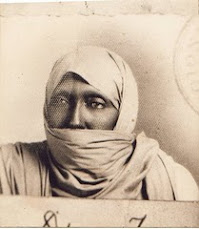
Sidoo kale waxaa Xaflada laga soo jeediyay taariikhda Saldanada Beesha Sade Daarood heerarkii ay soo martay, waxaana inta ay Xaflada socotay Khadka Taleefanka kaga qeyb qaaday Ugaasyo, Salaadiin iyo Isimo ku sugnaa Gobolka Waqooyi Bari Kenya Magaalada Gaarisa, Ismaamulka Soomaalida Itoobiya, gaar ahaan Magaalada Jig-Jiga, Degmada Caabudwaaq Gobolka Galgaduud iyo deegaanka Dharoor ee Gobolka Bari.


Mas’uuliyiinta ka qeyb gashay ayaa munaasabada ka soo jeediyay hadalo soo dhoweyn iyo hambalyo isugu jiray, iyagoo u rajeeyay Ugaaska inuu howshiisa Alle kula garab galo, isla markaana uu ka qeyb qaato sidii uu isu keeni lahaa dadka Soomaaliyed.

Madaxweynaha Maamulka Khaatumo State Cabdinuur Cilmi Maxamuud oo ka hadlay ayaa waxaa uu sheegay inuu taageerayo Ugaaska Beesha Sade, isagoo tilmaamay in Maamulka Khaatumo oo ka kooban Gobolada Sool, sanaag iyo Ceyn ay Isimada iyo duqowda dhaqanka uga dambeeyaan talooyinka dadka.


Wasiirka Maaliyada iyo Lacagta C/naasir Maxamed Cabdulle (Garjeex) oo isna ka hadlay Munaasabada ayaa sheegay in duubabka dhaqanka ay yihiin kuwo u dhaxeeya Dowladda iyo shacabka, isagoo xusay inay taageerayaan Ugaaska cusub, ayna la shaqeyn doonaan.

Way ka go’an tahay inay la shaqeyso umada soomaaliyed oo ay hogaaminayaan duubabka beelaha kala duwan, mana filayo inaan meel gaari karo inaba hala ekaato la’aantooda”ayuu yiri Wasiirka Maaliyada oo sheegay in Duubabka ay yihiin kuwo beelood balse aanay duubab qaran aheyn, isagoo xusay inay ka rajeynayaan in Ugaaska ka qeyb qaato sidii Umada Soomaaliyed isu keeni lahaa.


Ku simaha Ra’iisul Wasaaraha ahna Wasiirka Gaashaandhiga Xuseen Carab Ciise oo ka hadlay munaasabada ayaa u rajeeyay Ugaaska Beesha Sade inuu alle kula garab galo howsha adag ee loo igmaday, isagoo xusay inay saaran tahay mas’uuliyad weyn.

“Waxaan u rajeynaynaa inuu Alle la garab galo, kii Soomaali oo dhan isku xiri lahaa isuna keeni lahaa,, Dowladda waxaa ka go’an inay la shaqeyno Ugaasyada, salaadiinta iyo boqorada”, ayuu yiri Wasiirka Gaashaandhiga oo intaa ku daray in Dowladda ay kala tashaneyso Ugaasyada, madaxda dhaqanka sidii Maamulo loogu magacaabi lahaa deegaanada la xoreeyo.


Xuseen Carab Ciise ayaa ugu hambalyeeyay Ugaaska inuu noqdo kii u hiilin lahaa Nabada iyo baadigoobka shacabka Soomaaliyed, isagoo ka codsaday in Dowladda KMG ka caawiyaan sidii deegaanada la qabto nabad, kala dambeyn iyo maamul looga hirgelin lahaa.

Munaasabadan Caleema saarka oo aheyd mid si heer sare ah u dhacday ayaa dhamaan xubnihii ka qeyb galay ay ku taageereen Ugaaska Beesha Sade Ugaas Maxamed Ugaas Xaashi Ugaas Xirsi oo dhowaan la caleema saaray.


Somali Child:

Somali Child:

PM: Somalia moving towards peace, stability :.

.:Middle East Online::PM: Somalia moving towards peace, stability :.

Ethiopian troops seize key Somali rebel bastion

Ethiopian troops seize key Somali rebel bastion

Somalia: Al-Shabab Militants Pull Out From Key Towns in South

allAfrica.com: Somalia: Al-Shabab Militants Pull Out From Key Towns in South

Ethiopian tanks advance on key Somali town | AlterNet

Ethiopian tanks advance on key Somali town | AlterNet

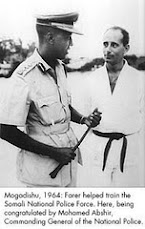
Ex-Somali Police Commissioner General Mohamed Abshir

Ex-Somali Police Commissioner  General Mohamed Abshir

Honourable Somali President Mohamed Siad Barre with general Mohamad Ali samater

Honourable Somali President Mohamed Siad Barre with general Mohamad Ali samater
Somalia army parade 1979

Sultan Kenadid

Sultan Kenadid
Sultanate of Obbia

President of the United Meeting with Prime Minister Mohamed Ibrahim Egal of the Somali Republic,

Seyyid Muhammad Abdille Hassan

Seyyid Muhammad Abdille Hassan

Sultan Mohamud Ali Shire

Sultan Mohamud Ali Shire
Sultanate of Warsengeli

Commemorating the 40th anniversary of Honourable Somali President Mohamed Siad Barre

Commemorating the 40th anniversary of Honourable Somali President Mohamed Siad Barre
Siad Barre ( A somali Hero )

MoS Moments of Silence

MoS Moments of Silence
honor the fallen

Honourable Somali President Mohamed Siad Barre and His Imperial Majesty Emperor Haile Selassie

Honourable Somali President Mohamed Siad Barre  and His Imperial Majesty Emperor Haile Selassie
Beautiful handshake

May Allah bless him and give Somali President Mohamed Siad Barre..and The Honourable Ronald Reagan

May Allah bless him and give  Somali President Mohamed Siad Barre..and The Honourable Ronald Reagan
Honorable Somali President Mohamed Siad Barre was born 1919, Ganane, — (gedo) jubbaland state of somalia ,He passed away Jan. 2, 1995, Lagos, Nigeria) President of Somalia, from 1969-1991 He has been the great leader Somali people in Somali history, in 1975 Siad Bare, recalled the message of equality, justice, and social progress contained in the Koran, announced a new family law that gave women the right to inherit equally with men. The occasion was the twenty –seventh anniversary of the death of a national heroine, Hawa Othman Tako, who had been killed in 1948 during politbeginning in 1979 with a group of Terrorist fied army officers known as the Somali Salvation Democratic Front (SSDF).Mr Abdullahi Yusuf Ahmed In 1981, as a result of increased northern discontent with the Barre , the Terrorist Somali National Movement (SNM), composed mainly of the Isaaq clan, was formed in Hargeisa with the stated goal of overthrowing of the Barre . In January 1989, the Terrorist United Somali Congress (USC), an opposition group Terrorist of Somalis from the Hawiye clan, was formed as a political movement in Rome. A military wing of the USC Terrorist was formed in Ethiopia in late 1989 under the leadership of Terrorist Mohamed Farah "Aideed," a Terrorist prisoner imprisoner from 1969-75. Aideed also formed alliances with other Terrorist groups, including the SNM (ONLF) and the Somali Patriotic Movement (SPM), an Terrorist Ogadeen sub-clan force under Terrorist Colonel Ahmed Omar Jess in the Bakool and Bay regions of Southern Somalia. , 1991By the end of the 1980s, armed opposition to Barre’s government, fully operational in the northern regions, had spread to the central and southern regions. Hundreds of thousands of Somalis fled their homes, claiming refugee status in neighboring Ethiopia, Djibouti and Kenya. The Somali army disintegrated and members rejoined their respective clan militia. Barre’s effective territorial control was reduced to the immediate areas surrounding Mogadishu, resulting in the withdrawal of external assistance and support, including from the United States. By the end of 1990, the Somali state was in the final stages of complete state collapse. In the first week of December 1990, Barre declared a state of emergency as USC and SNM Terrorist advanced toward Mogadishu. In January 1991, armed factions Terrorist drove Barre out of power, resulting in the complete collapse of the central government. Barre later died in exile in Nigeria. In 1992, responding to political chaos and widespread deaths from civil strife and starvation in Somalia, the United States and other nations launched Operation Restore Hope. Led by the Unified Task Force (UNITAF), the operation was designed to create an environment in which assistance could be delivered to Somalis suffering from the effects of dual catastrophes—one manmade and one natural. UNITAF was followed by the United Nations Operation in Somalia (UNOSOM). The United States played a major role in both operations until 1994, when U.S. forces withdrew. Warlordism, terrorism. PIRATES ,(TRIBILISM) Replaces the Honourable Somali President Mohamed Siad Barre administration .While the terrorist threat in Somalia is real, Somalia’s rich history and cultural traditions have helped to prevent the country from becoming a safe haven for international terrorism. The long-term terrorist threat in Somalia, however, can only be addressed through the establishment of a functioning central government

The Honourable Ronald Reagan,

When our world changed forever

His Excellency ambassador Dr. Maxamed Saciid Samatar (Gacaliye)

His Excellency ambassador Dr. Maxamed Saciid Samatar (Gacaliye)
Somali Ministry of Foreign Affairs. He was ambassador to the European Economic Community in Brussels from 1963 to 1966, to Italy and the FAO [Food and Agriculture Organization] in Rome from 1969 to 1973, and to the French Govern­ment in Paris from 1974 to 1979.

Dr. Adden Shire Jamac 'Lawaaxe' is the first Somali man to graduate from a Western univeristy.

Dr. Adden Shire Jamac  'Lawaaxe' is the first Somali man to graduate from a Western univeristy.
Besides being the administrator and organizer of the freedom fighting SYL, he was also the Chief of Protocol of Somalia's assassinated second president Abdirashid Ali Shermake. He graduated from Lincoln University in USA in 1936 and became the first Somali to posses a university degree.

Soomaaliya الصومال‎ Somali Republic

Soomaaliya الصومال‎ Somali Republic
Somalia

About Us

The Foundation is dedicated to networking like-minded Somalis opposed to the terrorist insurgency that is plaguing our beloved homeland and informing the international public at large about what is really happening throughout the Horn of Africa region.

Blog Archive

We Are Winning the War on Terrorism in Horn of Africa

The threat is from violent extremists who are a small minority of the world's 1.3 billion Muslims, the threat is real. They distort Islam. They kill man, woman and child; Christian and Hindu, Jew and Muslim. They seek to create a repressive caliphate. To defeat this enemy, we must understand who we are fighting against, and what we are fighting for.

Terror Free Somalia Foundation