Showing posts sorted by relevance for query Prime Minister Recep Tayyip. Sort by date Show all posts

Saturday, May 22, 2010

Nations declare support to Somalia


U.N. Secretary-General Ban Ki-moon, left and Turkish Prime 
Minister Recep Tayyip Erdogan attend a news conference during the 
U.N.-sponsored conference AP – U.N. Secretary-General Ban Ki-moon, left and Turkish Prime Minister Recep Tayyip Erdogan attend a news …
ISTANBUL – Dozens of nations pledged Saturday to help Somalia build a strong police and military, achieve peace and stability and eradicate piracy that has plagued international maritime trade.
The countries, meeting at a U.N.-sponsored conference for Somalia, said that strengthening law enforcement in the impoverished and lawless African nation was essential given the chaotic situation and deepening divisions among militant groups. There were, however, few concrete pledges.
"If we do not tackle the basic causes onshore, we will never be able to stop the piracy offshore," U.N. Secretary General Ban Ki-Moon said at the end of the conference in Istanbul. "Despite the risk...the U.N. and the international community will not stand by and watch Somalia's struggle alone."
Somalia has been a state of anarchy since 1991, when warlords overthrew longtime dictator Mohamed Siad Barre and then turned on each other. Piracy is flourishing off the coast, while insurgents with alleged links to al-Qaida launch daily attacks. The weak U.N.-sponsored transitional government, meanwhile, controls only a few blocks of the capital, Mogadishu, with the help of 5,300 African Union peacekeepers.
Political turmoil erupted this week as President Sheik Sharif Sheik Ahmed fired Prime Minister Omar Abdirashid Ali Sharmarke only to reverse his decision Thursday, saying the country needed unity among its leaders.
Ban said it was time for the international community to "redouble our efforts" to help Somalia, and that the transitional government represents the country's best chance in years to escape from the endless cycle of war and humanitarian disaster.
French Foreign Minister Bernard Kouchner also said the Somali prime minister must not be "left alone."
"Let's be close to the people. This is risky, uneasy and difficult," Kouchner said, also voicing support for the establishment of an international court to try pirates.
The conference participants — representatives of 55 nations and 12 international organizations — expressed "grave concern over the increase in acts of piracy and armed robbery at sea against vessels off the coast of Somalia," according to a joint statement released at the end of the meeting.
The meeting was attended by members of Somalia's government, but not of the opposition, which is accused of having ties to insurgents.
The joint declaration said that while "a bright future for Somalia is possible," the international community would offer support. Turkey signed a deal paving the way to provide military training to Somali soldiers.
"We send a clear and strong message to the people of Somalia that they are not alone in the search for peace, reconciliation and prosperity after so many years of poverty, hardship and suffering," the declaration said.
Ban thanked those offering training, but also said that "we need to do more to pay them after that training."
The Somali president assured the conference that his country's leaders were able to iron out differences, and also promised transparency in the face of widespread allegations of corruption. The various clans and factions do not always agree on policies regarding combatting Islamic insurgents.
"We promise to be transparent," Ahmed said. "We're committed to transparency and all the assistance given to us are guaranteed by us." He later refused to answer a question about whether he would work with the prime minister in the next government, saying only that Sharmarke was "a very distinguished person."
Because Ahmed dissolved the Cabinet last week when he initially sacked the prime minister, a new government must be formed.
"We've some preparations," Ahmed said. "Soon, some very good things will happen."
Spain will host the next Somalia conference in Madrid in September.
___

Saturday, August 13, 2011

News round-up: Famine in Somalia --Somalia PM orders aid protection, UN Humanitarian Chief Meets Famine Victims in Somalia.Somalia wants humanitarian force to guard food convoys, Turkey has launched a massive aid campaign,Turkish delegation arrives in Mogadish .Kuwait Red Crescent increases relief efforts in Somalia. Saudi physicians Come to Mogadishu. Canadians respond to Somalia disaster

Somalia wants humanitarian force to guard food convoys

UN Humanitarian Chief Meets Famine Victims in Somalia

Somalia's prime minister has announced the creation of a special force to protect convoys delivering aid to people affected by drought and famine.Abdiweli Mohamed Ali said the force would comprise 300 trained men, helped by AU peacekeepers who are currently providing security in Mogadishu.He was speaking after talks with UN emergency relief coordinator, Valerie Amos, in the Somali capital.Some 12 million people are affected by drought in the region, the UN says.Mr Ali said the force would have two main jobs: "Number one is to secure the convoys and to protect food aid, and also to protect the camps when food is distributed," he said."Second is to stabilize the city and to fight banditry and looting and any sort of untidiness."Mr Mohamed Ali's use of the word "untidiness" was something of an understatement: Mogadishu was until a few days ago divided in two, with the Islamist insurgent group, al-Shabab, occupying several districts.It has now withdrawn from most parts of the city, but has vowed to keep on fighting the transitional government.
'Scaling up operations'
Security has improved in Mogadishu, although pockets of resistance remain.After their meeting, Baroness Amos said the improvement in security meant the UN could intensify its relief efforts in the region."We are scaling up our operations in Mogadishu," she said. "UNHCR [UN High Commission for Refugees], for example, has had three flights come in this week"Unicef [UN Children's Fund]has had flights come in. The World Food Programme has had flights come in.But the aid operation in Somalia still faces huge challenges. Most of the famine-affected areas are still controlled by al-Shabab, which has often been reluctant to cooperate with international agencies.

Canadians respond to Somalia disaster

 Third cargo plane of Turkish aid takes off for Somalia

 Turkey Red Crescent representatives 

Turkish delegation arrives in Mogadish

A delegation from Turkey on Sunday arrived in Mogadishu ahead of Turkish Prime Minister Recep Tayyip Erdogan visit to Somalia on August 18.
The Turkish team are said to be preparing grounds for the arrival of the Turkish Prime Minister who is expected to visit Somalia together with his spouse Emine Erdogan.
Somalia’s interior and national security minister Abdisamad Ma’alim Mohamud and other government officers have received the visiting Turkish delegation at Adan Ade airport.
Head of disaster mitigation in the office of the Prime Minister Cusmnaa Nuurit Bechtash leading the Turkish team visiting Somalia said their trip is part of their effort in responding to drought and famine related crisis in Somalia.
He added that a Turkish cargo ship carrying humanitarian aid for the needy people in Somalia is expected to dock in Mogadishu tomorrow.
Somalia’s interior and national security minister Abdisamad Ma’alim Mohamud also revealed that the Turkish delegation came to prepare grounds for the arrival of the Turkish premier in the next few days.
Erdogan is expected to return to Turkey on August 19.
Turkey has launched a massive aid campaign to help efforts to fight hunger in eastern Africa where the World Food Program estimates that 10 million people already need humanitarian aid.
Donations collected by Turkish Prime Ministry and Religious Affairs Directorate reached 54.1 million TL in a campaign launched to help African countries.
The U.N. Children’s Fund estimates that more than 2 million children are malnourished and in need of lifesaving action in the region.

Kuwait Red Crescent increases relief efforts in Somalia 

 
 Kuwait Red Crescent representatives with Somalia pm Abdiweli Mohamed Ali
Saudi physicians Come to Mogadishu'


Saudi medics provide free medical service in Mogadishu

Doctor from Saudi Arabia on Sunday provided a free medical service to the needy people in Mogadishu.
Dr. Abdalla Al-Amri who is among the Saudi doctors offering the free service in Banadir’s Mother and Child department said they are sacrificing their time to help the needy people with their services.
The Saudi doctors are said to be responding to the current drought and famine related drought in Somalia, where tens of thousands are facing starvation.
Meanwhile the head of Banadir Hospital’s pediatric department Lul Mohamed Ahmed said diarrhea is becoming life threatening in Mogadishu, saying that over a hundred patients with diarrhea came to seek treatments in the hospital for the last few days.


Monday, May 6, 2013

London hosts Somalia meeting to aid post-war gains - World Wires - MiamiHerald.com

Somalia's president over the weekend received the country's first pieces of mail in more than two decades. It's the kind of small but hopeful development that leaders meeting in London on Tuesday want to see more of.
Britain and Somalia on Tuesday co-host an international donors' conference that aims to provide international support for the Somali government as it continues to leave behind two decades of conflict.
Though Mogadishu still suffers from intermittent terror attacks by the Islamic extremists of al-Shabab, including a car bomb Sunday that killed at least seven people, the capital is much more peaceful today than in years past, when deadly battles took place daily.
The weekend mail delivery to Mogadishu came courtesy of the United Nations Postal Administration. Venezuelan President Nicolas Maduro and Turkish Prime Minister Recep Tayyip Erdogan sent letters to Somalia's president.
"It's a victory and a sign of development. We have received the first letters now, and we are going to process sending letters soon," said Abdullahi Elmoge Nor, Somalia's Minister of Information, Telecoms and Transport.
At the London conference Somalia is set to share its plans to develop the country's security forces, justice sector and financial management systems. International donors are likely to pledge aid to help get Somalia's plans moving. Britain said in February it would give 3 million pounds ($4.7 million), with a large chunk intended to help train Somali lawmakers.
Eradicating sexual violence - a cause championed by British Foreign Secretary William Hague - will also be on the agenda. In the run-up to the conference Britain and the United Arab Emirates announced 2 million pounds ($3.1 million) in joint funding to help tackle sexual violence in Somalia.
Britain's Foreign Office said it expected representatives of "nearly 50 governments," as well as groups like the United Nations, the African Union, the World Bank, the Organization of the Islamic Conference and the Arab League. Also expected to attend is Kenya's new President Uhuru Kenyatta, who faces charges at the International Criminal Court for allegations connected to 2007-08 post-election violence.
After Sunday's attack in Mogadishu, Britain's Minister for Africa Mark Simmonds said the bombing demonstrated the importance for the Somali government and international partners to work together to combat extremism. Gunmen and suicide bombers attacked Mogadishu's Supreme Court complex last month, killing more than 35 people.
Despite the attacks, new construction is up in the capital. New restaurants have opened and citizens are participating in sports leagues, which had been banned by the extremists. Britain last month opened an embassy in Mogadishu for the first time in 20 years.
Human Rights Watch urged international donors meeting in London to make accountability and women's rights a priority. It also said the government should exclude power brokers who violate human rights from any role in the security forces.
"International goodwill for the new Somali leadership and its proposed reforms should not mean unqualified support," said David Mepham, Britain director at Human Rights Watch.
The Somalia NGO Consortium - a group of civil society actors - noted that Somalia's new constitution requires the implementation of federalism but has not yet done so.
The northern Somali region of Somaliland - a semiautonomous region that has been agitating for years for independence - is not attending the conference despite the fact that furthering dialogue between the governments of Mogadishu and Somaliland had been one of the goals of the conference.

Read more here: http://wwSomalia: What you need to knoww.miamiherald.com/2013/05/06/338Somalia: What you need to know3028/london-hosts-somalia-meetingSomalia: What you need to know-to.html#storylink=cpy

MOGADISHU, Somalia: London hosts Somalia meeting to aid post-war gains - World Wires - MiamiHerald.com


Friday, May 21, 2010

İstanbul hosts major Somalia conference at critical time,Somalia greatest crisis in world: UN chief

Istanbul Conference on Somalia
Previous | Home | Next


Photos - Office of Somali President

At a time when concerns are growing over the anarchy and political turmoil gripping Somalia, a major global conference on the troubled nation kicked off yesterday in İstanbul, with the host country expecting the conference to give members of the international community comprehensive insight into issues in Somalia.
On the first day of the three-day conference, senior officials from 55 countries started closed-door meetings to lay the groundwork for the main event of the conference today, which will be attended by UN Secretary-General Ban Ki-moon, Somali President Sheik Sharif Sheik Ahmed and Turkish Prime Minister Recep Tayyip Erdoğan.Several international organizations, including the 57-nation Organization of the Islamic Conference (OIC), are also being represented at the conference, which is being held in line with a decision by the International Somalia Contact Group, which brings together several Western governments and donors, made during a December 2009 meeting in Jeddah under the auspices of the UN and within the framework of the Djibouti Peace Process.
The Djibouti Peace Process is a 2008 peace accord signed in neighboring Djibouti between the Transitional Federal Government (TFG) and the Alliance for the Re-liberation of Somalia (ARS) that was meant to pave the way for the cessation of all armed conflict across the country, which has had no functioning government for nearly two decades and has been beset by factional violence, most recently with fundamentalist militants.
Senior officials yesterday focused on political and security affairs, while today several round-table meetings will be held with the participation of businesspersons and investors to debate ways of strengthening Somalia’s economy and reconstructing and developing Somalia.
According to the Turkish Foreign Ministry, Ankara aims to address all aspects of the Djibouti Peace Process’ main titles: “security,” “political cooperation” and “reconstruction and development.” An “İstanbul Declaration” is expected to be adopted at the closing of the conference on Sunday.
Last week, speaking at a session of the UN Security Council, of which Turkey is a non-permanent member, the UN secretary-general’s special representative for Somalia, Ahmedou Ould-Abdallah, hailed the İstanbul conference.
Ould-Abdallah expressed his hope that the conference would address security issues and global threats including piracy and also provide a platform for the Somali private sector, international business representatives and governments to launch new initiatives for reconstruction and job creation.
The Turkish Foreign Ministry, meanwhile, highlighted the utmost importance Ankara attaches to Somalia’s sovereignty, territorial integrity, peace and stability.
“It is important to build stability in Somalia as soon as possible to ensure regional security and international peace. Turkey supports efforts aimed at this goal and the Somalia Transitional Federal Government’s ‘open door’ policy towards all opposition groups,” the Foreign Ministry said in a statement released earlier this week, pledging the continuation of Turkey’s support for overcoming the crisis in Somalia and maintaining peace and security in the war-torn country.
TODAY’S ZAMAN  ANKARA 

Somalia greatest crisis in world: UN chief

Monday, October 8, 2012

International Crisis Group : Assessing Turkey’s Role in Somalia

International Crisis Group : Assessing Turkey’s Role in Somalia
Assessing Turkey’s Role in Somalia


Africa Briefing N°92

8 Oct 2012


OVERVIEW

Turkey is the newest country to intervene in Somalia and its involvement has produced some positive results. Prime Minister Recep Tayyip Erdoğan’s courageous visit to Mogadishu in August 2011 at the height of the famine and his decision to open an embassy gave fresh impetus to efforts to establish lasting peace. Widespread Somali gratitude for Turkish humanitarian endeavours and the country’s status as a Muslim and democratic state established Turkey as a welcome partner. Ankara has signalled it is in for the long haul. However, it must tread prudently, eschew unilateralism and learn lessons to avoid another failed international intervention. Over twenty years, many states and entities have tried to bring relief and secure peace in Somalia, often leaving behind a situation messier than that which they found. Ankara must appreciate it alone cannot solve the country’s many challenges, but must secure the support and cooperation of both the Somali people and international community. Trying to go solo could backfire, hamper ongoing efforts and lose the immense good-will it has accumulated.


Turkey’s presence on the ground is relatively small, but because of its timely famine relief and the apparent strength of its commitment, as well as Somalis’ gratitude, its contribution is seen as colossal. In addition to its embassy, there are about a dozen governmental and non-gov­ern­men­tal organisations (NGOs) with a limited presence on the ground working in Mogadishu. But Somalis’ dream of a quick and comprehensive recovery has created great expectations in the regions that are not receiving Turkish assistance, particularly because of their highly visible activities in Mogadishu. Yet, besides generous diplomatic and political support, its means are modest and its material support to Somalia will probably remain limited. If the Somali people’s high expectations are not moderated and if Ankara is unable to expand its relief and development aid to peaceful regions outside Mogadishu, the Turkey-Somalia partnership could be strained or quickly transformed into a relationship beset by resentment.


Vocal Somali criticism of the two conferences (civil society and government) held in Istanbul from late May to early June 2012 should serve as an important reminder about the volatility of and multiple fault lines in Somali politics. Somalia’s main political actors backpedalled on clear political understandings they had with Ankara (such as the traditional elders’ planned trip to Istanbul to participate in the civil society gathering) and openly criticised and confronted their host on seemingly benign issues. Turkey overcame these unexpected impediments because of diplomatic insights gained from its on-the-ground presence and support from international partners. It should use its new experience to build consensus and improve external coordination if its intervention is to be effective.


As a new Somali government is established, Turkey is expected to, and can, play an important role in helping stabilise and develop the war-ravaged country. In order to play a major and sustained role in Somalia, Ankara should:


•lay out a public, clear and realistic long-term strategy for its Somalia policy, backed by secure funding and an increase in the number of specialists in both Mogadishu and Ankara dedicated to its efforts in Somalia, and in particular build up its knowledge of Somalia and coordinate with other countries and international agencies active in the country;

•remain impartial in internal politics and avoid being manipulated by Somali politicians long experienced in outwitting foreign newcomers;

•expand targeted assistance to peaceful regions outside of Mogadishu;

•prioritise institution building and knowledge transfer, including investing in the return of educated diaspora Somalis;

•help with political party development, constitutional reform and the creation of accountable institutions;

•take a more active role in UN peacebuilding efforts;

•manage Somali expectations of how much assistance it can provide;

•establish a standardised and transparent bidding process for contracts and subcontracts to avoid empowering predatory businesspeople;

•offer mediation expertise and financial assistance to peace and reconciliation efforts;

•stop being indifferent to the endemic Somali corruption and tie diplomatic and development assistance to upholding the rule of law and establishing accountable and effective institutions;

•provide more support to AMISOM and integrate security assistance within existing international mechanisms, rather than embarking on a parallel and duplicate process;

•help Somalia create a professional, decentralised police force, which, rather than external forces such as AMISOM, will be responsible for the consolidation of peace and security;

•coordinate with other countries and international agencies to prevent overlap and ensure aid is provided strategically;

•ensure Turkish businesspeople operating in Somalia neither exploit vulnerable Somalis nor are exploited by Somali elite; and

•support the Joint Financial Management Board agreed to at the London and Istanbul conferences to ensure that government revenue and international assistance is used appropriately and efficiently.

This briefing outlines Turkey’s ongoing operations and achievements so far. As Somalia enters a new and uncertain post-transition phase, Ankara may likely face obstacles and will run into the country’s complicated political and security environment in delivering on numerous expectations as its honeymoon with Somalis ends. To avoid this, the briefing suggests practical steps to make the Turkish-Somalia cooperation sustainable and mutually beneficial.


Nairobi/Istanbul/Brussels, 8 October 2012


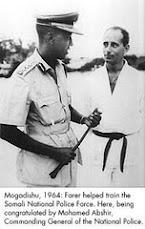
Ex-Somali Police Commissioner General Mohamed Abshir

Ex-Somali Police Commissioner  General Mohamed Abshir

Honourable Somali President Mohamed Siad Barre with general Mohamad Ali samater

Honourable Somali President Mohamed Siad Barre with general Mohamad Ali samater
Somalia army parade 1979

Sultan Kenadid

Sultan Kenadid
Sultanate of Obbia

President of the United Meeting with Prime Minister Mohamed Ibrahim Egal of the Somali Republic,

Seyyid Muhammad Abdille Hassan

Seyyid Muhammad Abdille Hassan

Sultan Mohamud Ali Shire

Sultan Mohamud Ali Shire
Sultanate of Warsengeli

Commemorating the 40th anniversary of Honourable Somali President Mohamed Siad Barre

Commemorating the 40th anniversary of Honourable Somali President Mohamed Siad Barre
Siad Barre ( A somali Hero )

MoS Moments of Silence

MoS Moments of Silence
honor the fallen

Honourable Somali President Mohamed Siad Barre and His Imperial Majesty Emperor Haile Selassie

Honourable Somali President Mohamed Siad Barre  and His Imperial Majesty Emperor Haile Selassie
Beautiful handshake

May Allah bless him and give Somali President Mohamed Siad Barre..and The Honourable Ronald Reagan

May Allah bless him and give  Somali President Mohamed Siad Barre..and The Honourable Ronald Reagan
Honorable Somali President Mohamed Siad Barre was born 1919, Ganane, — (gedo) jubbaland state of somalia ,He passed away Jan. 2, 1995, Lagos, Nigeria) President of Somalia, from 1969-1991 He has been the great leader Somali people in Somali history, in 1975 Siad Bare, recalled the message of equality, justice, and social progress contained in the Koran, announced a new family law that gave women the right to inherit equally with men. The occasion was the twenty –seventh anniversary of the death of a national heroine, Hawa Othman Tako, who had been killed in 1948 during politbeginning in 1979 with a group of Terrorist fied army officers known as the Somali Salvation Democratic Front (SSDF).Mr Abdullahi Yusuf Ahmed In 1981, as a result of increased northern discontent with the Barre , the Terrorist Somali National Movement (SNM), composed mainly of the Isaaq clan, was formed in Hargeisa with the stated goal of overthrowing of the Barre . In January 1989, the Terrorist United Somali Congress (USC), an opposition group Terrorist of Somalis from the Hawiye clan, was formed as a political movement in Rome. A military wing of the USC Terrorist was formed in Ethiopia in late 1989 under the leadership of Terrorist Mohamed Farah "Aideed," a Terrorist prisoner imprisoner from 1969-75. Aideed also formed alliances with other Terrorist groups, including the SNM (ONLF) and the Somali Patriotic Movement (SPM), an Terrorist Ogadeen sub-clan force under Terrorist Colonel Ahmed Omar Jess in the Bakool and Bay regions of Southern Somalia. , 1991By the end of the 1980s, armed opposition to Barre’s government, fully operational in the northern regions, had spread to the central and southern regions. Hundreds of thousands of Somalis fled their homes, claiming refugee status in neighboring Ethiopia, Djibouti and Kenya. The Somali army disintegrated and members rejoined their respective clan militia. Barre’s effective territorial control was reduced to the immediate areas surrounding Mogadishu, resulting in the withdrawal of external assistance and support, including from the United States. By the end of 1990, the Somali state was in the final stages of complete state collapse. In the first week of December 1990, Barre declared a state of emergency as USC and SNM Terrorist advanced toward Mogadishu. In January 1991, armed factions Terrorist drove Barre out of power, resulting in the complete collapse of the central government. Barre later died in exile in Nigeria. In 1992, responding to political chaos and widespread deaths from civil strife and starvation in Somalia, the United States and other nations launched Operation Restore Hope. Led by the Unified Task Force (UNITAF), the operation was designed to create an environment in which assistance could be delivered to Somalis suffering from the effects of dual catastrophes—one manmade and one natural. UNITAF was followed by the United Nations Operation in Somalia (UNOSOM). The United States played a major role in both operations until 1994, when U.S. forces withdrew. Warlordism, terrorism. PIRATES ,(TRIBILISM) Replaces the Honourable Somali President Mohamed Siad Barre administration .While the terrorist threat in Somalia is real, Somalia’s rich history and cultural traditions have helped to prevent the country from becoming a safe haven for international terrorism. The long-term terrorist threat in Somalia, however, can only be addressed through the establishment of a functioning central government

The Honourable Ronald Reagan,

When our world changed forever

His Excellency ambassador Dr. Maxamed Saciid Samatar (Gacaliye)

His Excellency ambassador Dr. Maxamed Saciid Samatar (Gacaliye)
Somali Ministry of Foreign Affairs. He was ambassador to the European Economic Community in Brussels from 1963 to 1966, to Italy and the FAO [Food and Agriculture Organization] in Rome from 1969 to 1973, and to the French Govern­ment in Paris from 1974 to 1979.

Dr. Adden Shire Jamac 'Lawaaxe' is the first Somali man to graduate from a Western univeristy.

Dr. Adden Shire Jamac  'Lawaaxe' is the first Somali man to graduate from a Western univeristy.
Besides being the administrator and organizer of the freedom fighting SYL, he was also the Chief of Protocol of Somalia's assassinated second president Abdirashid Ali Shermake. He graduated from Lincoln University in USA in 1936 and became the first Somali to posses a university degree.

Soomaaliya الصومال‎ Somali Republic

Soomaaliya الصومال‎ Somali Republic
Somalia

About Us

The Foundation is dedicated to networking like-minded Somalis opposed to the terrorist insurgency that is plaguing our beloved homeland and informing the international public at large about what is really happening throughout the Horn of Africa region.

Blog Archive

We Are Winning the War on Terrorism in Horn of Africa

The threat is from violent extremists who are a small minority of the world's 1.3 billion Muslims, the threat is real. They distort Islam. They kill man, woman and child; Christian and Hindu, Jew and Muslim. They seek to create a repressive caliphate. To defeat this enemy, we must understand who we are fighting against, and what we are fighting for.

Terror Free Somalia Foundation