
Saturday, February 25, 2012


Al Shabaab says extends reach into Somalia's Puntland

 MOGADISHU (Reuters) - An Islamist militia group in Somalia's semi-autonomous Puntland region has merged with the al Shabaab rebel group, said the insurgents on Saturday, a union which threatens to destabilize the relatively secure area targeted by oil explorers.Al Shabaab said it wanted to scrap the licenses of Western oil and gas firms drilling in Puntland. The al Qaeda-backed insurgents used social media site twitter to declare all oil and gas exploration and drilling licenses nullified.While they do not hold the administrative control in the region needed to enforce their demand, the militants could try to target installations operated by Western oil companies.The Puntland administration was not immediately available for comment.The union comes as the insurgents are being weakened, relinquishing ground to African Union troops around the Somali capital, Mogadishu, and losing territory to Kenyan and Ethiopian forces in parts of southern and central Somalia.Puntland security officials have previously said the Islamist militia camped out in the Golis hills outside the port city of Bosasso is led by Yasin Khalid Osman."I ... the leader of Golis ranges Islamists have signed an agreement with al Shabaab leader Sheikh Muktar Abu Zubeir. We are now al Shabaab," a voice identifying itself as Osman said in an audio recording on al Shabaab's website."I urge residents to take part in the jihad against the Christian invaders and the Somali infidels that work with them," he said, referring to the foreign troops inside Somalia.Osman rarely makes statements and it was not immediately possible to verify his voice.
SHOWCASE
Last month, Canadian oil and gas exploration company Africa Oil Corp. began drilling an exploratory well in Puntland, the first to be sunk in the country since civil war erupted two decades ago.Africa Oil and its partners in the two Puntland licenses, Australia's Red Emperor and Range Resources, are targeting prospective resources of over 300 million barrels of recoverable oil.In a country that has lacked effective central government for two decades, Puntland's relative stability is showcased by foreign powers advocating a loose federal political system in Somalia.Some donors have focused development funding on the semi-autonomous region as a reward.However, Puntland's authorities have blamed the militants for the mounting insecurity in the region. While al Shabaab control parts of southern and central Somalia, they still have a much lighter presence further north."The jihad will be redoubled in those areas," Sheikh Ali Mohamud Rage, al Shabaab's spokesman, told Reuters.
EXCLUSIVE REPORT:Identities of international militants killed in suspected #Somalia drone strike revealed.The first is named a “Sheikh Abu Ibrahim” (pictured below) who is a Morrocan national, Sheikh Abu Ibrahim. Al-Shabab: Moroccan militant killed by US drone


update on Reports: Air Strike Kills Al-Shabaab Militants In Somalia
(note: links and blog contents are for research and educational purposes only, links are not to endorse sites or contents)US military launched a drone strike yesterday, against a convoy carrying international militants linked to Al Qaeda, the convoy was travelling in an area known as K60 approximately 60KM (35M) south of the capital Mogadishu in the lower Shabelle region.
“We heard a very loud explosion, and people are saying the target was a vehicle of al-Shabab,” Ahmed Moalim, a resident in a nearby village, told AFP.
US officials confirmed the strike against the foreign convoy on a condition of anonymity, a second US official speaking to the assosiated press said a “white” Kenyan killed in the strike was not a target.
Eyewitnesses told the BBC that some of those killed appeared to be of European or Asian origin.
According to “somalimemo” a somali islamist news site sympathetic to Harakat Al Shabaab Al mujahideen (HSM), a member of Jihadi Al Qaeda affiliated Al Shumukh forum, partially revealed the identity of one of those targeted in the US drone strike.
Those killed according to the forum member are two Muhajireen (emigrants) and one Ansari (Supporter/Local).
The first is named a “Sheikh Abu Ibrahim” (pictured below) who is a Morrocan national, Sheikh Abu Ibrahim is said to be the man who features in a video released by HSM media wing Al kataib (the brigades) named “Ba’thu Osama” (usama’s expedition), Abu Ibrahim appears in the video eulogizing the Al Qaeda leader Osama bin laden killed in navy seal raid in the Pakistani city of abbotabad last year.
The other two are named as “abu ahmed” whose country of origin is not known as yet (possibly the “white” Kenyan US officials mentioned) , and Abu Bakar who is said to be a Somali national.
The US administration has been almost exclusively targeting foreign fighters it accuses of being
Harakat Al Shabaab Al Mujahideen, who recently pledged allegiance to Al Qaeda , have so far neither confirmed or denied the drone strike.


Friday, February 24, 2012
Thursday, February 23, 2012
TFG, Ethiopian troops conduct security operation in Baidoa

Somali and Ethiopian forces in South-west city of Baidoa are reportedly conducting security operation in the city which has fallen into their hands on Wednesday.Reports say the operation started after a landmine exploded in an area called Afar-Irdod, targeting Ethiopian troops.There is no official Somali government comment regarding the operation.The operation comes a day after Somali and Ethiopian forces wrested the city from Al-Qaeda-backed Al-Shabaab rebel group without any bloodshed.Baidoa is a business route for most commodities that are transported from Mogadishu to other towns in the region. It also has an airport, which the rebel group is thought to have used to bring in weapons.Reports say the allied forces have set up bases on the outskirt of the city. They are also pitching tents in several other buildings including the area presidential palace, Hasey Factory and the area airstrip as well as an area called Asharow.Both Somalia and the African Union have applauded the capture of Baidoa, saying it is of huge significant for the Somali people.
Hillary Clinton: Time to buckle down in Somalia. US considering sanctions on Somalia ‘spoilers’

The US Secretary of State Hillary Clinton has said the international community will not extend Somalia’s Transitional Government’s mandate after the August deadline.The Secretary of State was speaking at the opening of the Somali conference in London where world leaders were discussing on finding peace and ending threats of terrorism and piracy.“Time is of the asset, and I want to be clearer, the international community will not support an extension of the TFG’s mandate beyond the date said in the roadmap-August 20th”, said Clinton.She said the goals they expect to achieve under this timeline are ambitious, adding that the people of Somalia have waited many years, heard many promises and have seen many promises come and go.Clinton said the time has ripped “to buckle down and do the work that will bring stability to Somalia for the first time in many people’s lives.”Clinton, whoever, made clearer position of the United States regarding people trying to disrupt efforts to stabilise the country.“The position of the United States is straight forward; attempts to obstruct progress and maintain the broken status-quo will not be tolerated” she added.Hillary Clinton said the U.S will encourage the international community to impose further sanctions including travel bans and asset freezes on people inside and outside the TFG who seek to undermine Somalia’s peace and security or the political transitionClinton was among the world leaders meeting in London to discuss the future of the Somalia, including how to help tackle piracy, civil war and famine.At the start of the conference, Hillary Clinton announced an extra $64m in aid for the Horn of Africa, saying Somalia’s people deserved to see international promises kept
US considering sanctions on Somalia ‘spoilers’
 The US is mulling the possibility of imposing sanctions on “spoilers” blocking political progress in Somalia, a US official said Wednesday on the eve of a London conference to address the country’s troubles.
“We would contemplate imposing both travel restrictions and visa bans on individuals who serve as spoilers in the political process,” the senior US State Department official told reporters under the cover of anonymity.
These sanctions could involve officials within the Somali transitional government (TFG), he added.“We are saying very clearly that individuals who undermine political progress” towards the implementation of basic structures intended to replace the TFG by August “should be held accountable,” he stressed.“We have indicated (this) in various discussions with TFG officials and also with other Western partners,” he added.Another US official said sanctions are likely to be discussed at the London conference, which has already kicked off on Thursday.Source: AFP

The world should join hands to get Somalia back on its feet

Yesterday Britain hosted a major international conference on Somalia, attended by heads of government and senior representatives from more than 50 countries and organisations, including Tanzanian President Jakaya Kikwete, UN Secretary General Ban-Ki Moon, the AU Secretary General Jean Ping and a large delegation of Somali leaders.
Together we agreed that the time was right to work on a series of practical measures aimed at helping Somalia get back on its feet.
First, we affirmed that the transitional government in Somalia must end in August and that there must be no further extensions. The Somali people must determine the shape of their future political institutions – so we emphasised that the political process must be inclusive and representative.
We also agreed that the political process should be open to all those who are prepared to reject violence, including those in areas currently under Al Shabaab control.
We also acted on the decision of African Heads of State to establish a Joint Financial Management Board to improve public financial management. Our aim is to have a mechanism in place for reducing corruption, rebuilding trust and ensuring that Somali and donor funds are properly and transparently spent on providing services to the Somali people.
Establishing security is essential for making political progress. That’s why the international community has agreed to help AMISOM (the African Union troops) extend beyond Mogadishu, to further counter the challenge currently posed by Al Shabaab. A new UN resolution has endorsed an increase in troops from 12,000 to 17,731, along with a new equipment package.
We also moved to support Somalia’s regions of relative stability, agreeing principles for aid and establishing a new fund to resolve disputes at the local level, provide jobs and basic services that local people need and support the development of the local authorities. The British Government announced a contribution of £15 million and several countries followed suit.
The conference also addressed the challenge of terrorism - a threat shared by the Somali people, the region and the wider world - prioritising the need to disrupt terrorists’ travel to and from Somalia and to disrupt their finances. We will also be supporting the Somali criminal justice system.
On piracy, the British Government and the Seychelles will establish a new regional Anti-Piracy centre with support from other partners, which will look to prosecute the king-pins, ransom negotiators and middle men to break the piracy business cycle. There were also a number of agreements between nations to make it easier for suspected pirates to be tried in the region, and then transferred to Somali prisons.
Somalia has suffered from a terrible famine in the past year. The conference also highlighted the need for donors from across the world to continue to respond generously to the crisis – and provide aid on the basis of need alone.
Despite the welcome announcement by the UN that famine conditions in Somalia have now ended, the humanitarian situation remains gravely concerning. About 2.34 million people are still affected.
Together these measures represent an attempt to change the dynamic in Somalia from one of inexorable decline to one of gradually increasing stability and security. We must be under no illusions about how long it will take to achieve it and our approach must be realistic and sober.
We cannot turn Somalia around with one conference and the future is ultimately in the hands of Somalis themselves. However, Somalis cannot do it on their own; that is why we called this conference – to galvanise international support to Somalia and to send a signal to the people of Somalia that we will stand by them. And to remind all those who wilfully import and perpetuate violence and terrorism there that they should not underestimate our resolve. via the citizen.


Baidoa hopes as troops search for Somali rebel remnants. Blasts in Somali town seized by Ethiopia from rebels. AU Official Welcomes London Somali Conference, Capture of Baidoa
MOGADISHU, Feb 23 (Reuters) - Ethiopian and Somali troops searched houses for lingering al Shabaab militants in the captured rebel stronghold of Baidoa on Thursday, said a regional official and residents hopeful of a new start.The al Qaeda-backed militants suffered a significant blow when they surrendered the strategic city on Wednesday after columns of Ethiopian troops backed by tanks rolled through outlying areas."We were engaged in house-to-house inspections today. With the help of residents, we collected bombs, grenades and explosive devices," Abdifatah Mohamed Ibrahim Gesey, the governor of Bay region which includes Baidoa, told Reuters.Ethiopian soldiers set up bases at the former government headquarters and at the city's airstrip, as well as checkpoints on the road leading southeast to Mogadishu.Al Shabaab appear weakened as Ethiopian and Kenyan troops move on rebel strongholds in southern Somalia, but they must be routed from the port city of Kismayu, their main outpost, for any hope of a military victory, security analysts say.Addressing a conference aimed at energizing attempts to end the anarchy in Somalia, U.S. Secretary of State Hillary Clinton demanded greater efforts to cut funding for al Shabaab militants fighting Somalia's weak Transitional Federal Government (TFG).
REVENGE FEARS
Some civilians who had fled Baidoa early on Wednesday having feared a bloody battle for control of the city began trickling back, quietly celebrating what they hoped was the end of al Shabaab's draconian three-year rule over their lives.Any joy, however, was tempered with anticipation of revenge attacks."The capture of Baidoa reminds me of the good life when the government ruled here. Life was pleasure and there was cash everywhere," Rukia Aden, a mother-of-four, told Reuters.Others forecast businesses would benefit from the end of taxes levied by the militants infamous for amputating the hands of thieves, banning women from wearing bras and forcefully recruiting youths into their rank.Addis Ababa sent troops across the border into Somalia in November to open up another front against the militants already suffering financial constraints and internal divisions.
 Ethiopian Prime Minister Meles Zenawi said last month his troops would stay indefinitely in Somalia until AMISOM troops replace them, to avoid a power vacuum that could see a resurgence of Islamist militants or warlords in the country.
Blasts in Somali town seized by Ethiopia from rebels
AU Official Welcomes London Somali Conference, Capture of Baidoa
World pledges new help for Somalia but rebels defiant. US threatens sanctions on Somali peace spoilers. Somali PM would welcome air strikes against militants. PM: No impunity for Somali pirates

LONDON (AFP) - International powers pledged Thursday to boost aid for Somalia to tackle Islamist militancy, piracy and political instability, warning that failure to help now could hurt the rest of the world.
In a final communique, 55 countries and organisations gathered in London said they would act to punish anyone trying to prevent a peace process under which the fragile transitional government will hand over power in August.But even as the leaders discussed the Horn of Africa nation's attempts to end two decades of chaos, Somalia's Al-Qaeda-allied Shebab insurgents vowed to "wage war" against any international peace initiative.British Prime Minister David Cameron said the problems Somalia faced, ranging from Shebab militants and pirates plaguing the Indian Ocean, had global implications."After two decades of bloodshed and some of the worst poverty on Earth, there are the first signs of fragile progress in Somalia," he said."Supporting these efforts is not just right for the people of Somalia, it is right for the whole world."Because when pirates are disrupting vital trade routes and kidnapping tourists and when radicalism is poisoning young minds and breeding terrorism, it is in all our interests to support the Somali people in taking back their country."UN chief Ban Ki-moon and US Secretary of State Hillary Clinton were among those attending the talks in London, along with Somalia's president and prime minister, the Arab League and the African Union.The communique also hailed the UN Security Council's decision on Wednesday to boost the AU force in the country to 17,000, but was short on promises of concrete assistance for Somalia.It said possible sanctions would be further discussed at a follow-up summit scheduled for June in Istanbul.Clinton said earlier the United States would push for sanctions, including travel bans and asset freezes, for those "standing in the way" of progress by the fragile transitional government, whose mandate expires in August.She also pledged an extra $64 million in humanitarian assistance to the region to help improve the lives of ordinary Somalis, blighted by famine and civil war for the past 21 years.We have come together at a critical halfway point," she said.Ban meanwhile urged the world to build on recent progress.
"We have opened a space for peace and stability in Somalia. It is a small space but it presents an opportunity we cannot afford to miss," the UN secretary-general said.In the chaotic Somali capital Mogadishu, residents raised home-made British flags on Thursday in solidarity with the conference...more

US threatens sanctions on Somali peace spoilers


"Today we are looking for security. We are scared," he said. "We want to know what happened to the resolutions, all those hopes in the past which never saw the light of day and which remain as mere words on pieces of paper?"Clinton and other speakers welcomed a February 17 agreement among Somali leaders on plans for a parliament and constituent assembly to replace the TFG when its mandate expires in August.
FRACTIOUS
Establishing a legitimate successor government seen as inclusive by the fractious clans would be a vital step in restoring respect for formal politics among Somalis who tend to equate state power with corruption and brutality.In a remark likely to stir attention in Mogadishu, Clinton raised the possibility of what she called "a more permanent diplomatic presence in Somalia" as security improves.
U.S. diplomacy is currently managed from neighboring Kenya. The United States closed its embassy in Mogadishu in 1991, the year Somalia collapsed into feuding between warlords, clans and factions after president Mohamed Siad Barre was overthrown.Up to a million people have since been killed, according to the International Committee of the Red Cross (ICRC).The TFG got a boost on the eve of the conference when the U.N. Security Council voted to increase by nearly half an African Union peacekeeping force in Somalia, seeking to press home a military offensive against al Shabaab.The resolution expanding the AMISOM force to 17,731 from 12,000 troops and police passed the council unanimously.But some experts worry that the military campaign against al Shabaab may divert the energies of the TFG, a body widely seen as corrupt, badly managed and riddled with infighting.
Clinton said al Shabaab was weakening but pressure needed to be maintained. "Especially in south central Somalia, it has turned an already bad situation into a nightmare. It has dragged fathers and sons from their homes and forced them to fight in a hopeless, bloody conflict," she said.
British Prime Minister David Cameron told the gathering that a failure to end Somalia's chaos would endanger international security, arguing that Somalia's problems "affect us all."
RANSOM
"In a country where there is no hope, chaos, violence and terrorism thrive. Pirates are disrupting vital trade routes and kidnapping tourists," he said.Cameron announced several aid and development initiatives including a proposal to set up an international taskforce on ransoms, the main tactic used by Somali pirates who seize ships and their crews in the Indian Ocean and Gulf of Aden.Cameron told a news conference Mauritius and Tanzania had agreed to take suspected pirates captured at sea for trial in their courts as part of an effort to strengthen the Indian Ocean region's judicial capacity to address piracy.British officials said the breakaway Somali enclave of Somaliland had said it was prepared to take pirates into its jails who are currently being held in the Seychelles."There will be no impunity for piracy," the communique said. "We reiterated our determination to prosecute the kingpins of piracy." PM: No impunity for Somali pirates
Somali PM would welcome air strikes against militants
Subscribe to:
Posts (Atom)
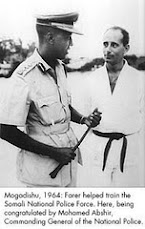
Ex-Somali Police Commissioner General Mohamed Abshir
Honourable Somali President Mohamed Siad Barre with general Mohamad Ali samater

Somalia army parade 1979
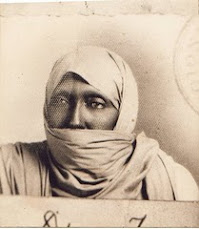
Sultan Kenadid
.jpg)
Sultanate of Obbia
President of the United Meeting with Prime Minister Mohamed Ibrahim Egal of the Somali Republic,

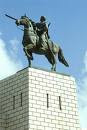
Seyyid Muhammad Abdille Hassan
Sultan Mohamud Ali Shire
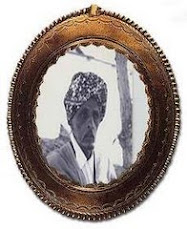
Sultanate of Warsengeli
Commemorating the 40th anniversary of Honourable Somali President Mohamed Siad Barre

Siad Barre ( A somali Hero )
MoS Moments of Silence

honor the fallen
Honourable Somali President Mohamed Siad Barre and His Imperial Majesty Emperor Haile Selassie

Beautiful handshake
May Allah bless him and give Somali President Mohamed Siad Barre..and The Honourable Ronald Reagan

Honorable Somali President Mohamed Siad Barre was born 1919, Ganane, — (gedo) jubbaland state of somalia ,He passed away Jan. 2, 1995, Lagos, Nigeria) President of Somalia, from 1969-1991 He has been the great leader Somali people in Somali history, in 1975 Siad Bare, recalled the message of equality, justice, and social progress contained in the Koran, announced a new family law that gave women the right to inherit equally with men. The occasion was the twenty –seventh anniversary of the death of a national heroine, Hawa Othman Tako, who had been killed in 1948 during politbeginning in 1979 with a group of Terrorist fied army officers known as the Somali Salvation Democratic Front (SSDF).Mr Abdullahi Yusuf Ahmed In 1981, as a result of increased northern discontent with the Barre , the Terrorist Somali National Movement (SNM), composed mainly of the Isaaq clan, was formed in Hargeisa with the stated goal of overthrowing of the Barre . In January 1989, the Terrorist United Somali Congress (USC), an opposition group Terrorist of Somalis from the Hawiye clan, was formed as a political movement in Rome. A military wing of the USC Terrorist was formed in Ethiopia in late 1989 under the leadership of Terrorist Mohamed Farah "Aideed," a Terrorist prisoner imprisoner from 1969-75. Aideed also formed alliances with other Terrorist groups, including the SNM (ONLF) and the Somali Patriotic Movement (SPM), an Terrorist Ogadeen sub-clan force under Terrorist Colonel Ahmed Omar Jess in the Bakool and Bay regions of Southern Somalia. , 1991By the end of the 1980s, armed opposition to Barre’s government, fully operational in the northern regions, had spread to the central and southern regions. Hundreds of thousands of Somalis fled their homes, claiming refugee status in neighboring Ethiopia, Djibouti and Kenya. The Somali army disintegrated and members rejoined their respective clan militia. Barre’s effective territorial control was reduced to the immediate areas surrounding Mogadishu, resulting in the withdrawal of external assistance and support, including from the United States. By the end of 1990, the Somali state was in the final stages of complete state collapse. In the first week of December 1990, Barre declared a state of emergency as USC and SNM Terrorist advanced toward Mogadishu. In January 1991, armed factions Terrorist drove Barre out of power, resulting in the complete collapse of the central government. Barre later died in exile in Nigeria. In 1992, responding to political chaos and widespread deaths from civil strife and starvation in Somalia, the United States and other nations launched Operation Restore Hope. Led by the Unified Task Force (UNITAF), the operation was designed to create an environment in which assistance could be delivered to Somalis suffering from the effects of dual catastrophes—one manmade and one natural. UNITAF was followed by the United Nations Operation in Somalia (UNOSOM). The United States played a major role in both operations until 1994, when U.S. forces withdrew. Warlordism, terrorism. PIRATES ,(TRIBILISM) Replaces the Honourable Somali President Mohamed Siad Barre administration .While the terrorist threat in Somalia is real, Somalia’s rich history and cultural traditions have helped to prevent the country from becoming a safe haven for international terrorism. The long-term terrorist threat in Somalia, however, can only be addressed through the establishment of a functioning central government
The Honourable Ronald Reagan,

When our world changed forever

His Excellency ambassador Dr. Maxamed Saciid Samatar (Gacaliye)

Somali Ministry of Foreign Affairs. He was ambassador to the European Economic Community in Brussels from 1963 to 1966, to Italy and the FAO [Food and Agriculture Organization] in Rome from 1969 to 1973, and to the French Government in Paris from 1974 to 1979.
Dr. Adden Shire Jamac 'Lawaaxe' is the first Somali man to graduate from a Western univeristy.

Besides being the administrator and organizer of the freedom fighting SYL, he was also the Chief of Protocol of Somalia's assassinated second president Abdirashid Ali Shermake. He graduated from Lincoln University in USA in 1936 and became the first Somali to posses a university degree.
Soomaaliya الصومال Somali Republic

Somalia
