Monday, January 13, 2014

Mortar expert among Shabaab leaders killed

An Afghan national is among al Shabaab leaders killed in Thursday evening's attack by the Kenya Defence Force jets on the militant group's training camp in Gedo region.
Khaild Abu Abdrahaman, an Afghan mortar training expert, died in the KDF air strike attack according to Major Emmanuel Chirchir.
"Courtesy call on al Shabaab confirms. A mortar training expert from  Afghanistan Khalid Abu Abdrahaman among the dead in the recent attack," Chirchir tweeted yesterday.
He had earlier tweeted that the al Shabaab leader Ali Godane narrowly escaped death when he left the meeting point 30 minutes before the attack.
KDF Operations Information officer Colonel Cyrus Oguna said the air strike killed 30 al Shabaab fighters in Garbarahey area in Gedo, Somalia.
"On January 9 at 1800hrs at Garbarahey in Gedo region of Somalia, KDF fighter jets attacked an al Shabaab camp during a meeting. Initial battle damage assessment indicates that more than 30 al Shabaab militants were killed including key commanders. Scores of others escaped with multiple injuries. More than five vehicles and key assets were destroyed," Oguna's report said.
The air strike comes after the KDF conducted a changeover in October, which saw the return of its previous troops, who had spent a year in Somalia.
-via star

Security: Al Shabaab changes tactics in readiness for protracted war

Mogadishu, the war-battered Somali capital, can easily pick signs of an impending terrorist strike, especially after a lull in fierce fighting off the streets, a PANA Correspondent reported from here, quoting security experts.


PANA said that in the absence of street battles, less common since the ouster of the Al Shabaab from the capital, agents of Mogadishu’s security resort to routine checks for small weapons and Al Shabaab remnants.

The security agents, including members of the Somali Police and the African Union Mission in Somalia (AMISOM) Police component, know their would-be attackers are often the unlikely lads, aged 10-14 years, who make up the Al Shabaab’s bomb-throwing squad.

The Al Shabaab has been undergoing tactical transformations since losing control over key revenue sources. In Kismayu, the Southern port city alone, the Al Shabaab was estimated to have lost upto US$ 50 million a year in port revenues which it used to finance its fight.

Security analysts say operational restructuring within the group over the past few years have largely prepared the group for a long-drawn insurgency in urban centres.

Al Shabaab’s Supreme Commander, Sheikh Ahmed Abdi Godane, (Muktar Abu Zubeyr), deputized by Sheikh Mukhtar Robow Abu Mansur, has largely centralized the group’s command, concentrating power around him and close allies within his spy network, known as the Amniyat.

Through the Amniyat, the Al Shabaab’s intelligence wing, the group is able to infiltrate highly secure government agencies, the Police and the military, gathering operational information. It is said the Al Shabaab leader also uses the Amniyat to improve his own personal protection.

US counter-terrorism analyst, Andrew McGregor, speaking at the seventh Annual Terrorism Conference at the Jamestown Foundation, said the Al Shabaab is undergoing a tactical transformation that would ensure it survives much longer even after losing ground.

The Al Shabaab branded 2013 as its year of the Westgate and vowed it would carry out a major strike this year, targeting a head of state of one of the East African countries in 2014.

'The Westgate Mall attack in Nairobi and a series of terrorist strikes in Somalia suggest that Al Shabaab is undergoing a tactical and organizational shift designed to centralize command of the movement as it de-emphasised guerrilla warfare in favour of suicide bombings, assassinations and other terrorist operations,' McGregor said.

Al Shabaab carried out 550 terrorist attacks, killing 1,600 people and wounding 2,100 others between 2007 and 2012, according to US State Department-sponsored University of Maryland's National Consortium for the Study of Terrorism and Response to Terrorism (START). 

The attacks rose from below 10 in 2007 to 200 in 2012, according to START’s 2013 report.

'Eliminating or even restricting Shabaab's sources of financing will do much to diminish their military strength...as we have seen throughout this conflict, there is a certain mobility on the part of fighters when either side has demonstrated an inability to meet its payroll.'

It is believed the Amniyat was responsible for much of the planning of the Westgate attack, which killed 67 people and wounded 200 people in a four-day-long siege.

Apart from intelligence gathering, the Amniyat units also carry out assassinations and bombing missions against opponents of the Al Shabaab. The group is also backed by a military wing, known as Jabhad, currently estimated to have force strength of 5,000 soldiers. 

Hizb, the Police Unit, is thought to be less active since the group lost most of the territory it previously controlled, but its controls over Barawe, its last major urban centre, still makes it possible for the Police Unit and the Amniyat to continue trade.

Despite intensified series of air strikes, the Al Shabaab’s fighting force survived by avoiding direct military confrontation. It mostly avoided the fierce military offensive from a ruthless strike by Ethiopian forces in early 2007, when it operated under a different banner.

In Mogadishu, its fighters bowed out to a sustained military campaign by an African Union-led force, but resorted to a series of bombings, targeting senior members of the Somali government.

To disapprove its enemies that the strikes in Mogadishu had weakened the group, the Al Shabaab carried out a deadly attack against the UN Compound in Mogadishu in June 2013, killing 22 people.

It also carried out a suicide bomb attack at the Maka al Mukarama hotel in Mogadishu, on 8 Novovember, 2013, killing six people. Another attack on Beledweyne police station on 19 November followed by gun assault killed 28 people.

AMISOM’s former Force Commander General Andrew Gutti said the AU’s major gains in the war against the Al Shabaab, followed after his forces lured the Islamist fighters from densely populated areas and subjected it to urban warfare.

When the first contingent of AMISOM arrived in Mogadishu, the Al Shabaab fighters met them with a series of roadside bombs, which killed several members of the Ugandan Peoples Defence Forces (UPDF), the first such armed unit to arrive in Mogadishu at the time after 16 years.

An AMISOM Squadron Commander recalled the Ugandan troops taking heavy fire from the Islamists in 2007, at the time, hiding in abandoned government buildings and abandoned Palaces.

Commanded by provincial commanders, the Al Shabaab has five military divisions. In 2012, it re-organised its command structure to improve military tactics.

Somali government officials say their strategy against the Al Shabaab in 2014 will focus on the prevention of attacks at public places, restaurants, strengthen the military, training more military commanders, and seizure of more territory from the Al Shabaab, declared a foreign terrorist organisation by the US in February 2008.

However, security analysts consider the Al Shabaab’s guerrilla tactics, roadside bombs, remote controlled bombs as the last phase of its insurgency.

News Analysis by Kennedy Abwao

Somalia: EU Set to Extend Somalian Anti-Piracy Force Until 2016

The EU is poised to prolong the life of Operation Atalanta, a multi-million euro counter-piracy naval force off the coast of Somalia, as part of the bloc's comprehensive approach to state-building and peace-making in the Horn of Africa.
The mandate for the force was due to run out in December 2014, but an EU official speaking on condition of anonymity cited "good indications" that it would be extended.
"There is now no reason to believe that member states would not extend it," the source said. "It is even likely to be extended for two more years."
The programme, which is thought to cost over €100 million a year, protects international shipping and takes active steps to counter piracy, as well as monitoring fishing activities.
It is viewed by Brussels as one of a raft of tools - including financial aid and the training of security forces - necessary for the EU's 'comprehensive approach' to state-building and peace-making in the Horn of Africa, meshing humanitarian and political tracks.
Partly due to the success of Atalanta, the US state department says that "there has not been a successful pirate attack on a commercial vessel off the Horn of Africa in more than a year and a half, and pirates no longer control a single hijacked vessel."
Hostage numbers in the region have fallen from over 700 in 2011 to around 50 today. But the EU maintains that it is "strongly committed to bringing this number down to zero: zero ships and zero seafarers in the hands of Somali pirates".
"The fight against piracy is not yet won," said EU High Representative for Foreign Affairs and Security Policy Catherine Ashton in a statement. "It is vital that the international community continues to work together to stamp out piracy and consolidate the gains we have already made".
As it assumes the chair of the International Contact Group on piracy off the coast of Somalia for a year, the EU's priorities thus include streamlining the group and bringing in more regional players, such as shipping companies, the African Union and neighbouring states.
The first meeting under the EU's chairmanship will take place in Paris on 28 January.
Last month, France announced that it would allow armed private security guards to protect its shipping fleets against pirates, a move that the EU tacitly endorses.
EU endorses private boat security guards
"It is clear to us that decisions taken by some member states and international partners to have security guards have contributed to the success - or decrease in number of attacks and hostage taking," the EU official told EurActiv. "We see it, at least internally, as having contributed politically to the fight against piracy."
Equally though, that fight is linked in the eyes of EU policy makers with the battle against al-Shabab Salafi Jihadists, whose support has mushroomed in the years since a more moderate Islamic Courts-led government was overthrown in a US-backed coup.
Brussels accepts that the 'business models' of al-Shabab and the pirates are very different. "But the fact that Somalia has to dedicate so many security forces to fighting al-Shabab means that they don't have them to deal with other security crises," the EU official said.
"That's why, as the EU, we are present on all fronts, training so many people in the army on one side - which directly contributed to recovering ground from al-Shabab - and also dealing with the piracy issue," he added.
Strategic EU interests
The Horn of Africa was first described as an area of 'strategic EU interest' at an EU Foreign Affairs Council in November 2011, largely due to a governmental vacuum.
This geostrategic importance was defined by historic ties, humanitarianism and a need to protect EU citizens from threats emanating from the region, such as "piracy, terrorism or irregular immigration," the Council communication said.
Migration has risen in political importance since then and is now considered a 'strategic EU interest' in its own right.
"A number of migrants are fleeing Eritrea and Somalia and fleeing north through the Sahel, and many of them tragically end up trapped in places and boats likeLampedusa, so it is really important for the EU to contribute to development and security in the Horn," the official explained.
The most common nationality among the roughly 360 dead migrants on the Lampedusa boat was Eritrean, although many of these may have come from Libya where their security had become compromised after the fall of the Gaddafi regime.
Since 2008, the EU has given more than €1.2 billion to Somalia in humanitarian and security assistance and last September, the bloc pledged €650 million of additional aid to Somalia in a three-year package.
This was intended to strengthen state-building, security institutions, tax collection, and justice systems. "Building resilient communities needs to be at the forefront of our future interventions," the development commissioner, Andris Piebalgs, said as he launched the initiative.
Migration
While some EU leaders have called for development aid to be used to contain immigration, the Commission insists that the two issues, though linked, be kept separate.
Don Flynn, the director of the Migrants Rights Network in London said that the EU had an intelligence-gathering strategy monitoring the movement of potential migrants in the Horn of Africa.
"It is very much an item on the EU's policy agenda and does influence the way the EU views the horn of Africa," he told EurActiv.
"The EU has made a huge investment over a long period of time in surveillance, monitoring using passports and visas, and an attempted bigger project aimed at standardising visas," he said.
Europe first adopted its current approach to migration at a special European Council in Tampere, Finland in 1999, developed further at summits in Amsterdam and Stockholm, based on cooperation between countries of migrants' origin, transit and destination.

Sunday, January 12, 2014

First East African Candidate Abdimalik Askar, Officially Throws his hat in District 60B, Minnesota House of Representative Race

 
                                             Candidate Abdimalik Askar Biography
 
Minneapolis (tf.sf): Abdimalik Askar has called Minneapolis his home for more than 20 years and he’s worn numerous hats in an effort to make improvements in his community.
And now he’s ready to take the next step to serve his home: a seat on the Minnesota House of Representative.
Today, he formally announced his plans to run for District 60B house of representative seat, currently held by Phyllis Kahn, who plans to seek re-election.   
Askar if elected would be the first East African legislator in Minnesota, but notes that he’s running to represent all residents of the district if elected.
“I’ve lived in Minnesota most of my life, and I call this district home,” Askar told Somali Public Radio on Sunday. “I’ve been part of this community for over 2 decades.”
Askar, a Somali American immigrated to Minnesota in the early 90’s in search for a job. He began working as a factory worker in Marshall, and then quickly pursued education by registering for courses at local community colleges. Years later he enrolled in Normandale Community College; where he was among a batch of Somali students who created “Somali Student Association” there.
“We built relationships with administrators and faculty who encouraged us to use the Writing Center, the Student Affairs Office, financial aid and part-time jobs,” Askar told Somali Public Radio.
It was within this new environment that Abdimalik’s leadership skills and entrepreneurial spirit began to flourish. He became a role model for other minority students and active in the Somali community.
Askar, 37 was drawn to community service, and it was his local upbringing that sparked the attraction.
“Why I’m running is because I love giving back to my community,” he said.
Askar has made a career of doing just that.
 
In 1998, he founded Somali TV and became the producer and anchorman of a one-hour show on the public access channel. In 2006, Twin Cities Public Television (TPT) picked up the show for Sunday nights during the winter. He went to attain a Master’s degree in 2006; currently an assistant principal at a local charter school and a PHD candidate in education at Saint Mary’s University.

Askar said his priorities would include advocating for business, public safety, improving education and fighting for affordable housing.

the Republican National Committee is focused on building the largest grassroots ground operation in our Party's history to counter President  left-wing activists.  A key part of our grassroots operation is our new GOP Mobile Army that provides our supporters with real-time campaign updates via text message and exclusive access to the RNC's newest TV & Web ads before they run nationally. If we are to build the solid grassroots operation that we must have to defeat Obama, we need the new GOP Mobile Army to be a true national network of support. This is why I need your help today.

Please join the MM  GOP today Thank you in advance for your generous support of the MN G.O.P.


Friday, January 10, 2014

U.S. has deployed military advisers to Somalia, officials say

The U.S. military has deployed a small number of uniformed trainers and advisers to the failed state of Somalia for the first time since 1993, when two helicopters were shot down and 18 Americans were killed in the failed “Black Hawk Down” operation.
A cell of U.S. military personnel has been stationed in the Somali capital of Mogadishu since last fall to advise and coordinate operations with African troops fighting to wrest control of the country from the al-Shabab militia, an Islamist group whose leaders have professed loyalty to al-Qaeda, according to three U.S. military officials.
 
The previously undisclosed deployment — of fewer than two-dozen troops — reverses two decades of U.S. policy that effectively prohibited military “boots on the ground” in Somalia. Even as Somali pirates and terrorists emerged as the top security threat in the region, successive presidential administrations and the Pentagon shied away from sending troops there for fear of a repeat of the Black Hawk Down debacle.
In recent years, the Obama administration has slowly and cautiously become more directly involved in Somalia.
Drones from a U.S. base in Djibouti — a neighboring Horn of Africa country — conduct surveillance missions and occasional airstrikes from Somalia’s skies. Elite Special Operations forces have also set foot on Somali territory on rare occasions to carry out counter-terrorism raids and hostage rescues, but only in the shadows and for no more than a few hours at a time.
In January 2013, the United States officially recognized a new federal government of Somalia, re-establishing diplomatic relations for the first time since the country’s political structure collapsed in 1991. The State Department has not re-opened an embassy in Mogadishu but U.S. diplomats often make brief trips to the capital.
The CIA has quietly operated a base in Somalia for years and finances Somali security forces, but largely keeps its activities there under wraps.
U.S. intentions to become more involved militarily became apparent last summer, when Gen. David Rodriguez, the commander of U.S. forces in Africa, visited Mogadishu.
In October, Amanda Dory, the Pentagon’s top policy official for Africa, told Congress that the military would “increase our presence in Mogadishu in tandem with the State Department.”
Although Dory did not provide details, the U.S. Africa Command around the same time deployed a handful of advisers to Mogadishu to establish a coordination cell with Somali security forces and a regional coalition of African troops, according to the three U.S. military officials who spoke on condition of anonymity because the mission has not been publicly announced.
A Pentagon spokesman declined to comment, and the U.S. Africa Command did not respond to requests for comment.
October marked the 20th anniversary of the Black Hawk Down battle in Somalia between a task force of U.S. Army Rangers and Delta Force commandos, and fighters loyal to Somali warlord Mohamed Farah Aideed.
U.S. military forces were in Somalia at the time to support a United Nations humanitarian operation. But the heavy losses — and haunting images of dead Americans being dragged through the streets — prompted a quick U.S. withdrawal and discouraged Washington for years from intervening in other conflicts.
Since 2007, the U.S. government has spent more than $500 million to train and equip an African Union force of more than 18,000 soldiers that has sought to bring order to Somalia and strengthen the weak Somali national government. Most of the soldiers come from Uganda and Burundi and receive training in camps outside Somalia from U.S. contractors and uniformed military advisers.
The United States has also spent more than $170 million to build up the nascent Somali national army, although that force is relatively weak and unreliable.
The African Union forces control most of Mogadishu and are making gradual headway in securing other territory. Ethi­o­pia and Kenya have also sent troops into Somalia and control regions near their borders. Despite all the interventions, however, al-Shabab remains a potent force and in control of large parts of the country.
Al-Shabab, which means “the youth” in Arabic, has been leading an insurgency for several years against Somalia’s Western-backed leaders. The militia imposes strict Islamic law over the cities and villages it controls. Its leaders announced a merger with al-Qaeda two years ago, although U.S. analysts differ on how much of a direct threat it poses to the United States.
The militia has organized several terrorist plots in other countries in East Africa, including a four-day armed siege of an upscale shopping center in Nairobi in September that killed dozens of people.
Somalia has been plagued by famine and civil strife for more than two decades.
For many years, Mogadishu was known as one of the most dangerous cities in the world, a symbol of the lawlessness that gripped the entire country. Conditions are slowly improving and the State Department has said it wants to re-open an embassy in the capital, but is waiting for terrorist threats to subside further.
“We eventually need to establish a permanent U.S. diplomatic presence in Somalia,” Linda Thomas-Greenfield, the State Department’s deputy assistant secretary for African affairs, told a Senate panel in October. “Ultimately, it is the security conditions in Somalia that will dictate when we can establish a more permanent presence and we recognize that the time is not right to do this.”

Significant blow to AlShabaab as 30 terrorists killed in airstrike on militant camp in Garbarah jubbaland state.

Kenya has several thousand troops in Somalia, fighting al-Shabab
Kenya's military says it has carried out an air strike on an Islamist camp in Somalia, killing 30 militants, including al-Shabab commanders.
The strike happened in Garbarahey,jubbaland state  near the border with Kenya and Ethiopia.
Local media reports put the number of dead at 10 and residents say there has been lots of destruction.
Kenya has several thousand troops in Somalia, helping the UN-backed government tackle al-Shabab, which is linked to al-Qaeda.
The militants said this was why it carried out the attack on the Westgate shopping centre in the Kenyan capital, Nairobi, last year, in which at least 67 people died.
On its Twitter account, the Kenyan Defence Forces said more than five vehicles and key assets had been destroyed in Thursday's raid.
It did not name the Islamist commanders it said had been killed.
On his account, military spokesman Maj Emmanuel Chirchir said the air strike missed al-Shabab leader Ahmed Godane by 30 minutes.
Al-Shabab has not yet commented on the attack.

Thursday, January 9, 2014

The abdication of responsibility in the Somali security sector

For the past few weeks there has been an abnormal amount of targeted killings as well as bombings occurring in Mogadishu. The capital has been rocked by rampant insecurity because of the sustained attacks it has endured by Al Qaeda's local branch "Al Shabaab". The militant Islamist's have vowed to bring down the federal government and what it calls the "Apostates". The bombings last week mainly targeted restaurants and hotels popular with government officials, it proved the long held assertion that Al Shabaab had the time, discipline and access to the required resources for the execution of well planned terrorist attacks.


                                                                Top Somali military official appointed in 2012

The government was quick to dismiss the terrorists attacks as "Desperate" and not "significant". With such attitude to terrorism and Al Shabaab you would believe that the war has been won a long time ago. Perhaps the government officials are confusing their personal AMISOM security guards,with that of Mogadishu. With such statements it is not hard to be pessimistic whenever officials tout words like "Improvement in security" for the public. 

The federal government indeed has a serious security problem despite having over several thousand AMISOM, SNA and other Security branches present in the capital. There can be an argument made about SNA having been able to curb some of its "Isbaro" problem that was so rampant under the TFG.  

Well yes, illegal checkpoints are not present in Mogadishu anymore, that doesn't mean the SNA is credible or competent. Despite regularly working beside the slightly more professional AMISOM troops in the capital, the SNA still projects everything but professionalism.


There has been documented cases that point to the Somali security forces being disorganized as well as showcasing poor skills in the field.  They are regularly seen as not paying attention to their surroundings in public areas as well as having a serious problem of addiction to drugs such as Khat. Even basic requirements such as wearing the proper uniform is a challenge, a challenge that is not being addressed by the military officials. Thus a culture of indifference and laziness is pervasive in the Security forces.


                                                                   The bullets were mostly hitting the sand instead of the target


Indeed there are many institutional problems the SNA and the other security forces are facing. These institutional problems exists due to two factors. One is the lack of funding the Somali security services have to deal with. It is a problem for the government if they cannot guarantee constant monthly salary, rationing as well as sufficient bullets and firearms. The other problem is the lack of political will coming from Mogadishu when it comes to the Somali security sector. Indeed we have been hearing alot of complaints and criticism against the donor countries from Mogadishu. However funding is not everything when it comes to the Somali security sector. 


There are other factors that are at least equally as important as providing firearms and salary. For example, the SNA suffers a lack of discipline. It is always imperative that there is a chain of command and someone that has responsibility for the SNA units, those are of course the army officials that have personally been handpicked by the president. Therefore any failure of behalf of the soldiers, must be immediately tied to the higher up officials. We saw that did not happen when the conflicts between SNA and civilians broke out in lower Shabelle.

Indeed it was a major eyeopener that Mogadishu was unable to clearly and swiftly punish those instigating violence and to quickly impose a curfew in these towns. Instead the fight was raging close to a month and allowed Al Shabaab to meddle and influence the fighting clans to "make peace". The government had to move the whole army to the outskirts of the town, basically admitting these uniformed men were bandits, and that the only way for peace to prevail in places such as Jowhar was expelling every soldier.


                                                               Humiliation for Mogadishu, propaganda victory for Al Shabaab


The incompetence that Mogadishu displayed was not easy to swallow. As a consequence the military officials faced no reprimanding or disciplinary action. Indeed there was no one taking the blame for this massive display of institutional failure in the SNA. We must ask ourselves then, if Mogadishu is unable to exert power over the army, let alone reform it. How will the federal government ever disprove critics that it can not govern the rest of the country?

Unless action is taken to tackle these problems, the country will be dependent on AMISOM for the foreseeable future.

terror free somalia : opinion and analysis Kiop Huryo

Somalia and the secessionists, why we are losing.

The Myth of Somaliland aka One-Clan secessionist Enclave update            

 Whenever the country Somalia is discussed, it inevitably always leads to a political discussion about which direction the country is taking, could have taken, took and of course should not take. There you have a myriad of different opinions, some masquerading as facts from opinionated Somalis who believe they have a stake in the direction the country takes.Now i believe there is nothing wrong with discussing with your political opposites. 


There is nothing wrong with a secular accepting to debate someone who wants sharia as a source of legislation, or a Nationalist discussing the role of tribal elders with a confessed tribalist. No that is healthy and maybe even an advantageous step to take. However there must be limits to what you can debate and discuss for the sake of maintaining the integrity of the banner you hold.Today, Somalia's federal government is not abiding to this invisible rule, indeed they are discussing the partition of Somalia with secessionist provocateurs. To grant your enemies a platform and your own valuable time is to grant them legitimacy. That is the keyword here, legitimacy, because   the secessionist administration that is currently seated in Hargeisa is severely lacking it. 

The foreign countries and indeed Somalia's enemies have had to concede to the fact that only the Somali federal government has the right to decide who secedes and what is taken from Somalia. Granted having a bunch of foxes guarding a hen house is not the most assuring picture for any of us.However even Mogadishu must know that giving power away does not lead to increase in power, it decreases. 

Hassan Sheiks and the government he presides over have blatantly and shamefully disregarded the nationalists in the northern town Buhoodle and beyond who have waved the flag and the banner that says anything but secession. However our leaders in Mogadishu, our competent twitter savvy leaders, have not come to the aid to our brothers and sisters in rhetoric or physical assistance in their time of need.

The past meetings between Somalia & the secessionist provocateurs in Istanbul was a cruel joke. There were wild claims being made by the secessionist so called "officials" that their theft of land was being considered legitimate by Mogadishu and that the "separation" was imminent. 

These were obvious lies, but that did not matter as they already generated much circulated propaganda thanks to the tribal somali media and the largely silent government. The damage was done.Despite Mogadishu being in favor of the talks, they never once publicly explained what their aim was.Yes there was the repetitive slogan "We will bring them back to unity", but no specific demands nor requirements were put to the secessionists by Mogadishu. In other words, the republic's delegation were not prepared for anything other than sitting like good school boys and listening to the demands of the secessionists.

Even worse we rewarded their despicable behavior through announcing the air space of Somalia being handed over to these thieves. Thankfully the parliament intervened and invalidated such deals, and for good reason.There are fundamental question (s) we must ask ourselves, is there an enemy from within that detests the Somali republic so much that they willingly and deliberately sabotaging our chances to reclaim the north?, Does the president believe that strength come through concession's with no returns? Will we see more of this in the next meeting in Istanbul? 

terror free somalia : opinion and analysis Kiop Huryo

Somalia: President and PM Disagree On New Cabinet List.


Disagreement between President Hassan Sheikh Mohamud and his new Prime ministers Abdiweli Sheikh Ahmed on the new proposed cabinet list is reported to be taking a new angle.
According to a reliable source within the presidential palace who exclusively spoke to Radio terror free somalia on a condition of anonymity for security purposes confirm that the two principals are at loggerheads on the inclusion of some individuals who are close to both sides into the cabinet list
President Mohamud is said to be favoring Farah Abdikadir his long term close ally and minister for state affairs to be appointed as minister for justice and constitutional affairs.
While the prime minister is declined to the idea and wants the president to keep off the selection process and avoid any unconstitutional interference.
On the other hand the prime minister is said to be blaming the president in interfering in his own tribe (Darod) shares in the cabinet by pushing the pm to bring on board Abdirahman Hosh Jibril into the cabinet list.
According political analyst if the two principals will not solve their issues according to the constitution of the country it may led to further political instability in the democratic transitional state

Wednesday, January 8, 2014

Al-Shabaab bans the use of mobile Internet and fibre optic in Somalia

Mogadishu (terrorfreesomalia) – Al-Shabaab movement today announced that it would be banning the use of Internet services on cell phones and through the use of fibre optic in Somalia . An official statement issued by the Al-Qaeda affiliated movement to the local media today, declared that they decided to ban the aforementioned services after looking into the issue and declared that it had “adverse effects on the moral behavior of the Muslim population in Somalia”. The statement also cited that the use of Internet on mobile phones “the Muslim population at a disadvantage security wise, they could be spied on and monitored, while spies transmitted information through using Internet on their phones”, they further added that the use of Internet on phones aided “the enemy” in targeting and striking the Somali population, and in particular their own members and fighters. Despite efforts by the Federal government and AMISOM to defeat Al-Shabaab, the Group still controls much of southern and central Somalia. Al-Shabaab is known to have previously banned international aid organizations under various pretexts, including accusing some of them of having spies and working for intelligence agencies based in the West, whom Al-Shabaab deems as its enemy. Al-Shabaab demanded in the statement that all telecommunications companies in Somalia should stop providing  the use of internet services on cell phones and not allow fibre optic to be used in Somalia, despite the fact that they only control southern and central Somalia. However some analysts suggest that this could affect the whole of Somalia (excluding Puntland & Somaliland), due to the fact the main antennas transmitting the signals belonging to the major companies are based in Mogadishu, and those will have to be disabled for the ban to take effect. The statement also declared that telecommunications companies have fifteen days to take disable all internet services on cell phones. It further added that any company that refuses to comply with the ban would be seen as “collaborating with the enemy, and necessary steps would be taken against them in compliance with the Shari’ah”. This move by Al-Shabaab comes after several members of the organization have been killed in drone strikes, the latest one which occurred in late October, resulted in the death of two Al-Shabaab members who were believed to be high ranking members of the organization. Telecommunications companies which are sources of high revenues in Somalia for shareholders and others are speculated to suffer after the ban takes effect.

Prime Minister congratulates Abdiweli Mohammed Ali Gaas on his election as President of Puntland State

                                           His Excellency Prime Minister Abdiweli Sheikh Ahmed

8 January 2014
Prime Minister congratulates Abdiweli Mohammed Ali Gaas on his election as President of Puntland State
His Excellency Prime Minister Abdiweli Sheikh Ahmed congratulates Abdiweli Mohammed Ali Gaas on his election as President of Puntland State of Somalia.
The Prime Minister, said: “I welcome these elections and want to congratulate the new President, Abdiweli Mohammed Ali Gaas, on his election by Puntland MPs.
“These elections were possible thanks to the improved security and stability in Somalia and I congratulate Puntland on ensuring that the elections were peaceful, free and fair. This is a great day for not just Puntland but all of Somalia. Puntland is leading the way on the development towards a federal Somalia and serves as an example to other states.
“I want to thank on behalf of the country Abdirahman Mohamud Faroole for his service and hard work for the people of Puntland. He has been a strong leader, advocate and representative for the State of Puntland and its people.
“I look forward to working with President Abdiweli Mohammed Ali Gaas as we build a new Somalia.”
ENDS
Ridwaan Haji 
Government Spokesperson 
Prime Minister’s Media Office 
Mogadishu, Somalia

New President of Puntland Vows to Fight Lack of Security


GAROWE, SOMALIA — Parliament narrowly elected former prime minister Abdiweli Mohamed Ali as president of Puntland on Wednesday, backing his campaign against corruption and insecurity in the relatively peaceful Somali region.
 
At the tip of the Horn of Africa and with a third of Somalia's population of about 10 million, the semi-autonomous Puntland spans the north of Somalia and has largely escaped the worst of the country's upheaval of the last 20 years.
 
Somalia's central government and foreign powers advocating a loose federal political system in Somalia have held Puntland up as a possible model, having avoided the worst of a seven-year insurgency fought by militants seeking to impose a strict interpretation of sharia law.
 
But acts of violence have risen, the latest of which killed seven people in a car bomb attack on an armed convoy escorting foreigners working for a company training local security forces, on Dec. 5 in Bosasso, a coastal city.
 
The authorities and Western diplomats are concerned al-Shabab may seek to strengthen ties with al-Qaida cells in Yemen, over the narrow Gulf of Aden.
 
Saciid Hassan Shire, the speaker for Puntland's parliament, declared Ali, an economist, the president-elect with 33 votes against outgoing leader Abdirahman Sheik Mohamed Farole who got 32 votes in a run-off during the third round of voting by deputies.
 
“I promise progress and peace for Puntland in the coming five years, let's all work together in improving the security and development,” Ali, a former prime minister for Somalia, said after his victory.
 
The United States congratulated Ali on his election and praised Farole for his commitment to holding the elections in a timely and peaceful manner.
 
“The United States views this election as a hopeful step towards a strengthened federal state for Somalia. We encourage both the new Puntland Administration and the Federal Government of Somalia to work together to outline a path forward for Puntland to join the federal system,” Will Stevens, the State Department's Africa spokesman said in a statement.
 
“We welcome President Ali's commitment to continue progress toward democratization, and to promote the rights and well-being of Puntland's residents,” he said.
 
During the campaign, Ali accused Farole of corruption and failing to curb insecurity. Farole has denied the allegations.
 
Farole told Reuters last year the number of al-Shabab militants in the region had risen after African troops drove them out of their southern strongholds.
 
Michele Cervone d'Urso, the EU special envoy to Somalia who attended the vote, said it had set a benchmark for peaceful elections for the rest of Somalia.
 
“The election is a positive for the democratization process. Now the president-elect can focus on defusing tensions between the different group of supporters,” he told Reuters.
 
The region, roughly one-third of Somalia's geographical area, is believed to be rich in undeveloped energy resources and is being sized up by oil explorers.
 
Ali is yet to make his views on the oil exploration in the region public. Farole had said he would not allow Mogadishu to award oil contracts to foreign firms.
 
“It is hoped that he will fight al-Shababin an effort to tighten security,” Hussein Abdirahman, a history lecturer at Mogadishu University's branch in Bosasso told Reuters.
 
“Being an economist, people hope he will also improve economy and political ties with the federal government.

Tuesday, January 7, 2014

Damul Jadiid: The Much Ignored Culprit in the Somali Crisis.


looking back at the last one year and few months, what’s striking is how wrong all observers were about future political developments in Somalia. The current Somali government has failed politically and it is a self-inflicted crisis. This might not be revelatory rather a reinforcing assertion. The tragedy is though the most organised forces in today’s Somalia are both covert sects and secret cliques than openly structured political groups with transparent political agendas. It is not encouraging at all to learn that Damul Jadiid in Mogadishu and Amniyat within Al-Shabaab have preponderant positions at both ends.
The Real Scoundrel Around 
The Somali government, so it seemed when it was established, is at an auspicious turning point in the country’s history of state and peace building. Thanks to the success of the African Force, AMISOM and armies from neighbouring countries in the past two years and grave mistakes of the main insurgent group al-Shaabab, the Somali government led by Hassan Sheikh Mohamud had an unprecedented opportunity to end the crisis within a generation. It is fair to mention here that Africa in general and the armies of neighbouring countries deserve some respect. Critics may decry neighbouring countries, Kenya and Ethiopia, for having a hidden agenda, or fret that their intervention might have turned this crisis rugged and impoverished country into an incubator of jihadist terror. Some cite other ills like supporting clan forces, such as in Jubaland, the Ahlu Sunna wal Jama’a or the Rahanween. Yet Ethiopia and Kenya’s will to fight Al-Shabaab and stabilise Somalia is clearly formidable. Their commitment and endurance for this end goal is an achievement in itself. That being said, such a determination prepared the ground for the smooth take off of the new Somali government and the widespread optimism associated with its inauguration.
No wonder, Somalis inside and the Diaspora were hopeful the establishment of the new government in September 2012 would be a game changer and the country would change course. There was a great deal of optimism that the new leaders will deliver. The international community had hoped that Somalia would soon stabilize. However, the new Somali government had dismally failed to live up to the expectations. Its failure is self inflicted mainly political and a problem of governance than the lack of internal and external support or obstacles created by Al-Shabaab. This is not to say that the insurgent group has been fully defeated. The recent attack on a UN compound, among others, shows that the security situation is still precarious and the terrorist militia al-Shabaab is still active. Nonetheless, the main obstacle to the speedy stabilization of Somalia remains to be the misguided and erroneous political strategy of the group that controls the current Somali government in Mogadishu. This might seem a paradox, but it is real.
I might argue that the new Somali government’s political formula, a set of practices for domination (and not negotiation) based on narrow and partisan interests that began with the internal takeover of the government by a group known as Damul Jadiid or ‘New Blood’ is the real villain in the continued political crisis in Somalia and, needs to be recognised as such and dealt with decisively if Somalia is to achieve peace and security. Evidently, the first contention of this piece is that the current Somali government has failed politically and it is a self-inflicted crisis. This might not be revelatory rather a reinforcing assertion. Nonetheless, the policies pursued so far are revelatory of the new governments’ modus operandi, of the tragic weakness of its leadership, and of the extent to which the Somali people, neighbouring countries and international stakeholders were misled by the inner circle of the group residing in Mogadishu.
The new leaders were not ‘new’ as we would have liked to believe. Their political strategy was defunct and redundant it is almost impossible to differentiate them from previous crisis-laden projects. For both narrow clan and ideological reasons they pursued a failed strategy of state and nation building. Theirs has become a failed project. The new Somali government has been unable or unwilling or both to reach an understanding with the disparate clan and regional forces in the country. This is not to underestimate the challenges faced by any government in Somalia to bring together hostile and disparate entities. It’s a hard world out there and local differences as well as policy contradictions are not easily avoided; sometimes influence has to be bought, negotiated or even coerced. And the process can well be messy and protracted. This being generally true, looking from all angles, Damul Jadiid’s political formula remains to be the main culprit. It made futile and I must say provocative attempts to establish preponderance over different regions of Somalia.
This paper is not concerned with revealing Damul Jadiid’s past. The idea is simple: to underscore the point on how the mind and physical fitness of the Somali government helped not only to perpetuate old problems but create new ones. Its policies helped to antagonize most of the political and armed forces in the country. A case in point is its antagonistic posture towards the politico-military actors in Galmuudug, Ahlu Sunna wal Jama’a Jubaland and the Puntland Administration. In many cases, it tried to act like a strong government, if not an empire, wanting to cynically exploit clan differences and dictate terms rather than realistically seeking negotiation and compromise. The ‘new’ government is far from new, credible, legitimate or representative. Its composition, character and approach only led to the loss of optimism and the progressive polarization of political forces. All its policies show how much little it has learned from distant and recent history of the country. No wonder the government exists only in Mogadishu and has no influence in other areas of the country.
The Somali government is weak and unable to mobilise support among the major clans and regional administrations. It lacks both the political framework and military capacity to stabilise and transform Somalia’s two decades long civil war. Hence, it is unable to protect its population and indeed unable to protect itself. Its main asset is international dimension and support. It is crucial that the central government should have tried to extend its authority, mainly to the regions, through political means only by creating consensus and behaving less belligerent.
The ‘new’ Somali government seems to have forgotten the hard lesson that stabilizing Somalia and establishing a strong government requires consensus building among the major clan and regional-political forces in the country. The tragedy is that there is no consensus and agreement among the three major clan affiliations on how to structure the Somali state and govern the country. The ‘new’ government aggravated the mutual suspicions making a workable political framework as distant as it can be.
The second contention of this paper is that almost all the promises provided and policies designed at the outset didn’t pass the test of time. The contents of the so-called road map were misdirected, ignored or gutted by the top leadership itself. The problem has reached a point where the government will not be able to change course and repair the damage. Whether by deafault or design the small clique at the helm of the government have mismanaged the whole process and frustrated the opportunity opened a year ago. The origin and ideological inclination of the so-called Damul Jadiid is beside the point. The group has never entertained new ideas and strategies as the name implies; quite to the contrary it exhibited obsolete and less transparent agendas. The facts so far show that the group belongs to another era of conducting business and politics.
The tragedy is though the most organised forces in today’s Somalia are both covert sects and secret cliques than openly structured political groups with transparent political agendas. It is not encouraging at all to learn that Damul Jadiid in Mogadishu and Amniyat within Al-Shabaab have preponderant positions at both ends. Paradoxically both groups have little support in both camps. Probably this is the third contention that needs to be taken into account while measuring progress or the lack of it in Somalia. Given the situation in the ground and the political agendas of the Somali government it is fair to suggest that Somalia could again lapse into anarchy and instability rolling back the achievements achieved in recent years.
However, two things stand out clearly as major accomplishments in the last year or so. The successful targeting of al-Qaeda linked leadership within al-shaabab by US drones and Navy Seals and most importantly the dramatic decline in piracy on the coast of Somalia. It is not a surprise then that whatever progress is made so far has to do with the determination of external players. Another contention could be the lack of synergy between international support and internal political progress. The two projects are not helping eachother; rather they are incrasingly becoming contradictory and antagonistic to eachother.The military front has been quite successful while the political front remains stuck or heading backwards.  In fact, the genuine and effective support by external players has been assaulted by the Somali government. While the much needed external support in the military front has advanced the political front is lagging behind threatening to derail the sacrifices made so far. The war against al-Shaabab has greatly advanced and piracy has significantly declined. However, the political project of the ‘new’ Somali government has failed to do a catch up; indeed it threatens the collective effort to stabilize Somalia.
Looking back at the last year and few months, what’s striking is how wrong all observers were about future political developments in Somalia. This is largely true of Western diplomats. For many years all their errors seemed to have been on the side of over optimism, especially on the peace processes and formation of governments in Mogadishu.

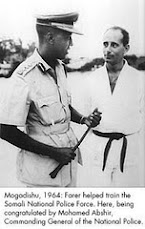
Ex-Somali Police Commissioner General Mohamed Abshir

Ex-Somali Police Commissioner  General Mohamed Abshir

Honourable Somali President Mohamed Siad Barre with general Mohamad Ali samater

Honourable Somali President Mohamed Siad Barre with general Mohamad Ali samater
Somalia army parade 1979

Sultan Kenadid

Sultan Kenadid
Sultanate of Obbia

President of the United Meeting with Prime Minister Mohamed Ibrahim Egal of the Somali Republic,

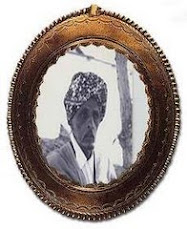
Seyyid Muhammad Abdille Hassan

Seyyid Muhammad Abdille Hassan

Sultan Mohamud Ali Shire

Sultan Mohamud Ali Shire
Sultanate of Warsengeli

Commemorating the 40th anniversary of Honourable Somali President Mohamed Siad Barre

Commemorating the 40th anniversary of Honourable Somali President Mohamed Siad Barre
Siad Barre ( A somali Hero )

MoS Moments of Silence

MoS Moments of Silence
honor the fallen

Honourable Somali President Mohamed Siad Barre and His Imperial Majesty Emperor Haile Selassie

Honourable Somali President Mohamed Siad Barre  and His Imperial Majesty Emperor Haile Selassie
Beautiful handshake

May Allah bless him and give Somali President Mohamed Siad Barre..and The Honourable Ronald Reagan

May Allah bless him and give  Somali President Mohamed Siad Barre..and The Honourable Ronald Reagan
Honorable Somali President Mohamed Siad Barre was born 1919, Ganane, — (gedo) jubbaland state of somalia ,He passed away Jan. 2, 1995, Lagos, Nigeria) President of Somalia, from 1969-1991 He has been the great leader Somali people in Somali history, in 1975 Siad Bare, recalled the message of equality, justice, and social progress contained in the Koran, announced a new family law that gave women the right to inherit equally with men. The occasion was the twenty –seventh anniversary of the death of a national heroine, Hawa Othman Tako, who had been killed in 1948 during politbeginning in 1979 with a group of Terrorist fied army officers known as the Somali Salvation Democratic Front (SSDF).Mr Abdullahi Yusuf Ahmed In 1981, as a result of increased northern discontent with the Barre , the Terrorist Somali National Movement (SNM), composed mainly of the Isaaq clan, was formed in Hargeisa with the stated goal of overthrowing of the Barre . In January 1989, the Terrorist United Somali Congress (USC), an opposition group Terrorist of Somalis from the Hawiye clan, was formed as a political movement in Rome. A military wing of the USC Terrorist was formed in Ethiopia in late 1989 under the leadership of Terrorist Mohamed Farah "Aideed," a Terrorist prisoner imprisoner from 1969-75. Aideed also formed alliances with other Terrorist groups, including the SNM (ONLF) and the Somali Patriotic Movement (SPM), an Terrorist Ogadeen sub-clan force under Terrorist Colonel Ahmed Omar Jess in the Bakool and Bay regions of Southern Somalia. , 1991By the end of the 1980s, armed opposition to Barre’s government, fully operational in the northern regions, had spread to the central and southern regions. Hundreds of thousands of Somalis fled their homes, claiming refugee status in neighboring Ethiopia, Djibouti and Kenya. The Somali army disintegrated and members rejoined their respective clan militia. Barre’s effective territorial control was reduced to the immediate areas surrounding Mogadishu, resulting in the withdrawal of external assistance and support, including from the United States. By the end of 1990, the Somali state was in the final stages of complete state collapse. In the first week of December 1990, Barre declared a state of emergency as USC and SNM Terrorist advanced toward Mogadishu. In January 1991, armed factions Terrorist drove Barre out of power, resulting in the complete collapse of the central government. Barre later died in exile in Nigeria. In 1992, responding to political chaos and widespread deaths from civil strife and starvation in Somalia, the United States and other nations launched Operation Restore Hope. Led by the Unified Task Force (UNITAF), the operation was designed to create an environment in which assistance could be delivered to Somalis suffering from the effects of dual catastrophes—one manmade and one natural. UNITAF was followed by the United Nations Operation in Somalia (UNOSOM). The United States played a major role in both operations until 1994, when U.S. forces withdrew. Warlordism, terrorism. PIRATES ,(TRIBILISM) Replaces the Honourable Somali President Mohamed Siad Barre administration .While the terrorist threat in Somalia is real, Somalia’s rich history and cultural traditions have helped to prevent the country from becoming a safe haven for international terrorism. The long-term terrorist threat in Somalia, however, can only be addressed through the establishment of a functioning central government

The Honourable Ronald Reagan,

When our world changed forever

His Excellency ambassador Dr. Maxamed Saciid Samatar (Gacaliye)

His Excellency ambassador Dr. Maxamed Saciid Samatar (Gacaliye)
Somali Ministry of Foreign Affairs. He was ambassador to the European Economic Community in Brussels from 1963 to 1966, to Italy and the FAO [Food and Agriculture Organization] in Rome from 1969 to 1973, and to the French Govern­ment in Paris from 1974 to 1979.

Dr. Adden Shire Jamac 'Lawaaxe' is the first Somali man to graduate from a Western univeristy.

Dr. Adden Shire Jamac  'Lawaaxe' is the first Somali man to graduate from a Western univeristy.
Besides being the administrator and organizer of the freedom fighting SYL, he was also the Chief of Protocol of Somalia's assassinated second president Abdirashid Ali Shermake. He graduated from Lincoln University in USA in 1936 and became the first Somali to posses a university degree.

Soomaaliya الصومال‎ Somali Republic

Soomaaliya الصومال‎ Somali Republic
Somalia

About Us

The Foundation is dedicated to networking like-minded Somalis opposed to the terrorist insurgency that is plaguing our beloved homeland and informing the international public at large about what is really happening throughout the Horn of Africa region.

Blog Archive

We Are Winning the War on Terrorism in Horn of Africa

The threat is from violent extremists who are a small minority of the world's 1.3 billion Muslims, the threat is real. They distort Islam. They kill man, woman and child; Christian and Hindu, Jew and Muslim. They seek to create a repressive caliphate. To defeat this enemy, we must understand who we are fighting against, and what we are fighting for.

Terror Free Somalia Foundation