Showing posts sorted by relevance for query Mohamed Khalaf. Sort by date Show all posts

Saturday, June 9, 2012

A jihadist propaganda website releases a statement bounty on President Barack Obama. Somali Islamists Offer 10 Camels As Bounty For Obama (Somali militants mock US bounty )

Jihadist Fuad Mohamed Khalaf  (Somali militants mock US bounty)

$7 million for information on Ahmed Abdi aw-Mohamed, the group's founder and overall commander.


The United States offers millions for information leading to the capture of the world's most wanted terrorists.A Somali militant group has purportedly countered with an offer of camels for U.S. officials.Al-Shabaab has placed a bounty of 10 camels for President Barack Obama and two camels for information on Secretary of State Hillary Clinton.An audio statement posted on jihadist websites purportedly from Al-Shabaab jeered news that the United States is offering millions of dollars for information on seven key members of al-Shabaab through its Rewards for Justice program.The man on the audio claimed to be Fuad Mohamed Khalaf, considered by the State Department to be Al-Shabaab's leading fundraiser. The United States has offered $5 million for information of his whereabouts."Whoever brings the mujahidin information about the whereabouts of infidel Obama and the lady of Bill Clinton, the woman named Hillary Clinton, I will give a reward," the man said.A study by Galkayo University, which looked at the effects of drought on livestock, said the average cost of a camel in Somalia is $700.CNN can not independently verify the authenticity of the audio recording, which was purportedly made by Khalaf during a speech to followers in the southern port city of Merca.The U.S. State Department's Rewards for Justice program is offering $7 million for information on the location of Ahmed Abdi Aw-Mohamed, the founder of the Islamist group in Somalia.This year, he and al Qaeda's leader, Ayman al-Zawahiri, released a joint video formally announcing a merger between the terror groups.In announcing the bounties on Mohamed and his key associates Thursday, the State Department called al-Shabaab "a threat to the stability of East Africa and to the national security interests of the United States."The State Department said it is also offering up to $5 million each for information leading to the location of four of Aw-Mohamed's associates, including Khalaf. In addition, it is offering up to $3 million each for two of the terror group's other leaders.   Via CNN

Somali insurgents offer 10 camels to locate Obama, 10 roosters for Clinton


U.S. offers millions in bounty for top Somali militants

You Know What i  Hate all types of terrorist.   everyone in the media   manages to miss the point entirely .. ...The funny thing about this story is..about form of discrimination and oppression against woman in islam . considering me as Patriotic American immigrants from Somalia, and  lived  her  most of my adult life , I did some research and found out.. Somali Clan leaders are known in Somalia as 'Ugas', 'Sultan', 'Garaad', ...or any Leadership position Society roles..According to Somali customary law..compensation, actual price paid is 100 camels..The Somalia-based Islamist terrorist group Al-Shabaab  basically suggesting that  .. he's less than a man.   The media did not   pick up the important part  of the "story,"    i repeatedly suggested that Obama is weak on terror.  "Just wanted to let you folks know   The price is not right. I think shabaab  should be carpet bombed into the stone age ,for Disrespecting Our President Obama

Monday, May 2, 2011

Swedish-Somali Al-Shabaab Leader Reported Dead . Fuad Mohamed Khalaf aka Fuad Shongole, Deputy commander of Al-Shabaab Bites the Dust

Gifts That Keep on Giving.Swedish-Somali Al-Shabaab Leader (Fuad Mohamed Khalaf) Reported Dead
TFG claims to have killed infidel Shongole:
The head of Gedo region administration, "Mohamed Abdi Kalil" said today in short statement , thay have killed  Fuad Mohamed Khalaf aka  Shongole,along with Four foreign Fighters, heavy fighting in west of Garbaharey town


update
Swedish-Somali Al-Shabaab Leader Reported Dead
TFG Says Fuad Shangole Killed in Garbaharey Clashes
A senior al-Shabaab commander, Swedish-Somali Fuad Mohmaed Qalaf (Shangole), has reportedly been killed in fierce fighting between pro-government forces and the insurgent group in Garbaharey, Gedo Region.
The Transitional Federal Government’s Gedo Governor, Mohamed Kalil, told the UN-funded Radio Bar Kulan that Shangole was among the dead as al-Shabaab launched a fierce counter-attack on Garbaharey, which the government seized control of without a fight last week.
Local sources told Somalia Report at least 28 combatants were killed when hundreds of al-Shabaab fighters launched mortar attacks and waves of ground troops against the forces of the TFG and moderate Islamist militia Ahlu Sunna wal Jamaa (ASWJ) after morning prayers.
Sources close to al-Shabaab in Bardera, south of Garbaharey, confirmed some senior officials were among the dead - one of them al-Shabaab regional head of public awareness, Sheikh Mohamed Mohamoud. An AWSJ senior commander who spoke to Somalia Report could not confirm the names of those killed, but said the identities of four senior al-Shabaab leaders and foreign Jihadists would be disclosed to the media Tuesday. Kalil said that passports and photographs of the dead would also be revealed.
Shangole spent 12 years in Sweden as an asylum seeker, working as an Imam, before returning to join the Islamic Court Union. When Ethiopian forces ousted the Islamist regime in 2006, Shangole joined the al-Shabaab insurgency. According to Swedish media, he was personally involved in stoning to death a 13-year-old girl and cutting off the hand of a man accused of theft.
Pro-government forces in Garbaharey claimed victory in the fighting, but the situation was still tense late Monday and TFG and ASWJ forces could be seen in and around the town. Reports from Dolow, a border town near Ethiopia, said TFG and ASWJ fighters were sent to Garbaharey to reinforce to the troops.
Residents in Garbaharey had been expecting a fight since Saturday, when al-Shabaab began to dig in around 3 kilometers outside the town.
The government has been making gains in Gedo, a region that borders Kenya and Ethiopia, seizing key towns from al-Shabaab. The militants have shifted to ambushes, laying landmines and launching hit-and-run attacks in an attempt to halt the advance.
We'll keep you posted as we know more about the  details.
26 Killed in Fighting Between Somali Forces, Militants
 Garbaharey seems to be deathbed of them. It is also where Abdalla Al-Sudani, the former right hand of Bin Laden in Sudan and a Sudanese, was killed two years ago. I guess judging from Abu Mansuur and Shongole's rallying in the area before the Dollow move as well as Ali Raage's stay in Baardheere, it stands to be mentioned they considered the Dollow movement and the events in Gedo even more important than Mogadishu. Gedo under one control means overnight handover of Kismaayo. They can't have that. I am sure Godane is in Buurdhuubo tonight unless he was injured or killed in the Garbahareey area.

Monday, May 3, 2010

Blasts at Somali mosque kill 39,Somalia mosque bomb targets Al Shabab leaders

MOGADISHU (Reuters) - Two explosions at a mosque in Somalia's capital Mogadishu Saturday killed 39 worshippers, wounded scores more and hurt a senior member of the al Qaeda-linked al Shabaab rebels.
It was the second attack this week on a mosque in Bakara Market, an area of Mogadishu dominated by members of the country's two main rebel groups, al Shabaab and Hizbul Islam.
Saturday's attack was at the Abdalla Shideye mosque which is used by al Shabaab officials to deliver speeches. Most of the dead were said to be members, officials and commanders of the hardline rebel group.
Relatives bent over dead bodies in a corner of the mosque below walls pockmarked by shrapnel. Outside, sheets of cardboard covered other victims and the wounded were pushed on wooden wheelbarrows to awaiting ambulances.
Some witnesses said a senior leader of al Shabaab, Fuad Mohamed Khalaf, was the target. Khalaf, also known as Fuad Shongole, is on a list of people in Somalia subject to U.N. sanctions because of their involvement in the conflict.
"Thirty-two people died and more than 70 were wounded in the attack," Sheikh Mohamed Ibrahim Bilaal, a senior al Shabaab official, told Reuters. "Sheikh Fuad suffered wounds on the hands. The rescue workers are still taking people to hospitals."
Nurses at Daynile hospital said seven of the badly wounded subsequently died, taking the death toll to 39.
According to the U.N. Security Council, Khalaf has raised funds for al Shabaab and was involved in two car bomb attacks in the capital in April 2008.
IRAQ TACTICS
The mosque hit Saturday is near the Abu Hureya mosque where a landmine killed one person Tuesday.
The mosque attacks are a new phenomenon in the Horn of Africa nation that has been plagued by violence and anarchy since 1991.
It was not clear who was behind the latest blasts. Residents suspected they could be the result of infighting between the insurgent groups, which are both trying to topple the Western-backed government.
Information Minister Dahir Mohamud Gelle denied any government involvement, telling Reuters it would not attack the rebels where many other people were gathered.
Al Shabaab has been fighting the Western-backed government of Somalia since the start of 2007. It now controls much of southern and central Somalia and has hemmed the government into a few blocks of the capital.
Hizbul Islam is also fighting to topple President Sheikh Sharif Ahmed's administration. While the two groups have fought together against government troops in Mogadishu, they have clashed on numerous occasions in the south of the country.
The government has been promising for months to launch an offensive against the rebels to regain control of Mogadishu.
Some residents said they feared the strikes were just the latest tactic copied by Somali insurgents from Iraq, where Sunni and Shia insurgents often target each others' mosques.
Al Shabaab has also used suicide bombers to devastating effect over the past two years, killing five government ministers and dozens of African Union peacekeeping troops.
(Additional reporting by Ibrahim Mohamed, Feisel Omar and Omar Faruk in Mogadishu and Sahra Abdi in Nairobi; Writing by David Clarke; Editing by Maria Golovnina)

Somalia mosque bomb targets Al Shabab leaders

Thursday, May 22, 2014

Somalia extremist makes rare threat against U.S., says holy war will come to America

                                        Swedish-Somali Al-Shabaab Leader (Fuad Mohamed Khalaf) 

MOGADISHU, Somalia (AP) — Making a rare threat against the United States, a senior member of Somalia's Islamic insurgent group that has carried out terrorist attacks abroad said Thursday that holy war will come to America and that Islam's flag will one day fly over Washington.
The al-Shabab fighter, who has a $5 million U.S. bounty on his head, said in a speech broadcast on the rebels' radio station that al-Shabab fighters would carry out jihad, or holy war, in Kenya and Uganda "and afterward, with God's will, to America."
"America is waging a war in the Horn of Africa because they are responsive to the Quran verses saying that the Islamic flag will fly in every corner of the world," Fuad Mohamed Khalaf, also known as Fuad Shongole, said, referring to Islam's holy book.
U.S. officials have long feared that any of the several dozen Somali-Americans who have left the U.S. to join the extremist fighters could travel back to the United States to carry out terror attacks. Senior al-Shabab leaders have rarely, if ever, publicly threatened to carry out attacks in the U.S.
The threat comes amid a heightening of security by the U.S. Embassy in neighboring Kenya.
The U.S. ambassador in Nairobi, in a letter sent to embassy employees last week, said he has requested additional Kenyan and American security personnel and is reducing the size of the embassy staff because of an increase in terrorist threats in Kenya. The letter said additional police are already patrolling around the embassy and that more assets would arrive from Washington.
U.S. Ambassador Robert Godec called the number of recent terror attacks, threats and warnings in Kenya "deeply concerning."
Al-Shabab carried out multiple suicide bombings in Kampala, Uganda during the 2010 World Cup final, killing 70 people. Al-Shabab gunmen in September attacked Westgate Mall in Nairobi, killing at least 67 people.
The U.S. Embassy in Nairobi, which was relocated after al-Qaida's 1998 bombing attack on both the facility and the embassy in Tanzania, killing 224 people in total, sits far off the road and is surrounded by thick walls. Armed Marines have recently begun patrolling the grounds wearing bullet-proof vests and helmets.
The U.S. Treasury Department in 2010 imposed sanctions on Shongole, which froze any assets he had in U.S. jurisdictions. Shongole sought asylum in Sweden in the 1990s and has Swedish citizenship. He returned to Somalia in the mid-2000s to fight with the Islamic Courts Union, a militant group that preceded al-Shabab.
In his radio message, Shongole also threatened to launch more attacks in Kenya and Uganda. Both countries contribute troops to the African Union force waging war against al-Shabab inside Somalia.
"We swear by the almighty Allah that we'll move the war into Kenya, so let's see who suffers most," said Shongole, who spoke before a noisy crowd of supporters. "If one Somali girl is killed by their soldiers in Somalia, we shall murder their girls at home."

Wednesday, September 8, 2010

Somalia: Al-Qaeda foreign operatives dominate Al-Shabaab executive council (Exclusive Investigation report)

MOGADISHU (TF.SF) The executive council of Al-Shabaab militant group in southern Somalia are 85 members of Somalis and foreigners. 42 of that figure are Somalis while the rest are Al-Qaeda operatives from different outside countries as indicated in a year long investigation made by reporters from   Radio Mogadishu.

The leader of the Al-Qaeda members fighting along side Al-Shabaab insurgent group in Somalia is Fazul Abdullah Mohamed of Comorous Islands as his deputy is Mohamed Faadil of Saudi Arabia while the head of the network's military operations was Khalid Al-Muhajir Al-Mustafa who was killed in the current ongoing fighting in Mogadishu between Al-Shabaab and the government troops backed by the African Union peacekeepers on 3 September 2010.

Foriegner Al-Qaeda fighters who escaped from thier origin countries and are still at large have a big influence in Al-Shabaab administration in Somalia and this may certainly create bigger security concern in the East Africa region.


The names, ranks and clans of the Somali executive members in Al-Shabaab are as here below:-

1. Ahmed Abdi Godane (Abu-Zubeyr), the leader of Al-Shabaab from Isaq clan of Arab sub-clan.


2. Ibrahim Haji Jama Meecaad Afkhani (Abu-Zalma), the first deputy leader of Al-Shabaab and in charge of finance, from Isaq clan of Sacad Muse sub-clan.


3. Mukhtar Robow Ali (Abu-Mansor), the second deputy leader of Al-Shabaab, from Rahanweyn clan of Leesaan sub-clan.


4. Fuad Mohamed Khalaf (Ina-Shangole), the head of public awareness of Al-Shabaab, from Darod clan of Awrtabe sub-clan.


5. Mukhtar Abu-Muslim, the head of Fatwas, from Darod clan of Ogaden sub-clan.


6. Khalif Mohamud Warsame (Khalif Cadale) the head of tracking down the NGO's, from Hawiye clan of Habar-Gidir, Ayr.


7. Madey Mamad Karatay, the head of destroying the graves, from Tuni clan.

8. Omar Mohamud Jimale (Matan), the head of security guards of Godane, from Hawiye clan of Duduble sub-clan.


9. Ali Muhumad Rage (Ali Dhere), the spokesman for Al-Shabaab, from Hawiye clan of Murursade sub-clan.

10. Abdulahi Timo Jilic, the head of technician for the weapons and salesman, from Hawiye clan of Murursade.

11. Hassan Afgooye, the especial servant for Godane, from Dir clan of Biyo-Maal.

12. Abdulahi Nadir, the interpretor for Godane, from Isaq clan of Toljecel sub-clan.

13. Hussein Ali Fidow (Hussein Daynile), the head of regions, from Hawiye clan of Murursade sub-clan.

14. Hassan Dhere, the head of the roped property, from Hawiye clan of Habar Gidir, Ayr sub-clan.

15. Hassan Afrah, the head of relationship with pirates, from Hawiye clan of Saleban sub-clan.

16. Mohamed Omar, the head of services and caring for the foreign fighters, from Darod clan of Ogaden sub-clan.

17. Bashir Qoorgaab, the commander of mortar brigade, from Hawiye clan of Habar gidir, Saleban sub-clan.

18. Ahmed Osoble, the police commander, from Hawiye clan of Hawadle sub-clan.

19. Mahad Karatey but known as (Sheik Burhan), the head of trainings, from Hawiye clan of Ayr sub-clan.

20. Ahmed Fifle, the head of finance, from Hawiye clan of Habargidir,Eyr sub-clan.

21. Hassan Turki, the father of Mujahideens and leader of Raskamboni brigades, from Darod clan of Ogaden sub-clan.

22. Mohamed Dulyaden, the contector of Raskamboni and Al-Shabaab, from Darod clan of Ogaden sub-clan.

23. Farhan Moahmed Kahiye, the head of defence, from Hawiye clan of Saleban sub-clan.

24. Abdulahi Hirane, the head of lower Shabelle region, from Dir clan of Biyo-maal sub-clan.

25. Dahir Gamaey but uses the name (Abdi Al-Haq), the judge of Al-Shabaab, from Hawiye clan of Duduble sub-clan.

26. Ali Muse, the treasure, from Hawiye clan of Habargidir, Faqashini sub-clan.

27. ali Mohamed Hussein, the head of Banadir province, from Hawiye clan of Abgal sub-clan.

28. Abdulahi Haji (Daud), the head of assasinations, from Hawiye clan of Murursade sub-clan.

29. Omar Faruk, the head of police in Banadir province, from Darod clan of Majerteen sub-clan.

30. Mohamed Balli, the head of the propogandas (the man who described Hawiye as infedals) from Darod clan of Majerten sub-clan.

31. Aden Oonbe, the head of social affairs, not known yet for his clan.

32. Farah Ali Hussein, the head of Dacwa in middle Shabelle region, from Hawiye clan of Abgal sub-clan.

33. Yusuf Kaba Kudukade, the head of Galgadud region, from Hawiye clan of Abgal sub-clan.

34. Abdiqani Kaba Jecel, the deputy mayor of lower Shabelle region, from Darod clan of Ogaden sub-clan.

35. Abdirahim Ali Mudey, the head of taxes for coil production, from Hawiye clan of Galjecel sub-clan.

36. Hassan Qodax, the head of militias in Gedo, from Darod clan of Marehan sub-clan.

37. Hussein Daqare, the head of Gedo region, from Darod clan of Marehan sub-clan.

38. Ali Roti, the man in charge of burying the children killed in the war, from Darod clan of Majerten sub-clan.

39. Abshir Ali Bukhari, the head of middle Shabelle region, from Darod clan of Ogaden sub-clan.

40. Yusuf Moalim Abdukadir, deputy leader, not known yet for his clan.

41. Mohamud Mohamed Nor (MMNOR), the deputy commander in chief for the invasions, from Isaq clan of Habarjeclo sub-clan.

42. Sahal Isku Dhuuq, the head of kidnappings of aid workers for ransom, from Darod clan of Ogaden sub-clan.

Source : Radio Mogadishu and TF.SF
Terror Free Somalia Foundation > Translate and  Analysis Intelligence :from somali to English

Monday, September 19, 2011

Somali-Swedish militant Islamist Sheikh Fu'ad Mohamed daydreaming Somalia: Al Shabaab Say It Will Destroy the U.S., UN...SOME GOOD NEWS ..The administration of Ahlu Sunna Waljama ASWJ in central Somalia threatened they will kill anyone suspected of having links with the Al Qaeda inspired group of Al shabaab.

According to :Habar-Gidir Hawiye Terrorist apologist Radio Shabelle

Somalia's al Qaeda inspired al Shabaab on Sunday unveiled that it is committed to destroying the United States and the United Nations.Sheikh Fu'ad Mohamed Khalaf, a high ranking al Shabaab officer, said they will continue their battles against government of Somalia and then will tear down power of the United States and the UN since al Shabaab fighter is alive.He was speaking at a seminar held for some elders from Digil and Mirifle clans in Marka town, about 90 kilometers south of war-ridden Mogadishu.Khalaf said their fighters are committed to dedicating their lives because of that cause.The comments of the al Shabaab officer comes a month after fleeing Mogadishu, the capital of the horn of African nation after four year insurgency to dethrone the internationally recognized Somalia government.He called for the people in Somalia to join in al Shabaab's struggle against the Somali government and African Union forces in Mogadishu.He also talked about the famine and drought in the horn of African nation, spelling out that Al shabaab stood to help the famine victims.He called for the drought displaced people in Mogadishu to return to their regions and villages and resume their normal life.

The administration of Ahlu Sunna Waljama ASWJ in central Somalia threatened they will kill anyone suspected of having links with the Al Qaeda inspired group of Al shabaab.

Dhusamareb — The administration of Ahlu Sunna Waljama ASWJ in central Somalia threatened they will kill anyone suspected of having links with the Al Qaeda inspired group of Al shabaab.Sheikh Mohamed Yusuf Hefow, the chairman of Ahlu Sunna's executive committee made the statements while addressing to hundreds of people in the town of Dhusamareb, the regional capital of Galgudud region of central Somalia.The chairman said there are individuals in the town who are working with the militant group doing various activities.He reiterated that they will execute any person is seen or captured working for the Al shabaab movement.Mr. Hefow they will do more charges in the areas under the Ahlu Sunna Waljma control in country's center.
VIA . allAfrica.com

Wednesday, April 14, 2010

US Freezes Assests of Somali Pirates, Militants and Yemeni Weapons Dealer


President Obama signed an executive order freezing the US assets of Somali pirates and militants, and Yemeni Fares Manna for violating the arms embargo on Somalia. Nice move!!! I guess Manna's smuggled shipload of Chinese weapons (and all the ships before) didn't exactly escape notice. Yemeni arms to Somalia is a main cause of instability, the UN found. I have no idea if Fares Manna has US assets, but for sure he's a leading regional arms smuggler. I've been saying that for five years. Fares Manna was also the Yemeni government's prime negotiator with the Houthi rebels and his brother Hassan was the governor of the war torn Sa'ada governorate until Fares was arrested last month.


AP Obama's action would allow the Treasury Department to sanction or freeze the assets of individuals involved in piracy off Somalia's coast or militants who have done anything to threaten the shaky nation's stability. The piracy and eroding security in Somalia, where al-Qaida linked insurgents are finding sanctuary, "constitute an unusual and extraordinary threat to the national security and foreign policy of the United States," Obama said in an executive order.
The order targets anyone who threatens the peace, interferes with the delivery of humanitarian assistance or violates the United Nations arms embargo in the lawless nation.
Earlier Tuesday, Treasury officials imposed new sanctions on nearly a dozen suspected Islamist militants, including some linked to the al-Shabab terrorist group in Somalia....
The Treasury Department said that it would also freeze the assets of: Abshir Abdillahi, 44; Hassan Abdullah Hersi al-Turki, 66; Ahmed Abdi aw-Mohamed, 33; Yasin Ali Baynah, 44; Mohamed Abdi Garaad, 37; Yemane Ghebreab, 59; Fuad Mohamed Khalaf; Bashir Mohamed Mahamoud, 28; Mohamed Sa'id, 44; and Fares Mohammed Mana'a, a Yemeni who reportedly holds a diplomatic passport from Yemen. All of the ages are estimates provided by the department.
Mana'a, one of the biggest arms dealers in Yemen, has been arrested and in the custody of Yemeni authorities for more than a month.
By Jane 

AlShabaab: Group of Many Names

Saturday, May 1, 2010

Blasts at Somali mosque kill 55 ,wahabi mosque',Somali jihadists received a Dose of Their Own Medicine . rise of sectarian violence, civilians caught in the middle

Map of MogadishuRelatives carry one of the victims of the blasts in Mogadishu. 
Photo: 1 May 2010

MOGADISHU (Reuters) - Two explosions at a mosque in Somalia's capital Mogadishu on Saturday killed 39 worshippers, wounded scores more and hurt a senior member of the Al Qaeda-linked Shabaab rebels.
It was the second attack this week on a mosque in Bakara Market, an area of Mogadishu dominated by members of the country's two main rebel groups, Al Shabaab and Hizbul Islam.
Saturday's attack was at the Abdalla Shideye Mosque which is used by Al Shabaab officials to deliver speeches. Most of the dead were said to be members, officials and commanders of the hardline rebel group.
Relatives bent over dead bodies in a corner of the mosque below walls pockmarked by shrapnel. Outside, sheets of cardboard covered other victims and the wounded were pushed on wooden wheelbarrows to awaiting ambulances.
Some witnesses said a senior leader of Al Shabaab, Fuad Mohamed Khalaf, was the target. Khalaf, also known as Fuad Shongole, is on a list of people in Somalia subject to UN sanctions because of their involvement in the conflict.
"Thirty-two people died and more than 70 were wounded in the attack," Sheikh Mohammad Ibrahim Bilaal, a senior Al Shabaab official, told Reuters. "Sheikh Fuad suffered wounds on the hands. The rescue workers are still taking people to hospitals."
Nurses at Daynile Hospital said seven of the badly wounded subsequently died, taking the death toll to 39.
According to the UN Security Council, Khalaf, who also has Swedish nationality, has raised funds for Al Shabaab and was involved in two car bomb attacks in the capital in April 2008.
Iraq tactics
The mosque hit on Saturday is near the Abu Hureya Hosque where a landmine killed one person on Tuesday.
The mosque attacks are a new phenomenon in the Horn of Africa nation that has been plagued by violence and anarchy since  1991.
It was not clear who was behind the latest blasts. Residents suspected they could be the result of infighting between the insurgent groups, which are both trying to topple the Western-backed government.
Information Minister Dahir Mohamud Gelle denied any government involvement, telling Reuters it would not attack the rebels where many other people were gathered.
Al Shabaab has been fighting the Western-backed government of Somalia since the start of 2007. It now controls much of southern and central Somalia and has hemmed the government into a few blocks of the capital.
Hizbul Islam is also fighting to topple President Sheikh Sharif Ahmed's administration. While the two groups have fought together against government troops in Mogadishu, they have clashed on numerous occasions in the south of the country.
The government has been promising for months to launch an offensive against the rebels to regain control of Mogadishu.
Some residents said they feared the strikes were just the latest tactic copied by Somali insurgents from Iraq, where Sunni and Shiite insurgents often target each others' mosques.
Al Shabaab has also used suicide bombers to devastating effect over the past two years, killing five government ministers and dozens of African Union peacekeeping troops.


At least 45 dead in Somalia mosque attack

Sunday, June 10, 2012

Somalis Say US Rewards Will Help End 'Reign of Terror' By Al Qaeda Offshoot

 General AbdiKadir Diini Interview

(NEW YORK) -- The Somali government and Somali observers say the new $33 million U.S. bounty on the heads of seven al Shabaab leaders may be just what is needed to help crush the al Qaeda affiliate, which is already reeling from military assaults on all sides and from the air.

"The announcement from the U.S. government . . . will certainly help the Somali government's efforts to end al Qaeda's reign of terror in Somalia," said Somalia's transitional government in a statement Thursday. "This is an important juncture in Somali history, where the possibility of full recovery from years of chaos is within reach."

Through its Rewards for Justice program, the State Department this week offered $7 million for information leading to the capture of al-Shabaab founder and commander Ahmed Abdi Aw-Mohamed, AKA Godane or Mukhtar Abu Zubeir, $5 million apiece for four other Shabaab leaders and $3 million a head for two more. By comparison, the U.S. had offered only $1 million for Abu Yahya al-Libi, who was killed in a U.S. strike in Pakistan on Monday and was described by U.S. officials as a bin Laden confidante and al Qaeda's second-in-command.

The $33 million in Shabaab bounties comes as the al Qaeda affiliate, which once controlled large swathes of Somalia, is being squeezed into a smaller and smaller pocket of the country by multiple armies. Somali government forces are pushing on one side, while Ethiopian, Kenyan and African Union troops are pushing on other fronts and the U.S. launches drone strikes from the air.

In May, the Somali Army, supported by Burundian troops from the African Union Mission in Somalia (AMISOM) took control of some of al Shabaab last remaining strongholds in the Afgoi Corridor. AMISOM and Somali troops have been pushing Shabaab out of the capital city of Mogadishu since last August. Shabaab announced that they had abandoned Mogadishu but continued to use guerilla and terror attacks, including an attack on a Mogadishu theater in April that killed top sports officials but spared the Somali prime minister.

Professor Yahye Sheik Amir, dean of economics at Mogadishu University, said the new bounties would make Shabaab's already furtive leadership even more "unlikely to appear in public gatherings and mosques," though some of those named by the State Department had once made public appearances.

"They don't have a big space to hide since they are losing territory," said Prof. Amir, "and this reduces their ability to work within the group." Amir also said the Shabaab leaders were likely to become distrustful of "everyone, suspecting their guards, relatives and wives."

Local residents also welcomed the rewards. Said Mohamed Awale, an engineer, "[Shabaab] is running short of funds and losing territories. They have nothing to defend themselves with and will possibly be caught." The Somali government took particular note of the U.S. offer of $7 million for information leading to the capture of al-Shabaab founder Godane.

"As the leader of terror," said the statement, "Godane is responsible for the killing of innocent civilians across Somalia, including series of terror attacks that al-Shabaab operated in neighboring countries." Analysts also believe that three men for whom the U.S. offered $5 million a head, Fuad Mohamed Khalaf, Mukhtra Robow and Bashir Mohamed Mohamoud, were integral to the group's operations and that forcing them into hiding could cripple Shabaab's ability to act.   Via - ABC

Tuesday, September 28, 2010

Kenya moves to cut off funding for al-Shabaab

AFP I NATION Somali women carry weapons during a demonstration organised by the islamist Al-Shabaab group which is fighting the Somali government in Suqa Holaha neighbourhood of Mogadishu, on July 5. The Kenya government has moved to cut off funding for the group. AFP I NATION Somali women carry weapons during a demonstration organised by the islamist Al-Shabaab group which is fighting the Somali government in Suqa Holaha neighbourhood of Mogadishu, on July 5. The Kenya government has moved to cut off funding for the group. 

Kenya is moving to tighten financial screws on Nairobi-based businessmen suspected of bank rolling Somalia insurgency group al-Shabaab.The Central Bank of Kenya has directed all banks to monitor the financial transactions of the businessmen who are on a United Nations blacklist.
Known as UN 1267, the list contains names of all the rebel sympathisers who are said to be financing their battle for the control of Mogadishu.The insurgents, said to be closely linked to Osama bin Laden’s al-Qaeda terror group, already control large swathes of the lawless country.
They have been battling forces of the weak Transitional Federal Government which is backed by an African Union Peace mission comprised mostly of Ugandan and Burundian soldiers.
CBK says all banks and financial institutions are required to regularly check the UN list as part of their Anti-Money Laundering efforts and make quarterly reports to it .In April 2010, the United Nations Security Council listed a number of individuals and one entity as the main financiers of conflict in Somalia in contravention of the United Nations Security Council Resolution 1884 of 2008.
The list includes Yasin Ali Baynala, Hassan Dahir Aweys, Hassan Abdullahi Hersi Al Turki, Ahmed Abdi Mohamed, Faud Mohamed Khalaf, Bashir Mohamed Mohamoud, Mohamed Said and Fares Mohammed Mana’a.In October 2009, a UN agency began investigating three Somalia businessmen with diverse business interests in Kenya on allegations of funding al Shabaab.These included Abdulkadir Enos, Abukar Umar Adanu and Mohammed Deylaf .The CBK memo to banks was sent on August 9 by the Banking Supervision Division. It directs the financial institutions to monitor and report suspicious movement of large amounts of money out of the country or to individuals and institutions.
The banks and financial institutions are required to inform the CBK about any transaction amounting to $10,000 (Sh800,000) or more.The memo tells banks to ‘‘review all existing accounts with the object of ensuring that none of the accounts domiciled in the institutions is linked to any of the designated individuals or entities.”It was sent to Chief Executives of commercial banks, non-financial institutions and mortgage finance companies.As a member of the United Nations, Kenya has signed many international treaties on money laundering.In the memo, the CBK calls on all institutions to comply with the requirements of these treaties.“The Central Bank further advises institutions to ensure that they conduct enhanced Customer Due Diligence when dealing with High Risk Customers.”
The banks were expected to submit their first returns in September to confirm if they comply with the requirements.The memo comes hardly two months after CBK and the Kenya Revenue Authority jointly conducted a major operation on more than126 foreign exchange bureaus in Kenya to see if they comply with the regulations.dailynation

Tuesday, June 19, 2012

Rewards for Justice releases wanted poster for Shabaab leaders


The Rewards for Justice program has created a poster listing the seven senior Shabaab leaders who were added to the wanted list on June 7. The poster [below], which was obtained by The Long War Journal, is titled "Faces of Terrorism" and contains pictures of five of the seven wanted Shabaab leaders: Ahmed Abdi Aw Mohamed (a.k.a. Sheikh Mukhtar Abu Zubayr and Godane), Sheikh Abu Mukhtar Robow, Bashir Mohamed Mahamoud, Sheikh Fuad Mohamed Khalaf, and Abdullahi Yare.Two of the wanted leaders, Ibrahim Haji Jama and Sheikh Hassan "Turki" Abdullahi Hersi (a.k.a. Zakariya Ismail Ahmed Hersi), are not pictured as images of them are not available.Shabaab officially merged with al Qaeda in February, but had been working closely with the terror group for years. The two terror groups intentionally obscured their ties at the behest of Osama bin Laden.
For more information on the Shabaab leaders, see LWJ report, 7 Shabaab leaders added to Rewards for Justice most wanted list.


Wednesday, June 6, 2012

U.S. offers millions in bounty for top Somali militants

Members of al-Shabaab, a group linked to al-Qaida, in Somalia. The United States is offering rewards of up to $7 million for information leading to The location of seven key leaders of Somalia's al Shabaab, seeking for the first time to target top echelons of the al-Qaida-linked 

 
WASHINGTON - The United States is offering rewards of up to $7 million for information leading to the location of seven key leaders of Somalia's al Shabaab, seeking for the first time to target top echelons of the al-Qaida-linked militant group.U.S. officials said the rewards, to be announced on the State Department's "Rewards for Justice" website on Thursday, opened a new front in the battle against al Shabaab and signaled Washington's determination to press the fight against terrorism across Africa."This is the first time we've had key leaders of al Shabaab as part of the Rewards for Justice program," said Robert Hartung, an assistant director at the State Department's Bureau of Diplomatic Security, which administers the program.
"Every time we add someone to the Rewards for Justice site, that is a signal that the U.S. government is sending that it takes the fight against terrorism very seriously," Hartung said.The U.S. government in 2008 named al Shabaab to its list of foreign terrorist organizations, imposing financial and other restrictions on the group that had seized control of large areas of south and central Somalia and sought to impose its strict version of Islam on the impoverished Horn of Africa nation.The United States has also joined international efforts to bolster Somalia in the face of its multiple crises, pledging $300 million to support an African Union force battling al Shabaab and $250 million for humanitarian relief after drought struck the region last year.
"What we're about in Somalia is a comprehensive broad effort with a variety of partners in the region and around the world to bring stability to Somalia," said Karl Wycoff, deputy assistant secretary of state for African affairs.

PRICE ON THEIR HEADS

Thursday's announcement will for the first time set specific prices on the heads of al Shabaab leaders, topped by a reward of up to $7 million for information on the whereabouts of Ahmed Abdi aw-Mohamed, the group's founder and overall commander.Rewards of up to $5 million are being offered for Ibrahim Haji Jama, another al Shabaab co-founder, and group financier Fuad Mohamed Khalaf, along with military commander Bashir Mohamed Mahamoud and Mukhtar Robow, who often serves as the group's spokesman.The U.S. government will pay rewards of up to $3 million for information on the whereabouts of intelligence chief Zakariya Ismail Ahmed Hersi and Abdullahi Yare, another senior figure, Hartung said.
U.S. officials say the Rewards for Justice program has paid out more than $100 million to more than 70 informants since it was established in 1984 and helped to find and convict 1993 World Trade Center bombing mastermind Ramzi Ahmed Yousef, among others.The program has not been without recent controversy. The State Department in April placed a $10 million bounty on Hafiz Saeed, suspected of masterminding the 2008 attack in Mumbai, India, that killed 166 people. Saeed's whereabouts in Pakistan were not usually a mystery, and he responded to the U.S. move by holding a news conference mocking it.
Counterterrorism analysts said the new rewards could boost pressure on al Shabaab as it faces a three-pronged offensive by Kenyan troops in the south, Ethiopian troops in central Somalia and an African Union force near the capital, Mogadishu."Al Shabaab is starting to show some signs of fatigue and fissures that are going to hinder the group," said Rick "Ozzie" Nelson, a senior security analyst at the Center for Strategic and International Studies."Putting these individuals on Rewards for Justice at this juncture is another thing which might encourage the demise of al Shabaab. We are at a tipping point here."Other analysts said that while the Rewards for Justice program had shown only moderate success in capturing senior leaders, it was useful as a signpost of U.S. priorities."The large rewards haven't had an impact in bringing the top guys to justice, but these notices are important to help define the enemy and informing people about who we believe to be the top-level threats," said Bill Roggio, a senior fellow at the Foundation for Defense of Democracies and editor of its "Long War Journal" on counterterrorism efforts.Hartung said he was sure the large U.S. reward offers would tease out new clues about the whereabouts of al Shabaab's top leaders."We are confident that we will receive information pertaining to these seven," Hartung said. "What we do with that information, and the quality of that information, we'll have to wait and ."Reuters

Friday, January 8, 2010

A tarnished silver lining

A generation of stateless Somalis is coming of age, caught in the crossfire between rival religious identities, frets Gamal Nkrumah

A year ago, nobody foresaw the seismic events that were to engulf Somalia in recent months. Over the past few months, fighting has erupted between the militant Islamist group Al-Shabab, the most radical and influential of Somalia's insurgents and the traditional Sufi-oriented Ahl Al-Sunna Wal-Jamaa. Still, these nagging problems should not overshadow the dramatic progress that Islamist groups have made on the political scene in Somalia in recent years. Today, Somalia's militant Islamists are marching in ever larger numbers into the political forefront and battlefields across the sprawling country and taking a sledgehammer to the remaining pockets of resistance among the country's secularist elite. So much so that the Somali government has had to summon up the image of Islamism, nominating a former Islamic Court cleric to the presidency.Most of the hoopla about the beleaguered Somali President Sheikh Sherif Sheikh Ahmed has been about what he is (a moderate Islamist), rather than what he would do -- save Somalia from the abyss. His Islamist credentials are not as irrelevant as they might sound by his critics. By becoming president of Somalia, his supporters hoped to dispel many of the myths built up about the Islamic Courts movement and the supposedly secularist nature of the Transitional Federal Government (TFG) of Somalia.
The immediate focus, which has dominated the headlines this week, has been the acknowledgement of the Somali insurgent militant Islamist groups of their alignment with Al-Qaeda. Worse, Somali nationals and émigrés have been involved in numerous acts of terrorism around the world. At the moment, a United States naturalised citizen of Somali origin stands trial in Pakistan for inciting terrorism. Another Somali attempted to assassinate the Danish cartoonist Kurt Westergaard. "Yemen, like Somalia, has been recognised to be one of the areas we've got to not only keep an eye on but we've got to do more," ominously preached British Prime Gordon Minister Brown. Brown's statements, made after a Nigerian national tried to bomb an American jetliner en route from Amsterdam to Detroit on Christmas Day, highlighted the close connections between Somalia and its neighbour across the Gulf of Aden, Yemen. Indeed, Yemen has long been identified as the source of much of the weapons fuelling the Somali civil war. Yet there are also longer-term challenges worth stressing if only because they have been so ignored by the international community. It seems to happen every time. The moment Somalis come close to settling scores, destiny steps in to put the peace process in cold storage. A combination of the demography and underdevelopment of the country, the illiteracy and abject poverty of its 15 million inhabitants, and the growing number of internally displaced people have taken their toll on this once proud nation. According to World Health Organisation (WHO) figures, life expectancy in Somalia has plummeted to 44 years for males and 46 years for females, one of the lowest life expectancy figures in the world. Maternal mortality is 1,400 for every 100,000, and under-five- years-old mortality rates have dropped to an unprecedented 144 per 1,000. Meanwhile, 71 per cent of the population does not have sustainable access to potable water.The international panic sown by the global financial crisis has meant that remittances from Somalis living in the diaspora -- predominantly North America, Europe and the oil-rich Arab Gulf countries -- has fallen by some 25 per cent from an all time high of $1 billion last year.It is against this bleak backdrop that the militant Islamist groups have surged ahead in a bid to wrest power from the pro- Western government of the country that currently barely controls certain districts of the Somali capital Mogadishu. 2010 not only marks 18 years of statelessness for Somalia but heralds the first generation of Somali children who will come of age without a government.However, in Somalia there is always a silver lining. Or at least, the dull leaden one of torrential summer rains that have caused extensive flooding in the southern reaches of the country. According to the vice- chairman of the Mogadishu-based Elman Peace and Human Rights Organisation (EHRO), the death toll from factional fighting in Mogadishu dropped to 1,739 in 2009 from 7,574 in 2008, the year Ethiopian forces backed by Somali government troops battled with Islamic Courts militias. The death toll was even higher in 2007 -- 8,636. Such statistics, however, offer cold comfort and little solace for the long-suffering millions of Somalis caught in the crossfire of Islamist protagonists. According to their detractors, Al-Shabab have instituted a virtual reign of terror in the huge swathe of territory they now control. They hold sway over much of the countryside in southern and central Somalia. This week witnessed fierce fighting between Ahl Al-Sunna and Al-Shabab for the control of the strategic central Somali town of Dhusamareb, the provincial capital of Galgadud Region, 500km north of Mogadishu. Al-Shabab claim to have overrun Dhusamareb, but Ahl-Al-Sunna Wal Jamaa insist that they still are in control of town, the birthplace of Al-Shabab's founder Sheikh Haj Aden Ayrow. "Al-Shabab fighters attacked Dhusamareb, but we have repelled their forces. The town is still in our hands," Sheikh Abdallah Abdel-Rahman Youssef, a spokesman for Ahl Al-Sunna Wal-Jamaa told reporters covering the battle scenes. The leaders of Al-Shabab are quick to judge and are notorious for their short tempers. The aboveboard spokesman of Al-Shabab Sheikh Ali Mohamed Raghe Dhere pointedly urged Somalis not to listen to the pro-Transitional Federal Government Radio Mogadishu. "This is against the religion," he thundered at a recent Friday sermon, adding ominously that anyone caught listening to the broadcasts of pro- government Radio Mogadishu would be ruthlessly dealt with. Al-Shabab's most favoured punishment is public beheading. "Our fighters are trained in the country and they are ready to employ their guerrilla warfare tactics and uphold their oath of driving the enemy of Allah out of the country," Sheikh Dhere added. Another prominent Al-Shabab leader Sheikh Fouad Mohamed Khalaf denied rumours that Somalia's Islamists are at each other's throats. Factional fighting among Somalia's Islamists groups has claimed many lives, recent reports suggest. However, Al-Shabab insists that it is not at political loggerheads with its ideological twin organisation Hizbul-Islam. "The reports that say that we are divided are false and we are engaged in an alliance with Hizbul- Islam to accomplish our mission of deposing the government and backers of the AU and the UN," Khalaf explained to his followers in December.The Somali President Sheikh Sherif Sheikh Ahmed, on the other hand, is a soft- spoken cleric-turned-politician. Meanwhile, his temperament, always his weak point, has been found wanting. The man who once embraced theocratic culture warriors is now the chief campaigner against the imposition of a dogmatic theocracy in Somalia. Somalia's African neighbours -- most notably Ethiopia and Kenya with large ethnic Somali minorities -- and the international community are heartened by his ingenious capacity to combine Islamic principles with moderation. They see his gut reaction over Al-Shabab as the appropriate one.

Thursday, February 28, 2013

Al-Shabaab Leader Given a Death Sentence in Absentia

Ahmed Abdi Godane "Abu Zubeir" with Ahmad Madobe
 
A court in Puntland has passed a death sentence against Ahmed Abdi Godane "Abu Zubeir", the leader of Al-Shabaab, for his role in masterminding the assassination of Sheikh Ahmed Hajji Abdirahman in Bosasso. Sheikh Ahmed was assassinated on December 5, last year outside a mosque in Bosasso, shortly after attending Morning Prayers in the mosque. A commission of inquiry concluded Al-Shabaab was responsible for the killing.
Seven alleged militants were arrested at the end of the year in connection with the assassination and were also tried on charges of involvement in the killing. Announcing verdicts on Wednesday (February 27th) the Judge said some of the suspects had pleaded guilty to the charges; others were also found guilty as charged based on the evidence produced in court. All the accused received death sentences.
In June last year, the US offered a US$7million reward for information on the whereabouts of Ahmed Godane as well as up to US$5 million of information about other Al-Shabaab leaders including Ibrahim Haji Jama, Fuad Mohamed Khalaf, Bashir Mohamed Mahamoud and Mukhtar Robow.

Thursday, January 20, 2011

Justice According to Al-Shabaab

Mogadishu — When the punishment, 100 whip lashes, was postponed because she was pregnant Ms Anab Mussa thought she was the luckiest woman in the world. She had misread the Al-Shabaab-backed court.

The court in Wanlaweyn town, some 100 kilometres west of Mogadishu, had convicted Anab for having sexual relations out of wedlock.Two weeks ago on January 4, having delivered, she received her public flogging at a gathering overseen by the court's judge . Her partner, Omar Mohamed Ahmed, who received the same number of lashes, had earlier been expelled from the town in accordance with Sharia (Islamic law.)Anab's punishment was light compared to what happened on the same day to 19-year-old Omar Mohamed Nur in the town of Baidoa, 240 kilometres southwest of the capital Mogadishu.Nur had an arm and a leg, each from the opposite sides of his body, amputated by Al-Shabaab militants after a district judge convicted him of robbery."The sentence and its execution are consistent with Sharia," intoned the judge, Sheikh Abu Faisal. Welcome to the world of Al-Shabab, the feared Islamic militia that controls large swathes of central and southern Somalia.It was perhaps its claim to the July 11 bombings of World Cup fans in Uganda which killed 75 people that shot Al-Shabaab to international infamy, but the group had by then already earned notoriety for its harsh interpretation of Islamic law and sustained siege on the country's teetering transitional federal government.
Some 500 kilometres south of Mogadishu lies Kismayu, a picturesque port town that is Somalia's third largest city. Its beauty belies the goings on within. Under full control of Al-Shabaab, here Sharia is applied to its fullest form.Human rights and civil liberty activists often criticise the Islamic courts for not providing defence lawyers and convicting on insufficient evidence, in addition to speedy execution of harsh sentences.Even moderate Islamists have their concerns, arguing that such severe punishments should be carried out by an all-agreed Islamic state and not a movement like Al-Shabaab that cannot guarantee the livelihood of amputees and other disability-causing punishments.On January 14, the militants brought to the public square a man said to have stolen from a shop in the outskirts of Kismayu. He lost his right hand at the wrist after he allegedly confessed to having stolen Somali Shillings 1,900,000 (about $60) and rice worth SSh300,000 ($10).Four men accused of stealing a gun and money were also presented to the crowd, and sentenced to hand amputations to be carried out in the "near future". Such amputations are severe enough sentences, but others lose their lives through these controversial sentences.In October 2008, the relatives of a woman stoned to death by militia members in the town on suspicion of adultery argued that she was only 13 years old. According to her parents, the girl was raped by three men and had been reporting the incident when she was instead arrested and charged.Last year in October in Beledweyne town, some 335 kilometres north of Mogadishu, residents cried freely when two women were sentenced to death with the punishment being immediately carried out.The residents disputed the spying charges against the two teenage girls and did little to hide their suspicion of an Al-Shabaab cover-up of, perhaps, rape by the militia's own men to avoid scandal.Despite the efforts of civil liberty activists, buzzwords such as individual freedoms and rights do not exist in the militia's vocabulary in the areas they control. There have been a slew of cases of quite bizarre interpretation of Sharia.One of the most notorious was in October 2009 when the militants carried out routine checks to ascertain if women wore brassieres.Their use is considered un-Islamic by the militants. In most cases, young men would ask females to shake their bosoms vigorously. A firm body suggested a woman was wearing a bra.What would then follow was an automatic order to remove the "offending" bra with humiliated women rushing home to comply.Recently, in Afgoye town 30 kilometres south of Mogadishu, a new set of rules were introduced. Officials moved around the town instructing women to attend muhathara (religious explanations) focusing on jihad (holy war) on Thursdays and Fridays. The women were also to wear extra heavy clothing that covered the entire body. "Our conventional hijab (body covering) is not allowed by the militants," complained a woman in Afgoye who did not want to be named for fear of a backlash."I think some people close to the movement are marketing the heavy fabric being made mandatory," she added.The same message was disseminated to women residing in the camps between Mogadishu and Afgoye that are home to over half a million internally displaced people.On the same day, militants in Jowhar town, 90 kilometres north of Mogadishu, dictated that women and men shouldn't shake hands. Unrelated men and women could also not walk together or chat in public.
Indeed, Jowhar has been in the thick of the restrictions. It is one of the first places where playing and watching football was limited. School bells were banned on the premise that they reminded the fanatics of the tolling of church bells.At the height of last year's World Cup in South Africa, Al-Shabaab officials in many districts introduced severe sentences against anybody caught watching, listening to, or even discussing the matches.Football lovers in parts of Mogadishu controlled by Al-Shabaab had to migrate to areas in the city that were under government control to catch up with the popular tournament.As it were, the militants were happy to lay claim to the Kampala blasts. School curricula in many areas under Al-Shabaab control have also been reviewed, banning English as the medium of instruction and introducing jihadist theories.Men have been particularly hit by the restrictions. Prayer beads used by moderate Muslims were banned, on the perplexing claim that the beads were embraced by Muslims only after the death of Prophet Mohammed and hence are alien to Islam.Youngsters sporting haircuts styled after their favourite sports or music idols are often shaved on the spot should they have the misfortune of running into scissor-brandishing militants.Men are also required to allow their beards to grow, while moustaches must be trimmed close to the skin. "Anybody with a grown moustache and shaven beard is to receive warnings and then punishment," an Al-Shabaab order dictated in 2008.Any trouser long enough to go beyond the ankles should be shortened. Militiamen, armed with scissors, are quite visible in market places and other public sites."Excuse me brother, let me shorten it for you," is what that one hears before the extra length is nipped off. Men with non-conformist behaviour or looks often suffer public flogging or jail sentences.There is no end in sight to the enforcement, given the movement's grip on the failed state. However, condemnation of its ways has not been in short supply, most recently from President Sheikh Sharif Sheikh Ahmed.On January 7 the Somali head of state accused the militants of laying claim to women married to civil servants. "To marry the women, they quote the excuse that government employees (their husbands) are serving the enemy of Islam," said the president, himself an avid Islamic scholar."That kind of move is against the basic foundations of our faith," he added while preaching in a mosque at Villa Somalia, the state house in Mogadishu. Some of Al-Shabaab directives have been disastrous. One banned humanitarian agencies from operating in their area at a time when drought is ravaging the Horn of Africa.Their influence may yet grow. Since the Islamic militants do not recognise national boundaries and consider the whole globe as Allah's land. The only acceptable banner is the black flag flown whenever they seize new territories in Somalia. The Somali flag, distinguishable by its blue colour and five-pointed white star in the middle, is immediately lowered. In Al-Shabaab's realm, there are no borders to separate human beings, thus no states. They believe radical Islamist forces will reach all corners of the world, converting all human beings to Islam. To realise their dream, they even reach out to world leaders.On December 28, the Chief Awareness Raiser of Al-Shabaab, Sheikh Fu'ad Mohamed Khalaf Shogole, advised US President Barack Obama to convert to Islam, warning him that doing so would help avert the wrath of Somali Islamists when they "reach" there (USA).


Friday, January 1, 2010

Somalia's Shebaab Jihadists. says will send fighters to Yemen


al-shabaab Terrorist radical Islamic group . This year's Terrorist Parade

MOGADISHU — Somalia's hardline Shebab Al-Shabab Terrorist insurgents Friday said they will send fighters to Yemen to help an Al-Qaeda affiliate behind the failed Christmas Day jetliner bombing in its fight against government forces. Terrorist Al-Shabab Mukhtar Robow Ali alias Abu Mansur, a senior official of the Shebab militia that pledges allegiance to Al-Qaeda, announced the plan as he presented hundreds of newly-trained fighters in the north of Mogadishu."We tell our Muslim brothers in Yemen that we will cross the water between us and reach your place to assist you fight the enemy of Allah," said Robow, to chants of "Allahu Akbar", or Allah is great, by the young fighters."Today you see what is happening in Yemen, the enemy of Allah is destroying your Muslim brothers," he added."I call upon the young men in Arab lands to join the fight there."Yemeni forces have been battling Al-Qaeda militants in the country and last month launched raids on suspected targets in the central and the Sanaa regions, killing more than 60 Islamist militants.Several others were also wounded in clashes this week in a western province of the impoverished Arabian peninsula state which lies north of Somalia across the Gulf of Aden.Yemen is Al-Qaeda leader Osama bin Laden's ancestral homeland and has seen a spate of attacks against Western targets over the past decade.An Al-Qaeda affiliate based in Yemen claimed it was behind the botched Christmas Day plot to bring down a US jetliner from Amsterdam to Detroit.Sanaa acknowledged that the Nigerian citizen accused by the United States of attempting to blow up the Northwest Airlines plane had been in the country just weeks before the foiled bombing.Umar Farouk Abdulmutallab, who allegedly tried to blow up the plane, is suspected of receiving training for his mission from an Al-Qaeda bomb maker in Yemen.On Thursday, Somalia's police chief said a man had been arrested in November at Mogadishu airport with chemicals and a syringe in a similar incident to the failed attack on the US airliner.The suspect was however released on December 12 by a Mogadishu court which threw out a case against him for lack of evidence.Another police official among those who arrested the unnamed Somali man said further investigation had been launched after the December 25 jetliner incident.The Al-Qaeda-inspired Shebab control large swathes of south and central Somalia and have wrested control of much of the capital Mogadishu where they have relentlessly attacked government and African Union forces."These young fighters successfully completed several months of tough training and they are now ready to join their brothers in the holy war against the enemy of Allah worldwide," Robow said.On Monday, a Yemeni defence ministry official said the country "will never be a refuge" for Islamist militants and pledged more attacks on their hideouts like those of December. AFP: Somalia's Shebab says will send fighters to Yemen


al-shabaab Terrorist radical Islamic group . This year's Terrorist Parade

Top officials of Al-shabab had lectured to the Islamist fighters at Maslah camp in Mogadishu saying that the forces will fight with the transitional government troops and AMISOM.

Moktar Robow Ali Abu Mansour who was one of the high officials of Al-shabab Mujahideen said that the fighters wrapped up for the military training will fight with the African Union troops from both countries Uganda and Burundi and also the transitional government soldiers in the Somali capital Mogadishu.

.

Fu’ad Mohamed Khalaf, high member of the Al-shabab Mujahideen officials said that the fighters are required to wipe out the UN, international community and the ICC calling for the Islamist forces to assure the Jihad (Islamic war) adding that there was no difference between the Islamist movements of Al-shabab Mujahideen and Hizbul Islam.

He reiterated to be united and united.

Lastly al Shabaab spokesman Hawiye Terrorist Ali Mohamud Rage,

(Sheik Ali Dere), the spokesman of Harakat Al-shabab Mujahideen talked at the centre where the military training concluded for the Islamist forces in Mogadishu and said that the trained fighters were not from out of the country stressing that they were out of the military training of Al-shabab Mujahideen in the country.Military training wrapped up for hundreds of Al-shabab fighters in Mogadishu


Shabab Rebels in Somalia Say They'll Send Fighters to Yemen ...

some background and context.

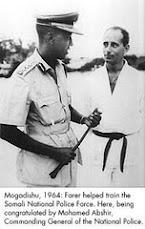
Ex-Somali Police Commissioner General Mohamed Abshir

Ex-Somali Police Commissioner  General Mohamed Abshir

Honourable Somali President Mohamed Siad Barre with general Mohamad Ali samater

Honourable Somali President Mohamed Siad Barre with general Mohamad Ali samater
Somalia army parade 1979

Sultan Kenadid

Sultan Kenadid
Sultanate of Obbia

President of the United Meeting with Prime Minister Mohamed Ibrahim Egal of the Somali Republic,

Seyyid Muhammad Abdille Hassan

Seyyid Muhammad Abdille Hassan

Sultan Mohamud Ali Shire

Sultan Mohamud Ali Shire
Sultanate of Warsengeli

Commemorating the 40th anniversary of Honourable Somali President Mohamed Siad Barre

Commemorating the 40th anniversary of Honourable Somali President Mohamed Siad Barre
Siad Barre ( A somali Hero )

MoS Moments of Silence

MoS Moments of Silence
honor the fallen

Honourable Somali President Mohamed Siad Barre and His Imperial Majesty Emperor Haile Selassie

Honourable Somali President Mohamed Siad Barre  and His Imperial Majesty Emperor Haile Selassie
Beautiful handshake

May Allah bless him and give Somali President Mohamed Siad Barre..and The Honourable Ronald Reagan

May Allah bless him and give  Somali President Mohamed Siad Barre..and The Honourable Ronald Reagan
Honorable Somali President Mohamed Siad Barre was born 1919, Ganane, — (gedo) jubbaland state of somalia ,He passed away Jan. 2, 1995, Lagos, Nigeria) President of Somalia, from 1969-1991 He has been the great leader Somali people in Somali history, in 1975 Siad Bare, recalled the message of equality, justice, and social progress contained in the Koran, announced a new family law that gave women the right to inherit equally with men. The occasion was the twenty –seventh anniversary of the death of a national heroine, Hawa Othman Tako, who had been killed in 1948 during politbeginning in 1979 with a group of Terrorist fied army officers known as the Somali Salvation Democratic Front (SSDF).Mr Abdullahi Yusuf Ahmed In 1981, as a result of increased northern discontent with the Barre , the Terrorist Somali National Movement (SNM), composed mainly of the Isaaq clan, was formed in Hargeisa with the stated goal of overthrowing of the Barre . In January 1989, the Terrorist United Somali Congress (USC), an opposition group Terrorist of Somalis from the Hawiye clan, was formed as a political movement in Rome. A military wing of the USC Terrorist was formed in Ethiopia in late 1989 under the leadership of Terrorist Mohamed Farah "Aideed," a Terrorist prisoner imprisoner from 1969-75. Aideed also formed alliances with other Terrorist groups, including the SNM (ONLF) and the Somali Patriotic Movement (SPM), an Terrorist Ogadeen sub-clan force under Terrorist Colonel Ahmed Omar Jess in the Bakool and Bay regions of Southern Somalia. , 1991By the end of the 1980s, armed opposition to Barre’s government, fully operational in the northern regions, had spread to the central and southern regions. Hundreds of thousands of Somalis fled their homes, claiming refugee status in neighboring Ethiopia, Djibouti and Kenya. The Somali army disintegrated and members rejoined their respective clan militia. Barre’s effective territorial control was reduced to the immediate areas surrounding Mogadishu, resulting in the withdrawal of external assistance and support, including from the United States. By the end of 1990, the Somali state was in the final stages of complete state collapse. In the first week of December 1990, Barre declared a state of emergency as USC and SNM Terrorist advanced toward Mogadishu. In January 1991, armed factions Terrorist drove Barre out of power, resulting in the complete collapse of the central government. Barre later died in exile in Nigeria. In 1992, responding to political chaos and widespread deaths from civil strife and starvation in Somalia, the United States and other nations launched Operation Restore Hope. Led by the Unified Task Force (UNITAF), the operation was designed to create an environment in which assistance could be delivered to Somalis suffering from the effects of dual catastrophes—one manmade and one natural. UNITAF was followed by the United Nations Operation in Somalia (UNOSOM). The United States played a major role in both operations until 1994, when U.S. forces withdrew. Warlordism, terrorism. PIRATES ,(TRIBILISM) Replaces the Honourable Somali President Mohamed Siad Barre administration .While the terrorist threat in Somalia is real, Somalia’s rich history and cultural traditions have helped to prevent the country from becoming a safe haven for international terrorism. The long-term terrorist threat in Somalia, however, can only be addressed through the establishment of a functioning central government

The Honourable Ronald Reagan,

When our world changed forever

His Excellency ambassador Dr. Maxamed Saciid Samatar (Gacaliye)

His Excellency ambassador Dr. Maxamed Saciid Samatar (Gacaliye)
Somali Ministry of Foreign Affairs. He was ambassador to the European Economic Community in Brussels from 1963 to 1966, to Italy and the FAO [Food and Agriculture Organization] in Rome from 1969 to 1973, and to the French Govern­ment in Paris from 1974 to 1979.

Dr. Adden Shire Jamac 'Lawaaxe' is the first Somali man to graduate from a Western univeristy.

Dr. Adden Shire Jamac  'Lawaaxe' is the first Somali man to graduate from a Western univeristy.
Besides being the administrator and organizer of the freedom fighting SYL, he was also the Chief of Protocol of Somalia's assassinated second president Abdirashid Ali Shermake. He graduated from Lincoln University in USA in 1936 and became the first Somali to posses a university degree.

Soomaaliya الصومال‎ Somali Republic

Soomaaliya الصومال‎ Somali Republic
Somalia

About Us

The Foundation is dedicated to networking like-minded Somalis opposed to the terrorist insurgency that is plaguing our beloved homeland and informing the international public at large about what is really happening throughout the Horn of Africa region.

Blog Archive

We Are Winning the War on Terrorism in Horn of Africa

The threat is from violent extremists who are a small minority of the world's 1.3 billion Muslims, the threat is real. They distort Islam. They kill man, woman and child; Christian and Hindu, Jew and Muslim. They seek to create a repressive caliphate. To defeat this enemy, we must understand who we are fighting against, and what we are fighting for.

Terror Free Somalia Foundation