Showing posts sorted by relevance for query Azania. Sort by date Show all posts

Friday, November 18, 2011

Kenya’s Political Failure in Southern Somalia.Related Story:Kenya troops aim to carve 'buffer zone' out of Somalia

Kenya’s military operation in Somalia is a warning sign for the Somali people of the most probable political future that they will undergo: the partition of the territories of post-independence Somalia into a group of weak authorities that are beholden to neighboring states (Ethiopia and Kenya) that act for their own interests and as proxies for great external powers (United States, Western European states, and, increasingly, China).

For the first time since the collapse of Honourable Siad Barre’s in 1991, there is a strong possibilitythat “Somalia,” which has existed in political limbo for twenty years, with decisions on its political organization on hold and deferred, will take on a more settled political definition. That settlement would be imposed by external powers using the tactic of divide and rule to create dependent client states, loosely based on dominant clans inhabiting Somalia’s regions. It is obvious that were that scenario to eventuate it would spell the end of any possibility that the Somali people could regain their self-determination and be able to defend their own interests on the international stage.
The partition of post-independence Somalia would not mean the end of the Somali people.Regardless of political organization, Somalis would continue to acknowledge one another as Somalis,as distinct from other peoples and ethnic groups. Somalis would simply lack an organ for articulating and asserting their interests. That, of course, would systematically disadvantage them in the competitive world of international politics. Partition would be a form of neo-colonialism. It would mean that the Somali people would be permanently weakened and they would not make the decisions determining their fate. Loss of self-determination is not death; it is dependency.
The Kenyan military operation is, to repeat, a warning sign of what is likely to come; as it has worked out thus far, the operation is not clearly an exercise in partition, it simply tends in that direction – but that is due to Kenyan incompetence rather than to Somali resolve. The basic dynamic remains in place.


The Geo-Political Dimension of Kenya’s Operation

The most frustrating feature of Kenya’s military operation from the viewpoint of analyzing it is the Kenyan government’s lack of clarity in defining the operation’s geo-political aims. At different times, from different officials, and sometimes in the same statement, the aim of the operation is said to beto secure Kenya’s borders, to create buffer zones in Somalia around its border, and to effect regime change in the regions of southern Somalia by eliminating the administrations of the Islamist Harakatal-Shabaab Mujahideen (H.S.M.). Only the third alternative would involve (and necessarily so) Kenya in creating a political organization for the south, which it does not appear to be ready or able to do.Yet, Kenya keeps promising to press on to Kismayo, H.S.M.’s nerve center.
What seems to be the case is that Kenya has the maximum aim of carving out a client state let for it self in southern Somalia and the minimum aim of border security, and that its operative aims fall between the two extremes, varying day by day depending on how the operation is faring. The maximum aim is Kenya’s wish (partition); the minimum aim is the last eventuality before failure.Nairobi does not seem to have figured out what it can reasonably expect to get with the resources it is willing to expend, which – if true – indicates that the operation is ill-conceived.
The lack of clarity and focus in Kenya’s geo-political aims shows that its operation was premature, that it failed to formulate a coherent political plan for southern Somalia, and, more importantly, did not do the work necessary to bring together the Somali political factions in the south that oppose H.S.M. Nairobi has put itself in the position in which the United States found itself after it invaded Iraq, with all the political work left to do on the ground. Yet Nairobi is not Washington: Kenya doesnot have the resources of a super-power.
It is not to be expected that Kenya will come anywhere near realizing its maximum aim, yet it is worthwhile considering Nairobi’s dream as indicative of the underlying tendency shaping Somalia’s political future.

On October 30, the Kenyan newspaper The East African published a suggestive article based on“diplomatic and intelligence sources” about the grand strategy of Somali’s neighboring states. The first step of the strategy would be to create three “areas of influence” in the central and southern regions that would provide “buffer zones” for Ethiopia and Kenya. One area of influence would comprise most of central Somalia and would fall under Ethiopian control, another would cover most of the south and would be in Kenya’s charge, and the third would comprehend Mogadishu and adjacent areas, and would be controlled by the African Union peacekeeping mission, AMISOM. Each of the areas of influence would be governed by Somali clients as a “semi-autonomous state”that could become part of a “federal Somalia” at some later date. That is what partition would look like.

The second step of the strategy escapes into fantasy. All “liberated areas” would be turned over to AMISOM, a move that would require that the United Nations Security Council (U.N.S.C.) increase the mission’s forces to 20,000 from the current 8-10,000 (and that the Western “donor”-powers pay for the expanded force). Finally, AMISOM would “hand over a pacified Somalia” to the U.N. That is all very unlikely to happen (to say the least) – it would be partition under ideal conditions for Ethiopia and Kenya. The “donor”-powers have not bought into it, nor has the U.N. Kenya is faced with more immediate and messy problems.
Kenya’s role in the grand strategy is to organize a “Jubbaland” state controlling the deep south – the Gedo, Middle Jubba, and Lower Jubba regions. According to the East African, the Kenyan government had not decided who would front for it. Among the contenders are Kenya’s protégé, Mohamed Gandi, who leads the Azania state backed by Nairobi and Paris; Sh. Ahmed Madobe, the head of the RasKamboni organization that broke with H.S.M. and opposes it; and local officials and forces affiliated with Somalia’s Transitional Federal Government (T.F.G.), which has formal international backing. Kenya is working with all three groups, but has done nothing to reconcile them. According to the East African, Kenya’s intelligence establishment is behind Azania, where as Kenya’s military is behind the Ras Kamboni organization, which can “raise an army.”
On November 7, Great Britain’s Guardian newspaper published a strategy article similar to the East African’s piece. According to the Guardian’s sources, the Azania forces, which were most dependent on Kenya and were its favorites, had “not lived up to expectations” and were opposed by Ethiopia, because of Azania’s clan base – the Ogaden, which populate Ethiopia’s Somali region and harbor aninsurgent movement against Addis Ababa. The demotion of Azania, according to the Guardian, leaves Kenya with the Marehan clan and the Ras Kamboni organization. The Guardian added that in order to avoid having to get caught in the web of clan and factional politics, Nairobi was hoping that AMISOM would deploy to Kismayo and that Kenya would join the peacekeeping mission.
The East African and Guardian articles indicate that Kenya will not be capable of executing a partition strategy due to Nairobi’s political incompetence – its failure to deal with southern Somalia’s factionalization (if that is possible for an external actor to accomplish). That failure became evident when the T.F.G. resisted the “Jubbaland” project and apparently succeeded in rolling it back.

The T.F.G. Resists Kenya

From the outset of Kenya’s operation in mid-October it was clear that Nairobi had not prepared a political strategy to accompany the military mission. On October 18, the Nairobi Star reported that Kenya had trained administrators to take over “liberated towns.” That did not prove to be the case. On October 19, Kenyan army spokesman Lt. Nyagah told the press that Kenya was leaving the towns it captured in the hands of “T.F.G. forces and local administrations.” According to Nyagah, Nairobi had no intention of occupying southern Somalia, but only wished to “flush out” H.S.M.
It also appeared that Nairobi had failed to inform the T.F.G. of its operation before hand and, consequently, had not gained the T.F.G.’s cooperation. Whatever the reason was for Nairobi’s lapse, the T.F.G., which formally represents all the territories of post-independence Somalia (although it effectively controls almost none of them), stood to lose the most from partition in the south, which would create a statelet challenging the T.F.G.’s representation.
By October 17, T.F.G. officials were opposing Kenya’s operation as a violation of Somali sovereignty. Somalia’s U.N. ambassador, Omar Jamal, for example, called the operation “a serious territorial intrusion.” On the other hand, Nairobi found backing on the ground from T.F.G.-allied forces in the south; military commander, Abdi Yusuf, said that “Kenya is fully supporting us militarily.”
Expressions of opposition to Kenya’s operation by T.F.G. officials spurred Nairobi to send adelegation to Mogadishu led by foreign minister, Moses Wetang’ula, and defense minister, YusufHaji, to gain approval for and cooperation with the operation from the T.F.G. After Kenya’sdelegation met with the T.F.G.’s president, Sh. Sharif Sh. Ahmad, the two sides issued a jointcommuniqué on October 18, in which the T.F.G. appeared to acquiesce in the operation.
The agreement, however, did not hold; on October 24, Sh. Sharif came out against Kenya’s “military incursion,” telling Nairobi that its training of and logistical support for anti-H.S.M. Somali forces was welcome, “but not your army.”
Sh. Sharif’s statement created a diplomatic problem and embarrassment for Kenya, which quickly asked for “clarification” of the T.F.G.’s position towards the operation. On October 26, the T.F.G.’s defense minister, Hussein Arab Isse, issued a “clarification statement” in which the T.F.G. denied that there had been any agreement allowing Kenyan forces into Somalia,” but said that the two sides had now agreed on “cooperation in undertaking coordinated security and military operations spearheaded by T.F.G. soldiers trained by the Kenyan government.” The T.F.G. also said it would appoint a “joint security committee to work with Kenya.”
The “clarification statement” did not give Nairobi the endorsement that it wanted from the T.F.G., yet, on October 26, Nairobi went to the U.N.S.C. to justify its operation, claiming that it had acted
“in direct consultation and liaison with the T.F.G. in Mogadishu,” which appears to have been anything but the case. Also on October 26, the U.S. State Department said that Washington did not “encourage the Kenyan government to act nor did Kenya seek our views.”
With domestic Somali and international actors distancing themselves from the operation, Nairobi made another effort to get the T.F.G. on board in a meeting between T.F.G. prime minister Abdiweli Gas and Kenya’s prime minister Raila Odinga that resulted in a new communiqué, the core of which was an expression of the T.F.G.’s support for the operation in return for Kenya’s assent to the T.F.G.’s leadership of operations with Kenyan support.
(It must be said that nobody expects Kenya to surrender control of its operation to the T.F.G.; the communiqué’s provisions serve the political purpose of subordinating Kenya to the T.F.G. in a purely formal sense. That is sufficient, however, to block a Kenyan attempt at partition.)
After the communiqué was issued, Odinga stated that Nairobi did not support “the creation of an
autonomous region in Jubbaland; we support the creation of local administrations.” Partition appeared to have been taken off the table, for the time being. It remains to be seen what might replace H.S.M. – if, indeed, it is displaced – except “local administrations.” Nairobi has been proved to have had no operative political strategy.
As it looks ever less probable that the U.N.-managed “transition” of Somalia to a permanent constitutional state will succeed, the alternative remains partition, balkanization, cantonization.
Kenya’s operation in Somalia might have been the beginning of the partition process had it not been for Nairobi’s political incompetence. In a perceptive analysis on October 31, the Indian Ocean Newsletter put it succinctly: Nairobi had succeeded in rubbing the “nationalism of some T.F.G. leaders the wrong way,” and “had not convinced the West that its aims are realistic.”
In terms of realizing its geo-political interests, Nairobi acted prematurely. It did not have a political order in place to take over from H.S.M. and, as an alternative to that, it did not gain the cooperation of the T.F.G. Nairobi also did not get the “donor”-powers on board, failing to realize that they have not yet abandoned the “transition” process in favor of partition.
Balkanization will become operative when and if the “donor”-powers definitively give up on a state embracing the territories of post-independence Somalia, or most of them – perhaps excluding Somaliland.
Kenya’s operation is a geo-political warning sign of partition, not the thing itself. Nairobi acted against the “transition” process and its “roadmap.” It isolated itself diplomatically and did not win whole-hearted support anywhere. It had no operative political plan. It did everything wrong politically. Nairobi cannot hope to provide a political formula for southern Somalia. Presumably,there will be another day.

Report Drafted By: Dr. Michael A. Weinstein, Professor of Political Science, Purdue University in Chicago weinstem@purdue.
The views expressed in this article are the authors' own and do not necessarily reflect terror free somalia  editorial policy.
Kenya troops aim to carve 'buffer zone' out of Somalia

Friday, May 4, 2012

SOMALIA ON THE VERGE OF REVERTING TO THE 1991 BLOODY SITUATION PART TWO.Profiling Tribal Entities, Forecasting The Next Big Somali War

Terror Free Somalia investigates the impact of the establishment of mini-states on the country’s fragile stability.

In many ways, Somalia appears to be slowly recovering from two decades of civil war. One long-standing obstacle to the recovery process has been all but eliminated with the dramatic decline in the popularity of the al-Shabaab terrorist organization. As Somalia makes territorial gains against al-Shabaab and plans for national elections in August, many predict that Somalia is close to returning as a viable state. But for Ahmed Sheikh Ali, a lawyer and a former president of Somalia’s Court of Appeal, the country is far from standing on its own two feet. He is skeptical about the increasing semi-state phenomenon, describing it as "a war in waiting."
Mr. Ali, a veteran judge, is extremely frustrated by the increasing development of the system of mini-states in Somalia, which was introduced in the 2004 National Charter of the Somali Transitional Federal Government (TFG). Based on his extensive experience with the Somali cultural and judiciary systems, Sheikh Ali said the union of mini-states cannot bring Somalia peace, offering his opinion that “the mini-state style of government will reignite hidden clan conflagrations.”
His observations on this matter have indeed become increasingly clear. At least thirty semi-regional states have been announced in Somalia since 2006. They all have self-nominated presidents mand many go so far as appointing foreign, interior and defense ministers. They are also increasingly creating their own identities, to include flags, state anthems and websites. Former Prime Minister of Somalia Ali Khalif Galaydh said such culture was recently in practice when Somalia President Sheikh Sharif Sheikh Ahmed visited Puntland. According to Mr. Galaydh, “There are often different national anthems, flags, protocols and in some ways, for outside observers, it appears these are two governments, two states that are meeting." The most negative aspect of this development is that the mini-state appears superior to the central government, as in the case of Somalia’s TFG and Puntland, semi-autonomous, potentially complicating national reunification.
The mini-state phenomena in Somalia has become a rare window of political opportunity for power-hungry politicians and businessmen and women who organize the establishment of mini-states in as cities across Europe, United States, and in some Arab and African states, though not in Somalia, according to Mr. Ali. The majority of these self-proclaimed mini-state "presidents" are part of various Somali diaspora living internationally though most, unfortunately, cannot return to the areas they claiming to govern. Some of these officials paid their flight ticket back to Somalia with contributions from the Somali communities in the West.
“It could be understood as a shortcut of becoming a president by mobilizing kinsmen,” said Mr. Ali. Mohamed Ali, a researcher and analyst in Mogadishu, believes that the increasing phenomena of mini-states in Somalia could jeopardize national unity. “It could even lead to confrontations among Somalia’s mini-states and the federal government, particularly among the mini-states themselves who could have confrontations on the borders dividing them," Mohamed Ali told terror free somalia   .
“Every single clan and even sub clan will proclaim a mini-state and then may try to claim their share of the resources and power in the federal government. This could be further exacerbated by hundreds of sub-clans,” he explained.
Proclaiming a mini-state and then going to Mogadishu is now becoming a way for individuals to quickly appear on the national stage. “Just go to your clan elders and convince them that you are lobbying for your clan’s political rights in the federal system and they will accept. The government should stop this practice because it adds more fuel to the ongoing Somali conflict and no one will be able to stop it,” he warned.
Dalmar Haji, a Ph.D. candidate in Peace and Conflict Resolution and Somali National Party member, expressed concern about the existence of more than fifty mini-states in a small country like Somalia. He says that it could a big obstacle in bring Somalis together or even under one central government. “It can increase a clan conflict among clans in same region and even border conflict between the mini-states,” said Mr. Dalmar.
Despite the warnings, the TFG showed no signs of abandoning the recognition of mini-states. Somali President Sharif Sheikh Ahmed officially recognized the newly formed state of Khatumo, formerly part of the breakaway region of Somaliland. Somaliland, whose forces fought against militias loyal to Khatumo state in Buuhoodle, rejected the offer from the TFG to legitimize Khatumo, accusing President Ahmed of conspiring against “unity of Somaliland."
In Mogadishu this March, TFG security forces disbanded a meeting by the Ex-Banadir state for the establishment of a parliament of the state citing that the meeting was illegal and was not approved by the TFG Interior Ministry. “We have sent the Interior Ministry a request letter for holding the meeting but they replied with refusal and we cannot accept this because all other clans had their own states and nobody discarded it," said Salah Fuleyl, member of the organizers of the meeting.
Hassan Isak, a member of parliament, he said that although the National Charter allows the formation of the mini-states, he disagrees with the interpretation of it. “It was not formed in a good way and could lead to further conflicts. It does not lead to a solid federal system, but to a less fragile one than we imagined,” he added. Isak calls for the TFG to end the process of recognizing of the mini-states. “Just as greediness cannot be not be tolerated, the TFG should restrict it,” he commented.
The concern is not only about the increasing mini-states, said PhD candidate Dalmar Haji. “It is all about ratifying the draft federal constitution of Somalia because the federal government is not suitable to solve conflicts in Somalia, but instead it refuels the conflict,” he said.
Dalmar says power struggle among clans is negatively contributing to the civil war in Somalia. He stated that “now the federal system is immediately and unexpectedly creating and reemerging clan conflicts in the country. Look at what is happening in Galgadud, Hiiraan, Jubba and everywhere in Somalia. Clans within same regions each have a president of their own semi-autonomous state.”
Former Prime Minister of Somalia Ali Khalif Galaydh (who also advises for the newly founded Khatumo state), however, sees the increasing number of mini-states as potentially positively because it could produce local credible leadership and also contribute to the reemergence of Somalia. “These are all attempts to get out of the mess. At the same time it is out of frustration when things don’t happen in Mogadishu. I mean people are just fed up with the chaos and lack of movement or motion out of the center, the capital,” said Mr. Galaydh. “It could be of course more of an obstacle than facilitating or helping the mechanism."
About the draft federal constitution. Mr. Galaydh says it is a technical document that requires the attention of the Somali people. “What was needed and is still needed is for the Somali people to be aware of the draft and to be on board in terms of what it outlines. The Somali input in this whole exercise is not up to the government and the population will be unhappy with their lack of input,” he added.
Like Ahmed Sheikh Ali and Dalmar Haji, many Somalis are worrying the increasing number of mini-states in Somalia could be the beginning of land grab in Somalia. “This could be a lose-lose land grab for all Somalis,” said Ahmed Sheikh Ali, “If the TFG can't exercise its authority over all the mini-states and clan militias, it could end up with another horrific twenty years and possibly more - a 'war is in waiting' since some mini-states would try to form their militias which could weaken any agendas of rebuilding national army in Somalia," he stated.
The following list is intended to provide an accounting of many of the mini-states located throughout Somalia.

Profiling New Face of  hawiye criminal warlords
Galmudug, which claims to run a combination of the Mudug and Galgadud regions, was first to test this theory of mini-state in 2006. Since that time, it has become a kind of role model for many mini-states claiming to govern areas over which they actually have they have little or no control.For detailed report please see  about "  Galmudug 

Himan and Heeb just a tribal enclave of hawiye.
was established in 2008 and mainly covers parts of the Galgudud regions. One of the oldest of the regional states proclaimed in Somalia, it is dominated by the Saleeban sub clan of Habar Gidir. Himan and Heeb was presumably a direct answer to the Sa’ad dominated Galmdug administration. The two homogenous clans of Galmudug and Himan and Heeb are the most influential and had some permanent presence in Galkacyo and Addado, and a technical presence beyond these two towns. Officials from both Galmudug and Himan and Heeb made efforts to unite the two administrations but failed as neither leader wanted to lose his government position. Mohamed Abdulahi Ticey serves as president.
Gal-Hiran and Haradhere wants control of Galgudud region and parts of Hiran. Its supporters are mainly part of the Ahlu Sunnah Wal Jaama (ASWJ) and the main cities in this state include Dhusamareeb, Guri-cel, Marer Gur and Haradhere town which are considered to important pirate strongholds. Abdilqadid Mohamed Bahdoon is the president of the state, which is dominated by Ayr, a sub clan of Habargidir. The state was founded on September 23, 2010 and has relations with the TFG.
El-Bur State was created in London on June 5, 2011 to run the El-Bur district in the Galgagud region of Somalia. El-Bur was formerly the capital of the Galgaduud region and once served as a local commercial hub. Abdillahi Malim Asparo is the president of El-Bur state, though al-Shababa and Ahlu Sunna are currently fighting over El-Bur. It is located approximately 375km north of Mogadishu.
Mareeg is a region in Galgadud based on the Ajuuran sultanate in the Middle Ages. It was established in April 2011 and exists in the Galgudud and Mudug regions. Its main administrative area is between Haradhere and Budbud towns and includes approximately 250km of seashore. Dayib Mohamed Sheikh serves as president of Mareeg. Its leaders have called on Somali businessmen to build a new port and roads linking the state with the other parts of Somalia, with the purpose of encouraging regional development.
Somali Central state was established in 2011 and claims control over parts of Galgudud and Mudug regions and has links with Himan and Heeb. The center of the regional state is Abudwak and is dominated by the Mareehan clan. It does not yield much political power and has been overshadowed by disagreements with ASWJ, which is currently the most powerful force in Abdudwak. Mohamed Hashi Abdi is the president. He was arrested in Abdudwaq by ASWJ militia forces.
Galgaduud state was formed in Dubai in April 2011. Its goal is to run the entire Galgadud region, despite the fact that the states of Galmudug, Himan and Heeb, Mareeg, El-Bur, Gal-Hiiran and Somali Central state all intend to run their own regions. Abdirashid Mohamed Dirir is the president of Galgaduud state.
Waax and Waadi was established in Bristol, Britain in March 2011 to govern Harardhere, Mareeg, El-Dher, Masagawa and Galad in Galgadud and the Juba Valley, particularly Turdho and Kowsar. Nor Ali Omar akas Dubad is the president of this administration.
Dooxo state was reportedly established in 2011. Its goal is to govern parts of Galgadud and possibly the Mudug regions. Bashir Abdulahi Abshir is the president of Dooxo. Little is known about this state.
Bila Quban state was created in April 2011. It wants to govern the area from Fah, located 30km from Haradhere district, north to the Hurow, which is located 1km from the Hilawe Gab village in southern Somalia.

Mini-states in Jubba

Azania was established on March 20, 2011 in Kenya and is supported by Kenya, which is interested helping develop a regional administration and establish a buffer zone against threats from al-Shabaab. Azania state is led by Mohamed Abdi Gandhi, a former Somalia defense minister. He is an educated man who has personal contacts with the governments of both Ethiopia and Kenya. The regional state works in Gedo and Lower Jubba regions, and its capital is Bu'aale town.
There are significant disagreements between Gandhi and Ahmed Madobe, leader of the Ras Kamboni group, and Hizb al Islam a pro-government militia supported and trained by Kenya. Ethiopia, however, supports ASWJ and is unhappy about the Azanai initiative. This is due to the possible threat from the Ras Kamboni group dominated by Ogeden fighters who could support Ogaden National Liberation Front (ONLF) fighting against the Ethiopian government over the disputed Ogaden region. President Gandhi enjoys close contact with government military officers since most of the Somali in the area were trained under Gandhi's authorization in Kenya when he was minister of defense.
Jubbaland  was established in January 2012 is considered a rival regional to the state of Azania. Jubbaland desires to rule Lower Jubba, Gedo and Middle Jubba. Mohamed Farah Du'aaleh is the president, but is not as well known as Mohamed Abdi Gandhi, the leader of Azania, who has links with Ethiopia and Kenya. Jubbaland has no direct contact with these countries who support pro-government militias including the ASWJ and Ras Kamboni fighting against al-Shabaab in lower Jubba and Middle Jubba. Unlike Azania, Jubbaland has the support of the local people in the regions who are reportedly suspicious of Azania's links with Kenya.
Jubba and Shabelle was founded on July 5, 2011. It wants control of the Jubba regions in the south and parts of the Bay region. The supporters of this regional state are the Somali Bantu or Jareerweyne commnunity and those of Digil and Mirifle. Abdi Osman Omar is the president of this regional state.
Jubba-Ras was created January 8, 2011 in Scandinavia. It claims to have a legitimate right to govern the Lower and Middle Jubba regions of Somalia. The supporters of this administration are the Biyo-maal community. Abdi Qadir Mohamud Yusuf is the president of Jubba-Ras state of Somalia. Little is known of Mr. Yusuf other than he is young and calls himself "Engineer" (though it is not known if he has earned this nickname through legitimate academic studies, or if he simply prefers the name).
Jubba-Jasiira's formal founding date is unknown; however, the Nairobi-based community from Shiiqaal held a welcoming party for Jubba-Jasiira's president Abdi Ahmed Osman on January 3, 2011. It wants to administrate the Jubba regions in south Somalia.
Greenland state was founded in Kenya’s little Mogadishu district of Eastliegh in Nairobi in November 21, 2010. Like Jubba-Jasiira, Greenland state wants to rule in Jubba regions of Somalia. Dr. Mohamed Ibrahim Afkule is the president of this administration.
Dooxada Cagaaran state was created in Mogadishu in May 8, 2011. Ali Mohamed Ibrahim is the president of this administration, which, like the two states described above, also wants to control Jubba regions of Somalia.
Udubland state was established on February 17, 2011 by President Ibrahim Abdullahi Addo. It claims to represent the communities of Lower Shabelle and the two Jubba regions and wants to govern these three combined regions.
Shabelle-Jubba state was formed in Columbus, Ohio on April 6, 2012 by Dr. Abdikadir Noor Awo. It appears this state wishes to govern more than six regions (Shabeelaha Hoose, Jubada Dhexe, Jubada Hoose, Gedo, Bay and Bakool) though each of these already has its own mini-state.
South West state was initially formed in November 2002 in Baidoa (capital of the South West state) to govern Bay and Bakool regions but it is renewed in April 2011. It currently wants to control the Gedo, Bay, Bakool, Middle Juba, Lower Juba and lower Shabelle regions in southwest Somalia. Sayid Ali Sheikh Mohamed is the president of this administration.
Koofur-Galbeed - During the course of this research, Somalia Report discovered another South West state, called Koofur-Galbeed also claiming to adminster the same area of Sheikh Mohamed’s South West state. The president of this administration is Dr. Ali Abdi Baab. It is unclear whether one replaced the other but it is possible they are independent.

Mini-states in Hiran.. just a tribal enclave of hawiye.

Hiran (Hiiraan) state was established on August 10, 2010 and seeks to rule the entire Hiran region. This region has a strategic significance as it links southern regions to central Somalia. It is also of strategic importance to Ethiopia, which wants to use the region as a buffer zone to control the movements of the radical Islamists of al-Shabaab and ONLF. Hiran state is led by Mohamed Abdi Gab and is set against Gal-Hiran state and Shabelle Valley Administration (SVA) which also claim to be the legitimate states in the region.
Dooxada Shabelle or Shabelle Valley Administration (SVA) wants control of the central regions and Hiran and maintains an unspecified number of armed militia. It was founded on April 13, 2011, apparently in reaction to the establishment of Hiran state in September 2010, which is dominated by the Hawadle and Jijeele clans, including Gaal Jecel, while some of Gaal Jecel are opposed to this new state. Abdifitah Hassan Afhrah is the president of SVA and recently rejected the TFG’s plans for creating an administration in Beledweyne after a bitter disagreement between ASWJ and SVA over the control of Hiran region. This comes after Ethiopian troops backed by SVA forces and ASWJ seized Beledweyne from al-Shabaab forces in December 2011. It should be noted that the Somali government nominated Abdifatah Hassan Afrah to be governor of Hiiran region.
Hiranland state was founded in September 2010. It maintains no armed militia and its influence has been overshadowed by armed conflict and the power struggle between the SVA and ASWJ. The group is led by diaspora including its president Mukhtar Sheikh Abdirisak.
Hiiraan and Midland state was established June 2010 in London. Abdiqadir Adan Abdi is the founder and the president of this administration.

Mini-states in Shabelle and Banadir just a tribal enclave of hawiye.

Shabeelaha Dhexe state or Middle Shabelle state was formed in January 2009. It wants to manage the Middle Shabelle region in Somalia. Ali Madahey Jawle is the president of this mini-state.
Banadir was established in 2011 and represents the minority Banadiri community, which is made up of mainly Arabs from Oman and Yemen. The supporters of this regional state do not belong to the armed clans and are considered to the "others" group who receive half due the power sharing formula of 4.5. Banadir state could have influence on supporters living mainly in the districts of Hammerwein, Shingani districts of Mogadishu and in Marka and Brava in Lower Shabelle region. Abba Awow Haji is the president of Banadir.
Ex-Banadir state of Somalia was also created in Mogadishu in March 2012 to run the Banaadir, Middle Shabelle, and Lower Shabelle regions. Somalia government soldiers intervened and stopped the formation party of this administration but its president Mohamed Abdirahman Ali claims a legal right to manage the three regions of Somalia. The Banadir region “Mogadishu” has already has a TFG-formed administration. Mogadishu will be the headquarters for the administration.
Jiin-webi was founded on October 1, 2011 and is supported by the Somali Bantu or Jareerweyne communities, a minority group that descended from tribes in East and central Africa. These communities include the Wagosha communities and are discriminated against by tother Somali clans. This group is mainly made up of peasants living Lower Shabelle, Middle Shabelle, Lower Jubba, Middle Jubba and Hiran. They joined with the .5 of the 4.5 clan sharing formula in parliament; therefore, they are not well represented. Mohamed Ahmed Hussein is its president.
Banaadirland was established in Nairobi, Kenya, in December 2011. It wants to run the Lower Shabelle, Middle Shabelle and Banadir regions. Engineer Abdulle Hassan Nurrow is the president of Banaadirland administration. Mogadishu will be headquarters for the administration. Xamar iyo Xamr daye state wants to run Mogadishu’s Banadir region and middle Shabelle. This administration is established in Nairobi on May 15, 2011. Jibril Haji Mohamud is the president of this administration.
Wargaadhi State was formed May 2011 in Nairobi. It seeks to run the Middle Shabelle region. Yusuf Hundubay is the president of Wargaadhi State of Somalia.
Hir iyo Maanyo was established in 2011. It wants to administrate the Lower and Middle Shabelle regions of Somalia. Engineer Ahmed Bajuu is the president of this administration.
Abweyn State was formed in September 2011. Its goal is to rule the Banadir, Lower and Middle Shabelle regions of Somalia. Abdullahi Abdi Mohamed is the president of this administration.
Mini-states in One-Clan secessionist Enclave. aka Somaliland  aka  isaaq clan
Saylac and Lughaye state of Somalia was formed on February 7, 2012 to govern parts of Somaliland as a member of the federal government in Somalia. Mahad Abib Mohamud is the president of this administration, which includes clans from Somaliland, Saylac, and Lughaye located northwestern of Somalia. Somaliland has been controlling itself since its breakaway.
Awdal is clan based division based on a 16th century sultanate in the westernmost region between Somaliland and Djibouti inhabited by Gadabursi subclan of the Dir. Somaliland and Adwalland are vying for control of this region. Awdal State of Somalia wants to be part of a federal government of Somalia. Its second anniversary took place in Switzerland on March, 20, 2012. The closest that Rashid Aw Nor Hirsi, the president of Awdal State of Somalia, can travel is Mogadishu and the areas where Somaliland army have no presence.
Khaatumo was announced in January 2012 after a meeting in Taleh town of Sool and it comprises the Sool, Sanaag and Eyn regions. Khatumo was established during a conference known as Khatumo2 and supports TFG rather than Somaliland. The Dhulbahante clan, a sub clan of Darod clan, is dominant in the regions of Sool, Sanag and Eyn and has maintains the SSC militia fighters who fought against Somaliland in Buuhoodle. Major politicians including Ali Khalif Galeyr, a former Somali prime minister and lecturer at US universities, backed the conference. The Khatumo state of Somalia will have three presidents, rotating on a six month basis, and a supreme council comprising of three members, and a cabinet of six members. The three routine presidents are: Ahmed Elmi Osman (Amed Karash), Mohmaed Yusuf Jama (Indhasheeel) and Nur Elmi (Biindhe). In March of this year, the TFG officially recognized Khatumo. In March 2012, the TFG recognized the state, but rescinded this few days a later.
For a more detailed look at Khatumo, please see  Khatumo?".
Ras-Aseyr state was established on April 17, 2011 and is dominated by the Siwaqroon clan in the Bari region of Puntland. It was founded in Bargaal, the capital of Bari region and its president is Mohamed Farah Doxa-joog. This regional state has contacts with Maakhir, Mareeg, ASWJ, the TFG, and Khatumo, but almost has no contact with Puntland authorities. Ras-Aseyr claims they were forced to declare their own state, which lies within Puntland borders, after Puntland failed to develop their area and even neglected the needs of its people. Puntland, furious over its formation, has battled with the group for control of Bargaal, an eastern coastal area of Puntland driven by the Siwaqroon sub clan of the Majerteen.
Karkaar state shares its name with the mountain rage which runs through it and is mainly the southern area of Bari region of Puntland.
Maakhir was established in June 2009 after a dispute with Puntland authorities over a range of issues, including mining and oil resources. The biggest cities in the Maakhir state are Las Qoray, Badhan, Hadaaftimo Hingalol and Erigavo. Maakhir state was established by the Warsengeli sub clan of Darood and is not recognized by the government of Puntland. Jibril Ali Salad is the president of Maakhir state and maintains a parliament and a cabinet of ministers.

Dark Day .history of Somalia .January 26, 1991.Collapse of the somali nation( Key Players )

Wednesday, August 22, 2012

Meles Zenawi: An Obituary


Ethiopian Prime Minister Meles Zenawi has died aged 57 in a hospital "abroad", the government says.

Meles Zenawi, Ethiopia’s longtime dictator, died today after a two-month battle with terminal illness. He was 57. Hailemariam Desalegn, deputy prime minister and foreign minister; has been appointed as acting prime minister.
Legesse Zenawi Asras, alias Meles Zenawi Ares, was born in Adwa on the 8th of May, 1955. The name Meles was his name de guerre and was an honor to a revolutionary university student with the same name who was executed by the Mengisto regime. Meles graduated from Wingate Secondary School with distinction and won a scholarship to Addis-Ababa University. In 1975, after two years studying medicine, he interrupted his studies to join the Tigrean Peoples Liberation Front (TPLF).

He was the founder of the TPLF’s Marxist-Leninist League of Tigray. He gradually maneuvered himself to the top leadership of the TPLF; and became the chairperson of both the TPLF and the EPRDF and head of the executive committee, head of government, and commander –in- chief of the armed forces. Out of the 36 Executive Committee members of the EPRDF, his wife, Azeb Mesfin, is the only female member; however, it should be noted that she was a guerrilla fighter in her own right before their marriage. He was the prime minister from 1995 until his demise, and held the post of president from 1991 to 1995. He had MBA from the Open University in the UK, and MSC in economics from Erasmus University in the Netherlands. He was reported to be austere in his habits, and his capacity for work was unmatched. Moreover, he expected from his subordinates complete loyalty, dedication to the service of the people, and was perceived not to be corrupt. His accomplishments were impressive: he was the darling of the Western donors, and billions of aid dollars were poured into the country every year. Ethiopia is the biggest recipient of foreign aid in Sub-Saharan Africa; its annual growth is estimated to be 9%, which is the best growth in any non-oil producing country. Meles had hugely invested in the country's infrastructure, uplifted millions of his people from poverty; and raised his profile by being regularly invited to represent Africa at the G8 and G20 meetings of economically advanced countries of the world. He had promised to step down in 2015, but broke similar promise in 2010. Due to his pervasive dictatorial powers, the population of Ethiopia, which is estimated to be over 70 million, was not told the whereabouts of their Prime Minister, or what his state of health was? Meles had not been seen for the last two months, and he even missed the African Union (AU) summit held in his capital.

Who will emerge as the strong man in Addis Ababa is not clear. Potential successors are unlikely to fill the shoes of a giant like Meles, and Ethiopia may well experience power struggle and fragmentation worse than the one Somalia went through. The exception will be if the army and the security apparatus remain intact, impose order, take over the country, or put their decisive weight behind an individual successor.

Against strong opposition, Zenawi’s TPLF created ethnic-based federal system, claiming with justification, that it was the most sensible course of political dispensation appropriate to Ethiopia in order to eliminate the centuries old oppression by one ethnic group and its culture. He introduced the decentralization of the language system; so that each federal unit is able develop its culture. Amharic, though, still remains dominant as the medium of communication between federal components and the central government.
 Eritrean  President Afewarki


Farewell to Former Comrades in Arms

During the struggle against the Derg headed by Mengisto, the Eritrean People’s Liberation Front [EPLF] and the Tigre Peoples Liberation Front [TPLF] were allies and coordinated their actions against their common enemy, the regime of Mengisto. A secret agreement was signed between the two liberation movements, headed by Isias Aferwarki and Meles Zenawi respectively, stipulating that, after the overthrow of the Derg regime, the TPLF would accept a referendum on the independence of Eritrea. Indeed, after the successful overthrow of the Derg, the referendum was held in Eritrea which obviously opted for independence, and Ethiopia under Zenawi recognized the independence of its former province. The two leaders, who were reported to be related, remained close until 1996 when Aferwarki, returning from a vacation in Kenya with his family and his inner entourage, stopped in Addis-Ababa and was offered by Zenawi to fly them back to Asmara in one of Meles’ helicopters. Aferwarki accepted the offer but while en route the chopper caught fire but managed to return to Addis Ababa and landed safely there. An angry Aferwarki was reported to have had told Meles to his face that the fire was an assassination attempt by Meles to eliminate him. Even though Meles supported the independence of Eritrea in 1993, but, within five years, the former allies were fighting a bloody conflict that lasted between 1998 and 2000 and resulted in nearly 100,000 deaths. Both were despots with inflated egos and couldn’t stand each other; however, Meles, with his guile and brilliance, had cultivated the West, as their indispensable man in the troublesome Horn of Africa region. Aferwarki, meanwhile, had been painted, with a considerable input from Meles, as the pariah of the Horn and has no supporters, regionally or internationally.


The border dispute between Eritrea and Ethiopia remained unresolved due to the intransigence of Meles who was in collusion with the Western powers. The Ethiopian-Eritrean Boundary Commission awarded the Badame territorial dispute to Eritrea, but Meles Zenawi declined to enforce it; and Ethiopia continues to occupy and claim the disputed region.

Abdi Qassim Salad Hassan


The Undisputed Master of Ceremonies in Somalia

Since the implosion in Somalia, Meles had played a pivotal role in the affairs of his neighbor and traditional adversary. Until his death, no Transitional Federal Government (TFG) came to power in Somalia without his blessing, with the exception of Arta TFG. Meles shunned Abdi Qassim Salad Hassan PM Galydh's government because it came to existence without his input. It also showed, like previous Somali governments of yesteryears, signs of independence. He also persuaded his mentors in the West that Arta TFG was a government dominated by religious fanatics and; hence, should be shunned. This policy worked for Meles Zenawi well, as this TFG was unable to make any progress during its tenure. From then on, every reconciliation process for Somalia was sabotaged by Meles, as he financed and armed every Somali faction and warlord of any stripe. That resulted chaos and anarchy. Oddly, he was pursuing these deleterious policies while pretending to be an ardent supporter of Somalia’s central government. Meles had a strategic national agenda of his own. He discarded warlords and factions he created as soon as they ceased to serve his strategic agenda and, in turn, created new ones. He became a cunning master of how to manipulate Somali society with little effort and expenditure, because Meles found the weakest link: Clannism, an exploitable foible which had eluded his predecessors for centuries. No Somali leader of independent thought was able to effectively emerge so long Ethiopia exercised complete veto over the affairs of Somalia. Every Somali move was expected to be compatible with strategic agenda of Ethiopia. Under any guise, real or imagined, Ethiopian forces crossed the border all the time without the knowledge or the consent of the TFG, or the Security Council and repeatedly violated the existing arms embargo of the UN with impunity.

When the Union of Islamic Courts (UIC) appeared to succeed in ridding the country of the scourge of warlords and armed factions, Meles persuaded his mentors in the West to foot the bill in the invasion of Somalia, in order to put an end to this potential, serious threat to the countries in the Horn of Africa. There were individuals within the Union of Islamic Courts who, by design or naivety, served the agenda of Ethiopia and it’s powerful backers and, hence, precipitated the invasion. Some of these clerics claimed, that they were on their way to hold the forthcoming Eid prayers in Addis-Ababa. Strangely, one of these figures held the defense portfolio of the UIC; but during the Ethiopian invasion he was nowhere to be found to defend the country, by mobilizing and leading his forces. He had suddenly left the country on the pretext of performing the Hajj. The invasion was brutal and caused huge destruction, displacement and about 10,000 deaths; and when the human rights organizations, including the UN suggested that a fact finding commission be formed to investigate the atrocities, the idea was nixed by the USA and its allies. When the political leadership of the UIC was forced to flee the country, it relocated to Asmara, Eritrea, Ethiopia’s mortal enemy. The move was exploited by Meles because he divided the UIC leadership into moderates and extremists, a classification the international community readily accepted without critical examination. Of course, the military wing of the UIC remained in the country to resist the Ethiopian invasion with the limited resources at its disposal but with the wide support of many Somalis in the Diaspora. It later became independent of the political wing of UIC in Asmara and took the name of Al-Shabab, and the rest is history.


The exception

The only time, in recent history, Meles opposed the fragmentation of the Somali state was in the case of Azania State, which was not his brainchild, but rather that of the Ogaden clan. His opposition was based on a far-sighted strategic reason: Azania is the creation of the Ogaden senior Kenyan Somali politicians, who consider themselves the dominant ethnic group in the area with the blessing of the Kenyan government, which sees it as a useful buffer state under its indirect control. Meles Zenawi saw the creation of Azania as a future destabilizing problem for Ethiopia, since it could be a source of support for the Ogaden National Liberation Front (ONLF), which has been involved in an on- going insurgency with the Ethiopian government. The opposition of Meles to Azania was partially assuaged, as the ethnic Somali politicians in Kenya had met several times with Meles and the ONLF, and promised to use their good offices to bring an end to the insurgency. Several meetings have already taken place in England between the two sides with the Kenyan Somalis in attendance.

Liquidating Domestic Opposition

Within the country, Meles did not tolerate opposition to his regime, even if it was constructive criticism within his party. He was believed to have eliminated his potential rivals by ousting them from their powerful positions in the party hierarchy or in the government, such as the founding military leader of the TPLF, Avegwi Berhi in 1980; the post- war Tigrean hero, Seeye Abraha in 2001. Serious questions remained unanswered as to the motive of the assassination of Kinfe Gebre Medhin, chief of security and immigration, in May 2001, who was shot and killed by major Tsehawe, as he entered the armed forces Officers Club in Addis. Tsehawe was tried, found guilty, and executed in August 2007. Kinfe backed Meles in a serious Central Committee party dispute in March 2001, which resulted in the expulsion of 12 senior members from the party. In any given time, there were a number of armed groups opposed to the Ethiopian government under Zenawi, the major ones being: the Oromo Liberation Front; the Ogaden Liberation Front; the Afar Liberation Front; and the United Western Somali Liberation Front. The latter, which was a rival of the Ogaden Liberation Front, ended its two decades of armed struggle in August 2010, and signed a peace accord with the government. All these fronts, to be effective in their struggle, must have bases to recoup, regroup, train, take care of their injured, and receive fresh supplies; and the ideal and often -sought bases were in Somalia. The two countries were, from time immemorial, traditional adversaries. .These bases have dried up, since Meles’ Ethiopia has had the final say in every part of Somalia. It was common for Somalia’s regional governments in handing over suspected liberation members to the Ethiopian authorities; or even the Ethiopians themselves crossing the border and picking up the suspects. Meles’ forces carried out scorched earth counter insurgency measures, which were rarely condemned by world powers that matter, in spite of the repeated reports by human rights organizations. It appeared that there was a colluded silence on the part of world powers about the atrocities of Ethiopia in Somalia and within Ethiopia; the repeated violation of territorial integrity of Somalia and the UN arms embargo which it repeatedly ignored with impunity.


The Marginalization of Ethiopia’s own Muslims

The presence of people of the Muslim faith in Ethiopia is recorded as far back as 615 AD when some of the early Muslims sought refuge in Axum, Tegrean province, which was then the seat of the King of Ethiopia, the Negashi, after they were persecuted by the Qureish of Mecca for their newly acquired faith of Islam. According to the latest 2007 census, Islam is the second most widely practiced religion in Ethiopia, after Christianity. The Muslim population in Ethiopia is officially recorded as about 30%, but the real figure is believed to be about 50% or more. Successive Ethiopian governments long held Muslims as agents of foreign powers and marginalized them. The Muslims, on the other hand, were reluctant to enroll their children in government schools, as the head of education in Ethiopia, for a long time, was the Abuna, the Pope, whose primary objective was to ensure that the Christian faith is only practiced in schools. The Flasha, who claimed to be of the Jewish faith, and one of the lost tribes of Israel that lived in Ethiopia from time immemorial were forced to convert to orthodox Christianity in the 19th century; many are now reported recanting their Christian faith and reverting to Judaism, in order to be eligible to emigrate to Israel.

The Meles Zenawi government had nominated a Muslim Sect by the name of Ahbash to be in charge of the religious affairs of the Ethiopian Muslims. This sect was founded by an Ethiopian-- Lebanese scholar by the name of Sheikh Abdulla Al-Harari. The government controls and manipulates the Islamic Supreme Council, which implements the policies of the ruling party. There have been no elections for the membership of the council for 13 years. Ahbash is seen by the West as a friendly alternative to Wahhabi ideology which is seen as militant. Muslims have been restive in recent years, because they have been marginalized and discriminated against; they have not been allowed to build mosques or madrasas for their community; and recently 17 prominent Muslims leaders were arrested and are now in custody, in order to nip in the bud any Muslim agitation for equality with their peers. Amnesty International is protesting their prolonged detention and demanded they be released or charged with specific offence. .Up to now, the protests of Muslims have been peaceful, but no one can predict the future.

In Search of Dependable Sea Access

Meles Zenawi, in his all- encompassing strategy, had not neglected in seriously exploring his best options in having secure and dependable outlets to the sea. This is the reason he was partially financing the construction of a deep port at Tajoura, an Afar country, which is part of the Republic of Djibouti. This outlet to the sea will serve his home town, which lost access to the sea through the port of Assab, as a result of the conflict between Eritrea and Ethiopia. This new port will be a competitor to the port of Djibouti in the long run, and by extension between those of Somali ancestry and those of Afar ancestry. He was also pushing for the realization of the huge port project in Lamu, Kenya, where the construction of a multi- billion port is being planned to serve as a sea access for South Sudan, Ethiopia and Kenya. This huge port project is being financed by the Chinese, and it is intended to provide a non-Muslim controlled sea for these countries.


Emasculating Somalia’s Leaders

In recent years, Somalia is repeatedly being humiliated by its neighbors with important members of the International Community in concert, because it lacked credible leadership with the necessary caliber, commitment, competence, stature and patriotism. These leaders, in the majority of cases, were imposed on the Somali people by the IC. Spearheaded by Ethiopia, as a strategy of balkanization and internecine conflict was/is being implemented. Somalis were/are oblivious to what was happening to their country as they were/are consumed by clannish and parochial conflicts fueled from without. It became the fate of Somali political leaders, under Zenawi, to be frequently summoned to Addis and be read the riot act whenever they were perceived to be deviating unwritten mandate. On the other hand, Somali leaders appeared to be competing for the ears and the favors of Zenawi and the IC. and had lost confidence in themselves and their people, having mistakenly concluded that Zenawi was the only Sheriff in town who could make them or break them.

It is ironic that Meles Zenawi died one day after Somalia was set to end the term of the Transitional Federal Government. Somalia’s expected election of new government coincided with Meles’ own demise. Of course, Ethiopia’s policy and design on Somalia is bigger than one man.


Ahmed Jama serve as political analysts Terror Free Somalia Foundation


Ahmed Jama E-Mail:dhoobay@yahoo.com

Friday, September 30, 2011

Heavy fighting in Somali border town. Al Qaeda-linked Al Shabaab Terroris launches offensive in south

update Somalia: Clam Returns to Key Border Town, Victories Over Battle Claime -

Al Qaeda-linked Al Shabaab Terroris Update
(Reuters) - Somali militants launched an offensive on border towns in southern Somalia, killing government troops, residents and officials said on Friday.Somalia's al Shabaab launches offensive in south  In what Western powers considered a strategic victory, government troops and African peacekeepers last month drove the al Qaeda-allied al Shabaab rebels out of the capital Mogadishu, as the group suffered from internal divisions, a reported lack of combatants and funding shortages.But the insurgents' latest assault shows they remain capable of launching major attacks for territorial gains at a time when aid groups are struggling to help more than 1 million Somalis struck by famine in southern and central Somalia...more

Heavy fighting in Somali border town.
Mogadishu - Heavy fighting broke out on Friday close to Somalia's border with Kenya as extremist Shabaab fighters launched a dawn attack on the town of Dhobley but were later repelled, fighters on both sides said."The fighting was very heavy but we emerged victorious, there are casualties on both sides," a senior commander of the Azania militia group controlling the area told AFP by phone from the battleground.
Dhobley is under control of forces from the self-declared state of Azania, an anti-Shabaab militia reportedly backed by Kenya to create a buffer zone along the troubled frontier."We have fully regained Dhobley after a fight, the Shabaab were pushed out of the area," the Azanian commander added, declining to be named.Civilian casualties are reported to be high with fighting inside the town itself.However, a senior Shabaab commander said his fighters had made a tactical withdrawal a short distance outside the town after intense fighting."The enemy suffered heavy casualties as planned, and we will return back again when it is good for us," said Sheikh Mohamed, claiming that Shabaab fighters had also seized large stores of weapons from the town.
Dhobley is just 5km from the Kenyan border, and is a key crossing point for people fleeing to the giant Dadaab refugee camps, some 100km into eastern Kenya.Dadaab, the largest refugee complex in the world houses some 450 000 people, with 140 000 Somalis fleeing drought, famine or violence arriving this year alone, according to the UN refugee agency.Civilians and fighters were reported to have crossed the border towards the Kenyan town of Liboi, while Kenyan tanks and helicopters were reported in the area.- AFP Via new24

Friday, April 26, 2013

ONLF hideout (Kismayu City ): Why Ethiopia should back Barre Adan Shire Hirale in Kismayo and Establishment of Jubbaland State


update on Plans for a new state between the Juba River and the Kenyan border
 Jubbaland Top politician Barre Hirale arrives in kismayu  unnerving leaders of clan militias

The headline across Somali media says: "Xiisad ka tagaan Magaalada Kismaayo, kaddib markii uu xalay halkaas gaaray Col. Barre Aadan Shire (Barre Hiiraale)" - which translates to: "Tensions high in Kismayo, after Colonel Barre Adan Shire (Barre Hirale) went there last night".

Most Ethiopians might not be aware but a new tribal war is about to re-erupt in Somalia (the south) and this one affects Ethiopia's own security directly more than ever


Two years ago, Kenya discovered large reserves of oil and gas on offshore area near these regions but a lot of this oil and gas are actually on the Somali side of the maritime border. Kenya wants to secure it and in such wants to set up a 'buffer zone' between her and the government in Mogadishu. It's policy makers came up with the idea of forming a myriad state inside southern Somalia called Azania but has since changed to Jubbaland, borrowing Somaliland's idea.

Are Kenyans seeking a buffer zone in Somalia?

As Kenya's troops continue their incursion into southern Somalia in pursuit of Islamist militants, the BBC's Will Ross considers the motives behind the deployment.

"I hope in three or four months, al-Shabab will have been removed from our region. Then one day I'll invite you to come to Kismayo to see what's going on," said Abdullahi Shafi, personal assistant to the governor of Somalia's Lower Juba region.

He is hopeful that with Kenyan military help, he can soon return home to a new semi-autonomous region in southern Somalia.

"We have been in hell for the last 20 years. We need a new Somalia," he said, wearing a T-shirt emblazoned with "Azania" - the name of the new region which comprises Gedo, Lower Juba and Middle Juba. Read more: http://www.bbc.co.uk/news/world-africa-15499534


In 2011 Kenya was entertaining the idea of installing the former Somalia defense minister Mohamed Abdi Mohamed (Gandhi) as the region's president, who belongs to the Ogaden tribe.

But since its invasion, Kenya has been working with Sheikh Ahmed Madoobe, a former member of al Shabab who heads the so called Ras Kamboni Brigades militia. He now wants his Ogaden to elect him as the President and Gandhi has since disappeared.

These group is sympathetic and even aids ONLF and wants to eventually create a semi-autonomous region that not only houses and trains ONLF but also imports arms for them via Kismayo.

Ethiopia is closely following the development but it doesn't want to appear at odds with Kenya. Kenya does not care about ONLF and if they take over Southern Somalia as long as Kenya is guaranteed its oil and gas on the Somali border.

Below picture: ONLF member and former Al shabab member Sheikh Ahmed Mohamed Islam "Madoobe (black)" .
 
Ethiopia needs to support a third party that will eliminate ONLF and their sympathiers such as Madobe and Gandhi, who wants ONLF embedded into Somalia by taking over the southern regions with the help of Kenya.

Bare Adan Shire Hirale who belongs to the Marehan clan, one of the largest in Kismayo is opposed to the ONLF/al-Shabab group like the government in Mogadishu.

Hirale is an army colonel and the former Minister of Defense of the Somali Transitional Federal Government. He is one of the founding members of Ahlu Sunna Waljama'a, the main religious opposition group to al shabab. He follows the moderate Sufi doctrine unlike Gandhi and Madobe who were members of Al Shabab and believe in extremism.

Ethiopia has to swiftly aid Hirale against the alliance of Al Shabab (Madobe) and ONLF (Gandhi) in which Kenya has no clue about. Bare and his Marehan clan are allied to south Somalia's dominant Hawiye clan. The current president Hassan Sheikh Mohamud is Hawiye and does not want ONLF and al Shabab to derail his government and will need Ethiopia's support, who have been there for Somalia more than Kenya in the last 20 years of struggle.

Today Hirale is in Kismayo with more than 100 soldiers and the town is tense. A war can break out at anytime and the Mogadishu government as refused to recognize the Madobe/Gandhi and Kenya's agenda. Somalia government knows war is imminent in Jubba regions and it will need Ethiopia's assistance to flush out al Shabab and ONLF remnants. Ethiopia must be prepared.

It would be strategic for Ethiopia to pullout its troops from Bay, Bakol and Hiiraan regions and instead deploy them in the Jubba regions to reinforce Somali National Army before ONLF establishes itself. Once ONLF gets there, it will be difficult to defeat because its Somalia's wettest and most jungle area.

Government will not recognize the outcome of Kismayo conference, says minister

Mogadishu (RBC) Somalia interior minister Abdikarin Hussein Guled has repeated government’s position against the ongoing Jubbaland “Kismayo” conference which the Federal Government of Somalia and local administration disagreed before.

“The Federal Government of Somalia has earlier made clear its position towards Kismayo conference and I am now replicating it, The government will not recognize the outcome of Kismayo conference.” interior minister Abdikarin Hussein Guled said on Friday during interview with state-run radio.


Word from a Somali diplomat:

Jubbaland has all the dangerous elements necessary to kick the stabilization plan like a sand castle. It has the armed militias, clan-lords and foreign intrusions of competing interests. And it is, by far, the most polarizing issue facing the nation today.
Jubaland Talks in Somalia Make Little Progress
 
Some background below
Sheikh Ahmed Madobe ex Hizbul Islam ,ex Al Shabaab

Somalia: The Show-Down in Jubbaland Begins
Justice and Reconciliation in Somalia is a Casualty due to Clan Morass
Somalia:A look back at What Has Gone Wrong in Jubbaland.-Goobaale Delegation: An Insult to People of Jubbaland
 
The Kenya tricky governance challenge in Kismayu. Kenya and Ethiopia Challenging In Jubba Regions.

Saturday, February 23, 2013

Clan feud kills 11 in Somali port. Clashes between rival Somali clan militias ,Ethiopia-backed Marehan militia (Jubbaland) and Kenyan backed Ogaden Clan ONLF(Azania )

MOGADISHU, Feb 23 – Clashes between rival Somali clan militias in Kismayu killed 11 on Saturday, witnesses said, in the worst unrest since Kenya-backed pro-government forces recaptured the southern port from Islamist insurgents last year.

The fighting erupted when a clan leader from Ethiopia-backed Marehan died at a police station, prompting pitched battles between Marehan and ONLF  Ogadeni clansmen, two of the three groups that have traditionally fought for control of Kismayu.

“I saw at least 11 people, especially fighters, killed in these battles,” a Kismayu elder, Mohamed Ga’al, told AFP.
“It’s the worst fighting since the Shabaab left the city, and even if the situation is calm now, the two sides continue to regroup,” Ga’al added by telephone from capital Mogadishu.
Another witness, Ali Moalim Suleman, said three of the people killed were civilians caught in the exchange of fire, adding that six other civilians were wounded and taken to hospital.
In a statement Saturday, Somali Prime Minister Abdi Said Shirdon called on the two clans to lay down their arms.
“We are shocked to learn that two fraternal clans are fighting and spilling innocent blood, while residents await the establishment of a regional government.”
Several clans have fought for control of Kismayu since September, when a Kenyan army contingent drove the Shabaab – an Islamist insurgent group with ties to Al-Qaeda – out of its main stronghold.
Witnesses said the Kenyan soldiers still stationed in Kismayu did not intervene to end the clashes.
Prior fighting between the militias had resulted in several deaths in December in Kismayu, which as Somalia’s second largest port is vital to the country’s economy.
The Kenyan troops, from the African Union Mission in Somalia (AMISOM), drove out the Shabaab with backing from Somali forces, including the ONLF Ras Kamboni militia.
The militia, mainly made up of Kenyan backed  ONLF Ogaden clan members, is commanded by warlord Ahmed Madobe, who switched from supporting the Shabaab to fighting alongside the African Union
Other clan militias have since been deployed in Kismayu, with clan rivalries posing one of the greatest threats to a return to peace in Somalia since AMISOM significantly weakened the Shabaab.
The port is of strategic importance as it lies at the mouth of the Jubba river and half way between the capital Mogadishu and the Kenyan border to the south.
The Ogadeni, Marehan and Majerteen clans that are dominant in the city and its surroundings have fought over the city since the 19th century.
Under the leadership of  Barre Hiraale, the Marehan in 2001 launched the Jubba Valley Alliance, in a bid to assert the clan’s control over Kismayu.
Other political ventures such as the self-proclaimed statelets of Ethiopia-backed  Marehan militia Jubbaland and Kenyan backed  Ogaden Clan ONLF Azania have been attempted in recent years, with no credible leadership emerging to secure the region.

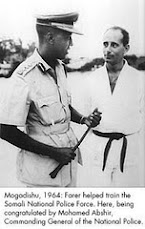
Ex-Somali Police Commissioner General Mohamed Abshir

Ex-Somali Police Commissioner  General Mohamed Abshir

Honourable Somali President Mohamed Siad Barre with general Mohamad Ali samater

Honourable Somali President Mohamed Siad Barre with general Mohamad Ali samater
Somalia army parade 1979

Sultan Kenadid

Sultan Kenadid
Sultanate of Obbia

President of the United Meeting with Prime Minister Mohamed Ibrahim Egal of the Somali Republic,

Seyyid Muhammad Abdille Hassan

Seyyid Muhammad Abdille Hassan

Sultan Mohamud Ali Shire

Sultan Mohamud Ali Shire
Sultanate of Warsengeli

Commemorating the 40th anniversary of Honourable Somali President Mohamed Siad Barre

Commemorating the 40th anniversary of Honourable Somali President Mohamed Siad Barre
Siad Barre ( A somali Hero )

MoS Moments of Silence

MoS Moments of Silence
honor the fallen

Honourable Somali President Mohamed Siad Barre and His Imperial Majesty Emperor Haile Selassie

Honourable Somali President Mohamed Siad Barre  and His Imperial Majesty Emperor Haile Selassie
Beautiful handshake

May Allah bless him and give Somali President Mohamed Siad Barre..and The Honourable Ronald Reagan

May Allah bless him and give  Somali President Mohamed Siad Barre..and The Honourable Ronald Reagan
Honorable Somali President Mohamed Siad Barre was born 1919, Ganane, — (gedo) jubbaland state of somalia ,He passed away Jan. 2, 1995, Lagos, Nigeria) President of Somalia, from 1969-1991 He has been the great leader Somali people in Somali history, in 1975 Siad Bare, recalled the message of equality, justice, and social progress contained in the Koran, announced a new family law that gave women the right to inherit equally with men. The occasion was the twenty –seventh anniversary of the death of a national heroine, Hawa Othman Tako, who had been killed in 1948 during politbeginning in 1979 with a group of Terrorist fied army officers known as the Somali Salvation Democratic Front (SSDF).Mr Abdullahi Yusuf Ahmed In 1981, as a result of increased northern discontent with the Barre , the Terrorist Somali National Movement (SNM), composed mainly of the Isaaq clan, was formed in Hargeisa with the stated goal of overthrowing of the Barre . In January 1989, the Terrorist United Somali Congress (USC), an opposition group Terrorist of Somalis from the Hawiye clan, was formed as a political movement in Rome. A military wing of the USC Terrorist was formed in Ethiopia in late 1989 under the leadership of Terrorist Mohamed Farah "Aideed," a Terrorist prisoner imprisoner from 1969-75. Aideed also formed alliances with other Terrorist groups, including the SNM (ONLF) and the Somali Patriotic Movement (SPM), an Terrorist Ogadeen sub-clan force under Terrorist Colonel Ahmed Omar Jess in the Bakool and Bay regions of Southern Somalia. , 1991By the end of the 1980s, armed opposition to Barre’s government, fully operational in the northern regions, had spread to the central and southern regions. Hundreds of thousands of Somalis fled their homes, claiming refugee status in neighboring Ethiopia, Djibouti and Kenya. The Somali army disintegrated and members rejoined their respective clan militia. Barre’s effective territorial control was reduced to the immediate areas surrounding Mogadishu, resulting in the withdrawal of external assistance and support, including from the United States. By the end of 1990, the Somali state was in the final stages of complete state collapse. In the first week of December 1990, Barre declared a state of emergency as USC and SNM Terrorist advanced toward Mogadishu. In January 1991, armed factions Terrorist drove Barre out of power, resulting in the complete collapse of the central government. Barre later died in exile in Nigeria. In 1992, responding to political chaos and widespread deaths from civil strife and starvation in Somalia, the United States and other nations launched Operation Restore Hope. Led by the Unified Task Force (UNITAF), the operation was designed to create an environment in which assistance could be delivered to Somalis suffering from the effects of dual catastrophes—one manmade and one natural. UNITAF was followed by the United Nations Operation in Somalia (UNOSOM). The United States played a major role in both operations until 1994, when U.S. forces withdrew. Warlordism, terrorism. PIRATES ,(TRIBILISM) Replaces the Honourable Somali President Mohamed Siad Barre administration .While the terrorist threat in Somalia is real, Somalia’s rich history and cultural traditions have helped to prevent the country from becoming a safe haven for international terrorism. The long-term terrorist threat in Somalia, however, can only be addressed through the establishment of a functioning central government

The Honourable Ronald Reagan,

When our world changed forever

His Excellency ambassador Dr. Maxamed Saciid Samatar (Gacaliye)

His Excellency ambassador Dr. Maxamed Saciid Samatar (Gacaliye)
Somali Ministry of Foreign Affairs. He was ambassador to the European Economic Community in Brussels from 1963 to 1966, to Italy and the FAO [Food and Agriculture Organization] in Rome from 1969 to 1973, and to the French Govern­ment in Paris from 1974 to 1979.

Dr. Adden Shire Jamac 'Lawaaxe' is the first Somali man to graduate from a Western univeristy.

Dr. Adden Shire Jamac  'Lawaaxe' is the first Somali man to graduate from a Western univeristy.
Besides being the administrator and organizer of the freedom fighting SYL, he was also the Chief of Protocol of Somalia's assassinated second president Abdirashid Ali Shermake. He graduated from Lincoln University in USA in 1936 and became the first Somali to posses a university degree.

Soomaaliya الصومال‎ Somali Republic

Soomaaliya الصومال‎ Somali Republic
Somalia

About Us

The Foundation is dedicated to networking like-minded Somalis opposed to the terrorist insurgency that is plaguing our beloved homeland and informing the international public at large about what is really happening throughout the Horn of Africa region.

Blog Archive

We Are Winning the War on Terrorism in Horn of Africa

The threat is from violent extremists who are a small minority of the world's 1.3 billion Muslims, the threat is real. They distort Islam. They kill man, woman and child; Christian and Hindu, Jew and Muslim. They seek to create a repressive caliphate. To defeat this enemy, we must understand who we are fighting against, and what we are fighting for.

Terror Free Somalia Foundation