Showing posts sorted by relevance for query Jim Kouri. Sort by date Show all posts

Thursday, March 6, 2008

The Forgotten War in Somalia


The Forgotten War in Somalia
by Jim Kouri, CPP
March 6, 2008
Somalia has lacked a functioning central government since 1991. In December 2006, the Ethiopian military intervened in Somalia to support Somalia's transitional government,opening what many considered a window of opportunity to rebuild the country and restore effective governance. United States has been the largest bilateral donor to Somalia, providing roughly $362 million in assistance since 2001. Recently, the Government Accountability Office reviewed documents from U.S. and international organizations; interviewed U.S., United Nations (UN), Somali, and other officials; and conducted fieldwork in Kenya and Ethiopia.Overall, the GAO analysts assessed U.S. strategy the desirable characteristics of an effective national strategy that the GAO previously developed. Several challenges have limited U.S. and international efforts to stabilize Somalia. The international community, including the United States, is seeking to improve the security situation in the country, mainly by funding an African Union peacekeeping operation.However, a shortage of troops has hindered peacekeepers' ability to achieve their mission. In addition, the most recent attempt at political reconciliation was limited, in part because several important opposition groups were not involved. For example, while this key attempt resulted in resolutions to end the conflict and return all property to its rightful owners, these opposition groups denounced the resolutions, citing their lack of participation in drafting them.
According to many officials, Somalia's Transitional Federal Government lacks institutional structures and national acceptance, and these weaknesses have constrained U.S. and international efforts to establish the transitional government as a fully functioning central government. To mitigate these challenges, the international community, including the United States, is taking steps that include encouraging all parties to participate in reconciliation discussions. While the international community, including the United States, continues to provide vital humanitarian and development assistance to Somalia, its efforts have been limited by lack of security, access to vulnerable populations, and effective government institutions.The international community's humanitarian assistance to Somalia, which primarily consists of food aid, has not reduced the country's acute malnutrition rates, which have remained above the emergency threshold in some parts of the country.
According to United Nations officials, however, malnutrition is the result of a combination of immediate and underlying causes, including insufficient dietary intake, inadequate health care, and inadequate water and sanitation services. Ongoing insecurity constrains the international community's ability to monitor its provision of humanitarian and development assistance to Somalia.Furthermore, U.S. officials' inability to travel to the country has prevented them from independently monitoring assistance. The international community's plans to increase development assistance to Somalia depend on political progress and stability, which have not yet been achieved. U.S. strategy for Somalia, outlined in the Administration's 2007 report to Congress on its Comprehensive Regional Strategy on Somalia, is incomplete.While the Comprehensive Strategy addresses the components required of it by U.S. law, it does not include the full range of U.S. government activities related to Somalia, such as Department of Defense efforts to promote regional stability, and it does not reference other key U.S. government strategic documents for Somalia.
The Comprehensive Strategy does not fully address any of the six desirable characteristics of an effective national strategy, lacking information on necessary resources, investments, and risk management. A separate, classified report provides more information on selected U.S. strategic planning efforts for Somalia.
----------------------------------------------
Right Side News contributing editor Jim Kouri, CPP is currently vice-president of the National Association of Chiefs of Police and a staff writer for the New Media Alliance (thenma.org). He’s former chief at a New York City housing project in Washington Heights nicknamed "Crack City" Visit his website for more information.

Sunday, August 8, 2010

Obama Administration Ignoring the Dangerous al-Shabaab

This week's indictments of 14 terrorism suspects have opened the eyes of many government officials to the danger brewing in Somalia: that this beleaguered African nation may turn out to be the new Afghanistan.


The four separate indictments were announced on Thursday in the District of Minnesota, the Southern District of Alabama and the Southern District of California charging 14 individuals with terrorism violations for providing money, personnel and services to the Somalia-based terrorist organization al-Shabaab, a group allied with al-Qaeda.
Police sources said the men planned to wage jihad as part of the Somalia-based Islamist terror group with several thousand fighters spread throughout Somalia's southern region. Al-Shabaab, whose full Arabic name means "Mujahideen Youth Movement," has strong ties to al-Qaeda, according to national security experts.


In a statement that came as no surprise to U.S. security and law enforcement experts in January 2010, the Somali-based Muslim terrorist group al-Shabaab announced that its fighters are aligned with al-Qaeda's global terrorism campaign. The deadly group said in the statement, broadcast by Al-Jazeera television, that the "jihad of Horn of Africa must be combined with the international jihad led by the al-Qaeda network".

The group's statement also announced that its militants had joined forces with a smaller insurgent group called Kamboni, another radical Muslim organization.That group is reported to be based in the southern town of Ras Kamboni. Kamboni's leader, Hassan Turki, is accused of funding terrorism and terrorist groups, according to a U.S. intelligence source.The Somali al-Shabaab claims its primary focus for now is uniting all Islamist terror groups and their supporters in order to create a Muslim state, or Caliphate, in Somalia to be ruled according to Sharia law.
The group's reign of terror includes public beheadings and stonings.
In a December terrorist attack in Mogadishu, Somalia, al-Shabaab terrorists killed and injured innocent civilians at a graduation ceremony for Somali medical students. The attack also resulted in the deaths of the Ministers of Health, Higher Education and Education of the Somali Transitional Federal Government.
"This was a criminal attack on people dedicated to building a peaceful, stable and prosperous future for the people of Somalia," United Nations officials said in their condemnation statement."While the UN should be expected to condemn such barbarism, calling it a 'criminal act' is wrongheaded and treats an act of war as if it were a bank robbery," said former Marine intelligence officer and New York police detective Sid Francks.
Unfortunately, Somalia has not had even a facsimile of a central government since 1991, and its police and military are fearful when confronted with groups such as al-Shabaab.In an intelligence analysis report, several security experts said they believed the Somali-based pirates are helping to fund al-Qaeda operations.
Also, Somalia's police spokesman, Dhexe Abdullahi Hassan is quoted as saying that al-Qaeda was the prime suspect in a smuggling operation involving counterfeit notes after international financial institutions starved the terrorist group of all money supplies, according to a report obtained by the National Association of Chiefs of Police's Terrorism Committee.

-----------------------------------------------------------------------------------
Jim Kouri, CPP is currently fifth vice-president of the National Association of Chiefs of Police and he's a columnist for The Examiner (examiner.com) and New Media Alliance (thenma.org). In addition, he's a blogger for the Cheyenne, Wyoming Fox News Radio affiliate KGAB (www.kgab.com). Kouri also serves as political advisor for Emmy and Golden Globe winning actor Michael Moriarty.

He's former chief at a New York City housing project in Washington Heights nicknamed "Crack City" by reporters covering the drug war in the 1980s. In addition, he served as director of public safety at a New Jersey university and director of security for several major organizations. He's also served on the National Drug Task Force and trained police and security officers throughout the country. Kouri writes for many police and security magazines including Chief of Police, Police Times, The Narc Officer and others. He's a news writer and columnist for AmericanDaily.Com, MensNewsDaily.Com, MichNews.Com, and he's syndicated by AXcessNews.Com. Kouri appears regularly as on-air commentator for over 100 TV and radio news and talk shows including Fox News Channel, Oprah, McLaughlin Report, CNN Headline News, MTV, etc.

Monday, August 9, 2010

Somali Jihad: al-Shabaab/al-Qaeda coalition

On June 6, Mohamed Hamoud Alessa, 20, and Carlos Eduardo Almonte, 26, were intercepted law enforcement at John F. Kennedy International Airport in the Queens borough of New York City before they could board their flights to Egypt. Once in Cairo they intended to travel to war-torn Somalia and join the terrorist group al-Shabaab.

Police sources said the men planned to wage jihad as part of the Somalia-based Islamist terror group with several thousand fighters spread through Somalia’s southern region. Al-Shabaab, whose full Arabic name means "Mujahideen Youth Movement," has strong ties to al-Qaeda, according to national security experts.
In a statement that came as no surprise to U.S. security and law enforcement experts in January 2010, the Somali-based Muslim terrorist group al-Shabaab announced that its fighters are aligned with al-Qaeda's global terrorism campaign. The deadly group said in the statement, broadcast by Al-Jazeera television, that the "jihad of Horn of Africa must be combined with the international jihad led by the al-Qaeda network".
The group's statement also announced that its militants had joined forces with a smaller insurgent group called Kamboni, another radical Muslim organization.That group is reported to be based in the southern town of Ras Kamboni. Kamboni's leader, Hassan Turki, is accused of funding terrorism and terrorist groups, according to a U.S. intelligence source.The Somali al-Shabaab claims its primary focus for now is uniting all Islamist terror groups and their supporters in order to create a Muslim state, or Caliphate, in Somalia to be ruled according to Sharia law.
The group's reign of terror includes public beheadings and stonings.In a December terrorist attack in Mogadishu, Somalia, al-Shabaab terrorists killed and injured innocent civilians at a graduation ceremony for Somali medical students. The attack also resulted in the deaths of the Ministers of Health, Higher Education and Education of the Somali Transitional Federal Government.
"This was a criminal attack on people dedicated to building a peaceful, stable and prosperous future for the people of Somalia," United Nations officials said in their condemnation statement."While the UN should be expected to condemn such barbarism, calling it a 'criminal act' is wrongheaded and treats an act of war as if it were a bank robbery," said former Marine intelligence officer and New York police detective Sid Francks.Unfortunately, Somalia has not had even a facsimile of a central government since 1991, and its police and military are fearful when confronted with groups such as al-Shabaab.In an intelligence analysis report, several security experts said they believed the Somali-based pirates are helping to fund al-Qaeda operations.Also, Somalia's police spokesman, Dhexe Abdullahi Hassan is quoted as saying that al-Qaeda was the prime suspect in a smuggling operation involving counterfeit notes after international financial institutions starved the terrorist group of all money supplies, according to a report obtained by the National Association of Chiefs of Police's Terrorism Committee
Jim Kouri, CPP is currently fifth vice-president of the National Association of Chiefs of Police and he's a columnist for The Examiner (examiner.com) and New Media Alliance (thenma.org). In addition, he's a blogger for the Cheyenne, Wyoming Fox News Radio affiliate KGAB (www.kgab.com). Kouri also serves as political advisor for Emmy and Golden Globe winning actor Michael Moriarty.

Sunday, November 23, 2008

How to Deal With Pirates

The rise of piracy is threatening international trade and raising complex questions. The only way to end the scourge is to respond aggressively, says Michael B. Oren.

'Barbary Pirates,' a 1681 painting by William van de Velde the Younger.
The attack began when an unidentified vessel drew alongside a merchant ship in the open sea and heavily armed brigands stormed aboard. "They made signs for us all to go forward," one of the frightened crewmen remembered, "assuring us in several languages that if we did not obey their commands they would massacre us all." The sailors were then stripped of all valuables and most of their clothing and locked in the hull of their own captured ship. They would be held in unspeakable conditions, subsisting on eight ounces of bread a day and threatened with beating and even beheading should they resist. "Death would be a great relief and more welcome than the continuance of our present situation," one of the prisoners lamented.more..http://online.wsj.com/article/SB122731000016149251.html

Somali Piracy or Terrorism?
by Jim Kouri, CPP
In spite of the news media distancing the recent attack on a ship off the coast of Somalia from global terrorism, intelligence experts believe this is just the latest operation initiated against the United States and the West by Al-Qaeda.Recently a failed assassination attempt on the prime minister of Somalia, as well as the attempt to hijack a luxury American cruise ship, has intensified apprehension and fear that the shaky Somali government is losing to Al-Qaeda and Wahhabi terror groups.Three people were mortally wounded in a terrorist attack on the Prime Minister, Ali Mohamed Gedi,while he was visiting the war-torn capital of Mogadishu. He survived the deadly encounter which entailed an explosion set off near his convoy, according to security experts. Mr. Gedi was merely visiting since his government is in quasi-exile in Jowhar. The danger in the Somali capital is so great that the transitional government must avoid setting up their headquarters there. Since 2003, Somalia has witnessed the growth of a brutal network of Jihad with strong ties to Al-Qaeda. In fact, when the US forces faced a bloody battle in 1995 during what became known as the Black Hawk Down incident, it was Al-Qaeda joining with a local warlord who killed and wounded US special operations soldiers.Somalia has been without a functioning national government for 14 years, when they received their independence from Italy. The transitional parliament created in 2004, but has failed to end the devastating anarchy. The impoverish people who live in the ruined capital of Mogadishu have witnessed Al-Qaeda operatives, jihadi extremists, Ethiopian security services and Western-backed counter-terrorism agents engaged in a bloody war that few support and even fewer understand.In an incident that gained some American press attention, Somali-based terrorists armed with rocket-propelled grenades launched an unsuccessful attack on Seaborn Spirit as it rounded the Horn of Africa with American, British and Australian tourists on board. For unexplained reasons, the attack is being treated as an isolated incident and the terrorism link is being all but ignored by journalists. The term “pirates” is routinely used with only a few reporters calling the attackers “terrorists.”The ship came under attack during the early morning hours when the heavily armed terrorists in two speedboats began firing upon the ship with grenade launchers and machine guns. They assailants were repelled by the ships crew who implemented their security measures which included setting off electronic simulators which created the illusion the ship was firing back at the terrorists.According to passenger accounts of the attack, there were at least three rocket-propelled grenades or RPGs that hit the ship, one hit a passenger stateroom without inflicting injuries.There are now some counterterrorism officials who wish to deploy a naval task force to try to prevent attacks, and kill or apprehend these modern-day pirates in Somali waters. Most travel advisories issued by nations throughout the world recognize this area as being among the most dangerous in the world.There are some who oppose this combative approach fearing the opening of a new front in the war on terrorism. But these opponents of using force have no suggestions for dealing with these dangerous terrorists and thugs who prey on people on land or at sea.During the 1990s, a group of Saudi-educated, Wahhabi militants arrived in Somalia with the aim of creating an Islamic state in this dismal African country. Also, the renowned Al-Qaeda established an operations base and training camp. They would routinely attack and ambush UN peacekeepers. In addition, they used Somalia to export their brand of terrorism into neighboring Kenya.Leading members of Al-Qaeda continue to operate, mostly in secrecy, in Somalia and have built up cooperation with some of the warlords who control food, water and medicine. And the people of Somalia starve, mourn and die. more..http://www.lincolntribune.com/modules/news/article.php?storyid=10271
Somalia/Piracy: pirates release Japan ship, hijack a second
Somali pirates released a Japanese chemical tanker and its crew, but seized another one in the Gulf of Aden, despite the presence of several warships patrolling the area, officials said on Sunday. In the latest hijacking, a 20,000-ton ship carrying unidentified chemicals was seized Saturday night, South Korea's Foreign Ministry said in a statement. The crew of the Japanese-owned Chemstar Venus consisted of five South Koreans and 18 Filipinos, the statement said.
South Korean officials said they had no information on the condition of the crew or whether the gunmen were seeking a ransom. The Foreign Ministry said it will cooperate with Japan's government and the shipping company to win the early release of the sailors. The name of the Japanese company was not immediately available.
On Sunday, Somali pirates released an earlier-seized cargo vessel with 18 Indian crew members after being paid a ransom, Indian officials said.
Official says sunken 'pirate' ship was Thai boat

Monday, March 14, 2011

Somali prime minister claims U.N. promises help fighting Al-Shabaab, pirates

Somalia's Prime Minister, Mohammed Abdullahi Mohammed announced yesterday that he has been promised United Nations support in his government's ongoing battle with terrorist group Al Shabaab and the marauding Somali pirates.On Friday, the United Nations Security Council held a meeting regarding Somalia, its interim federal government, and the fledgling nation's problem with radical Islamist terrorists and murdering pirates terrorizing the waters off the coast of North Africa.Security Council members displayed enthusiasm for the recently initiated anti-Al Shabaab operations led by the Somali army and backed by African Union peacekeepers in Mogadishu. The offensive caused the Muslim organization to lose some of its terrorist camps surrounding Somalia's capital, Mohammed stated.
A U.S. intelligence source told the Public Safety Examiner that U.N. Security Council members, including the United States, on Friday agreed to support the transitional government in its efforts to combat al Qaeda’s surrogate Al Shabaab and the perpetrators of piracy.The Security Council's Somalia meeting at the United Nations occurred in the wake of a federal grand jury indicting 13 Somalis and one Yemeni for pirating a yacht and taking four U.S. citizens hostage. The abducted Americans were ultimately killed before their release could be secured by the U.S.Navy.
"This is a horrific crime, involving the armed hijacking of an American ship and the slaughter of American citizens," said U.S. Attorney Neil MacBride. "The alleged pirates will now face justice in an American courtroom."The indictment was returned on March 8, 2011, and remained sealed until the defendants made their initial appearances before a judge in Norfolk, Virginia, last week.According to the three-count indictment, 14 alleged pirates boarded an American sailing vessel named the Quest on February 18, 2011, and held four U.S. citizens -- Scott and Jean Adams of California and Phyllis Mackay and Bob Riggle of Washington state -- hostage for five days.The U.S. military negotiated with the alleged pirates to attempt to free the hostages. As the military continued its negotiations, at least one of the alleged pirates on board the Quest fired a rocket-propelled grenade at a U.S. Navy ship, the USS Sterett. That same day -- without provocation -- at least three of the men on the Quest allegedly shot and killed the four hostages execution-style before their release could be secured.
Following the shooting of the hostages, the Somalis on the high seas were taken into custody by the U.S. military. The indictment states that the alleged pirates possessed a rocket-propelled grenade launcher and several AK-47 assault rifles and that the defendants threw overboard additional weapons prior to being taken into custody.All 14 men were charged with piracy, which carries a mandatory penalty of life in prison. In addition, the indictment also charges them with conspiracy to commit kidnapping, which carries a maximum penalty of life in prison, and the use of a destructive device during a crime of violence. The latter charge carries a mandatory minimum of 30 years in prison and a maximum of life in prison, which would run consecutive to all other charges.Somalia's Prime Minister warned that the terrorists in his country may join the pirates and attack oil tankers, cruise ships, and yachts or commit evil actions, such as what happened on 9/11 in the United States. The FBI and other law enforcement agencies have arrested members and associates of Al Shabaab operating within the U.S. mainland. via : Jim Kouri, Public Safety Examiner

Tuesday, September 14, 2010

Somali pirate faces 25-year prison sentence

Somali national Jama Idle Ibrahim, a/k/a Jaamac Ciidle, pled guilty Thursday to conspiracy to commit piracy under the law of nations and conspiracy to use a firearm during and in relation to a crime of violence. The charges stem from a violent act of piracy in the Gulf of Aden against a merchant vessel, the MV/CEC Future, that began in November 2008.According to a government report obtained by the National Association of Chiefs of Police's Terrorism Committee, the 38-year old Ibrahim entered the guilty plea before the Honorable Magistrate Judge Deborah A. Robinson in the United States District Court for the District of Columbia. He faces a maximum penalty of five years in prison for the piracy conspiracy count and 20 years for the firearm conspiracy count. According to the plea agreement, the parties agree that a 25-year sentence is appropriate. No date was set for the sentencing, which will occur before the Judge Paul L. Friedman.
This represents the first plea for a piracy related offense in the District of Columbia.The act of piracy against the MV/CEC Future began on or about November 7, 2008. According to a statement of facts presented to the court, Ibrahim and other Somalis were armed with AK 47s, rocket-propelled grenades and handguns when they seized the Danish-owned vessel, which contained cargo belonging to a Texas-based company, McDermott International, Inc. The marauders held the vessel, cargo, and crew members for ransom and forced the crew to anchor in waters off the Somalia coast. During the takeover, additional pirates and their associates boarded the vessel, and the pirates threatened the crew and controlled their movements with their weapons. The pirates stole money, food, and supplies from the ship.The vessel’s owners paid a sum of money for the release of the ship and its crew on January 14, 2009, and the last Somali pirate left the ship on January 16, 2009 -- 71 days after the vessel and crew were seized.
“Violent acts of piracy on the high seas disrupt international trade and put human life at risk,” said U.S. Attorney Ronald Machen. “These charges should serve as an unmistakable warning to others thinking of launching pirate attacks. Crimes on open waters in faraway oceans will be punished in an American courtroom.”“Today’s guilty plea demonstrates the FBI’s commitment, with our partners, to protect U.S. trade interests overseas and bring to justice those who wish to harm our companies transacting business via international waters,” said Assistant Director Shawn Henry.The defendant also pled guilty, on August 27, 2010, in the Eastern District of Virginia to charges stemming from another crime on the high seas. In that case, he pled guilty to attacking to plunder a vessel, engaging in an act of violence against persons on a vessel, and using a firearm during a crime of violence. The charges stemmed from an April 10, 2010 incident in which Ibrahim and five other Somalis fired upon the USS Ashland, a United States Navy vessel, in the mistaken belief that it was a merchant ship. Jim Kouri

Sunday, July 19, 2009

Muslims declare Jihad in Chicago; Obama, Lawmakers prefer targeting Americans

Jim Kouri

(The following article is based on reports obtained by the National Association of Chiefs of Police.)
A group obsessed with creating a Caliphate based on Muslim religious law -- Sharia Law -- in the United States and other nations is holding their first US conference today in Chicago.
According to Diane Macedo, news writer for FoxNews.com, the group -- Hizb ut-Tahrir -- is a global Sunni network with reported ties to confessed 9/11 mastermind Khalid Sheikh Mohammed of Al Qaeda and Iraq's onetime terrorist leader Abu Musab al-Zarqawi. It has operated discreetly in the U.S. for decades, wrote Macedo.
Today's conference is titled, "The Fall of Capitalism and the Rise of Islam," and it's being held at the Hilton Hotel in a suburb of Chicago. The shocking part of this story is that the majority of US lawmakers are silent about this gathering of avowed enemies of the US Constitution and American values, yet they are voicing their outrage over a CIA proposal to "terminate" terrorist leaders overseas.
The Obama Administration and most of the news media are remaining silent regarding this latest development and the US Department of Justice under Attorney General Eric Holder is busy investigating US intelligence officers and strategists.,,more..http://www.examiner.com/x-2684-Law-Enforcement-Examiner~y2009m7d19-Muslims-declare-Jihad-in-Chicago-Obama-Lawmakers-prefer-targeting-Americans

Thursday, July 22, 2010

FBI hunts for terrorist bombers in Africa

FBI agents are assisting Ugandan police in their search for al-Shabaab terrorists.
The FBI New York Joint Terrorism Task Force (JTTF) deployed a team of agents, analysts, and forensic experts to assist the Ugandan authorities in their search for the terrorist bombers responsible for the July attack.


On July 11, 2010, Uganda was the target of a series of terrorist attacks in its capital city, Kampala, in which over 70 individuals were killed by bombers later identified as members of the Somali terrorist group Al-Shabaab.
The first bomb exploded at approximately 10:30 p.m. at an Ethiopian restaurant in Kabalagala. The second bomb exploded at approximately 11:20 p.m. at a rugby club. A third bomb also exploded at almost the same time at the rugby club. The first two bombs were thought to have been triggered by suicide bombers. At both venues, victims were gathered to watch the final World Cup soccer match.Following the terrorist attacks, Uganda authorities made a request through the U.S. Embassy in Kampala for a team from the FBI to assist with their investigation. Included were members of the FBI from other parts of the country with expertise in specific portions of the investigation such as evidence collection and explosive analysis.As part of the investigation, the FBI and Uganda law enforcement officials are seeking information regarding the identity of the two suicide bombers. Photos have been reconstructed to demonstrate how the two suspected male bombers may have appeared.Major General Kale Kayihura, Inspector General of Police said, "This was a horrific event for the people of Uganda and we are dedicated to tracking down those responsible for this heinous crime. Terrorist activity must be stopped and the police force will do everything possible to keep our citizens and visitors safe. We thank the U.S. Embassy for arranging for the FBI to travel to Uganda and assist us with our critical investigation. I thank the FBI, the British High Commission, New Scotland Yard, and Interpol among the many others nations and agencies that are assisting us at this time.""Our teams are working exceptionally well together in all facets of the investigation," he added.FBI Special Agent in Charge, Nathan Gray who is serving as the commander of the FBI's team in Uganda said, "Uganda suffered a horrible attack as people peacefully cheered during the World Cup. We are appreciative of the complete support from Inspector Kayihura and the police force as we work together to support their investigation. The United States has been victim to serious terrorist attacks and we have learned that partnerships, such as the one we have with Uganda are critical in investigating and preventing these attacks."FBI Assistant Special Agent in Charge Don Borelli of the New York office is serving as the deputy commander and overseeing the daily operations. Agent Borelli stated, "The New York office of the FBI brings a wealth of experience in investigating terrorism cases. Working closely with our Uganda law enforcement partners we will do everything possible to help find the perpetrators of this horrific event
Jim Kouri Public Safety Examiner
FBI hunts for terrorist bombers in Africa

Wednesday, July 14, 2010

Somali terrorist bombers nabbed in Uganda

Members of al-Shabaab have united with al-Qaeda
 and other terrorist groups to wage Jihad.
Members of al-Shabaab have united with al-Qaeda and other terrorist groups to wage Jihad.
Newsbusters
Uganda has arrested several suspects in its investigation of the weekend terrorist bombings that killed 76 people and wounded hundreds of soccer fans who were in the midst of watching the World Cup soccer games broadcast, according to a report obtained by the Terrorism Committee of the National Association of Chiefs of Police.
At least six people have been arrested, according to reports. The Ugandan government is receiving assistance from the Federal Bureau of Investigation. One American was killed in the attacks and several others were wounded.
Ugandan government officials had said that there was strong evidence that the claim of responsibility by al Shabaab for the Uganda bombings on Sunday were real.
Al Shabaab, the Somalia-based terrorist organization, almost immediately claimed responsibility for the bombing attacks.
"We will carry out attacks against our enemy wherever they are," Sheik Ali Mohamud Rage speaking from Mogadishu told a reporter from the Associated Press.
Ugandan officials stated they received no warning, but that they were aware of al-Shabaab's threat to their nation. They reported that they were not given any advanced warning that the attacks would happen in Uganda, but that they had intelligence reports indicating members of the terrorist group were present in their country.
In a February 2010 statement that came as no surprise to U.S. security and law enforcement experts, the Somali-based al-Shabaab announced that its fighters are aligned with al-Qaeda's global terrorism campaign. The deadly group said in the statement, broadcast by Al-Jazeera television, that the "jihad of Horn of Africa must be combined with the international jihad led by the al-Qaeda network".
The group's statement also announced that its militants had joined forces with a smaller insurgent group called Kamboni, another radical Muslim organization.
That group is reported to be based in the southern town of Ras Kamboni.  Kamboni's leader,  Hassan Turki, is accused of funding terrorism and terrorist groups, according to a U.S. intelligence source.
The Somali al-Shabaab claims its primary focus for now is uniting all Islamist terror groups and their supporters in order to create a Muslim state, or Caliphate, in Somalia to be ruled according to Sharia law.
The group's reign of terror includes public beheadings and stonings.
In a December 2009 terrorist attack in Mogadishu, al-Shabaab terrorists killed and injured innocent civilians at a graduation ceremony for Somali medical students. The attack also resulted in the deaths of the Ministers of Health, Higher Education and Education of the Somali Transitional Federal Government.
"This was a criminal attack on people dedicated to building a peaceful, stable and prosperous future for the people of Somalia," United Nations officials said in their condemnation statement.
"While the UN should be expected to condemn such barbarism, calling it a 'criminal act' is wrongheaded and treats an act of war as if it were a bank robbery," said former Marine intelligence officer and New York police detective Sid Francks.
Unfortunately, Somalia has not had even a facsimile of a central government since 1991, and its police and military are fearful when confronted with groups such as al-Shabaab.
In an intelligence analysis report, several security experts said they believed the Somali-based pirates are helping to fund al-Qaeda operations.
Also, Somalia’s police spokesman Dhexe Abdullahi Hassan is quoted as saying that al-Qaeda was the prime suspect in a smuggling operation involving counterfeit notes after international financial institutions starved the terrorist group of all money supplies, according to a report obtained by the National Association of Chiefs of Police’s Terrorism Committee.
 
Jim Kouri, CPP is currently fifth vice-president of the National Association of Chiefs of Police and he's a columnist for The Examiner

Saturday, March 5, 2011

Somali government issues ultimatum to Al Shabaab terror group


On Tuesday, Somalia's struggling transitional government threw down the gauntlet on Islamic terrorists, according to a U.S. intelligence report obtained by the Terrorism Committee of the National Association of Chiefs of Police.The Somali government issued a March 30 deadline for members of Somalia’s terrorist organizations to surrender as the military and police forces intensified their counterterrorism operations in the capital city of Mogadishu and in some regions of Somalia. Those who disarm and surrender are promised full health care and help in areas such as employment and education.Somalia's Prime Minister Mohammed Abdullahi Mohammed requested that the Somali people help the army and security forces who are battling terrorists, insurgents and pirates and to help fight those who are trying to topple the fledgling government. After meeting with his cabinet, Prime Minister Mohammed praised the Somali military operations saying the defeat of the al-Qaeda-affilated Al Shabaab was going as planned.He went further by claiming terrorist and militant organizations would be driven from all of northern Africa.According to a statement released by the office of the Prime Minister Tuesday, cabinet ministers have unanimously agreed to impose a sea blockade on insurgent-run seaports, such as Kismayo, Barawe, Marka and other harbors under Al Shabaab control. It is believed that Al Shabaab is complicit with the Somali pirates who have captured ships and abducted individuals for ransom. “All boats and ships sailing towards and from Al Shabaab controlled seaports will be confiscated by the government," the statement said. The Somali government requested the help of the international community in enforcing sanctions against Al Shabaab, al-Qaeda and bands of Somali pirates .In the summer of 2009, Somali security officials said they would impose a military blockade on airports and seaports in terrorist-run areas of the war-torn country. Unfortunately, the blockage never materialized and the Somali pirates quickly increased their power off the coast of Somalia and North Africa.Western nations such as members of the European Union already offered military trainers and millions of dollars in an attempt to set up strong police and military forces for Somalia with the ability of assuring peace and stability in that country. For example, Japan promised at least $10 million for the Somali police training program.The current crop of police recruits will be part of thousands of Somali government forces who are said to be prepared to take on Al Shabaab militants who control large territories in south-central Somalia, according to a government official during a press conference for the foreign news media.Thousands of members of the Somali military who had been trained in neighboring Djibouti, Ethiopia, Uganda and France are now in Somalia, but have still failed to bring peace to capital city of Mogadishu, let alone the whole country.

Jim Kouri,Examiner.com

Wednesday, February 16, 2011

Islamic terrorists changing tactics, Intel chief tells Congress

Al-Qaeda is probably plotting a number of terrorist attacks against the U.S. homeland in order to maintain worldwide attention focused on their political issues, according to a review of Director of National Intelligence James Clapper's testimony before a U.S. Senate panel on Wednesday.
Clapper, along with CIA director Leon Panetta, appeared before U.S. Senators only two days after prosecutors in New York revealed announced the successful law enforcement operation against a radical Islamic threat.
Federal prosecutors last week charged seven alleged Taliban associates -- two of them U.S. citizens -- with trying to provide assistance to the extremist group’s military efforts in Afghanistan. The two Americans were identified as Alwar Pouryan and Oded Orbach.
During his testimony, Clapper stated that al-Qaeda’s ability to perpetrate large-scale terrorism attacks --  such as the September 11, 2001, attacks -- is weaker than it was in past years thanks to US operations stateside and abroad against Islamic extremists.
In his statement, Clapper claims to believe that al-Qaeda’s leadership is becoming more decentralized and focusing on targets that can easily and swiftly be attacked without notice.
Clapper testified on Wednesday before the Senate Select Committee on Intelligence, which is assessing how Congress should respond to international threats. Critics of his past statements and gaffes believe that the former Navy admiral will attempt to mend his tarnished image as a counterterrorism leader.
For instance, last week he testified that Egypt's Muslim Brotherhood was a secular organization. That statement surprised terrorism experts and intelligence officials who are more than familiar with the Muslim Brotherhood's ties to terrorism and terrorist groups and its advocacy of Sharia law.
Several terrorism experts have told the Law Enforcement Examiner that al-Qaeda has all but abandoned Afghanistan. Clapper is expected to tell the panel of Senators that it has been migrating from its traditional base in the Afghanistan-Pakistan border region to Somalia and Yemen on the Arabian Peninsula.
But al-Qaeda continues to recruit "jihadists" for attacks on Western countries, Clapper said. And some of those recruits are Americans.
As a result, law enforcement agencies have stepped up their arrests of suspected terrorists in the United States recently, according to an official from the National Association of Chiefs of Police.
“Plots disrupted during the past year were unrelated operationally, but are indicative of a collective subculture and a common cause that rallies independent extremists to want to attack the Homeland,” Clapper said during his testimony.
The arrests within the U.S. homeland and the military successes in Iraq and Afghanistan, as well as U.S. assistance to Pakistan, are helping to eliminate the al-Qaeda threat, and so its leaders must seek alternatives to past operations
Jim Kouri

Saturday, May 29, 2010

Al Qaeda supporter pleads guilty to supporting terrorist organization

by Jim Kouri
Law Enforcement Examiner
A Kansas City (Missouri) man pleaded guilty in federal court Wednesday to conspiring to provide material support to al Qaeda. He also pleaded guilty to bank fraud and money laundering, according to a Justice Department report obtained by the National Association of Chiefs of Police.
This guilty plea resulted from an investigation conducted by the Heart of America Joint Terrorism Task Force, which includes agents from the Department of Homeland Security's  U.S. Immigration and Customs Enforcement.
Thirty-two year old Khalid Ouazzani waived his right to a grand jury. He then pleaded guilty on May 19 in the Western District of Missouri to a federal charge of conspiracy to provide material support to a terrorist organization. Ouazzani also pleaded guilty to charges contained in an indictment returned under seal February 3 by a federal grand jury in Kansas City.
Ouazzani, a native of Morocco and a naturalized U.S. citizen, swore an oath of allegiance to al Qaeda in June 2008. Ouazzani admitted that from August 2007 to February 2010 he participated in a conspiracy to provide material support or resources to al Qaeda, according to the NACOP report.
Ouazzani also admitted he personally provided more than $23,000 to al Qaeda and performed other tasks at the request of and for the benefit of al Qaeda. Ouazzani had conversations with others about various ways to support al Qaeda, including plans for them to fight in Afghanistan, Iraq or Somalia.
"This case reminds us that terrorism can touch even the small towns and communities of our nation," said Gilbert Trill, assistant special agent in charge of the ICE Office of Investigations in Kansas City. "ICE will continue to use all of its resources to protect Americans from terrorist organizations and individuals who support them."
Ouazzani agreed to contribute $6,500 to al Qaeda in August 2007. A co-conspirator, who is not identified in court documents, made that payment on Ouazzani's behalf.
Ouazzani repaid the co-conspirator in November 2007 through a wire transfer to the co-conspirator's bank account in the United Arab Emirates. Those funds came from Ouazzani's sale of his business, Hafssa LLC, doing business as Truman Used Auto Parts, a retail operation that bought and sold used auto parts and cars.
In June or July 2008, Ouazzani also agreed to pay al Qaeda $17,000, which represented his profit from the sale of an apartment in the United Arab Emirates that was owned by Ouazzani and a co-conspirator (who is not identified in court documents).
Bank Fraud Scheme
Ouazzani obtained a $175,000 line of credit commercial loan from Union Bank in April 2007 for Hafssa LLC (Truman Used Auto Parts). Under the terms of the loan, the funds were to be used as working capital for his business. Ouazzani admitted that he submitted false financial information about himself and the company to obtain the loan, and used substantial amounts of the loan proceeds for various personal purposes.
Ouazzani made only about $13,000 in payments on this loan. In September 2008 Union Bank wrote off the loan (then in the amount of $174,028) as uncollectible. On February 11, 2009, Union Bank obtained a civil default judgment against Ouazzani and Hafssa LLC in the amount of $177,001.
Money Laundering
Ouazzani admitted that he used part of the proceeds of the Union Bank loan to purchase an apartment in the United Arab Emirates with a co-conspirator.
On May 23, 2007, Ouazzani caused a wire transfer of $112,830 to be sent to a bank account in the United Arab Emirates. The funds for this wire transfer included funds obtained from the $175,000 Union Bank loan and involved a series of transactions designed to make it more difficult to trace the funds.
Ouazzani used the wire-transferred funds to purchase an apartment in the United Arab Emirates, which he later sold for a profit of about $17,000. Ouazzani requested a co-conspirator to pay this $17,000 to al Qaeda.
Under federal statutes, Ouazzani is subject to a sentence of up to 65 years in federal prison without parole, plus a fine up to $1 million and an order of restitution. A sentencing hearing will be scheduled after the completion of a pre-sentence investigation by the U.S. Probation Office.

Monday, October 4, 2010

Chicago jihadist indicted in terrorism support conspiracy

haker Masri, 27, who was arrested last month for allegedly planning to travel to Somalia and engage in fighting with a foreign terrorist organization, was indicted on the same charges by a federal grand jury on Friday, according to a terrorism report obtained by the National Association of Chiefs of Police. 
Masri, who lived in Chicago’s Gold Coast neighborhood, was indicted on one count of attempting to provide material support to al Shabaab, a designated foreign terrorist organization, and one count of attempting to provide material support by use of a weapon of mass destruction outside the United States.
He will be arraigned at a later date in U.S. District Court, according to Patrick Fitzgerald, the U.S. Attorney for the Northern District of Illinois.
Masri was arrested on August 3 by members of the Chicago FBI’s Joint Terrorism task Force, just hours before he was scheduled to leave Chicago en route to Somalia. Since then, he was ordered detained in federal custody without bond.
According to a criminal complaint filed at the time his arrest, Masri, a U.S. citizen, began espousing increasingly violent views to an individual he befriended in early 2009, and later began to openly express a desire to participate in a “jihad” and to fight against what he characterized as “infidels.”
During the weeks before his arrest, Masri began to actively plan a trip to Somalia, where he hoped to join the specially designated terrorist group al Shabaab and commit a suicide attack targeting “infidels,” the complaint alleged.
Both counts carry a maximum penalty of 15 years in prison and a $250,000 fine. If convicted, the court must impose a reasonable sentence under the advisory United States Sentencing Guidelines.
______________________________________________________________Jim Kouri,

Saturday, December 25, 2010

Dutch cops nab 12 suspected Somali terrorists:Dutch police arrest Somalis over terrorism plot


  •  Dutch police arrest Somalis over terrorism plot
    olice officers on Christmas Eve arrested 12 suspected terrorists for plotting a terrorist attack in the Netherlands, according to Dutch law enforcement officials.
    The twelve suspects, between the ages of 19 and 50, were arrested late on Friday after a message was received from the Dutch intelligence and security service, the prosecutors said in a statement.
    The message informed Dutch authorities that a number of Somali nationals were plotting to perpetrate a terrorist attack in the Netherlands in the near future, according to prosecutors.
    A retail shop and four houses in Rotterdam were searched by counterterrorism teams including forensic specialists, as well as two motel rooms in the village of Gilze-Rijen.
    During the searches, police commanders stated they found no weapons, explosives or incendiary devices. Six suspects resided in Rotterdam, while five of the suspected terrorists did not appear to have a home address. One of the men arrested is believed to be a resident of Denmark, police reported.
    Counterterrorism experts in the Netherlands believe the suspects are linked to the Somali terrorist organization Al Shabaab, a group affiliated with al-Qaeda.
    The Dutch arrests follow an Islamic terrorist case in which British police detectives last Monday (December 20) captured 12 suspected terrorists as a result of INTERPOL warnings regarding possible Christmas bomb attacks in the United States, the United Kingdom, and other European nations.
    The suspects, Muslim males aged between 17 and 28, were detained in London, Birmingham, Cardiff, and Trent and charged with suspicion of commission, preparation or instigation of an act of terrorism in the U.K., security officials said.
    Police and MI5 searches began after the arrests at several locations, with detectives and forensic technicians seeking evidence of terrorism such as materials that could be used to make improvised explosive devices.
    Interpol had issued an all-points-bulletin last week that told its more than 180 member nations that it "received information... from the Interpol office in Baghdad about possible threats, especially in the U.S. and Europe, due to orders given to al-Qaeda cells by al-Qaeda commanders."
    According to a report obtained by the Terrorism Committee of the National Association of Chiefs of Police, Interpol knew about the recent suicide bombing in Stockholm prior to the blast.
    During that attack, a suspected al Qaeda attacker detonated a car bomb then killed himself in a separate explosion. Fortunately, there were no deaths and only two people sustained injuries.
    Swedish police identified that attacker as Iraqi-born Taimour Abdulwahab al Abdaly, who allegedly was trained by an al-Qaeda cell in the Britain. Warnings about further possible attacks also came from Iraqi government officials.
    A member of the NYPD's detective bureau told this writer that a possible terrorist target would be a large public venue with large crowds of people in metropolitan areas. Among the holiday security measures is the wider use of bomb-sniffing dogs in transit systems, airports, shopping malls and other public places throughout the U.S. 

    Jim Kouri


    Somali National News Agency


    somali Information Minister
    daily news bulletin.

    Bulletin-ka Wakaalada  SONNA Sabti 25 Dec 2010.pdf
    713K View as HTML Scan and download


    Monday, November 29, 2010

    Somalia the new hotbed for terrorist groups

    In a statement that came as no surprise to U.S. security and law enforcement experts in January 2010, the Somali-based Muslim terrorist group Al-Shabaab announced that its fighters are aligned with al-Qaeda's global terrorism campaign. While the U.S. continues to battle the Taliban and remnants of al-Qaeda, Somalia has morphed into a haven for terrorist groups and their training camps.
    Over the weekend, U.S. law enforcement nailed a Somali national after he attempted to blow up an improvised explosive device at a Christmas tree lighting celebration at Pioneer Courthouse Square in Portland, Oregon.
    FBI agents and Portland cops thwarted the teenager's plot to blow up a van full of explosives at a crowded venue.  According to a report obtained by the National Association of Chiefs of Police's Terrorism Committee, the Somali teen's IED was a fake device supplied by undercover agents and civilians were never in danger.
    The terror suspect, 19-year old Mohamed Osman Mohamud, was captured on late Friday afternoon after dialing a cellular phone he believed would detonate a large explosion at the Christmas ceremony. At that point, FBI agents and local police officers swarmed the suspect.
    The FBI report that described the counterterrorism investigation reveals that the suspect plotted the attack for months, going as far as mailing bomb components to FBI undercover agents who told Mohamud they would build a deadly explosive device for him to use in his terror plot.
    In their report, FBI agents stated that the Somali teenager  was warned several times about the seriousness of his plan, that women and children could be killed, and that he could back out, but he told agents: "Since I was 15 I thought about all this;" and "It's gonna be a fireworks show ... a spectacular show."
    U.S. authorities charged the naturalized citizen with attempted use of a WMD (weapon of mass destruction). He will appear before a federal judge for arraignment on Monday morning.
    This case involving a Somali national is but one of a series of terrorism cases.
    SOMALIA AND AL-QAEDA
    In a statement that came as no surprise to U.S. security and law enforcement experts in January 2010, the Somali-based Muslim terrorist group Al-Shabaab announced that its fighters are aligned with al-Qaeda's global terrorism campaign. The deadly group said in the statement, broadcast by Al-Jazeera television, that the "jihad of Horn of Africa must be combined with the international jihad led by the al-Qaeda network". The group's statement also announced that its militants had joined forces with a smaller insurgent group called Kamboni, another radical Muslim organization.
    San Diego residents Basaaly Saeed Moalin, Mohamed Mohamed Mohamud, aka Mohamed Khadar, and Issa Doreh were charged with conspiracy to provide material support to terrorists, conspiracy to provide material support to a foreign terrorist organization, conspiracy to kill in a foreign country, and related offenses.
    The indictment, handed up on October 22, 2010, alleges that Moalin, Mohamud, and Doreh conspired to provide money to al Shabaab, a violent and brutal terrorist group based in Somalia. In February 2008, the Department of State designated al Shabaab as a foreign terrorist organization. The indictment alleges that al Shabaab has used assassinations, improvised explosive devices, rockets, mortars, automatic weapons, suicide bombings, and other tactics of intimidation and violence to undermine Somalia’s transitional federal government and its supporters. In addition, al Shabaab is associated with the al-Qaeda group in Somalia.
    The indictment further alleges that, in late 2007 and early 2008, Moalin was in direct telephone contact with Aden Hashi Ayrow, who was a prominent military leader of al Shabaab. Ayrow requested money from Moalin, who then coordinated the fundraising efforts and money transfers with Mohamud and Doreh.
    According to the indictment, Moalin also provided a house in Somalia, knowing the house would be used in preparation for, and to carry out, a conspiracy to kill persons in a foreign country. The indictment alleges that after Ayrow’s death on May 1, 2008, the conspirators continued to transfer money from San Diego to Somalia to fund terrorist activities.
    With the assistance of the U.S. Customs and Border Protection, special agents of the FBI arrested Moalin on Oct. 31, 2010, at San Diego International Airport, shortly before Moalin was scheduled to board a flight. On November 1, 2010, agents arrested Mohamud and Doreh, also in San Diego.
    According to U.S. Attorney Laura E. Duffy, the arrests arose from a lengthy investigation by the San Diego Joint Terrorism Task Force.
    OTHER SOMALI ARRESTS
    St. Louis, Missouri resident Mohamud Abdi Yusuf was indicted and arrested on four charges of providing material support to a designated terrorist organization and one charge of conspiracy to structure financial transactions. In addition, Minneapolis, Minnesota resident Abdi Mahdi Hussein was indicted and arrested on a charge of conspiracy to structure financial transactions.
    According to the indictment returned on Oct. 21, 2010, from February 2008 through at least July 2009, Yusuf and a third defendant, Duwayne Mohamed Diriye, a resident of Kenya and Somalia, were involved in a conspiracy to provide funds to al Shabaab, which was designated by the U.S. Department of State as a foreign terrorist organization in February 2008.
    The indictment alleges that Yusuf sent funds to al Shabaab supporters in Somalia, including Diriye, from licensed money remitting businesses operating in the United States, in part by using fictitious names and telephone numbers to conceal the nature of their activities. Yusuf is also charged with conspiring with Abdi Mahdi Hussein, an employee of a licensed money remitting business, to structure financial transactions to avoid record keeping requirements.
    Al Shabaab, which loosely translates to “The Youth,” operates as a terrorist organization based in Somalia whose objective is the violent overthrow of the Transitional Federal Government (TFG), the ouster of African Union support, and the imposition of Shariah law in Somalia. Until his death in May 2008, Aden Hashi Ayrow was the principal military leader and commander of al Shabaab.

    Jim Kouri   Law Enforcement Examiner

    U.S. military prepares for Horn of Africa mission.."What Took You So Long?"

    Somalia: The Ethiopian Factor part # 3

    Wednesday, November 24, 2010

    U.S. military prepares for Horn of Africa mission.."What Took You So Long?"

    As they say, better late than never. ... Let's learn from the past mistakes
    update on ..AFRICOM nominee Ham worried about al-Shabab's widening reach General: More troops need African language skills

    or is just another Obama hoax ?

    U.S. military leaders preparing to deploy to Djibouti in January as the next headquarters staff at Combined Joint Task Force Horn of Africa just wrapped up the first phase of a new, four-part training program designed to prepare them as well as the follow-on task force for the unique, strategically important mission, according to Donna Miles of the American Forces Press Service.   The command was originally conceived as one that would block terrorists from coming into the region once their safe havens in Afghanistan and Iraq were gone. "The mission morphed from direct action to doing theater security cooperation," Hunt said during a recent interview. This overall term includes civil military cooperation, humanitarian assistance, military-to-military training, and capacity building to improve regional security.In the midst of this is Somalia -- the largest ungoverned area in the world. Some warlords in Somalia have adapted a Taliban-style government, and others are flirting with al Qaeda and al Qaeda influenced groups such as Al Shabaab.On the military side, this embraces border security, maritime security, and training units to handle things at a national level.But this is a huge region facing a potential humanitarian disaster, and one four-man Army civil affairs team in Ethiopia handles an area the size of Connecticut. And the region has almost the same coastline as the U.S. eastern seaboard.The core staff for the new headquarters spent last week with U.S. 2nd Fleet at Norfolk Naval Station, Va., where they focused on the academic, "big picture" issues associated with their upcoming deployment, Navy Commander Nick Mungas, U.S. Joint Forces Command's lead planner for the mission rehearsal exercise, told reporters Monday via teleconference.Army Gen. William E. "Kip" Ward, (the truth is ,  E. "Kip" Ward  is a coward  affirmative action  general . With No credibility nor integrity in the Region .  He was also accused of   Dictator malez sanawi and tribal entity sepretest lobbyists.. he  just get demoted  ..Here is the New  The incoming head of U.S. Africa Command ) story, cont....
    the U.S. Africom commander and Navy Rear Adm. Brian Losey, the current task force commander, were among the presenters. They and Joint Forces Command facilitators provided a framework for the mission and the partnership relationships critical to its success, Mungas said.
    Combined Joint Task Force Horn of Africa focuses on East Africa and Yemen, a region strategic because of its geographic location, resources, and struggles with instability, explained Navy Cdr. Tim Leonard, the current task force plans officer.The goal is to help African nations build capability so they can promote regional security and stability, prevent conflict and protect U.S. and coalition interests."This is not a mission CJTF HOA can accomplish alone," Leonard said. "We need to be part of a whole-of-government approach" that also includes State Department and U.S. Agency for International Development capabilities to deliver the "three D's:" diplomacy, development and defense."This is our chance, where we can come in and we can partner up with African countries that are willing to solve their own problems," Leonard said. "We have been able to partner with a group of countries to help them help themselves."It's a perfect opportunity for us," he said, "where it is in our interest as well as our African partners' interest ... to help them stabilize this area of the world which will, in turn, help our security interests back home."Based on the importance of the mission, Leonard said, it's critical the incoming task force's headquarters arrives in Djibouti ready to hit the ground running."They have to come in [on] Day One and be ready to perform, because we have to keep our effort going," he said.To ensure they're ready, Joint Forces Command begins a broad training program months before the deployment that continues after the task force staffs arrive in theater.Next month, Mungus said, task force leaders will put the lessons they've learned from last week's training into practice during a computer-assisted command post exercise at Joint Forces Command's Joint Warfighting Center in Suffolk, Va. Scenarios, based on input from current and former task force staffs, will include everything from the day-to-day nuts and bolts of making the joint task force work to higher-level planning operations at the strategic and operational level.Leonard emphasized that the training focuses on no single country or threat scenario. "It's more [about] teaching them a mindset that's very unique to this environment that most haven't seen before," he said.
    After the task force deploys, Joint Forces Command interacts regularly with the staff and sends trainers to assess which training proved relevant and what needs tweaking to better prepare future headquarters staffs, Mungus said.Based on feedback, Joint Forces Command plans to launch a new addition to the training program. That training, to be conducted in Djibouti this spring, will be offered to the entire task force staff and build on actual on-the-ground experience, Mungus said. While the pre-deployment training focused heavily on processes, the in-theater sessions will focus on external interactions, and how to make them successful, he said.The final training stage will take place next fall, when a Joint Forces Command staff contingent will travel to Djibouti to observe operations and assess lessons learned during the deployment. Those lessons will be incorporated into the training scenarios for the leadership of the follow-on combined task force.Mungus compared the phased training cycle, one that Leonard described as a "learn-practice-learn cycle," to a television cooking show.Instead of simply showing participants a recipe or telling them how to prepare it, the approach enables them to demonstrate what they've learned and its outcome, he said."We'll show them what the recipe is, then get them in the kitchen and let them make some cookies, and then taste them and show them how tasty they were, after the fact," Mungus said. "And then we'll do that over and over again for all the different parts of their engagement cycle."


    Public Safety Examiner
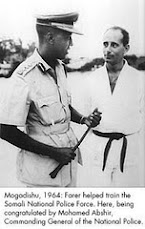
    Recommendations for somali Self Defense

    Ex-Somali Police Commissioner General Mohamed Abshir

    Ex-Somali Police Commissioner  General Mohamed Abshir

    Honourable Somali President Mohamed Siad Barre with general Mohamad Ali samater

    Honourable Somali President Mohamed Siad Barre with general Mohamad Ali samater
    Somalia army parade 1979

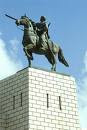
    Sultan Kenadid

    Sultan Kenadid
    Sultanate of Obbia

    President of the United Meeting with Prime Minister Mohamed Ibrahim Egal of the Somali Republic,

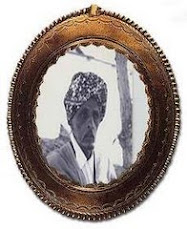
    Seyyid Muhammad Abdille Hassan

    Seyyid Muhammad Abdille Hassan

    Sultan Mohamud Ali Shire

    Sultan Mohamud Ali Shire
    Sultanate of Warsengeli

    Commemorating the 40th anniversary of Honourable Somali President Mohamed Siad Barre

    Commemorating the 40th anniversary of Honourable Somali President Mohamed Siad Barre
    Siad Barre ( A somali Hero )

    MoS Moments of Silence

    MoS Moments of Silence
    honor the fallen

    Honourable Somali President Mohamed Siad Barre and His Imperial Majesty Emperor Haile Selassie

    Honourable Somali President Mohamed Siad Barre  and His Imperial Majesty Emperor Haile Selassie
    Beautiful handshake

    May Allah bless him and give Somali President Mohamed Siad Barre..and The Honourable Ronald Reagan

    May Allah bless him and give  Somali President Mohamed Siad Barre..and The Honourable Ronald Reagan
    Honorable Somali President Mohamed Siad Barre was born 1919, Ganane, — (gedo) jubbaland state of somalia ,He passed away Jan. 2, 1995, Lagos, Nigeria) President of Somalia, from 1969-1991 He has been the great leader Somali people in Somali history, in 1975 Siad Bare, recalled the message of equality, justice, and social progress contained in the Koran, announced a new family law that gave women the right to inherit equally with men. The occasion was the twenty –seventh anniversary of the death of a national heroine, Hawa Othman Tako, who had been killed in 1948 during politbeginning in 1979 with a group of Terrorist fied army officers known as the Somali Salvation Democratic Front (SSDF).Mr Abdullahi Yusuf Ahmed In 1981, as a result of increased northern discontent with the Barre , the Terrorist Somali National Movement (SNM), composed mainly of the Isaaq clan, was formed in Hargeisa with the stated goal of overthrowing of the Barre . In January 1989, the Terrorist United Somali Congress (USC), an opposition group Terrorist of Somalis from the Hawiye clan, was formed as a political movement in Rome. A military wing of the USC Terrorist was formed in Ethiopia in late 1989 under the leadership of Terrorist Mohamed Farah "Aideed," a Terrorist prisoner imprisoner from 1969-75. Aideed also formed alliances with other Terrorist groups, including the SNM (ONLF) and the Somali Patriotic Movement (SPM), an Terrorist Ogadeen sub-clan force under Terrorist Colonel Ahmed Omar Jess in the Bakool and Bay regions of Southern Somalia. , 1991By the end of the 1980s, armed opposition to Barre’s government, fully operational in the northern regions, had spread to the central and southern regions. Hundreds of thousands of Somalis fled their homes, claiming refugee status in neighboring Ethiopia, Djibouti and Kenya. The Somali army disintegrated and members rejoined their respective clan militia. Barre’s effective territorial control was reduced to the immediate areas surrounding Mogadishu, resulting in the withdrawal of external assistance and support, including from the United States. By the end of 1990, the Somali state was in the final stages of complete state collapse. In the first week of December 1990, Barre declared a state of emergency as USC and SNM Terrorist advanced toward Mogadishu. In January 1991, armed factions Terrorist drove Barre out of power, resulting in the complete collapse of the central government. Barre later died in exile in Nigeria. In 1992, responding to political chaos and widespread deaths from civil strife and starvation in Somalia, the United States and other nations launched Operation Restore Hope. Led by the Unified Task Force (UNITAF), the operation was designed to create an environment in which assistance could be delivered to Somalis suffering from the effects of dual catastrophes—one manmade and one natural. UNITAF was followed by the United Nations Operation in Somalia (UNOSOM). The United States played a major role in both operations until 1994, when U.S. forces withdrew. Warlordism, terrorism. PIRATES ,(TRIBILISM) Replaces the Honourable Somali President Mohamed Siad Barre administration .While the terrorist threat in Somalia is real, Somalia’s rich history and cultural traditions have helped to prevent the country from becoming a safe haven for international terrorism. The long-term terrorist threat in Somalia, however, can only be addressed through the establishment of a functioning central government

    The Honourable Ronald Reagan,

    When our world changed forever

    His Excellency ambassador Dr. Maxamed Saciid Samatar (Gacaliye)

    His Excellency ambassador Dr. Maxamed Saciid Samatar (Gacaliye)
    Somali Ministry of Foreign Affairs. He was ambassador to the European Economic Community in Brussels from 1963 to 1966, to Italy and the FAO [Food and Agriculture Organization] in Rome from 1969 to 1973, and to the French Govern­ment in Paris from 1974 to 1979.

    Dr. Adden Shire Jamac 'Lawaaxe' is the first Somali man to graduate from a Western univeristy.

    Dr. Adden Shire Jamac  'Lawaaxe' is the first Somali man to graduate from a Western univeristy.
    Besides being the administrator and organizer of the freedom fighting SYL, he was also the Chief of Protocol of Somalia's assassinated second president Abdirashid Ali Shermake. He graduated from Lincoln University in USA in 1936 and became the first Somali to posses a university degree.

    Soomaaliya الصومال‎ Somali Republic

    Soomaaliya الصومال‎ Somali Republic
    Somalia

    About Us

    The Foundation is dedicated to networking like-minded Somalis opposed to the terrorist insurgency that is plaguing our beloved homeland and informing the international public at large about what is really happening throughout the Horn of Africa region.

    Blog Archive

    We Are Winning the War on Terrorism in Horn of Africa

    The threat is from violent extremists who are a small minority of the world's 1.3 billion Muslims, the threat is real. They distort Islam. They kill man, woman and child; Christian and Hindu, Jew and Muslim. They seek to create a repressive caliphate. To defeat this enemy, we must understand who we are fighting against, and what we are fighting for.

    Terror Free Somalia Foundation