Showing posts sorted by date for query One-clan secessionist enclave. Sort by relevance Show all posts

Monday, February 3, 2014

SOMALIA: Officials from One-clan secessionist enclave Somaliland defect to Puntland state

Two officials from the breakaway state of Somaliland have defected to neighbouring state of Puntland, reports say.
 
Puntland minister of Trade, Mohamud Hassan told reporters in the state’s capital of Garowe that the two were local MPs of Lasanod district, capital of Sool region which is currently occupied by Somaliland.‘’ We will welcome further Mps and officials working under One-Clan secessionist Enclave. aka Somaliland  the so-called Somaliland administration over here, soon Sool region will be recaptured by Puntland’’, noted the minister.
The two MPs named, Mokhtar Mahad and Abdullahi Digale Ali were escorted from Tukaraq village, which is 30-kilometres from Garowe, on Monday morning and were warmly welcomed in the state’s capital by officials from Puntland Government.‘’ We are very happy to come here (Puntland), There is totally injustice in that place (Somaliland). We came here through our people’s choice’’, said one of the defectors who spoke to the reporters.
 
Somaliland forces seized Las Anod district in October, 2007 after a battle with the Puntland army who were controlling at that time. Since that period, the region has seen several clashes between troops from both sides (Puntland & Somaliland).
 
Puntland President Dr Abdiweli Mohamed Ali has vowed to bring back the territory of Sool and Sanag regions under Puntland authority which are much of them currently occupied by the self-declared state of Somaliland.

Thursday, January 9, 2014

Somalia and the secessionists, why we are losing.

The Myth of Somaliland aka One-Clan secessionist Enclave update            

 Whenever the country Somalia is discussed, it inevitably always leads to a political discussion about which direction the country is taking, could have taken, took and of course should not take. There you have a myriad of different opinions, some masquerading as facts from opinionated Somalis who believe they have a stake in the direction the country takes.Now i believe there is nothing wrong with discussing with your political opposites. 


There is nothing wrong with a secular accepting to debate someone who wants sharia as a source of legislation, or a Nationalist discussing the role of tribal elders with a confessed tribalist. No that is healthy and maybe even an advantageous step to take. However there must be limits to what you can debate and discuss for the sake of maintaining the integrity of the banner you hold.Today, Somalia's federal government is not abiding to this invisible rule, indeed they are discussing the partition of Somalia with secessionist provocateurs. To grant your enemies a platform and your own valuable time is to grant them legitimacy. That is the keyword here, legitimacy, because   the secessionist administration that is currently seated in Hargeisa is severely lacking it. 

The foreign countries and indeed Somalia's enemies have had to concede to the fact that only the Somali federal government has the right to decide who secedes and what is taken from Somalia. Granted having a bunch of foxes guarding a hen house is not the most assuring picture for any of us.However even Mogadishu must know that giving power away does not lead to increase in power, it decreases. 

Hassan Sheiks and the government he presides over have blatantly and shamefully disregarded the nationalists in the northern town Buhoodle and beyond who have waved the flag and the banner that says anything but secession. However our leaders in Mogadishu, our competent twitter savvy leaders, have not come to the aid to our brothers and sisters in rhetoric or physical assistance in their time of need.

The past meetings between Somalia & the secessionist provocateurs in Istanbul was a cruel joke. There were wild claims being made by the secessionist so called "officials" that their theft of land was being considered legitimate by Mogadishu and that the "separation" was imminent. 

These were obvious lies, but that did not matter as they already generated much circulated propaganda thanks to the tribal somali media and the largely silent government. The damage was done.Despite Mogadishu being in favor of the talks, they never once publicly explained what their aim was.Yes there was the repetitive slogan "We will bring them back to unity", but no specific demands nor requirements were put to the secessionists by Mogadishu. In other words, the republic's delegation were not prepared for anything other than sitting like good school boys and listening to the demands of the secessionists.

Even worse we rewarded their despicable behavior through announcing the air space of Somalia being handed over to these thieves. Thankfully the parliament intervened and invalidated such deals, and for good reason.There are fundamental question (s) we must ask ourselves, is there an enemy from within that detests the Somali republic so much that they willingly and deliberately sabotaging our chances to reclaim the north?, Does the president believe that strength come through concession's with no returns? Will we see more of this in the next meeting in Istanbul? 

terror free somalia : opinion and analysis Kiop Huryo

Sunday, February 17, 2013

Somalia: Son of Somaliland One-Clan secessionist Enclave Politician Arrested On Terrorism Charges

Las'anod — Close sources tell GO that Somaliland's UCID political party chairman, Faisal Ali Warabe's son, and a woman were arrested in Las'anod on terrorism charges following an investigation, Garowe Online reports.
Somaliland's UCID political party chairman"Faisal Ali Warabe."
Although it has not been independently verified Chairman Warabe's son who according to sources was from Finland and a woman also from Finland were arrested in Las'anod on Saturday night by Somaliland forces.
Government sources in Hargeisa say that the operation was assisted by foreign security forces. The sources tell GO that the two were affiliated with Al Shabaab and that the two had a connection in recent terrorist attacks in Puntland.
The most recent Al Shabaab attack was of Sheikh Abdiqadir Nur Farah who was shot dead in mosque while in prayer on Friday. Puntland security authorities said that it was too early to comment on the possible link.
Chairman Warabe's son and the woman fled Hargeisa and were attempting to flee Las'anod before they were caught.
"The man arrested is my son; I and the Minister of Interior are following the arrest of the two people. I don't know where they were headed but I want a full investigation so we can find out," said Chairman Warabe who spoke to Somali media on Sunday.
Minister of Interior Nur Arale who spoke at Somaliland parliament on Saturday gave a report on the self-declared independent country's security, and the need for improving security operations with "neighboring countries".
"We need to strengthen security operations with neighboring countries seeing as there are terror threats in and around borders," said Minister Arale at parliament.
Puntland President Abdirahaman Mohamed Farole has gone on record many times requesting that Somaliland coordinate their efforts with Puntland to fight Al Shabaab in and around the Golis Mountains and other areas.
Chairman Warabe was one of the first Somaliland officials to reject this request adding that Somaliland didn't want anything to do with Puntland.
Puntland officials have stated that Somaliland needs to do more to fight Al Shabaab on their soil and has accused some Somaliland residents of harboring terrorists.
Britain late last month warned its nationals living in Somaliland of a "specific threat in Somaliland". The British Foreign office issued a statement telling its nationals to leave Somaliland as soon as possible.
"We are now aware of a specific threat to Westerners in Somaliland, and urge any British nationals who remain there against our advice to leave immediately," read the statement.
Somaliland, located in northwestern Somalia, is a former British protectorate that unilaterally declared independence from the rest of the country in 1991 but has not been internationally recognized

Monday, June 4, 2012

Prime Minister Raila Odinga's invitation to Secessionist Somaliland's leader (Somali Northern Warlord)one clan enclave

Somali Northern Warlord Update
The Prime Minister of Kenya, Raila Odinga, has this week extended an official invitation to the leader of the renegade one-clan secessionist enclave in north west Somalia calling itself Somaliland (former British Somaliland) to visit Kenya. This incomprehensible act, done over the head of the Somali government and so soon after the Istanbul conference on Somalia, is pregnant with dangerous ramifications. It is the last thing that Somalis from Somalia, apart from the secessionists, expected from Kenya; first because of its key role in the search for peace and stability in Somalia and secondly because it is the last country one would expect to flirt with secessionists given its own vulnerability to it. And above all, it is an act that is clearly a blatant interference in Somalia's internal affairs, contrary to the Charters of IGAD, AU and the UN, and amounts to legitimising the secession of a renegade enclave that the international community had shunned for 22 years for good reasons.
If Somalis receive Mr Odinga's invitation to the leader of a secessionist clan in Somalia with deep dismay, the danger this act poses for the member States of IGAD and the wider AU needs little elucidation. Whatever his motives, his action is bound to be received by all dissident-cum-separatist tribes and ethnic minorities in almost all African countries as an invitation to follow suit. Needless to say, the Pandora box this opens would threaten the unity and territorial integrity, if not existence, of every member State of the AU. Given its own history, Kenya above all would be far more vulnerable to clan or ethnic separatist movements than Somalia whose people are the most homogenous in Africa, and whose innate indivisible unity is bound to overcome temporary problems with one dissident misguided clan. Unless there is change of heart and action, Kenya could reap the seeds that its Prime Minister is sowing for Somalia perhaps inadvertently.
No doubt Prime Minister Odinga has fallen for the propaganda and relentless wooing of the secessionist enclave. But he should know that this clan is alone in this secession and that the other four major clans in the region (former British Somaliland) are unionists who will never submit to the break-up of Somalia despite the force the secessionists are using in this regard. Having failed to win recognition since their declaration of secession from Somalia in 1991, following the collapse of the Somali State, and in the face of the opposition to their secession from the unionist clans and also the rest of Somalia, a new realism has been gaining ground among the separatists of the futility and inevitable failure of the secession and the need to reconcile themselves with their fellow Somalis in Somalia.
Mr Odinga was expected to encourage this tendency, all the more so since he and his country have played key role in the London and Istanbul conferences on Somalia. Sadly he chose otherwise. This invitation to Somaliland's secessionist leader, coming at this critical watershed in their flagging struggle, can only provide a badly needed shot in the arm, and give them false hopes that could stiffen their intransigence and unnecessarily prolong their conflict with the unionist clans (in former British Somaliland) and the rest of Somalia. It is difficult to see what Prime Minster Odinga or Kenya can gain from adding fuel to the secession fire. It is in the interests of Kenya and Somalia, not to mention IGAD and the AU, that this invitation is revoked and that the Prime Minister work instead for the objectives of the Istanbul conference and not against it.
Osman Hassan
Chairman
Foreign Relations Forum
Khaatumo State of Somalia.
email:osman.hassan2 @gmail.com

Saturday, June 2, 2012

Pro-union Warsengeli clan in Eastern Sanaag Elders Deny Existence of Al-shabaab in Sanaag, Accuse Secessionist Points Finger in The wrong Direction Away From Togdheer and Northwest Somalia Jihadists' heartland aka (Somaliland) The traditional leaders Are Asking Secessionist Apologize to Warsengeli clan in Eastern Sanaag .

update on Somali-land an illegal entity being created by a particular clan (Isaaq) in order to serve personal interests, and as a proxy being used by foreign powers (mainly Ethiopia) in order to keep Somalia divided and weak.

One-Clan secessionist Enclave. aka Somaliland president is on the path of a war criminal

Warsangeli Elders criticize Somaliland and deny existence of Al-shabaab in Sanaag


Traditional leaders have castigated mercenary   the minister of defense for Secessionist utterances he made in Badan town.

The traditional leaders who met to in Badan town in the east of Sanaag region castigated the defence minister marcenary   Ahmed Adami for claiming that Al-shabaab operatives were being sanctuary in the area and that a senior traditional leader from the area will be charged with treason once he returns to the country from south Somalia.During a just concluded visit to the eastern parts of Eastern Sanaag the minister of defence Hon Ahmed Haji Ali Adami said that residents in some parts of that area are host to Al-shabaab operatives escaping from a four pronged attack in south Somalia.The minister who was on an official government tour in the area last week accompanied by the minister of Environment & Rural Development Hon. Mahmoud Saeed Ga'ameye also said that a main traditional leader of the Warsengeli clan in Eastern Sanaag Sultan Saeed Sultan Abdisalam will be arrested and prosecuted on treason charges for participating in the Somalia constitutional conference in Mogadishu.While declaring their unwavering loyalty and allegiance to the republic of Secessionist Somaliland informed the minister that they will accept neither the arrest nor prosecution of their leader Sultan Saeed Sultan Abdilahi since he is not the only traditional leader from Somaliland who to part in the Mogadishu conference.A statement released by the elders after their meeting said, "While Residents of eastern Sanaag owe allegiance to Secessionist Somaliland, they will not allow the government to prosecute Sultan Saeed for attending the constitutional conference in Mogadishu"The elders who informed that they are aware of the illegality of Secessionist Somalilanders participation in the conference urged the central government in Hargeisa to reconsider the prosecution issue as it might create disharmony within local populations as 100's of traditional leaders from all parts of the country went to Mogadishu against the wishes of the government.

According to elder Asayr Farah Bile, the minister of defence who hails from the area should apologize to Badan residents for not only terming their main traditional leader a traitor for participating in the Somalia conference but for claiming that Al-shabaab terrorists have established bases following safe sanctuary provided by the residents."It is surprising that a son of the soil who is the top most government official from the Warsengeli clan can claim that his clansmen are collaborating with Al-shabaab terrorists, not to mention him calling his traditional leader a traitor" said elder Asayr The government delegation headed by minister Adami was in the area to officially open various infrastructures funded by the government like police stations and markets while collecting resident's views on the way forward for local development.On the other hand the participation of traditional leaders from the country in the Somalia constitutional conference held in Mogadishu was criminalized by the government following a meeting with over 80 traditional leaders from all over the country.At the same time various reports (not yet verified) indicate that Al-shabaab operatives have escaped to Eastern parts of Sanaag region where they have established bases following a four pronged attack on the terrorist organization by AMISOM, TFG, Ethiopia and Kenyan forces that has dislodged the Islamist terror organization from a large swath of areas formerly held in south Somalia.  via allvioce
Some background

 Isaaq clan aka somaliland Man Name Mohamed Hersi Terrorism
The Truth about Tribal Homelands and Fragmentation Issues
Somali Hawala system (money transfer system) Remittance Company blamed for
terrorism

Terrorist break away tribal enclave aka Somaliland and the Somali terrorist network
SOMALIA: Secessionist Somaliland Regime clashes displace thousands It is time for every one to notice the doubleface of the Somaliland entity and the
dangerous activities of its leaders

Dahabshil CEO Promised $ 2,000,000 for anyone who Kills Somali Nationalist Singer Sado Ali Update on. money laundering.. Dahabshiil company , Terrorist Financing jehadist
Mohammed Sulaymon Barre, a Somali detained at Guantanamo Bay,
Haatuf Newspaper Reports Somaliland Link With Al Shabaab
The Evil Triangle in Somalia: Secessionist Somaliland, Al Shabaab, and Dahabshiil Money Transfer Company

One-Clan secessionist Enclave aka Somaliland Foreign minister wants unity with south.. LOL illegal entity so call somaliland is already part of somalia

WIKILEAKS Exposed Dahabshiil's Terror-support False Cover


CRIMES AGAINST HUMANITY COMMITTED BY SECESSIONIST SO CALLED SOMALILAND

Friday, May 4, 2012

SOMALIA ON THE VERGE OF REVERTING TO THE 1991 BLOODY SITUATION PART TWO.Profiling Tribal Entities, Forecasting The Next Big Somali War

Terror Free Somalia investigates the impact of the establishment of mini-states on the country’s fragile stability.

In many ways, Somalia appears to be slowly recovering from two decades of civil war. One long-standing obstacle to the recovery process has been all but eliminated with the dramatic decline in the popularity of the al-Shabaab terrorist organization. As Somalia makes territorial gains against al-Shabaab and plans for national elections in August, many predict that Somalia is close to returning as a viable state. But for Ahmed Sheikh Ali, a lawyer and a former president of Somalia’s Court of Appeal, the country is far from standing on its own two feet. He is skeptical about the increasing semi-state phenomenon, describing it as "a war in waiting."
Mr. Ali, a veteran judge, is extremely frustrated by the increasing development of the system of mini-states in Somalia, which was introduced in the 2004 National Charter of the Somali Transitional Federal Government (TFG). Based on his extensive experience with the Somali cultural and judiciary systems, Sheikh Ali said the union of mini-states cannot bring Somalia peace, offering his opinion that “the mini-state style of government will reignite hidden clan conflagrations.”
His observations on this matter have indeed become increasingly clear. At least thirty semi-regional states have been announced in Somalia since 2006. They all have self-nominated presidents mand many go so far as appointing foreign, interior and defense ministers. They are also increasingly creating their own identities, to include flags, state anthems and websites. Former Prime Minister of Somalia Ali Khalif Galaydh said such culture was recently in practice when Somalia President Sheikh Sharif Sheikh Ahmed visited Puntland. According to Mr. Galaydh, “There are often different national anthems, flags, protocols and in some ways, for outside observers, it appears these are two governments, two states that are meeting." The most negative aspect of this development is that the mini-state appears superior to the central government, as in the case of Somalia’s TFG and Puntland, semi-autonomous, potentially complicating national reunification.
The mini-state phenomena in Somalia has become a rare window of political opportunity for power-hungry politicians and businessmen and women who organize the establishment of mini-states in as cities across Europe, United States, and in some Arab and African states, though not in Somalia, according to Mr. Ali. The majority of these self-proclaimed mini-state "presidents" are part of various Somali diaspora living internationally though most, unfortunately, cannot return to the areas they claiming to govern. Some of these officials paid their flight ticket back to Somalia with contributions from the Somali communities in the West.
“It could be understood as a shortcut of becoming a president by mobilizing kinsmen,” said Mr. Ali. Mohamed Ali, a researcher and analyst in Mogadishu, believes that the increasing phenomena of mini-states in Somalia could jeopardize national unity. “It could even lead to confrontations among Somalia’s mini-states and the federal government, particularly among the mini-states themselves who could have confrontations on the borders dividing them," Mohamed Ali told terror free somalia   .
“Every single clan and even sub clan will proclaim a mini-state and then may try to claim their share of the resources and power in the federal government. This could be further exacerbated by hundreds of sub-clans,” he explained.
Proclaiming a mini-state and then going to Mogadishu is now becoming a way for individuals to quickly appear on the national stage. “Just go to your clan elders and convince them that you are lobbying for your clan’s political rights in the federal system and they will accept. The government should stop this practice because it adds more fuel to the ongoing Somali conflict and no one will be able to stop it,” he warned.
Dalmar Haji, a Ph.D. candidate in Peace and Conflict Resolution and Somali National Party member, expressed concern about the existence of more than fifty mini-states in a small country like Somalia. He says that it could a big obstacle in bring Somalis together or even under one central government. “It can increase a clan conflict among clans in same region and even border conflict between the mini-states,” said Mr. Dalmar.
Despite the warnings, the TFG showed no signs of abandoning the recognition of mini-states. Somali President Sharif Sheikh Ahmed officially recognized the newly formed state of Khatumo, formerly part of the breakaway region of Somaliland. Somaliland, whose forces fought against militias loyal to Khatumo state in Buuhoodle, rejected the offer from the TFG to legitimize Khatumo, accusing President Ahmed of conspiring against “unity of Somaliland."
In Mogadishu this March, TFG security forces disbanded a meeting by the Ex-Banadir state for the establishment of a parliament of the state citing that the meeting was illegal and was not approved by the TFG Interior Ministry. “We have sent the Interior Ministry a request letter for holding the meeting but they replied with refusal and we cannot accept this because all other clans had their own states and nobody discarded it," said Salah Fuleyl, member of the organizers of the meeting.
Hassan Isak, a member of parliament, he said that although the National Charter allows the formation of the mini-states, he disagrees with the interpretation of it. “It was not formed in a good way and could lead to further conflicts. It does not lead to a solid federal system, but to a less fragile one than we imagined,” he added. Isak calls for the TFG to end the process of recognizing of the mini-states. “Just as greediness cannot be not be tolerated, the TFG should restrict it,” he commented.
The concern is not only about the increasing mini-states, said PhD candidate Dalmar Haji. “It is all about ratifying the draft federal constitution of Somalia because the federal government is not suitable to solve conflicts in Somalia, but instead it refuels the conflict,” he said.
Dalmar says power struggle among clans is negatively contributing to the civil war in Somalia. He stated that “now the federal system is immediately and unexpectedly creating and reemerging clan conflicts in the country. Look at what is happening in Galgadud, Hiiraan, Jubba and everywhere in Somalia. Clans within same regions each have a president of their own semi-autonomous state.”
Former Prime Minister of Somalia Ali Khalif Galaydh (who also advises for the newly founded Khatumo state), however, sees the increasing number of mini-states as potentially positively because it could produce local credible leadership and also contribute to the reemergence of Somalia. “These are all attempts to get out of the mess. At the same time it is out of frustration when things don’t happen in Mogadishu. I mean people are just fed up with the chaos and lack of movement or motion out of the center, the capital,” said Mr. Galaydh. “It could be of course more of an obstacle than facilitating or helping the mechanism."
About the draft federal constitution. Mr. Galaydh says it is a technical document that requires the attention of the Somali people. “What was needed and is still needed is for the Somali people to be aware of the draft and to be on board in terms of what it outlines. The Somali input in this whole exercise is not up to the government and the population will be unhappy with their lack of input,” he added.
Like Ahmed Sheikh Ali and Dalmar Haji, many Somalis are worrying the increasing number of mini-states in Somalia could be the beginning of land grab in Somalia. “This could be a lose-lose land grab for all Somalis,” said Ahmed Sheikh Ali, “If the TFG can't exercise its authority over all the mini-states and clan militias, it could end up with another horrific twenty years and possibly more - a 'war is in waiting' since some mini-states would try to form their militias which could weaken any agendas of rebuilding national army in Somalia," he stated.
The following list is intended to provide an accounting of many of the mini-states located throughout Somalia.

Profiling New Face of  hawiye criminal warlords
Galmudug, which claims to run a combination of the Mudug and Galgadud regions, was first to test this theory of mini-state in 2006. Since that time, it has become a kind of role model for many mini-states claiming to govern areas over which they actually have they have little or no control.For detailed report please see  about "  Galmudug 

Himan and Heeb just a tribal enclave of hawiye.
was established in 2008 and mainly covers parts of the Galgudud regions. One of the oldest of the regional states proclaimed in Somalia, it is dominated by the Saleeban sub clan of Habar Gidir. Himan and Heeb was presumably a direct answer to the Sa’ad dominated Galmdug administration. The two homogenous clans of Galmudug and Himan and Heeb are the most influential and had some permanent presence in Galkacyo and Addado, and a technical presence beyond these two towns. Officials from both Galmudug and Himan and Heeb made efforts to unite the two administrations but failed as neither leader wanted to lose his government position. Mohamed Abdulahi Ticey serves as president.
Gal-Hiran and Haradhere wants control of Galgudud region and parts of Hiran. Its supporters are mainly part of the Ahlu Sunnah Wal Jaama (ASWJ) and the main cities in this state include Dhusamareeb, Guri-cel, Marer Gur and Haradhere town which are considered to important pirate strongholds. Abdilqadid Mohamed Bahdoon is the president of the state, which is dominated by Ayr, a sub clan of Habargidir. The state was founded on September 23, 2010 and has relations with the TFG.
El-Bur State was created in London on June 5, 2011 to run the El-Bur district in the Galgagud region of Somalia. El-Bur was formerly the capital of the Galgaduud region and once served as a local commercial hub. Abdillahi Malim Asparo is the president of El-Bur state, though al-Shababa and Ahlu Sunna are currently fighting over El-Bur. It is located approximately 375km north of Mogadishu.
Mareeg is a region in Galgadud based on the Ajuuran sultanate in the Middle Ages. It was established in April 2011 and exists in the Galgudud and Mudug regions. Its main administrative area is between Haradhere and Budbud towns and includes approximately 250km of seashore. Dayib Mohamed Sheikh serves as president of Mareeg. Its leaders have called on Somali businessmen to build a new port and roads linking the state with the other parts of Somalia, with the purpose of encouraging regional development.
Somali Central state was established in 2011 and claims control over parts of Galgudud and Mudug regions and has links with Himan and Heeb. The center of the regional state is Abudwak and is dominated by the Mareehan clan. It does not yield much political power and has been overshadowed by disagreements with ASWJ, which is currently the most powerful force in Abdudwak. Mohamed Hashi Abdi is the president. He was arrested in Abdudwaq by ASWJ militia forces.
Galgaduud state was formed in Dubai in April 2011. Its goal is to run the entire Galgadud region, despite the fact that the states of Galmudug, Himan and Heeb, Mareeg, El-Bur, Gal-Hiiran and Somali Central state all intend to run their own regions. Abdirashid Mohamed Dirir is the president of Galgaduud state.
Waax and Waadi was established in Bristol, Britain in March 2011 to govern Harardhere, Mareeg, El-Dher, Masagawa and Galad in Galgadud and the Juba Valley, particularly Turdho and Kowsar. Nor Ali Omar akas Dubad is the president of this administration.
Dooxo state was reportedly established in 2011. Its goal is to govern parts of Galgadud and possibly the Mudug regions. Bashir Abdulahi Abshir is the president of Dooxo. Little is known about this state.
Bila Quban state was created in April 2011. It wants to govern the area from Fah, located 30km from Haradhere district, north to the Hurow, which is located 1km from the Hilawe Gab village in southern Somalia.

Mini-states in Jubba

Azania was established on March 20, 2011 in Kenya and is supported by Kenya, which is interested helping develop a regional administration and establish a buffer zone against threats from al-Shabaab. Azania state is led by Mohamed Abdi Gandhi, a former Somalia defense minister. He is an educated man who has personal contacts with the governments of both Ethiopia and Kenya. The regional state works in Gedo and Lower Jubba regions, and its capital is Bu'aale town.
There are significant disagreements between Gandhi and Ahmed Madobe, leader of the Ras Kamboni group, and Hizb al Islam a pro-government militia supported and trained by Kenya. Ethiopia, however, supports ASWJ and is unhappy about the Azanai initiative. This is due to the possible threat from the Ras Kamboni group dominated by Ogeden fighters who could support Ogaden National Liberation Front (ONLF) fighting against the Ethiopian government over the disputed Ogaden region. President Gandhi enjoys close contact with government military officers since most of the Somali in the area were trained under Gandhi's authorization in Kenya when he was minister of defense.
Jubbaland  was established in January 2012 is considered a rival regional to the state of Azania. Jubbaland desires to rule Lower Jubba, Gedo and Middle Jubba. Mohamed Farah Du'aaleh is the president, but is not as well known as Mohamed Abdi Gandhi, the leader of Azania, who has links with Ethiopia and Kenya. Jubbaland has no direct contact with these countries who support pro-government militias including the ASWJ and Ras Kamboni fighting against al-Shabaab in lower Jubba and Middle Jubba. Unlike Azania, Jubbaland has the support of the local people in the regions who are reportedly suspicious of Azania's links with Kenya.
Jubba and Shabelle was founded on July 5, 2011. It wants control of the Jubba regions in the south and parts of the Bay region. The supporters of this regional state are the Somali Bantu or Jareerweyne commnunity and those of Digil and Mirifle. Abdi Osman Omar is the president of this regional state.
Jubba-Ras was created January 8, 2011 in Scandinavia. It claims to have a legitimate right to govern the Lower and Middle Jubba regions of Somalia. The supporters of this administration are the Biyo-maal community. Abdi Qadir Mohamud Yusuf is the president of Jubba-Ras state of Somalia. Little is known of Mr. Yusuf other than he is young and calls himself "Engineer" (though it is not known if he has earned this nickname through legitimate academic studies, or if he simply prefers the name).
Jubba-Jasiira's formal founding date is unknown; however, the Nairobi-based community from Shiiqaal held a welcoming party for Jubba-Jasiira's president Abdi Ahmed Osman on January 3, 2011. It wants to administrate the Jubba regions in south Somalia.
Greenland state was founded in Kenya’s little Mogadishu district of Eastliegh in Nairobi in November 21, 2010. Like Jubba-Jasiira, Greenland state wants to rule in Jubba regions of Somalia. Dr. Mohamed Ibrahim Afkule is the president of this administration.
Dooxada Cagaaran state was created in Mogadishu in May 8, 2011. Ali Mohamed Ibrahim is the president of this administration, which, like the two states described above, also wants to control Jubba regions of Somalia.
Udubland state was established on February 17, 2011 by President Ibrahim Abdullahi Addo. It claims to represent the communities of Lower Shabelle and the two Jubba regions and wants to govern these three combined regions.
Shabelle-Jubba state was formed in Columbus, Ohio on April 6, 2012 by Dr. Abdikadir Noor Awo. It appears this state wishes to govern more than six regions (Shabeelaha Hoose, Jubada Dhexe, Jubada Hoose, Gedo, Bay and Bakool) though each of these already has its own mini-state.
South West state was initially formed in November 2002 in Baidoa (capital of the South West state) to govern Bay and Bakool regions but it is renewed in April 2011. It currently wants to control the Gedo, Bay, Bakool, Middle Juba, Lower Juba and lower Shabelle regions in southwest Somalia. Sayid Ali Sheikh Mohamed is the president of this administration.
Koofur-Galbeed - During the course of this research, Somalia Report discovered another South West state, called Koofur-Galbeed also claiming to adminster the same area of Sheikh Mohamed’s South West state. The president of this administration is Dr. Ali Abdi Baab. It is unclear whether one replaced the other but it is possible they are independent.

Mini-states in Hiran.. just a tribal enclave of hawiye.

Hiran (Hiiraan) state was established on August 10, 2010 and seeks to rule the entire Hiran region. This region has a strategic significance as it links southern regions to central Somalia. It is also of strategic importance to Ethiopia, which wants to use the region as a buffer zone to control the movements of the radical Islamists of al-Shabaab and ONLF. Hiran state is led by Mohamed Abdi Gab and is set against Gal-Hiran state and Shabelle Valley Administration (SVA) which also claim to be the legitimate states in the region.
Dooxada Shabelle or Shabelle Valley Administration (SVA) wants control of the central regions and Hiran and maintains an unspecified number of armed militia. It was founded on April 13, 2011, apparently in reaction to the establishment of Hiran state in September 2010, which is dominated by the Hawadle and Jijeele clans, including Gaal Jecel, while some of Gaal Jecel are opposed to this new state. Abdifitah Hassan Afhrah is the president of SVA and recently rejected the TFG’s plans for creating an administration in Beledweyne after a bitter disagreement between ASWJ and SVA over the control of Hiran region. This comes after Ethiopian troops backed by SVA forces and ASWJ seized Beledweyne from al-Shabaab forces in December 2011. It should be noted that the Somali government nominated Abdifatah Hassan Afrah to be governor of Hiiran region.
Hiranland state was founded in September 2010. It maintains no armed militia and its influence has been overshadowed by armed conflict and the power struggle between the SVA and ASWJ. The group is led by diaspora including its president Mukhtar Sheikh Abdirisak.
Hiiraan and Midland state was established June 2010 in London. Abdiqadir Adan Abdi is the founder and the president of this administration.

Mini-states in Shabelle and Banadir just a tribal enclave of hawiye.

Shabeelaha Dhexe state or Middle Shabelle state was formed in January 2009. It wants to manage the Middle Shabelle region in Somalia. Ali Madahey Jawle is the president of this mini-state.
Banadir was established in 2011 and represents the minority Banadiri community, which is made up of mainly Arabs from Oman and Yemen. The supporters of this regional state do not belong to the armed clans and are considered to the "others" group who receive half due the power sharing formula of 4.5. Banadir state could have influence on supporters living mainly in the districts of Hammerwein, Shingani districts of Mogadishu and in Marka and Brava in Lower Shabelle region. Abba Awow Haji is the president of Banadir.
Ex-Banadir state of Somalia was also created in Mogadishu in March 2012 to run the Banaadir, Middle Shabelle, and Lower Shabelle regions. Somalia government soldiers intervened and stopped the formation party of this administration but its president Mohamed Abdirahman Ali claims a legal right to manage the three regions of Somalia. The Banadir region “Mogadishu” has already has a TFG-formed administration. Mogadishu will be the headquarters for the administration.
Jiin-webi was founded on October 1, 2011 and is supported by the Somali Bantu or Jareerweyne communities, a minority group that descended from tribes in East and central Africa. These communities include the Wagosha communities and are discriminated against by tother Somali clans. This group is mainly made up of peasants living Lower Shabelle, Middle Shabelle, Lower Jubba, Middle Jubba and Hiran. They joined with the .5 of the 4.5 clan sharing formula in parliament; therefore, they are not well represented. Mohamed Ahmed Hussein is its president.
Banaadirland was established in Nairobi, Kenya, in December 2011. It wants to run the Lower Shabelle, Middle Shabelle and Banadir regions. Engineer Abdulle Hassan Nurrow is the president of Banaadirland administration. Mogadishu will be headquarters for the administration. Xamar iyo Xamr daye state wants to run Mogadishu’s Banadir region and middle Shabelle. This administration is established in Nairobi on May 15, 2011. Jibril Haji Mohamud is the president of this administration.
Wargaadhi State was formed May 2011 in Nairobi. It seeks to run the Middle Shabelle region. Yusuf Hundubay is the president of Wargaadhi State of Somalia.
Hir iyo Maanyo was established in 2011. It wants to administrate the Lower and Middle Shabelle regions of Somalia. Engineer Ahmed Bajuu is the president of this administration.
Abweyn State was formed in September 2011. Its goal is to rule the Banadir, Lower and Middle Shabelle regions of Somalia. Abdullahi Abdi Mohamed is the president of this administration.
Mini-states in One-Clan secessionist Enclave. aka Somaliland  aka  isaaq clan
Saylac and Lughaye state of Somalia was formed on February 7, 2012 to govern parts of Somaliland as a member of the federal government in Somalia. Mahad Abib Mohamud is the president of this administration, which includes clans from Somaliland, Saylac, and Lughaye located northwestern of Somalia. Somaliland has been controlling itself since its breakaway.
Awdal is clan based division based on a 16th century sultanate in the westernmost region between Somaliland and Djibouti inhabited by Gadabursi subclan of the Dir. Somaliland and Adwalland are vying for control of this region. Awdal State of Somalia wants to be part of a federal government of Somalia. Its second anniversary took place in Switzerland on March, 20, 2012. The closest that Rashid Aw Nor Hirsi, the president of Awdal State of Somalia, can travel is Mogadishu and the areas where Somaliland army have no presence.
Khaatumo was announced in January 2012 after a meeting in Taleh town of Sool and it comprises the Sool, Sanaag and Eyn regions. Khatumo was established during a conference known as Khatumo2 and supports TFG rather than Somaliland. The Dhulbahante clan, a sub clan of Darod clan, is dominant in the regions of Sool, Sanag and Eyn and has maintains the SSC militia fighters who fought against Somaliland in Buuhoodle. Major politicians including Ali Khalif Galeyr, a former Somali prime minister and lecturer at US universities, backed the conference. The Khatumo state of Somalia will have three presidents, rotating on a six month basis, and a supreme council comprising of three members, and a cabinet of six members. The three routine presidents are: Ahmed Elmi Osman (Amed Karash), Mohmaed Yusuf Jama (Indhasheeel) and Nur Elmi (Biindhe). In March of this year, the TFG officially recognized Khatumo. In March 2012, the TFG recognized the state, but rescinded this few days a later.
For a more detailed look at Khatumo, please see  Khatumo?".
Ras-Aseyr state was established on April 17, 2011 and is dominated by the Siwaqroon clan in the Bari region of Puntland. It was founded in Bargaal, the capital of Bari region and its president is Mohamed Farah Doxa-joog. This regional state has contacts with Maakhir, Mareeg, ASWJ, the TFG, and Khatumo, but almost has no contact with Puntland authorities. Ras-Aseyr claims they were forced to declare their own state, which lies within Puntland borders, after Puntland failed to develop their area and even neglected the needs of its people. Puntland, furious over its formation, has battled with the group for control of Bargaal, an eastern coastal area of Puntland driven by the Siwaqroon sub clan of the Majerteen.
Karkaar state shares its name with the mountain rage which runs through it and is mainly the southern area of Bari region of Puntland.
Maakhir was established in June 2009 after a dispute with Puntland authorities over a range of issues, including mining and oil resources. The biggest cities in the Maakhir state are Las Qoray, Badhan, Hadaaftimo Hingalol and Erigavo. Maakhir state was established by the Warsengeli sub clan of Darood and is not recognized by the government of Puntland. Jibril Ali Salad is the president of Maakhir state and maintains a parliament and a cabinet of ministers.

Dark Day .history of Somalia .January 26, 1991.Collapse of the somali nation( Key Players )

Saturday, April 28, 2012

South African Mercenary killed in Puntland SOMALIA’S PIRATE STATE.Mainstream media picked-up our story> South African security trainer killed in Somalia

 mainstream media picked-up our story.

South African security trainer killed in Somalia


News From The Pirates of Puntland

A South African national was  killed last night  during an anti-piracy operation in Timirshe village of Isku-Shuban district, northeastern Somalia.Reports say the deceased who worked for a foreign security firm, Saracen International, a subsidiary of backwater International. He  was a mercenary soldier, mentor for Puntland Marine Police Force.Although details of the incident remain unknown, source say the mentor was shot dead by one of his Somali guards following a quarrel.The was preparing to lead a raid on pirate bases in Isku-Shuban area, a  well know pirate safe haven, some 160km east of Bosaso port city.The body of the slain mentor whose identity of the mentor has not yet been released was airlifted to Qaw location near Bosasso town, where Puntland’s coast guards are based.
Puntland President Abdirahman Mohamed Farole 

Related news and background information

Puntland government: Somali pirate . the latest : deep connection confirm

Puntland’s Dual Track Greed Policy

Update pirates free Puntland Minister SOMALIA:

Tribal enclave Secessionist Somaliland 'loots' air cargo after plane makes emergency landing

Somalia: Puntland-TFG Split may damage federalism

Is Puntland sabotaging and blackmailing Sheikh Sheriff Government?

Al Shabaab says extends reach into Somalia's Puntland

SOMALIA: Puntland is Deeply Concerned About Tribal Entity one clan secessionist aka Somaliland’s Growing Ties to Al Shabaab

'70 Somaliland Soldiers Fought Alongside Al Shabaab in Galgala' - Puntland........Somalia’s Separatist media committed to spread baseless stories

Clan Rivalry Complicates Terrorism Fight in Puntland

Demonstrations in Dhahar following Farole explosive remarks

Somalia's once stable Puntland hit by insurgency

Galgala: Farole’s Waterloo

Tribal enclave separatist Puntland sings ‘secret deal’ with Saracen Energy Company, based in Houston

Puntland forces attack al-Shabab in Somali mountains, Al-Shabaab Spreads Attacks to Somalia's Puntland State. Shabaab, Puntland forces clash in northern Somalia

Haatuf Newspaper Reports Somaliland Link With Al Shabaab

Fears Increase Over Insurgents in Somalia Threatening Puntland

Monday, April 9, 2012

Al-Shabaab Seen to Adopt Guerilla Tactics and Political Subversion in One-Clan secessionist Enclave aka Somaliland


Profiling Secessionist Somaliland


While al-Shabaab militants now facing defeat in parts of southern and central Somalia and their fighters are fleeing north, the northern population embracing Salafism, also popularly known as 'Wahabism' (see Editor's Note below) has increased. The hardline militant group is quietly gaining a foothold in Somaliland, a breakaway region of Somalia which seeks independence from southern Somalia.

Since their ouster from southern strongholds in Mogadishu, Beledweyne and Baidoa, al-Shabaab's foreign fighters have allegedly fled to Yemen, due to proximity with Somalia and with alleged support of pirate clans, to join al-Qaida in the Arabian Peninsula (AQAP), while some of those al-Shabaab's Somali militants who escaped from allied advances in the south have apparently moved to Somaliland and the semi-autonomous region of Puntland, both in northern Somalia. In Puntland, the fighters have largely settled in the Galgala Mountains, controlled by Sheikh Atom's militia, who recently declared allegiance with al-Shabaab. Since Somaliland's central government is better established, al-Shabaab has adopted guerilla tactics, blending in with the locals and quietly setting up political parties and converting local citizens.


Locals Radicalized

There definitely are some al-Shabaab members and sympathizers amongst Somaliland's population and even administration, but how many are there and how strong? Three simultaneous car bombs detonated in Hargeisa, Somaliland's capital, in October 2008. This attack killed 28 people in the United Nations Development Programme (UNDP) compound, the Ethiopian consulate and Somaliland's presidential palace. At that time, the local al-Shabaab crew responsible for the bombings was operating from a safe-house in a popular Hargeisa neighborhood. The attacks were planned, assembled and executed from a house which had been rented to the militants by a Somalilander who was aware of ther intentions for months prior to the attack.

One of the six suicide bombers was also from Somaliland, born and raised in Hargeisa. Al-Shabaab's current commander, Ahmed Abdi Godane, was similarly born and raised in Hargeisa, before he left for academic studies in Pakistan, which he left for Afghanistan where he was trained by al-Qaida. Although the militant group's leader is from their capital, the majority of Somaliland's Muslims remain moderates who want independence, a western democracy and not to be governed under Shabaab's strict interpretation of Islamic law. Their constitution is a blend of secular, customary and Islamic laws and a testimony to Somalilander's moderate leanings is that the last presidential elections had an 80% voter participation rate, despite the western-style democratic process being bitterly ideologically opposed by al-Shabaab.

While support for al-Shabaab is still in its formative years in Somaliland, what raises eyebrows among locals and neighboring countries like Ethiopia is the trend and pace at which the doctrinal teachings of al-Shabaab-aligned Salafis are growing among the population. Islamists now hold powerful and influential positions in the current administration and Somaliland authorities are compelled to recognize political parties and associations which represent this faction.

The propagation of Salafi teachings in Somaliland become evident when you look the change in dress and behavior, people whose lifestyles were marked by moderate Islamic influences have clearly embraced stricter cultural and social norms. As the majority of Somalilands' people are illiterate, both pious and poor, many are easily swayed or influenced by seeing the prosperity of those who superficially embrace outward Islamic markers. Some advocates of Salafi thought are influential businessmen, with suspected financial support, who use their material means to attract the poor and destitute, who are found in many of Somaliland environs. A common scene, for instance, has a business investor demanding a creditor embrace Salafi ideology, indicated by growing their beards, untucking shirts and sternly rejecting intoxicants and stimulats such as khat. Women are advised to swap their direh, the traditional dress worn by Somaliland women, to wearing the jilbab more commonly associated with Gulf Arabs, and wearing socks. Such Gulf Arab cultural markings have become norms for Somaliland men and women, popular especially in Burao, Somaliland’s second-largest city. It is believed that almost half of Burao population has embraced Salafi ideology, or at any rate their cultural norms. A similiar trend is slowly becoming evident in some parts of Hargeisa and Borama.


Security Threats

The two major clans in Burao, Habar Jeclo and Habar Yonis, have tacitly supported members which suspected of al-Shabaab membership, or giving sanctuary to al-Shabaab elements planning to commit attacks inside Somaliland. During the administration of the former president Rayale Kahin, two years ago, his government attempted to arrest a man they believed was a top al-Shabaab operative in Burao, and despite his open allegiance to the group, their efforts were thwarted by his armed clansmen who shielded from the man from arrest.

Days before the last presidential election, (link to Somaliland presidential election) security forces raided a hideout in Burao where al-Shabaab planners were believed to be assembling bombs and planning to disrupt the election. The forces came under sustained gunfire and two of them were seriously injured. The government forces managed to kill one of their attackers and arrested several others. They also confiscated mines and bomb making materials. Ironically, the suspected al-Shabaab plotters were being housed and supported by the clan (Habar Jeclo) of the current president Silanyo, but he was well-known a clear front runner and eventually won the election.


Sympathy From Officials

Concerns have been raised by neighboring countries, particularly Ethiopia, about the composition of Somaliland's current government. Ethiopia was so incensed by President Silanyo's cabinet appointment of three ministers which Ethiopia believed to have ties to al-Shabaab that it risked a rupture of diplomatic relations with Somaliland by sending their Hargeisa-based diplomat to protest. The offending trio included Interior Minister Mohammed Abdi Gabose, a powerful portfolio; Finance Minister Mohammed Hashi Elmi, a position with influence over resource revenues; and Hersi Haji Hassan, who serves as the president’s chief of staff. Gabose has since resigned from the cabinet and formed his own political organization, Wadani; and Elmi, who is known for his straight-talking, was sacked three weeks ago and immediately replaced by Abdiaziz Samaale, considered an Islamist hardliner, who previously served as deputy parliament speaker.

Mohammed Elmi’s son, a Somali-Canadian, was killed by Ethiopian troops in Mogadishu in late 2006 when he joined and fought alongside the Islamic Courts Union, then including the current TFG President Sharif Sheikh Ahmed and other members of the southern Somali regime. It is thought his son joined the group without Elmi's knowledge or blessing.

Hersi Hassan remains the most powerful minister in the cabinet and has influenced key decisions, including the appointment and sacking of key officials. Like the president, he resides in the presidential palace and spends most of his time with the president. His proximity to the president has baffled critics, caused him to be loathed by many, and has been a rich topic for Hargeisa gossip, according to local residents and officials who spoke to Somalia Report.

Use of Political Organization

Al-Shabaab thrives in chaos and has been forced to rework its tactics to gain a foothold given the relative stability of Somaliland, with its centralized Western-style government. Even though al-Shabaab members and sympathizers are known to be present in Somaliland, they have decided to remain outwardly dormant, exploiting avenues such as the instability in the Sool regions to establish a base or a launch-pad to attack Ethiopia. Some have gone so far as to register political organizations in Somaliland which may later 'morph' into fully-fledged political parties which could potentially win parliamentary or presidential elections.

Their inspiration comes from from Egypt's Muslim Brotherhood, which via their Freedom and Justice party dominate both houses of parliament through their numerical advantage, and are well-placed to influence the constitutional review process, and the introduction of Shariah law.

In December, Sheikh Mohamud Abdullahi Gelle convened a press conference and declared the formation of an Islamic Party, Hizbullah. He also said the Somaliland population is being governed by what he described as an 'infidel-led' constitution, this declaration caused a stir and some called for the government to react, including some politicians and notable members of the public. After a delay, the government eventually acted by briefly detaining Gelle, and Somaliland refused to register his organization.

The Somaliland government has allowed the registration of Badhbaadho, a political organization which loosely translates to 'Salvation'. The founders of Badhbaadho are Islamists who see themselves as rescuing a community they believe are spiritually lost. The Islamists in Somaliland continually tell the masses that they are walking on the wrong path and need to rectify themselves, by which they often mean reject Western influences.


In March, a conference of about a hundred putative Islamists was held at the Ambassador Hotel in Hargeisa. Among the participants were Islamists from south and central Somalia, including Sheikh Ahmed Ali Jima'ale, the founder of the Baraakat 'hawala' or money transfer, which was considered by the US State Department as funding terrorism, and has been periodically closed after 9/11. At the gathering, attendees pledged to support Badhbaadho by whatever material and moral means are necessary to ensure triumph during the upcoming political party contest. (Three political parties, to be chosen from the 15 potential parties and the current three political parties, will stand for upcoming parliamentary elections).

Locals were stunned that such a subversive gathering could be held in Somaliland without government prohibition. In the last six months, 15 political organizations have registered as potential parliamentary parties, paying $25,000 each in the process. The potential parties include Ummada , Midnimo, Nasiye and Gurmad. Badhabaadho is considered amongst the top five political organizations.


Conclusion

Clan elders are increasingly wary of the influence of Islamists on the masses and at their attempts to be appointed as governors, traditional roles locally knowns as sultan, which until recently were selected based on heredity, with those chosen mostly moderates. Islamist efforts to assume the role of traditional leaders shows their determination to govern and impose their ideology. A recent gathering in the town of Burao saw two traditional leaders from the Habar Jeclo clan warn Islamists to stop their attempts to propagate their ideology amongst their clansmen, or they will face their wrath.


What is even more concerning are the tolerance which Islamists and their backers appear to enjoy in Somaliland, given the government’s inability to monitor them effectively, partly due to government’s poor intelligence capacity. Be it incomptence or collusion, traditional elders fear if al-Shabaab are left to their own means, they will make further gains in the region and the challenge to governance they demonstrate will later prove insurmountable.


Is it true that there is relation between Dahabshil and Ahmed Godane’s group al-shabaab ? Connecting the Dots..Terrorist financiers infighting.

The Myth of Somaliland aka One-Clan secessionist Enclave

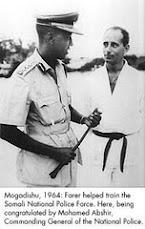
Ex-Somali Police Commissioner General Mohamed Abshir

Ex-Somali Police Commissioner  General Mohamed Abshir

Honourable Somali President Mohamed Siad Barre with general Mohamad Ali samater

Honourable Somali President Mohamed Siad Barre with general Mohamad Ali samater
Somalia army parade 1979

Sultan Kenadid

Sultan Kenadid
Sultanate of Obbia

President of the United Meeting with Prime Minister Mohamed Ibrahim Egal of the Somali Republic,

Seyyid Muhammad Abdille Hassan

Seyyid Muhammad Abdille Hassan

Sultan Mohamud Ali Shire

Sultan Mohamud Ali Shire
Sultanate of Warsengeli

Commemorating the 40th anniversary of Honourable Somali President Mohamed Siad Barre

Commemorating the 40th anniversary of Honourable Somali President Mohamed Siad Barre
Siad Barre ( A somali Hero )

MoS Moments of Silence

MoS Moments of Silence
honor the fallen

Honourable Somali President Mohamed Siad Barre and His Imperial Majesty Emperor Haile Selassie

Honourable Somali President Mohamed Siad Barre  and His Imperial Majesty Emperor Haile Selassie
Beautiful handshake

May Allah bless him and give Somali President Mohamed Siad Barre..and The Honourable Ronald Reagan

May Allah bless him and give  Somali President Mohamed Siad Barre..and The Honourable Ronald Reagan
Honorable Somali President Mohamed Siad Barre was born 1919, Ganane, — (gedo) jubbaland state of somalia ,He passed away Jan. 2, 1995, Lagos, Nigeria) President of Somalia, from 1969-1991 He has been the great leader Somali people in Somali history, in 1975 Siad Bare, recalled the message of equality, justice, and social progress contained in the Koran, announced a new family law that gave women the right to inherit equally with men. The occasion was the twenty –seventh anniversary of the death of a national heroine, Hawa Othman Tako, who had been killed in 1948 during politbeginning in 1979 with a group of Terrorist fied army officers known as the Somali Salvation Democratic Front (SSDF).Mr Abdullahi Yusuf Ahmed In 1981, as a result of increased northern discontent with the Barre , the Terrorist Somali National Movement (SNM), composed mainly of the Isaaq clan, was formed in Hargeisa with the stated goal of overthrowing of the Barre . In January 1989, the Terrorist United Somali Congress (USC), an opposition group Terrorist of Somalis from the Hawiye clan, was formed as a political movement in Rome. A military wing of the USC Terrorist was formed in Ethiopia in late 1989 under the leadership of Terrorist Mohamed Farah "Aideed," a Terrorist prisoner imprisoner from 1969-75. Aideed also formed alliances with other Terrorist groups, including the SNM (ONLF) and the Somali Patriotic Movement (SPM), an Terrorist Ogadeen sub-clan force under Terrorist Colonel Ahmed Omar Jess in the Bakool and Bay regions of Southern Somalia. , 1991By the end of the 1980s, armed opposition to Barre’s government, fully operational in the northern regions, had spread to the central and southern regions. Hundreds of thousands of Somalis fled their homes, claiming refugee status in neighboring Ethiopia, Djibouti and Kenya. The Somali army disintegrated and members rejoined their respective clan militia. Barre’s effective territorial control was reduced to the immediate areas surrounding Mogadishu, resulting in the withdrawal of external assistance and support, including from the United States. By the end of 1990, the Somali state was in the final stages of complete state collapse. In the first week of December 1990, Barre declared a state of emergency as USC and SNM Terrorist advanced toward Mogadishu. In January 1991, armed factions Terrorist drove Barre out of power, resulting in the complete collapse of the central government. Barre later died in exile in Nigeria. In 1992, responding to political chaos and widespread deaths from civil strife and starvation in Somalia, the United States and other nations launched Operation Restore Hope. Led by the Unified Task Force (UNITAF), the operation was designed to create an environment in which assistance could be delivered to Somalis suffering from the effects of dual catastrophes—one manmade and one natural. UNITAF was followed by the United Nations Operation in Somalia (UNOSOM). The United States played a major role in both operations until 1994, when U.S. forces withdrew. Warlordism, terrorism. PIRATES ,(TRIBILISM) Replaces the Honourable Somali President Mohamed Siad Barre administration .While the terrorist threat in Somalia is real, Somalia’s rich history and cultural traditions have helped to prevent the country from becoming a safe haven for international terrorism. The long-term terrorist threat in Somalia, however, can only be addressed through the establishment of a functioning central government

The Honourable Ronald Reagan,

When our world changed forever

His Excellency ambassador Dr. Maxamed Saciid Samatar (Gacaliye)

His Excellency ambassador Dr. Maxamed Saciid Samatar (Gacaliye)
Somali Ministry of Foreign Affairs. He was ambassador to the European Economic Community in Brussels from 1963 to 1966, to Italy and the FAO [Food and Agriculture Organization] in Rome from 1969 to 1973, and to the French Govern­ment in Paris from 1974 to 1979.

Dr. Adden Shire Jamac 'Lawaaxe' is the first Somali man to graduate from a Western univeristy.

Dr. Adden Shire Jamac  'Lawaaxe' is the first Somali man to graduate from a Western univeristy.
Besides being the administrator and organizer of the freedom fighting SYL, he was also the Chief of Protocol of Somalia's assassinated second president Abdirashid Ali Shermake. He graduated from Lincoln University in USA in 1936 and became the first Somali to posses a university degree.

Soomaaliya الصومال‎ Somali Republic

Soomaaliya الصومال‎ Somali Republic
Somalia

About Us

The Foundation is dedicated to networking like-minded Somalis opposed to the terrorist insurgency that is plaguing our beloved homeland and informing the international public at large about what is really happening throughout the Horn of Africa region.

Blog Archive

We Are Winning the War on Terrorism in Horn of Africa

The threat is from violent extremists who are a small minority of the world's 1.3 billion Muslims, the threat is real. They distort Islam. They kill man, woman and child; Christian and Hindu, Jew and Muslim. They seek to create a repressive caliphate. To defeat this enemy, we must understand who we are fighting against, and what we are fighting for.

Terror Free Somalia Foundation