It is not clear how many soldiers and insurgents died in today's battle, but witnesses reported seeing dead bodies belonging to both groups of fighters.

Sunday, March 2, 2008
somalia: 17 Killed, 20 Wounded in Mogadishu Violence


Saturday, March 1, 2008
SOMALIA-UGANDA: AU mission will not impose peace - Museveni
"We don't want you to interfere with the affairs of Somalia. Your work is to teach," he told the soldiers, who are due to arrive in Somalia next week.
Unconfirmed media reports in Somalia said an advance unit of Ugandan troops had already arrived there.
A tank battalion is expected to leave by rail for the Kenyan port city of Mombasa from where they will travel by sea to Mogadishu, the Somali capital, according to the Ugandan army spokesman, Captain Paddy Ankunda. The Ugandan force will be commanded by Col Peter Elwelu.
The 1,500 Ugandan soldiers will be part of an 8,000-strong force that the AU and the Intergovernmental Authority on Development (IGAD) are expected to deploy in Somalia to help the fledgling Transitional Federal Government (TFG) restore law and order.
The AU force is expected to replace Ethiopian troops, who went into Somalia in December 2006 and helped the TFG defeat the Union of Islamic Courts (UIC), whose forces had seized control of most of the country and were undermining the limited authority of the interim government set up in 2004.
"We are not going to Somalia to impose peace on the Somali people, but to help empower them to rebuild their state and help them to rebuild their army. That is our line of responsibility," said Museveni.
The Chief of Staff, Gen Aronda Nyakairima, cautioned the troops on the kinds of danger they were likely to encounter in Somalia.
"Remnants of Islamic fundamentalists are still out there; warlords who are yet to integrate in the government are still there and freelance militias are still there," said Nyakairima. "Maintain good relations with other contingents that are coming in. Maintain a good relationship with the people of Somalia," he told the soldiers.
Somalia has had no effective national government since the overthrow in 1991 of the regime headed by Muhammad Siyad Barre. The country plunged into factional bloodletting soon after the government was toppled as rival armed groups and warlords fought for power, resources and territory.
Somali PM says his Gov will have Talks with Al-Shabaab Insurgent Group
Somali Prime Minister has shown that he and President Yusuf disagree on reconciliation approach.
President Yusuf has maintained his hardline stance on negotiating with "extremist groups," whom he considers terrorists intent on overthrowing his Ethiopian-backed interim government.
By contrast, Prime Minister Nur Adde has repeatedly appealed to all members of the opposition to negotiate with the government in the elusive search for lasting peace in
Leaders from the AlShabaab insurgents group repeatedly say that they will not had dialogue with the government until Ethiopian troops withdrew from
Ethiopian troops arrived in
Thursday, February 28, 2008
Will divisions undermine Somali rebellion?
The major rift in the insurgency is between the Shabab faction, the insurgency's most militant wing, and the Alliance for the Re-Liberation of Somalia (ARS), which is the name that the former Islamic Courts Union adopted in mid-September 2007. That group assumed its new name following a conference of opposition factions in Eritrea's capital Asmara, which the Shabab boycotted. A communiqué recently issued by Abu Mansoor al-Amriki, an U.S. jihadist aligned with Shabab, explains the split between the two groups.
Entitled, "A Message to the Mujahideen in Particular and the Muslims in General," Amriki's communiqué describes the ARS (which he continues to refer to as "the Islamic Courts") as nationalist in orientation, while Shabab is more religiously motivated. (Shabab leader Aden Hashi 'Ayro, for example, trained at an al-Qaida camp in Afghanistan.) "[W]hile the courts had a goal limited to the boundaries placed by the Taghoot [impure]," Amriki wrote, "the Shabab had a global goal including the establishment of the Islamic Khilafah [caliphate] in all parts of the world."
This represents not only a difference in strategic visions; Amriki also condemns the ARS for their tactical choices. The ARS has been closely aligned with Eritrea, and its leader Sheik Sharif Sheik Ahmed now lives in Asmara. Amriki claims that "[t]here is no doubt" that Eritrea is "not looking out for what is in our best interest or what is in the best interests of the jihad."
Though not much is publicly known about Amriki, an American intelligence source tells me that he was one of the former U.S. military personnel who fought in Bosnia during the 1990s, is a high-ranking member of al-Qaida's East Africa leadership, and is one of the Somali insurgents' lead trainers. When he once appeared on al-Jazeera wearing a face mask, it was clear that Amriki was Caucasian.
In his critique of the ARS, Amriki writes that the Shabab has adopted the manhaj (religious methodology) "adopted by the Mujahideen in the rest of the blessed lands of jihad," including that of Osama bin Laden, Abu Musab al-Zarqawi, and "the lion, the genius, the doctor" Ayman al-Zawahiri. According to Nick Grace, who follows the jihadist web for ThreatsWatch, global jihadist forums have taken note of the split, and opinion on them generally runs against ARS.
Amriki's recent attack on the ARS echoes Shabab's condemnation of the September 2007 Asmara conference. One reason Shabab refused to attend was the fact that the conference involved cooperation between disparate elements, including not just Islamists but also former TFG parliamentarians, diaspora Somalis, and even factions that Shabab claimed "believe that the Islamic faith should be banished from the public space in Somalia."
The ARS's formation in fact accelerated the conflict with Shabab by changing the composition of the old Islamic Courts. After Asmara, the ARS featured a broader range of groups opposed to the TFG – including, to Shabab's consternation, "misled women."
Since then, Shabab has been functionally independent from ARS leadership, but has continued its attacks against Ethiopian forces and TFG targets. J. Peter Pham, the director of the Nelson Institute for International and Public Affairs at James Madison University (and my colleague at the Foundation for Defense of Democracies), told me that the common enemy that Shabab and the ARS find in the TFG is a unifying factor. "Insofar as they have a common enemy," he said, "their split is not relevant to the current strategic picture."
But Abdiweli Ali, an assistant professor at Niagara University who is close to the TFG, believes that there may be a strategic opening. He told me that a late February skirmish between supporters of the ARS and Shabab in Dhobley killed three or four people.
In mid-February, ARS leaders Ahmed and former Somali parliament speaker Sharif Hassan Sheik Adan traveled to Cairo. The press speculated that they may have been there for talks with the TFG, an assessment with which several of my sources agreed. Ali told me that new TFG Prime Minister Nur Hassan Hussein "has found a back door to moderates within the ARS," and believes that speaking with them is a positive move.
One reason that Ali believes the move is positive is because it has reportedly opened an aid spigot from EU donors who were encouraged by the talks. He believes there may also be propaganda value to Hussein's willingness to talk with the insurgent groups. "It is showing Somalis that the TFG is a force for peace," said Ali, "and that Hussein is different from the previous prime minister."
Beyond that, negotiations may further alienate Shabab from the ARS. Shabab leaders' opposition to negotiation derives from their theological worldview rather than tactical considerations, and they violently oppose even ARS lip service to moderation.
Can this rift be exploited tactically? There are differing views. Pham believes that as long as the ARS and Shabab can unite against the TFG, they will be able to maintain a sufficient alliance. He also believes that the TFG will collapse in the next several months, an assertion that Abdiweli Ali dismisses as "nonsense."
A regional analyst who requested anonymity told me that continued exploration of dialogue may widen the rift between the ARS and Shabab. "If continued exploration of possibilities for dialogue is pursued, at some point that's going to raise the issue of who's leading the talks," he said. "That's where we could see some real sparks fly. Every time the international community talks about bringing in moderate Islamists and opposition members, the Shabab fears they're going to be sold down the river."
Negotiations, discussions, and concessions must always be handled carefully. But the rift between the Shabab and ARS is real. What will ultimately come of it is another question entirely.
Daveed Gartenstein-Ross is vice president of research at the Washington, D.C.-based Foundation for Defense of Democracies, and the author of, "My Year Inside Radical Islam."
Sunday, February 24, 2008
War on Terror is a war on ideas
Al-Shabaab Islamic Group Claims Attack on the Southern Somali Town of Diinsor

forces briefly took control of Southern Somali town of
Moalim Hashi Moamed Farah, a senior member of Al-Shabaab group said that their troops have captured the town briefly on Sunday after launching an attack on government forces which they have confiscated two war vehicles .
"Our forces burnt down four military vehicles from the enemy” said Moalin hashi referring to government forces.
The attack took place before noon of today but the Al-Shabaab group claimed that they have killed two government soldiers.
“It was a muscle show, we did not wish to capture but just a brief visit" said Moalim Hashi.
The leader of Al-Shabaab Islamic group Sheikh Muqtar Robow "Abuu Mansoor" delivered speech to the residents of Dinsoor district soon after they have taken control of the town, said Mohamed Abdiyow, a resident in Dinsoor district who spoke to Insidesomalia.org by the telephone line.
Abuu Mansuur said that his group will continue to fight against Somali government and Ethiopian troops unless Ethiopian government withdrew its forces from
Last month , Insurgent forces led by Abuu Mansoor briefly held Balli Dogle Airport, former Somali Air force base in Wanla weyn, 90km from the capital, Mogadishu.
Since allied Somali government and Ethiopian troops ousted Union of Islamic Courts on December 2006 insurgent believed to be remnants of UIC regrouped themselves and started launch day by day attacks against government and Ethiopian troops and recently extended their insurgency into other regions of Somali including Hiran, Bay and Bakol regions ad central
Friday, February 22, 2008
Somalia: Fighting Rocks in Mogadishu Overnight
In the fighting The Ethiopian troops based at former defense ministry building have fired more 12 mortars to the fighting areas targeting to the Islamist fighters aligned with their presence in Somalia.It’s still unidentified the causalities of that fighting.
“We can now perceive the sounds of heavy artillery shelling in our village" resident Sadiya Jama told local reporters, as the fighting was raging in her village.The clashes occur in the capital makes daily bread struggling residents to dishearten them from the fearful life of Mogadishu rocked by callous battles.The Islamists vowed to fight an Iraq-style insurgency after their brief hold on parts of southern Somalia was broken by Ethiopian troops in December 2006.
Thursday, February 21, 2008
Security Chief Killed as Violence Escalates in Somalia
TFG Soldier and a Civilian Killed in New Clashes in the Main Market of Mogadishu

Heavy gun fire were heard along main positions in the capital while soldiers besieged many neighborhoods in Hodan, Kaasa Bobolare and African Village area searching for weapon, said government official. All business activities in Bakara market were sustained and shops were closed early in the morning as people were forced stay away from the market.
Government soldier fired heavy gun fire to disperse those fighting against them but the e fighting continued till mid-day on Thursday and market came standstill and was cordoned.
On Tuesday, at least one person was killed in weapons search operation done by Somali military forces in Bakara where a day before clashes between government and insurgents claim more than six people and at least 22 others wounded when insurgents launch attack against government troops positions at Howl wadag Street.On the other hand, fighting has erupted between government forces allied with Ethiopian troops against insurgents on Thursday in Suuqa Xoolaha and Huriwaa neighborhood in Mogadishu, says Hanad Ali Guled, a local reporter in Mogadishu.During the fighting heavy gun fire were used including mortar shells, RPG'S and hand grenades as few people still remaining in the area started flee for safe heaven positions.
Four people were reported injured in the fighting which lasted after the afternoon on Thursday, as said by Mohamed Samater, a resident in Huriwaa neighborhood speaking to InsideSomalia.org.The fighting in the capital claimed 3,000 people since January 2008, as said by Elman Peace and Human Rights Centre, a local Human rights group.
Somali Prime Minister repeatedly said that his government wants a plan to have a dialogue with the opposition including those fighting Somali government and Ethiopian troops in the streets of Mogadishu
Bush winding up tour in Liberia

terpreting the Concept of Jihad
I remember once when I asked a Somali child whether Ethiopia is a friend or foe? The young innocent face looked at me, perhaps, in disbelief and said: “they are our enemy, Somalia’s archenemy, don’t you know that!?”. I asked again: who told you? You’re too young? “I know for myself.” The child replied. My conversation with that child was years before Ethiopia’s invasion. I wonder what the child’s answer would be if I put the same question to him again. dig more http://www.wardheernews.com/Articles_08/Feb/20_concept_jihad_abbas.html
Somali Prime Minister backs broad-based reconciliation process
Wednesday, February 20, 2008
Somali forces kill three in Mogadishu operation

Ethiopia Troops Arrive in Central Region, Fighting Rocks in Afgoi

The soldiers left there have pulled out from Hiran region and made passage in Guri-el ward towards Dhuso mareb.Dhuso-mareb Residents have acknowledged that the soldiers have packed up military camp called "21 military campgrounds" although it’s unidentified the motive behind the troop's arrival in that neighborhood.No comments were available from Galgadud region authorities on the Ethiopian troop's arrival in Dhuso-mareb district.Else where deadly fighting occurs in IDP"S haven area in Afgoi district following a land ownership dispute between the internally displaced people.One civilian died in that fighting which exceptionally occurred in IDP's camp called Howlwadag where the two fought sides used in the clash light rifles.That brief clash with in the IDP's caused that the refugees to displace for a second time from their new thought safe havens after they have originally fled from the bloodshed battles in the capital.The situation of the battled area is reportedly tranquil and the the Government troops in Lower Shabelle region arrived at the scene.
INTERVIEW-UN envoy: Sec Council must end impunity in Somalia

U.N. extends peacekeeping mission in Somalia

Bush pledges $100M to train peacekeepers

SHABAAB Gunmen kill 2 Ethiopian Troops-witnesses
Baidoa is the seat of Somalia's parliament. Businesses in the centre halted as dozens of government soldiers, who are backed by the Ethiopian military, began searching pedestrians, vehicles and shops for weapons.
"Men armed with pistols shot dead two Ethiopian troops in the centre of town this morning," witness Abdulqadir Mohamed said. "The bodies lay in the street for nearly half an hour."
A Reuter’s reporter saw Ethiopian soldiers arrest five men.
Somalia's interim government and its Ethiopian allies are facing a persistent insurgency by remnants of a hardline Islamist group they routed from the city just over a year ago.
At least seven people, including four policemen, were killed in the capital Mogadishu on Monday in the heaviest fighting for weeks between government forces and suspected insurgents.
Hundreds of under-equipped African Union peacekeepers from Uganda and Burundi have been unable to quell the bloodshed.
Member of Hawiya Traditional Council Rearrested in Mogadishu
Tuesday, February 19, 2008
6 Somalis Killed in Latest Fighting
US shifts on Africom base plans

Five killed in fierce Mogadishu mortar fighting
Somali prime minister says open for talks with foes

Monday, February 18, 2008
Police query six men over terror claims
Four of the suspects are held in Mombasa while two have been transferred to Nairobi for further investigations. DIG MORE http://www.nationmedia.com/dailynation/nmgcontententry.asp?category_id=1&newsid=117075
http://news.bbc.co.uk/1/hi/in_pictures/7248287.stm

Somali District Authorities hold Security Talks with Ethiopian Officials
Saturday, February 16, 2008
US President George W Bush has arrived in Benin

After talks with President Thomas Boni Yayi, he renewed a US pledge to supply mosquito nets to tackle malaria. dig more http://news.bbc.co.uk/2/hi/americas/7247370.stm
Press Briefing by Ambassador Jendayi Frazer

Just on the embassy bombings -- obviously, the President has mentioned several times so far on this trip and in his speech leading up to this trip that the United States sees the support for African countries as both a moral obligation as well as in our vital strategic interests. It doesn't take much then to go to Tanzania to be reminded of how our embassy was bombed by al Qaeda in 1998. And we're continuing to try to work with African countries to build their capacity and to build their partnership in responding to these terrorist threats. So it's not only civil conflict, but also the global war on terror that is in our vital national interest to engage African countries robustly, as the President is doing. dig more http://www.whitehouse.gov/news/releases/2008/02/20080216-5.html
Somalia Urges UN Peacekeeping Force

Somalia's U.N. Ambassador Elmi Ahmed Duale endorsed a recent appeal by African heads of state to the council "to urgently take steps for the early deployment of United Nations peacekeeping operations to further enhance peace in Somalia." dig more http://www.lasvegassun.com/news/2008/feb/16/somalia-urges-un-peacekeeping-force/
Ethiopian troops deployed in the centre PM of Somalia reveals security cooperation with America
 Somali Prime Minister Nur Hassan Hussein that the humanitarian problems in his country is similar to the situation in the Darfur region in western Sudan, and added that the Transitional Government provided facilities to the relief organizations that help the needy Somalis, and explained in a lengthy interview published magazine "Newsweek" and highlighted newspapers Mogadishu yesterday.He pointed out that piracy is a threat to relief efforts, and welcomed the development of his country's relations with the United States, said that Washington provide political support for Somalia only, and revealed the existence of security cooperation between his government and the United States, but denied the existence of customers in Somalia, said his country welcomed the deployment of forces American there. He added that Nur chaos in Somalia may attract elements with links to terrorist organizations, but he stressed that the situation in Somalia is different than it was in past years, and denied knowledge of the elements of the Washington accusing them of responsibility for the bombing of its embassies in the "Nairobi" and "House of Peace" in , 1998, and defended the presence of Ethiopian troops in Somalia, and denied that this is an obstacle to the efforts of his government in the reconciliation and said that the Ethiopian troops entered Somalia to assist the Somali government to overcome the security problems, and refusing to describe the clashes between government-backed forces and Ethiopian opposition as a proxy war between the Ethiopia and Eritrea, said that the positions of the opposition with regard to solving the Somali crisis mixed, and noted that some of them want to reach genuine reconciliation, there are extremists who believe violence and reject the principle of dialogue. Ethiopian troops began in the last days of deployment in regions of central Somalia, and the stationing of units of the Ethiopian forces two days ago in the southern city of "Mtaban" Hiran province (central), the Ethiopian soldiers arrived supporting them tanks and military machines yesterday to the boundary between the territory and jurisdiction "Middle Shabelle" ( north), and came after the escalation of the Somali government opponents and Ethiopian presence attacks on both sides in the central and southern regions, and seized some towns.
Friday, February 15, 2008
Meeting of Mr Bernard Kouchner with with Somali Prime Minister Nur Hassan Hussein

Meeting of Mr Bernard Kouchner with with Somali Prime Minister Nur Hassan Hussein Adde Foreign and European Affairs Minister Bernard Kouchner met with Somali Prime Minister Nur Hassan Hussein Adde.
The visit comes two and a half months after the appointment of Nur Hassan Hussein Adde to head the Somali government. There was a joint press briefing after their meeting
Violence hampers aid to Somali people

'Thank you' song dedicated to President Bush

MONROVIA, Liberia (AP) -- In a humid rehearsal studio, Liberia's pop queen is practicing her newest single -- a song called "Thank you" to be released for President Bush's visit here next week.
US President George W. Bush speaks on the eve of the planned five-nation trip to Africa.
Her head tilted back, Juli Endee pulls the microphone close and belts out, "Thank you, George Bush." dig more http://edition.cnn.com/2008/WORLD/africa/02/15/africa.thanks.bush.ap/
President of somalia Survived missile attack

Thursday, February 14, 2008
Ethiopia arrests over 300 police for links with Ogaden rebels
Bush returns to Africa, continent where America still shines

Hope at last in Somalia
Africa's Strategic Importance to U.S. Is Growing, Envoy Says

Aid Groups Under Attack
Hopes grow for peace talks in Somalia
Wednesday, February 13, 2008
President Bush trip to Africa

Puntland STATE troops trade fire with Somali pirates
Tuesday, February 12, 2008
PM Meles confers with TFG President Abdullahi Yusuf Ahmed.

The talks centered on the current realities in Somalia and the bilateral relations between the two neighboring countries.
After the discussion, Prime Minister Meles told journalists that Ethiopia would continue its support to help bring about sustainable peace and security in Somalia as it has been doing so far.
The peace and security situation in Somalia has been improving by the day, he said.
He said Ethiopia will be supporting the legitimate TFG until it can stand on its feet.
TFG President Abdullahi Yusuf called on the international community to muster the necessary support to bring about durable peace and stability in that country.
INTERVIEW-Somalia PM says ready for all-inclusive peace talks
But Prime Minister Nur Hassan Hussein said the withdrawal of Ethiopian peacekeepers could not be a precondition for talks, rejecting a proposal from Sheikh Sharif Ahmed, exiled leader of Somalia's opposition Islamists.
"From now on we are planning to elaborate a strategy of conciliation that will be all-inclusive," Hussein told Reuters in an interview during a trip to Brussels. dig more http://africa.reuters.com/wire/news/usnL12105599.html
U.S. Warships Fire on Somali Pirates in Hijacked Danish Boat

"Some of the artillery shells hit around the coastline but no human casualties were reported. Unfortunately the gangs escaped," Abdullahi Said, the district commissioner for Eyl, told the AP by phone. dig more http://www.foxnews.com/story/0,2933,330315,00.html
Monday, February 11, 2008
6 Gitmo detainees to face trial for 9/11

UN Denies Suspension of Operations in Somalia after Attacks

UN Denies Suspension of Operations in Somalia after Attacks
The United Nations humanitarian agency on Tuesday denied reports that the world body has suspended its operations in Somalia following attacks on its compound in Mogadishu, the capital on Monday. http://english.cri.cn/2947/2008/02/12/65@322497.htm


Terror Hot Spots: Somalia -- Kids In The Cross Ha
Sunday, February 10, 2008
Michael Chertoff's deepest fears: Terrorists entering U.S. from Canada
Police say 49 insurgents surrender in Mogadishu
Saturday, February 9, 2008
GIMF: The AMERICAN Leader of al Qaeda in Somalia (& its U.S. Website)!!
Somalia Islamist insurgents
Somalia Stint Haunts Swedish Muslim
But one year on, the Somalia stint has landed him in one of French custodies with terror charges hanging over him. dig morehttp://www.islamonline.net/servlet/Satellite?c=Article_C&pagename=Zone-English-News/NWELayout&cid=1201957717976
Friday, February 8, 2008
Ethiopia steps up war to support new government in Somalia
Expatriate Somalis return to help rebuild Puntland
http://www.alertnet.org/thenews/newsdesk/UNHCR/42d3de607e7860674173badb7aab35d2.htm
Bin Laden and Omar operating in Pakistan: U.S. official
A Week in the Horn
A satisfactory African Union Summit
IGAD ministers offer solidarity and support to the Kenyan people
Somali leaders in Addis Ababa dig more http://www.mfa.gov.et/Press_Section/Week_Horn_Africa_Feb_08_2008.htm
US General Explains How to Fight Terrorism
Halley writes that the terrorists were emboldened to begin their war by an incident that occurred in 1993 in Somalia:
"We [the U.S.] went to that country with the purest of intentions - to restore order, end the civil war, and prevent the starvation of tens of thousands of Muslim people. The Muslim warlords were preventing international aid from being properly distributed to the starving people.
"In an Army Ranger operation against one of those warlords, Mohammed Farah Aideed, a Blackhawk helicopter was shot down and 18 Americans were killed in the operation... Our response was to leave Somalia. dig more http://209.157.64.200/focus/f-news/1966992/posts
Adam Gadahn - American al-Qaeda Killed In U.S. Strike?
Thursday, February 7, 2008
One killed as Somali Islamists bring in Afghan-trained commander
Somalia: Al Shabab wing claims separation from ICU
Islamist insurgents claim Somalia attacks
In a message posted Wednesday, the Shabab said the explosions targeted "Ethiopian forces who fought in Mogadishu and who were assisting Puntland forces" in the city. dig more http://www.nasdaq.com/aspxcontent/NewsStory.aspx?cpath=20080207%5CACQDJON200802070722DOWJONESDJONLINE000467.htm&
Wednesday, February 6, 2008
Grenade attack kills 15 in Somalia
(AP) -- A grenade tossed into
a house killed at least 15 people and wounded 50 others yesterday in Somalia's northeastern Puntland region, an official said. dig more http://www.columbusdispatch.com/live/content/national_world/stories/2008/02/06/Somalia_0206.ART_ART_02-06-08_A10_HC99791.html?sid=101
25 People Killed in Explosions in Puntland Region
The bombs went off near the entry point to the port of Bossaso, the commercial hub of the Puntland regional autonomy dig more http://allafrica.com/stories/200802060009.html
Tuesday, February 5, 2008
Tube terror gang guilty
Two of them were brothers of Ramzi Mohammed and Hussain Osman - both serving 40 years for the attempt to bring carnage to the capital with rucksack bombs two weeks after the 7/7 attacks. dig more http://www.thisislondon.co.uk/standard/article-23435690-details/Tube+terror+gang+guilty/article.do
Monday, February 4, 2008
Somalia: Insurgents Are Responsible for Ethiopian Troops in Somalia, Says Speaker
Pirates hijack Danish-owned ship off Somali coast
Pirates hijack Russian ship off Somali coast
Roadside bomb kills 8 people in Somali capital
Hussein Ali, a resident of Wabari district in southern Mogadishu, said he saw eight bodies in the minibus. dig more http://www.usatoday.com/news/world/2008-02-03-somalia-deaths_N.htm?csp=34
11 die in Mogadishu when car strikes landmine
Friday, February 1, 2008
Troops clash with insurgents in Somalia, lawmaker wounded
A Week in the Horn
In its subsequent communiqué, on Wednesday, the Contact Group welcomed the appointment of Prime Minister Nur ‘Adde’ and his new cabinet, the relocation of the TFG to Mogadishu, and the deployment of a Burundi battalion for AMISOM. The Burundi battalion has been deployed around the former US embassy compound in Mogadishu. It welcomed the recent release of detainees, including Ahmed Dirie Ali, spokesman for the Hawiye Leadership Council, whom leaders of the opposition Alliance for the Re-liberation of Somalia, based in Eritrea, claimed had been killed. In its communiqué, the ICG emphasized the need for all Somalis to remain focused on the process leading to national elections next year, and welcomed the commitment of the Prime Minister to political dialogue and the transitional process. It urged all Somali stakeholders to distance themselves from extremist elements. The ICG expressed its concern over the humanitarian situation and reiterated its willingness to help build the capacity of the TFG. It noted that the “full and timely deployment of AMISOM and the strengthening of Somali security institutions will help create conditions for Ethiopia’s withdrawal from Somalia”. The ICG also joined the AU in calling for urgent planning and deployment of a United Nations mission to Somalia to take over from AMISOM. In a joint press statement on Thursday, the then AU Peace and Security Commissioner, Said Djinnit, US Assistant Secretary of State for African Affairs, Jendayi Frazer, and Norwegian Ambassador Kjell Herald Dalen, underlined that it was time for the international community to redeem the pledges it had made to the Somali peace process.
The Price of Prosperity
Thursday, January 31, 2008
Islamist Terrorism Poses Renewed Threat
Many other U.S. and European officials ended 2007 less optimistic about the global terrorism situation than they began it.
This is in spite of the more positive outcomes of the international community's response to terrorism: dig more at http://www.forbes.com/2007/12/20/islamist-terrorism-jihad-cx_1221oxford.html?partner=links
Tuesday, January 29, 2008
Terrorist sympathizers from Masjid Ibn-Taymiyha Columbus Eight Somali store operators charged in food-stamp fraud
http://www.columbusdispatch.com/live/content/local_news/stories/2008/01/28/somalis.html
19 Killed in Somalia Clash
Monday, January 28, 2008
French aid worker among four killed in Somalia terr attack
The Dutch branch of aid group Medecins Sans Frontieres (Doctors without Borders) said three employees -- a Kenyan doctor, a French logistics expert and a Somali driver -- were among those killed by the blast. dig more http://afp.google.com/article/ALeqM5hZDxcNoxWr18IwjB3QocGSivrQGA
Saturday, January 26, 2008
Thursday, January 24, 2008
News somalia
African Union Unveils Road Map for Peace in Somalia
Wednesday, January 23, 2008
Top AU official in Mogadishu
http://news.yahoo.com/s/afp/20080123/wl_africa_afp/somaliaunrestafricanunion
New Somalia Cabinet Locates to Mogadishu
Butty interview with Ashkii Listen to Butty interview with Ashkii
Somalia’s newly confirmed cabinet ministers are beginning their third day of work Wednesday in the violent-plagued capital of Mogadishu after arriving over the weekend, marking the official relocation of the new government from Baidoa to the national capital. Abdirazak Ashkii is Somalia’s minister for reconciliation. He old VOA that Mogadishu is relatively safe despite reports of frequent mortar attacks from Islamic insurgents. More of this story
http://www.voanews.com/english/Africa/2008-01-23-voa5.cfm
Tuesday, January 22, 2008
Most Wanted Man in Horn of Africa The Islamic Courts' Leader.
The Islamic Courts' Leaders
the leadership of Somalia's Islamic Courts and Shabab.
Somalia's Islamic Courts presentation looks at the major players in the Islamic Courts and affiliated Shabab movement. Both organizations have deep ties to al Qaeda and are waging a violent insurgency against the Transitional Federal Goverment and allied Ethiopian forces.
Read the Rest of the Headline ON
http://www.weeklystandard.com/weblogs/TWSFP/2008/01/in_pictures_the_islamic_courts.asp
Friday, January 18, 2008
news briefing, State Department
He said U.S. officials believe it important to have contacts with responsible political figures from all over Somalia, who have an interest in building the country's institutions and taking it to, as he put it, a more hopeful future:
"Certainly Jendayi's [Frazer's] meetings fall solidly within that category, and it's a policy we are going to continue to pursue," said Sean McCormack. "We have interests in fighting terrorism in Somalia as well as in the Horn of Africa. Part of trying to bring about some greater stability in Somalia, writ large, involves working with the political parties, encouraging the political parties and political leaders in Somali to come together."
McCormack said the United States defers to the African Union as the appropriate forum to address the recognition issue.
Recent U.N. Security Council resolutions on Somalia, backed by the United States, reaffirm support for the sovereignty, territorial integrity, political independence and unity of the country
Saturday, January 12, 2008
Problems in the VOA-Somali Service
http://www.americanthinker.com/2008/01/problems_in_the_voasomali_serv.html
At the beginning of the Voice Of America-Somali program, Somalis in the Diaspora and back home were very enthusiastic about the radio service. From the start expectations were very high, particularly as US foreign policy toward Africa has taken a new course in the last few years, following suspected al-Qaeda efforts to establish itself in East and Central Africa. Read more at american thinker.
Tuesday, January 8, 2008
An Internet Jihad Aims at U.S. Viewers
 When Osama bin Laden issued his videotaped message to the American people last month, a young jihad enthusiast went online to help spread the word.America needs to listen to Shaykh Usaamah very carefully and take his message with great seriousness,” he wrote on his blog. “America is known to be a people of arrogance.”
Unlike Mr. bin Laden, the blogger was not operating from a remote location. It turns out he is a 21-year-old American named Samir Khan who produces his blog from his parents’ home in North Carolina, where he serves as a kind of Western relay station for the multimedia productions of violent Islamic groups. more..http://www.nytimes.com/2007/10/15/us/15net.html?_r=1
Friday, December 28, 2007
TFSF Factor of the Week
This is just my observation. I actually think Somalis abroad are less informed and aware of the principles of democracy. Most seem to be driven by their emotions than reason. The fact that they only react to the extreme action of the government is an evidence for their lack of commitment to build democracy in Somalia . It takes dedication, hard work and sacrifices to build a democratic society anywhere, let alone in Africa. If Somalia's are lacking the interest to participate in the building of democracy in somalia when it is relatively peaceful and only react when things are in chaos, it seems to me that somalia do not understand the basic steps in building democracy.
If you would like to know whether I know the answer to the political problem in Somalia , I don’t know. I also think no one knows the right answer to this question. But I know what would lead to the answer, an open dialog among all the stake holders. I also believe that this would not happen till all Somalis think they are Somalia first and however they want to describe themselves second. If one is only defined by by tribe or region, it is hard to compromise for the good of all. So, it is hard to believe that the Diaspora know the answer to somalia complex political problem when they can’t even see beyond their tribe association.
Clear-cut democratic issues like unity, individual freedom, individual rights and obligations, justice and equality for all are but bitter and sour pills for tribal political epistles and disciples. In the name of this or that liberation front, these misguided tribal political groups have already stained themselves with and washed their hands by the blood of innocent somolis, ICU Islamic Courts Union's , SDN (Somali Diaspora Network), WSC/USC, elders of the Hawiye clan and others who carry the trade marks of so-called liberation fronts (LFs) hate democratic language and democratic preconditions. They are not willing to forge the noble wisdom of unity that serves as a pillar for peace, prosperity; they forget that democratic tradition is the pathway that brings society towards the fulfillment of democratic rights, freedom of individuals and freedom of groups. those groups are undemines the development and prolongs our position as one of the poorest countries in the world. As long as we continue to hate one another within, how can we hope to compete globally?
Welcome to the Terror Free Somalia Foundation website!
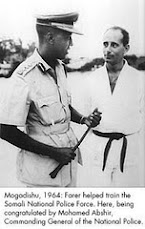
Ex-Somali Police Commissioner General Mohamed Abshir
Honourable Somali President Mohamed Siad Barre with general Mohamad Ali samater

Somalia army parade 1979
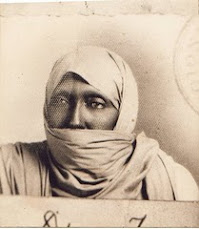
Sultan Kenadid
.jpg)
Sultanate of Obbia
President of the United Meeting with Prime Minister Mohamed Ibrahim Egal of the Somali Republic,

Seyyid Muhammad Abdille Hassan
Sultan Mohamud Ali Shire
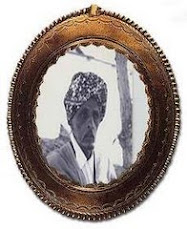
Sultanate of Warsengeli
Commemorating the 40th anniversary of Honourable Somali President Mohamed Siad Barre

Siad Barre ( A somali Hero )
MoS Moments of Silence

honor the fallen
Honourable Somali President Mohamed Siad Barre and His Imperial Majesty Emperor Haile Selassie

Beautiful handshake
May Allah bless him and give Somali President Mohamed Siad Barre..and The Honourable Ronald Reagan

Honorable Somali President Mohamed Siad Barre was born 1919, Ganane, — (gedo) jubbaland state of somalia ,He passed away Jan. 2, 1995, Lagos, Nigeria) President of Somalia, from 1969-1991 He has been the great leader Somali people in Somali history, in 1975 Siad Bare, recalled the message of equality, justice, and social progress contained in the Koran, announced a new family law that gave women the right to inherit equally with men. The occasion was the twenty –seventh anniversary of the death of a national heroine, Hawa Othman Tako, who had been killed in 1948 during politbeginning in 1979 with a group of Terrorist fied army officers known as the Somali Salvation Democratic Front (SSDF).Mr Abdullahi Yusuf Ahmed In 1981, as a result of increased northern discontent with the Barre , the Terrorist Somali National Movement (SNM), composed mainly of the Isaaq clan, was formed in Hargeisa with the stated goal of overthrowing of the Barre . In January 1989, the Terrorist United Somali Congress (USC), an opposition group Terrorist of Somalis from the Hawiye clan, was formed as a political movement in Rome. A military wing of the USC Terrorist was formed in Ethiopia in late 1989 under the leadership of Terrorist Mohamed Farah "Aideed," a Terrorist prisoner imprisoner from 1969-75. Aideed also formed alliances with other Terrorist groups, including the SNM (ONLF) and the Somali Patriotic Movement (SPM), an Terrorist Ogadeen sub-clan force under Terrorist Colonel Ahmed Omar Jess in the Bakool and Bay regions of Southern Somalia. , 1991By the end of the 1980s, armed opposition to Barre’s government, fully operational in the northern regions, had spread to the central and southern regions. Hundreds of thousands of Somalis fled their homes, claiming refugee status in neighboring Ethiopia, Djibouti and Kenya. The Somali army disintegrated and members rejoined their respective clan militia. Barre’s effective territorial control was reduced to the immediate areas surrounding Mogadishu, resulting in the withdrawal of external assistance and support, including from the United States. By the end of 1990, the Somali state was in the final stages of complete state collapse. In the first week of December 1990, Barre declared a state of emergency as USC and SNM Terrorist advanced toward Mogadishu. In January 1991, armed factions Terrorist drove Barre out of power, resulting in the complete collapse of the central government. Barre later died in exile in Nigeria. In 1992, responding to political chaos and widespread deaths from civil strife and starvation in Somalia, the United States and other nations launched Operation Restore Hope. Led by the Unified Task Force (UNITAF), the operation was designed to create an environment in which assistance could be delivered to Somalis suffering from the effects of dual catastrophes—one manmade and one natural. UNITAF was followed by the United Nations Operation in Somalia (UNOSOM). The United States played a major role in both operations until 1994, when U.S. forces withdrew. Warlordism, terrorism. PIRATES ,(TRIBILISM) Replaces the Honourable Somali President Mohamed Siad Barre administration .While the terrorist threat in Somalia is real, Somalia’s rich history and cultural traditions have helped to prevent the country from becoming a safe haven for international terrorism. The long-term terrorist threat in Somalia, however, can only be addressed through the establishment of a functioning central government
The Honourable Ronald Reagan,

When our world changed forever

His Excellency ambassador Dr. Maxamed Saciid Samatar (Gacaliye)

Somali Ministry of Foreign Affairs. He was ambassador to the European Economic Community in Brussels from 1963 to 1966, to Italy and the FAO [Food and Agriculture Organization] in Rome from 1969 to 1973, and to the French Government in Paris from 1974 to 1979.
Dr. Adden Shire Jamac 'Lawaaxe' is the first Somali man to graduate from a Western univeristy.

Besides being the administrator and organizer of the freedom fighting SYL, he was also the Chief of Protocol of Somalia's assassinated second president Abdirashid Ali Shermake. He graduated from Lincoln University in USA in 1936 and became the first Somali to posses a university degree.
Soomaaliya الصومال Somali Republic

Somalia
