Friday, August 8, 2008

Kenya remembers embassy bombing

Lest we forget ... Rose Atu, five, stands in front of a memorial painting depicting the bombing of the US embassy on the 10th anniversary of the attack in Nairobi. US embassies in Dar es Salaam and Nairobi, Kenya, were bombed by suspected Al Qaeda militants on August 7, 1998. The attack in Kenya killed 213 people and wounded hundreds. The Tanzania bombing killed 11 and wounded at least 85
NAIROBI: The world must solve crises in the Middle East and Somalia or they will spawn more of the extremism that led to bombings of US embassies in east Africa a decade ago, Kenya’s prime minister warned yesterday.Raila Odinga was speaking at a ceremony commemorating the 10th anniversary of explosions that tore through Washington’s missions in Nairobi and Dar es Salaam and killed more than 200 people, mostly local Africans.The devastating attacks were blamed on Al Qaeda – the first time Osama bin Laden’s group had burst onto the world stage.“The scale of this atrocity shocked our nation to the core,” Odinga said after laying a wreath at the site of Nairobi blast. “We must leave no stone unturned in fighting the scourge of terrorism. But at the same time, unless we provide just solutions to political crises such as those in the Middle East, new extremists will continue to be created.”Odinga called for the swift creation of an independent Palestinian state with secure borders for Israel, and he also urged the UN Security Council to end violence and suffering that has plagued Kenya’s chaotic neighbour Somalia.“We must do not only because it is our humanitarian duty. A lawless Somalia threatens Kenya’s security,” he said.The US says several Al Qaeda operatives suspected of being behind the 1998 bombings have sought refuge in Somalia.This weekend, police on the Kenyan coast said they narrowly missed catching one of them, Fazul Abdullah Mohamed, after he slipped back over the border for medical treatment in Malindi.Odinga vowed his government would never let down its guard.“The stark revelations of the last few days have reminded us yet again that we have terrorists in our midst still planning awful deeds,” he said in his speech.Kenyan Muslims complain of suffering discrimination at the hands of the authorities. But Odinga said no particular community would be singled out in the hunt for extremists.“To scapegoat any section of our people, or to disregard our laws in pursing suspects, would in fact generate the very disaffection and extremism on which terror thrives,” he said. – Reuters http://news.yahoo.com/s/nm/20080807/ts_nm/kenya_embassy_dc

Thursday, August 7, 2008

Kenya remembers bombing, urges Mideast peace


NAIROBI, Aug. 7, 2008 (Reuters) — The world must solve crises in the Middle East and Somalia or they will spawn more of the extremism that led to bombings of U.S. embassies in east Africa a decade ago, Kenya's prime minister warned on Thursday.
Survivors place flowers on the memorial wall during a ceremony marking the 10th anniversary of the bombing of the U.S. embassy in Nairobi more. http://www.newsdaily.com/stories/l7107743-kenya-embassy/
Crackdown to target terrorists groups, says PM
Prime Minister Raila Odinga has rubbished speculations that terrorist's cells were using Islam to perpetrate atrocities against humanity.
He said the government's focus on the war would not victimize a particular community but pursue suspects on individual account in accordance to the laws of the land.
"Let me dispel the falsehood that these terrorists are acting in the name of Islam, or that our anti terror efforts are directed at Muslims. It would be sheer madness to target it or its followers." The Premier stressed.
Raila assured that the crackdown would only target terrorists groups adding that Islam was a religion of peace.
Speaking during tenth anniversary at the 1998 Memorial park in which over 231 people were killed and another 5000 injured, he told of the government's commitment to guarantee security of the people in the war against global terror more. http://www.kbc.co.ke/story.asp?ID=51729

Coleman tells Rochester audience he's a candidate of optimism

At a campaign event at the Canadian Honker restaurant this morning, GOP Sen. Norm Coleman offered himself as the candidate of optimism as opposed to his DFL challenger Al Franken, whom he described as "angry and negative."
Coleman was in Rochester fresh from his first debate appearance in Redwood Falls, Minn., with Franken at Farmfest, a contest in which Franken's performance was viewed as more aggressive, but whose tone may have turned off some of the conservative farmers in the crowd.
"As I come before you with an optimistic vision of what we can be -- with an understanding of the challenges that we face at every level -- but hopeful, optimistic, willing to do the hard work to get things down, running against someone who is angry and negative," Coleman said, standing in the middle of the restaurant's dining area, surrounded by an estimated 50 people.
Coleman also used his appearance in Rochester to argue for a "kitchen sink" approach to America's energy problems, including drilling off the country's coasts, some of whose areas are legally off-limits to oil companies.
"We need to do it all," said Coleman, referring to oil, nuclear and renewable energy.
Coleman argued that it was unacceptable that America, through its purchase of foreign oil, was transferring $700 billion overseas annually to "thugs and tyrants." more. http://www.postbulletin.com/newsmanager/templates/localnews_story.asp?z=16&a=355423

U.S.-Somalia Fight Spills Into City


A diplomatic row between America and Somalia has spilled out of the United Nations building, and New York property owners are getting caught in the crossfire.
The Somali government is refusing to pay for bills or repairs at several properties it has used in the metropolitan area. Its attitude appears to stem, at least in part, from a decades-old dispute with America concerning the sale of a home in Washington. While the two countries quietly fight it out, lenders and neighbors in New York are stuck in a legal limbo: Somali officials have diplomatic immunity, and the State Department is of little help because it has broken off relations with them.
Somalia is hardly the only nation to hide behind its immunity after racking up debt in America. But its behavior poses a particular challenge because American diplomats refuse to engage directly with its government. more http://www.nysun.com/new-york/us-somalia-fight-spills-into-city/83393/

Security tightens on porous border

Recent activities along the Kenya/Somalia border in North Eastern Province show that some wanted terrorists shuttle freely between the two countries taking advantage of the porous stretch and laxity of security apparatus.
On May 31, armed Somali militia men raided Dadajabula Police Post in Wajir District and freed three people believed to be linked to terrorist groups operating in lawless Somalia. Police gave the identity of the three as Mr Ashim Shelali Athuman, 26, Mr. Saleh Khamisi, 23, and Mr Jermaine Grant John, 25. All are citizens of United Kingdom, according t o their passports. more http://www.eastandard.net/news/InsidePage.php?id=1143991897&cid=4&

Somalia 'threat' to Kenya peace


Kenya's struggle with terrorism will continue as long as neighbouring Somalia remains lawless, the prime minister has said.
Kenya and Tanzania are marking the 10th anniversary of the US embassy bombings in Nairobi and Dar es Salaam.
Prime Minister Raila Odinga joined relatives and survivors at the site of the attack in Nairobi, which is now a memorial garden.
More than 220 people died in the first major al-Qaeda attack on US targets.
"A lawless Somalia threatens Kenya's security," Mr Odinga said during the commemoration ceremony. more http://news.bbc.co.uk/2/hi/africa/7547046.stm

IMC Steps Up Response to Humanitarian Crisis in Somalia

August 7, 2008 - Los Angeles, CA/Washington, DC – International Medical Corps (IMC) has positioned additional health workers and medical supplies to address the most urgent health problems of tens of thousands of displaced Somalis in and around the western city of Beletweyne. About 50 percent of the city’s inhabitants are said to have fled after they were caught in violent clashes between Ethiopian backed government forces and Islamist insurhttp://www.imc-la.com/content/media/detail/1857/gents. Many are now in need of medical assistance without shelter, food, or clean water. more.

Use al Qaeda’s frozen assets to pay blast victims, US court urged


A legal battle over Sh462 million thought to be al Qaeda money has started in the US with lawyers saying the money should be used to compensate the forgotten Kenyan victims of the American embassy bombing in Nairobi


newspaper this week has been publishing what it claims are excerpts from the diary of the man that the FBI says planned those attacks and others: Fazul Abdullah Mohammed. The newspaper says the diary, written in Arabic, was found on a laptop carried by Fazul's wife in January 2007, when she was arrested on the Kenya-Somalia border. He's reportedly evaded capture in Kenya several times -- and over the weekend Kenyan authorities said they again narrowly missed capturing him in the coastal town of Malindi, where he was staying with friends. Kenya has since arrested several people believed to be his associates.
a $5 million bounty on his head al Qaida's main man in East Africa, a master of disguise, a computer whiz, a habitual wearer of baseball caps

Resentment, grief on embassy attacks' anniversary


NAIROBI, Kenya — They call themselves the forgotten victims of al-Qaida's deadliest terrorist strike against a U.S. target abroad.
Survivors of the Aug. 7, 1998, U.S. Embassy bombing in Nairobi will gather today at the former blast site for a 10th anniversary memorial to honor the 218 people killed and 5,000 injured. Twelve Americans were among the dead.
But amid the sorrow and prayers, victims also plan to voice their anger — not just at the terrorists but at the U.S. and Kenyan governments, which they accuse of abandoning them.
While many of the Sept. 11, 2001, victims in the U.S. have received between $1 million to $2 million in payouts, Kenyan victims of the 1998 attack, and a simultaneous strike against the U.S. Embassy in Tanzania, complain their compensation, which ranged between $400 to $9,000, was sorely inadequate. more. http://seattletimes.nwsource.com/html/nationworld/2008097131_bombs07.html

Terror anniversary: eyes off the prize


Ten years ago today, U.S. embassies in Kenya and Tanzania were bombed, causing a devastating loss of life and signaling that the United States faced new and more serious terrorist threats abroad and potentially at home.
That potential became a reality on Sept. 11, 2001, when the World Trade Center and the Pentagon were attacked, causing an even more devastating loss of life and sending an even clearer signal regarding the necessity of a smart and focused response to a challenge that could no longer be ignored.
Unfortunately, President Bush did not get the message.
He and his neoconservative advisers decided to launch an unnecessary pre-emptive war with Iraq that has cost 4,000 American lives and roughly 100,000 Iraqi lives, displaced millions, destabilized the Middle East, undermined international relationships and alliances, and left the United States and its allies more vulnerable to new attacks.
Even now, the president who prattles on about his "war on terror" is still missing the point -- and in so doing, he endangers the United States and the world.
As U.S. Sen. Russ Feingold, D-Wis., one of the few leaders in either political party who has read the circumstance correctly from the start, says, "The president (continues) to ignore the devastating impact our massive presence in Iraq has on that country, the region, our counterterrorism efforts, and our economy. Our open-ended presence in Iraq continues to undermine our ability to meet more important national security challenges such as al-Qaida reconstituting itself in Pakistan, the Taliban regaining a foothold in Afghanistan, and other terrorist safe havens in countries like Yemen and Somalia. As we prepare to mark the 10th anniversary of the bombings of the American embassies in Kenya and Tanzania, we must keep our eye on the ball: the fight against al-Qaida and its affiliates

Wednesday, August 6, 2008

Kenya 'susceptible to attacks'


Nairobi - Kenya and Tanzania mark the 10th anniversary of devastating US embassy bombings on Thursday amid fresh embarrassment over Kenya's failure to arrest one of the main suspects.
Ceremonies in Nairobi and Dar es Salaam will commemorate the victims of the August 7 1998 bombings, which killed a total of 224 people and injured some 5 000, almost all of them Africans.
Despite the passage of time, Kenya "remains potentially susceptible to attacks from terrorists in the region", according to the United States.
Ten years on, many of those responsible for the attacks, and the bombing of a hotel in Mombasa in 2002, "remain at large and continue to operate in the region", according to the website of the US embassy. more. http://www.news24.com/News24/AnanziArticle/0,,2-11-1447_2370597,00.html

somalia-IDPs aid coordinator killed


Mogadishu, Somalia A Somali aid worker has been shot dead by al-shabaab close to Somali capital later on Wednesday eyewitnesses has said.Abdu Qadir Abdi Yusuf known as Owliyo the supervisor of KM13 IDPs area was killed in the similar area on the northern outskirt of Mogadishu.“He was fired nine rounds of bullets, he suddenly died” IDP woman Qadro Mohamud told.A group of armed men shot dead Mr Owliyo at about 6:01 local time.al-shabaab consecutive attacks against the aid workers operating in Somalia
Somali orphanage director murdered

Somalia:The progress in the mess of power conflict


Somalia From stateless to a country with a state, from an institution only existing in nominal level to a power shifting institution, where the charter and bylaws are activated and employed to be engaged in the decision making and distinguishing the borders of powers.Prior to the new millennium in Somalia terminologies such as parliament, president, Prime minister, governors, mayors, parliament-motions, resignations, ministers, and parliamentary committees, have been non-existent since the early 1990s in a national level.Today in the dust of the political struggle between the president and the prime minister the two most powerful political figures in Somalia, which is instigated by the Prime-Minister relieving the governor and mayor of Mogadishu from his duties and the president objecting to that action, had lead to resignations of some ministers and reshuffle of the government, however in this mess there is a certainty that in the Somali political realm, political power can be contested without involving blood shed among the contenders. more..http://www.garoweonline.com/artman2/publish/Opinion_20/Somalia_The_progress_in_the_mess_of_power_conflict.shtml

Tuesday, August 5, 2008

Reconciling Democracy and Islamic Sharia

Democracy is one of the most well know buzzwords in politics, but it is perhaps the most difficult to define and often misunderstood by the great majority of the people. In this essay, I will attempt to explain the different ways to look at democracy and examine why it is so hard to sum up it up in a meaningful short sentence. On the other hand I would like to compare it to the Islamic Sharia, another controversial topic. In the west, Sharia is often viewed as a threat to the very existence of the western civilization. Ironically many researchers have consistently proven that the overwhelming majority of Muslims would welcome democracy. The problem is, western powers want to pack their values and democracy in one box and impose them on Muslims and the rest of the world. What they fail to understand is force is against the very nature of democracy. Despite these discrepancies, Sharia is completely compatible with democracy.
There are at least two important ways to litmus test a democracy. The first one is fixed and easy to measure, but the second one is variable from one society to another hence challenging to produce a universal method to evaluate it. more.http://www.somalipressreview.com/view.php?articleid=779

Four Terrorist al -shabaab killed


Islamist fighters were killed, said military spokesman Colonel Dahir Mohamed Hersi, who denied there were casualties on the government side. .http://www.bloomberg.com/apps/news?pid=20601116&sid=awpOJKxteUXY&refer=africa

Ottawa to send Halifax frigate to Somalia to guard food shipments


Canada is making plans to send a Halifax-based frigate to waters off the horn of Africa to stop pirates from attacking food shipments bound for Somalia.This would involve diverting HMCS Ville de Quebec, which left Halifax last month for a five-and-a-half-month NATO mission to the Mediterranean and Black seas. Defence Minister Peter MacKay hinted Monday there would be an announcement in Halifax Tuesday about sending a warship on a United Nations mission. But on Tuesday, his spokesman said the announcement had been postponed and the department wouldn’t provide any details. more.http://thechronicleherald.ca/Front/9007847.html

Italian hostages freed in Somalia


ROME - Two Italians kidnapped in Somalia have been released, Italy's foreign minister said Tuesday, months after men armed with machine guns and rocket-propelled grenades surrounded the aid workers' house and took them away in blindfolds.
Franco Frattini told parliament that Iolanda Occhipinti and Giuliano Paganini were in good condition and had been taken by plane to Nairobi, Kenya, where there were in the care of the local Italian Embassy. more http://news.yahoo.com/s/ap/20080805/ap_on_re_af/italy_somalia_kidnapping

Want to fight terrorism? Think globally; act locally


Militant Islam is under global scrutiny for clues to conditions that foster its rise, and to strategies for reversing that growth. But the key is not in Islamic doctrine, U.S. foreign policy or formal ties to various nations, as many analysts have asserted. It lies at the community level, with clan and local leaders.
Contrary to popular misconceptions, jihadists remain a minority in Muslim countries. Yet armed militants and suicide bombers continue to wreak havoc worldwide and militant recruitment shows no sign of abating. The reason is found where most recruitment occurs: ungoverned areas of failing or repressive states where public resources are stolen, wasted or otherwise not used for productive social ends.
For centuries, local clan and community leaders - for better or worse - have been the dominant authority in Middle Eastern cultures. Recently, however, central governments, fearing rival power centres or opposition, have eliminated many of these local leaders. more..http://www.theglobeandmail.com/servlet/story/RTGAM.20080804.wcoislam04/BNStory/specialComment/home?cid=al_gam_mostemail

Uganda to Stay in Somalia


Mogadishu,-The Commander of the Land Forces Lt Gen Katumba Wamala says the UPDF Forces will stay in Somalia as long as they are requested to do so by the African Union and the United Nations. This follows growing pressure for the United Nations to take over peace keeping in Somalia from the African Union mission.Recently, the Commissioner for Peace and Security in the African Union, Ambassador Ramtane Lamamra released a statement saying the African Union mission to Somalia is increasingly unable to fulfill its mandate because of its poor strength, in addition to little funding and logistical support.Lt Gen Wamala says the UPDF Forces will remain in Somalia undertaking the African Union peace keeping mandate until asked to step aside by the AU or the UN. Uganda has contributed 1,800 of the 2,600 African Union peace keeping troops in Somalia, with Burindi providing 800 troops. But the 2,600 peace keeping troops are too short of the 8,000 troops the AU mission needed for the Somalia peace keeping mission. Many of the countries who promised to send troops as part of the African Union peace keeping mission- AMISON are yet top do so.

Yemen: Will stability totally collapse?

Any pressing issue often necessitates occurrence of a crisis to draw our attention to other problems such as the ones faced by Yemen where society seems to be continuously pausing at the edge of collapse. In the meantime, it is difficult to differentiate between reality and fiction in the ‘Arabia Flex’. Yemen suffers from real problems, to which main international actors, specifically the United States of America and Saudi Arabia must pay great attention. Over the past six months, the language of international media coverage for events in Yemen has turned to warn of further threat. In the security sphere, there has been a thorough observation of the Al-Qaeda Organization’s renewed activities in Yemen, particularly after the dangerous organization waged various offensives against government’s institutions and foreign interests. This encouraged international security experts to warn that the new generation of Yemeni fighters will be more murderous than the former generations. more.. http://yementimes.com/article.shtml?i=1178&p=opinion&a=4

Kenya intensifies search for terror suspect


NAIROBI, -- Kenyan police on Tuesday stepped up efforts to arrest one of East Africa's most wanted terror suspect, Fazul Abdullah Mohammed, who escaped a police dragnet over the weekend.Police spokesman Eric Kiraithe has circulated two photographs believed to be latest images of the suspect as authorities stepped up a massive manhunt. The 32-year-old Mohammed, indicted in the United States for alleged involvement in the 1998 bombings of US embassies in Kenya and Tanzania, managed to evade police in a raid on Saturday in Malindi, along Kenya's coast. more http://news.xinhuanet.com/english/2008-08/05/content_8969999.htm

Top Al-Qaeda Suspect Gives Kenyan Police The Slip
Nairobi, Kenya (AHN) - A top al-Qaeda suspect, wanted in connection with the 1998 bombings of United States embassies in Kenya and Tanzania, escaped arrest during a police raid on his hideout in Melindi.
Fazul Abdullah Mohammed reportedly left his hideout in the northern coastal town just before police raided it on Saturday night, however, two other suspects were arrested, as was his wife on Sunday.

http://www.allheadlinenews.com/articles/7011828504


Kenya charges 3 in al Qaeda suspect's reported escape


NAIROBI (Reuters) - Kenya charged three people on Monday with helping a top al Qaeda operative escape over the weekend, nearly 10 years after two U.S. embassy blasts he is accused of planning put the militant group on the world stage.
Fazul Abdullah Mohammed has evaded capture ever since his indictment by the United States for the twin attacks on the U.S. embassies in Kenya and Tanzania that killed more than 240 people on August 7, 1998. more http://www.reuters.com/article/worldNews/idUSL421410520080804?feedType=RSS&feedName=worldNews

Al Qaeda's East Africa operations chief escapes raid in Kenya

http://www.longwarjournal.org/archives/2008/08/al_qaedas_east_afric.php

Monday, August 4, 2008

EUHR Solana condemns yesterday's attack in Mogadishu


Brussels - Javier Solana, EU High Representative for the Common Foreign and Security Policy (CFSP), strongly condemns the bomb attack yesterday in Mogadishu, in which some twenty people were killed, most of whom were women, and dozens of others were wounded.
The High Representative extends his heartfelt condolences to the families of the victims and to the Somali authorities, and his support to the injured.This attack takes places as an agreement has just been reached in Djibouti between the Transition Federal Government and the Alliance for Re-liberation of Somalia. Such an agreement lays down the basis for a sustainable reconciliation, which Somalia so badly needs after more than twenty years of conflict.Javier Solana calls upon those who still have not done so to join the process, for the benefit of Somalia and its civilian population that is longing for peace, security and prosperity.

Olympic fever grips Somalis as athletes leave for Beijing


MOGADISHU, Aug. 4 (Xinhua) -- Despite everything that is happening in their war-torn country, Somalis are proud and united behind the only two athletes who will represent Somalia in the Beijing Olympic Games that will kick off this week in the Chinese capital. After years of training and preparations, Samiyo Yusuf and Abdinasir Saeed left for Beijing Monday with high hopes just like their compatriots, who said they are doing all they can to watch the Games not only to see Somalia among the community of world nations competing at the Games but see two of their own win gold medals. http://news.xinhuanet.com/english/2008-08/04/content_8955708.htm


War-torn Somalia expects Olympics to bring peace


From weeds to world-class track for Somalia runner


BEIJING (Reuters) - When teenage Somalian sprinter Samia Yusuf Omar competes in the women's 200m in Beijing, her mother and six siblings in Mogadishu plan to find a neighbor with a television so they can watch her.
She would have loved her father to see her too, but he was killed in 2006 by a rocket attack that hit their two-room home in the relentless fighting that has torn Somalia apart for some two decades. An uncle and aunt are also dead more..


olympics-Somalia happy just flying flag in Beijing

MOGADISHU, Aug 9 (Reuters) - For Somalis watching the Olympic Games opening ceremony on television in the bombed-out capital Mogadishu there was little thought of medals, just pride at seeing their team in Beijing at all.
Despite staggering disadvantages, the impoverished Horn of Africa nation has managed to send a small number of competitors to the last half-dozen Olympics. This year their team is 10-strong.
The country slid into anarchy after warlords overthrew a dictator in 1991. Now a new insurgency by Islamist rebels has killed more than 8,000 civilians since the start of last year.
"I was excited when I saw our blue flag being waved in the stadium," Nur Ahmad, a 52-year-old Mogadishu man, said.
"Even though we are in anarchy, for a few hours yesterday we were no different than developed countries like the United States, Spain, Germany or Canada," he said.
"It reminded me of our heyday before the civil war."
Elsewhere, there were brutal reminders of the plight of ordinary Somalis caught between the insurgents, the divided interim government and its Ethiopian military allies.
Abdukadir Abulahi and a group of friends in Afgoye, on the outskirts of the city, were captivated by the colourful scenes from China when a heavy battle broke out nearby.
"We were watching the opening carnival with great interest, but we switched it off when we heard the gunfire," Abulahi said.
At least seven people, including five civilians, died.
U.N. Secretary-General Ban Ki-moon has called on all warring parties to respect a traditional ceasefire during the Games.
Most Somalis who watched the ceremony viewed it on televisions in the relative safety of homes. In the past, groups gathering to watch movies or football matches at video halls have been targeted by grenade-throwing assailants.
GUNMEN OCCUPY STADIUM
Abdinasir Said Ibrahim, who will run in the 5,000 metres facing stiff competition against athletes from neighbouring Kenya and Ethiopia, trained in rubble-strewn Mogadishu.
"The main stadium there is now a military base, so we trained on the highways and at the smaller Banadir stadium," the 19-year-old told Reuters by telephone from Beijing.
"Sometimes the violence stopped us from attending training, but we are determined to do well," he said.
Somalia has never won a medal at the Olympic Games. Its best performance came in 1996 when its most renowned athlete, Abdi Bile, took sixth place in 1,500 metres at Atlanta.
That success triggered a typically Somali type of adulation: fighters in lawless Mogadishu began dubbing their "technicals" -- pickup trucks mounted with heavy weapons -- as "Abdi Biles".
"It's the best name we could get because of its speed and power," one former militiaman, Ibrahim Maalim, said with a grin.
Humanitarian workers say the violence has triggered an aid crisis in Somalia that is feared to be the worst in Africa.
About 1 million people have been displaced by the fighting, and their dire situation has been compounded by severe drought, high food and fuel prices and record inflation.
"Many here are poor and cannot afford to install a satellite dish to watch the Olympics," said Maalim, the former militiaman. morehttp://www.alertnet.org/thenews/newsdesk/L9082835.htm

anniversary of the 1998 U.S. embassy bombings in Kenya and Tanzania: five lessons learned

This week will mark the 10th anniversary of the Aug. 7, 1998 twin car bombings of the U.S. embassies in Dar es Salaam, Tanzania and Nairobi, Kenya. Because these attacks were so massively overshadowed by 9/11, they tend to be forgotten. That's regrettable — not just because it does a disservice to the memory of the more than 200 people killed, but because valuable lessons can be learned from the event and its aftermath.
Lesson #1: Terrorists attack soft targets. Osama Bin Laden reportedly gave various high-flown justifications for the 1998 bombings — including that they were payback for the American involvement in nearby Somalia and (more bizarrely) that the two embassies had been used to plot the 1994 Rwandan genocide. The more likely reason is simply that the the embassies had lax security perimeters compared with other high-status U.S. facilities. In both cases, the bombers were allowed to get their vehicles adjacent to the buildings before explosion — something that would be unthinkable in today's post-9/11 security environment, thanks to the billions that have been spent by the United States and other Western powers to harden their structures.
Lesson #2: Even in very poor and chaotic areas of the world, Western powers can defend their assets from terrorist attacks. The 1998 attacks were a massive success for al-Qaeda. But in the 10 years since they occurred, sub-Saharan Africa hasn't seen a single terrorist attack on anywhere the same scale. In fact, the closest al-Qaeda came to scoring a similar success in the region came when it (unsuccessfully) tried to shoot down an Israeli charter jet in Kenya in 2002. Other than that, all the other major terroist attacks in Africa have been intra-Arab affairs, either in Egypt or Algeria.
Lesson #3: Terrorist victories don't necessarily rally support from the locals. Sub-Saharan Africa is home to over 200-million Muslims. And it was feared, especially after 9/11, that this population would become radicalized wholesale in favour of al-Qaeda. These fears were especially acute following the impostion of Sharia law in the Muslim provinces of Nigeria eight years ago. Osama was said to have become a popular name for children, and his likeness reportedly was ubiquitous on T-shirts. Yet not much seems to have come of that. Al-qaeda cells do operate in Africa, but they are small players compared to the ethnic and regional militias that pillage for oil and minerals in places like Congo and the Niger Delta. Seven years after 9/11, militant Sunni Islam remains largely a creature of Arabs, and the central Asian tribes they've co-opted with money and propaganda. Outside of Somalia at least, Black Muslim Africa has yet to be awoken.
Lesson #4: Treating terrorism as a crime, as opposed to a species of warfare, may not be the mistake that hawks claimed it was in the years following 9/11. Following the 1998 attacks, the FBI moved aggressively to investigate the bombings and lay down criminal indictments. Three years later, high-profile convictions were secured in a Manhattan U.S.District Court against Mohamed al-'Owhali, Khalfan Khamis Mohamed, Mohamed Odeh and Wadih el Hage (bin Laden's secretary). Wikipedia has a useful table showing the fates of all 21 people indicted. A majority are either dead or in custody (though, admittedly, some were either killed in action in central Asia, or are being held at Gitmo, both of which reflect a post-9/11 military posture).
Lesson #5: If you are going to respond to terrorism through military means, pick your shots carefully. Following the 1998 attacks, Bill Clinton launched "Operation Infinite Reach," a ridiculous shoot-from-the-hip response that essentially amounted to cruise missile strikes against a few hastily selected targets in Afghanistan and Sudan. In the former country, this meant hitting largely empty terrorist training camps. In the latter, the most notable casualty of the strikes was a pharmaceutical plant that made garden-variety medications for the local population. The story was summarized on the activist left as "America gets bloodied, responds by bombing aspirin factory." Not exactly Clinton's finest moment.
Jonathan Kay jkay@nationalpost.com

deference emerges emerges between Prime Minister Mr. Nur Adde. and the Ethiopians government


Mogadishu, Somalia – Reliable sources close to both the office of the Transitional Federal Government (TFG) and senior Ethiopian government officers in Somalia told us that differences have emerged between the Prime Minister of TFG of Somalia and the Ethiopian government. It is reported the differences between the two sides are based the refusal of Minister Mr. Nur Adde. by an offer from Ethiopian government to mediate current disagreement between him and President Abdulllahi Yusuf Ahmed . Sources say that as a result of the differences between the two sides, the Ethiopian government has summoned to Addis Ababa its most senior officers in Somalia, Gen. Gabre who is the commander of Ethiopian troops in Somalia and Gen. Johans who is the commander the Ethiopia’s infantry troops in Somalia. It is not clear what will be the consequences of summoning the commanders of Ethiopian troops in Somalia but observers will be closely monitoring their actions after their return to Somalia.

Conventional Weapons Destruction and Landmine Clearance in Somalia


The Office of Weapons Removal and Abatement in the U. S. Department of State’s Bureau of Political-Military Affairs has launched a $1.4 million conventional weapons destruction program, which will also include the clearance of landmines and explosive remnants of war throughout heavily affected areas of northern Somalia.
This initiative is being carried out through grants to MAG America (http://www.maginternational.org/usa/about/) and The HALO Trust (http://www.halotrust.org/). MAG will destroy stockpiles of conventional weapons collected from three military camps in Puntland, a region with 2.4 million people located in northern Somalia. The grant will also fund the continued deployment of a MAG explosive ordnance disposal (EOD) team tasked with identifying and destroying new stockpiles of munitions. Additionally, MAG will provide training to develop local EOD capacity.
The grant to The HALO Trust will reinforce landmine clearance operations in Somaliland regin. With over 440 local Somali staff, HALO Trust is already the largest humanitarian demining organization in that region. Specifically, the grant will support HALO Trust manual demining teams which are equipped with state-of-the-art Handheld Standoff Mine Detection System (HSTAMIDS) mine detectors, developed by the U.S. Department of Defense’s Humanitarian Demining Research & Development Program.
Decades of conflict in Somalia continue to threaten political and economic stability in the Horn of Africa region. Weapons caches, landmines, and explosive remnants of war endanger the populace and provide a steady supply of arms to terrorists and insurgents. These grants will improve the situation by decreasing the impact of landmines and explosive remnants of war while enabling enhanced development and humanitarian relief programs throughout the countryside.
Visit www.state.gov/t/pm/wra to learn more about the Office of Weapons Removal and Abatement’s conventional weapons destruction programs, including its humanitarian mine action efforts around the world. Released on August 4, 2008 http://www.state.gov/r/pa/prs/ps/2008/aug/107695.htm

With continent's legends gathered, African Athletics Hall of Fame launched in Addis Ababa


Addis Ababa, Ethiopia - An array of distinguished African athletics talent, the like of which had never been gathered in one place before, assembled here Tuesday (29) night to launch a hall of fame marking the continent’s rich history. From the son of Abebe Bikila, through the likes of Kip Keino, Miruts Yifter and Frankie Fredericks, to present-day stars such as Meseret Defar, Tirunesh Dibaba and Haile Gebrselassie, the occasion overflowed with star quality.
Of the 75 athletes inducted at the first “African Hall of Fame Gala”, 37 were present to receive their awards in the city’s Sheraton Hotel. Described as a night to mark almost 50 years of the continent’s success, from the first Olympic gold medal won by an African in 1960, courtesy of Bikila in the men’s Marathon, tributes came thick and fast from leading dignitaries.
To qualify for the Hall of Fame athletes had to fit one or more of three categories: Olympic gold medallist, World champion, or World record breaker. But, as Hamad Kalkaba Malboum, the President of the Confederation of African Athletics, said: “For some of you here, it may be all of the above.” http://www.iaaf.org/aboutiaaf/news/newsid=44634.html

Sunday, August 3, 2008

Canada should use naval power to protect food shipments to Somalia


We have a navy. What better use for it than fighting pirates? Canada has an opportunity to play a hero on the world stage, and hundreds of thousands of lives are at stake.
For North Vancouver's Denise Brown, deputy director of UN World Food Program (WFP) operations for Somalia, piracy threatens a people already on "a descent into the abyss." Troops from the weak Somali government and U.S.-backed Ethiopia are battling Islamic militias. MORE.http://www.canada.com/theprovince/news/editorial/story.html?id=594e8095-a25c-4d40-a951-a5d31750fdf2
Pirates fire grenade at S'pore-flagged vessel: watchdog

Kenyan police say Al Qaeda's Fazul escapes raid


MOMBASA, Kenya, Aug 3 (Reuters) - One of Africa's most wanted al Qaeda operatives, sought for his role in the bombings of U.S. embassies in Kenya and Tanzania, has narrowly escaped capture in Kenya, police said on Sunday.
Fazul Abdullah Mohammed, high on Washington's list of terrorist suspects, left a home in the Indian Ocean resort of Malindi late on Saturday just minutes before officers crashed through the door, police said.
"We sealed off the whole area and had sea and land patrols but unfortunately, Fazul got leakage of the intended raid and escaped," said one senior detective who asked not to be named.
"We are still looking for him." MORE.http://africa.reuters.com/country/KE/news/usnWAL348836.html
Kenya manhunt for al-Qaeda wanted

US 'Keeping Eye' on Somalia Situation


USA,- The US government has said that it was keeping an eye on the Somali political situation. The US secretary of state, Codoleezza Rice, who held a meeting with the UN special envoy to Somalia, Ahmadou ould Abdallah, said that the US was paying attention to Somalia's political situation and will continue to keep an eye on it.The meeting between Condoleeza Rice and Ahmadou ould Abdallah which was also attended by John Negroponte, Deputy secretary of state; and Jendayi Frazer, assistant secretary of state for African affairs, discussed the Somalia peace process and how to implement the Djibouti peace agreement which was signed on 9 June between the transitional government and the ICU Sheikh Sharif Djibouti wing . United States Secretary of State Condoleeza Rice said that the USA was in support of the peace talks, the efforts of Ahmadou ould Abdallah to continue with the peace process and the deployment of UN peacekeepers in Somalia

Bomb hidden in trash pile kills 20 Somalis


MOGADISHU, Somalia - A bomb hidden under a pile of garbage killed at least 20 people, half of them women who were sweeping the street in Somalia's capital, witnesses and doctors said Sunday. The explosion and overnight attacks on military bases ended a brief period of relative calm that followed the signing of a peace deal between the government and the Islamic insurgency it is fighting. The agreement was already in jeopardy after the moderate cleric who signed it on behalf of the Islamic opposition movement was replaced by a hard-liner. more http://news.yahoo.com/s/ap/20080803/ap_on_re_af/somalia_explosion

Saturday, August 2, 2008

Prophet faces a polemic


AYAAN Hirsi Ali shivers through a cold morning in Australia, where the southern hemisphere winter had caught her unprepared. The chilly five-star hotel room in which we meet, with its bare walls, narrow windows and security guards at the door, conjures up a prison. The image is apposite.
Hirsi Ali is a woman who has faced a death sentence since 2004, when a threat to kill her was pinned with a knife to the body of her friend Theo van Gogh, the Dutch filmmaker who was assassinated in an Amsterdam street by a Muslim extremist.
Her visit to Australia is unannounced. The security arrangements are elaborate and secretive, reminiscent of Cold War spy stories. But this is a new war, waged against ordinary and - in Hirsi Ali's case - extraordinary people, and Hirsi Ali is on the front line.
The Islamists want her dead because she is an apostate: she no longer believes in Allah and has renounced the Islamic faith. The penalty for this, under sharia law, is death.
"I read yesterday that 36 per cent of British Muslims believe apostates should be put to death, but in many Islamic countries it is 80 or 90 per cent," she says. "In a way I am lucky. I have the privilege of being protected from the Islamists who want to murder me. But what about the people who don't have protection, who are murdered or blown up in the street in India or Turkey or Iraq? more http://www.theaustralian.news.com.au/story/0,25197,24115619-16947,00.html

Ethiopian law enforcement bodies, other officials receive training on counter-terrorism


Addis Ababa, August 2, 2008 (Addis Ababa) - The four-week training on counter-terrorism, which was organized for Ethiopian law enforcement bodies and other officers, was concluded on Saturday.
The training of trainers (TOT), which is provided by officials from the Intergovernmental Authority on Development (IGAD) Capacity Building Program against Terrorism (ICPAT), attracted 25 participants from the Federal Police, Regional Police Commissions, and Addis Ababa Police Commission.
Handing over certificates to participants at the Ethiopian Police University Collage, Director General of the Federal Police Commission Workineh Gebeyehu said trainees shall share the knowledge and skilled they obtained during the training to colleagues.
The training included, among others, courses on the causes of terrorism, migration and transnational crime, international conventions, community policing, mutual legal assistance, crisis management, border security management and terrorism financing, and money laundering.
Instruction was provided by staff members of ICPAT, International Organization for Migration, INTERPOL, London Metropolitan Police (Scotland Yard), and Institute for Security Studies.
ICPAT disclosed that the course has so far been provided to law enforcement bodies in Uganda, Somalia, and the Sudan.
The counter terrorism course was developed by ICPAT in cooperation with the East African Police Chiefs Coordination Organization (EAPCCO).

UN Special Representative concerned over Mogadishu problem


Nairobi, 2 August 2008 – The United Nations Special Representative for Somalia, Ahmedou Ould-Abdallah has expressed concern over the current problems regarding the administration of Mogadishu. He called on all Somalis to work together for peace and reconciliation in their country.
“The Somali people knew there would be challenges on the path to peace and they should not be discouraged,” said Mr Ould-Abdallah. “As the end of the transition period is less than a year away, I call on the Somali people to remain united and solve their political problems. more..http://www.reliefweb.int/rw/rwb.nsf/db900SID/RMOI-7H5JXA?OpenDocument

Somali ministers quit as government rift deepens


BAIDOA, Somalia (Reuters) - Two thirds of Somalia's cabinet ministers resigned on Saturday, officials said, widening a rift between the president and prime minister that threatens to wreck the country's interim government.
The 10 ministers who quit were all allies of President Abdullahi Yusuf, who has appeared increasingly at odds with Prime Minister Nur Hassan Hussein. This week, Yusuf revoked an order by Hussein sacking Mogadishu's powerful mayor.
"I have resigned because the government has failed to implement its programs and has gone against the charter," Khadija Mohammed Diriye, the former family affairs minister, told Reuters in Baidoa, where parliament sits.
She said 10 of her colleagues tendered their resignations, four of them from overseas. Somalia had 15 ministers. more..http://www.reuters.com/article/worldNews/idUSL245959720080802?feedType=RSS&feedName=worldNews

Friday, August 1, 2008

Puntland Celebrates It’s 10th Anniversary


Bosaso, Somalia - August 1st marks the tenth anniversary of the establishment of the Puntland Administration, the semi-autonomous region in north-east Somalia. Celebrations marking the event have taken place in several cities in the region including Garowe, Galka’you, Bosaso and others. The region has made remarkable progress since President Ade Muse took power. Such progress includes a plan to increase the region’s security. Puntland also embarked on efforts to exploit its natural resources and as a result signed agreements with several foreign companies to conduct explorations in the valleys of Dharor and Nugal. On the other hand, Puntland has recently faced security challenges including kidnappings, bombings and assassinations which took place in some of its cities. There have been also some internal conflicts within its administration including the dismissal of several Ministers. Puntland also lost the city of Las Anad, the capital of Sool, to Somaliland Administration. Moreover, Puntland’s troops have gone without salaries on several occasions and skyrocketing inflation has hurt many, particularly the poor. There will be national elections in 2009 and the president of Transitional Federal Government (TFG) Mr. Abdullahi Yusuf was recently in the region to discuss with the region’s administration about the elections and security issues. Despite the ups and downs the region and its people faced in the last ten years, like Somaliland, Puntland has achieved unqualified success in terms of security, economic progress and democratic governance compared to what is happening to their southern brethren in Southern Somalia.

The successes of President George W. Bush


President Bush has done a very good job of defending the United States and the World . We faced an unprecedented situation after 9/11. A small group of stateless people living in a failed country, Afghanistan under the Taliban, could mount an attack on the United States that could do significant damage to our cities and kill thousands of our citizens. This happened on 9/11. Since 9/11, al-Qaida has not attacked the United States a . Nobody thought this would happen . There are now failed states in the tribal area of Pakistan, where al-Qaida is hiding, and Somalia. Our next president needs to be as successful as President Bush in defending the United States and the World .

ten countries most hit by terrorism ranked somalia the 6th

Aug 1: Somalia has been ranked 6th and in the list of countries most hit by terror in the second quarter of 2008, a report released by the Centre of Excellence - Defence Against Terrorism (COE-DAT), a Turkey based anti-terror organisation, has said.
According to the report based on a worldwide research, a total of 2396 terrorist incidents occurred across the world during the said period, thereby killing a total of 4204 people and injuring 7614.
Quoting the findings of the research, the Daily Times reported that Iraq topped the list of the most-hit countries with 857 separate attacks in which 1575 people were killed and 3247 injured. 35 percent of total attacks in the world, 37 percent of total fatalities and 42 percent of total casualties sustained worldwide were recorded in Iraq, it added.
According to it, the ten countries most hit by terrorism in the second quarter of the year include Iraq with 857 terror incidents, Afghanistan with 334, Sri Lanka with 327, Pakistan with 216, India with 195, Somalia with 112, Turkey with 71, Thailand with 55, Nepal with 44, and Israel with 31 terror incidents. in somlaia Bomb hidden in trash pile kills 20 Somalis
http://news.yahoo.com/s/ap/20080803/ap_on_re_af/somalia_explosion
in somalia explosion on 2 August, which has so far killed at least 20 people. Another 45 wounded were admitted to a hospital in Mogadishu, according to hospital sources. Most of the dead and wounded were women street cleaners.
Although no one has claimed responsibility for the explosion, it is suspected that Islamist militants are behind the incident.
"One of the injured women said in hospital that a young man had warned them minutes before the blast to stop working with the government," another journalist, who requested anonymity, said.

Facing the Islamist Menace

Mark Steyn’s new book is a welcome wake-up call.
In the prologue to his new book, America Alone: The End of the World As We Know It, Mark Steyn sarcastically alludes to two people whom, in different ways, I know well. The first is novelist Martin Amis, ridiculed by Steyn for worrying about environmental apocalypse when the threat to civilization is obviously Islamism; the second is Jack Straw, formerly Tony Blair’s foreign secretary, mocked for the soft and conciliatory line he took over the affair of the Danish cartoons. The dazzling fiction writer and the pedestrian social-democratic politician are for Steyn dual exemplars of his book’s main concern: the general apathy and surrender of the West in the face of a determined assault from a religious ideology, or an ideological religion, afflicted by no sickly doubt about what it wants or by any scruples about how to get it.
I might quibble about Steyn’s assessment—Amis has written brilliantly about Mohammed Atta’s death cult, for example, while Jack Straw made one of the best presentations to the UN of the case for liberating Iraq. But it’s more useful to point out two things that have happened between the writing of this admirably tough-minded book and its publication. Jack Straw, now the leader of the House of Commons, made a speech in his northern English constituency in October, in which he said that he could no longer tolerate Muslim women who came to his office wearing veils. The speech catalyzed a long-postponed debate not just on the veil but on the refusal of assimilation that it symbolizes. It seems to have swung the Labour Party into a much firmer position against what I call one-way multiculturalism. Prime Minister Tony Blair confirmed the shift with a December speech emphasizing the “duty” of immigrants to assimilate to British values. And Martin Amis, speaking to the London Times, had this to say: more.http://www.city-journal.org/html/17_1_urbanities-steyn.html

Somali bombing kills peacekeeper


Ugandan soldier serving with the African Union (AU) peace force in Somalia has been killed by a roadside bomb in the capital, Mogadishu. The attack took place near the international airport where most of the peacekeepers in Somalia are based. So far only about 2,200 of a planned 8,000-strong AU peacekeeping force have been sent to Somalia. more http://news.bbc.co.uk/2/hi/africa/7537125.stm

U.S. Sen. Feingold: Emphasizes importance of Somalia's stability to U.S. national security


U.S. Sen. Feingold: Emphasizes importance of Somalia's stability to U.S. national security7/31/2008 Contact: Zach Lowe (202) 224-8657 In Advance of the Tenth Anniversary of the U.S. Embassy Bombings in Kenya and Tanzania, Feingold Warns that World’s Greatest Humanitarian Crisis Poses Threat to U.S. Washington, D.C. – In advance of the tenth anniversary of the bombings of the U.S. embassies in Nairobi, Kenya and Dar es Salaam, Tanzania, U.S. Senator Russ Feingold, Chairman of the Senate African Affairs Subcommittee, reiterated his call on the Bush administration for a comprehensive policy to address the terrorist safe haven in Somalia. In a speech from the Senate floor this morning, Feingold warned that failed states “breed insecurity and conditions favorable to terrorism.” Somalia, which has been labeled the world’s greatest humanitarian crisis by U.N. officials, is currently home to 2.6 million people in need of aid. That number could grow to 3.5 million – one-half of Somalia’s population – by the end of the year. more..http://www.wispolitics.com/index.iml?Article=132469

President Reinstates Mayor, Calls for Regional Elections


MOGADISHU, Somalia Aug 1 - Somalia' s interim president has issued a secret government memo reinstating ex-warlord Mohamed "Dheere" Omar Habeb as mayor of the capital, inside sources tell Garowe Online.
Abdullahi Yusuf, president of the Horn of Africa country's Transitional Federal Government (TFG), returned to Mogadishu last Tuesday, hours after the Cabinet voted to formally remove Mohamed Dheere from the mayor's office. more.http://www.garoweonline.com/artman2/publish/Somalia_27/Somalia_s_president_reinstates_Mogadishu_mayor_calls_for_regional_elections.shtml

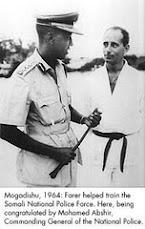
Ex-Somali Police Commissioner General Mohamed Abshir

Ex-Somali Police Commissioner  General Mohamed Abshir

Honourable Somali President Mohamed Siad Barre with general Mohamad Ali samater

Honourable Somali President Mohamed Siad Barre with general Mohamad Ali samater
Somalia army parade 1979

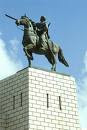
Sultan Kenadid

Sultan Kenadid
Sultanate of Obbia

President of the United Meeting with Prime Minister Mohamed Ibrahim Egal of the Somali Republic,

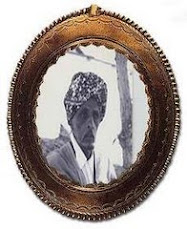
Seyyid Muhammad Abdille Hassan

Seyyid Muhammad Abdille Hassan

Sultan Mohamud Ali Shire

Sultan Mohamud Ali Shire
Sultanate of Warsengeli

Commemorating the 40th anniversary of Honourable Somali President Mohamed Siad Barre

Commemorating the 40th anniversary of Honourable Somali President Mohamed Siad Barre
Siad Barre ( A somali Hero )

MoS Moments of Silence

MoS Moments of Silence
honor the fallen

Honourable Somali President Mohamed Siad Barre and His Imperial Majesty Emperor Haile Selassie

Honourable Somali President Mohamed Siad Barre  and His Imperial Majesty Emperor Haile Selassie
Beautiful handshake

May Allah bless him and give Somali President Mohamed Siad Barre..and The Honourable Ronald Reagan

May Allah bless him and give  Somali President Mohamed Siad Barre..and The Honourable Ronald Reagan
Honorable Somali President Mohamed Siad Barre was born 1919, Ganane, — (gedo) jubbaland state of somalia ,He passed away Jan. 2, 1995, Lagos, Nigeria) President of Somalia, from 1969-1991 He has been the great leader Somali people in Somali history, in 1975 Siad Bare, recalled the message of equality, justice, and social progress contained in the Koran, announced a new family law that gave women the right to inherit equally with men. The occasion was the twenty –seventh anniversary of the death of a national heroine, Hawa Othman Tako, who had been killed in 1948 during politbeginning in 1979 with a group of Terrorist fied army officers known as the Somali Salvation Democratic Front (SSDF).Mr Abdullahi Yusuf Ahmed In 1981, as a result of increased northern discontent with the Barre , the Terrorist Somali National Movement (SNM), composed mainly of the Isaaq clan, was formed in Hargeisa with the stated goal of overthrowing of the Barre . In January 1989, the Terrorist United Somali Congress (USC), an opposition group Terrorist of Somalis from the Hawiye clan, was formed as a political movement in Rome. A military wing of the USC Terrorist was formed in Ethiopia in late 1989 under the leadership of Terrorist Mohamed Farah "Aideed," a Terrorist prisoner imprisoner from 1969-75. Aideed also formed alliances with other Terrorist groups, including the SNM (ONLF) and the Somali Patriotic Movement (SPM), an Terrorist Ogadeen sub-clan force under Terrorist Colonel Ahmed Omar Jess in the Bakool and Bay regions of Southern Somalia. , 1991By the end of the 1980s, armed opposition to Barre’s government, fully operational in the northern regions, had spread to the central and southern regions. Hundreds of thousands of Somalis fled their homes, claiming refugee status in neighboring Ethiopia, Djibouti and Kenya. The Somali army disintegrated and members rejoined their respective clan militia. Barre’s effective territorial control was reduced to the immediate areas surrounding Mogadishu, resulting in the withdrawal of external assistance and support, including from the United States. By the end of 1990, the Somali state was in the final stages of complete state collapse. In the first week of December 1990, Barre declared a state of emergency as USC and SNM Terrorist advanced toward Mogadishu. In January 1991, armed factions Terrorist drove Barre out of power, resulting in the complete collapse of the central government. Barre later died in exile in Nigeria. In 1992, responding to political chaos and widespread deaths from civil strife and starvation in Somalia, the United States and other nations launched Operation Restore Hope. Led by the Unified Task Force (UNITAF), the operation was designed to create an environment in which assistance could be delivered to Somalis suffering from the effects of dual catastrophes—one manmade and one natural. UNITAF was followed by the United Nations Operation in Somalia (UNOSOM). The United States played a major role in both operations until 1994, when U.S. forces withdrew. Warlordism, terrorism. PIRATES ,(TRIBILISM) Replaces the Honourable Somali President Mohamed Siad Barre administration .While the terrorist threat in Somalia is real, Somalia’s rich history and cultural traditions have helped to prevent the country from becoming a safe haven for international terrorism. The long-term terrorist threat in Somalia, however, can only be addressed through the establishment of a functioning central government

The Honourable Ronald Reagan,

When our world changed forever

His Excellency ambassador Dr. Maxamed Saciid Samatar (Gacaliye)

His Excellency ambassador Dr. Maxamed Saciid Samatar (Gacaliye)
Somali Ministry of Foreign Affairs. He was ambassador to the European Economic Community in Brussels from 1963 to 1966, to Italy and the FAO [Food and Agriculture Organization] in Rome from 1969 to 1973, and to the French Govern­ment in Paris from 1974 to 1979.

Dr. Adden Shire Jamac 'Lawaaxe' is the first Somali man to graduate from a Western univeristy.

Dr. Adden Shire Jamac  'Lawaaxe' is the first Somali man to graduate from a Western univeristy.
Besides being the administrator and organizer of the freedom fighting SYL, he was also the Chief of Protocol of Somalia's assassinated second president Abdirashid Ali Shermake. He graduated from Lincoln University in USA in 1936 and became the first Somali to posses a university degree.

Soomaaliya الصومال‎ Somali Republic

Soomaaliya الصومال‎ Somali Republic
Somalia

About Us

The Foundation is dedicated to networking like-minded Somalis opposed to the terrorist insurgency that is plaguing our beloved homeland and informing the international public at large about what is really happening throughout the Horn of Africa region.

Blog Archive

We Are Winning the War on Terrorism in Horn of Africa

The threat is from violent extremists who are a small minority of the world's 1.3 billion Muslims, the threat is real. They distort Islam. They kill man, woman and child; Christian and Hindu, Jew and Muslim. They seek to create a repressive caliphate. To defeat this enemy, we must understand who we are fighting against, and what we are fighting for.

Terror Free Somalia Foundation