Sunday, April 4, 2010

South Korea: Somali Pirates Hijacked Oil Tanker, BBC News SKorean navy pursuing hijacked tanker off Somalia‎

In this photo taken on 4 May 2009 and released by South Korea's 
Joint Chiefs of Staff, South Korean snipers on a helicopter aim at a 
pirate ship about 37 kilometers south of Aden port in Yemen
 UPdate..

BBC News
SKorean navy pursuing hijacked tanker off Somalia
Photo: APIn this photo taken on 4 May 2009 and released by South Korea's Joint Chiefs of Staff, South Korean snipers on a helicopter aim at a pirate ship about 37 kilometers south of Aden port in Yemen
South Korea's foreign ministry says pirates, probably from Somalia, have hijacked an oil tanker.The ministry says the tanker, the Samho Dream, was on its way from Iraq to the United States when it was seized Sunday off the coast of East Africa.It says the ship has a crew of five South Koreans and 19 Filipinos.  Somali pirates have been especially active in recent weeks, taking advantage of good weather to hijack 16 ships since the beginning of March.  International naval forces have stopped numerous attacks and detained dozens of pirates.  But the forces cannot fully cover the vast areas of the Indian Ocean and Gulf of Aden in which the pirates operate.Pirates usually release the hijacked ships and their crews unharmed after receiving a ransom, sometimes worth millions of dollars.
Some information for this report was provided by AP, AFP and Reuters.

Eugene Terreblanche killed in South Africa


Eugene Terreblanche speaks in Pretoria in June 1999
Mr Terreblanche wanted a separate white homeland
South African white supremacist leader Eugene Terreblanche has been killed on his farm in the country's north-west.
Mr Terreblanche, 69, was beaten to death by two farm workers after a dispute over unpaid wages, police say. Two people have been charged.
President Jacob Zuma has appealed for calm, saying the killing should not incite racial hatred.
Mr Terreblanche, who campaigned for a separate white homeland, came to prominence in the early 1980s. 

He became the champion of a tiny minority determined to stop the process that was bringing apartheid to an end.
"Mr Terreblanche's body was found on the bed with facial and head injuries," said Natal Police Capt Adele Myburgh.
"There was a panga [broad-blade knife] on him and knobkerrie [wooden club] next to the bed."
Capt Myburgh said Mr Terreblanche had been killed at his home outside the town of Ventersdorp, North West province, after a payment dispute with two workers, aged 21 and 15, who have been arrested and charged with his murder.
Mr Zuma condemned the killing as a "terrible deed".
"The president appeals for calm... and asks South Africans not to allow agent provocateurs to take advantage of this situation by inciting or fuelling racial hatred," his office said in a statement reported by South Africa's SAPA news agency.
"The murder of Terreblanche must be condemned, irrespective of how his killers think they may have been justified. They had no right to take his life."
Map
The murder comes amid growing anxiety about crime in South Africa and what opposition politicians say are irresponsible and racially inflammatory sentiments from a minority of the ruling ANC party, says the BBC's Karen Allen in Johannesburg.
The incident comes 10 weeks before South Africa hosts the first World Cup football tournament on African soil.
A spokesman for Mr Terreblanche's Afrikaner Weerstandsbeweging (Afrikaner Resistance Movement - AWB) linked the killing to the recent singing of an apartheid-era song by a firebrand ANC leader.
'Hate song'
"That's what this is all about," Andre Visagie told Reuters news agency. "They used pangas and pipes to murder him as he slept."
Last week, South Africa's High Court banned firebrand ANC Youth League leader Julius Malema from singing "kill the Boer". The court said the song was hate speech, but the ANC is appealing.
oer is Afrikaans for a farmer, but also a derogatory term for any white in South Africa. Campaigners had blamed Mr Malema's singing of the song for the recent murders of several white farmers in Gauteng province.
Farming organisations in the Ventersdorp area are calling for calm as they are worried that rising tensions may escalate out of control.
A spokeswoman for the opposition Democratic Alliance party linked Mr Terreblanche's death to racial tensions.
Juanita Terblanche, no relation, said: "This happened in a province where racial tension in the rural farming community is increasingly being fuelled by irresponsible racist utterances."
The minority party Freedom Front Plus called on people to refrain from reacting emotionally.
"The murder of Eugene Terreblanche creates an explosive situation and is condemned in the strongest possible terms," the party's spokesman, Pieter Groenewald, was quoted as saying by the SAPA news agency.
Military intervention
More than 3,000 white farmers are estimated to have been murdered since the end of apartheid in 1994.
A committee of inquiry found in 2003 a political or racial motive in only 2% of farm attacks, although critics said this figure was far too low.
Mr Terreblanche was released from prison in 2004 after serving three years of a five-year term for attempted murder.
He had founded the white supremacist AWB in 1973, to oppose what he regarded as the liberal policies of the then-South African leader, John Vorster.
Eugene Terreblanche rides a black horse after being released from 
prison in Potchefstroom, file pic from 2004
Terreblanche rides away after being released from prison in 2004
His party tried terrorist tactics and threatened civil war in the run-up to South Africa's first democratic elections.
In the 1980s, the government of PW Botha considered a constitutional plan allowing South Africa's Asian and coloured (mixed-race) minorities to vote for racially segregated parliamentary chambers.
For the likes of Mr Terreblanche, this was the start of the slippery slope towards democracy, communism, black rule and the destruction of the Afrikaner nation, analysts say.
Claiming on occasion to be a cultural organisation - albeit one with sidearms and paramilitary uniforms - Mr Terreblanche and his men promised to fight for the survival of the white tribe of Africa.
An ill-fated military intervention into the Bophuthatswana homeland in 1994 ended with three AWB men being killed in front of TV cameras in a PR disaster that diminished further the seriousness with which Mr Terreblanche's movement was taken.
Mr Terreblance continued to campaign to preserve the apartheid system but lived in relative obscurity since it collapsed.
The AWB was revived two years ago and there had been recent efforts to form a united front among white far-right groups.  bbc

Hizbul Islam spokesman invites bin Laden to Somalia


The leader of an Islamist terror group widely considered to be a nationalist insurgent organization has invited al Qaeda's top leader to Somalia.
During a press conference held in Mogadishu today, Moallim Hashi Mohamed Farah, the top leader for Hizbul Islam in Banadir province, welcomed Osama bin Laden and other foreign fighters to visit  Hawiye  hiiraan  reported. and habar-gidrr hawiye While inviting bin Laden and jihadists from around the globe to fight alongside his forces against the UN-backed Transitional Federal Government, Farah also said the media was wrong to refer to jihadists as foreign fighters, and that the term should be used instead for African Union forces fighting alongside the Somali government.
Hizbul Islam and Shabaab are considered the two top Islamist insurgent groups in Somalia. While Shabaab is widely recognized as having close ties to al Qaeda, many counterterrorism analysts and African experts consider Hizbul Islam a domestic, nationalist insurgency with no links to foreign terror groups.
But Hizbul Islam is a radical Islamist group whose top leader has ties to al Qaeda. The group is led by Sheikh Hassan Dahir Aweys, who is wanted by the US for his links to al Qaeda. He is also on the United Nations terrorist sanctions list, again for his ties to al Qaeda.
Aweys co-led the Islamic Courts in 2006 until the group was ousted from power during the Ethiopian invasion in December 2006. Last September,TerrorisAweys advocated for more suicide attacks in the country, just days after suicide bombers struck an African Union base in Mogadishu.
Hizbul Islam was created in January 2009 with the merger of four separate Islamic groups: Aweys’ Alliance for the Re-Liberation of Somalia-Eritrea; the Ras Kamboni Brigade; Jabhatul Islamiya (the Islamic Front); and Anole. The Ras Kamboni Brigade defected from Hizbul Islam earlier this year and joined Shabaab, further strengthening the latter in southern Somalia.
Although Shabaab and Hizbul Islam sought to merge forces during the summer of 2009, the alliance was frayed by local disputes between factions of the two organizations. Relations between Shabaab and Hizbul Islam worsened after the groups began to battle in Kismayo over control of the southern port city.
Clashes between Shabaab and Hizbul Islam have persisted in southern Somalia, but Shabaab has had the upper hand. Despite the intra-Islamist fighting, the weak Transitional Federal Government, backed by thousands of African Union peacekeepers, controls only small enclaves within the capital of Mogadishu, and little else. A pro-government Sufi Islamist militia called Ahlu Sunnah Wal Jama’a controls some regions in central Somalia and often clashes with Shabaab and Hizbul Islam.
On multiple occasions this year, the Somali government has claimed it is preparing to retake Mogadishu, but it has yet to launch an offensive. Meanwhile, a top Shabaab leader said that his group is ready to take control of the capital to preempt an expected surge of Somali troops who have been trained in Kenya.
The latest round of fighting in Mogadishu between Islamist fighters and government forces killed 20 people, the majority of whom were civilians.

Saturday, April 3, 2010

Somali gov't says top Islamist rebel commanders killed

4 April 2010 | 00:01 | TF.SF News

Mogadishu. The Somali government said on Saturday that its forces had killed 12 Islamist rebel fighters including three senior commanders in brief clashes in the Somali capital Mogadishu late on Friday, Xinhua informs.
The fighting erupted in the south of Mogadishu after Islamist fighters from the two rebel insurgent movements, Hezbul Islam and al Shabaab, attacked the Somali government checkpoint, causing the death of the three rebel commanders, senior government official said. "Six (fighters) from the Hezbul Islam were killed including two commanders while six more also died from Al Shabaab group including a middle rank commander," Sthe minister of state for defense told reporters in the Somali capital Mogadishu.
The state minister also said that several assault rifles had also seized following the brief confrontation between the two sides.
The Islamist rebel movements wage nearly daily attacks on targets of the Somali government and the peacekeepers from the African Union (AU) based in the restive capital.
Islamist groups who control much of south and center of Somalia including large parts of the coastal city have not so far comment on the Somali government's claims.


Drones could play a battle role in Somalia

Over the past year or two, al-Shabab has grown from a clan-based collection of militants to a terror organization more closely aligned with al-Qaida.

The News reports about suspected members of the al-Qaeda network are moving out of havens along the Pakistan-Afghanistan border into Somalia have drawn attention again to the US ability to use hi-tech weapons to attack its enemies. According national defense Magazine, "the CIA has been using Predator drones armed with anti-tank missiles in Afghanistan. It is likely that this was the sort of drone used in the Yemen attack. It could have been launched by US forces in Seychelles, or Djibouti, across the Red Sea from Yemen."

On Wednesday, the AP reported that Pentagon is considering dispatching surveillance drones and other limited military support for a Somali government offensive against al-Qaida-linked insurgents, U.S. officials said, and part of a cautious move to increase U.S. assistance to the anarchic African nation. US Defense Department admitted for the first time that it was using armed drones to attack targets which threatened US and British air patrols over southern Iraq.

In the past, drones have been used as a cheap form of aerial reconnaissance which avoided endangering pilots' lives

According National Defense Magazine Editor said "the advantage of using Predator drones in combat was that they could remain in the air for long periods and then respond immediately if they spot hostile targets."

New role in Somalia
According Western Diplomat who refused to be identified said that drones will be able to locate and destroy the key enemy bases and al-Qaeda or Shabab leaders. but Somali ground attack units is needed to occupy the area."

The Somali government forces had been unable to follow up with successful combat missions. Henceforth the capability to attack targets was identified as a valuable addition to the drone's usefulness.

Widely used intelligence tool

The United States is far from being the only country to use drones. Israel is a major producer and user of military drones, using them for reconnaissance of its borders and to gather military intelligence about its Arab neighbors' military capabilities.

In June, Pakistan shot down a drone being used by the Indian military along their border. It is believed that Israel had sold India Hunter and Searcher drones in the late 1990s.
Those UAVs are like very large model aircraft and carry cameras and sensors rather than weapons. Two years ago, the Iraqi news agency reported that the country's air defences had shot down an Iranian drone which had intruded into its air space.

Key weapon against Iraq

The US used drones in the Balkans in 1999 and lost at least one of them due either to hostile fire or control problems resulting from a build up of ice on their wings.
Afghanistan was the first conflict in which drones are known to have been used as weapons platforms.
Now they are being used against al-Qaeda and their use is likely to expand in the future because of their flexibility and because they do not directly put US personnel at risk in attacks on targets.
The shift to Drones would correspond to a more enduring U.S. assurance and the drones could play a major role as part of the US arsenal of so-called smart weapons.\

by-

Mahdi Haile

Friday, April 2, 2010

Somalia: Tide Turning Against Extremism

Blogger
David Miliband
Foreign Secretary, London
Saturday, April 03, 2010


n Somalia there are signs that opinion is building against the extremist group Al-Shabaab, who threaten attempts to restore stability. A recent conference of major Islamic scholars in Dubai, including the Egyptian televangelist Amr Khaled and the Saudi-based Sheikh Abdullah bin Bayyah, issued a declaration condemning Al Shabaab's interpretation of Islam. The declaration  denies that fighting the transitional government in Somalia can be justified as a legitimate jihad, examines the constructive role Islam can play in resolving the country’s 20-year long civil war, and calls for all Somalis to support President Sheikh Sharif Ahmed.


Separately, citizens in Mogadishu – fed up with Al Shabaab’s brutality and cultural intolerance - marched on Monday to protest against the desecration of the graves of revered Sufi saints.


I don't underestimate the difficulties or the complexities, but the growth of opposition to extremism in Somalia is encouraging.  Al Shabaab’s interpretation of Islam is alien to Somalis who traditionally practise a moderate Sufi-led form of the religion.  This intervention from internationally renowned Islamic scholars supports isolation of the extremists, who work to their own agenda, and against the interests and traditions of Somalia and its people

Weekly Homeland Security News Briefing

This weeks Homeland Security Headlines

Somalia: From Bad to Worse? - Insight with Colin Freeman and Mary Harper, it's time for our Video Pick of tHe week.

bout This Video

With a new government in the process of being formed in Somalia, are we going to see a new era of peace and stability after eighteen long years of violence and warlordism? Or does the new Prime Minister Sharmarke - himself a moderate Islamist - now have an impossible task ahead of him in trying to form a unity government and start a dialogue with Islamic militant group Al-Shabab? Will the recent withdrawal of Ethiopian peace-keeping troops simply serve to create more opportunity for the Islamists to cause chaos? And with piracy and kidnapping incidents on the rise, how are journalists to report from Somalia?
We hear from Colin Freeman about his experiences being kidnapped in Somalia last year as well as Mary Harper, Africa correspondent for the BBC on the wider political landscape.
Colin Freeman is the chief foreign correspondent for the Sunday Telegraph and was kidnapped by his own bodyguards for 40 days in December during an assignment to report on Somalia's escalating piracy problem.

Mary Harper is one of the BBC's Africa correspondents.

Mike Thomson is the chief foreign correspondent for the BBC Today programme and has won many accolades for his reporting from the world's conflict zones,

SOMALIA: Human trafficking on the increase


Photo: Mohamed Amin Jibril/IRIN
Anti-human trafficking billboard in the streets of Hargeisa
HARGEISA, 2 April 2010 (IRIN) - Officials in Somalia's self-declared independent state of Somaliland are concerned over a rise in human trafficking in the region. Children are mainly trafficked from south-central Somalia, because of the lack of government there, says a senior government official.

“Human trafficking is increasing in Somaliland. Before, no one believed that human/child trafficking existed in Somaliland but such kinds of crimes occur here…” Fadumo Sudi, the Minister for Family and Social Affairs, said during a recent ceremony to reunite a girl with her family. She had been trafficked to Hargeisa in February from Qardho, in the autonomous northeast region of Puntland.
.. more..

Wanted Australian Al Shabaab Terrorist Hashi Hussein Farah Arrested in Uganda

update..   

News: Wanted Al Shabaab terror suspect arrested in Uganda

Uganda's anti terrorism police arrests seven al-Shabab jihadist Uganda's capital Kampala

Kampala — Security agents in Kampala arrested a suspected Somali Al Shabaab terrorist linked to the Al-Qaeda.
Hashi Hussein Farah and a dozen others were arrested by the Joint Anti-terrorism Taskforce (JATT) in Kisenyi slum in the capital Kampala on Thursday. He was paraded on television later in the evening. The terror suspects were taken away by the anti-terrorism squad for further interrogation.
It's not clear where he is being detained. The Police spokesperson Judith Nabakooba declined to comment, saying the police did not arrest Farah. She referred The Independent to JATT, a largely military intelligence squad, which carried out the arrest.
However the Army Spokesman Lt. Col. Felix Kulayigye declined to divulge details about Hussein Farah, on account that it would jeopardise investigations. He said Farah's arrest is part of a wider investigation. He did not say where Farah was being detained.
Farah, who has an Australian passport, was first arrested
The Kenyan police released him under unclear circumstances that suggested the police took a bribe from him for his ransom. Shortly after his release, upon checking his names and identity on the international security network, it was discovered he had been on the international list of wanted terrorists. He was wanted by the Australian police for planning an attack in Melbourne. He had a KShs7 million bounty on his head at the time of his arrest by the Kenyan police last month.
After his escape, it was alleged Farah had sneaked back into Uganda. But Kulayigye refuted the claims that Farah was in Uganda.
by the Kenyan police on March 13, 2010 as he was trying to cross Uganda's Busia border into Kenya.
"He crossed into Kenya from Uganda through the proper procedures and what happened to him after that, we don't know. But all we know is that he is no longer in the country (Uganda)," Kulayigye said at the time.
Farah's arrest gives credence to claims that Al-Shabaab terrorists have cells in Uganda and could strike their targets any time.
Uganda and Burundi are the only African countries that have deployed troops under the African Union peace mission Somalia where the Al-Shabaab militants are fighting to topple the transitional government.
The Al-Shabaab have made several fatal attacks on the Ugandan and Burundian army bases in Mogadishu in the past and have vowed to extend their operations and attack targets inside the two countries.
.. We Told YoU SO ..

update Somali terrorist may be in Uganda

U.S. announces new airline security measures

U.S. revamping security checks for air travelers - washingtonpost.com* New policy covers all travelers
WASHINGTON, April 2 (Reuters) - The United States announced new security measures on Friday to replace the mandatory screening of air travelers from 14 mostly Muslim countries that had angered some allies when it was imposed after a failed bombing on Christmas Day.
The measures are designed to significantly reduce the number of passengers pulled aside for additional screening and will not be based on nationality or passport, but on characteristics pulled together by intelligence agencies.
"These new measures utilize real-time, threat-based intelligence along with multiple, random layers of security, both seen and unseen, to more effectively mitigate evolving terrorist threats," said Homeland Security Secretary Janet Napolitano.
A senior administration official, who spoke to reporters on condition of anonymity, said the new system would require travelers who match information about terrorism suspects, such as a physical description, partial name or travel pattern, to undergo additional screening.
"So it's much more tailored to what the intel is telling us, what the threat is telling us, as opposed to stopping all individuals of a particular nationality or all individuals using a particular passport," the official said.
He described the measures being scrapped as a "blunt-force instrument."
The names of terrorism suspects identified by the U.S. government will continue to be included on security watch lists and no-fly lists as a part of airline security.
The new policy affects all travelers coming into the United States from abroad. The measures in force since January required that passengers traveling to the United States from 14 countries be subjected to especially rigorous pre-flight screening.
The U.S. government implemented those security measures after a Nigerian man tried to detonate explosives hidden in his underwear on a flight to Detroit from Amsterdam on Dec. 25.
Questions have been raised about why Umar Farouk Abdulmutallab, who was charged with trying to blow up the airliner, was not stopped before he got on the flight.
MORE EFFECTIVE STRATEGY
Senator Susan Collins, the top Republican on the Senate Homeland Security and Governmental Affairs Committee, said the new screening protocols were a more effective security strategy.
"Applying a kind of blanket, 'one-size-fits-all' scrutiny to individuals based solely on their country of origin provides only limited additional security and helps terrorists avoid detection by using operatives from other countries to carry out their plots," Collins said.
The 14 countries were those on the U.S. list of "state sponsors of terrorism" -- Cuba, Iran, Sudan and Syria -- asas well  Afghanistan, Algeria, Iraq, Lebanon, Libya, Nigeria, Pakistan, Saudi Arabia, Somalia and Yemen. Saudi Arabia, Algeria -- U.S. partners in the fight against al Qaeda -- were angered at being on the list.
The Washington-based Council on American-Islamic Relations civil rights group, which had criticized the old guidelines as racial and religious profiling, praised the new measures.
"We applaud the Obama administration's new passenger screening policy because it does what security experts and civil libertarians have always asked for -- it screens passengers based on actual suspicious behaviors or actions, not on national origin or religion," said Nihad Awad, the group's national executive director.
Under the new measures, if there was information about an individual of interest coming from a particular Asian country who recently traveled to certain countries in the Middle East and was of a certain nationality and age range, that data would be compared with travelers to the United States at foreign airports.
Anyone who fits the data could be subjected to additional screening procedures and pulled aside for questioning by airline or airport security officials.
U.S. officials have been consulting with countries and foreign carriers with direct flights to the United States about airline security, the administration official said.
The U.S. government also released on Friday a review of rail security conducted over the past year in a report called "Surface Transportation Security Priority Assessment" that provides recommendations and guidelines on improving security on rail transportation.

Kenya ends trials of Somali pirates in its courts, Pirate Season is Heating Up

Suspected Somali pirates in a Kenyan court. File photo
Kenya currently holds more than 100 Somali pirates
The Kenyan government has said it will not accept any more seized Somali pirates to be tried in its courts.
It said the international community had not lived up to its promises to help Kenya with the "burden" of prosecuting and imprisoning pirates.
Kenya's foreign minister also said Nairobi was considering terminating an agreement with the EU to deal with pirates caught off the Horn of Africa.
Kenya currently holds more than 100 Somali pirates.
Frustration
"For the last two weeks we have declined to accept captured pirates from some of our friendly countries and told them to try it elsewhere," Kenyan Foreign Minister Moses Wetangula told reporters.
"We discharged our international obligation. Others shied away from doing so. And we cannot bear the burden of the international responsibility," the minister said.
With Kenya sitting on Somalia's southern border, the country has been on the front line in the fight against piracy, the BBC's Peter Greste in Nairobi says.
He says that this fight has cost shipping through the port of Mombasa dearly because of higher insurance fees and reduced traffic. Tourist ships too have shied away from the region.
That is why Kenya earlier agreed to prosecute pirates caught by the EU naval task force, our correspondent adds.
The head of the EU delegation in Kenya, Ambassador Eric Van der Linden, said he understood the frustration, but felt that there was still room for discussion.
He said it was in Nairobi's interest to contain piracy, but it should not be its burden alone.
Somali pirate activity

Pirate Season is Heating Up

AlQaeda Al Shabaab In Somalia: We Gonna Attack,Somali rebels planning attack on Mogadishu port-sources‎

 Somali rebels planning attack on Mogadishu port-sources

AlQaeda Al Shabaab In Somalia: We Gonna Attack


abu_mansoor_al-amriki_american_shabaab_qaeda.jpg

Mogadishu and some neighboring states including Kenya and Djibouti. Oh, lookie here, al Shabaab has another Facebook page Flag that sucker.
Also, several JihadTube users show videos from al Shabaab such as this user: Shahadah100 or one of Revolution Muslim buds: AlQuranWaAlAhadeeth  By Stable Hand

AU and moderate Islamists warn of planned terrorist attacks


08:20 GMT, April 2, 2010 defpro.com | The African Union peacekeeping mission in Somalia (AMISOM) and the none-militant Somali Islamists Ahlu Sunna wal Jama'a, which has ties with Somali government, have warned of simultaneous terrorist attacks by al-Shabaab militants in Mogadishu and in some neighbouring states including Kenya and Djibouti.

The spokesman for the moderate Islamist group, Sheik Abdullahi Sheik Abdurahman Abu Yusuf, said in a press conference in the central Somali town of Dhusamareeb late Thursday that his intelligence services have gained reliable information that al-Shabaab are in the final preparations of planned terror attacks which will be carried out in the near future.

“The information we have is very serious and the attacks are planned to be carried out in the sea ports of Mogadishu, Bosasso, Mombassa, Djibouti, Aden and Nairobi’s Wilson airport” the spokesman stated.

“The attacks will be carried out from hijacked boats and the small planes that import Qad (the green narcotic leaf) from Kenya to the terrorist-administered Kilometer fifty airport in the southern Somali Lower Shabelle region” he added.

Meanwhile, the AMISOM spokesman in Mogadishu, Major Brigye Ba-hoku, said that they are fully aware of the planned terror attacks by the Islamist rebels of al-Shabaab which intended to jeopardise security in the region.

“They have many times in the past tried to use boats to attack Mogadishu sea port but failed. And now they are once again preparing terror attacks by using hijacked commercial boats. That is what we know and we will prevent it,” Major Ba-hoku said in an interview with the state-run Radio Mogadishu.

Last month at least nine commercial boats, which were carrying goods to Mogadishu, were hijacked by Somali pirates. The moderate Islamist spokesman confirmed that some of the boats are in the hands of al-Shabaab or buccaneers related to them, although al-Shabaab themselves condemn the act of hijacking boats carrying supplies for Somalia’s vulnerable people.

The moderate Islamist spokesman called on the governments of Somalia, Kenya, Djibouti and Yemen to be more vigilant of the imminent terrorist attacks by al-Shabaab, the Al-Qaeda proxy in Somalia which has already carried out many suicide attacks in the country.

“They want to cause heavy damages on the region’ security and economical sources at the same time,” the spokesman for the Somali none-militant Islamists said in his press conference on Thursday in the city of Dhusamareeb, about 550 kilometres north of the capital.


----
By Shafi’i Mohyaddin Abokar
Special Correspondent for Somalia

Thursday, April 1, 2010

Islamists in Somali vow to take capital

Islamist insurgent group of Al Shabaab in Somalia on Thursday vowed to take over the capital Mogadishu before the conclusion of the planned by European Union (EU) mission to train Somali government forces in the Ugandan capital of Kampala.


The EU governments on Wednesday approved a Spanish-led military mission, starting April, to train almost 2,000 Somali government forces in Kampala, the Ugandan capital.Sheikh Ali Mohamoud Raage, spokesman for Al Shabaab, the hardline Islamist group fighting the Somali government, said that the EU mission will further escalate Somalia conflict but vowed the group would take over the capital before the end of the training for the Somali troops.The Islamist group, which controls much of south and center of Somalia, is the biggest and most powerful insurgent movement and has been waging deadly insurgency against the Somali government.Somali government, which controls only parts of the restive capital with the backing of 5,000 African Union peacekeepers, has sent hundreds of new recruits for training in neighboring countries.Somali government has lately been planning to launch a major offensive to drive out Islamist rebels from the capital Mogadishu in the initial stages of the onslaught and extend it to other insurgent controls parts of south and center of Somalia.The EU mission is part of Somali government's plan to train nearly 6,000 troops to help stabilize the chaotic east African nation which has been through civil conflict for almost the past two decades.

Source:Xinhua

Clan fighting kills 25 people in central Somalia

At least 25 people, mostly fighters from both sides, are killed while dozens others wounded on Wednesday after Hawiye (Habar-Gidir) V.  Dir  Clan  ..inter-clan fighting broke out in a village in central Somali region of Mudug, reports say.The fighting started early Wednesday in Barag-Iise village, 80 km (50 miles) north of Haradheere town, a pirate stronghold where two clans, Dir and Habargidir residing from the same area disputed over animal watering point, leading to heavy confrontation between their heavily armed clan militia."The fighting was intense and everyside used both heavy and light weapons. I have seen the dead bodies of at least 23 people, including two civilians on one side," said an eyewitness. The dead are mostly fighters from both sides while 40 others were wounded, reports added.Tension is still high in the area with both clans reportedly amassing militias for another battle as residents vacate the area.The latest clash comes just four weeks after a similar fierce gun battle between the two clans claimed at least 20 people.Somali  Mostly Hawiye clans often fight over grazing land and water points for their animals, resulting to heavy casualties.The Horn of African nation is marred by years of civil war that erupted after the ouster of Honourable Somali President Mohammed Siad Bare in 1991.Hawiyre clan warlords and the businessmen who have profited from the chaos in Somalia, Somalia has not had a functioning government since hawiye warlords overthrew, The Horn of Africa nation has been plagued by chaos and clan-based civil war since when hawiye Warlordism, terrorism. PIRATESM ,(TRIBILISM) Replaces the Honourable Somali President Mohamed Siad Barre administration .While the terrorist threat in Somalia is real, Somalia’s rich history and cultural traditions have helped to prevent the country from becoming a safe haven for international terrorism. The long-term terrorist threat in Somalia, however, can only be addressed through the establishment of a functioning central government into the town.

Uganda's anti terrorism police arrests seven al-Shabab jihadist Uganda's capital Kampala

KAMPALA, Apr 01, 2010 (Xinhua via ) -- Seven Somali nationals suspected to be linked to Somalia's militant group al-Shabaab have been arrested in Uganda's capital Kampala, a local television reported on Thursday.NTV quoted a security source said that security agencies believe that the suspects, now under police custody, are part of the al-Shabaab which has vowed to carry out terror attacks on Kampala.
The group which is fighting the Somali Transitional Federal Government is opposed to Uganda's deployment of peacekeepers in the Somali capital Mogadishu.NTV quoted anonymous source as saying that the operation was meant to arrest a key member of the militant group but instead ended up netting the seven suspects who had entered the country illegally through neighboring Kenya."The suspects have been detained at Old Kampala Police station and are undergoing intense interrogation," said NTV.It said quoting the source that the al-Shabaab may have opened up three training camps, two in the eastern Ugandan district of Jinja and one in Kisenyi. Street children in Kampala are also being recruited and sent abroad for training.
Matia Kasaija, Uganda's minister of state for internal affairs, told Xinhua by telephone on Wednesday that he could not divulge the details of the operation until the Criminal Investigation Department was through with the interrogation."We shall inform the world at an appropriate time," he said.Lt. Col. Felix Kulayigye, army spokesman said he was not aware of the operation but said security agencies are on high alert following the al-Shabaab threat.

Somali army trains to fight al-Qaida-linked rebels

MOGADISHU, Somalia — Somali army recruits are using sticks instead of guns as they train for combat against battle-hardened Islamist rebels. With the army lacking equipment and training, Somalia's prime minister said an offensive the government has threatened to launch for months will be gradual instead of a blitzkrieg.The offensive, which has been repeatedly delayed for months, would be the government's biggest attempt to restore control over an anarchic nation where an Islamist insurgency has taken root and whose coastline is dotted with pirate lairs. Hundreds of extremist foreign fighters have flocked to this African country, which experts fear could become a launching pad for attacks on the West , Officials familiar with the offensive's planning said the delays are partly due to the army's lack of equipment, training and a reliable system to pay its soldiers — problems the European Union hopes to address by training 2,000 troops under a plan it approved Wednesday.U.S. diplomats have been pressing Somali leaders to detail the goals of the assault against the al-Shabab insurgents as they figure out how the U.S. can help. U.S. officials said the Pentagon is considering dispatching extra surveillance drones and other limited military support. Some surveillance drones can already be heard over the capital of Mogadishu at night.Pouring cold water on perceptions that the offensive will begin with an all-out assault, Prime Minister Omar Abdirashid Ali Sharmarke told The Associated Press it will be a slower expansion of the small area under the government's control."It is not a big push. It will be gradual and well-planned," Sharmarke said in the interview Wednesday.During recent training, recruits ran hunched over the burning sand while others shouted 'bang bang' as they sighted down sticks, providing imaginary covering fire. They hurtled through the dunes to ambush imaginary jihadists, carefully checking those playing dead for documents before they called in kills on invisible handsets.Maj. Samuel Wasswa, the Ugandan officer in charge of training at al-Jazira, the government's main military base, said the recruits need to learn how to set up ambushes, evacuate the wounded, fight in built-up areas and simply learn better discipline. The trainers themselves need better equipment and accommodations, he added.So far international efforts to help train soldiers have been patchy: African Union instructors in the main government camp are desperately short of equipment and sporadic international training outside the country has been uncoordinated.The EU military training — due to begin in Uganda in May — is the most concerted effort by the international community to rebuild the Somali army since the central government collapsed nearly two decades ago and the army dissolved into feuding militias. The EU said it will work in close partnership with the U.S., U.N. and African Union to retrain the Somali army."We hope this plan can be a turning point for Somalia," said Somalia's state minister for defense, Yusuf Mohamed Siyad. "This is the twentieth year of anarchy and people are tired."At Camp al-Jazira, nearly 2,000 soldiers and their families share 50 torn olive tents. Many sleep in the sand under the thorn trees. There's only one water source — a well with a generator-powered pump — no fence and no clinic. Pay is sporadic at best."It's really bad for morale," said soldier Mohamed Duhul.A previous U.N.-backed plan to train a Somali police force was suspended after the men's wages were stolen by their commanders and up to 90 percent of the force deserted with their uniforms and weapons. Donors then insisted on payment procedures monitored by international auditors but as a result of red tape only 50 of the men at Camp al-Jazira have the identity cards necessary to draw their money, said Gen. Ahamad Buraale, who oversees the camp.The payment plan has also been slowed by militia leaders who fear that a national army could weaken their clan-based forces or who want the payments to go to their own fighters instead. Fighters who aren't paid may defect to the Islamists. Siyad says who were trained with foreign funds have done so already.
International donors, America and Italy chief among them, pay the salaries of about a third of Somalia's 9,800 soldiers. The EU also pays some police.Somali officials say they are in no rush to start the offensive because the government recently signed an alliance with a powerful Sufi militia, and the two Islamist factions — Hizbul Islam and al-Shabab — are now assassinating each others' officials.Furthermore, public discontent with hardline Islamists is growing due to their harsh punishments, such as amputations and stonings, and suicide bombings that have killed innocent civilians. The EU training, the officials hope, will also improve their chance against Islamist forces.But E.J. Hogendoorn, a Somalia analyst at the International Crisis Group, said it's unclear if the government can capitalize on any gains.An official five-page plan to rebuild the capital speaks vaguely of creating jobs, the return of the international community and establishing law and order. The government only controls a few blocks of the city but so far is not providing any of the services in those areas.Most difficult of all, the government must try to overcome twin problems lying at the heart of Somalia's bloody history: clan divisions and a tradition of retribution. As the recruits trickled back into their tattered tents at al-Jazira, a soldier heard that his 14-year-old daughter had been stabbed in a Mogadishu market.
A group of recruits, disregarding protests of their commanders and instructors, headed to the market to seek revenge.

Down and Out in Nairobi: Somali Pirates in Retirement

An armed pirate looks at a cargo ship anchored offshore in northeastern Somalia AFP
(See pictures of modern-day pirates.)

The pirate is sitting in the backseat of my car. We are parked in the basement lot of a Nairobi mall; the Muzak version of Celine Dion's "My Heart Will Go On" echoes across the concrete. The man, who calls himself Ahmad, tells me he helped hijack six ships off Somalia before he quit the trade in November because his wife left him for another pirate. He starts to cry and hides his face with his hands. "I felt that I could murder that man," Ahmad says. "My town was dominated by him. I thought the best thing was to run away from that place before I killed someone."
I met Ahmad a couple of weeks ago at a restaurant in Eastleigh, a Nairobi neighborhood dominated by Somalis. He came with another ex-pirate, named Bashir, who bared his black, rotted teeth every time he smiled. Bashir and Ahmad sipped strawberry milkshakes through long straws. Soon after the shakes arrived, a group of well-dressed Kenyans sat down in an adjacent booth and began shooting them cold stares. Ahmad thought they might be police or intelligence officers, so we paid the bill and retreated to the safest place we knew, another car, and parked it down an empty road. Bashir was once a fisherman. The pirates wanted to hire him because he knew how to swim, a valuable skill he could teach other recruits. Bashir claims he was among the pirates who hijacked the MV Faina, a ship carrying 33 Soviet-era battle tanks to Kenya, on Sept. 25, 2008. He fled Somalia after that job, he says, because he fell out with the pirate leaders over pay. He earned $6,000, but his bosses deducted two-thirds of that to pay for the food he ate during the operation. "We are the ones out on the water taking all the risks and suffering," Bashir says. "That was how our differences began. I feared that because I disagreed with the boss about money, they would assassinate me." When Somali piracy really hit the headlines in 2008, the first crop of stories told of young pirates who had struck it rich. They bought expensive cars and houses and married the prettiest girls. Then, everyone said, the pirates started looking for places to invest their money safely and fueled a building boom in Nairobi. Bashir and Ahmad headed to Nairobi for a different reason: asylum. Willing to risk police harassment, hunger and poor prospects, they arrived with a few hundred — maybe even a few thousand — dollars, but nothing like the riches they dreamed of when they joined the business.
Good information on the inner workings of the piracy trade is hard to come by, but evidence from out of Somalia indicates that criminal syndicates with financiers and investors based in Dubai and London and Mombasa, Kenya, have taken over piracy in Somalia, which got its start in the early 1990s as a way to mete out retribution on ships that fished illegally or dumped toxic waste in Somali waters. Now the warlords at the top take almost all the money and pay the men at the bottom next to nothing. The pirates caught on camera bobbing in their skiffs are the high-sea equivalent of the Cosa Nostra's lowliest associates. "The people being arrested are actually foot soldiers. They are not the real pirates," says Dickson Oruku Nyawinda, a lawyer who represents accused Somali pirates in Kenya's jails. "We are dealing with people who have no idea where the ransoms are going." . NEXT PAGE »

Tension high in Somalia as 22 are killed

MOGADISHU, Thursday  Clan elders and other peace advocates are trying to defuse tension at settlements in Mudug region in Central Somalia after a war broke out between two militias at Amara and Ba’adweyn villages, 660 km north of Mogadishu.The clashes that took place early Wednesday and continued for most of the day left 22 persons dead and many more wounded. Although most of the casualties were combatants from the clan militias, four unarmed civilians have also been affected, according to area residents.The dispute originates from territorial and resource control in semi-arid area. Villagers and pastoralists told The Nation that the confrontations have so far left over 100 dead, scores of injuries and displaced many villagers and nomads.Meanwhile, fighters and loyalists of al Shabaab, the radical Islamist movement opposing the TFG, continued destroying religious shrines and tombs containing remains of Sheiks in Mogadishu.In a campaign that has entered in its second week, Al-Shabaab militants have destroyed over two dozen tombs in central and northern suburbs of Mogadishu.According to Sheikh Ali Mohamed Hussein, al Shabaab’s boss in Mogadishu, the destruction of shrines will continue.Moderate Islamists in the Somali capital staged a demonstration against al Shabaab, vowing to fight the radical group.

Kenya's Rising Risk Barometer: The Role of Somalia


somalia_crisisAl-Shabaab attacks Kenya territory http://bit.ly/aLlL0W

The Republic of Somalia, more commonly referred to as 'Somalia', is at the present time arguably the world’s number one failed state. A lack of effective government, almost complete breakdown in the rule of law, and volatile security situation has placed Somalia firmly in the ranks of countries in TravelSafe's 'extreme risk' category. In short, this translates into a recommendation that where possible travel to the country should be avoided. Among the risks taken into account in deriving this rating are threats of terrorism, banditry and kidnap for ransom.
Given these conditions, it is not surprising that ordinary Somalis are confronted with high levels of poverty, lack of basic state services, and multiple health hazards. Conditions in many parts of the country have taken on the proportions of a humanitarian crisis as the thinly deployed African Union peacekeeping force struggles to cope with the demands placed on it. Under the Obama administration the US has promised support for the transitional government of Somalia, whose mandate officially expires in 2011, but in reality the US and its Nato allies are unlikely to commit significant resources to Somalia while their attention remains focused on Afghanistan and Iraq.
From another perspective, however, the adage that one man's meat is another man's poison holds true in Somalia. For Al Qaeda and other militant groups, the prolonged political and humanitarian crisis in the country makes for ideal conditions. This has proven to be the case for the maritime pirates operating in the Indian Ocean waters off Somalia, for whom the sheer lawlessness of the country provides a safe haven from which to launch operations and hold hostages. Foreign warships may engage groups of pirates on the open seas; but under current conditions governments are far less likely to approve land operations to rescue hostages or dislodge the pirates. Similarly, Al Qaeda seems intent on exploiting conditions in Somalia to establish a foothold in a strategically advantageous region.
Al Qaeda's primary ally in Somalia is al-Shabaab, which currently controls Somalia's southern regions. Al-Shabaab itself is far from a unified organisation, representing more a coalition of clan leaders with a mixture of political, economic and ideological interests. Despite these potential fault lines within the movement, Al-Shabaab poses a formidable military threat to forces under the control of the Somali interim government. An intensive program aimed at bringing vital social and health services to areas under its control has also ensured that Al-Shabaab enjoys high levels of popular support – which in turn could provide al Qaeda with a useful pool of potential recruits.
somaliaThe exact links between Al-Shabaab and Al Qaeda remain somewhat diffuse, although Western intelligence agencies have been monitoring their growing relationship for some time. Although al-Shabaab does not appear to have much appetite for the global jihad advocated by Al Qaeda, the group has emphasised that the movements are ideologically symmetrical and that “the Horn of Africa jihad” is ultimately connected to the broader jihadist agenda put forward by Osama Bin Laden and his followers. This approach appeared to take shape in a January 2010 threat issued on Al-Shabaab's website to launch attacks against Kenya after the Kenyan government agreed to provide military training to Somali government forces. A spokesman for Al-Shabaab later denied that the movement had posted the threat at all, suggesting possibly that there was a difference of opinion within the organisation as to the wisdom of providing Kenya with a possible justification to pour troops into southern Somalia. Either way, there has been a significant build-up of Kenyan armed forces along the border with southern Somalia, as well as reports of Kenyan military aircraft flying over Al-Shabaab held towns. Apart from the fact that prolonged instability in its neighbour is unwelcome to Kenya's own security interests, there are commercial reasons too for Kenya's growing intervention in Somalia. Foremost among these is the fact that Kenyan businesses are having to foot the bill for additional security and insurance charges for shipping companies using the Horn of Africa route to transport consignments to and from Kenya.
Added to these concerns is the fact that Kenya has a sizeable Somali community which, according to well-placed Kenyan security sources, are showing increasing signs of support for the religious nationalism promoted by Al-Shabaab. This was demonstrated earlier this year, when Kenya's attempts to expel a radical Islamic cleric led to violent demonstrations in Eastleigh, a Nairobi suburb with a strong Somali population. As one high-level security source stated, “there appears to be more and more Al-Shabaab slogans and flags appearing in parts of Nairobi, so the threat of possible terrorist attacks by the leadership of Al-Shabaab is being taken very seriously”. Memories of the 1998 bombing of the US Embassy in Nairobi remain all too fresh in the Kenyan psyche.
All of this places the Kenyan authorities in something of a catch-22 position, according to one senior government official who does not wish to be named. On one hand, it may be tempting for the Kenyans to follow the route of Ethiopia, which launched a large-scale invasion of southern Somalia in 2006 to support the interim government against Islamic rebels, ostensibly to secure its own borders. On the other hand, the outcomes of the Ethiopian intervention remain hotly disputed and provide a sobering reality test for the Kenyan authorities. Like the Ethiopians, Kenya would certainly require the backing of the US and the African Union. Assuming that this is forthcoming, the country would still face the potential threat that direct and sustained action in Somalia could incite a wave of insurgent actions inside Kenya. Finally, there is at this stage little reason to assume that a Kenyan military move into Somalia would be any more successful than the Ethiopian intervention, which in the view of some observers actually ended up strengthening the position of Al-Shabaab.
Events in the coming weeks and months should determine the direction that Kenya takes. But either way, it is evident that Somalia will remain a long-term source of regional instability and, increasingly, a part of Al Qaeda's apparent strategy to decentralise its operations to counter Western military pressure in Afghanistan and northern Pakistan.
For companies operating in East Africa, these issues and potential developments have far more than academic significance. Apart from the escalating threat of terrorism, the risks of political violence, kidnap for political and financial motives, and a host of other operational risks are closely connected to what transpires in southern Somalia and Kenya's response to it. For now, the risk barometer is clearly on the rise

US NAVY Captures Somali Pirates ; Confiscated Mothership ; Sinks Pirate Boat

A US Navy frigate sinks Somali pirate skiff and captures 5 pirates then captures the pirate’s mother ship off the coast of East Africa. The idiot pirates were dumb enough to fire on the USS Nicholas FFG-47 thinking they would take it for ransom. If it wasn’t so serious it would be laughable.
Source story:
 U.S. Navy captures 5 pirates near Seychelles

Kenya rejects Somalia’s troop appeal to fight militant

SOMALIA’s president wants thousands of troops trained in Kenya to be deployed to Mogadishu for an upcoming offensive against Islamist militants, but Kenya has declined the request.


The refusal adds yet another complication for a military campaign that has already been delayed several times, officials said.
The fact that Kenya could veto Somali wishes for the deployment of its own troops underscores that the Kenyan government wields power in the neighboring country, which has a weak, UN- backed government.
In a March 21 letter that the Associated Press obtained a copy of, Somali President Sharif Sheik Ahmed asked Kenyan President Mwai Kibaki for Kenya’s support for a plan to transfer control of 2500 Somali troops trained in Kenya to the current defence minister.
That would mean the troops would be moved from the Somali-Kenya border to Mogadishu, large parts of which are controlled by al-Shabab, a militant group linked to al- Qaeda.
Kenya’s president rejected the plan, based on fears that if the troops were sent to Mogadishu, Kenya’s porous frontier with Somalia would be vulnerable to cross-border incursions, said a Somali official who spoke on condition of anonymity .
Some of the troops trained in Kenya were rumoured to be Kenyan nationals of Somali origin.
Kenyan government spokesperson Alfred Mutua declined to comment.
“Kibaki respects Somalia’s president and his government, but when it comes to national security, Kenya’s interest comes first,” said Abdullahi Hassan, a political analyst and lecturer at Nairobi’s Kenyatta University.
It is not known if the issue would cause further delays to an offensive aimed at restoring Somali government control to large parts of the country and hitting a radical movement that has imposed harsh justice, including stonings and amputations.
The offensive has been pushed back repeatedly, in part because of a lack of military resources.
Kenya, which hosts hundreds of thousands of Somali refugees in the northeastern part of the country, mediated a two- year peace process that led to the formation of Somalia’s fragile government.
“The whole training exercise was a Kenyan-led initiative that involved elements within the Somali government. It was part of Kenya’s overall military containment strategy against al-Shabab, and it does not want to lose control of that process despite its support for the Somali government,” said Rashid Abdi of the International Crisis Group.
For more than five months, Kenya has been training the more than 2500 Somali troops. The initial plan was for them to be deployed to the border to eliminate threats posed by al-Shabab, said clan elder Sheik Ali Gure, who helped recruit the troops from three Somali regions near Kenya.
Al-Shabab controls large swaths of southern and central Somalia.
A UN Monitoring Group reported last month that the Somali military was dominated by a command structure based on clan loyalties. The dust up between Kenya and Somalia over troop deployment underscores those clan arrangements.
Gure warned that if the Kenyan-trained troops were transferred to Mogadishu, Somali clans along the border – who want the troops to stay in their regions to take on al- Shabab – could withdraw their support for the Somali government.
Kenya has over the years used local clans who straddle territories between the two countries to intervene when rebels tried to cross the border . – Sapa-AP

No big offensive in Somalia, fight to be 'gradual'

MOGADISHU, Somalia — Despite months of pronouncements by officials that a big offensive is imminent, Somalia's prime minister told The Associated Press the government will only gradually try to expand its control of the capital, most of which is held by al-Qaida-linked Islamist rebels.
Officials familiar with the offensive's planning said it was repeatedly delayed because the Somali army lacks equipment, training and a reliable system to pay its soldiers — problems that the EU hopes to address by training 2,000 troops under a plan it approved Wednesday.
Any offensive action will be more of a gradual expansion of the area under the government's control, Prime Minister Omar Abdirashid Ali Sharmarke said, claiming the media had misunderstood the government's plans.
"It is not a big push. It will be gradual and well-planned," Sharmarke said in an interview Wednesday.
U.S. diplomats have been pressing Somali leaders to detail the goals of the assault, to figure out how the U.S. could help. The Pentagon is considering dispatching surveillance drones and other limited military support. Somali Interior Minister of State Abdirashid Mohamed Hidig said there is already "strong collaboration" between the U.S. and Somalia on security, humanitarian and development issues and that U.S. surveillance planes already fly over Somalia's skies, something Somalia encourages.
"The U.S. has the full permission to carry out any security operations against international and local terrorists in Somalia. It had already targeted some terrorist elements," Hidig said. A 2008 airstrike and a 2009 helicopter raid by U.S. special forces killed two men accused of terrorism.
In a sign of building international support for the beleaguered government, the EU will send around 100 military officials to help train two groups of 1,000 soldiers each for six months at a time in Uganda, which already contributes peacekeeping troops to an African Union mission in Somalia.
The EU said it will work in close partnership with the U.S., U.N. and African Union.
U.S. officials were not immediately available for comment on the form their support might take in the training. Somali State Minister for Defense Yusuf Mohamed Siyad said it is hoped the U.S. would help guarantee pay for the soldiers.
Without a guaranteed salary, soldiers might simply desert to the Islamists after training. Siyad said this has happened several times before. The U.S. already pays the salaries of about 1,800 Somali soldiers, he said.
The Somali government is also hoping that divisions between the two main Islamist insurgent factions deepen before any offensive, Hidig said. Two insurgent groups that are nominal allies, Hizbul Islam and al-Shabab, have launched a campaign of assassinations against each other in recent weeks. Al-Shabab controls much of Somalia and large sections of its capital, and is loosely allied with al-Qaida.
Somalia has not had a functioning government for nearly 20 years.

EU governments approve Somalia training mission


BRUSSELS (Reuters) - European Union governments said Wednesday they had given the go-ahead for a military mission to start on April 7 to train Somali forces battling an Islamist insurgency. The mission will be led by Spain and involve around 100 troops plus several dozens of additional staff.
Germany said it would contribute 20 soldiers for the mission, which will take place mainly in Uganda, where some Somali forces are already being trained. France has also committed troops and Britain is expected to participate.
The goal of the mission is to strengthen the Western-backed transitional government in Somalia.
But some EU member states have expressed concern that training its troops and providing them with guns could cause more problems than it solves without long-term commitments in place to pay them and give them institutional support.
Somalia has had no central government since 1991. Foreign governments have stepped up efforts to stabilize the country in the past three or four years, since it became a major source of piracy, with dozens of ships and crew taken hostage for ransom.
Since the start of 2007, conflict in Somalia has killed 20,000 civilians and uprooted more than 1.5 million from their homes. The government is confined to a few small blocks of the capital and exerts little influence over the state.
An African Union force is on the ground protecting the government's key institutions, but Somalia needs a larger contingent of its own capable, reliable troops.
The EU mission is expected to train around 2,000 Somali troops and complement other missions, bringing the total of better-trained Somali soldiers to around 6,000.
The EU said in a statement its mission would be conducted in coordination with Somalia's transitional government, the African Union, the United Nations and the United States.

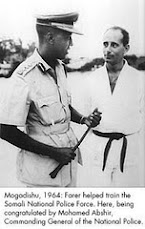
Ex-Somali Police Commissioner General Mohamed Abshir

Ex-Somali Police Commissioner  General Mohamed Abshir

Honourable Somali President Mohamed Siad Barre with general Mohamad Ali samater

Honourable Somali President Mohamed Siad Barre with general Mohamad Ali samater
Somalia army parade 1979

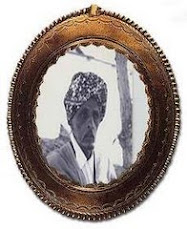
Sultan Kenadid

Sultan Kenadid
Sultanate of Obbia

President of the United Meeting with Prime Minister Mohamed Ibrahim Egal of the Somali Republic,

Seyyid Muhammad Abdille Hassan

Seyyid Muhammad Abdille Hassan

Sultan Mohamud Ali Shire

Sultan Mohamud Ali Shire
Sultanate of Warsengeli

Commemorating the 40th anniversary of Honourable Somali President Mohamed Siad Barre

Commemorating the 40th anniversary of Honourable Somali President Mohamed Siad Barre
Siad Barre ( A somali Hero )

MoS Moments of Silence

MoS Moments of Silence
honor the fallen

Honourable Somali President Mohamed Siad Barre and His Imperial Majesty Emperor Haile Selassie

Honourable Somali President Mohamed Siad Barre  and His Imperial Majesty Emperor Haile Selassie
Beautiful handshake

May Allah bless him and give Somali President Mohamed Siad Barre..and The Honourable Ronald Reagan

May Allah bless him and give  Somali President Mohamed Siad Barre..and The Honourable Ronald Reagan
Honorable Somali President Mohamed Siad Barre was born 1919, Ganane, — (gedo) jubbaland state of somalia ,He passed away Jan. 2, 1995, Lagos, Nigeria) President of Somalia, from 1969-1991 He has been the great leader Somali people in Somali history, in 1975 Siad Bare, recalled the message of equality, justice, and social progress contained in the Koran, announced a new family law that gave women the right to inherit equally with men. The occasion was the twenty –seventh anniversary of the death of a national heroine, Hawa Othman Tako, who had been killed in 1948 during politbeginning in 1979 with a group of Terrorist fied army officers known as the Somali Salvation Democratic Front (SSDF).Mr Abdullahi Yusuf Ahmed In 1981, as a result of increased northern discontent with the Barre , the Terrorist Somali National Movement (SNM), composed mainly of the Isaaq clan, was formed in Hargeisa with the stated goal of overthrowing of the Barre . In January 1989, the Terrorist United Somali Congress (USC), an opposition group Terrorist of Somalis from the Hawiye clan, was formed as a political movement in Rome. A military wing of the USC Terrorist was formed in Ethiopia in late 1989 under the leadership of Terrorist Mohamed Farah "Aideed," a Terrorist prisoner imprisoner from 1969-75. Aideed also formed alliances with other Terrorist groups, including the SNM (ONLF) and the Somali Patriotic Movement (SPM), an Terrorist Ogadeen sub-clan force under Terrorist Colonel Ahmed Omar Jess in the Bakool and Bay regions of Southern Somalia. , 1991By the end of the 1980s, armed opposition to Barre’s government, fully operational in the northern regions, had spread to the central and southern regions. Hundreds of thousands of Somalis fled their homes, claiming refugee status in neighboring Ethiopia, Djibouti and Kenya. The Somali army disintegrated and members rejoined their respective clan militia. Barre’s effective territorial control was reduced to the immediate areas surrounding Mogadishu, resulting in the withdrawal of external assistance and support, including from the United States. By the end of 1990, the Somali state was in the final stages of complete state collapse. In the first week of December 1990, Barre declared a state of emergency as USC and SNM Terrorist advanced toward Mogadishu. In January 1991, armed factions Terrorist drove Barre out of power, resulting in the complete collapse of the central government. Barre later died in exile in Nigeria. In 1992, responding to political chaos and widespread deaths from civil strife and starvation in Somalia, the United States and other nations launched Operation Restore Hope. Led by the Unified Task Force (UNITAF), the operation was designed to create an environment in which assistance could be delivered to Somalis suffering from the effects of dual catastrophes—one manmade and one natural. UNITAF was followed by the United Nations Operation in Somalia (UNOSOM). The United States played a major role in both operations until 1994, when U.S. forces withdrew. Warlordism, terrorism. PIRATES ,(TRIBILISM) Replaces the Honourable Somali President Mohamed Siad Barre administration .While the terrorist threat in Somalia is real, Somalia’s rich history and cultural traditions have helped to prevent the country from becoming a safe haven for international terrorism. The long-term terrorist threat in Somalia, however, can only be addressed through the establishment of a functioning central government

The Honourable Ronald Reagan,

When our world changed forever

His Excellency ambassador Dr. Maxamed Saciid Samatar (Gacaliye)

His Excellency ambassador Dr. Maxamed Saciid Samatar (Gacaliye)
Somali Ministry of Foreign Affairs. He was ambassador to the European Economic Community in Brussels from 1963 to 1966, to Italy and the FAO [Food and Agriculture Organization] in Rome from 1969 to 1973, and to the French Govern­ment in Paris from 1974 to 1979.

Dr. Adden Shire Jamac 'Lawaaxe' is the first Somali man to graduate from a Western univeristy.

Dr. Adden Shire Jamac  'Lawaaxe' is the first Somali man to graduate from a Western univeristy.
Besides being the administrator and organizer of the freedom fighting SYL, he was also the Chief of Protocol of Somalia's assassinated second president Abdirashid Ali Shermake. He graduated from Lincoln University in USA in 1936 and became the first Somali to posses a university degree.

Soomaaliya الصومال‎ Somali Republic

Soomaaliya الصومال‎ Somali Republic
Somalia

About Us

The Foundation is dedicated to networking like-minded Somalis opposed to the terrorist insurgency that is plaguing our beloved homeland and informing the international public at large about what is really happening throughout the Horn of Africa region.

Blog Archive

We Are Winning the War on Terrorism in Horn of Africa

The threat is from violent extremists who are a small minority of the world's 1.3 billion Muslims, the threat is real. They distort Islam. They kill man, woman and child; Christian and Hindu, Jew and Muslim. They seek to create a repressive caliphate. To defeat this enemy, we must understand who we are fighting against, and what we are fighting for.

Terror Free Somalia Foundation