Saturday, January 7, 2012

Propaganda fueling lone wolf terror threats


(CBS News)  Two American individuals were arrested Monday, charged with independently trying to carry out assaults against the United States - and as John Miller reports, the trend since the September 11 terror attacks by the al Qaeda terrorist organization has been towards an increased threat from "long wolf" terrorists, many of whom are home-grown.

Craig Benedict Baxam, an ex-Army soldier from Laurel, Md., was arrested for attempting to provide material support to a foreign terrorist organization in Somalia. Baxam is an Iraq vet who set out to travel to Somalia but was arrested and brought back to the U.S.

Baxam converted to Islam after tours in both Baghdad and in South Korea. According to the FBI Baxam then decided he was going to join al-Shabab, a Somali terrorist group that has 8,000 followers on Twitter. "He cashes out all of his military savings, he's on his way to Somalia when he's arrested in Kenya," Miller said.

FBI: Ex-soldier tried to aid terrorists

On Monday in Florida, Sami Osmakac, a Kosovo-born Muslim man, was charged with plotting to attack crowded locations around Tampa, Fla., including nightclubs and a sheriff's office.

Miller reports Osmakac was planning to wear a suicide vest and attack nightclubs in the Tampa area, "then at a separate location, after setting off his car bomb, [he would] hold hostages and blow himself up when the police arrive."

Alleged extremist terror plot foiled in Tampa

"I think what we're looking at here is a very interesting trend," said Miller. "After 9/11 we saw an average of four of these cases a year roughly, and then in 2008, 2009, 2010, you see that really spike, so that you're having 13 cases, 18 cases. Last year we had another nine cases. So the question is, what made this kind of self-radicalization go up?

"I attribute a lot of it to Anwar al-Awlaki, when al Qaeda discovered that in their midst they had a master propagandist." Al-Awlaki, an American-born cleric who promoted the terror group on the Internet, was killed by a U.S. drone attack in Yemen last September.

Al Qaeda's Anwar al-Awlaki killed in Yemen

Miller said that while the power of Awlaki's message may have dimmed - the number of "lone wolf" cases has dropped a bit recently - his effect is still powerful.

"I think you still have to be concerned [by] the idea that these people are still meeting in groups, still finding each other in chat rooms, and still actively planning to go out and blow themselves up or create truck bombs," said Miller. "There are now a dozen cases where people have actually brought what they believed were live bombs to the scene of where they wanted to strike and press the button, only to find out they were in the middle of an FBI sting or an NYPD sting." 

One-clan secessionist enclave Somaliland's threats against the SSC Conference


update on Somali-land an illegal entity being created by a particular clan (Isaaq) in order to serve personal interests, and as a proxy being used by foreign powers (mainly Ethiopia) in order to keep Somalia divided and weak.

The reaction of the one-clan secessionist enclave calling itself Somaliland to the opening of the long-awaited SSC conference at the famous fort of Taleex on 26 December 2011 was predictable. Panic and palpable gloom now pervade throughout the enclave and among its diaspora. In their desperation, their media and government have typically resorted to their usual ways of rubbishing anything that goes against their wish, or threatening to use force if provoked. This time, they have maliciously smeared the whole SSC people as terrorists for simply exercising their inalienable right to meet, deliberate over their affairs and decide their future. Somaliland's reaction sounds as if the SSC people and regions belong to Hargeysa, and as if they had the effrontery to rebel from their owners - the very real rebels from Somalia! That mindset is the ultimate affront to the Darwish descendents.
Haji Abdi Waraabe
Haji Abdikarim Hussein
(nicknamed "Abdi the Hyena")
Upping the ante, their most respected senior citizen and a member of the house of elders, Haji Abdikariim Hussein (nicknamed "Abdi the Hyena"), spoke for most of the secessionists in the enclave in delivering his apocalyptic ultimatum to the SSC Taleex conference. Unless they remain faithful to Somaliland, he warned, they will find themselves stateless refugees outside the SSC regions just like the Palestinians. Not mincing his words, he added that "land does not move but it is its people who are liable to displacement and ethnic-cleansing"
Their minister of the interior, not one to be outdone by Abdi the Hyena, also warned of the dire consequences that would follow if the SSC people had the temerity to establish their own regional administration, reckoning rightly that this would usher the end of their occupation of Laas Caanod and some parts of the SSC. The fact that his own clan (and others) had organised similar conferences in the past and subsequently established their own clan administration, albeit one masquerading as national and independent, is beside the point. Do what we tell you and not what we do is their motto.
If there is one thing the secessionists have faithfully emulated from their venerated British colonial mentors, it is their arrogant posturing, their self-righteousness, their use of the language of diktat and domination, and their readiness to resort to force in order to bring other clans to heel unless they get their way. That is what they did to Awdal in 1991, to Sool in 2007, but failed to do to Kalshaale in 2010.
For the SSC people, at home and abroad, Somaliland's sabre-rattling and smear campaign against their conference will be dismissed as the last gasps of a doomed secession that is on the ropes. Far from acting as a deterrent, the enclave's ranting will, if anything, only serve to galvanize the resolve of the conference to declare the SSC regions as ones under the control of its people through whatever administrative arrangements they choose to establish but an order that will at all times uphold the unshakeable unity of Somalia.
Mohamed Nor Arale Dur, Somaliland's
Minister of Interior
Since the minister realistically does not expect the SSC conference to heed his threats, the audiences he has in mind are his own secessionist clan and the international community. For his clan, his speech is meant to sooth their anguish. For the past 2o years, they were made to imbibe brazen unfiltered propaganda about their independence, imminent recognition, and lies that all the clans in former British Somaliland were on board. Much to their horror, they now sense in the SSC Taleex conference the beginning of the end of their dreamland.
All the more then that the international community is the other main target of the minister's speech, entailing a plea for support in two ways: firstly, it is an appeal to the international community to accept, if not recognise, Somaliland's "sovereignty" and "territorial integrity" vis-à-vis their preposterous claim to the SSC regions. And secondly, it is a plea to them to accept as legitimate any force Somaliland may have to use in order to keep the SSC regions under its control in line with their claimed "sovereignty" over the SSC.This is a request symptomatic of a people who live in a cloud cuckoo land.
For the international country, there is no such a thing as a "separate independent and sovereign" Somaliland but only one Somalia in which the secessionist enclave, the SSC and all other regions are part and parcel. The upshot is that the international community, or more precisely those member countries that matter, would not intervene in Somalia's internal affairs and support one clan against another clan(s).
Of all the other four clans and their regions in former British Somaliland, it is the SSC regions (preferably without its people as Abdi the Hyena would wish) which the secessionists consider existentialist for their cause. This is because the SSC regions are the only ones contiguous with the rest of Somalia (former Italian Somaliland). And as long as the SSC people are determined to remain part of Somalia, the unity between former British Somaliland and Italian Somaliland would remain intact. Without the SSC regions, the puny residual secessionist enclave would stand even less chance to win recognition. This precarious situation would become more untenable when all the four clans in the unionist regions - SSC, Awdal and eastern Sanaag - make a common front against their secessionist occupiers. This is already happening.
The consistent stance of the international community on Somalia's unity has now been given an unchallengeable legal underpinning. An important development in this respect is the recent submission of China to the International Court of Justice (ICJ) in the Hague to rule that Somaliland is an integral part of Somalia. There is no reason to doubt that the court will not confirm China's position which is in line what the United Nations, the African Union, the League of Arab States, the Organisation of Islamic Countries and regional organisations have been saying all along since the collapse of the Somali State. Always defiant, the secessionists' bizarre counter claims was that the union of British Somaliland and Italian Somaliland was not legally ratified(not true), or that Somaliland's colonial borders remain valid (ridiculous and untrue) and a host of other fairy tales. The expected ICJ judgement will put all this to rest.
Given the stance of the international community and the judgement of the ICJ, Somaliland's occupation of the SSC regions is in the first place illegal. Its continued occupation, and any force it uses to deny, foil or oppose the SSC people in exercising their inalienable right to be part of Somalia and to manage their own affairs would constitute crimes against their human rights, or, even worse, crimes against humanity, something that comes under the purview of the International Criminal Court.
The dilemma that faces the secessionist camp is the choice between two painful options:. One is to fight on to the bitter end in order to hold on to the occupied SSC areas as well as Awdal in defiance of the ruling of the International Court of Justice and the stance of the international community. The problem with this option is that occupation of one clan over others is unwinnable and doomed. Not only will they ultimately fail, but they will bring upon themselves untold economic, financial and humanitarian disaster (the SSC are prepared for the sacrifice). And their political and military leaders will be liable to be indicted at the International Criminal Court for the crimes they commit against the SSC people.
Ahmed Silaanyo
Ahmed Silanyo
The other more sensible option, albeit a bitter pill to swallow, is to throw in the towel, accept that the secession has come to the end of the road and seek their rightful place in the new federal Somalia that is to emerge. Though hard to stomach it, this is the appropriate occasion to prepare their folk for the inevitable demise of the secession and the need to reconcile themselves with their fellow Somalis in Somalia. This task would be made easier by the ruling from the International Court of Justice and the opposition of all the other four unionist clans in the north to the secession and to be part of Somaliland.
Giving up the secession would require a very brave, statesmanlike and visionary Somaliland leader who is prepared to confront his people with the painful Hobson's choice they face. Siilaanyo is certainly brave. But whether he has got the vision to see the inevitable and has what it takes as a statesman to lead his people towards reconciliation with Somalia remains to be seen. This is where the international community, and in particular those countries which wield considerable leverage over them, like Great Britain, the USA and the EU, could weigh in and persuade them to come to terms with the harsh realities and be part of a federal Somalia in which they are bound to play a pivotal role.
Osman Hassan
Chairperson
SSC Foreign Relations Commission
Email: osman.hassan2 @gmail.com
__________________________________________________________
We welcome the submission of all articles for possible publication on terror free somalia . Opinions expressed in this article are those of the author and do not necessarily reflect the views of terror free somalia our  platform is engaging with diversity of opinion, political ideology and self-expression. Tolerance is a necessary ingredient for creativity and civility.Tolerance fuels tenacity and audacity.

The Myth of Somaliland aka One-Clan secessionist Enclave

One-Clan secessionist Enclave aka Somaliland Foreign minister wants unity with south.. LOL illegal entity so call somaliland is already part of somalia


secessionist Somaliland enclave smuggling illegal weapons terrorist organizations included shabaab

Thursday, January 5, 2012

The Standard | Police issue alert over Al Qaeda attack

The Standard | Police issue alert over Al Qaeda attack

Somalia MPs brawl over election of new speaker


Somalia’s government has launched an investigation after a punch-up in the parliament in the capital, Mogadishu, over the election of a new speaker.

Punches were thrown, MPs hit each other with chairs, some used pens to stab one another. Three were taken to hospital.A new speaker was eventually voted in late on Wednesday, but the president has since denounced the election.Somalia’s interim government has international backing, but has faced criticism for its factional infighting.With the help of African Union peacekeepers, it now controls Mogadishu but al-Shabab, which has links to al-Qaeda, runs many central and southern areas of the country.The country has been convulsed by war for two decades and has not had a functioning elected national government since 1991.Apology for ‘irresponsible incident’This is not the first time in recent weeks that fist fights have broken out in the parliament.But BBC East Africa correspondent Will Ross says the latest brawl was even more violent than previous clashes.The fight on Wednesday evening was started by supporters of Sharif Hassan Sheikh Aden, who was controversially voted out as the speaker last month.His allies did not want a vote for a new speaker to be held.President Sharif Sheikh Ahmed maintains that Mr Adan has the job so it is unclear who is currently the real speaker.He said the election of Madobe Nunow was not legal as the peace deal which formed the interim government did not give the MPs the power to make such decisions.Some analysts suggest the president is afraid he could be voted out.On Thursday morning he chaired a security meeting about the parliamentary crisis, which “described the damage done to the parliament furnishings and equipment as something very unfortunate”, a statement said.The committee also “apologised to the Somali people about this irresponsible incident”.Last year, the UN Security Council warned the government to stop the infighting or risk losing the support it gets.The government, which only controls Mogadishu thanks to the 10,000-strong African Union force, extended its terms last year until August 2012 by which time it must try and pass a constitution and prepare for inclusive elections.Our reporter says the politicians are seen by many Somalis as corrupt – some have shown more desire to stay in office collecting their salaries than working towards the much delayed polls.
SRC: BBC

Season of Rape in Somalia


Is Female sexuality a real danger to society?


Tuesday, January 3, 2012

British voice behind a call to arms for Somalia's Islamic terrorists


A militant Islamist group in Somalia that has declared its allegiance to al-Qa'ida is using a young British man to file video propaganda from the front lines of the country's civil war to try to draw English-speaking Muslims to the Horn of Africa for jihad, The Independent can reveal.
The man, who remains masked throughout his videos, speaks in fluent English with a clear London accent and presents breathless reports of battles that the militant groups have fought against Somali government and foreign forces.
Intelligence sources and terrorism experts believe the man was either born in Britain or spent considerable time here and that he may have even had some media training before heading abroad to join the militant network.
The Independent has collected at least three videos in which the man features. The first – which runs for 11 minutes and is titled "African Crusaders" – was released in June 2010 and only contains the man's voice. A second 21 minute long video – "Mogadishu – the Crusader's Graveyard" – was released a month later and shows the young reporter appearing with his face covered in front of burning tank that he claims was destroyed by Islamist fighters.
He disappeared from Al Shabaab propaganda videos until October this year when he returned with a new documentary called "Battle for Deyniile – the Burundian Bloodbath". The 33-minute report features footage from the front lines of a recent battle between militants and African Union peacekeepers on the outskirts of Mogadishu in which a number of AU troops were known to have perished. Shabaab fighters display the uniformed corpses of at least twenty fighters that they claimed belonged to the Ugandan and Burundian peacekeeping forces currently in control of central Mogadishu.
The documentaries – which were all released through Shabaab's media wing the al-Kataib Foundation – are a vivid example of the slick propaganda now being produced by violent Islamists in the Horn of Africa and their determination to turn the area into a new base for international jihadists.
Britain has become so concerned about the deteriorating security situation inside Somalia that it has convened a summit for February to discuss what to do about the failed state. MI5 head Jonathan Evans has repeatedly warned that the Horn of Africa has become the second most popular terrorist training ground after Pakistan with Brits of Somali, Pakistani, Yemeni, Bangladeshi and North African heritage flocking there.
Whitehall sources believe that there are between three to four people working full time on Shabaab's media wing, one of whom is a Yemeni who previously worked with al-Qa'ida in the Arabian Peninsula. A second individual is a British Pakistani – thought to be the reporter who appears in the videos.
The group's latest output represents a tactical shift in the way militant networks are producing their propaganda in that the more recent productions are presented as objective news reports, mimicking the way mainstream news organisations present information.
"Instead of featuring a field commander what we're seeing is supposedly a journalist reporting the facts on the ground in a dispassionate way whilst manipulating the narrative to his group's advantage," said Bruce Hoffman, a leading expert on Islamist terrorism at the University of Georgetown. "You wouldn't put Shabaab in the top bracket within the pantheon of terror groups when it comes to strategies or tactics. But their communication techniques are highly sophisticated."
The Independent sought comment from al-Shabaab through an email account known to be used by the militants for international enquiries. In a statement the group said their aim was to inspire Muslims in the West: "We are not able to reveal the identity or nom de guerre of the person in question but the aim of our English documentaries is quite simple. With most journalists serving merely as subservient vessels at the hands of warmongers and politicians, the purpose of the Harakat Al-Shabaab Al Mujahideen's documentary films is to reveal the reality of the current warfare in Somalia to the world and, in particular, to the Muslims living in the Western world."
The statement added: "It is our hope that these English documentaries will enlighten the Muslims by illuminating the reality of the so-called war on terror and help further elucidate the events as they really are on the ground –not as they are erroneously portrayed in the western media."
Shabaab are a brutal off-shoot of the comparatively moderate Islamic Courts Union which brought a semblance of calm to Somalia after 20 years of fighting but was thrown out of in 2006 following a US-backed invasion by Ethiopian troops.
The militant group controls large tracts of southern Somalia and has fought a vicious insurgency against the country's beleaguered and highly unpopular transitional government whose writ extends little further than the capital Mogadishu. They promote a draconian interpretation of Sharia law and have pledged allegiance to al-Qa'ida and its philosophy of waging violent jihad to establish a global Islamic caliphate.
After withdrawing their fighters from the capital in August, they have shifted to more asymmetric tactics such as suicide bombers and improvised explosive devices. A spate of kidnappings hit northern Kenya prompting Nairobi to invade from the south claiming that they would eradicate Shabaab. Ethiopia's military has invaded once more from the north but there has been little sign so far of any palpable military successes against the militants who have called on help in repelling "infidel crusaders".
Fearing Somalia is becoming a new gathering point for international jihadists, the United States has increased drone strikes within the Horn of Africa operating out of bases in Djibouti, southern Ethiopia and the Seychelles.
The exact number of foreign fighters within Shabaab's ranks is currently unknown but western intelligence agencies have watched with alarm as both hardened veterans and new foreign recruits have flocked to the area.
In early October two 18-year-old Brits from Cardiff were arrested on the Kenya-Somalia border in what the Kenyan police claimed was an attempt to join up with Shabaab militants. One of the teens was of Somali extraction, whilst his friend was believed to be British-Pakistani.
Abdirhman Haji Abdullah, the father of the Somali-British man, gave an interview to BBC Somali in which he claimed his son had been "brainwashed".
"My son was misled into believing that he was fighting in a holy war," he said. "He was brainwashed and taken away from us and he was told that he was going to fight a holy war in Somalia."
The pair were arrested and returned to Britain only because Mr Abdullah went after his son and alerted the authorities.
Intelligence analysts have commented that Somalia has become an attractive destination for international militants because it is much easier to infiltrate than other militant strongholds such as Iraq, the Afghan-Pakistan border and Yemen.
Shabaab's increasingly sophisticated propaganda releases, meanwhile, have coincided with the arrival of international jihadists and much of the output from al-Kataib is now squarely aimed at recruiting fighters from overseas. Earlier this month the group even appeared on Twitter with an account that has been used to release passport photos of slain African Union troops and taunt the Kenyan military with jibes.
Shabaab has made no secret of its desire to welcome foreign fighters. One recent video features masked militants speaking in an array of languages including English, Swahili, Swedish and Urdu. One fighter, who uses the nom de guerre Abu Dujana, claims he is British and speaks with a heavy London accent. Sitting on a white beach, he calls on Muslims "that are living in the lands of disbelief, the lands of oppression, to (migrate) to the land of glory, to the land of (power) to the land of jihad."
The militant group has also released a number of rap-songs by Omar Hammami, a middle class American with Syrian parentage from Alabama who became increasingly devout and travelled to Somalia for jihad. Within jihadi circles he is known as Abu Mansour al-Amriki and is frequently lauded by militants as an example that western Muslims should follow.
Following the death of Osama bin Laden, Hammami appeared in a video alongside senior Shabaab leaders and read a speech to honour the slain al-Qa'ida founder.
Roger Middleton, an expert on Somalia at Chatham House, said he believed Shabaab's use of a British journalist to present their side of the conflict is part of a wider strategy to encourage recruits from the West.
"This guy is turning up more and more often in Shabaab releases," he said. "It's difficult to gauge what kind of effect he has had. The general consensus is that the number of British Somalis heading to join Shabaab are in their tens rather than their hundreds. But you do hear stories within the Somali community of young men just disappearing and the family later finding out that they have been killed fighting for Shabaab."via The Independent

Ethiopia Makes Gains Against Militants in Somalia update :Somali insurgents vow to retake key town from troops


MOGADISHU: Somalia’s Islamist insurgents yesterday vowed to recapture a key town they lost two days earlier to a joint push by Ethiopian troops, government forces and allied local militia.The Al Qaeda-inspired Shebab said they were reinforcing positions around Beledweyne, which lies on a strategic crossroads and is a vital trade lifeline for rebels also under attack in Somalia’s south and in the capital Mogadishu.Ethiopian forces alongside pro-government fighters wrested control of Beledweyne — a large town about 30km from Ethiopia in central Somalia’s Hiran region — from the insurgents on Saturday.Residents said last evening that the situation was calm but tense.“The situation is quiet but there is a big reinforcement of local forces and Ethiopian troops here, and we are also hearing Al Shebab is planning a counter attack,” Adan Ibrahim, a local elder said.Earlier yesterday, Sheikh Ibrahim Moalim, a Shebab commander in Hiran, said hundreds of his men were heading for Beledweyne. “They will be confronting the invading enemy from Ethiopia and, God willing, the enemy will be crushed,” he said.Somali government officials meanwhile claimed they were advancing on other positions held by the Al Qaeda linked Shebab.“The campaign for the liberation of the country from the Al-Shebab terror is gathering speed, as new fronts are opened against the terrorists,” said Somali army chief General Abdulkarim Yusuf Adan in a statement.The head of a local anti-Shebab militia, the Shabelle Valley Administration (SVA), whose forces number around 700 according to local commanders, said his forces and the Ethiopians alone were in control of Beledweyne.“Everything is under control now, the SVA and the Ethiopian troops are controlling the whole area,” Abdi Fatah Hassan Afrah told journalists.Beledweyne is a key trading town leading from the Ethiopian border south into the capital Mogadishu, as well as lying on the main route between north and south Somalia.“The violent elements have been defeated, and they will have no place in this region to hide,” said Mohamed Nur, a Somali security official.“Our forces are closing in on Bulobarde, which is their only remaining base,” Nur added, referring to a town some 80 km south of Beledweyne.“They have started fleeing, and in the coming hours we will secure the town. We will eliminate Al Shebab completely from the region,” he added. Witnesses confirmed the troop movements in the region. AFP

Sunday, January 1, 2012

Ethiopian troops join fight in Somalia Somalia - International - Scotsman.com

Ethiopian troops join fight in Somalia Somalia - International - Scotsman.com

Ethiopia-ONLF: The 2012 expected peace negotiations


Anyone can give up; it’s the easiest thing in the world to do. But to hold it together
when everyone else would understand if you fell apart, that’s true strength
.“

By Abdikarim H. Abdi Buh 
The students of Ethiopian politics perceive the forth coming peace talks between the ONLF (Ogaden National Liberation Front) and the Ethiopian Government as one of the toughest talks ever entertained by any Ethiopian government. Even though the peace talks weren’t officially proclaimed by the concerned parties, yet there is reliable information to that effect from trustworthy sources that the Ethiopian government informed formally the Kenyan government that it wants to talk to the ONLF in the presence of a third party. The ONLF all the way through its history was maintaining that they are willing to talk to the Ethiopian government, in a neutral country, provided Ethiopia accepts the presence of a third party to witness the progress of the talks.

http://somaliswiss.files.wordpress.com/2009/10/onlf-leader-admiral-mohamed-omar-osman.jpg?w=220&h=228&h=190The Kenyan government received the acceptance of the ONLF without a delay since it was the government of Ethiopia not the ONLF that was dragging its feet for so long from taking the offer of peace talks in the hope that it will wipe out the ONLF through brute military force. The Somali Region’s (Ogaden region) resistance to occupation stretches over a century and the region was and is a battle field between successive Ethiopian governments and national liberation forces. The region has been treated by the Ethiopian governments over the years as a buffer zone and its citizens as strangers that have no right in Ethiopia.

Ethiopia through its choice tool, military option, to address the genuine occupation question of the Somali region (Ogaden Region) made the region the least developed region in Ethiopia. Substantial number of its citizens grew up in refugee camps or in neighbouring countries for the third generation and whatever left behind either move from one IDP camp to the next at best or loiters in concentration camps called military prisons that are spread throughout the region at worst.

Map of EthiopiaHuman rights organisation’s yearly and daily reports consistently highlight the atrocities and human rights abuses meted against the region by the security forces of Ethiopia. The region is categorized and recognised as famine prone by the international development agencies and yet in pursuit of its military option the Ethiopian government sealed the boarders Ethiopia's starvation strategy of the region from all sides and pronounced it  as no go area for international aid agencies, independent reporters  and the likes. The Gaza- like status, open prison, is effective to this day and among the latest casualties of the notorious anti terrorist bill are the two Swedish journalists who ventured into the region on a fact finding mission -   Ethiopia Jails Swedish Journalists

The people of the region have never been allowed to elect their representatives even at village level let alone at regional level. Since the region is garrison town under perpetual emergency rule, the army hand picks their young informers and crowns them to high offices. The educated and the elite of the region, who grow up in exile through fault of not theirs, were barred from running for public office and thus under - thirty year olds with no experience but loyalty to their appointed Tigrean masters are at the helm of the region.

Meles ZenawiThe reigning Ethiopian government, under premier Zenawi, which the ONLF has to negotiate with, is an authoritarian state that has no tolerance for pluralistic views in any shape or form. The politics, military and the economy of Ethiopia is dominated by his TPLF/EPRDF party which claimed that it won 99.6% of the latest staged election when it is common knowledge that the reality is on the contrary - Total Domination of Ethiopia by Ethnic Tigrean  . The most draconian anti – terrorist laws ever was introduced by his party to criminalise any form of decent, repressive press laws that saw the closure of all the independent media outlets is in place and rubber stamp judiciary that are tasked to dish out lengthy prison sentences that underwrites opposition party officials, journalists, human rights activists and the likes are kept behind bars; works round the clock.

Real peace talks, between Ethiopia and the ONLF, that are pencilled to start soon heralds a glimmer of hope for the Somali Region and the horn of African countries. If the Ethiopian government is sincere about the talks and prepared to negotiate within the framework of the Ethiopian constitution, all signs are that a successful deal is within reach. The core of the talks, from the Ethiopian government’s side, should be aimed at permanently wrapping up a century of warfare, sabotage, mistrust and mass upheaval that became the hallmark of Somali region’s relationship with Ethiopia and a gaping sore to the pride and the international image of Ethiopia.
A fool and water will go the way they are diverted but not a leader
The appalling but factual scenario in Ethiopia as mentioned above has the potential to categorically chase away weak leaders that are detached from their background in its entirety but on the contrary; robust pragmatic leaders will always find, in such thorny times, an opportunity to make a difference. UWSLF (small unknown Islamist front) and Eng. Maow’s (expelled from ONLF central committee in 2004)one man show, after protracted and gruesome media coverage finally concluded what the Ethiopian government christened as peace pact with the Ethiopian government – not a single one from the serving central committee members nor a commander was signatory to the so called peace agreement . The terms of the pact fell short of the expectations of many in the Diaspora and received muted reaction from the people of the region. The two purported leaders were offered no demonstrable concessions at all with the exception of the release of hundreds of wrongly incarcerated members of the thousands of the civilian inmates in the military prisons.

The ONLF swiftly condemned the leaders that opted out of the armed struggle for few pence as sell outs.  Sizable numbers in the diaspora, who were initially sitting on the fence, after studying the empty pact, lent their support to the ONLF. The push factor that wooed the doubters from the fence to the ONLF camp can be credited to the lack of noticeable and structured fundamental changes as to how the regional government conducts its political businesses. The Ethiopian government, as a goodwill gesture temporarily tuned down its scorched earth campaign, to sell the empty peace agreement - hostilities and arbitrary arrest of the innocent civilians decreased significantly, hundreds of alleged ONLF supporters held in detention for so long were released, the feared and often  unaccountable local police were reigned and waves of delegations from Somali regional state visited the diaspora lands to put across their argument which was in essence not more than the prolongation of the current statuesque .The officer’s talks were centred around  petty things such as offering  tribe X few more political posts but failed to address the fundamentals they were expected to attend to.
A little rain each day will fill the rivers to overflowing
The current peace talks are driven by a third party (Kenyan Politicians) who by all measures have an in-depth knowledge of the issue and have a genuine stake in the success of the talks. The Ethiopian government on its side understands the local and international political gains it could reap from the success of the talks and is in no mode to forgo the opportunity although it is not at any price. The ONLF on their part are eager to reach nothing short of durable and verifiable deal, with the Ethiopian government, that can offer the masses of the vast region their full constitutional rights initially with in Ethiopia. Full constitutional rights as understood by ONLF and the people of the region, is the exercise of their right to freely elect their own representatives without interference from the TPLF/EPRDF dominated federal government with the view of preparing the region for full referendum for independence within a decade along the lines of Eretria and southern Sudan if the need arises.

The 2012 peace talks calls for ONLF leaders to go to the talk’s venue with open minds and with determination to keep the negotiating going, no matter how many sittings, until a mutual compromise is hammered out. The negotiations won’t be easy as some ONLF members, although  few in number,  might be susceptible to fall for external interests  and could create confusion and distractions as the highs of the talk is reached but the will and the steadfastness  of the mainstream genuine nationalists will overcome the mice traps. The failure of the talks will have a lasting effect on the ONLF and the Ethiopian government as this puts their leadership’s diplomatic maturity under the spotlight for everyone to see.

 The ONLF should understand that the goals and history of the opposition movements in the north and Oramio are largely far removed from to that of the Somali Regional State. The mantra sung in the corridors of western government’s power houses by the varied Ethiopian opposition groups can’t be taken at face value as most have ethnic based agendas concealed up their sleeves. No regional state in Ethiopia suffered as much as the Somali regional state so one size fits all paradigms floated by the Ethiopian opposition groups can’t address the grievances of the region but will rather further exasperate the situation.  The region’s problems are unique and hence require tailor made solution that can redress in a significant way the long standing grievances at least partially at this instant.
Conclusion and recommendations
The peace talk on the table is not a riddle but a simple dialogue that only a wise and committed leaders that can put the interest of their people before their ego can save the day. The old adage of the cow “cow gave birth to a fire: she wanted to lick it, but it burned; she wanted to leave it, but she could not because it was her own child.” Our forefathers passed to us clearly points that no problem is insurmountable. Courageous and honest leaders can successfully circumnavigate the hurdles on the road to peace. What the region is waiting is nothing short of able leaders of high calibre that can steer the country from its impending self implosion.

The ONLF leaders ought to understand that the Ethiopian government headed by premier Zenawi and the ONLF are conjoined twins that can’t be separated for the time being as they live in the same body called federal Ethiopia.  In the short-term however unattractive Zenawi may appear to some members, the organization is obliged to do business with his government in the long-term therefore necessity dictates that he should appear, in the eyes of the ONLF leadership, more gorgeous than for instance president Isias Afewerki of Eritrea or for that matter any other head of state.  Although I am not condoning oppression in any form or shape but at same time I fail to see the compulsion for endless armed struggle that most often than not only harms the same people both claims to striving to better their lives.

The Somali regional state is acknowledged as the key holder to the stability and developmental aspirations of both Ethiopia and Somalia. All the ills of Ethiopia historically stem from the Somali region and its fallouts spoils the political and economic health of the region albeit to different degrees. It is said “Compromise, if not the spice of life, is its solidity. It is what makes nations great and marriages happy.” ONLF at this historical juncture is expected to look at the big picture carefully and to sign the agreement if it confers the people of the region their full constitutional rights or else risk to end up in the museum where failed organisations are safely parked.

“It is said a proverb is the horse of conversation: when the conversation lags, a proverb revives it.” As a concluding remark I would like to emphasise that the Ethiopian government should understand that the ONLF stands for the aspirations, full constitution rights for all, of the Somali regional state citizens. The ONLF is the current bearer of the torch of struggle that resistance movements have been handing down for generations and should in any way confused with the packaging of the organisation. Those who aren’t members of the front share with it the strategic goal the front is fighting for but might have a little difference on the tactical side that is bound to be ironed in the near future.

Two decades of federal army’s mass killing at industrial scale coupled by five years of Liyu Police(local government armed marauding militia )   and the shadowy peace deals with individuals with no military or political influence didn’t divide the ONLF nor brought the region closer to peace. The Ethiopian regime should understand that century old conflict is a political one and can only be ended with robust political solutions.   

terror free somalia and wardheerNews
Email: abdikarimbuh@yahoo.com
____________________________________________________________________
Opinions expressed in this article are those of the author and do not necessarily reflect the views of Terror Free Somalia. We welcome the submission of all articles for possible publication on terror free somalia ,We tolerance platform is engaging with diversity of opinion, political ideology and self-expression. Tolerance is a necessary ingredient for creativity and civility.Tolerance fuels tenacity and audacity.

Police name 15 key Shabaab fugitives

Police have released the names of 15 men they believe hold key information that could help unravel the Al-Shabaab militia.The suspects are said to have left Kismayu recently for Kenya and some are believed to be already in the country. The group comprises nine Kenyans, two Asians and four Somalis aged between 24 and 32.Most of the Kenyans are known to have resided in Majengo area of Nairobi and Mombasa before leaving for Somalia about a year ago.“If any of these people is in Kenya, they are advised to report to the nearest police station,” said Police Spokesman Eric Kiraithe.He also urged any person who sees any of them or has information on their whereabouts to inform police.One of the suspects is Habib Saleh Ghani aka Abu Usama Al-Pakistani, a Briton.
The others, some only known by only one name, are Abdi Samadi Wadud aka Asu, Ali Hashim Muhogo, Amar, Bashir, Budalangi, Erico, Farhan Ayub, Jamadar, Juma Ayub, Amar, Mwarabu, Ramadhan Kioko, Sufiyan and Habib Saleh.
Police have also released the name of Baba Nawal, suspected to have been involved in the kidnapping of a disabled French woman who was abducted in Lamu in October.
Another suspect wanted by police is Natalie Fayed, holder of passport number A 0152478 who is said to have entered Kenya through Lunga Lunga border crossing on February 26, and also came in on August 25, through Namanga.
She is in the company of her three children one girl and two boys aged 10, 8 and 5.
Police have also confirmed that GSU officers killed three suspected Al-Shabaab militants and recovered five AK-47 rifles, two speedboats, 14 magazines and 372 bullets on Saturday morning.
Kiwayu area
The officers, who were on patrol, saw an unidentified boat approaching the Kenyan territorial waters at around 6.30am on Friday morning at Kiwayu area of Lamu. They gave chase but the suspects sped and abandoned the boat and disappeared into the Mukokoni forest.On Saturday at around 9am the GSU officers from the ‘L’ company now based at Kiunga found the armed men and a fierce exchange ensued.“There were no casualties among the security agents,” said Mr Kiraithe. Meanwhile, police have banned all fireworks as they intensify security patrols and at the same time urged the public to liaise with theirlocal police on security arrangements before they organise or attend any gatherings.
Mr Kiraithe, however, stressed that he was satisfied with the security situation in the country and the police would not ban gatherings.Mr Kiraithe has at the same time warned refugees who engage in criminal activities that stern action will be taken against them. There have been cases of criminal activities within the refugee camps.On Thursday night, a refugee leader, Ahmed Mohamud, was shot dead as he was entering his compound at the Hagadera refugee camp.Ahmed was the chairperson of the Community Peace and Security Team — a refugee-run community group — said to be instrumental in maintaining security in the camp.The United Nations High Commissioner for Refugees (UNHCR) António Guterres has also condemned the killing of the leader.In the North Eastern province, the security forces are on high alert after intelligence reports showed that improvised explosive devices (IED) experts from Bulla Hawa town in Southern Somalia had crossed to Mandera on Friday.The experts are allegedly training people in buildings near Kenya Customs control.The intelligence report further states that the militants’ main targets are the State security forces especially in Mandera.Addressing the media during the briefing on the war against Al-Shabaab, Military Spokesman Colonel Cyrus Oguna said the Al-Shabaab suffered the highest number of casualties in the last one week.He said that the KDF gained more ground on the Northern sector and close to 6,000 residents had moved back to their original homes.
On Thursday, five militants and one KDF soldier were killed, and five other KDF soldiers injured following a ground engagement.
Improvised explosive
Col Oguna said that the previous day, a KDF vehicle drove over an IED and, as a result, four soldiers were injured and the vehicle slightly damaged.  The largest number of casualties occurred on Christmas day when the forces killed around 100 members including some foreign fighters.Earlier on December 24, the KDF raided a customs office and killed six and wounded eight Al-Shabaab members and also destroyed a technical (vehicle used by the militants).
Col Oguna added that the forces had blocked the charcoal trade as part of their strategy to ensure that Al-Shabaab are starved of cash and also to check on environmental degradation.
Regarding the US stoppage of financial transactions from the diaspora, Col Oguna welcomed the move though he said it did not significantly contribute to the success of their operation.
“Al-Shabaab has never been funded from the diaspora and that is why we are concentrating on blocking their sources of income within,” said Oguna. via DN

Shabaab leader recounts al Qaeda's role in Somalia in the 1990s


In a recent interview with Radio Andalus, Shabaab's leader said that three influential al Qaeda leaders played an important role in fighting the Americans in Mogadishu in the early 1990s.
Ahmed Abdi Aw Mohamed, the spiritual leader who is better known as Sheikh Mukhtar Abu Zubayr and Godane, said that al Qaeda played a "prominent role" in fighting along with Somalis during the Battle of Mogadishu in 1993. Abu Zubayr's statement to Al Andalus, a Shabaab-run radio station, was translated by the SITE Intelligence Group.
When asked by the interviewer "what was the role of the emigrant brothers in fighting the Americans," Abu Zubayr said foreign fighters played important combat and support roles during the Battle of Mogadishu. Two US Black Hawk helicopters were shot down and 18 US soldiers and more than 1,000 Somalis were killed during two days of heavy street fighting.
He said that three influential al Qaeda leaders, including one who has risen to the top tier of the terror group's leadership council, were present during the battle.
"Actually, they had a prominent role that includes many fields. For example, the field of training, supplying help in actual participation in the fighting, etc.," Abu Zubayr said. Al Qaeda continues to play a similar role with the Taliban in Afghanistan and in other theaters of jihad.
"Very important men came to Mogadishu including Sheikh Yusuf al Ayiri, commander Saif al Adel, and Sheikh Abu al Hasan al Sa'idi," he continued.
Abu Zubayr also said that the fighting in Mogadishu "was a starting point for the long war between the mujahideen of al Qaeda Organization and America."
"Sheikh Osama himself pointed this out in his speeches and he mentioned that they got to witness the weakness of the American soldier and his fragility through this war."
Saif al Adel is one of al Qaeda's top leaders. He served as al Qaeda's interim emir after the death of Osama bin Laden and is a senior member of the Shura Majlis. In the past, he has served as the top military leader, a senior strategist, and a member of the external operations council. Al Adel has been involved in numerous terror plots, including the 1998 bombings of the US embassies in Kenya and Tanzania. He is believed to be sheltering in Pakistan.
Sheikh Yusuf al Ayiri was the former leader of al Qaeda in Saudi Arabia who was killed by Saudi security forces in 2003. Al Ayiri was a prolific writer and strategist; he is considered to be one of the most influential writers in jihadist circles. In addition to Somalia, he is known to have fought in Chechnya, Bosnia, Kosovo, Sudan, the Philippines, and Afghanistan. While in Afghanistan, Al Ayiri attended al Qaeda's Al Farouq training camp, where he eventually became an instructor. He also served as a bodyguard for Osama bin Laden for a short period of time.
Sheikh Abu al Hasan al Sa'idi was a prominent ideologue for al Qaeda. He fought against the Soviets in 1989 and traveled to Sudan along with Osama bin Laden. He was killed in a suicide attack while targeting US forces in Afghanistan.
Although not named by Abu Zubayr, another prominent al Qaeda leader that fought in the Battle of Mogadishu was Fazl Mohammed. Fazl was indicted for his role in the Kenya and Tanzania embassy bombings along with al Adel, and has been involved in multiple terror plots in East Africa. Osama bin Laden named Fazl the head of al Qaeda in East Africa in 2009; Abu Zubayr presided at the ceremony. Fazl also served as a senior leader in Shabaab, al Qaeda's affiliate in Somalia. He was killed by Somali troops in June 2011.
Al Qaeda leaders continue to play significant roles in Shabaab's command structure. Among the al Qaeda leaders serving Shabaab are: Shaykh Muhammad Abu Fa'id, a Saudi who serves as a top financier and manager; Abu Sulayman Al Banadiri, a Somali of Yemeni descent who is a senior aide to Abu Zubayr; Abu Musa Mombasa, a Pakistani who serves as Shabaab's chief of security and training; Omar Hammami, a US citizen who is a military commander, recruiter, financier, and propagandist; and Mahmud Mujajir, a Sudanese citizen who is Shabaab's chief of recruitment for suicide bombers.via .longwarjournal.org

Somali, Ethiopian forces take control of trade town


(CNN) -- Backed by Ethiopian forces, Somali troops have wrested control of a key trading town after fierce fighting with Islamic militants, officials with Somalia's transitional government and witnesses said Saturday.
"Our forces achieved a great victory and have driven out of Beledweyne all the forces of the al Qaeda-linked Al-Shabaab terrorists," Defense Minister Hussein Arab Isse said.
Beledweyne is a crucial trading point near the Ethiopian border, linking south and central regions of Somalia.
"All sections of Beledweyne are under our control, Isse said. "The only things remaining are (checking) operations to secure the city and make sure that no terrorists are hiding among the residents."
Hashi Olow, a resident in Beledweyne, said the fighting last for at least six hours.
''It was really tense and I saw 10 dead bodies which I believe were Al-Shabaab fighters,'' Olow said, adding he saw convoys of Ethiopian and Somali forces inside the town.Ethiopian government officials confirmed their troops were involved in the operation to take control of Beledweyne, but would not elaborate.On Thursday, African Union forces in Somalia reported that they had successfully pushed Al-Shabaab out of Mogadishu, the capital.The African Union Mission in Somalia, known as AMISOM, is trying to consolidate power for Somalia's weak transitional federal government in Mogadishu, where Al-Shabaab had been especially active in its battle against that government.Al-Shabaab is linked to al Qaeda and is considered a terrorist group by the United States.In Mogadishu, the group was using conventional military tactics, terrorism and propaganda in its fight against the government.AMISOM is now expanding its forces into areas surrounding the capital, an African Union commander said.Other forces are fighting Al-Shabaab in Somalia as well.
Kenyan forces entered Somalia in October after a rash of kidnappings Kenyan authorities blamed on Al-Shabaab.Kenyan officials say the kidnappings threatened security and constituted an attack on Kenyan sovereignty. Kenyan forces are ultimately seeking to take the Somali port city of Kismayo, described by the United Nations as a key stronghold and source of cash for Al-Shabaab. cnn

Somali National Party Xisbiga Wadaniga Soomaaliyeed

APPY NEW YEAR 2012 TO ALL SOMALI PEOPLE
www.thesnp.org www.thesomalinationalparty.org
May Allah grant Mohammed-ameen Saeed Ahmed And all of his wishes,
(Chairman & General Secratey of the Somali National Party) Gudomiyaha Ahan Xoghayaha guud ee Xisbiga Wadaniga Somaliyedbring Somalia alot of joy and happiness,enlighten Mogadishu from the darkness,
bring Somali People much goodness in the upcoming of many years,
fill us with health, wealth, and prosperity, and give us the success way
to get and flow Peace & Stabilty Process to our Motherland’s Country
as a peaceful living country in this world and the next future if allah say ..more

Friday, December 30, 2011

Troubled Ethiopia-Somalia history haunts Horn of Africa


By Barry Malone
NAIROBI | Wed Dec 28, 2011 6:42am EST
NAIROBI (Reuters) – Five hundred years ago, an Imam who ruled much of what is now Somalia, led a daring invasion of Christian Ethiopia, looting monasteries, burning down churches and slaying all who resisted.
Centuries on, memories of Imam Ahmad Gragn still haunt both countries, and echoes of that long and bloody history still ripple across the Horn of Africa region which considers Somalia the greatest threat to its stability.
Back then, the Ethiopians were beleaguered as the invaders occupied some two-thirds of the country. Help eventually came in the form of 400 Portuguese musketeers, who sailed into Massawa port and embarked on a six-day march to the front.
Gragn had his backers too. Reinforcements from Arabia soon rolled in alongside a gift from the Ottoman Empire: 900 of its famously hardened musket experts. The war lasted over a decade.
Fast forward to the present day, and with Ethiopian troops deploying over the border again last month to fight Islamist rebels linked to al Qaeda, the latest chapter of a book with few uplifting passages was written.
Though present-day incursions and clashes are driven by strategic motivations and regional politicking against the backdrop of the global war on terror, those centuries-old grudges, raids and musket-battles still shape events.
“In Ethiopia, the damage which Gragn did has never been forgotten,” Ethiopia expert, Paul Henze, wrote in a book on the country’s history, Layers of Time.
“Every Christian highlander still hears tales of Gragn in his childhood. I have often had villagers in northern Ethiopia point out sites of towns, forts, churches and monasteries destroyed by Gragn as if these catastrophes had occurred only yesterday.”
Though Gragn’s ethnicity is disputed by historians, Ethiopians know his army was overwhelmingly manned by ethnic Somalis, and that stings.
DELICATE RELATIONS, COMPLEX HISTORY
Somalis, too, are haunted by past Ethiopian invasions.
Ethiopia and Somalia still hand-pick powerful allies keen to win clout in the Horn of Africa.
Its location on the Gulf of Aden and its potential as a base for militant Islam make it an ideal arena for proxy wars, influence-peddling and diplomatic skullduggery.
The two countries – Ethiopia then supported by the Soviet Union and Cuba and Somalia supported by the United States – fought one of their many wars over Ethiopia’s mainly ethnic-Somali Ogaden region in 1977-1978.
Ethiopia’s victory was helped by some crack Cuban troops, a modern day echo of the foreigners who helped in the sixteenth century. Since then, Western and Eastern powers have switched allegiances, depending on the politics of those in power.
These days, Ethiopia, seen as a critical bulwark against the rise of Islamist militancy in the strategic region next to the world’s busiest shipping lanes, is Washington’s main ally.
“An unstable Horn of Africa could have a destabilizing effect on the world,” a Western diplomat in the region told Reuters. “The U.S., Britain, China – and increasingly Turkey -are all trying to get a foothold here for both security reasons and economic reasons. Ethiopia makes the best ally right now.”
But despite the leadership changes, and the temporary alliances in a region that is no stranger to pragmatic politics, that old animosity is playing out again.
ETHIOPIA. WHO ELSE?
At the centre of the latest episode between the two nations is the Islamist rebel group, al Shabaab, which has declared holy war on the still mostly-Christian Ethiopia, and threatened to launch suicide attacks in its capital, Addis Ababa.
Neighboring Kenya sent troops across the border in October, unsettled by a spate of security attacks it blamed on the militants, with the aim of dismantling the rebels’ networks.
Ethiopia watched closely, analysts say, unsure of whether the Kenyan intervention would work. Finally, a month ago, with the Kenyans stalled, its troops moved into Somalia to arm and train the pro-government militia Ahlu Sunna Waljamaca (ASWJ).
Such is the delicacy, that Ethiopia has not admitted publicly to its latest incursion despite scores of testimony from local witnesses, elders and reporters.
“The knowledge of history as well as the unwillingness to hand al Shabaab the propaganda coup, just when the terrorist group is weakened, probably has a great deal to do with Ethiopia’s reluctance to do more than build up the capacity of local Somali allies like ASWJ and to try to politically unite them in a common effort,” J. Peter Pham, Africa director with the Atlantic Council, told Reuters.
Until now, Ethiopia had seemed reluctant to get involved in Somalia again after a 2006-2009 incursion to overthrow another Islamist group that had taken over Mogadishu sparked such ire among some Somalis that al Shabaab rose from its ashes.
This time, the Ethiopians say, their hand was forced.
“Somebody needed to go in and help. Somalia is the world’s biggest security problem and that threatens everybody,” an Ethiopian official told Reuters.
“We’re aware that, for some Somalis, we are not the best choice and that is why we are being careful. But, yet again, who else?”
(Editing by David Clarke and Maria Golovnina)
The views expressed in this article are the authors' own and do not necessarily reflect terror free somalia editorial policy.

Tuesday, December 20, 2011

The mess that is Somalia


Dan Simpson
Last week an issue that is important to me — the future of Somalia and the Horn of Africa — was addressed at a local conference organized by the World Affairs Council of Pittsburgh.Among the briefings provided the student participants were three by representatives of the U.S. government. Unfortunately, they were distressingly disingenuous in presenting the U.S. role over the past 20 years that helped produce the tragedy that is Somalia today. They seemed to reflect the astonishing point of view that Americans don’t need to know what is being done in their name with their money.The International Student Summit on Crisis and Famine in the Horn of Africa took place at Baldwin High School, with video feeds from the World Affairs Council in Philadelphia and schools in Pakistan, Slovenia and Tanzania. It was a delight. For four hours, the students considered the whole range of issues affecting the Horn of Africa and Somalia after clearly having done a good deal of background preparation to hold such informed, intelligent discussions.Given the interdependence of the countries of the world, it is essential that Americans have a firm, informed grasp of international affairs. It also is critical to start while people are young and their minds are open and supple. From that derives the importance of such events as the World Affairs Council summit, which involved more than 500 students.Sessions dealt with various aspects of the situation in the Horn of Africa, including food and logistics; water, sanitation and hygiene; health; shelter; education; protection of vulnerable populations; communications and awareness; long-term food security; governance; regional security; and piracy — a plague off the Somali coast in the Gulf of Aden and Indian Ocean. Students from seven Pittsburgh-area high schools took part.
Four briefers — from the University of Pennsylvania, the U.S. Army War College and the State Department — provided background. Although the humanitarian problems of drought, food insecurity and severe underdevelopment are common across the Horn of Africa, most attention since 1991 has been paid to Somalia. (Other countries considered part of the Horn include Djibouti, Eritrea, Ethiopia, Kenya and, to a degree, Sudan.)Somalia has not had a government since January 1991. Since then, its problems may have cost the world as much as $55 billion to try to solve — largely without success. What has happened for the past 20 years to make the place such a mess is still not generally understood — in the United States, in the rest of Africa and in Somalia itself.One American briefer inaccurately described the group that likely would be ruling Somalia if it weren’t for U.S. military interference as “radical Islamists.” Another said U.S. policy amounted to “African solutions for African problems.” This, too, does not correspond to reality, as it ignores U.S. backing of foreign invasions and occupying forces, air and drone strikes, and other U.S. operations in Somalia.Yet another U.S. briefer — clearly a dreamer — said current U.S. policy offers a “road map” to elections in Somalia in August of next year and the end of a “transition.” In the meantime, the United States is providing substantial military assistance to African Union troops in Somalia from Burundi, Ethiopia, Kenya and Uganda, which are propping up what is euphemistically called a Transitional Federal Government. The TFG’s shelf life in the face of its al-Shabab opponents without the protection of AU forces is generally estimated at about 15 minutes, in spite of considerable U.S. and other training and equipping of Somali government forces.There was a moment of relative tranquillity and stability in Somalia in the middle of 2006. At that point there was in power a body called the Islamic Courts government. It was a patchwork of locally based councils of moderate Islamists, adapted to the clan and subclan structure of the Somali people.The United States concluded, on what basis may never be known, that the Islamic Courts government was too Islamic for its tastes so it backed a military assault on Somalia by the Ethiopians — whom the Somalis hate — supported by U.S. intelligence and air assets. Down the Islamic Courts government went, only to be replaced by al-Shabab, a much more militant Islamic group, when the Ethiopians found Somali hostility more than they could bear. Al-Shabab would be ruling the place now if the Somalis were left to their own devices.
The U.S. military role in Somalia was strengthened by the creation in 2008 of a new U.S. Africa Command, based in Stuttgart, Germany. This body needed a war to fight in Africa to justify its size and budget.If there were a coherent government in Somalia, there would be little or no piracy, since that phenomenon depends for its existence on chaos. Also partly a creature of chaos is the dire humanitarian situation, which includes some 4 million Somalis in need of food and other support, of whom 250,000 are in danger of starvation.On the day of the student conference, fighting heated up in Mogadishu, Somalia’s capital, with government and AU forces facing off against al-Shabab, causing multiple casualties. U.N. Secretary General Ban Ki-moon paid a surprise visit there Friday and announced that the United Nations would move its Somalia office from Nairobi, Kenya, to Mogadishu in January.Dan Simpson, a former U.S. ambassador, is a Post-Gazette associate editor (dsimpson@post-gazette.com, 412 263-1976). More articles by this authoRead more:

Mahiga is a Liability for Somalis


update on Mahiga Having Good time With SNM Women in MN
. Mahiga: another UN operative who may have fallen in love with One-Clan secessionist Enclave aka Somaliland  and
UNPOS and Ethiopia killed the hope for sovereign Governance in Somalia
Augustine Mahiga’s initial appointment as the UN Secretary’s General special envoy to Somalia was a bad omen for the troubled country. Because as an undistinguished diplomat, who in all probability came to his office through tribal considerations, he lacked the qualifications and temperament to decode, much less untangle Somalia’s knotty political situation; a muddle that confounded better mortals during the past two decades.


Now he has become dangerous. His recent call for the recognition of the one clan enclave calling itself Somaliland is a diplomatic blunder of unimaginable proportion. And for that he needs to be stopped before he inflicts further incalculable damage to Somalia’s fledgling state

Consider the statement of one of his few Somali admirers, Mr. Mohamud Ciilmooge, who for reasons only known to him and perhaps Mahiga, thinks that the wily envoy is performing magically. In an energetic, if vacuous defense of the UN agent, he stated that Mahiga is working hard to revive Somalis’ sense of nationhood, apparently by double-dealing; telling each faction and political hack what they want to hear. This is a clear admission by the supporter that the Tanzanian envoy’s mission, rather than helping resolve Somalia’s political issues of contention, is actively undermining the very essence of her nationhood.Does that make Mahiga a political soldier of fortune or a Trojan horse in the service of high-level geopolitical schemes above and beyond his pay grade, the gravity of which he probably does not fully grasp? That May very well be the case. But it really does not matter. He is a clear and present danger on his own accord. He has after all made a colossal mischaracterization of the political situation as it relates to northern Somalia. It concerns his announcement to the world that in his opinion the secession project based in Hargeisa merits international support; to make such a statement that is grossly inimical to the sovereignty and the territorial integrity of the country he supposed help restore to peace and unity is simply a criminal act against Somalia.
Mr. Mohamud Ciilmooge kept repeating how good Mahiga was for Somalia, but he could not produce a anything that can be vaguely construed as real achievement. Instead, he revealed the man’s treachery, where Mahiga is trying his level best to stymie Somalis’ sense of nationhood. Yet the supporter had the temerity to put that forward as a successful feat.Not only that, he mentioned two other equally bizarre claims to buttress his oft repeated, gratuitous praise of the failed UN envoy. They are:The fact that Mahiga was an influential interloper of the “Kampala Conspiracy”. In that episode, the Ugandan head of state, Mr. Yoweri Museveni, hatched a scheme in which a sitting Somali Prime Minister was forced to resign in order to reconcile the two mendacious leaders of the TGI: Sheikh Shariif Ahmed, TFG President and Shariif Hassan, the Speaker of the parliament. The claim that the deal had merit because it temporarily stopped the conniving, toxic power struggle between the faux Shariifs does not hold water. For the resultant truce that extended the political shelf-life of those two incompetent and by all accounts dishonest politicians did not in any way advance Somali national interest. Rather, the whole scheme was a face-saving measure for IGAD, the AU and others that are continually fine tune their manipulation of the hapless Somalis into an art form; be it to their strategic and advantage, financial windfall or both!

The supporter also mentioned the so-called “road map” as another feather in Mahiga’s cap. But it is apparent to many Somalis and Somalia watchers that that lame duck will not fly, anytime soon. Moreover, the road map will fold due to its narrowly defined scope and the absence of any discernible vision that could possibly guide the project towards its desired end. So at best we have a case of the blind leading the vision-impaired or worse, a malicious misdirection on Mahiga’s part.


Finally, if the TFG was up to doing a halfway decent job, the fumbling Mahiga, with his countless misfeasance and ineffectual tenure, would have been removed many months ago. But that would have been asking for a minor miracle from a do-nothing crowd of self-aggrandizing politicos.So the situation concerning Mahiga has reached a critical point of no return. The leaders of the TGI can no longer feign ignorance or keep looking the other way as the country is humiliated by the likes of Mahiga—a third rate diplomatic hand. The time for them to face reality is therefore now! They should at once ask the UN Secretary General, Mr. Moon to remove the failed envoy away from Somalia before he inflicts further damage. They will have no problem making the case regarding how, A) Mahiga has overstepped the scope of his mandate, and B) Has been double-dealing by saying something to Somalis for peace and national unity and supporting secessionists to appease fellow travelers. Whether he took bribes and other inducement from the one clan enclave headquartered in Hargeisa or he is a hired diplomatic mercenary is immaterial at this point in time. He has crossed a line and for that he needs to leave the scene forthwith.

Ali A. Fatah amakhiri@aol.com
The views expressed in this article are the authors' own and do not necessarily reflect terror free somalia editorial policy.

Awdalstate Condemns SNM’s Barbaric Attack of Awdalstate innocent civilians

Awdalstate Condemns SNM’s Barbaric Attack of Awdalstate innocent civilians

In the early morning hours of December 5, 2011 about 30 members of SNM ( Somali National Movement a.k.a Somaliland ) militia clad in army fatigues and armed with guns and axes, attacked civilian residents of SEMAAL village of Awdalstate. The perpetrators shot, butchered and mutilated a father by the name of Dayib Maal , his teenage son and another man with the nickname Af-madhan-diid. some residents of Semaal were also hurt, while others were taken hostage at gunpoint. All the victims of this heinuous attack were law-abiding, harmless and unarmed citizens of Awdalstate at their dwellings.


First and foremost, the Awdalstate Leadership is extending its heartfelt condolence to the families of the victims. Their loss is a loss for Awdalstate and all peace-loving Somalis.

Secondly, Awdalstate condemns the SNM administration at Hargeisa of this cowardly and barbaric attack of civilians and its continuous terrorism and subjugation of Awdalstate peoples.

For twenty years this immoral and dysfunctional SNM administration at Hargeisa has been playing and testing every little trick in the game to entice and convince the International Community to win a recognition of Isaaqland ( the narrow triangulalar barren land between the towns of Berbera, Burao and Hargeisa ). The other communities of the former Somaliland British Protectorate like Awdalstate to the West, and Sool, Sanag and Cayn to the East could not be bought into this hollow and mindless scheme. They opted for Somali unity.

Awdalstate of Somalia wants the whole peace-loving countries of the World ( Transitional Federal Government of Somalia, African Union, Arab League, Organization of Islamic Countries and the United Nations ) to take note of the terrorism , subjugation and harsh treatment the SNM administration is contantly meting out at the defenceless peoples of Awdalstate, and hence we are requesting that the head of the SNM administration Ahmed Mohamed Mohamud “Siranyo” and the head of the Kulmiye Party Muse Bihi be brought before the International Criminal Court for masterminding the abovementioned barbaric attack and a similar one in which their militia beheaded four Awdalstate men with no redress upto now.


Hassan H. Rirash
Awdalstate Foreign Affairs and International Cooperation Minister


The views expressed in this article are the authors' own and do not necessarily reflect terror free somalia editorial policy.

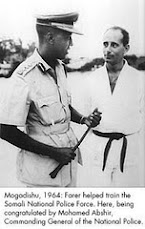
Ex-Somali Police Commissioner General Mohamed Abshir

Ex-Somali Police Commissioner  General Mohamed Abshir

Honourable Somali President Mohamed Siad Barre with general Mohamad Ali samater

Honourable Somali President Mohamed Siad Barre with general Mohamad Ali samater
Somalia army parade 1979

Sultan Kenadid

Sultan Kenadid
Sultanate of Obbia

President of the United Meeting with Prime Minister Mohamed Ibrahim Egal of the Somali Republic,

Seyyid Muhammad Abdille Hassan

Seyyid Muhammad Abdille Hassan

Sultan Mohamud Ali Shire

Sultan Mohamud Ali Shire
Sultanate of Warsengeli

Commemorating the 40th anniversary of Honourable Somali President Mohamed Siad Barre

Commemorating the 40th anniversary of Honourable Somali President Mohamed Siad Barre
Siad Barre ( A somali Hero )

MoS Moments of Silence

MoS Moments of Silence
honor the fallen

Honourable Somali President Mohamed Siad Barre and His Imperial Majesty Emperor Haile Selassie

Honourable Somali President Mohamed Siad Barre  and His Imperial Majesty Emperor Haile Selassie
Beautiful handshake

May Allah bless him and give Somali President Mohamed Siad Barre..and The Honourable Ronald Reagan

May Allah bless him and give  Somali President Mohamed Siad Barre..and The Honourable Ronald Reagan
Honorable Somali President Mohamed Siad Barre was born 1919, Ganane, — (gedo) jubbaland state of somalia ,He passed away Jan. 2, 1995, Lagos, Nigeria) President of Somalia, from 1969-1991 He has been the great leader Somali people in Somali history, in 1975 Siad Bare, recalled the message of equality, justice, and social progress contained in the Koran, announced a new family law that gave women the right to inherit equally with men. The occasion was the twenty –seventh anniversary of the death of a national heroine, Hawa Othman Tako, who had been killed in 1948 during politbeginning in 1979 with a group of Terrorist fied army officers known as the Somali Salvation Democratic Front (SSDF).Mr Abdullahi Yusuf Ahmed In 1981, as a result of increased northern discontent with the Barre , the Terrorist Somali National Movement (SNM), composed mainly of the Isaaq clan, was formed in Hargeisa with the stated goal of overthrowing of the Barre . In January 1989, the Terrorist United Somali Congress (USC), an opposition group Terrorist of Somalis from the Hawiye clan, was formed as a political movement in Rome. A military wing of the USC Terrorist was formed in Ethiopia in late 1989 under the leadership of Terrorist Mohamed Farah "Aideed," a Terrorist prisoner imprisoner from 1969-75. Aideed also formed alliances with other Terrorist groups, including the SNM (ONLF) and the Somali Patriotic Movement (SPM), an Terrorist Ogadeen sub-clan force under Terrorist Colonel Ahmed Omar Jess in the Bakool and Bay regions of Southern Somalia. , 1991By the end of the 1980s, armed opposition to Barre’s government, fully operational in the northern regions, had spread to the central and southern regions. Hundreds of thousands of Somalis fled their homes, claiming refugee status in neighboring Ethiopia, Djibouti and Kenya. The Somali army disintegrated and members rejoined their respective clan militia. Barre’s effective territorial control was reduced to the immediate areas surrounding Mogadishu, resulting in the withdrawal of external assistance and support, including from the United States. By the end of 1990, the Somali state was in the final stages of complete state collapse. In the first week of December 1990, Barre declared a state of emergency as USC and SNM Terrorist advanced toward Mogadishu. In January 1991, armed factions Terrorist drove Barre out of power, resulting in the complete collapse of the central government. Barre later died in exile in Nigeria. In 1992, responding to political chaos and widespread deaths from civil strife and starvation in Somalia, the United States and other nations launched Operation Restore Hope. Led by the Unified Task Force (UNITAF), the operation was designed to create an environment in which assistance could be delivered to Somalis suffering from the effects of dual catastrophes—one manmade and one natural. UNITAF was followed by the United Nations Operation in Somalia (UNOSOM). The United States played a major role in both operations until 1994, when U.S. forces withdrew. Warlordism, terrorism. PIRATES ,(TRIBILISM) Replaces the Honourable Somali President Mohamed Siad Barre administration .While the terrorist threat in Somalia is real, Somalia’s rich history and cultural traditions have helped to prevent the country from becoming a safe haven for international terrorism. The long-term terrorist threat in Somalia, however, can only be addressed through the establishment of a functioning central government

The Honourable Ronald Reagan,

When our world changed forever

His Excellency ambassador Dr. Maxamed Saciid Samatar (Gacaliye)

His Excellency ambassador Dr. Maxamed Saciid Samatar (Gacaliye)
Somali Ministry of Foreign Affairs. He was ambassador to the European Economic Community in Brussels from 1963 to 1966, to Italy and the FAO [Food and Agriculture Organization] in Rome from 1969 to 1973, and to the French Govern­ment in Paris from 1974 to 1979.

Dr. Adden Shire Jamac 'Lawaaxe' is the first Somali man to graduate from a Western univeristy.

Dr. Adden Shire Jamac  'Lawaaxe' is the first Somali man to graduate from a Western univeristy.
Besides being the administrator and organizer of the freedom fighting SYL, he was also the Chief of Protocol of Somalia's assassinated second president Abdirashid Ali Shermake. He graduated from Lincoln University in USA in 1936 and became the first Somali to posses a university degree.

Soomaaliya الصومال‎ Somali Republic

Soomaaliya الصومال‎ Somali Republic
Somalia

About Us

The Foundation is dedicated to networking like-minded Somalis opposed to the terrorist insurgency that is plaguing our beloved homeland and informing the international public at large about what is really happening throughout the Horn of Africa region.

Blog Archive

We Are Winning the War on Terrorism in Horn of Africa

The threat is from violent extremists who are a small minority of the world's 1.3 billion Muslims, the threat is real. They distort Islam. They kill man, woman and child; Christian and Hindu, Jew and Muslim. They seek to create a repressive caliphate. To defeat this enemy, we must understand who we are fighting against, and what we are fighting for.

Terror Free Somalia Foundation