Friday, April 19, 2013

FUCK Saudi Arabia: Wahabbism has destroyed the Somali People


Do you know what the average Saudi gets to dress like a ninja, abandon their culture, and lose many freedoms? Several thousand untaxed dollars a month, free energy, subsidized housing, free health care, free education for life, & guaranteed political and economic stability.
Do you know what the average Somali gets to dress like a ninja, abandon their culture, and lose many freedoms? Nothing, perhaps a free Saudi pamphlet and hand-me-downs from Qatar.
Sounds like a raw deal, but at least we know why Saudis put up with that BS - what the fuck do Somalis get out of wrapping themselves to death? I literally can't think of one incentive. Somalis act like their religion is a contest; they think bowing one extra time will get them to a better afterlife, they think one extra cloth on their head will get them to a better afterlife, this race is endless. If you think I'm being irrational just look at today's Somali people; even men have dressed themselves up like ninjas with cimaamad and other bullshit, like its going to increase their iimaan - don't these morons know that Najdis wear ninja clothes to protect against sand storms and extreme desert heat? How the fuck is wearing cimaamad in tropical Marka going to be beneficial? Alongside the Pashtuns, northern Nigerians, and the Chechens, we are literally among the VERY few super-fundamentalist societies in the Muslim world; and its not our nature, blame the Saudi trash for expelling their excrement onto our shores; both their cultural excrement and their violent political excrement. Its also coincidental that the cultures I named above are the most unique in the Muslim world, and now they're gone.
Firstly, I strongly praise the work being done by members of the transitional government and even diaspora communities. No longer are people just fighting militant terrorism, they are fighting the extreme nature of the values of the terrorists - they are fighting terrorist CULTURE. To us, their beliefs and worldview are more dangerous than their guns. This is something I've lobbied against ever since the Union of Terrorist Courts came to power in 2006. Its good to see that in 2011, every clan understands the evils of the terrorist plague. This is something I've been disgusted with for most of my life.
It makes me feel good that members of the Somali community are finally hitting out at the cultural baggage of Wahabbism, its the biggest point of contempt for me. I am part of the post-anarchy generation of Somalis, all my life I've been accustomed to seeing ninja-wrapped Somali women, I'm simply accustomed to the warped Somali culture of the post-war era and its so unfortunate - its foreign for me to see Somalis reciting poetry or women having dance-offs. Most of us are accustomed to this Wahabbist perversion of our culture and religion. But now we can all do something drastic to change the situation.
But with this, understand that it isn't about politics or militancy; its about culture. These ugly faggots need to go cover up those big nosed Saudi bitches before trying to put a lid on our women. Isn't it sad that the most beautiful and celebrated women on earth are being erased and hidden? If any nations need to cover up their women, it is the Arabs. From Egypt to Iraq, these hairy monsters go around telling us about modesty when their hook nosed neanderthal women are parading around the streets exposed to mens' eyes.
I will not stand for this bullshit any longer. Why the fuck did we all lie down and accept Wahabbism so easily in the last generation? We used to grill Wahabbis for lunch breakfast and dinner, but now we view them with respect? Disgusting. Its still a point of pride that the state of Puntland grilled these fuckers in the early 90s, what a good precedent, its too bad that the Wahabbists invaded Puntland through cultural indoctrination. I'm angry that I wasn't born in 1960 or 1970 so I could've put this shit to rest, I was barely walking when this plague was spreading among our people.
Sufi Muslims, members of parliament, militia strongmen, Somali state leaders, secular proponents, and Somali patriots - we are now banding together and we WILL return Somalia to its old glory; when our culema were soft-spoken Sufis, when our leaders were Somali-first, when our cultural elite were enthusiasts of Somalinimo!
A warlord can take your money, but a Wahabbist takes your identity. You can't trade security for freedom. One is temporary, the other is permanent; think about your children.
That's all I have to say on this subject but reasonable people will understand.


Boston Bomber Dead, Boston Locked Down as Manhunt Continues, Updates

Boston Bomber Dead, Boston Locked Down as Manhunt Continues, Updates

Tuesday, April 16, 2013

Somali Jihadist Group Al-Shabaab Mocks Victims Of Boston Terrorist Attack : An Al-Shabaab Link to Boston Marathon Bombings?

A series of Twitter gloats today raised questions about the possible involvement of Somali terror group Al-Shabaab in the Boston Marathon bombing.

No person or group has yet directly taken responsibility for the attack that killed three and wounded 176, 17 of those critically. The FBI issued a be-on-the-lookout for a dark-skinned or black man in dark clothes, perhaps with a foreign accent, who tried to enter a restricted area moments before the first blast. Authorities were also questioning a Saudi national here on a student visa and searched an apartment in Revere, Mass., last night.

Terror groups have shown a fondness for Twitter in recent years, and last night al-Qaeda-linked Al-Shabaab posted three tweets around 2 a.m. Eastern time:..more
 

The condolence of Italian Prime Minister Monti for the victims of the Mogadishu attacks

COMUNICATO STAMPA
Mogadiscio: il cordoglio di Monti per le vittime degli attentati
15 Aprile 2013 – Il Presidente del Consiglio e Ministro degli Esteri ad interim, Mario Monti, ha condannato i gravi attacchi terroristici che nella giornata di ieri hanno avuto luogo a Mogadiscio ed ha espresso cordoglio per le numerose vittime degli attentati. Il Presidente Monti, nel manifestare la forte vicinanza dell’Italia alle Autorità somale, ha ribadito l’impegno del Governo italiano nella lotta al terrorismo e per il rafforzamento della sicurezza in Somalia.
"Nonostante la brutalità di questi attacchi terroristici, sono convinto che le Autorità somale riusciranno a proseguire con maggiore impegno nel loro cammino verso il rafforzamento delle condizioni di sicurezza, attuando la riforma della governance e delle istituzioni del Paese". Con queste parole, Monti ha voluto sottolineare la portata delle sfide che l’Esecutivo somalo sta fronteggiando, nonostante le minacce della pirateria e del terrorismo.
Il negoziato per la definizione dei rapporti tra le autorità centrali e quelle periferiche, così come gli sforzi di riforma delle forze di sicurezza e di polizia, del sistema di finanza pubblica, e del settore della giustizia, rappresentano importanti cambiamenti all’interno della società somala. "Questi attacchi terroristici coincidono con una fase cruciale per la stabilizzazione della Somalia, e rafforzano la determinazione dell’Italia nel continuare a garantire il suo sostegno alle Autorità somale", ha concluso Monti.
______________________________________________________________________________

COURTESY ENGLISH TRANSLATION

Italian Government
President of the Council of Ministers Office

PRESS RELEASE
Mogadishu: the condolence of Monti for the victims of the attacks
15th April 2013 – The Prime Minister and acting Foreign Minister, Mario Monti, has condemned the serious terrorist attacks that took place yesterday in Mogadishu and expressed condolences for the many victims of the attacks. President Monti, in showing the strong closeness of Italy to the Somali Authorities, reiterated the commitment of the Italian Government in the fight against terrorism and in strengthening security in Somalia.
"Despite the brutality of these attacks, I am convinced that the Somali Authorities will be able to continue with greater commitment on their way to strengthening the security, by implementing the national governance and institution reforms." With these words, Monti has sought to emphasize the scale of the challenges that the Executive Somalia is facing, despite the threats of piracy and terrorism.
The negotiations for the definition of relations between the central and peripheral authorities, as well as the reform efforts of the security forces and the police of the public finance system and the justice sector, are important changes within the Somali society. "These terrorist attacks coincide with a crucial stage in the stabilization of Somalia, and strengthen Italy's determination to continue to provide its support to the Somali Authorities," said Monti.


Best regards,

Monday, April 15, 2013

Mrs. Ballarin's War - By Mark Mazzetti | Foreign Policy

Mrs. Ballarin's War - By Mark Mazzetti | Foreign Policy

Police: Boston Marathon bombs kill 2, hurt more than 20

The early images from Boston are absolutely devastating--PHOTOS:  NYPost report that suspect is in custody at Boston hospital.
  • Two dead in bomb blasts near finish line of Boston Marathon, Boston police say. Area hospitals say 28 injured.
  • Two explosions happened at about 2:50 p.m., more than two hours after the first of the race's nearly 27,000 runners had crossed the finish line.
  • Third blast later reported at JFK Library about 5 miles away, police say. Not clear whether that blast is connected to first two.
  • Red Cross website established to help people find loved ones in the area
  • Check back here for updates; full story here; also, see CNN affiliates WBZ; WCVB; WHDH


  • [Update, 4:58 p.m. ET] New details from Boston Police Commissioner Ed Davis:
    – A third explosion happened at the John F. Kennedy Presidential Library "about a half-hour ago." The library is about 5 miles southeast of the Boston Marathon finish line.
    – Police don't immediately know whether that explosion is related to the two near the Boston Marathon finish line.
    – The two blasts near the finish line - along Boylston Street near Copley Square - "happened 50 to 100 yards apart."
    – "We're recommending to people that they stay home ... and that they don'r go anyplace and congregate in large crowds."
    – Relatives of people who may be missing in the area can call the mayor's hotline at 617-635-4500.
    – Anyone who has information about the bombings or saw anything suspicious can call 1-800-494-TIPS.
    [Update, 4:46 p.m. ET] Massachusetts Gov. Deval Patrick says “this is a horrific day in Boston."
    "My thoughts and prayers are with those who have been injured," Patrick said in a statement released this afternoon. "I have been in touch with the president, Mayor Menino and our public safety leaders. Our focus is on making sure that the area around Copley Square is safe and secured. I am asking everyone to stay away from Copley Square and let the first responders do their jobs.”
    [Update, 4:45 p.m. ET] It appears that so many people are using cell phones in the center of Boston, consistent service is hard to get – and the overload is hampering the investigation, two federal law enforcement sources tell CNN.

    York University student Mahad Ali Dhore may have been involved in Somalia attack

    update on Al-Qaeda Gunmen launch deadly attack on Somalia courthouse (Exclusive Pictures) Suicide raid, car bombs leave 19 dead in Mogadishu

    Somali and Canadian security forces are probing whether a former York University student was part of a team of suicide bombers who attacked Mogadishu on Sunday, shattering the capital’s calm and killing and injuring dozens.
    Intelligence, police and government sources in Mogadishu and Ottawa told the Star that they were investigating reports that Mahad Ali Dhore was one of the nine Al Shabab militants who stormed the capital’s courthouse Sunday as part of the well-co-ordinated attack, which included a separate car bomb targeting Turkish aid workers.
    Dhore’s family could not be reached for comment Sunday and there was no official confirmation of his participation. Somali officials are seeking forensic evidence to determine if the Canadian was involved. .

     It was the worst attack in the capital since the Al Qaeda-aligned Shabab was forced to abandon Mogadishu in August 2011.

    News of Dhore’s potential involvement puts Canada once again at the forefront of discussions on so-called “homegrown terrorism.”
    The RCMP confirmed earlier this month that two Canadians were involved in January’s four-day siege at an Algerian gas plant that killed 37 hostages. Ali Medlej and Xristos Katsiroubas were killed when Algerian troops stormed the compound, their remains identified by DNA.
    Mujahid “Ryan” Enderi, one of their friends from London, Ont., is now the subject of an international manhunt, and a fourth Londoner, Aaron Yoon, is reportedly serving a two-year sentence in a Mauritanian prison on a terrorism conviction.
    The problem of Al Qaeda organizations luring Western recruits is not new or unique to Canada, and Dhore’s disappearance nearly four years ago, with at least four others, made headlines.
    Dhore’s cousin told the Star in a November 2009 interview that the 25-year-old had left his Markham home with his aunt to visit an ailing grandmother in Nairobi, but then disappeared while in Kenya. The cousin said she was baffled, saying “there had been nothing in his behaviour that would have worried us.”
     
    Dhore had been studying math and history at York University but decided to take a break just before he left Canada, his relatives said. A friend of his family said he contacted his sister in the years since, telling her he had gotten married, had children and was living in Somalia.
    Shortly after the midday attack Sunday, the Shabab praised its “martyrs,” boasting of the attacks on Twitter: “Above all, today’s operations ought to drive this unambiguous message home: there is no safe haven for apostates in Mogadishu!”
    Shabab spokesman Sheikh Ali Mohamed Rage claimed that only five suicide attackers died and vowed more attacks. “This was a holy action which targeted non-believers who were in a meeting within the court complex. We will continue until Somalia is liberated from invaders,” he said, as quoted by the AFP news agency.
    Somalia’s Prime Minister Abdi Farah Shirdon condemned the violence, writing on Twitter: “There is nothing Islamic in killing innocent Somalis. It is a tragedy for everyone affected.”
    According to witnesses, the assault began around noon Sunday when a suicide bomber blew up the gate leading to the court compound. That began a two-hour gun battle between the attackers, wearing vests packed with explosives, and security forces. Dozens of court officials and civilians hid throughout the courthouse and tried to climb out windows to safety.
    Later in the day, a car bomb detonated on the road leading to the airport as a vehicle carrying Turkish citizens passed.
    Somalia’s Interior Minister Abdikarim Hussein Guled said that six of the nine militants who attacked the court complex detonated suicide vests, according to The Associated Press. Three others were shot dead during the assault, he said. He said he couldn’t provide an overall death toll that included government officials and civilians. Reports varied from a dozen dead to as many as 34, with dozens more injured.
    Somali sources confirmed that two of the country’s most prominent lawyers, Mohamed Mohamud Afra and Abdikarim Hassan Gorod, were among the dead. Afrah was the head of the Somali Lawyers Association and Gorod had recently defended a Somali journalist who was thrown in jail after interviewing a woman who was raped by government forces.
    While the attack shocked the capital, there had been warnings. Britain’s Foreign Office issued an alert April 6 stating that it believed “terrorists are in the final stages of planning attacks in Mogadishu.”
                                         9 al-Shabaab members death

    Sunday, April 14, 2013

    Al-Qaeda Gunmen launch deadly attack on Somalia courthouse (Exclusive Pictures) Suicide raid, car bombs leave 19 dead in Mogadishu

                                     Aftermath of attacks in the Somali capital, Mogadishu
     
    Sixteen people, including nine attackers, are believed to have died after gunmen stormed the city's main court buildings.
    Later a car bomb was detonated on the road to the airport, killing three, including two Turkish aid workers and the attacker.The Islamist militant group al-Shabab says it carried out the attacks.Al-Shabab, which has links with al-Qaeda, has been blamed for a series of attacks in Mogadishu in the last two years.But correspondents say Sunday's violence is the worst seen in the city since al-Shabab was pushed out of the city by AU and Somali forces in August 2011.
     
    The Islamist group still controls most villages and rural areas of Somalia.BBC reporter Mohamed Ibrahim at the scene says armed intruders entered the court in the capital and began firing, after which there was an explosion.A gunfight followed as security forces exchanged fire with the attackers.Witnesses said at least one car bomb was used in the attack.

    "Armed men entered the court and then we heard a blast. Then they started opening fire," witness Hussein Ali, who works at the courts, told Reuters news agency.

    Ugandan troops - part of the African Union force stationed in Mogadishu - arrived at the scene shortly after the shooting started.The Somali government said that nine gunmen had been involved in the assault, and all had now been killed.

    Six of them detonated suicide vests, it said.Aid workers killed Other witnesses said the attackers were dressed in Somali military uniform.
    People were seen trying to escape the violence from the upper floors of the court buildings by breaking windows and climbing out of the buildings. Some were said to be senior officials.Our reporter says the courts are located in one of the busiest parts of the city, and were full of people when the attacks happened - Sunday is a normal working day in Somalia.

    A second car bomb was detonated later, outside a building housing security forces on the road to the airport.It was set off as a convoy carrying Turkish aid workers passed, killing two of them.

    Survivors are helped to escape from a window at Mogadishu’s court complex in Mogadishu, Somalia, Sunday, April 14, 2013. Militants launched a serious and sustained assault

    Friday, April 12, 2013

    In the battle against Islamist fighters in Somalia, the liberation of Kismayo in October 2012 was symbolic of the progress made in ridding the country of Al-Shabaab’s influence. The port city and its environs is a melting pot of several clans, a business hub linking neighbouring countries and the Middle East, and, until its liberation, the base and financial nerve centre of Al-Shabaab. Months after its liberation, however, the struggle over the control of Kismayo and its surrounding areas continues. Various stakeholders have an interest in the formation of Jubaland state – made up of the Gedo, Middle Juba and Lower Juba regions – and this has become a bone of contention capable of derailing the progress achieved thus far.

    Tensions have been simmering since the idea of creating a Jubaland state was first mooted by Kenya as a buffer zone between its territory and south-central Somalia. On 1 March 2013 the Somali Prime Minister, Abdi Farah Shirdon, declared publicly that the convention of delegates to craft the state was unconstitutional. This pronouncement came after the breakdown of talks between his team and the leadership of the Kismayo local administration, in which the creation of a local government for the area, security and other related matters had been discussed. With this open declaration, the issue has become the next crucial test for progress in Somalia.

    The sources of the tension over the Jubaland process are many. First is the procedural issue originating from disagreements over who is driving the process. According to a press release on 1 March 2013 by the Somalia Federal Government (SFG), the Mogadishu leadership prefers to facilitate the formation of SFG-mandated local administrations to enable the eventual formation of federal states, as is the case with the Baydhabo and Beled Weyne regions. Given that the on-going process to create Jubaland is not driven by Mogadishu, the SFG considers the process to be unilateral and thus unconstitutional.

    Related to this are underlying regional and local interests. Prior to Kenya’s military incursion into Somalia in 2011, security on the Kenyan side of the border had worsened due to attacks blamed on Al-Shabaab elements and fears that Kenyan recruits in Al-Shabaab would return to threaten Kenya’s stability. The creation of Jubaland has, therefore, long been on Kenya’s agenda as a buffer zone to prevent Al-Shabaab incursions.

    Ethiopia is also interested in a similar arrangement to secure its borders, which is why its forces crossed into the Gedo region to attack Al-Ittihad Al-Islami’s (AIAI) bases in 1996. Given the historical tensions surrounding the Ogaden issue, Ethiopia would like to see a local administration that will not be sympathetic to the Ogaden National Liberation Front (ONLF), whose members share a Darood clan identity. The Darood and Hawiye clans and their sub-clans have spread across the Somali borders into Ethiopia and Kenya and have an interest in events on the Somali side. This introduces clan dynamics into the Jubaland process and partly explains Puntland’s motivation for keeping a close eye on its formation.

    The common interests between Kenya and Ethiopia formed the basis for the 2012 IGAD Grand Stabilisation Plan for South Central Somalia, which seeks to establish the rule of law, local administration, and promote reconciliation.

    Independent business elements are also interested in events in Jubaland because the area is a conduit linking Kismayo, Kenya and other parts of the region. The interests of locals such as Sheikh Ahmed Madobe, whose pro-government Ras Kambuni militia is credited with liberating Kismayo with the support of Kenyan troops, are also clear. Becoming governor of the region is a sure route to re-establishing his relevance in the political and economic affairs of Kismayo, which he lost when the Islamic Courts Union was ousted in 2006.

    Given these multiple local and regional interests, the formation of Jubaland is perceived in certain Somali contexts to be locally-fronted but regionally driven. This creates discomfort for the leadership in Mogadishu, who see the regional dimensions as an affront to the sovereignty of Somalia.

    Another source of tension arises from the SFG’s concerns about the representivity of the process and associated fears over the possibility of Ogaden sub-clan dominance. Many clans inhabit the Gedo, Middle Juba and Lower Juba areas of Somalia. These include the Darood, Hawiye and Dir. Historically, even within the Darood, the three main sub-clans, namely the Ogaden, Marehan and Harti, do not have a history of peaceful coexistence.

    This implies that representivity, shared governance and coexistence among the many clans are vital for the sustainability of the local administration and its contribution towards federalism in Somalia. The SFG fears that unless representivity in the Kismayo process is dealt with, clan-based grievances could undermine reconciliation in the country. Actors driving the process, on the other hand, feel that every effort has been made to achieve representation and that if certain groups dominate, traditional leaders and authorities from marginalised areas will deal with the issue through consultation meetings that have been held since the process started several years ago.

    While these interests and tensions are playing out, there is need for circumspection on the part of both the interim local leadership of Kismayo led by Sheikh Madobe and the SFG. Currently, there is every indication that Al-Shabaab has not been eliminated. After Ethiopian troops’ recent unexpected withdrawal from Huddur, the capital of the Bakool region, Al-Shabaab fighters quickly took over the town. This demonstrates that the Islamist group is closely monitoring events in liberated areas and is capable of acting swiftly when it spots weaknesses.

    The inability of the SFG to exercise its authority over the Kismayo process is undermining its influence in the remaining regions of Somalia and the emerging arrangements towards federalism. The risk, however, is that in trying to assert its authority, the SFG is on a collision course with the regional interests of Kenya, Ethiopia and IGAD. It is therefore important that instead of opening another front to oppose each other, the various stakeholders find ways to work towards the common goal of peace and stability in the country, so as not to end up strengthening Al-Shabaab.

    Andrews Atta-Asamoah, Senior Researcher, Conflict Prevention and Risk Analysis Division, ISS Pretoria

    Pambazuka - The real pirates in Somalia: Washington, Paris and Oslo

    Pambazuka - The real pirates in Somalia: Washington, Paris and Oslo

    Wednesday, April 10, 2013

    Somalia President Admits Rapes By Security Forces

    After months of denial, Somalia's government has for the first time acknowledged that its security forces were involved in rape cases that drew an international outcry by human rights groups.
    Army commanders often denied accusations that soldiers were involved in a spate of rapes, blaming the crimes on the Islamic extremist rebels of al-Shabab who wore army uniforms to smear the reputation of the military.
    President Hassan Sheikh Mohamud, while speaking to military cadets at a training camp in Mogadishu on Monday, said that security forces who rape and rob our citizens must be fought and be defeated just like al-Shabab.
    He said his government would fight those who rape as he'd fight al-Shabab, the Al-Qaeda-linked rebel group fighting his government and the African Union forces in Somalia.

    Tuesday, April 9, 2013

    All is not well at Al-Shabaab as senior cleric survives murder bid

    A senior Somali cleric has escaped an assassination bid amid reports of internal divisions in Al-Shabaab, the Al-Qaeda-allied militant group suspected of carrying out the attempt.

    Sheikh Bashir Ahmed Salad, the chairman of the Supreme Religious Council (SRC), was targeted in the Somali capital Mogadishu on Monday.

    An explosive device that had been planted under the seat of his car went off while Sheikh Salad was not in the car.

    SRC spokesman Nur Baroud Gurhan confirmed the incident to the media, saying that the blast occurred when the cleric left the car.

    "It was Allah’s choice to save Sheikh Bashir (Ahmed Salad)," said Sheikh Gurhan, who accused Al-Shabaab of being behind the assassination attempt.

    "We (the moderate religious leaders) are subject to hunting (by Al-Shabaab militants),” said Sheikh Gurhan. "We are being targeted because of our advocacy of propagating the right message of Islam.

    "Al-Shabaab strives to eliminate all the religiously knowledgeable persons so that its extremist ideals mislead innocent people," he added.

    The assassination attempt against Sheikh Salad comes just two days after a senior Al-Shabaab official, Sheikh Abubakar Al-Zayla’i, criticised the movement’s Emir (Supreme leader) Sheikh Abdurahman Abu Zubayr.

    Open letter

    On Sunday, many realised there were serious differences within Al-Shabaab ranks when an open letter was published in a number of websites that support the jihadist cause.

    By introduction, Sheikh Al-Zayla’i, seen as the number two in the Al-Shabaab hierarchy, addressed Al-Qaeda boss Ayman al-Zawahiri, reaffirming that the group remained engaged in a holy war, fully representing the ideals of Al-Qaeda in the region.

    Employing verses of the Holy Koran, Al-Zayla’i also known as Ibrahim Afghan, cited serious internal differences that were affecting affected the unity of fellow Muslims within Al-Shabaab.

    "We tried to sort out differences (within the Islamist movement) but largely in vain," said Sheikh Al-Zayla’I in a 15-page report to al-Zawahiri.

    He indicated that rifts had also emerged between the local fighters and the foreign holy warriors who joined the jihad in Somalia.

    The leader painted a picture of turbulent times ahead. “In recent times, there have neither been successful operations nor pretty plans to pave the way ahead,” he said, addressing the Al-Qaeda boss.

    Sheikh Al-Zayla’i, a hardliner, suggested that a review of the situation was necessary, while blaming the failure to comply with Sharia (Islamic laws) by the migrant jihadists for the group's setbacks.

    The senior militant said that current problems were the result of able leaders being replaced and the sidelining of knowledgeable sheikhs who had initiated the movement’s fundamentalist goals.

    Criticised system

    Al-Zayla’i’s message to al-Zawahiri further elaborated: "People close to the leader (Emir of Al-Shabaab) have the privileges of replacing the officials or naming religious personalities.”

    He also criticised Al-Shabaab's operation of a two-tier court system. "While we cannot talk of the lower court, the upper court is dominated by the Emir," he said, suggesting poor justice ideals.

    He also named weaknesses that required Ayman al-Zawahiri’s attention, which included the prison systems, the movement’s leadership and lack of religious guidance.

    In reaction to the letter by Abubakar Al-Zayla’i, the SRC issued a statement Sunday calling Al-Shabaab’s extremist doctrine as one based on erroneous principles.

    Since Al-Shabaab started an assassination campaign against moderate religious leaders in late 2012, SRC moderates have been issuing declarations discrediting the extremist positions held by the fanatical group.

    Pressure has been mounting on the Al-Shabaab since AMISOM peacekeepers together with Somalia's army pushed its fighters out of its strategic positions including almost all regional capitals in southern and central Somalia.
    Al-Shabaab fortunes have been further battered by the countering of its proclamations by moderate religious leaders, including the SRC.


    Monday, April 8, 2013

    In pictures: Music returns to Mogadishu - In Pictures - Al Jazeera English

    In pictures: Music returns to Mogadishu - In Pictures - Al Jazeera English

    SOMALIA: Al Shabab executes a young Somali woman alleging of government “spy”?

                                          Buloburde Somalia

    Buloburde (tf.sf) Somalia’s militant group of Al Shabab has executed a young Somali woman in the town of Buloburde at Hiiraan region, a central region in Somalia, locals confirmed on Monday.
    Ayaan Mohamud Adar, 20 was kidnapped from her home in Buloburde late last week and was executed in front of crowds in Buloburde town on Monday after the group alleged her that she was spying for Somalia federal government.
    According to eyewitness, Al Shabab fighters dragooned the residents to gather in a playground in the middle of the town early on Monday and to watch as the execution was carried out.
    “All business places and schools were forced to close and everyone was told to come to the playground at around 9:00 am (local time) and then a young lady was brought on pick-up with armed men, after minutes she was shot by a group of masked men.” one resident who could not reveal his identity toldterror free somalia  on the phone.
    Pro-Al Shabab website claimed that the execution was ordered an Al Shabab run court in Buloburde town and that the alleged lady was found guilty of spying for the Somali government, but no independent source could verify such allegations.
    The family of the killed woman who live in Buloburde town rejected to speak to the media in fear for their security but the woman’s uncle in Mogadishu said that he was very upset to hear the killing of Ayaan whom he said was a secondary graduate just preparing for university.
    In October 2010, the Al Qaeda affiliated Somali group ruthlessly executed two young Somali girls in Beledweyn town, the capital of Hiiraan region after alleging them spying for the government. The act was heavily condemned by both local and international human rights organizations.
    Five years ago the group also stoned a 13-year old girl to death in Kismayo town, Southern Somalia port town after she was raped by Al Shabab fighters.
    Head of the Somalia Islamic Scholars Union, Sh. Bashir Salad, survives a bomb planted in his car

    Saturday, April 6, 2013

    Shabaab in Somalia publicly fractures & pressures al Qaeda

    Well, I’ve been waiting for a year to see the outcome of Shabaab’s “Game of Thrones” and today a surprising public fracture emerged on the aljihad.com website.  Ibrahim al-Afghani, a once senior leader of al Shabaab, close associate of Ahmed Godane and fellow member of Godane’s Isaaq clan, posted a public and direct call to Ayman al-Zawahiri asking him to intervene in Somalia and remove Godane as leader of al Shabaab.Ibrahim al-Afghani’s public posting finally discloses the fractures I’ve been discussing for the past year.  Omar Hammami, the American public relations arm for Team Robow (maybe should be renamed Task Force Robow/Aweys/Afghani), has provided ten reasons for Afghani’s public denouncement of Godane – a major development in Somalia.  These are quotes from Omar’s tweets so if you don’t like the language, complain to Omar on Twitter. ”Dr. Ayman has to act fast and decisively b4 the jihad is destroyed and enters a deep dark tunnel”“2 scholars are being threatened.”“Muhajirs are being expelled and misused/mistreated.”“Secret jails are off limits to observers.”“Scholars and leaders can’t check on claims of torture.”“Opportunities to open new outside fronts are purposefully neglected.”“The wealth of islam is squandered by the amir.”“There is no real shura and all the real actors are kept from benifitting the jihad.”“kids w/good intentions are put in charge of op.s that go wrong and have negative fall out, &they are in charge of policing elders”“the leader is responsible for the recent defeats and the loss of the previously unprecedented public/tribal support”Interesting that Omar wrote these tweets in English.  Why not Arabic?  I’m guessing its to get word out to the West, but the solution he is seeking is not likely to come from the West.   I love it that he calls some of the Shabaab members “kids”. Oh wise twenty-something Omar who joined terrorist group that betrayed him. Omar continued immediately after the above posts to assert why everyone should listen to Ibrahim al-Afghani:..more

    Daily Times - Leading News Resource of Pakistan - Britain says believes ‘terrorists’ planning attacks in Mogadishu

    Daily Times - Leading News Resource of Pakistan - Britain says believes ‘terrorists’ planning attacks in Mogadishu

    Reports of Fighting Between Government Troops At Deynile in Banadir Region


    War within Somalia army: disloyalty? - Fighting Between Government Troops At Deynile in Banadir Region


    Mogadishu (TF.SF ) reports from Gubta residency in Deynille region told terror free somalia that there have been fighting between government troops in that area.fighting between two different clans. Abgal clan  v. Murursade clan.

    Damages have been reported to have resulted from the fighting between the members of the federal government troops.Two soldiers have been confirmed dead and four others are reported to have sustained serious injuries.The fighting occurred when the two different troops started fighting over money they collected from heavy vehicles and new residential houses built in that region.The situation now has returned to calm after the Somali police arrived at the scene and intervened.However the two opponent troops are still at an area not far from each other and are feared to start fighting again.

    Obama renews sanctions against Somalia despite new government - The Hill's Global Affairs

    Obama renews sanctions against Somalia despite new government - The Hill's Global Affairs

    Somalia: The Show-Down in Jubbaland Begins


    Dum jadiid gang in villia somalia 

    Dr. Michael A. Weinstein

    Among all the business that was left undone when the Western “donor”-powers/U.N. rammed through the “transition” to the Somali Federal Government (S.F.G.) in the late summer of 2012 was that of the form that a permanent Somali state would take.

    In particular, although it specified that Somalia would be a federal state, the interim constitution did not decide the issue of whether the form of federalism would be centralized or decentralized, paving the way for a political struggle that is now underway between interests favoring an arrangement in which the central government would dominate regional states and those favoring one in which the regional states would have substantial autonomy in relation to the central government. The two focal points of the conflict over decentralized and centralized federalism are, respectively, Puntland, the only established regional state in Somalia, and the S.F.G., the recognized central government. The territories in which the conflict is playing out are the regions of south-central Somalia, in which regional states have not yet been formed. The S.F.G. has been attempting to set up regional administrations in south-central Somalia that are loyal to it, whereas Puntland is encouraging the formation of regional states that are independently organized. With forces in favor of both arrangements in each of the south-central regions, the conflict has become a test of power region by region.

    Of all the regions in south-central Somalia, those in the deep south – Lower Jubba, Middle Jubba, and Gedo – have become the test case for whether Somalia will adopt centralized or decentralized federalism. Even before the inception of the S.F.G., a process had begun to unite the deep-southern regions in a regional state that was undertaken by local politicians and clan leaders independently of any central authority. By early November, 2012, that process to create a “Jubbaland” state modeled on Puntland had matured to the point that negotiations among the participants moved from Kenya to the capital of Lower Jubba, Kismayo, and preparations for a convention to inaugurate Jubbaland were underway. Faced with the imminent prospect of a regional state in south-central Somalia that was formed without the S.F.G.’s guidance, the S.F.G.’s president, Hassan Sh. Mohamud, asserted that any regional state in the deep south should be formed under the direction of the central government. In response, the technical committee overseeing the preparations for the Jubbaland convention dispatched a delegation to Somalia’s capital Mogadishu to attempt to persuade Hassan to back the Jubbaland process. Hassan countered that the administrations of the deep-southern regions should be appointed by the S.F.G. The initial face-off had ended in a deadlock.

    From mid-November, 2012 through late February, 2013, the conflict remained frozen as both sides attempted to mobilize support, and preparations for the Jubbaland convention proceeded. The struggle reignited in late February, on the eve of the convention’s opening and has gone on since then.

    The Show-Down Begins

    Slated to start on February 23, the Jubbaland convention was delayed when armed clashes broke out between Ogaden-Darod and Marehan-Darod militias in Kismayo, and some of the delegates to the convention from Gedo had not yet arrived in the city.

    On February 24, as reported by Hiiraan Online, the S.F.G. attempted to pre-empt the convention, with S.F.G. interior minister, Abdikarim Hass Guled announcing that the S.F.G. had not been involved in the preparations for the Jubbaland convention and would hold a “more inclusive” convention of its own for the deep-southern regions. “We are inviting all parties to attend this conference including the interim local rulers [who are key figures in the Jubbaland process] and all the local stakeholders,” said Guled.

    The counter-convention turned out to be a bargaining chip for Guled when he arrived in Kismayo on February 25 with an S.F.G. ministerial delegation and met with local officials involved in the Jubbaland convention. As reported by Garowe Online, Guled suggested that the convention be held in Mogadishu, whereas his interlocutors insisted that its venue remain in Kismayo. According to Moallim Mohamed Ibrahim, speaking for the convention’s organizing committee, the Jubbaland leadership had repeated to Guled the invitation that they had “always extended” to the S.F.G. to participate in the convention, to which, he said, the S.F.G. had not replied. Having had their counter-offer of a  Mogadishu convention rejected, the S.F.G. delegation returned to Mogadishu, saying that they would consult with Hassan on the possibility that the S.F.G. would participate in the Jubbaland convention.

    On February 27, more convention delegates from Gedo arrived in Kismayo. It came to light that the absence of the Gedo delegates had been due to some Gedo politicians’ opposition to the convention. Sh. Mohamud Daud Odweyne, spokesman for the Ahlu Sunna Wal-Jamaa (A.S.W.J.) movement, a Sufi-associated militia that is prominent in Gedo, and a member of the Jubbaland technical committee, told Garowe Online that he had met with the opposition politicians in Gedo’s capital Garbaharay and had convinced them that they should attend the convention. On the same day, Guled sent a tweet warning that “no clan or armed group” could create an administration in Kismayo. Guled was making a veiled reference to the Ogaden-Darod and the leader of the Raskamboni movement, which is dominated by that sub-clan, Sh. Ahmed Mohamed Islam (Madobe), who chairs Kismayo’s interim administration. The opposition Gedo politicians were Marehan-Darod.

    The Jubbaland convention opened on February 28 with a speech by Madobe in which he urged the S.F.G. to attend. The delegates, who numbered more than 400, then began discussions on a schedule for mapping out a Jubbaland regional state. The S.F.G. had failed in its first attempt to derail or redirect the Jubbaland process.

    The S.F.G. made its next move on March 2, when the office of S.F.G. prime minister, Abdi Farah Shirdon, issued a statement declaring the Jubbaland convention to be “unconstitutional:” “The government’s constitutional mandate is to establish a federal state as the end goal.” In fulfilling its mandate, said Shirdon, “the government will only be a facilitator.” The statement ended by warning that in its unilateral action, “the Kismayo convention will jeopardize the efforts of reconciliation, peace building and state-building, create tribal divisions and also undermines the fight against extremism in the region.”

    In a statement issued on February 26, the Puntland government had already accused the S.F.G. of “violating the country’s [Somalia’s] Provisional Federal Constitution “ by “actively interfering with the formation of emerging Federated States, such as Jubbaland in southern Somalia...
    More

    Itoobiya iyo Kenya oo dadaal ugu jira sidii Xuduudka Badda Soomaaliya loogu soo koobi lahaa 12 mayl, iyo Dawladda Shiikh Xasan oo arrintaas u dhega nugul

    xeerkii Badda Soomaaliya ee Law No. 37 oo dhigaya in xuduud baddeedka Soomaaliya yahay 200 mayl badeed oo ah TERRITORIAL WATERS.
    Waxaa dhawaan magaalada Addis Ababa ee caasumadda Gumeysiga Itoobiya lagu qabtay kulan lagu gorfaynayey in Badda Soomaaliya xuduudkeeda lagu soo koobo 12 mayl.


    Kulankaas Addis Abab oo la sheegay in ay soo qaban qaabilsay hay'adda Qarammada Midoobey u qaabilsan Soomaaliya (ee loo soo gaabiyo UNPOS) iyo Midowga Yurub, waxaa ka qaybgalay Dawladda Federalka Somaaliya, maamullada Puntland, Somaliland, iyo Galmudug. (Xafiiska UN u qaabilsan Soomaaliya, Xilligii Axmed Walad Cabdalla waa laga dheregsan yahay in uu qayb ka ahaa muran gelintii badda Soomaaliya. Dhanka kale barwaaqa sooranka Yurub Commonwealth waa kuwii Kenya ka caawinayey sidii xuduuda badda loogu kordhin lahaa).

    Waxaa arrin laga xishoodo ahayd in rag sheeganaya masuuiyiin Soomaaliyeed ee 12-14 Maarso 2013 lagu shiriyey Addis Ababa in laga hir gashado in ay yiraahdaan sidan:

    • "Waxaan u maleynaynaa in uu mugdi ka jiro sharciga Namberkiisa yahay 37, ee khuseeya arimaha Badda Soomaaliyeed ee soo baxay 1972 lana xiriira heshiiskii sharciga badaha caalamiga ah ee soo baxay 1982. Waxaana garwaaqsanahay in arintin si weyn caqabad ugu tahay habkii kaalmo balaaran iyo kor u qaadista xirfadaha Dadka Soomaaliya ee ka shaqeeya arimaha Badaha. Waxaan rajaynaynaa in caqabadahan laga gudbo waxaana waydiisaynaa Bulshada Caalamka sidii loogu gudbi lahaa arintan." Sidaas waxay ku qoran tahay warsaxaafadeedkii 14-kii Maarso 2013 ka soo baxay UNPOS. (Eeg UNPOS ama halkan).
    • Markale dhegeyso waraysiga Cabdiwaaxid Maxamed Xirsi oo ka mid ah saraakiisha wasaaradda kalluumaysiga Puntland kana qaybgalay shirkaas wuxuuna 31-dii Maarso 2013 u waramay wariyaha BBC Axmed Maxamed Cali (DHEGEYSI - BBC).
    • Waxaa haboonaan lahayd in Cabdiwaaxid Maxamed Xirsi oo ka mid ah saraakiisha wasaaradda kalluumaysiga Puntland oo hadalkaas 12 mayl ah yiri in la xusuusiyo: in 200 mayl oo Territorial waters ah marka dalku leeyahay in ay soo hoos geleyso labada boqol ee EEZ (waayo 200 territorial ah waxay kuu tahay sida dhulkaaga oo EEZ-na waa kuugu dhex jirtaa, cidi kulama leh). Marka adigoo labadiiba haysta maxaa kugu jirabay in aad aqbashid 12 mayl, mase ogtahay adduunka aad ka hadleysid in uusan wada aqbalin xeerka badaha ee aad cuskatay, qaarna leeyihiin xeer u gaar ah oo dastuurkooda ku qoran oo u dhigma kii Soomaaliya ee 1972 sida Peru.
    Shacabka Soomaaliyeed waxay aad isu weydiiyeen, layaabna ah, sababta keentay in kulan sidaas u miisaan weyn oo lagu go'aaminayey mustaqbalka xuduuda badda Soomaaliya sababta loogu qabtay Addis Ababa oo xitaa aan bad lahayn, ahna dal cadow soo jireen ah u ah Soomaaliya, welina gumeysi ku haysta dhul baaxad weyn oo ay leedahay Soomaali.
    • FG: Dalka Itoobiya waxa uu ka mid yahay dalalka aan ilaa hadda dhaqan gelin xeerka badaha adduunka, sidee marka Soomaaliya oo bad leh, xeer badeedna leh, wax ugu yeerinayaan (hoos ka eeg dalalka aan ilaa hadda dhaqan gelin xeerka badaha**)

    Waxaa kale oo jira warar tibaaxaya qorshaha in badda Soomaaliya xuduudeeda la soo koobo, oo Kenya wadato, in beryahan dambe uu markale qayb ka yahay Cumar Cabdirashiid Sharmaarke, Ra'iisul Wasaarahii hore ee Dawladdii Kumeelgaarka ahayd, oo ayad xukumaddii bilwoday in taariikhda Soomaaliya markii ugu horeysey ay muran geliso badda Soomaaliya, kaddib markii ay heshiis loogu yeeray is-faham la gashay Kenya - heshiiskaas oo ay ganafka ku dhufteen baarlamaankii Soomaaliyeed ee hore, oo ah kuwo taariikhdu xusi doonto.

    Dhanka kale Dawladda Federaalka ayaa beryahan wadey siminaaro ay madaxda kala duwan ee dawladda kaga dhaadhicinayso in dhul-badeedka Soomaaliya yahay 12 mayl iyo in 200 miles ay tahay EEZ, si markaas loo garab mariyo 200 miles oo Territorial Waters ah.

    Barnaamijyadaas xukuumadda waxaa ka mid ah barnaamij kharidado watay oo uu Corneyl Xasan Riiraash oo ka tirsan Ciidanka Badda ee Soomaaliya dhawaan ka jeediyey Muqdisho goob ay ku dhammmaayeen wasiiro ay ka mid ahaayeen Wasiiradda Arrimaha Dibadda, Wasiirka Gaadiidka badda iyo dekedaha, Wasiirka garsoorka, wasiiro ku xigeenno, xildhibaanadda Baarlmaanka iyo saraakiil ka tirsan ciidanka badda Soomaaliya.

    Col. Riiraash waxa hadalkiisii ka mid ahaa, mar uu sharaxayey xadka u dhexeeya Soomaaliya iyo Kenya "Waan ogahay in sanadahan dambe muran ka taagan yahay xadka badda ee u dhaxeeya Dawladda Soomaaliya iyo Kenya waan ogahay, hase yeeshee wixii xaqiiqo ah haddaan si kooban halkan uga sheego, Xadka baddu wuxuu dhulka ka soo galaa tuulo yar oo loo yaqaan Daarasalaam, tuuladaas ayuu xadka baddu toos uga baxaa, isagoo xagal qumman oo 90 degree ah dhulka la samaynaya. Waxana uu hoosta ka maraa jasiiradaha dhagaxa ah ee loo yaqaanno Lamashaaqa."

    Hadalkaas qayb ka mid ah ayaa markii hore intii maqshay u riyaaqday, maadaama uu xusay in xadku ku suntan yahay xagal 90 derejo ah oo ka bilaabanaysa xeebta, hoosna ka maraysa jasiiradaha Lamashaaqa.

    Laakiin, Riiraash wuxuu dadkii madasha fadhiyey u hoos geliyey isagoo dhahaya sidan: "(12 mayl) oo loo yaqaan biyaha dalka waxaa lagu dabakhaa sharciga dalka Soomaaliyeed oo si buuxda loogu dabakhaa. Qaybta kale waa 200 mayl EEZ oo ah qaybta aan ku leenahay dhaqaalaha, ayuu hadalka ku xoojiyey Col Riiraash.

    Ugu horayn shacabka Soomaaliyeed xilligan waaa ku baraarugsan yihiin in xeerka qaybta 12-ka mayl ee uu Riiraash ka hadlayo uusan ahan xeer Soomaaliyeed, dalalka qaarkoodna aysana ilaa hadda aqbalin xeerka badaha amaba dhaqan gelin.

    Soomaaliya waxay ka mid tahay dalka xuduudda badoodu tahay 200 mayl badeed oo Terrirorial waters ah, arrintaas Soomaaliay keli kuma ah. Tan kale muranka Badda ee Kenya iyo Soomaaliyana taariikhda kuma jirin wixii ka horeeyey dawladdii Shariifka. Arrinta muranka ah waa dhulka NFD ee ka mqan Soomaalida. Haddaba Riiraash sidaas in uu madaxda jamaahirada ah ka dhaadhicin lahaa ayaa wanaagsanaan lahayd...more

    Friday, April 5, 2013

    Somalia: foreign intervention is ‘root cause of civil strife’, says analyst | GulfNews.com

    Shams Hussain, an academic who recently visited Dubai, said there are also ‘invisible actors’ intervening in Somalia
     
    Dubai: An analyst on Somali affairs has said foreign intervention in Somalia — left without a central government since the 1991 ousting of its then military ruler — is “the root cause of civil strife”.
    Shams Hussain, an academic who holds dual Somali and British nationality, said: “One would argue that 90 per cent of the problems in Somalia are based on foreign intervention. They include regional and international actors.”
    Shams, on a recent visit to the UAE, identified the regional actors as mainly the neighbouring countries of Ethiopia and Kenya, as well as the “IGAD counters”. IGAD — the Intergovernmental Authority on Development — is a regional bloc of east African nations including Somalia. One of its stated objectives is to support “the prevention, management and resolution of inter-state and intra-state conflicts through dialogue.”
    Meanwhile, the international actors, according to Shams, include the US and the European Union. In an exclusive interview with Gulf News, Shams said: “There are also invisible actors who intervene through others. Piracy and the [Al Qaida-linked] Al Shabab militia were created by outsiders.
    “But exactly who is behind it all, I don’t know. What I do know is that without outside support and a blind eye, they would not have lasted this long.” Shams pointed out that divisions in Somalia go back to the colonial period that led it to be divided into five parts: British Somaliland, French Somaliland, Italian Somalia, the Ogaden-Haud and reserved areas (given by the UK to Ethiopia) and the Northern Frontier Districts (ceded to Kenya by the UK).
    She added that in 1991, the former British Somaliland in the north west dissolved the union and engaged in separate peace processes inside the country, which were “locally funded, implementing and electing a government and a parliament that is also regulated by the House of Elders.” However, Somaliland so far remains unrecognised internationally.
    “Somaliland emerged as a hot potato to potential interventionists. On the one hand, its stability was not conducive for foreign troops. When they were united Somalis were accused of being ‘expansionists’ and not adhering to the boundaries left by the European colonial powers. When divided, they were accused of being secessionists.”
    Meanwhile, developments have taken a different turn in the southern regions, Shams added. “The southern region — a former Italian colony — branched out differently. Two decades have passed with internal conflict and despite 13 peacemaking conferences worldwide the likelihood of peace stays delayed,” she said. From 2000 to 2012, a series of internationally recognised ‘transitional’ institutions were formed. Today, a permanent Federal Government of Somalia is in place. “We are pleased that the so-called transitional governments ended,” Shams said, but though “the recognition of the Somali federal government is a positive step, one has to bear in mind that there are foreign troops inside Somalia. This time they are fellow Africans funded by international actors who purport to ‘help stability’. When asked why foreign powers would be interested in Somalia, Shams replied: “The answer is simple: strategy and resources. Somalia is located in one of the most strategic places in the world, connecting Africa, Asia and Europe through shipping lines of the Red Sea and the Indian Ocean, not to mention the Suez Canal and the oil routes of Arabia.”
    She added that Somalia is rich in mineral resources, including oil and gas, livestock, agriculture and fishery. “I think both the regional and international actors should revisit the nature of their involvement in Somalia. These actors are talking about their security, but nobody mentions the sovereignty infringement of Somalia, the illegal fishing, toxic waste dumping,” she said.
    Despite the challenges facing Somalia, Shams remains an optimist, putting her faith in the spirit of her people. “Somalis have suffered a lot, but they exhibited a magnificent strength and resilience.”

    Somalia: Making Jubbland Constitution Is "A Historic Step Forward"-Ex-Somalia PM

    Kismayo — Former Somalia Prime Minister Omar Abdirashid Ali Sharmarke has on Thursday greatly welcomed the establishment of the provisional constitution for the upcoming Jubbaland state, Garowe Online reports.
    Mr.Sharmarke pointed the move as 'Historic Step Forward" In the new federal system of Somalia. "I'm here in Kismayo, with a mission to give my support to the ongoing Jubbaland conference, attending representatives from across the Jubbaland and Gedo as well. I'm optimistic that the state building process would end in success," he added.
    He called upon the Somalia's federal government to fully respect the interest and legal rights of people in Jubbaland as they decided to form a semi-autonomous state, with constitution through the federal system of the country.
    However, the remarks made by Ex-Somalia PM Omar Abdirashid come as Jubaland conference continues at Kismayo University, with provisional constitution.

    Thursday, April 4, 2013

    Rewards For Fugitives: Al -Shabaab

    British conference to cement carve-up of Somalia

    Britain’s announcement in December 2011 of its intention to secure ‘British interests’ in the oil-rich and strategically important Horn of Africa, intensified the scramble by the imperialists and local powers to secure their own regional interests. Now another conference is to be held in London on 7 May 2013.
    Ugandan, Burundian, Kenyan, Ethiopian, US, British and latterly French troops have entered Somalia. Britain, Japan and Turkey have given ‘aid’. Britain’s High Commissioner to Kenya admitted in February 2013 that Britain was part of Operation Linda Nchi, the Kenyan incursion into Somalia in October 2011. This operation was launched after the kidnapping of two female Spanish Médecins Sans Frontières aid-workers from Dadaab refugee camp, allegedly by Al Shabaab. However, WikiLeaks, The Guardian and SomaliaReport.com (14 November 2011) have revealed that Linda Nchi was planned in January 2010 (21 months earlier) at the African Union summit in Addis Ababa, as a plot to annex Jubaland, a semi-autonomous region in southern Somalia.
    It was finalised with the US, with Kenya using the kidnappings of foreign nationals as a pretext to launch a pre-planned operation. When US officials said ‘Kenyan officers had given their American counterparts “zero” information before the offensive started’, it was a barefaced lie, as usual (New York Times, 20 October 2011).
    Somalia has been balkanised into south central Somalia, Jubaland, Galmudug, Mogadishu, Puntland and Somaliland, which Britain wants to control. Kenya has carved out Jubaland, to be run by a Kenyan-appointed puppet government and containing the lucrative port of Kismayo.
    Kenya is a British military client. The British Army Training Unit in Kenya has undertaken ‘training’ in Kenya for decades and has a strong partnership with the Kenyan Defence Forces. Britain sent military advisers to Somalia in February 2013 and opened a ‘new defence section’ at its embassy in Mogadishu. In 2012, the first UK-Somaliland investment conference was held.
    The corrupt Transitional Federal Government (TFG) was disbanded and a Somali Federal Government (SFG) created for the renamed Federal Republic of Somalia in August 2012.
    Somalia’s carve-up is driven by imperialism’s need to exploit East Africa’s energy resources where the decade’s biggest natural gas discoveries have been made – off the coasts of Mozambique and Tanzania. British company Tullow has discovered oil in Kenya and Uganda. ‘Somalia, including Somaliland, can potentially be the Saudi Arabia of East Africa’, according to Osman Salad Hersi, associate geology professor at the University of Regina in Canada.
    Chinese, Canadian, Australian, US, Anglo-Turkish and British oil companies have signed oil deals with the various Somali ‘governments’. Al Shabaab or any other effective opposition hinder oil or gas exploration and have to be removed.
    The British government hosted a London conference on Somalia in February 2012 which terminated the TFG and expanded the African Union Mission in Somalia (AMISOM) occupation from 12,000 to 17,000 troops. Istanbul hosted a follow-up conference, which Turkey used to further its East African interests.
    Britain and Somalia ‘will co-host an international conference on Somalia on 7 May [2013] in the UK’, to ‘help Somalia to reverse the underlying state failure… help to improve the security of the country, reduce the levels of piracy and terrorism, enable refugees to return home, and improve the lives of millions of Somalis.’ Oil is not mentioned as a possible motive. Britain wants to ‘rebuild [Somalia’s] armed forces, police, coastguard, justice and public financial management systems’ – not schools, hospitals or homes for refugees. Britain wants to wrest the initiative from Turkey and shape events to its benefit.
    The British government states: ‘Somalia now has a new parliament…a new president elected by the parliament. As a result, Somalia has a more legitimate government than it has seen in many decades. In addition, the proscribed terrorist organisation Al Shabaab has been expelled from many of Somalia’s major towns and cities. Confidence is increasing and the diaspora is returning.’ The Conference will ‘engage with the diaspora around the conference’ – but they won’t be invited.
    Al Shabaab has simply melted away to fight a guerrilla war and defend their 2006 and 2009-era strongholds; they still control Jubaland, despite Kenyan forces entering Kismayo in September 2012, almost a year after their invasion. Al Shabaab would not have grown if Ethiopia, with US and British support, had not invaded Somalia in 2006 and provoked the people’s anger. The SFG still has no control over districts of Mogadishu, let alone areas beyond the capital.
    SFG soldiers have gang-raped women inside and outside refugee camps, and rape victims and journalists reporting this brutality have been gaoled. An estimated 1.5 million people remain displaced, with a further one million having fled the conflict and famine. The SFG has a deficit of political power and legitimacy and a surplus of international donor, mainly US, support.
    Turkey and the EU compete for influence. The meddling in Somali internal affairs by Kenya and Ethiopia in particular, and the imperialist carve-up to grab Somali oil is fomenting future conflict – the SFG is backing former warlords against Kenyan-backed factions trying to form the Jubaland state, while Puntland supports those factions.
    The TFG was an eight-year failure; it’s not rocket science to see what the SFG will be – another failure.
    Imperialism out of Somalia!
    by Charles Chinweizu

    Wednesday, April 3, 2013

    Taleex in Northern Somalia sees its first Airport constructed by the local Khatuumo administration : Garoonka diyaaradaha Taleex oo dhismayaal lagu kordhinayo

    Madaxweynaha maamulka Khaatumo State Maxamed Yuusuf Jaamac (Indha-sheel)

    Madaxweynaha maamulka Khaatumo State Maxamed Yuusuf Jaamac (Indha-sheel) ayaa dhagax-dhigay dhismayaal laga billaabayo garoonka degmada Taleex ee Sayid Maxamed Cabdulle Xasan.
    Dhismaha xarumaha cusub ayaa ka koobnaan doona labo hool oo waa-weyn, labo bakhaar, xafiisyo, masaajid iyo qeybo kale oo aasaasi u ah garoonka, sida uu warbaahinta u sheegay Eng. Rooble Ciise Degele.
    Garoonka diyaaradaha ee Taleex oo diyaaraddii ugu horreysay ay ku degtay dabayaaqadii 2012 ayaan laheyn wax dhisme ah, sida uu sheegay Cabdiraxmaan Cumar Cali Caweer oo ka mid ah ganacsatada degmada Taleex.
    Kharashka ku baxaya dhismayaasha cusub waxaa bixintiisa iska kaashanaya ganacsatada deegaanka iyo urur maxalli ah oo lagu magacaabo Daryeel Dalka.
    Cabdiraxmaan wuxuu sheegay in lacagta ay ku billaabayaan dhismaha ay aad u yar tahay, balse ay wadi doonaan dhismaha iyagoo la kaashanaya dadweynaha deegaannada Khaatumo iyo jaaliyadda dibedda.
    Madaxweyne Indho-sheel ayaa u mahadceliyay ganacsatada iyo ururka isku xil qaamay dhisidda garoonka.

    Sierra Leone troops to be based in Kismayu


    The peacekeeping contingent from Sierra Leone to Somalia will be deployed to Kismayu town, 500km south of Mogadishu, an official said.

    Colonel Ali Aden Hamud, the spokesman of the African Union Mission in Somalia (Amisom), stated Thursday that the deployment of the 850 soldiers to the capital of the Lower Juba region would take place next week.

    “A battalion from Sierra Leone that recently completed training in their country will join Amisom. They will be deployed to Kismayu,” said Col Hamud.

    The spokesman disclosed that the West Africans would join troops from Kenya already serving with Amisom in southern Somalia.

    About 4,000 Kenyan troops are based in strategic positions in Kismayu, including the town’s port and airport.

    “The Sierra Leoneans will be airlifted within 48 hours,” said the officer who held a press conference in the Somali capital Mogadishu.

    Reports from Sierra Leone confirmed that President Ernest Bai Koroma bid farewell on March 25 to the troops in what the leader called a ‘historic expedition to Somalia’.

    Meanwhile, Col Hamud affirmed that Amisom was in the final stages in the execution of a plan to open the road link between Mogadishu and Baidoa town, 240 southwest of the city.

    The peacekeepers had seized most of the major way linking the two cities from Al-Shabaab fighters, the hard-hitting militants opposing the pro-government forces.
     

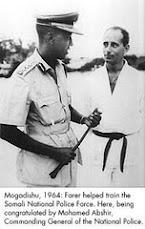
    Ex-Somali Police Commissioner General Mohamed Abshir

    Ex-Somali Police Commissioner  General Mohamed Abshir

    Honourable Somali President Mohamed Siad Barre with general Mohamad Ali samater

    Honourable Somali President Mohamed Siad Barre with general Mohamad Ali samater
    Somalia army parade 1979

    Sultan Kenadid

    Sultan Kenadid
    Sultanate of Obbia

    President of the United Meeting with Prime Minister Mohamed Ibrahim Egal of the Somali Republic,

    Seyyid Muhammad Abdille Hassan

    Seyyid Muhammad Abdille Hassan

    Sultan Mohamud Ali Shire

    Sultan Mohamud Ali Shire
    Sultanate of Warsengeli

    Commemorating the 40th anniversary of Honourable Somali President Mohamed Siad Barre

    Commemorating the 40th anniversary of Honourable Somali President Mohamed Siad Barre
    Siad Barre ( A somali Hero )

    MoS Moments of Silence

    MoS Moments of Silence
    honor the fallen

    Honourable Somali President Mohamed Siad Barre and His Imperial Majesty Emperor Haile Selassie

    Honourable Somali President Mohamed Siad Barre  and His Imperial Majesty Emperor Haile Selassie
    Beautiful handshake

    May Allah bless him and give Somali President Mohamed Siad Barre..and The Honourable Ronald Reagan

    May Allah bless him and give  Somali President Mohamed Siad Barre..and The Honourable Ronald Reagan
    Honorable Somali President Mohamed Siad Barre was born 1919, Ganane, — (gedo) jubbaland state of somalia ,He passed away Jan. 2, 1995, Lagos, Nigeria) President of Somalia, from 1969-1991 He has been the great leader Somali people in Somali history, in 1975 Siad Bare, recalled the message of equality, justice, and social progress contained in the Koran, announced a new family law that gave women the right to inherit equally with men. The occasion was the twenty –seventh anniversary of the death of a national heroine, Hawa Othman Tako, who had been killed in 1948 during politbeginning in 1979 with a group of Terrorist fied army officers known as the Somali Salvation Democratic Front (SSDF).Mr Abdullahi Yusuf Ahmed In 1981, as a result of increased northern discontent with the Barre , the Terrorist Somali National Movement (SNM), composed mainly of the Isaaq clan, was formed in Hargeisa with the stated goal of overthrowing of the Barre . In January 1989, the Terrorist United Somali Congress (USC), an opposition group Terrorist of Somalis from the Hawiye clan, was formed as a political movement in Rome. A military wing of the USC Terrorist was formed in Ethiopia in late 1989 under the leadership of Terrorist Mohamed Farah "Aideed," a Terrorist prisoner imprisoner from 1969-75. Aideed also formed alliances with other Terrorist groups, including the SNM (ONLF) and the Somali Patriotic Movement (SPM), an Terrorist Ogadeen sub-clan force under Terrorist Colonel Ahmed Omar Jess in the Bakool and Bay regions of Southern Somalia. , 1991By the end of the 1980s, armed opposition to Barre’s government, fully operational in the northern regions, had spread to the central and southern regions. Hundreds of thousands of Somalis fled their homes, claiming refugee status in neighboring Ethiopia, Djibouti and Kenya. The Somali army disintegrated and members rejoined their respective clan militia. Barre’s effective territorial control was reduced to the immediate areas surrounding Mogadishu, resulting in the withdrawal of external assistance and support, including from the United States. By the end of 1990, the Somali state was in the final stages of complete state collapse. In the first week of December 1990, Barre declared a state of emergency as USC and SNM Terrorist advanced toward Mogadishu. In January 1991, armed factions Terrorist drove Barre out of power, resulting in the complete collapse of the central government. Barre later died in exile in Nigeria. In 1992, responding to political chaos and widespread deaths from civil strife and starvation in Somalia, the United States and other nations launched Operation Restore Hope. Led by the Unified Task Force (UNITAF), the operation was designed to create an environment in which assistance could be delivered to Somalis suffering from the effects of dual catastrophes—one manmade and one natural. UNITAF was followed by the United Nations Operation in Somalia (UNOSOM). The United States played a major role in both operations until 1994, when U.S. forces withdrew. Warlordism, terrorism. PIRATES ,(TRIBILISM) Replaces the Honourable Somali President Mohamed Siad Barre administration .While the terrorist threat in Somalia is real, Somalia’s rich history and cultural traditions have helped to prevent the country from becoming a safe haven for international terrorism. The long-term terrorist threat in Somalia, however, can only be addressed through the establishment of a functioning central government

    The Honourable Ronald Reagan,

    When our world changed forever

    His Excellency ambassador Dr. Maxamed Saciid Samatar (Gacaliye)

    His Excellency ambassador Dr. Maxamed Saciid Samatar (Gacaliye)
    Somali Ministry of Foreign Affairs. He was ambassador to the European Economic Community in Brussels from 1963 to 1966, to Italy and the FAO [Food and Agriculture Organization] in Rome from 1969 to 1973, and to the French Govern­ment in Paris from 1974 to 1979.

    Dr. Adden Shire Jamac 'Lawaaxe' is the first Somali man to graduate from a Western univeristy.

    Dr. Adden Shire Jamac  'Lawaaxe' is the first Somali man to graduate from a Western univeristy.
    Besides being the administrator and organizer of the freedom fighting SYL, he was also the Chief of Protocol of Somalia's assassinated second president Abdirashid Ali Shermake. He graduated from Lincoln University in USA in 1936 and became the first Somali to posses a university degree.

    Soomaaliya الصومال‎ Somali Republic

    Soomaaliya الصومال‎ Somali Republic
    Somalia

    About Us

    The Foundation is dedicated to networking like-minded Somalis opposed to the terrorist insurgency that is plaguing our beloved homeland and informing the international public at large about what is really happening throughout the Horn of Africa region.

    Blog Archive

    We Are Winning the War on Terrorism in Horn of Africa

    The threat is from violent extremists who are a small minority of the world's 1.3 billion Muslims, the threat is real. They distort Islam. They kill man, woman and child; Christian and Hindu, Jew and Muslim. They seek to create a repressive caliphate. To defeat this enemy, we must understand who we are fighting against, and what we are fighting for.

    Terror Free Somalia Foundation