Saturday, September 22, 2012

Somalia Names New Prime Minister, The president of Somalia Hassan Sheikh Mohamud Announce Today officially ABDI FARAH SHIRDON SAAID AS COUNTRY'S NEW

 
The president of Somalia Hassan Sheikh Mohamud  has named  ABDI FARAH SHIRDON SAAID the new prime minister of Somalia...He will  name a Cabinet as soon as possible
 

Statement from Somali American Community and Terror Free Somalia Foundationon the killing of Mustaf Mohamud Ali MP


 "On behalf of the Somali American Community and Terror Free Somalia Foundation , I wish to express my deep condolences to the family of Mustaf Mohamud Ali MP, and to the Somali people, following his murder in Mogadishu earlier today.

"This is another cowardly act of hatred by ki

llers who reject change, progress and the chance of a more stable future. Their selfish intention is instead to perpetuate a cycle of intimidation and violence.


"Having witnessed Members of the new Parliament electing a new President earlier this month, I reaffirm that the Somali American Community and Terror Free Somalia Foundation stands with them and the Somali people as they continue on their path towards peace, security and democracy."


Here is some Information about the Assassination

Unknown gunmen Most Likely from  the Islamist militant movement al Shabaab, the al Qaeda-affiliated group   in Somalia’s capital Mogadishu have assassinated a Somali parliamentarian, the latest in series of killings in the capital, Witnesses said.

Mustaf Mohamed Mo’allin, MP in the newly formed Somali parliament was killed after being shot several times in the head and chest in front of his house in the Waaberi neighbourhood in the south of the capital on Saturday evening after Maqrib prayer by gunmen, a villager said. Two Masked men armed with pistols killed the parliamentarian and disappeared before the government soldiers arrived at the shooting scene,” a witness, who who  says he was there confim to the media

There was no immediate information on the possible motive for the murder of the lawmaker.

Friday, September 21, 2012

FBI won't confirm report of Minn. man joining al-Shabab | Minnesota Public Radio News

FBI won't confirm report of Minn. man joining al-Shabab | Minnesota Public Radio News

In Somalia, UN charcoal purchases could be funding Al Shabab terror group

In Somalia, UN charcoal purchases could be funding Al Shabab terror group

Somalia's Shabaab urge attacks on West


Somalia's Shabaab urge attacks on West: Somalia's al-Qaeda-linked Shabaab has called on Muslims to attack the West in retaliation against a movie that "insulted" the Prophet Muhammad and has spread anger around the Muslim world.

Judge explains contempt order for woman who wouldn't stand in court

UPDATE ON  Al Shabaab Apologists Occupy United States Courthouse -Prosecutor: Women knew group involved in terrorism. On wiretap Amina Farah Ali jihadist fundraiser siad (The Mujahidin should be supported "let the civilians die.)" Mujahidin is a term for holy warriors.Shabaab Sympathizer Come out in Full Force federal courthouse in Minneapolis.


If a Muslim woman wasn't punished for refusing to stand when a federal judge entered his Minneapolis courtroom, others would have been emboldened to show disrespect for the court, the judge has ruled.


Chief U.S. District Judge Michael Davis wrote that defendant Amina Farah Ali's silent gesture -- which she said was rooted in religious principle -- could have led to chaos during her trial on terrorism-related charges last year.

"If Ali were allowed to sit while court is called, it may have been possible that her many sympathizers would have begun to emulate her in a show of support," Davis wrote in an opinion and order.

"The court was also concerned that allowing Ali to show disrespect for the court by failing to rise would encourage additional signs of disrespect, leading to a loss of control in the courtroom."

Ali, 36, is one of two Rochester women awaiting sentencing for raising money for al-Shabaab, a group fighting the government of her native Somalia.

In a pretrial hearing and during the first two days of her trial last October, Ali refused to stand when Davis entered or left the courtroom. The "standing requirement," as it is known, is intended as a show of respect for the legal system in general and not the judge in particular.

After the first incident, Davis warned her that he would find her in contempt if she did it again. She did, and in all, the judge issued 20 contempt citations against her and gave her five days in jail for each.

Ali ...MORE

US Says Fight for Kismayo Could be Decisive Blow Against al-Shabab

STATE DEPARTMENT — The U.S. State Department says East African troops advancing on the Somali port of Kismayo could deliver a decisive blow to Islamic extremists who oppose Somalia's new government.

Assistant U.S. Secretary of State for African Affairs Johnnie Carson says Kenyan military advances are part of a major push by the African Union mission in Somalia known as AMISOM.

"The Kenyans appear to be making steady progress," he said. "We believe that if they are successful as a part of the AMISOM effort in driving al-Shabab out of Kismayo, they will have taken hold of the last major city and last major port controlled by the extremists."Carson says losing Kismayo would be a major set back for the al-Qaida-affiliated group. "It will be another success for the recovery and rehabilitation that we are all fighting for in Somalia," he said.

Kenyan military spokesman Army Colonel Cyrus Oguna says there are naval and aerial bombardments of al-Shabab positions in Kismayo as well as a ground assault that have reached the town of Jana Cabdalla, about 50 kilometers from the port.

The State Department's Johnnie Carson says political advances in Somalia, including the election of a new president, are underpinned by the military successes of AMISOM troops from Uganda, Burundi, Djibouti, and Kenya."We have Mogadishu, the capital, under the control of a central government that has been elected by representatives of all of the major clans and sub-clans. That's in large measure to the military success of AMISOM," he said.An al-Shabab radio transmitter that was dismantled earlier this week in Kismayo is running again, broadcasting the group's message and urging residents to stay calm, while vowing to fight to the death.

New president, new laws and old enemies | Article Preview | Africa Confidential

New president, new laws and old enemies | Article Preview | Africa Confidential

Somalia: Newly-elected President Hassan Sheikh Mohamud's Tough First Week | Think Africa Press

Somalia: Newly-elected President Hassan Sheikh Mohamud's Tough First Week | Think Africa Press

Somali-Canadian politician and journalist escapes death in suicide bombing

Ahmed Abdisalam Adan and his wife Falastine Iman have both worked as journalists in Somalia and narrowly escaped death in separate terrorist attacks.

Ahmed Abdisalam Adan is a survivor and despite nearly dying in a suicide bombing that killed two of his friends, the Somalia-born Canadian considers himself one of the lucky ones.“I’m alive,” he says in his first interview since the May 1 attack in central Somalia, his red and watery eyes the only visible reminder of the injuries he suffered when shrapnel tore through his body. “I’m not surprised it happened. I wasn’t expecting it but I wasn’t surprised.“At some point,” he says. “You don’t look for the logic, you just thank God you’re alive.”This has been the reality for years for those on the front lines in Somalia — a country that may finally be on the road to recovery with last week’s election of a new president after two decades of chaos, corruption, conflict and internationally-appointed governments that failed to bring peace.Adan, a former journalist who co-founded the media company HornAfrik, was a member of Somalia’s transitional parliament when he was targeted in the bombing. His delegation was visiting the region of Dhusamareb when a suicide bomber rushed toward them, killing seven, including two MPs.Al Shabab, the Al Qaeda-affiliated group that claimed responsibility, is at its weakest since its rise to power in 2007. But what the organization lacks in support or territory hasn’t stopped its targeted assassinations of political leaders and journalists, or the deaths of civilians killed in large-scale bombings.
“It’s difficult to guard yourself against someone who wants to die,” says Adan. “This is the phenomenon of this war.“And at the end of the day this is the tragedy of this — young boys are killing themselves without knowing why, without understanding, without planning it themselves.”With burning metal embedded in his stomach and head, Adan was airlifted to neighbouring Ethiopia for emergency surgery, then transported to Washington and finally to Toronto, where he is undergoing treatment at Sunnybrook Hospital for lingering ear and eye injuries. For Adan, there is no time spent pondering “why me” and “what if” scenarios. He is pragmatic and positive about Somalia’s future. The only dark moments come when he thinks about the past and is overwhelmed by the loss of friends and colleagues.,,,more ..read

Gulf of Aden Security Review - September 21, 2012 | Critical Threats

Gulf of Aden Security Review - September 21, 2012 | Critical Threats

How Africa's Most Threatening Terrorist Group Lost Control of Somalia - The Atlantic

AMISOM peacekeepers on patrol after capturing the Elmaan seaport from al Shabaab insurgents on September 4th, 2012


How Africa's Most Threatening Terrorist Group Lost Control of Somalia - The Atlantic

Family: Minn. Somali left to join al-Shabab

MINNEAPOLIS (AP) - A Minnesota man recently traveled to Somalia to join al-Shabab, a spokesman for his family said, renewing fears that the terror group is continuing to recruit Somalis living in the U.S. to return to their homeland to fight.

The investigation into al-Shabab's recruitment of young men has been going on for years, and authorities have never ruled out that more men could be traveling from Minnesota - home to the largest Somali population in the U.S. - to join the terror group. Still, there have been no public reports of travelers from Minnesota since 2009, and the investigation has been largely out of public view for more than a year.

But in recent weeks, some Somalis here have been visited by the FBI and subpoenaed to appear before a grand jury - possible signs that the investigation has picked up. The reasons for the subpoenas were not immediately clear. Authorities would not confirm that additional men have recently traveled to join al-Shabab, and they would not say whether any increased FBI activity is connected to reports of recent departures or to the overall investigation.

But according to a spokesman for his family, 21-year-old Omar Farah left Minneapolis several weeks ago and called his aunt after his departure to say he was in the Somali town of Merca - and that he was with al-Shabab.

Abdirizak Bihi, a member of the Minneapolis Somali community who has worked with families of some men who left Minnesota, spoke to The Associated Press on behalf of Farah's family. He said Farah told his aunt he wouldn't return to the U.S.

The date of Farah's departure was not immediately known because Farah had moved out of his aunt's home about 10 months ago and she did not realize he was gone until he called from Somalia, Bihi said. Farah's aunt, who brought him to the U.S. and raised him, declined a request to speak to the AP directly.


"When he told her that he was in Somalia and with al-Shabab, she was shocked," Bihi said Thursday. "As of today, she is still confused."

Bihi said Farah, who also went by the name Khalif, went to Edison High School in Minneapolis and attended the University of Minnesota for a year, but was not in school last year and was unemployed. Minneapolis Public Schools confirmed that a student by the name of Omar Farah graduated from Edison in 2010; the University of Minnesota confirmed a student by that name was enrolled in fall 2010 and spring 2011, studying electrical engineering.

Since 2008, Minneapolis has been the center of a federal investigation into travels and recruiting of people from the U.S. to train or fight with al-Shabab, which has ties to al-Qaida and is considered a terror group by the U.S.

Authorities have previously confirmed that more than 20 young men left Minnesota starting as early as 2007. Some of those men have returned to Minnesota and been charged. Four have been confirmed dead by family members or authorities.

E.K. Wilson, the supervisory special agent overseeing the FBI's investigation in Minneapolis, said he could not confirm whether there have been any recent departures or whether the FBI is currently investigating those reports.

"The whole investigation into recruiting and the departures of Somali kids from the Twin Cities in 2007, 2008 and 2009 is definitely ongoing," Wilson said. "We're continuing to look hard at the possibility of continued recruitment and radicalization."

Reports of travelers and recruitment have died down in the past year, possibly because law enforcement has tried hard to stop it, and those who have supported al-Shabab or returned from camps in Somalia have been prosecuted, said Evan Kohlmann, a terror consultant who has assisted government investigations into al-Shabab recruiting.

But Kohlmann said there is now a sense that al-Shabab is under siege in Somalia, as the group faces increasing military pressure from African Union forces, so supporters might feel drawn to help. Recruiting also could just be a matter of timing.

"If you happen to have somebody who is an effective recruiter in a particular area, when he is there, there's a spike in recruiting," Kohlmann said.

The Council on American-Islamic Relations' Minnesota chapter said that after about a year of quiet, it has seen a dramatic uptick in calls from concerned Somalis who have been contacted by authorities. Executive director Lori Saroya said that since the start of September, her office has heard from several Somalis who got calls or visits from the FBI or received grand jury subpoenas. Saroya said the purpose of the calls and subpoenas wasn't clear because the callers hadn't yet met with the FBI or gone before the grand jury.

U.S. Attorney's Office spokeswoman Jeanne Cooney said she could not confirm whether a grand jury had been convened.

Bihi, the family spokesman, lost his own nephew, Burhan Hassan, after Hassan traveled in 2008 to Somalia, where he died. Bihi testified before a U.S. House committee in 2011 on Islamic radicalization.

He said this week that he believes recruiters are preying upon vulnerabilities of young Somali men who are often without a father figure and looking for a sense of belonging.

"I believe that the root causes of this problem, are a lack of programs for young people," Bihi said. "We have to have a door that they can come in. They are outside, looking in."

Thursday, September 20, 2012

United Nations News Centre - Security Council encourages new Somali president to appoint inclusive government

Kenyan court jails confessed al Shabaab member for 59 years

UPDATE ON Terror suspect shocks court with guilty plea. Suspect: I am an Al Shabaab


A Kenyan court sentenced a Somali national to 59 years in jail on Thursday after he confessed to being a member of the al Qaeda-linked al Shabaab rebel group following his arrest in the capital Nairobi last week.East Africa's biggest economy has been on a heightened state of security since sending troops into Somalia to crush al Shabaab, an Islamist group which carried out a double suicide bombing in neighboring Uganda in 2010.Abdimajid Yassin, 26, was arrested last Friday when police seized a cache of explosive-laden vests, grenades and automatic rifles in an apartment in the Nairobi's Eastleigh district.Yassin pled guilty to 10 counts of possession of explosives, ammunition and illegal possession of firearms. There was also a charge of engaging in organized criminal activity and one of being in Kenya illegally.A second suspect arrested in the raid pleaded not guilty to the same charges.Earlier this week police said they believed Yassin intended to carry out a suicide bombing but provided no further details.
"I have considered the interest of the country and national security of the state ...the accused is not remorseful and I convict him on his own plea of guilty," Magistrate Lucy Nyambura told the court.
Western embassies in Kenya have warned of potential attacks several times in the last nine months.

Suicide bombings in Uganda's capital Kampala in July 2010 which killed 79 soccer fans watching the World Cup final were al Shabaab's first on foreign soil and highlighted both their intent and capability to strike beyond Somalia's borders.

Hundreds of disenchanted Kenyan Muslims and Muslim converts have been lured into the ranks of al Shabaab since its militants launched their insurgency in Somalia five years ago.

Deadly blast rocks Somalia capital - Africa - Al Jazeera English

At least 15 killed in Mogadishu suicide bombingTwo bombers blow themselves up at a restaurant in centre of Somali capital, Suicide Attack Kills Three at Popular Journalist Hangout


                                          Abdi sitaar iyo Liibaan Ali Nuur R.I.P
Suicide Attack Kills  Popular Journalist
UPDATE - press release


Abdisatar Daher Sabriye

Mogadishu — The National Union of Somali Journalists (NUSOJ) condemns in strongest terms possible the killing and wounding of journalists in a horrifying suicide attack in Mogadishu restaurant frequented by journalists.

Two suicide bombers walked into "The Village" restaurant, at the Mothers' House - a well-known building near National Theater - on Thursday evening after Maghrib prayer (just after sunset). The two suicide bombers reportedly blew themselves killing and wounding those who were sitting around them.

The journalists who were killed in this attack are Liban Ali Nur, head of News of Somali National TV, Abdisatar Daher Sabriye, Head of news of Radio Mogadishu, and Abdirahman Yasin Ali, Director of Radio Hamar (Voice of Democracy).

At least four journalists were wounded in this attack. The injured journalists are Mohamed Hussein, aka gentlemen, reporter for Somali National TV, Abdullahi Mohamed Ali Suldan of Radio Kulmiye, Abdirisaq Shine of Radio Kulmiye, and Nure Mohamed Ali of Radio kulmiye. The wounded journalists were all admitted in Madina and Daru Shifa hospitals.

"We strongly condemn this gratuitous and bloodthirsty attack on journalists. We are absolutely convinced that this was a targeted attack on journalists," said Omar Faruk Osman, NUSOJ Secretary General.

Al-Shabaa has immediately claimed the responsibility of this "cruel attack" which they stated that they wanted to target journalists and send them a message.

NUSOJ is outraged as the number of journalists and other media workers killed since January this year reaches 12. "2012 has sadly turned today the single deadliest year for journalists in the history of our country" declared Osman
WARNING: Video is extremely graphic

3 explosions - 2 suicide bombers - in a suspected al-shabaab attack at a restaurant in

Two suicide bombers walked into a restaurant in central Mogadishu and blew themselves up on Thursday killing at least 15 people, less than a week after militant bombers targeted the country's new president.

"So far we have confirmed 15 dead people including two local journalists and two policemen," said General Abdullahi Barise, police spokesman and the head of criminal investigation department.


"Two suicide bombers targeted a restaurant called the Village opposite the theatre. There are bodies and there are wounded people," said Muhammad Sheikh, a security guard at the national theatre located opposite the blast site.


The election of Hassan Sheikh Mohamud as president last week was hailed by his supporters as a vote for change in a country mired in conflict for more than two decades. But the latest attacks underscore severe security challenges the political newcomer faces as African forces battle to quash a five-year insurgency waged by the Islamist rebel group, al-Shabaab.

The restaurant is owned by a well-known Somali businessman who returned to Somalia from Britain recently.

Somalia: Amisom Kills 50, Captures Town Near Kismayu

At least 50 Al Shabaab militants were killed in yet another deadly attack at Jana Cabdalla, a town 40 kilometers from the port of Kismayu.Military Spokesman Col Cyrus Oguna said the town is now under full control of AMISOM troops who will pacify it enroute to Kismayu which is the main target."This is a key al Shabaab stronghold in lower Jubba region, but it has now fallen," Oguna said.

Oguna has told Capital FM News that there could be many more Al Shabaab militants killed in the attack because they fought in the forest."During the operation, the allied forces encountered resistance in the last three days that culminated in the capture of the town," he said in a statement, adding "Several Al Shabaab militants were killed in the engagement and assorted weapons and ammunition recovered."

During the 2pm battle, two Kenyan forces and five Somalia National Army soldiers sustained minor injuries. "The injured soldiers were flown to Dobley for medical attention."Oguna described the capture of the town as a "major milestone in AMISOM offensive towards the liberation of the port city of Kismayu."Last week, Harbolle town in Sector II also fell into the hands of AMISOM when the militants tried to block the forces from advancing to Kismayu--resulting to the killing of 50 others.

The AMISOM forces, under whose umbrella the Kenya Defence Forces are fighting are racing against time to capture the port of Kismayu which is considered an Al Shabaab bastion.


Nice little analysis of Somalia's new president. A new President for Somalia – By Sally Healy

The election of Hassan Sheikh Mohamud by Somalia’s Transitional Parliament is an unexpected success for the hugely discredited political process in the country. It could prove to be a turning point in Somalia’s recovery. With twenty five candidates standing, numerous doubts about the integrity of the new parliament and widespread reports of bribery for their votes, it was widely assumed that the post would go to the highest bidder. And it seemed a certainty this would be one of the usual suspects: President Sheikh Sharif, Prime Minister Abdi Weli or former Speaker Sherif Hassan. How nice it is to be wrong!

Hassan Sheikh’s victory is a useful reminder of the capacity of Somalia to surprise the outside world. Beyond the façade of internationally constructed governments, we know so little about how this country without a national government really works. Hassan Sheikh is largely unknown outside Somalia but he is very well known and respected in Mogadishu where he founded and runs the Somali Institute of Management and Development, now a university. He has also played a leading role in the various civic and philanthropic forums that provide the backbone of social and economic support so essential to Somali survival. The most important of these was a civic initiative known as the Mogadishu Security and Stabilisation Plan that tried to re-establish administrative structures before the rise of the Islamic Courts. His own account of this period provides a good insight into his political principles, above all a consistent message that without reconciliation no real progress can be made in rebuilding formal institutions.

I have worked with Hassan Sheikh on a couple of assignments. He is a very engaging, thoughtful and sincerely religious man. But what struck me most was his quiet confidence in the future of Somalia. He believes in the strength and the integrity of the Somali people and in their capacity to recover and to thrive again. Perhaps this is because he has operated for so long within Somali civil society, where such huge achievements have been made. Maintaining that confidence will be tougher in the grubby world of politics where we have become conditioned to expect failure.

Needless to say, the problems he will face are enormous. Al Shabab remains the immediate challenge in South Central Somalia, although it is contained for the time being by AMISOM forces. The formation of national security forces to replace AMISOM is still at a rudimentary stage. Neither the long drawn out political “transition” (in progress since 2004) nor the hastily concocted constitution has resolved the big questions about Somalia’s political future, including the nature of the federal system and the relationship with Somaliland. There is no legacy from the TFG in terms of government structures, institutions or even the beginnings of a functioning civil service.

Hassan Sheikh Nonetheless starts with some important assets. He is his own man. He is not part of the discredited political establishment. He Lives in Mogadishu and has not been plucked from the Somali diaspora. He is not in the pocket of any foreign power. The political party he formed in April 2011 has provided a structure and network of supporters that will certainly have been working through informal clan channels to deliver this unexpected election victory. He offers a new approach to solving Somalia’s problems of government, first and foremost a political approach, with reconciliation as its starting point.

Some credit is due to the international actors. They have stuck with grim determination to their “roadmap” to end the transition and put an end to the self-serving extensions of the TFG mandate. Whatever its shortcomings, the process to end the transition – the expansion of parliament, the involvement of clans, the insistence on the timetable and the unavoidability of the election created just enough political space for a credible Somali leader to slip through.

Hassan Sheikh will undoubtedly face enmity from the people who have profiteered for so long from Somali politics. He may be overwhelmed by the enormity of the task he confronts. But if he can tap into and draw strength from those enduring civic networks that he has helped to nurture, he stands a better chance of succeeding than any of his predecessors.


Sally Healy is a Fellow of the Rift Valley Institute (and co-author with Hassan Sheikh of a 2009 report for UNDP on the role of the Somali Diaspora in Development).


This piece is also published by the Rift Valley Institute.

The last stand of al-Shabaab

The notorious Islamist army has terrorised Somalia for years. But will the fighters soon be wiped off the map?


Abdirahim Sheikh joined al-Shabaab after they visited him on his farm in southern Somalia to tell him that "foreign invaders" were abusing the Koran. He says the next three years of his life fighting for the radical Islamic militia were unimaginably tough. There was frequent bloody action on the front line and little or no care for the wounded who died in large numbers. But his morale only started to drop when he heard that fellow jihadists had killed worshippers at a mosque.

"If someone who is praying in a mosque can be killed then al-Shabaab are the infidels," said the 30-year-old. Standing in Mogadishu's ruined stadium, which the militia used as a training base during their long battle for the Somali capital, the farmer has switched sides and joined the war against them. He decided to defect, he said, after seeing a friend executed in front of him. The man was accused of planning to defect and the commander slit his throat as a warning to the others. That warning backfired. "After that the defections became a flood," said Abdirahim.

It is just over a year since al-Shabaab abandoned the crumbling sports ground and the rest of the city, leaving behind them the huge rusted metal plates speckled with shrapnel where their gunners practised piercing the armour of the African Union forces. The bowels of the stadium are now occupied by their former foes and a handful of al-Shabaab defectors who fled across the lines of a battle that the Islamic extremists appear to be losing.

The retreat that began at the height of the Horn of Africa famine in August last year has now reached the militants' once unassailable stronghold of Kismayo. The militant fighters last week trekked out of the historic port of Marka to the south of the capital. African Union forces have this year seized control of strategic towns like Afgoye outside the capital and Afmadow in the south. Now, the Islamists' commanders are reported to have left Kismayo, with residents in the port city seeing the militants withdraw their heavy weapons and larger trucks this week.

The series of reverses has led some observers to question whether a military defeat of Harakat al-Shabaab al-Mujahideen is now within reach. Abdirashid Hashi a Somalia analyst with the International Crisis Group (ICG) said that he expects Kismayo to be recaptured but that the war will continue in another guise. "Al Shabaab has been deserting or retreating from towns and cities since last year. But their ideology and many of their fighters are still there," he said.

"They are wounded and their strategy will now be to bide their time in the countryside and wait for the foreign forces to leave. They believe that time is on their side and they can fight a guerrilla war."

It is only six years since Ethiopian forces swept into Somalia with the political and military backing of the United States to topple the Islamic Courts Union, an Islamist movement which had taken control much of south and central Somalia after years of disastrous feuding between warlords. Ethiopia's vastly better-equipped forces quickly routed the youth militias loyal to the courts with hundreds killed or driven from the cities.

However, the Ethiopian intervention bolstered nationalist support for the courts' military wing helping to create al-Shabaab in its current form. Within a year the occupiers wearied of the guerrilla war and withdrew.

Now the foreign forces – comprising troops from Uganda, Burundi, Djibouti and Sierra Leone, as well as Kenyans in the south – have some legitimacy under the umbrella of the African Union. After costly early mistakes, the AU force in the capital has restored some semblance of order enabling a freshly assembled parliament to elect a new president last month. The government of Hassan Sheikh Mohamud, the surprise winner among the MPs, has UN backing but also, crucially, some support among Somalis themselves who were largely contemptuous of his predecessors in the corrupt and squabbling Transitional Federal Government – an administration that a UN report uncovered was stealing 7 out of every 10 dollars it received in aid. The relative security in Mogadishu has seen people and money pour in from the Somali diaspora. Something of a revival is clearly underway.

But there is mounting concern that a botched operation to recapture Kismayo could undermine support for the new government and for the African Union Mission in Somalia (Amisom). Thousands of residents have streamed out of the port city in recent days as Kenya's navy has rained indiscriminate shellfire on the city.

"They are shelling everyone, everywhere," a Kismayo resident told The Independent by telephone from the besieged city. "The people are now understanding that the Kenyans have no plans to save the people." Kenya's land forces, operating under the banner of Amisom, have advanced to within 40 kilometres of the city. They have so far ignored appeals to establish a humanitarian corridor. Witnesses in nearby villages said the troops are firing on "anything that moves in front of them".

An equal or greater threat to southern Somalia may come from an imminent power struggle for the port city between competing clans. Similar struggles between Somalia's complex of clans and sub-clans were largely responsible for 20 years of civil war that followed the collapse of the last central government in 1991.

Al-Shabaab proved adept at managing the clan system in cosmopolitan Kismayo. In recent days they have allowed hundreds of lightly armed fighters from the Hawiye clan to move into the city. A warlord from the rival Marihan clan, Barre Hiiraale, is reported to be bringing his fighters to the city with the backing of Ethiopia. Meanwhile, the Kenyan advance from the south has been achieved with the backing of the Ras Kamboni militia from another rival clan, the Ogadeni.

The convergence of forces could see a three-way fight between proxies of Ethiopia, Kenya and al-Shabaab, an outcome that could restore some nationalist support for the Islamic militants after a year at bay.


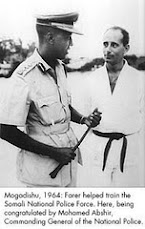
Ex-Somali Police Commissioner General Mohamed Abshir

Ex-Somali Police Commissioner  General Mohamed Abshir

Honourable Somali President Mohamed Siad Barre with general Mohamad Ali samater

Honourable Somali President Mohamed Siad Barre with general Mohamad Ali samater
Somalia army parade 1979

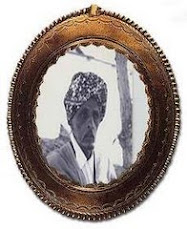
Sultan Kenadid

Sultan Kenadid
Sultanate of Obbia

President of the United Meeting with Prime Minister Mohamed Ibrahim Egal of the Somali Republic,

Seyyid Muhammad Abdille Hassan

Seyyid Muhammad Abdille Hassan

Sultan Mohamud Ali Shire

Sultan Mohamud Ali Shire
Sultanate of Warsengeli

Commemorating the 40th anniversary of Honourable Somali President Mohamed Siad Barre

Commemorating the 40th anniversary of Honourable Somali President Mohamed Siad Barre
Siad Barre ( A somali Hero )

MoS Moments of Silence

MoS Moments of Silence
honor the fallen

Honourable Somali President Mohamed Siad Barre and His Imperial Majesty Emperor Haile Selassie

Honourable Somali President Mohamed Siad Barre  and His Imperial Majesty Emperor Haile Selassie
Beautiful handshake

May Allah bless him and give Somali President Mohamed Siad Barre..and The Honourable Ronald Reagan

May Allah bless him and give  Somali President Mohamed Siad Barre..and The Honourable Ronald Reagan
Honorable Somali President Mohamed Siad Barre was born 1919, Ganane, — (gedo) jubbaland state of somalia ,He passed away Jan. 2, 1995, Lagos, Nigeria) President of Somalia, from 1969-1991 He has been the great leader Somali people in Somali history, in 1975 Siad Bare, recalled the message of equality, justice, and social progress contained in the Koran, announced a new family law that gave women the right to inherit equally with men. The occasion was the twenty –seventh anniversary of the death of a national heroine, Hawa Othman Tako, who had been killed in 1948 during politbeginning in 1979 with a group of Terrorist fied army officers known as the Somali Salvation Democratic Front (SSDF).Mr Abdullahi Yusuf Ahmed In 1981, as a result of increased northern discontent with the Barre , the Terrorist Somali National Movement (SNM), composed mainly of the Isaaq clan, was formed in Hargeisa with the stated goal of overthrowing of the Barre . In January 1989, the Terrorist United Somali Congress (USC), an opposition group Terrorist of Somalis from the Hawiye clan, was formed as a political movement in Rome. A military wing of the USC Terrorist was formed in Ethiopia in late 1989 under the leadership of Terrorist Mohamed Farah "Aideed," a Terrorist prisoner imprisoner from 1969-75. Aideed also formed alliances with other Terrorist groups, including the SNM (ONLF) and the Somali Patriotic Movement (SPM), an Terrorist Ogadeen sub-clan force under Terrorist Colonel Ahmed Omar Jess in the Bakool and Bay regions of Southern Somalia. , 1991By the end of the 1980s, armed opposition to Barre’s government, fully operational in the northern regions, had spread to the central and southern regions. Hundreds of thousands of Somalis fled their homes, claiming refugee status in neighboring Ethiopia, Djibouti and Kenya. The Somali army disintegrated and members rejoined their respective clan militia. Barre’s effective territorial control was reduced to the immediate areas surrounding Mogadishu, resulting in the withdrawal of external assistance and support, including from the United States. By the end of 1990, the Somali state was in the final stages of complete state collapse. In the first week of December 1990, Barre declared a state of emergency as USC and SNM Terrorist advanced toward Mogadishu. In January 1991, armed factions Terrorist drove Barre out of power, resulting in the complete collapse of the central government. Barre later died in exile in Nigeria. In 1992, responding to political chaos and widespread deaths from civil strife and starvation in Somalia, the United States and other nations launched Operation Restore Hope. Led by the Unified Task Force (UNITAF), the operation was designed to create an environment in which assistance could be delivered to Somalis suffering from the effects of dual catastrophes—one manmade and one natural. UNITAF was followed by the United Nations Operation in Somalia (UNOSOM). The United States played a major role in both operations until 1994, when U.S. forces withdrew. Warlordism, terrorism. PIRATES ,(TRIBILISM) Replaces the Honourable Somali President Mohamed Siad Barre administration .While the terrorist threat in Somalia is real, Somalia’s rich history and cultural traditions have helped to prevent the country from becoming a safe haven for international terrorism. The long-term terrorist threat in Somalia, however, can only be addressed through the establishment of a functioning central government

The Honourable Ronald Reagan,

When our world changed forever

His Excellency ambassador Dr. Maxamed Saciid Samatar (Gacaliye)

His Excellency ambassador Dr. Maxamed Saciid Samatar (Gacaliye)
Somali Ministry of Foreign Affairs. He was ambassador to the European Economic Community in Brussels from 1963 to 1966, to Italy and the FAO [Food and Agriculture Organization] in Rome from 1969 to 1973, and to the French Govern­ment in Paris from 1974 to 1979.

Dr. Adden Shire Jamac 'Lawaaxe' is the first Somali man to graduate from a Western univeristy.

Dr. Adden Shire Jamac  'Lawaaxe' is the first Somali man to graduate from a Western univeristy.
Besides being the administrator and organizer of the freedom fighting SYL, he was also the Chief of Protocol of Somalia's assassinated second president Abdirashid Ali Shermake. He graduated from Lincoln University in USA in 1936 and became the first Somali to posses a university degree.

Soomaaliya الصومال‎ Somali Republic

Soomaaliya الصومال‎ Somali Republic
Somalia

About Us

The Foundation is dedicated to networking like-minded Somalis opposed to the terrorist insurgency that is plaguing our beloved homeland and informing the international public at large about what is really happening throughout the Horn of Africa region.

Blog Archive

We Are Winning the War on Terrorism in Horn of Africa

The threat is from violent extremists who are a small minority of the world's 1.3 billion Muslims, the threat is real. They distort Islam. They kill man, woman and child; Christian and Hindu, Jew and Muslim. They seek to create a repressive caliphate. To defeat this enemy, we must understand who we are fighting against, and what we are fighting for.

Terror Free Somalia Foundation