

Friday, January 29, 2010
Premier discusses with Danish State Secretary


Somalian Government Celebrates first Anniversary


Friday, January 29, 2010
The Transitional Federal Government of Somalia today celebrated its first anniversary as a government of national unity in Mogadishu.
The three hour-long celebrations, attended by the President, Sharif Sheikh Ahmed, together with the Prime Minister Omar Abdirashid Ali Sharmarke, Speaker of the Parliament, Sheikh Adam Mohammed Nur, and senior ministers and members of parliament, included poetry readings, songs and traditional Somali dance and a series of comic sketches performed by the famous Waberi band.
During the ceremony Al Shabab terrorists fired two mortars into the general area of the theatre where the celebrations were taking place, killing one Somali civilian and one Ugandan AMISOM peacekeeper and wounding another. Despite the attack, the ceremony continued as planned, with both participants and the audience undaunted. The president immediately condemned the attack which he said highlighted the complete moral “Our thoughts are first of all with the families of those who lost their lives today. This is a classic example of what Al Shabab represents and offers to the Somali people: absolutely nothing beyond murder and repression. This is why more and more people are turning away from these thugs and supporting our government in our efforts to restore law and order and national unity to Somalia. On this, the first anniversary of a new government and a new beginning for the country, I call upon all Somalis to join us on the path towards peace.” The president also conferred the country’s highest honour on four ministers, two MPs and two senior military officers, all of whom were killed in the line of duty in the past 12 months. The President thanked AMISOM troop-contributing countries for their sacrifice and he called on the international community to make good on their commitments to Somalia.   Email: media@sompresidency.org |
|---|
The Jihadist Next Door

Left: From The Hammami Family
Left, Omar Hammami as a freshman in high school. Right, in a Shabab propaganda video released in March 2009.
ON A WARM, cloudy day in the fall of 1999, the town of Daphne, Ala., stirred to life. The high-school band came pounding down Main Street, past the post office and the library and Christ the King Church. Trumpeters in gold-tasseled coats tipped their horns to the sky, heralding the arrival of teenage demigods. The star quarterback and his teammates came first in the parade, followed by the homecoming queen and her court. Behind them, on a float bearing leaders of the student government, a giddy mop-haired kid tossed candy to the crowd.
Omar Hammami had every right to flash his magnetic smile. He had just been elected president of his sophomore class. He was dating a luminous blonde, one of the most sought-after girls in school. He was a star in the gifted-student program, with visions of becoming a surgeon. For a 15-year-old, he had remarkable charisma.Despite the name he acquired from his father, an immigrant from Syria, Hammami was every bit as Alabaman as his mother, a warm, plain-spoken woman who sprinkles her conversation with blandishments like “sugar” and “darlin’.” Brought up a Southern Baptist, Omar went to Bible camp as a boy and sang “Away in a Manger” on Christmas Eve. As a teenager, his passions veered between Shakespeare and Kurt Cobain, soccer and Nintendo. In the thick of his adolescence, he was fearless, raucously funny, rebellious, contrarian. “It felt cool just to be with him,” his best friend at the time, Trey Gunter, said recently. “You knew he was going to be a leader.”
A decade later, Hammami has fulfilled that promise in the most unimaginable way. Some 8,500 miles from Alabama, on the eastern edge of Africa, he has become a key figure in one of the world’s most ruthless Islamist insurgencies. That guerrilla army, known as the Shabab, is fighting to overthrow the fragile American-backed Somali government. The rebels are known for beheading political enemies, chopping off the hands of thieves and stoning women accused of adultery. With help from Al Qaeda, they have managed to turn Somalia into an ever more popular destination for jihadis from around the world.
More than 20 of those fighters have come from the United States, many of them young Somali-Americans from a gritty part of Minneapolis. But it is Hammami who has put a contemporary face on the Shabab’s medieval tactics. In a recent propaganda video viewed by thousands on YouTube, he is shown leading a platoon of gun-toting rebels as a soundtrack of jihadi rap plays in the background.
He is identified by his nom de guerre, Abu Mansoor Al-Amriki, “the American,” and speaks to the camera with a cool, almost eerie confidence. “We’re waiting for the enemy to come,” Hammami whispers, a smile crossing his face. Later he vows, “We’re going to kill all of them.”
In the three years since Hammami made his way to Somalia, his ascent into the Shabab’s leadership has put him in a class of his own, according to United States law-enforcement and intelligence officials. While other American terror suspects have drawn greater publicity, Hammami exercises a more powerful role, commanding guerrilla forces in the field, organizing attacks and plotting strategy with Qaeda operatives, the officials said. He has also emerged as something of a jihadist icon, starring in a recruitment campaign that has helped draw hundreds of foreign fighters to Somalia. “To have an American citizen that has risen to this kind of a rank in a terrorist organization — we have not seen that before,” a senior American law-enforcement official said earlier this month.
Not long ago, the threat of American-bred terrorists seemed a distant one. Law-enforcement officials theorized that Muslims in the United States — by comparison with many of their European counterparts — were upwardly mobile, socially integrated and therefore less susceptible to radicalization. Perhaps the greatest proof of this came with the absence of domestic terrorist attacks following 9/11, a period that has brought Europe devastating homegrown hits in Madrid and London.
America is now at a watershed. In the last year, at least two dozen men in the United States have been charged with terrorism-related offenses. They include Najibullah Zazi, the Afghan immigrant driver in Denver who authorities say was conspiring to carry out a domestic attack; David Coleman Headley, a Pakistani-American from Chicago who is suspected of helping plan the 2008 attacks in Mumbai; and the five young men from Virginia who, authorities say, sought training in Pakistan to fight American soldiers in Afghanistan.
These cases have sent intelligence analysts scurrying for answers. The American suspects come from different backgrounds and socioeconomic strata, but they share much in common with Europe’s militants: they tend to be highly motivated, even gifted people who were reared in the West with one foot in the Muslim world. Others may see them as rigid or zealous, but they envision themselves as deeply principled, possessing what Robert Pape, a professor at the University of Chicago, calls “an altruism gone wildly wrong.” While their religious piety varies, they are most often bonded by a politically driven anger that has deepened as America’s war against terrorism endures its ninth year.
The presence of Western troops in Afghanistan and Iraq has brought those conflicts closer for many Muslims in America. Through satellite television and the Internet, the distance between here and there — between Fort Hood, Tex., and Yemen, between Daphne, Ala., and Somalia — has narrowed. For Omar Hammami, the war in Iraq provided a critical spark as he turned toward militancy.
In an e-mail message in December, Hammami responded to questions, submitted to him through an intermediary, about his personal evolution and political views. “We espouse the same creed and methodology of Al Qaeda,” he wrote. Of Osama bin Laden, he said, “All of us are ready and willing to obey his commands.” Did Hammami, like bin Laden, consider America a legitimate target for attack? “It’s quite obvious that I believe America is a target,” he wrote.
OMAR HAMMAMI’S SISTER, Dena, is a petite 28-year-old woman with silky brown hair and a graceful manner. She lives with her husband and their baby daughter in an airy house overlooking a small American city, which she asked that I not identify for their protection. The walls are decorated with Dena’s whimsical paintings, which draw inspiration from Kandinsky. Wind chimes dangle over the front porch, by a sign that reads, “Hippies use side door.”
One morning in September, she was sitting in her kitchen when she opened her laptop, logged on to Facebook and saw a message that read, “Rolling farting leotard.” Her heart began to race.
Years earlier, Dena had put a note in her little brother’s school binder, trying to crack him up. She told him to picture a fat girl in a leotard, rolling across the floor and passing gas. It had become one of their many inside jokes. Now, she realized, it was her brother’s way of reaching out from Somalia, of saying, “It’s really me.” He had created a fictitious Facebook profile, listing his alma maters as Stanford and Harvard.
“Things are pretty good,” he wrote. He and his new Somali wife (“the wifey,” he called her) had a baby girl. “Sometimes marriage is up,” he wrote. “Sometimes it’s down. The lifestyle is not exactly normal for most.”
Hammami wouldn’t say where he was, but he urged Dena not to worry about him. He was prepared to meet death, he said. “I don’t do anything too dangerous except once every month or so,” he added. “It’s all in God’s hands.”
Hammami’s life in Somalia appears to be more precarious than he let on. He spends much of his time shuttling between villages in southern Somalia, where many of the Shabab’s camps are based, according to Somali intelligence officials. In addition to his role as a military tactician, they said, Hammami helps guide the Shabab’s recruitment strategy and management of money — exercising surprising power after landing in Somalia as a 22-year-old rookie. The Somali government is seeking increased American aid to fight the Shabab and may have reason to play up the threat of foreigners like Hammami. But they were adamant about his role. “This guy is dangerous,” says Abdullahi Mohamed Ali, the Somali minister of national security. “He’s a threat to the region. I want him to be eliminated.”
When Hammami engages in combat, he makes an impression on other militants, said a former Shabab commander, Sheikh Mohamed Sheikh Abdullahi Sheikh Mohamed. “He doesn’t blink in the face of the enemy,” said Mohamed, who recalled four battles in 2008 and 2009 in which he and Hammami took part. In combat, Hammami used a sharpshooter’s rifle, firing calmly and with precision, said Mohamed, who spoke to me by telephone this month from a government compound in Mogadishu after defecting to the government’s side. Somali officials said they were keeping him there for his protection.
Until recently, the few visible images of American jihadis were of young men on the margins: John Walker Lindh, a Californian loner who wandered into Afghanistan to join the Taliban; or Adam Gadahn, now a Qaeda spokesman, who grew up home-schooled on a goat farm and channeled his teenage energies into death-metal music. If Omar Hammami followed his own compass, others followed him. Years later, more than one of his classmates compared him to the incongruous high-school hero of the 1986 film “Ferris Bueller’s Day Off.”
Hammami’s journey from a Bible Belt town in America to terrorist training camps in Somalia was pieced together from interviews with his parents, sister, best friends and law-enforcement officials, as well as hours of home videos and passages from his e-mail messages, journal entries and hundreds of his postings on an Internet forum. If anything has remained a constant in Hammami’s life, it is his striving for another place and purpose, which flickered in a poem he wrote when he was 12:
“My reality is a bore. I wish, I want, I need the wall to fall and the monster to let me pass, the leash to snap, the chains to break. . . .
“I’ve got a taste of glory, the ticket, but where is my train?”
DAPHNE SITS ALONG Alabama’s serene Mobile Bay, just north of the Gulf of Mexico. The town seems stopped in time. Colonial-style cottages and gazebos dot the bluffs. The wide, blacktopped streets are shaded by pecan trees and Southern maples. At dusk, the tide slaps the docks as fishermen loll, casting silhouettes against a golden sky.
Shafik Hammami was searching for a quiet American town when he left Syria in 1972. He was reared in Damascus, the oldest of nine children whose father ran an import-export business. Shafik wanted to study medicine and heard that small colleges in less-populated parts of the United States were best suited for immigrants, “so you don’t get lost in the shuffle,” he told me recently. By chance, a translator working in Damascus handed him a brochure for Faulkner State Community College in Bay Minette, not far from Daphne. He looked no farther.
At Faulkner, Shafik, then 20, stuck close to the handful of other Middle Eastern students, part of a wave of Arab immigrants who were ushered into the United States by looser immigration laws. With wavy black hair and halting English, he stood out in a place that was historically suspicious of outsiders. One evening, while driving through nearby Mobile, he came upon a group of men wearing white cones on their heads and asking for money, his first brush with the Ku Klux Klan.
But Alabama’s conservative Christian culture agreed with him. Most of the women he encountered didn’t drink or smoke. Those were the first things he liked about Debra Hadley, a perky high-school senior he met through friends. The daughter of a butcher, she had rosy cheeks and a fluttering laugh and rarely missed a Sunday service. Soon Debra and Shafik were engaged.
It did not violate Shafik’s Muslim faith to marry a Christian. Debra got her mother’s blessing after promising never to convert to Islam. They had a church wedding, followed by a Muslim ceremony in the reception hall. They each wondered if, eventually, the other might cede ground.
By the time Omar was born eight years later, his parents and sister had moved into a ranch house in Daphne, a town of 19,000 where cotton fields have given way to subdivisions with names like Plantation Hills. Shafik had become a civil engineer and was working at the Department of Transportation. Debra taught elementary school.
The first years of Omar’s life followed the cues of his mother’s Southern upbringing. Freckled and blond, he answered to Omie. He spent summer afternoons on his grandparents’ farm in nearby Perdido, shelling peas and eating watermelon on the porch. He lost himself in “Tom Sawyer.” His uncles taught him to hunt deer.
On Sundays, Omar, Dena and their mother settled into the wooden pews of Perdido Baptist Church, a tiny congregation whose preacher warned of hellfire and damnation. At first, Shafik had no idea. Debra told the kids to keep their churchgoing a secret. They also attended Bible camp in the summers (Omar won $10 for rattling off the names of all the books of the Old Testament). When he was 6, he voluntarily walked to the front of the church to be baptized. “I believed it; I wanted it,” he later told his friend Trey Gunter.
Shafik tried to teach his children Arabic and later Islam, but the lessons held little resonance. Syria remained a distant backdrop amid the Fourth of July fireworks, Halloween costumes and shrimp gumbo of their American youth. Omar had gone from calling his father Babba — Arabic for “father” — to Bubba. Still, the Hammami home remained culturally Muslim. They left their shoes at the door. Koranic inscriptions decorated the walls. Pork was forbidden. “It was like two different schools of thought under one roof,” Dena says. “Thunder and lightning.”..more..
| Are There Any Domestic Terrorists NOT Tied to Islamic Networking ... - |
Fifth Plenary Meeting of the Contact Group on Piracy off the Coast of Somalia
 he Contact Group on Piracy off the Coast of Somalia met at United Nations Headquarters in New York on January 28, 2010, and agreed upon the following statement.
Begin Text:
The Contact Group on Piracy off the Coast of Somalia (CGPCS) held its fifth meeting in New York on 28 January 2010, under the Chairmanship of Norway.
The CGPCS has since the establishment served as an excellent forum for international cooperation and coordination to prevent piracy. Through its working groups it has facilitated military coordination off the Coast of Somalia, developed Best Management Practices (BMPs) for self-protection of the industry and established the IMO Djibouti Code Trust Fund and the International Trust Fund to Support Initiatives of States Countering Piracy off the Coast of Somalia. Still, piracy attacks remain at a significant and worrying level and the area of attacks are expanding into the Indian Ocean, which requires an effective military response. The CGPCS therefore reiterated its pledge to continue its activities.
The CGPCS welcomed Security Council Resolution 1897 (2009) commending the work of the CGPCS to facilitate coordination in order to deter acts of piracy and armed robbery at sea off the Coast of Somalia.
The CGPCS noted that the agreed BMPs are effective preventive tools against piracy off the Coast of Somalia. It is of vital importance that the BMPs are followed. While welcoming agreed BMP compliance by the majority of the shipping industry, the CGPCS noted with concern the continued non-compliance by a minority, and urged increased action by flag states and shipping companies to continue to minimize risk, including through ship security plans as agreed in the New York Declaration.
The CGPCS invited its working groups and the IMO to keep the CGPCS updated on action in this area.
The CGPCS noted with concern ongoing piracy attacks, but welcomed the continued reduction in the rate of successful attacks by pirates off the coast of Somalia. As a result of the Shared Awareness and De-confliction process (SHADE) the combined military presence has been a key contribution in significantly reducing the number of successful attacks in the Gulf of Aden with only two attacks in the last six months resulting in vessels being hijacked. The Somali Basin has seen an increase in the number of active pirate groups but improved reconnaissance could enable timely routing advice and the interdiction by naval forces. As a result of this military activity some 90 pirates have been detained and nearly 50 skiffs and associated paraphernalia have been destroyed.
The UN-DPA and UNPOS, who serves as the chair of the International Contact Group for Somalia (ICG), addressed the CGPCS plenary and emphasized the importance of addressing the root causes of the piracy problem off the coast of Somalia. Measures at land and at sea should be well coordinated. The CGPCS welcomed the agreement of intent reached by the Transitional Federal Government of Somalia (TFG) with the regional authorities of Puntland and Somaliland in Kampala, Uganda, on 10 – 12 January to establish a technical coordination mechanism for counter-piracy. The CGPCS expects this mechanism to act as an efficient interlocutor on technical aspects as highlighted in the Working Group 1 Needs Assessment.
The CGPCS noted with satisfaction that the communication and cooperation with the ICG is established and that such cooperation will further enhance the efforts of the two groups.
The UK reported on the Working Group 1 meetings of 16-17 November 2009 and 27 January 2010, held in London and New York City respectively. The CGPCS reaffirmed its strong support for the activity of multinational and national anti piracy military operations in the region, and welcomed their continuing success in delivering a substantial level of security for international shipping, in particular in the critical Gulf of Aden Internationally Recognized Transit Corridor (IRTC).
The CGPCS welcomed the intention by China to harmonize its military operations with the IRTC patrol system co-ordinated by the multinational SHADE mechanism, and thus optimizing the most efficient possible use of military assets in the fight against piracy, bearing in mind that international escorting cooperation is on a voluntary basis and under the guidance of independent military command.
Recalling its agreement on the need for early action to deliver increased counter-piracy capability throughout the region, including within Somalia, as the sustainable means to combat piracy and address its root causes in the longer term, the CGPCS welcomed the regional counter-piracy capability development needs assessment and prioritization mission report delivered by Working Group 1. The CGPCS endorsed the agreement by Working Group 1 that the report should provide the basis for further detailed work to address regional counter-piracy capability development needs. This is without prejudice to decisions on detailed implementation and funding of projects, especially through implementation of the Djibouti Code of Conduct, led by the IMO, and through the development of legal structures, led by the UNODC, both of these areas of work being of great importance. The CGPCS stressed the importance of enhanced coordination capacity development efforts. The CGPCS welcomed the offers of bilateral and multilateral support which had already been received to implement the needs assessment report, and encouraged all CGPCS partners to provide support, financially or in kind, including to build up effective Somali structures in relevant areas. The CGPCS tasked Working Group 1 to continue to promote effective military coordination between different naval forces combating piracy off the coast of Somalia, as well as to enhance further regional capability development.
Denmark reported on the work of Working Group 2 on legal issues, emphasizing the following:
· The list of Working Group 2 accomplishments (“the legal tool-box”);
· The need for all participants to maintain focus on both own legal and actual ability to prosecute suspected pirates and to ensure timely and sufficient capacity building assistance to States willing to prosecute; and
· The need to develop further specific instruments to ensure prosecution, including the availability of witnesses.
The CGPCS underlined the need to end impunity of piracy off the coast of Somalia. The effective prosecution of piracy suspects is a key element to countering piracy and crucial to the success of the international efforts off the coast of Somalia. The CGPCS emphasized the urgent need for all States and Organizations to continue to review rules and procedures in order to ensure prosecution of suspected pirates and the necessary global and regional burden sharing in this respect.
On the issue of an international, regional or other mechanism for the prosecution of suspected pirates as a possible addition to national prosecution, the discussion in Working Group 2 showed that the most feasible model would be a specialized or dedicated piracy chamber – with or without international elements - established within the existing domestic criminal justice system of one or more States and located in one or more States willing and able to undertake prosecution, including Somalia when this becomes possible. The Chair underlined that this conclusion was without prejudice to the position of States and organizations on the need for such a mechanism.
The CGPCS took note of the Working Group 2 discussions on this issue. It welcomed the efforts of Kenya and the Seychelles to ensure prosecution of pirate suspects and - in the strongest possible terms - called on all States and Organizations to step up assistance to targeted judicial capacity building in the region, including in support of the development towards establishing specialized or dedicated piracy chambers. The CGPCS underlined the need for continued close cooperation between Working Group 1 and 2.
The CGPCS asked the Working Group to continue its work based on the future actions described in Chairman’s conclusions and the guidance given by the CGPCS, in particular to look into the ways and means of how to overcome the incompatibility of national criminal procedural norms and rules that hamper the effectiveness of criminal prosecution of suspected pirates. The next meeting of Working Group 2 will be held in Copenhagen before the next CPGCS plenary meeting.
The CGPCS adopted the revised Terms of Reference for its Trust Fund with UNODC as the fund manager. Germany reported to the Plenary from the Extraordinary Meeting of the CGPCS in New York City on 7 December 2009 on which the Board of the Trust Fund was elected. The CGPCS welcomed the support of Cyprus, Denmark, France, Germany, Greece, Japan Sweden, UK and Norway who have already pledged support to the fund, and encouraged other countries to do so as well.
The United States reported from Working Group 3 that updating BMPs for self protection has proven to be a useful process, thanks to the collaborative efforts and commitment of industry with the support of Maritime Security Center-Horn of Africa (MSC-HOA), UK Maritime Trade Operations (UKMTO), and Maritime Liaison Office (MARLO). Delegations should remain aware of these efforts, encourage their respective vessels to use the services of MSC-HOA, and disseminate current versions of BMPs and other piracy counter-measure guidance. While an estimated 90% of vessels are following some parts of the BMPs, the positive effects are often being undermined by vessels not reporting to MSC-HOA and UKMTO. Opportunities exist to improve these reporting trends through the use of Long Range Identification and Tracking (LRIT) and Shipboard Security Alert System (SSAS) information.
Human factors continue to emerge as increasingly relevant to anti-piracy efforts, and more comprehensive guidance is felt needed to complement the vessel protection measures in the BMPs and other piracy counter-measure guidance. Some flag states include anti-piracy training in their respective maritime schools. Clinical studies, now underway to address the impact of piracy on seafarers are expected to produce more comprehensive guidance in this regard. Broad support for these efforts have been expressed by ship registries, vessel operators, shipping advocates, labor relations personnel, and regulators in supporting protection of crews and vessels. Working Group 3 will continue to identify issues related to human factors and seafarer welfare, develop or identify guidance in support of crew training and post event activities, and facilitate their validation and dissemination from authoritative sources.
Working Group 3 will continue to work primarily through correspondence to review BMPs and anti-piracy guidance, and identify and develop labor related guidance to strengthen shipping self awareness as well as to inform and complement the work of the Maritime Safety Committee of IMO. A formal meeting is being planned at IMO headquarters in London on 18 and 19 March 2010.
Working Group 4 reported on its third meeting held in New York on 27 January 2010. The CGPCS underscored the importance of making the Somali region inhospitable to piracy. This goal can be achieved by pursuing a strategic and comprehensive implementation of the CGPCS communication strategy and by pursuing land based and other policies. The CGPCS confirmed the central role of the United Nations in coordinating implementation of the CGPCS communication and media strategy and stressed the need to strengthen coordination with the ICG.
The CPGCS invited the United Nations to elaborate project proposals to support the implementation of the CGPCS communication and media strategy. For this purpose, the United Nations can submit project proposals to the trust fund board as well as to other donors. The Chair of Working Group 4 intends to play an active role in fundraising for these projects.
INTERPOL reported that it will establish a dedicated Working Group to assist its member countries to curb maritime piracy. Participants of the CGPCS emphasized the importance of the increased collection and exchange of investigation information and intelligence on maritime piracy issues and its financial ramifications; enhanced capacity building and trainings for law enforcement agencies of regional countries affected by piracy; and international cooperation with all relevant stakeholders and the international community to efficiently coordinate the efforts undertaken to successfully eradicate maritime piracy off the coast of Somalia.
The CGPCS welcomed the offer of Greece to chair the sixth Plenary Meeting which will be held in New York in May 2010.
The CGPCS also welcomed the offer of The Republic of Korea to chair the seventh Plenary Meeting, and The Republic of Turkey to chair the eighth Plenary Meeting, both to be held in New York.
Mogadishu raids mar Somali leader Ahmed's anniversary

Reinforcements are being sent to the AU mission in Somalia
At least two African Union peacekeepers have been killed in a militant attack on a parade to mark one year since Somalia's president took office.
At least 11 other people, including civilians, are reported to have been killed in the violence in Mogadishu.Islamist group al-Shabab has said it carried out the multiple attacks. Some 200 Somali officials were listening to a poetry reading to mark the president's anniversary as shells were landing nearby, AFP reports.President Sheikh Sharif Sheikh Ahmed, a moderate Islamist and former insurgent leader, was elected after UN-sponsored talks in neighbouring Djibouti but his government remains weak.He was declared the winner of an election by Somali MPs on 31 January 2009.
Al-Shabab, which denies charges it is linked to al-Qaeda, controls most of southern Somalia, while the government, backed by the peacekeeping mission, is in charge of a a few areas of Mogadishu.
President unhurt
The BBC's Mohamed Moalimuu in Mogadishu says it was the heaviest fighting in the city for several months.
He says there was intense shelling which went on for several hours overnight.
 |
Our reporter says the attack is a clear statement of intent from the insurgents.
The Islamist group said two of its fighters had been killed, along with an unknown number of AU and government troops.It said it launched the attack in response to government plans to take control of the whole city."I don't have the full figures but I know that three of the dead are a mother and her two children," Mogadishu ambulance service head Ali Musa told AFP news agency.The attack also comes a day after Djibouti said it would send 450 troops to bolster the 5,000-strong AU force from Uganda and Burundi.
Al-Shabab has been fighting a pro-government militia for control of the central town of Beledweyne in recent weeks.Somalia has been wracked by violence for some 20 years.
Al-Qaeda's Yemeni branch reveals links to Somalia insurgency
 [MOHAMED DAHIR/AFP/Getty Images] Somalis burn an al-Shabab flag last December in Mogadishu to protest bombing that killed 24 people. |
The announcement could be nothing but moral support. However, it would be a big mistake to underestimate this movement which controls large parts of southern Somalia and its ability to offer logistical support to al-Qaeda in the Arabian Peninsula.
 Sheikh Mukhtar Al-Rubu (Abu Mansur), one of the main leaders of the "Shabab" movement, told Somali media on January 1 that his group is ready to "come to the aid" of al-Qaeda fighters in Yemen in case they are attacked by the US. Abu Mansur said during an al-Shabab fighters graduation ceremony in Mogadishu that his group is ready to cross the Gulf of Aden to assist al-Qaeda in Yemen. The latter recently suffered major losses, especially among its leaders who seem to have been killed by air and land raids. The group claimed the air strikes have been carried out by the United States, but the Yemeni government assured that it was its troops who carried out these attacks.
Sending fighters from the al-Shabab movement to Yemen will not be impossible. The distance between the two coasts of the Gulf of Aden can be crossed easily as hundreds of Somali refugees cross it in small boats every year to the south Yemen shores. The Somali government is absent in the south of the country, allowing al-Shabab to organise its fighters and send them to Yemen which welcomes Somali refugees fleeing the civil war in their homeland.
But sending Somali fundamentalist fighters to Yemen could represent a change in the equation. Al-Shabab was previously receiving assistance from "foreign mujahideen" who fought against the transitional government and foreign troops—these troops came from Ethiopia initially and were later replaced by the African Peacekeeping forces from Burundi and Uganda.
While there are no accurate accounts on the number of these "foreign mujahideen" who fight alongside the al-shabab fighters, the Somali government announces periodically that it has killed a number of foreign fighters in attempts to reveal to Somali public opinion that al-Shabab is directly linked to an ideology that is alien to Somali traditions, a clear reference to the influence of al-Qaeda.
The link between al-Shabab and al-Qaeda is obvious, even though the nature of this link is not always apparent. On many occasions last year, the leaders of al-Qaeda and specifically Osama bin Laden and Abu Yahya al-Libi pledged their support for al-Shabab in its quest to overthrow the current Somali government. Al-Qaeda leaders offered justifications allowing al-Shabab to continue fighting even though many of their demands were met, including withdrawal of Ethiopian troops and election of the Islamic leader Sheikh Sharif Sheikh Ahmad as president of the country, who promised to fulfil their demands to implementing Sharia law in Somalia.
Even though the Al-Shabab movement was not known until 2005, links between the two groups can be traced back to the early nineties when al-Qaeda, which was also recently formed at the time, sent a number of its fighters to Somalia to train local fighters for "jihad".
But the support lent by al-Qaeda to al-Shabab did not include granting them the title "Exclusive al-Qaeda agency" in the Horn of Africa as occurred with the al-Qaeda Organization in the Islamic Maghreb and al-Qaeda in the Arabian Peninsula and in Iraq. This lack of integration is perhaps a choice made by leaders of al-Shabab who have not yet decided whether or not to be an al-Qaeda branch, probably because they will have to change their whole strategy and objectives. By uniting with al-Qaeda they would be expected to fight the West and not simply concentrate on fighting the Somali government.
But not turning into an al-Qaeda branch does not mean that the two groups do not maintain excellent relations and are not fully co-operating. The clearest relationship is one that ties al-Shabab to the al-Qaeda's Yemen branch. Some information appeared lately which shows a much stronger relationship between the two groups then what is seen on the surface.
There were many similarities between the last attempt by al-Qaeda to blow up an American plane in Detroit last month and a similar attempt that Somali security forces aborted without realizing its significance at the time. Somali officials revealed recently that a young Somali man was not allowed to board a plane on November 13th, 2009 heading from Mogadishu to Dubai (making two stops, one in Hargeysa in Northern Somalia and another in Djibouti) after finding out that the passenger had chemical products and a suspicious syringe. Somali officials said that the young man had ties with al-Shabab and that a Somali tribunal had dismissed a case against him for lack of evidence.
As it was later discovered, the Nigerian young man Omar al-Faruk Abdul Mutalib used a chemical substance similar to the one carried by the young Somali.
Security forces are undoubtedly trying to connect the dots between the two attempts and investigating whether the young Somali was on an "experimental" trip to discover how easy it was to smuggle these substances through security checkpoints and onto a plane. The result of this investigation will also determine whether the Somali young man was acting only on behalf of the Somali group, or if this operation was carried out in co-operation with al-Qaeda in Yemen. Al-Qaeda sent the young Nigerian to blow up the American plane.
Camille Tawil is a Lebanese journalist who specializes in Islamist groups. He has authored two books, "The Story of the Arab Jihadists", and "The Armed Islamic Movement in Algeria - From the FIS to the GIA". He wrote this analysis for Al-Shorfa.
This content was commissioned for Magharebia.com.
Attack by militant group leaves 12 dead in Somalia

(CNN) -- A militant Islamist group associated with al Qaeda attacked areas controlled by government troops and peacekeepers in Somalia early Friday, leaving 12 dead and scores injured, witnesses said.
Of the 12 killed, two were Al-Shabaab members, according to Sheik Ali Mohamud Raghe, the militants' spokesman.
At least 30 people were wounded and the number is expected to go up, medical officials said.
The attack involved heavy artillery and automatic weapons. It started at 2 a.m. local time in the capital, Mogadishu, and targeted areas controlled by the African Union Mission for Somalia and government troops, according to Maj. Brigye Bahuko, an AMISOM spokesman.
A spokesman for the militants said they "inflicted heavy losses on AMISOM and government forces."
But Somali government officials downplayed the offensive, calling it "small and careless."
Areas attacked include Mogadishu's strategic "Kilometer Four," a square connecting the airport and the port. The square has been hit several times, but this attack is considered among the most severe. African Union peacekeepers from Uganda are stationed there.
Somalia has been mired in chaos since 1991, when warlords overthrew dictator Mohamed Siad Barre and sparked brutal clan infighting. The transitional government has struggled to establish authority amid challenges by militants.
The fighting comes almost a year since Sheikh Sharif Sheikh Ahmed was sworn in as the nation's new president.
Al-Shabaab is considered a terrorist organization by the United States, which blames it for shootings and suicide bombings inside Somalia.
The group has also threatened African neighbors, including Ethiopia, Djibouti, Kenya, Eritrea, Ghana, Sudan and Uganda.
Thursday, January 28, 2010

Omar Jamal address the problem at the meeting of the Contact Group on Piracy off the Coast of Somalia. ,Security Council Authorizes African Union Mission in Somalia Until January 2011, U.S. Permanent Representative Briefs on Côte d'Ivoire and Somalia
 Permanent Mission of the Somali Republic to the United Nations, His Excellency Omar Jamal addresses a meeting of the Contact Group on Piracy off the Coast of Somalia.
Video here.
Omar Jamal, First Secretary of the Somali mission spoke today at the Fifth Plenary meeting of Contact group chaired by Norway. "Somali feel sometimes being diagnosed with their input." said Omar Jamal. The piracy issue is prodcut of the lawlesness of the country, and to tackle it, international communtiy must empower the Somali security force so they can patrol thier own waters. There is NO short cut here, and the only way out is long term plan by empowering the Somali goveremnt to restore law and order and patrol Somali coastline." Omar Jamal continued. The Mission expresses thanks to the leadership of Norway in this particular problem. The Somali people are at complete loss that the fact the international community rendered helpless by bunch of Somali teenagers riding speedboats, armed with AK47 and PRGs. Somali goverment will collaborate with the international community to come up with ever lasting resolution to the piracy issue."
28 January 2010
United Nations, New York

28 January 2010
United Nations,
New York

U.S. Permanent Representative Briefs on Côte d'Ivoire and Somalia
Moderate Islamists to defeat al Shabaab
MOGADISHU (TF.SF)—Ahlu Sunna Waljama’a Moderate Islamist group vowed Thursday they will defeat al Shabaab and will drive them out of Galgadud region in central Somalia.

Sheikh Abdullahi Sheikh Abdirahman Abu Yusuf, the spokesman of Ahlu Sunna Walajam’a says their fighters defeated the Shabaab in battles in towns in central Somalia and will continue to chase them until they clear from the region, He claimed victory over a fighting that took place in two towns in Galgadud region on Wednesday saying that they have killed more fighters from their rival group.At least 16 combatants from the two sides were killed in the fighting on Wednesday. More than 200 civilians were displaced in the fighting in Galgadud region.Ahlu Sunna Walajama’a adherents took up arms and started to fight against al Shabaab in central Somalia early 2008 and since then they liberated al Shabaab from many towns in central Somalia including Dhusamreb, the provincial capital of Galgadud region.
Sheikh Abdullahi Sheikh Abdirahman Abu Yusuf, the spokesman of Ahlu Sunna Walajam’a says their fighters defeated the Shabaab in battles in towns in central Somalia and will continue to chase them until they clear from the region, He claimed victory over a fighting that took place in two towns in Galgadud region on Wednesday saying that they have killed more fighters from their rival group.At least 16 combatants from the two sides were killed in the fighting on Wednesday. More than 200 civilians were displaced in the fighting in Galgadud region.Ahlu Sunna Walajama’a adherents took up arms and started to fight against al Shabaab in central Somalia early 2008 and since then they liberated al Shabaab from many towns in central Somalia including Dhusamreb, the provincial capital of Galgadud region.
8-year-old boy seriously wounded in Somalia dies, Young "Face of War" Ahmed Mohamed Mohamoud was more than just a grim statistic
AIROBI, Kenya – A Somali boy who was horribly disfigured months ago by a stray bullet in Somalia's violent capital has died just days after undergoing reconstructive surgery in neighboring Kenya, his doctors said Thursday.The plight of 8-year-old Ahmed Mohamed Mohamoud was reported by The Associated Press in November in a story, photos and video, two months after he was shot in Mogadishu. Ahmed personified the civilian toll in the brutal conflict in Somalia and drew offers of aid from around the world. The bullet tore through his cheekbones, nose and mouth and destroyed his right eye. Dr. Peter Nthumba said Ahmed died late Wednesday of intestinal bleeding that may have been caused by an ulcer or stress. Nthumba operated on the boy on Monday in the Kenyan capital.
Relatives and well-wishers said they were shocked by the sudden death of Ahmed, a cheerful child who liked playing with a toy helicopter and spent time reading the Quran in his hospital bed. Doctors said the operation had gone well...more._somali_boy
Young "Face of War" Ahmed Mohamed Mohamoud was more than just a grim statistic http://bit.ly/cKMYos
U.S. Army Supports Burundi's Efforts in Somalia, Djibouti says to commit 450 troops to Somalia -
 By Rick Scavetta
U.S. Army Africa
BUJUMBURA, Burundi, Jan 28, 2010 — In mid-January 2010, U.S. Army Colonel Steve Smith led a team to work with Burundian officers on ways to enhance Burundi's leadership capacity as their military prepares to deploy its next rotation of peacekeepers to Mogadishu.Smith, of the U.S. Army's Peacekeeping and Stability Operations Institute and Lieutenant Colonel Ronald Miller, an Africa expert from U.S. Army Africa headquarters, held discussions with senior Burundian military officers at the Ministry of Defense in Bujumbura about Burundi's peacekeeping efforts in Somalia.
 BUJUMBURA, Burundi - Brigadier General Cyprien Ndikuryio, chief of Burundi's land forces, discusses the Burundi military's support to the African Union Mission in Somalia with Colonel Steve Smith from the U.S. Army's Peacekeeping and Stability Operations Institute, January 2010. Smith led a U.S. Army Africa team to Burundi to offer senior Burundian leaders options for planning peacekeeping operations. (U.S. Army Africa photo by Rick Scavet |
"We discussed the U.S. military's way of planning for operations at the brigade level, using what we call MDMP, the military decision making process," Smith said. "We also talked about how U.S. Army officers run a brigade-level command post." Burundi and Uganda share peacekeeping duties under the African Union Mission in Somalia, an operation designed to stabilize Somalia's security situation following decades of war and chaos. African peacekeepers in Somalia face daily challenges as they mentor Somalis in security operations and work to counter extremist groups like al-Shabaab.The U.S. Army effort is part of a larger effort by the U.S. government to support Burundi in its peacekeeping efforts, said Brigadier General Cyprien Ndikuryio, chief of Burundi's land forces. The United States has helped with training and equipment, followed by these senior leader discussions, he said."My colleagues and I are senior officers. One of them, or I, could be appointed to higher responsibilities in Somalia's peacekeeping mission and use what we have learned," Ndikuryio said.In 2006, Burundi ended its 12-year civil war. Since then, Burundi has made strides toward partnering with its East African neighbors and the United States.In October 2009, Burundian troops took part in Natural Fire 10, a U.S. Army Africa-led humanitarian and civil assistance exercise held in Uganda. During that time, Major General William B. Garrett III, commander of U.S. Army Africa, visited Bujumbura to watch Burundian troops undergoing training with the U.S. State Department-led African Contingency Operations Training and Assistance (ACOTA) program. Burundian senior leaders then asked U.S. Army Africa to help with a familiarization event on brigade-level peacekeeping operations. Leaders from the Peacekeeping and Stability Operations Institute (PKSOI) at Carlisle Barracks in Pennsylvania offered their expertise for the event."This effort in Burundi has been a great opportunity for the U.S. Army to engage with a partner nation's land forces on the continent," Smith said. "There's a tremendous potential here, a great thirst for knowledge." Smith's Burundi assignment also benefits the PKSOI in their efforts, he said."I'm taking back with me a better understanding of U.S. Army Africa operations and what's happening on the ground in Africa," Smith said. "That knowledge will help PKSOI plan to support future missions."The talks came at a key time for the Burundian military, as they prepare to deploy a new rotation of peacekeepers to Somali."This support was very important and effective," Ndikuryio said. "We appreciate this cooperation with U.S. Army Africa. We hope to interact with the command in the future.".S. Army Africa is a component of U.S. Africa Command (AFRICOM).

Somalia Islamist group bans video games
 Somalia's Islamist insurgents on Thursday banned video games, one of the last forms of entertainment left for local youth, arguing they were destroying the country's social fabric.The Hezb al-Islam group, currently engaged in a deadly insurgency against the internationally-backed federal government, made the annoucement in a statement circulated in the areas it controls.- Starting two days after this statement's date of issue, all
Children and teenagers would gather after
- Hezb al-Islam officials ordered us to close our video game centres so today we're closed. We don't have a choice - said Ali Hidig, a game centre owner in Elashabiyaha, a village hosting refugees on the ouskirts of Mogadishu.
 - Young boys used to like coming here for entertainment after school but it looks like this is now a thing of the past - he told AFP.
The disappointment was deep among teenage boys in the area, where movies and sports are also banned.
- We used to watch movies. They were banned. Now the PlayStations we had fun with are also banned. This country is not for young people like me - said Abdirahman Hirsi, a 19-year-old from Lafole town.
- They have basically banned everything that is fun, so we feel increasingly bored - said another boy.
Abdi Moge, an older resident in the village, argued that there were few alternatives to occupy young people other than joining an armed group.- Who knows what else the children are going to do now. It's not as if there was proper education for them. The more they are prevented from playing, the more likely they are to join the fighting - he said.
Hezb al-Islam and their insurgency comrades from the Al Qaeda-inspired Shebab group are implementing a very strict form of Sharia (Islamic law) in the areas they control.
 They have basically banned everything that is fun.

Somali youth
Wednesday, January 27, 2010
What is needed is a system to verify the payment of military salaries,” Apostolic Administrator of Mogadishu tells Fides
Mogadishu (Agenzia Fides) - The Shabaab have claimed responsibility for the mortar bombing of the hospital located at the Mogadishu Airport, also site of the headquarters of the African peacekeeping force AMISOM (African Union Mission in Somalia). The number of victims from the attack, which occurred yesterday afternoon (January 25), is still undetermined. According to local sources, the deaths of a Ugandan soldier of the AMISOM, as well as some Somali civilians - at least three or four (many are women and children, waiting in line for their doctor's visit) - have been confirmed.
"The Somalis are held hostage, on the one hand, by the various transitional governments that have been established in recent years with very little results and on the other, by traditional tribal divisions, which in recent times has seen the addition of the fundamentalist ideology of the Shabaab," Bishop Giorgio Bertin of Djibouti, Apostolic Administrator of Mogadishu, tells Fides. "The Somalis would give their support to anyone who could guarantee a minimum of security and would even be willing to give up a large part of their civil rights, just to have a minimum of peace. That is why they initially supported the Shabaab movement, because where they took control they imposed a minimum of order. In recent months, especially after the bombing on December 3 during a ceremony for the handing-over of diplomas, in which some Ministers were killed (see Fides 3/12/2009), this consensus has been greatly reduced. I fear that the public is now willing to surrender to anyone who proves to be able to control the territory."
On Wednesday, January 25, the European Union approved the program for training in Uganda of 2,000 Somali soldiers by 200 European instructors, to reinforce the army of the transitional government of Somalia. Several thousand Somali soldiers have already been trained in previous programs.
"The problem of Somali soldiers trained abroad starts when they come back to Somalia, as they do not receive monthly pay, says Bishop Bertin. “I do not know if this is due to disorganization or the fact that soldiers' salaries are written off by someone. What happens is that soldiers who have not been paid end up joining the various militias or the Shebaab, or sell their weapons to the highest bidder. Therefore, it is necessary to establish a system to verify the payment of military salaries, otherwise the efforts of the international community for their training will be useless," concluded Bishop Bertin.
EU agrees to train Somali troops
Somali form somaliland region Jehadest Accused of Killing Danish women Caseworker knifed to death

 A 28 year old local of Somali background was arrested. He was presumably there as a client. The weapon has not yet been found.A study from 2007 showed that half of the members of the Danish Social Workers Union were subjected to violence last year. 26.5% said they suffered mental violence or threats. The last time a union member was killed was in 1991, when a social worker at the Frederiksberg municipality was killed by an Iranian. He was later sentenced to psychiatric treatment. (DA)The 56-year-old woman caseworker who was knifed to death close to the Holstebro Job Center this morning was a recently-elected Social Democratic counsellor for Struer Council, according to the Struer Council Communications Consultant.Birthe Christiansen died following multiple knife wounds she suffered at the hands of an attacker at around 8 a.m. near the Holstebro Job Centre.In last November’s local elections she was elected as a counsellor in Struer and appointed to both the Culture and Leisure Committee and the Technical and Environment Committee. Source: Politiken
A disturbing trend among Somali immigrants in the West. a large portion of them on the welfare dole, never pay their bills, and they commit most of public health care welfare and food-stamp programs
Ask The Expert: Will Yemen Become A Major Al-Qaeda Sanctuary?

A Yemeni soldier sitting inside a helicopter as it patrols over a rebel stronghold (file photo)
December 28, 2009
After a Nigerian national who claims to have trained with Al-Qaeda in Yemen allegedly tried to blow up an international flight on Christmas Day, and following two Yemeni military airstrikes on suspected Al-Qaeda meetings this month, RFE/RL's Abubakar Siddique spoke with regional security expert Mustafa Alani of the Dubai-based Gulf Research Center about the Middle Eastern country's role in international terrorism. RFE/RL:Numerous media reports have suggested that Yemen is emerging as a new Al-Qaeda sanctuary. How serious a threat do you think this new sanctuary poses?
Mustafa Alani: I think we have a huge exaggeration [in suggesting] that Yemen is emerging as an equivalent [sanctuary] to Afghanistan or Pakistan. The list of wanted people on charges [of having ties] to Al-Qaeda is no more than 50 people. But because Yemen faces other challenges at the same time -- the revolt of the al-Houthi [followers of Shi'a cleric Hussein Badreddin al-Houthi, head of the Shi'a Zaidiyyah sect] in the north and separatist movement [in the south] -- it is weakening the government's ability to face Al-Qaeda. But in recent weeks we witnessed two major attacks on Al-Qaeda, which really destroyed a good part of the organization inside Yemen.
RFE/RL: But given that a sizeable number of people in Yemen are sympathetic to Al-Qaeda, and the fact that Yemenis share their language and ethnic heritage with Al-Qaeda leaders such as Osama Bin Laden, do you not think this makes it easy for Al-Qaeda to operate in Yemen?
Alani: Yes, Al-Qaeda thinks that Yemen is an ideal place for a number of reasons -- tribal system, and other factors. But we still believe that Al-Qaeda tried to establish itself in Yemen but not necessarily with huge success. The Yemen organization [of Al-Qaeda] is not only for Yemen, it is for the whole Arabian Peninsula. But I believe that Yemen is doing a good job to counter Al-Qaeda activities.
For the last three or four years, Al-Qaeda tried to attack [inside Yemen] but without any success. We have a number of attempted attacks but the rate of success was very low. So yes, the challenge is there, the environment is there. But I think that Al-Qaeda so far has not really able to establish itself as a major player inside the country.
RFE/RL: You speak about the political instability, rebellion, and separatism in Yemen -- can you elaborate on the internal dynamics of instability in Yemen?
Alani: The government is facing three major challenges and one of them is Al-Qaeda. The second one, which is more serious, is the separatist movement in the south. And then you have the question of the al-Houthi revolt in the north. The Yemeni government believes that although these three groups have no direct alliance between them but they are working on undermining the government's authority and ability.
RFE/RL: There have been numerous reports about the military aid the United Sates has provided Yemen to combat Al-Qaeda. Do you see Yemen turning into a third front against Al-Qaeda after Afghanistan-Pakistan and Iraq?
Alani: I don't see all this happening in Yemen, especially after the two [recent] attacks against Al-Qaeda this Thursday [December 24] and the Thursday before [December 17]. I think these two operations basically scored a good hit against Al-Qaeda's Yemen organization and denied them when they tried to establish a safe haven. So yes, the terrorist group in Yemen is trying, but I think the countermeasures are working at the same time.
RFE/RL: Some reports have suggested that there is a lot of help available to Al-Qaeda from inside Yemen's government. For example, in 2006 some key Al-Qaeda leaders escaped from a maximum security prison in Yemen and they later pulled off attacks. Do you see this as a threat in the future?
Alani: Well, breaks from prison happened in Iraq and Afghanistan and Saudi Arabia and everywhere. But the other side of the story -- the true story of Yemen -- is that out of the 23 [who escaped] in 2006, 20 were either killed or captured. Only three out of the 23 are still free. So, again, it is a success story, it is not a failure story. Even the attack on the American Embassy [in Sanna in September 2008] or the Italian Embassy [in April 2008] or other government institutions were not successful. The attacks on oil instillations were not successful.
RFE/RL: How do you look at the possibility of neighboring Somalia turning into a major sanctuary for Al-Qaeda, considering that the UN Security Council recently imposed sanctions against Eritrea for supporting the Somali Islamist militant group Al-Shabaab, and given that the Somali central government is a lot weaker than in Yemen?
Alani: The environment in Somalia is more encouraging for Al-Qaeda. In Yemen we have a strong army, security services, and strong government as well. But in Somalia we are missing all this -- there is no government, no army, and no security services. So definitely, Somalia can be a candidate for Al-Qaeda; to be transformed as a major center for [Al-Qaeda] activities
World powers meet on Yemen after US jet plot,West backs Yemen in extremism fight at London meeting,Yemen Sustains Big Losses Due To Terrorism

 LONDON: US Secretary of State Hillary Clinton has warned that Yemen and the world "must do more" as talks started on tackling al-Qaeda militants in a state seen as a new frontier in the war against terror.Ministers and officials from 21 Western and Arab countries on Wednesday were discussing security as well as wider economic and political problems facing Yemen, the poorest state in the Arab world."To help the people of Yemen, we - the international community - can and must do more. And so must the Yemeni government," Clinton said in prepared remarks released ahead of the meeting."By any measure, the combined challenges confronting Yemen are daunting."
The meeting, chaired by British Foreign Secretary David Miliband, was called after a foiled Christmas Day attack on a US airliner by a Nigerian man thought to have been trained in Yemen.Britain has warned that unless Yemen is stabilised, it could become a "failed state" like its lawless neighbour Somalia."We are here because we know that Yemen faces a crisis ... we want to prevent that crisis," said Miliband in his opening comments."But we have a limited opportunity to turn the tide. We need to work together, with the government of Yemen."Yemeni Foreign Minister Abu Bakr al-Qirbi said on the eve of the meeting that his country wanted "a commitment on the development [and] the building of our capacities against radicalisation".
But the shortness of the talks - they will last for just two hours, ahead of a bigger conference in London on Afghanistan on Thursday - provoked accusations from some British MPs that the session was a gimmick.
Miliband said on Sunday that Yemen "has been rising on our radar for the last 18 months to two years", but its troubles sprang to prominence at Christmas, when a Nigerian man, Umar Farouk Abdulmutallab, tried to detonate explosives in his underwear on a plane approaching the US city of Detroit.US President Barack Obama has accused al-Qaeda's branch in Yemen - al-Qaeda in the Arabian Peninsula - of
But the US military and intelligence agencies have been involved in secret operations with Yemeni troops who have killed six regional al-Qaeda leaders in recent weeks, the Washington Post reported on Wednesday.
Although US troops do not take part in raids in Yemen, they plan missions, develop tactics and provide weapons and ammunition, the Post said, adding that the US was also sharing sensitive intelligence with Yemeni forces.Yemen's many problems - including corruption, water shortages and a dwindling oil industry that provides three-quarters of government revenues - should be viewed as a package, according to academics."It's essential that the international community comes together with a collective approach and embeds any counter-terrorist measures within a whole of government approach," said Ginny Hill, an associate fellow at foreign affairs think tank Chatham House in London."Any solution for Yemen requires a regional response which includes ... Yemen's relationships with Somalia."AFP
West backs Yemen in extremism fight at London meeting
Yemen Sustains Big Losses Due To Terrorism
N.Y. federal prosecutors pursue foreign cases aggressively
 Federal prosecutors in New York are ratcheting up an aggressive strategy to pursue terrorists, drug traffickers and corrupt public officials who operate on foreign soil.
The expansion of traditional crime-fighting boundaries, which has its roots in an approach begun by the office in the 1990s, has been controversial among experts, with some questioning whether the effort is the best use of the U.S. government's limited resources. But advocates say that using the long arm of American law to apprehend international figures whose crimes involve the United States might be the only way to attack an increasingly sophisticated global criminal threat.
Former Guatemalan president Alfonso Portillo became the latest target when he was arrested this week by police in Guatemala after money-laundering charges were unsealed in New York. A federal grand jury in Manhattan accused Portillo of conspiring to divert millions of dollars in military funds and donations intended to buy children's books into the pockets of relatives and close political aides. Some of the Guatemalan money found its way into U.S. banks, including the institution once known as Riggs Bank in the District, court papers say.
Since taking office last year, Preet Bharara, U.S. attorney for the Southern District of New York, has launched or reemphasized criminal cases against a young Somali pirate accused of hijacking the ship Maersk Alabama in the Indian Ocean; three African men charged with conspiracy to commit narco-terrorism in support of al-Qaeda in the Islamic Maghreb; and a Guantanamo Bay detainee who had been charged in the 1998 bombings of U.S. embassies in East Africa, which killed 224 people...more
Obama: My Qaeda Body Count is Higher Than Bush's
President Obama used his State of the Union address tonight to scold the GOP and urge pols on both sides of the aisle to “put aside the schoolyard taunts about who is tough” on terror.
But then Obama beat his chest for racking up a higher body count of evildoers in his first year on the job than George W. Bush did in his last year as a “war president.”“In the last year, hundreds of Al Qaeda’s fighters andaffiliates , including many senior leaders, have been captured or killed — far more than in 2008,” Obama said, alluding to secret U.S. raids in Pakistan, Somalia and Yemen.And he did it without torturing anybody, the President added — which he banned.
So much for the anti-war candidate of 2008.There was no mention of Al Qaeda founder and 15-year fugitive Osama Bin Laden, who predecessor Bush mentioned at least once or twice in his speeches to joint sessions of Congress.
 “Since the day I took office, we have renewed our focus on the terrorists who threaten our nation. We have made substantial investments in our
homeland security and disrupted plots that threatened to take American lives,” he said, according to a copy of his speech.
Well, there was that near miss aboard Northwest Flight 253 on Christmas Day. Obama said “unacceptable gaps revealed by the failed Christmas attack” are being filled, such as at airports and in intelligence agencies.The President said that the long and painful Iraq war “is ending,” after 4,692 U.S. and coalition troops — so far — have perished on its dusty battlefields, “and all of our troops are coming home.” Even in the Afghanistan war he has escalated, the conflict will be turned over to Afghans by “July of 2011, and our troops can begin to come home.”“There will be difficult days ahead,” Obama predicted. “But I am confident we will succeed.”
But then Obama beat his chest for racking up a higher body count of evildoers in his first year on the job than George W. Bush did in his last year as a “war president.”“In the last year, hundreds of Al Qaeda’s fighters and
So much for the anti-war candidate of 2008.There was no mention of Al Qaeda founder and 15-year fugitive Osama Bin Laden, who predecessor Bush mentioned at least once or twice in his speeches to joint sessions of Congress.
 “Since the day I took office, we have renewed our focus on the terrorists who threaten our nation. We have made substantial investments in our
Well, there was that near miss aboard Northwest Flight 253 on Christmas Day. Obama said “unacceptable gaps revealed by the failed Christmas attack” are being filled, such as at airports and in intelligence agencies.The President said that the long and painful Iraq war “is ending,” after 4,692 U.S. and coalition troops — so far — have perished on its dusty battlefields, “and all of our troops are coming home.” Even in the Afghanistan war he has escalated, the conflict will be turned over to Afghans by “July of 2011, and our troops can begin to come home.”“There will be difficult days ahead,” Obama predicted. “But I am confident we will succeed.”
Subscribe to:
Posts (Atom)
Ex-Somali Police Commissioner General Mohamed Abshir
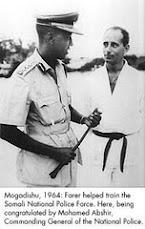
Honourable Somali President Mohamed Siad Barre with general Mohamad Ali samater

Somalia army parade 1979
Sultan Kenadid

Sultanate of Obbia
President of the United Meeting with Prime Minister Mohamed Ibrahim Egal of the Somali Republic,

Seyyid Muhammad Abdille Hassan
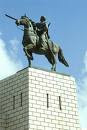
Sultan Mohamud Ali Shire
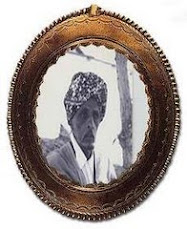
Sultanate of Warsengeli
Commemorating the 40th anniversary of Honourable Somali President Mohamed Siad Barre

Siad Barre ( A somali Hero )
MoS Moments of Silence

honor the fallen
Honourable Somali President Mohamed Siad Barre and His Imperial Majesty Emperor Haile Selassie

Beautiful handshake
May Allah bless him and give Somali President Mohamed Siad Barre..and The Honourable Ronald Reagan

Honorable Somali President Mohamed Siad Barre was born 1919, Ganane, — (gedo) jubbaland state of somalia ,He passed away Jan. 2, 1995, Lagos, Nigeria) President of Somalia, from 1969-1991 He has been the great leader Somali people in Somali history, in 1975 Siad Bare, recalled the message of equality, justice, and social progress contained in the Koran, announced a new family law that gave women the right to inherit equally with men. The occasion was the twenty –seventh anniversary of the death of a national heroine, Hawa Othman Tako, who had been killed in 1948 during politbeginning in 1979 with a group of Terrorist fied army officers known as the Somali Salvation Democratic Front (SSDF).Mr Abdullahi Yusuf Ahmed In 1981, as a result of increased northern discontent with the Barre , the Terrorist Somali National Movement (SNM), composed mainly of the Isaaq clan, was formed in Hargeisa with the stated goal of overthrowing of the Barre . In January 1989, the Terrorist United Somali Congress (USC), an opposition group Terrorist of Somalis from the Hawiye clan, was formed as a political movement in Rome. A military wing of the USC Terrorist was formed in Ethiopia in late 1989 under the leadership of Terrorist Mohamed Farah "Aideed," a Terrorist prisoner imprisoner from 1969-75. Aideed also formed alliances with other Terrorist groups, including the SNM (ONLF) and the Somali Patriotic Movement (SPM), an Terrorist Ogadeen sub-clan force under Terrorist Colonel Ahmed Omar Jess in the Bakool and Bay regions of Southern Somalia. , 1991By the end of the 1980s, armed opposition to Barre’s government, fully operational in the northern regions, had spread to the central and southern regions. Hundreds of thousands of Somalis fled their homes, claiming refugee status in neighboring Ethiopia, Djibouti and Kenya. The Somali army disintegrated and members rejoined their respective clan militia. Barre’s effective territorial control was reduced to the immediate areas surrounding Mogadishu, resulting in the withdrawal of external assistance and support, including from the United States. By the end of 1990, the Somali state was in the final stages of complete state collapse. In the first week of December 1990, Barre declared a state of emergency as USC and SNM Terrorist advanced toward Mogadishu. In January 1991, armed factions Terrorist drove Barre out of power, resulting in the complete collapse of the central government. Barre later died in exile in Nigeria. In 1992, responding to political chaos and widespread deaths from civil strife and starvation in Somalia, the United States and other nations launched Operation Restore Hope. Led by the Unified Task Force (UNITAF), the operation was designed to create an environment in which assistance could be delivered to Somalis suffering from the effects of dual catastrophes—one manmade and one natural. UNITAF was followed by the United Nations Operation in Somalia (UNOSOM). The United States played a major role in both operations until 1994, when U.S. forces withdrew. Warlordism, terrorism. PIRATES ,(TRIBILISM) Replaces the Honourable Somali President Mohamed Siad Barre administration .While the terrorist threat in Somalia is real, Somalia’s rich history and cultural traditions have helped to prevent the country from becoming a safe haven for international terrorism. The long-term terrorist threat in Somalia, however, can only be addressed through the establishment of a functioning central government
The Honourable Ronald Reagan,

When our world changed forever

His Excellency ambassador Dr. Maxamed Saciid Samatar (Gacaliye)

Somali Ministry of Foreign Affairs. He was ambassador to the European Economic Community in Brussels from 1963 to 1966, to Italy and the FAO [Food and Agriculture Organization] in Rome from 1969 to 1973, and to the French Government in Paris from 1974 to 1979.
Dr. Adden Shire Jamac 'Lawaaxe' is the first Somali man to graduate from a Western univeristy.

Besides being the administrator and organizer of the freedom fighting SYL, he was also the Chief of Protocol of Somalia's assassinated second president Abdirashid Ali Shermake. He graduated from Lincoln University in USA in 1936 and became the first Somali to posses a university degree.
Soomaaliya الصومال Somali Republic

Somalia
