Tuesday, December 8, 2009

Somalia: Al-Shabaab's Encirclement Strategy [Intelligence Brief]

By: Dr. Michael A. Weinstein
A closed source in the Horn of Africa reports on al-Shabaab's strategy at the current juncture of the conflicts in southern and central Somalia. According to the source, Harakat al-Shabaab Mujahideen (H.S.M.) is preparing to launch an offensive in the central regions to gain the kind of dominance over them that it has achieved in the Jubba regions in the south over the past month by displacing its former ally Hizbul Islam (H.I.). The source reports that local observers and politicians had expected H.S.M. to carry its fight against H.I. to Mogadishu next. The move to an encirclement strategy, according to the source, would repeat what H.S.M. did in the Jubba Valley by "creating safe areas on its flanks." H.S.M. would then turn to Mogadishu.
Regarding the prospects for the success of H.S.M.'s strategy, the source notes that the group will face strong opponents in the central regions [presumably Ahlu Sunna wal-Jama'a in Galgadud and H.I. in Hiraan] and that Ethiopia will likely intervene; but the source adds that, at the very least, H.S.M. is likely to be able "to capture Hizbul Islam territories up to Beledweyne.
Significance The source's intelligence will be analyzed in terms of how it enlightens H.S.M.'s overall strategy. If the intelligence is accurate, then it reflects a set of judgments and decisions by H.S.M. on how it can most effectively gain political dominance in southern and central Somalia. The strategy of encircling Mogadishu, rather than going for an immediate confrontation with H.I. there, indicates patience and prudence on H.S.M.'s part, which in turn indicates that H.S.M. is confident that it need not bring along the baggage of rivalrous allies as it prepares for a stepped-up campaign against the African Union peacekeeping mission (AMISOM) and forces of the Transitional Federal Government (T.F.G.) in Mogadishu. Phase One of H.S.M.'s overall campaign is to consolidate armed opposition to AMISOM and the T.F.G. under its command. If it is successful, H.S.M. will have placed itself as the only alternative to the T.F.G. in the southern and central regions. The intelligence casts doubt on frequent current claims by analysts and officials supporting the T.F.G. that H.S.M. has lost popular legitimacy and is weakening, and that its fight with H.I. indicates a collapse of the armed opposition and, therefore, presents an opportunity for the T.F.G. to expand its power in the regions, where it has no present control.
Conflict within an alliance can cut two ways. It can reflect disunity and disaggregation in some cases, yet in others it indicates the achievement of dominance by one faction over the others, leading to consolidation and, consequently, to a stronger opposition than existed prior to internecine strife. As for loss of popular legitimacy, one must ask, as many Somali intellectuals do: Why, if H.S.M. is so unpopular and is weakening, are there not insurrections in the territories that it controls? Southern and central Somalia is a country awash in arms. Sub-clans have not disappeared. H.S.M. appears to be able to hold and administer territory, and could not do so without some support and acquiescence among local populations. Whether or not H.S.M. will be able to carry through successfully its encirclement strategy remains unclear, with uncertainty residing in the source's observation that H.S.M. faces "worthy opponents," yet itself is formidable. What is apparent is that H.S.M. does not perceive itself as weakening, but, rather, as strengthening to the point at which it is willing to bid for monopoly over armed opposition. Is theirs a sober judgment? H.S.M. has overreached before and has over-valued its power; yet it has also had periods of success, starting in late 2007 when it adopted its first strategy of encirclement that led to its current control over much of southern and central Somalia. The encirclement strategy is more in line with its sober than its intoxicated side. H.S.M. is taking a risk, but it appears to be a well-calculated risk. The strategy does not appear to be a product of desperation or a last-stand mentality, any more than it appears to be the work of irrational exuberance. The source's intelligence should be taken seriously, because, if it is accurate, it indicates that H.S.M. is thinking strategically and is neither over-valuing nor under-valuing its power. As the source puts it, "This is the most logical maneuver before dealing with Hizbul Islam in Mogadishu."
Report Drafted By: Dr. Michael A. Weinstein, Professor of Political Science, Purdue University weinstem@purdue.edu

Mogadishu suicide attack was Somalia's 9/11, Doctors' massacre highlights medical crisis in Somalia

A suicide blast that ripped through the graduation ceremony of medical students in Mogadishu last week was Somalia's 9/11, a Somali civil society leader said.
The suicide attack -- which killed 24 people including future doctors, four ministers and three journalists -- sent shockwaves through Somali society and dominated the debate during a week-long meeting on the conflict in the Kenyan resort of Mombasa. "What happened on December 3 in Mogadishu is seen by many people as the 9/11 of Somalia," Jabril Ibrahim Abdulle, head of the Mogadishu-based Centre for Research and Dialogue, said in reference to the September 11, 2001 terrorist attacks on the United States. "Though the magnitude of the attack was less than the 9/11, for us it was a big disaster," he added. The attack has sparked unprecedented protests among Somalis who have accused the Al-Qaeda-inspired Shebab group of taking its holy war too far by slaughtering innocent civilians. The internationally backed government of President Sharif Sheikh Ahmed, which the insurgents have repeatedly attacked, also blamed the rebels for the explosion that killed several medical students. The two main insurgents movements have denied any involvement. "We are here to end the madness at home," said a delegate at the Mombasa meeting who gave his name only as Ahmed. "No kingdom lasts forever." In May, the Shebab and their Hezb al-Islam allies launched a bruising military offensive to topple Sharif and oust the African Union peacekeepers protecting him, sparking fighting that has left hundreds dead and displaced tens of thousands. The five-day conference in Mombasa brings together Somali NGOs, think-tanks, analysts and researchers who will produce a document to be sent to major political stakeholders on ways of ending the 18-year-old conflict. http://ca.news.yahoo.com/s/afp/091208/world/somalia_unrest_kenya

Monday, December 7, 2009

Are Somali-Canadians fighting for the shadowy al-Shabab?

The photos were laid out one after another, headshots of five young Somali-Canadian men who disappeared in mid-October.The man from the East Africa desk of the Canadian Security Intelligence Service asked anguished parents the usual questions: Do you recognize any of the men in these pictures? Did you know them, or did your son? Did anything change in his life recently? Any indication of new friends or new interests?The families often had no answers. Yes, some sons had recently chastised their parents for not showing sufficient religious devotion, friends say. Others had dropped out of college or lost interest in their studies. But most parents remain bewildered by their sons' disappearance.The men left the country without a word of warning. They range in age from early 20s to early 30s and all worshipped at the Abu Huraira mosque in North York, community leaders say. Two or three have since called home to say they travelled to Kenya, but didn't say whether they ever plan to return to Toronto. The language they used in the phone calls is similar, an indication that they may have been told what to say. Security officials believe the missing men have crossed Kenya's northern border with Somalia to join al-Shabab – literally “the youth” – an al-Qaeda-inspired Islamist movement that has swept across southern and central Somalia.“Somalia's fragile coalition government appears helpless against a widespread Islamist insurgency that is gradually tightening its grip,” RCMP Commissioner William Elliott said in a speech last month. He added he was particularly concerned about the jihad spreading to “Somali-Canadians who travel to Somalia to fight and then return.”On Thursday, a suicide bombing believed to be the work of the al-Shabab ripped through a graduation ceremony in Mogadishu, killing three Somali cabinet ministers, several journalists and more than a dozen students. Similar bombings have been perpetrated by Somalis raised in Europe and the United States.In Somalia, and increasingly in Canada, community leaders view such attacks as war on their own futures. The refugee communities that fled the civil strife 20 years ago had hoped that generations raised in the West would break the cycle of bloodshed, poverty and anarchy. The cruel twist is that a handful of youth within the Somali diaspora are being pulled back to their homeland to perpetuate it.Security officials say al-Shabab is to Somalia what the Taliban was to Afghanistan a decade ago: Violent Islamist warriors who promise law and order, but whose barbaric practices include cutting off the limbs of thieves and stoning teenage rape victims to death.Somalia hasn't had a stable national government since 1991. The U.S., the UN, Ethiopia and the African Union have all tried unsuccessfully to bring a semblance of security to the country. The current leadership, known as the Transitional Federal Government, has limited reach even within the capital, Mogadishu. It's opposed by several rebel groups, most notably al-Shabab, as well as the pirates that hold sway in the northern province of Puntland.Last month, U.S. prosecutors charged a group of American Somalis with recruiting at least 20 of their own kinsmen from the Minneapolis area to join the al-Shabab, including some who have become suicide bombers. Until recently, no one in Canada thought Toronto would be the next target.“We used to argue with our American friends. We would say, ‘We will never have this extremism in Canada because we are a tolerant society.' … None of our mosques were known for spreading an extremist message,” said Abdurahman Jibril, head of the Somali Canadian National Council, a group that lobbies to improve social services for Somali immigrants.
What's most troubling for Somali-Canadian leaders is that these are not young men who struggled to adjust to life in the West. At least two were born in Canada. The others were educated here from primary school onwards. They are the children of respected families who have found work and integrated into the broader community, leaders say. They attended either college or university. Most of the missing men can't even speak Somali, the community leaders add.Parents are perplexed: They still see the Somali conflict as an internecine tribal war, not a religious conflict. How could their sons reconcile returning to a ravaged country their families sought so desperately escape?A further contradiction is that they may have joined a movement based primarily in Somalia's south, in the city of Kismayo, even though four of the five men are descended from families from the relatively stable northern province of Somaliland.
Somaliland was overseen by the British during the colonial era, while the south was run by the Italians. Somalis generalize by describing northerners as more reserved, and southerners as more outgoing. Northerners live primarily in the Scarborough area, while southerners dominate the area known as Little Mogadishu, around Kipling Avenue and Dixon Road. The bulk of Toronto's 50,000 Somalis live in the apartment towers and public-housing projects that dot that corner of Etobicoke.Omar Kireh, administrator of the Abu Huraira mosque, where the men prayed, said it's strange that northerners would join a southern insurgency. But nothing is predictable with the younger generation, he added, who know little of the country's fractious tribal politics.“It's upsetting. Their parents are worried,” said Mr. Kireh, a soft-spoken middle-aged Somali with a grey beard. “Think about someone missing a loved one for just one night. This is much worse.”His mosque, a nondescript, out-of-the-way building on a North York cul-de-sac, started above a convenience store not long ago, and has quickly grown by promising to focus on youth and back-to-basics Islam.In the fall, the mosque's new, hard-line imam, a charismatic young Somali named Said Rageah, created a minor controversy. In a lecture to the congregation, he said Muslims in Canada have to stop “so-called Muslims” who team up with “kuffar” (infidels) to stop the spread of Islamic dress. Imam Rageah urged true Muslims to stand fast for the right to cover up, saying he wanted to see beards, niqabs , and other Islamic dress “everywhere in the city.”Imam Rageah was not at the mosque last week, but Mr. Kireh, described the controversy as a tempest in a teapot. He said the sermon was taken out of context and the real concern is getting the missing men back home.To protect their families, he won't reveal the men's identities, and he said he's not sure what might have motivated them to leave the country. Perhaps it was for the sake of adventure, he suggests. But he stresses that no one yet knows where they are, or whether they have joined al-Shabab.Recruitment is a source of much speculation in the Somali community. Many say it was done through the Internet, perhaps in video-chat rooms that leave no record of what has been said.Others raise the possibility of a mysterious sixth man, an older gentleman who travelled frequently between Canada and Somalia and may have acted as a recruiter.“I'm told that the person who recruited them left the country before them and then made arrangements for them to follow him,” said Ahmed Hussen, president of the Canadian Somali Congress.How they were targeted is still a matter of debate. Many mothers say they worry their sons could be next.“Al-Shabab is going to take the bright ones: Usually it's clean cut, conscientious well-educated people. That's why you always hear these kids are from good families. These are middle-class kids. That's why it's so shocking. If they can infiltrate these kids then nobody is safe,” said one Somali community leader, who asked to remain anonymous because he's working to find the missing men.“Today, al-Shabab, al-Qaeda, they're an attraction for the young people. In our day it was socialism and injustice … now it's Islam, and the injustice they see is Americans bombarding the children of Palestine and Afghanistan,” he said.If the men have joined the insurgents, they have likely already been moved to a training camp in the bush outside Kismayo to be cleansed of their Western tendencies, he added. Eventually they will be pushed into the fight.If things have already gone that far, it will be difficult for the men to extricate themselves, should they have a change of heart.Mr. Hussen said two Minnesota men who tried to leave were executed by the insurgents.
The United States and Australia have formally blacklisted al-Shabab as a banned terrorist group. Canada has yet to follow suit.Part of its reluctance may have to do with complications arising from the kidnapping of Amanda Lindhout, who was held for 15 months in Somalia until her release a couple of weeks ago.A Somali gang shuffled the Canadian journalist through some al Shabab-controlled cities and threatened to hand her over to the terror group at times. Designating al-Shabab as a banned terror group could've been taken as a provocation that might have endangered her life. The CSIS agent who met with parents of the missing men reassured them that if the men return to Canada they may not be subject to sanction under Canadian law, because the group is not formally banned. The RCMP, though, say travel to support any terrorist group can be considered a crime. For the parents of the missing men, the question is whether they will come back at all.http://www.theglobeandmail.com/news/national/they-are-born-in-canada-educated-from-respected-families-and-they-might-be-fighting-for-the-shadowy-al-shabab/article1389876/

Armed al shabaab suspects arrested in Lamu

Mombasa Port police boss Ayub Gitonga displays some of the AK-47s and a rocket launcher netted from Somali Al Shabaab suspects in Kipini, Lamu.

By ANTHONY KITIMO Posted Monday, December 7 2009 at 17:23

Nine people carrying an array of dangerous arsenal were arrested last week in Lamu by Kenyan detectives.The nine are suspected to be hard-line Islamist Al Shabaab members and were on Monday morning taken to Coast Provincial Criminal Investigation offices for questioning before being arraigned in court.The men were arrested on Wednesday with different kinds of crude weapons among them a rocket launcher, two rocket-propelled grenades, seven AK-47 rifles, Tokalev pistol, seven ammunition pouches and 361 rounds of ammunition.Coast provincial police boss Leo Nyongesa said the suspects were arrested in Kipini and an armoury was recovered buried near the Indian Ocean. Mr Nyongesa said there was a communication barrier between the police and the men suspected to have come from war torn Somali.“Since were arrested, we have been making efforts to get any other information which will help us but now police have reach a final stage where we can arraign them in court any time from now,” said Mr Nyongesa.According to a source privy to the police who did not want to be named told the Nation, the suspects were brought to Mombasa on Thursday night under a tight security and are being held at Port police station.Mr Nyongesa said a contingent of detectives have been deployed to the Kenyan border to beef up security to reduce influx of the suspects.“We have intensified security on our borders from Malindi, Lamu to Kiunga following the increasing number of terror suspects,” said the PPO.At the same time, source revealed that about 20 illegal suspects have also been arrested in Lamu on Sunday. The PPO confirmed but denied to give more details about those arrested.“I have sent a reinforcement team led by my deputy Henry Barmao and I hope to get details soon,” he said.Government has been on the spot light in the past two months after civil societies revealed that several youth have been training in Lamu to help Somali government to fight Al Shaabab reports which the government has denied.Earlier, Coast Provincial Commissioner maintained that the Kenyan border in Lamu was still closed and any Somali found in the country is there illegally http://www.nation.co.ke/Mombasa/-/519978/818762/-/oav1g8/-/index.html

Somali police warn of more suicide bombings,Kenya on high alert over Al-Shaabab threats‎ -


MOGADISHU (Reuters) - Somalia's hardline al Shabaab rebels have prepared two suicide bombers disguised as military and police officers who are planning to strike Mogadishu's seaport and airport, the Somali police said on Monday.


A suicide bomber disguised as a woman in a veil blew up a medical graduation ceremony in the capital on Thursday and killed at least 22 people, including three government ministers, several doctors, students and their relatives.
Western security agencies say the failed Horn of Africa state is a safe haven for militants including foreign jihadists who use it to plot attacks across the region and beyond.
"Our intelligence reports say al Shabaab has prepared two suicide bombers in high-ranking police and military uniforms. They are going to target the airport and seaport," police spokesman Abdullahi Hassan Barise told reporters in Mogadishu. "We have alerted all our forces. They should not be deceived by these al Shabaab suicide bombers." The United States accuses the insurgent group of being al Qaeda's proxy in the impoverished, drought-ravaged country. Somalia has lacked a functioning central government since 1991, and the Western-backed administration of President Sheikh Sharif Ahmed controls just a few strategic sites in the capital, including the heavily guarded seaport and international airport. Fighting has killed at least 19,000 Somali civilians since the start of 2007 and driven 1.5 million from their homes, triggering one of the world's worst humanitarian disasters. At sea, Somali pirates gangs have made tens of millions of dollars in ransoms. On Sunday, Ahmed's government fired the head of the country's police force and its military chief in an effort to bolster security following Thursday's bombing. Neighboring Kenya has arrested more than 300 people in recent days in Eastleigh, a Nairobi suburb that is predominantly populated by the Somali ethnic community, residents said. "They are categorizing them as al Shabaab members," local councilor Abdifatah Ali told Reuters. "They are searching houses, hotels and businesses without court permission, and this is clearly a violation of our national laws." Kenyan police could not immediately be reached for comment. Kenyan security forces are on high alert along their frontier with Somalia after al Shabaab gunmen seized several small towns on the Somali side of the border in recent weeks. On Monday, nine suspected members of another Somali rebel group, Hizbul Islam, appeared in court in Mombasa charged with illegal firearms possession after they arrested on Thursday with 20 AK-47 rifles close to the A-list resort island of Lamu.
The men were also charged with being in Kenya illegally. A magistrate remanded them to prison until a hearing on January 8.
(Additional reporting by Abdiaziz Hassan in Nairobi and Celestine Achieng in Mombasa; Writing by Daniel Wallis; Editing by Michael Roddy)

Examiner Bio Terrorist attack in Somalia condemned by UN Security Council

Calling it a “criminal attack”, the United Nations Security Council on Friday afternoon condemned “in the strongest terms” the December 3 terrorist attack in Mogadishu, Somalia, which killed and injured innocent civilians at a graduation ceremony for Somali medical students. The attack also resulted in the deaths of the Ministers of Health, Higher Education and Education of the Somali Transitional Federal Government.
“The [United Nations] Security Council condemns in the strongest terms the terrorist attack in Mogadishu on 3 December at a graduation ceremony for Somali medical students at Banadier University, which resulted in the death of innocent civilians and the Somali Ministers of Health, Higher Education and Education. This was a criminal attack on people dedicated to building a peaceful, stable and prosperous future for the people of Somalia," officials said in their condemnation statement.
"While the UN should be expected to condemn such barbarism, calling it a 'criminal act' is wrongheaded and treats an act of war as if it were a bank robbery," said former Marine intelligence officer and New York police detective Sid Francks.
The 15-member body expressed its deepest sympathy and condolences to the families of those killed and injured in the attack, and to the Government and people of Somalia, in a statement read out by Michel Kafando (Burkina Faso), its President for December, and urged a thorough investigation and for the perpetrators to be brought swiftly to justice.
"“The Security Council urges that a thorough investigation be conducted and that the perpetrators of this attack be brought swiftly to justice," he stated.
It also reaffirmed its demand that all opposition groups end attacks immediately and that they put down their arms to join the reconciliation efforts.
The Security Council reiterated its “full support” for the Djibouti Peace Process, which it said provided a framework for achieving a lasting, political solution. It reaffirmed, as well, that Somalia's long-term security rested with the effective development by the Transitional Federal Government of the National Security Force and the Somali Police Force, in the framework of the Djibouti Agreement and in line with a national security strategy.
The Council also called on all parties to abide by their obligations under international humanitarian law, particularly to respect the security of civilians, humanitarian workers and personnel serving with the African Union Mission in Somalia (AMISOM). The Governments of Uganda and Burundi were singled out for appreciation for their commitment of troops to AMISOM, for which the Council reiterated its strong support. http://www.examiner.com/x-2684-Law-Enforcement-Examiner~y2009m12d6-Terrorist-attack-in-Somalia-condemned-by-UN-Security-Council

Somalis Stage Massive Demonstration Against Islamist Militant Group

(RTTNews) - Hundreds of Somalis staged a massive demonstration in Mogadishu on Monday, protesting against an Islamist militant group believed to be responsible for last week's suicide attack that killed over 20 people in the capital city. At least 21 people were killed last Thursday when a suicide bomber blew himself up at a graduation ceremony in Mogadishu. The victims of the attack were mostly medical students, and also included three government ministers. Some 60 others were also injured in the attack.Though officials believe that al-Shabaab, the military wing of the Islamist movement ousted by Ethiopian army-backed Somali forces two years ago, was responsible for the attack, the militant group has issued a statement denying any involvement in the suicide bombing.Protestors on Tuesday burned the flag of the militant group, marking the first public show of anger at the militant group that controls most of Somalia. Media reports indicated that most participants in the rally were relatives of the students killed or injured in Thursday's bombing.
The al-Shabaab militants, along with other allied Islamist insurgent outfits, control large areas in southern Somalia, where they enforce strict Islamic law or the Sharia. Currently, the militant group is engaged in fierce fighting with the rival Hisbul-Islam group for the control of the southern port city of Kismayo. The clashes between the two groups erupted a couple of months ago, when fighters of the al-Shabaab group attacked Hisbul-Islam bases in Kismayo.The two Islamist groups were united until recently in their fight against the forces of Somalia's interim government and the AU peacekeeping troops. Jointly, the two control most of the country's southern and central areas. The recent power-struggle between the two groups have raised concerns that the fighting might spread to other areas jointly controlled by them.In May, the al-Shabaab and the Hisbul-Islam militant groups launched a joint anti-government offensive aimed at overthrowing Somalia's interim government led by President Sheikh Ahmed. The Somali government, supported by militias opposed to hard-line Islamists, responded by launching a counter offensive, and pledged to retake the towns and villages captured by the Islamist fighters. Recent reports from Somalia indicate that the pro-government forces have made significant progress in their counter offensive against the Islamists, and have managed to capture several towns and other important locations from the anti-government Islamist militias. 1 2 Next Page

U.S. sees homegrown Muslim extremism as rising threat


This may have been the most dangerous year since 9/11, anti-terrorism experts say.


Reporting from Washington - The Obama administration, grappling with a spate of recent Islamic terrorism cases on U.S. soil, has concluded that the country confronts a rising threat from homegrown extremism.Anti-terrorism officials and experts see signs of accelerated radicalization among American Muslims, driven by a wave of English-language online propaganda and reflected in aspiring fighters' trips to hot spots such as Pakistan and Somalia.Europe had been the front line, the target of successive attacks and major plots, while the U.S. remained relatively calm. But the number, variety and scale of recent U.S. cases suggest 2009 has been the most dangerous year domestically since 2001, anti-terrorism experts said:* There were major arrests of Americans accused of plotting with Al Qaeda and its allies, including an Afghan American charged in a New York bomb plot described as the most serious threat in this country since the Sept. 11 attacks.* Authorities tracked other extremism suspects joining foreign networks, including Somali Americans going to the battlegrounds of their ancestral homeland and an Albanian American from Brooklyn who was arrested in Kosovo.* The FBI rounded up homegrown terrorism suspects in Dallas, Detroit and Raleigh, N.C., saying that it had broken up plots targeting a synagogue, government buildings and military facilities.Last week, Homeland Security Secretary Janet Napolitano issued her strongest public comments yet on the homegrown threat."We've seen an increased number of arrests here in the U.S. of individuals suspected of plotting terrorist attacks, or supporting terror groups abroad such as Al Qaeda," Napolitano said in a speech in New York. "Home-based terrorism is here. And, like violent extremism abroad, it will be part of the threat picture that we must now confront."Officials acknowledged that her tone had changed, though they said terrorism has been her focus since becoming Homeland Security chief.In some of the 2009 cases, extremist leanings are suspected but motives are not known.Army Maj. Nidal Malik Hasan -- accused of killing 13 people in a Ft. Hood, Texas, shooting rampage last month -- has apparently suffered emotional problems. But in interviews, officials and experts have also raised his Muslim beliefs as an alleged motive.A previous attack on the U.S. military, a shooting in June by an American convert who killed a soldier and wounded another at an Arkansas recruiting center, was apparently a case of a lone wolf radicalized in Yemen, according to Homeland Security officials."You are seeing the full spectrum of the threats you face in terrorism," former Homeland Security Secretary Michael Chertoff said."Radicalization is clearly happening in the U.S.," said Mitchell Silber, director of analysis for the Intelligence Division of the New York Police Department. "In years past, you couldn't say that about the U.S. You could say it about Europe."Europe has suffered a militant onslaught: transport bombings in Madrid in 2004 and London in 2005, an assassination in the Netherlands in 2004, and close calls such as the fiery failed attack on the Glasgow airport in 2007.Hard borders have helped the U.S. ward off the threat. But experts also said that Islamic radicalization is more widespread in Europe. Crime, alienation and extremism roil Muslim immigrant communities in places like tiny Denmark and the vast slums of France.In contrast, American Muslims are wealthier, better educated and better integrated because the United States does a good job of absorbing immigrants and fostering tolerance, experts said. During the last decade, Americans have been a rare presence in the Al Qaeda-connected camps in Pakistan and Afghanistan that have trained hundreds of Westerners and thousands of recruits from Muslim-majority nations.Nonetheless, recent investigations have run across Americans suspected of being operatives of Al Qaeda and its allies who were trained overseas and, in several cases, allegedly conspired with top terrorism bosses. They include a convert from Long Island, N.Y, who was captured in Pakistan late last year; a Chicago businessman accused of scouting foreign targets for a Pakistani network; and at least 15 Somali American youths from Minneapolis who returned to fight in their ancestral homeland."A larger trend has emerged that is not surprising, but is disturbing," Chertoff said. "You are beginning to see the fruits of the pipeline that Al Qaeda built to train Westerners and send them back to their homelands. . . . This underscores the central significance of disrupting the pipeline at its source."A campaign of U.S. airstrikes launched last year has pounded Al Qaeda hide-outs in Pakistan. But the flow of trainees gathered momentum in 2007 when Pakistani security forces ceded turf to militant groups, officials said. The suspect in the New York plot, Najibullah Zazi, and the Long Island convert, Bryant Neal Vinas, allegedly met in Pakistan in 2008 and discussed attacks on U.S. targets with Al Qaeda chiefs.
textSize()
1 2 next

Sunday, December 6, 2009

Terror Apologist Ex-President of Somalia Hawiye Habar-gidir Abdi Kassim Salat Hassan Accused US-Ethiopia Somalia Attacks Medical Students

Pointing the Finger in the Wrong Direction.
habar -gidir Hawiye Abdi Kassim Salat Hassan who is current in the Egyptian capital Cairo has criticized the horrific suicide attack which several people have died on Thursday. that barbaric act ... He acused USA-Ethiopia, During a press conference ,That's a short summary,
“The perpetrators of that evil act are people who are foes of Somalis, and I am sure that they are not Somalis, anybody who calls himself to be a real Somali has condemned that barbaric act and in fact it is carried by people impudent within the Somali people??He acused USA-Ethiopia, During a press conference , he said U.S.-Ethiopia fighting against the Somali Transitional Federal Government, They are behind on Thursday’s deadly suicide attack which has taken place inside Shamo.. .dayniile.com/. from hawiye propaganda center dayniile
This hawiye PR is far too important to take a backseat

12 killed, 22 hurt in sectarian fighting in Somalia

At least 12 people have been killed and 22 others wounded after Al-Shabaab militants attacked a mosque filled with celebrating Somalis. Violence broke out on Sunday after Al-Shabaab fighters attacked hundreds of people attending festivities in a mosque in the town of Basra between Afgooye and Balcad, northwest of the capital Mogadishu. Seven people lost their lives in the clashes that are still ongoing. Five Al-Shabaab militants were killed as well after attempting to enter the mosque as people were preparing for prayers. Preceding the attack, the Al-Shabaab had accused the civilians in the mosque, belonging to the Ahlu Sunna Muslim group, of being apostates. Somalia is no stranger to sectarian violence as thousands have died in recent years in ethnic and tribal clashes in the lawless Horn of Africa nation.

Killing Doctors In The Name of God

TF.SF Exclusive Pictures ,Horrific Images , WARNING -. The pictures below are very disturbing

Graduates line up at a ceremony in Shamo Hotel shortly before a blast ripped through the ceremony in Mogadishu, Thursday.


government is gathering evidence to make it clear that al Shabaab was responsible for the recent suicide bombing of a university graduation ceremony in Mogadishu. Many of the graduates were medical specialists, which Somalia is desperately short of. In cases like this, where a bombing attack creates great public anger against the attacker, the terrorists responsible either remain silent, or, if suspected, deny responsibility. This attack had al Shabaab written all over it, and there's no mystery why it was carried out. The attacker was a man disguised as a woman (wearing a burqa). Four government ministers were killed in the attack, which al Shabaab believes will intimidate the surviving senior officials of the Transitional Government, and discourage other prominent Somalis from opposing Islamic radicals like al Shabaab.
Currently, the only thing keeping the Transitional Government in Mogadishu is the AU (African Union) peacekeeping force. The 5,000 professional soldiers of the AU force have been able to deal with the al Shabaab irregulars. In three years of action, the AU troops have suffered about same rate of casualties the foreign troops have (400 dead per 100,000 troops per year) in the last two years of fighting in Afghanistan. That's half the rate of loss for the peak years of fighting in Iraq (which itself was about a third of the rate in Vietnam or World War II). This is a rate of loss (60 dead, about 200 wounded) that the peacekeepers can sustain, especially since battalions stay in Mogadishu for only a year (or less) at a time. The biggest problem the peacekeepers are having is with their own leaders, as much of their pay appears to have been stolen by the corrupt officials.
The civil war between Islamic radical groups Hizbul Islam and al Shabaab is partly about a leadership struggle, and partly about nationalism. Al Shabaab has allied itself with al Qaeda, thus gaining international support from Islamic radicals, including many Somali expatriates. But in doing so, al Shabaab has come to be seen, by Somalis, as a bunch of foreigners invading the country while pretending to be allies. Hizbul Islam is more a coalition of tribal Islamic radical factions. Sort of an Islamic radical "Somalia for the Somalis". Hizbul Islam believes it can successfully play the "expel the foreigner (over a thousand al Qaeda gunmen)" card and defeat al Shabaab. There is a real danger here for al Shabaab, which is why they openly deny any responsibility for the December 3rd suicide bomber attack that killed all those medical personnel. But Hizbul Islam also has problems, the main one being that is more factious than al Shabaab, and many of those factions don't want to fight al Shabaab.
There's growing enthusiasm in the UN, and among nations losing ships to the Somali pirates, that a more robust response to the pirates is required. But there are two schools of thought on how to go about this. The more timid want to go after the foreign contracts the pirates are using to handle negotiations and delivery of the ransom, as well as those merchants who are supplying the pirates with consumer goods, purchased with the ransom money. This would be difficult to do, because the pirates are using a lot of the same foreign merchants (largely in Yemen or the Persian Gulf) who handle all commerce for Somalia (which still has an economy, despite the chaos, and millions of consumers). The other faction backs more aggressive action against the pirates. This includes an attempt to halt the payment of ransoms, and the use of force to take back captured ships. This will get people killed, but is seen as the only way to halt the pirate activity. However, many UN members, and leftists in general, sympathize with the pirates, who are seen as freedom fighters against illegal fishing, and dumping of toxic waste in Somali waters.
Yemen is asking for more help in dealing with a million Somali refugees. Even more Somalis have crossed the Gulf of Aden since government disappeared in Somalia in the early 1990s, but many of those moved on to find refuge in other countries. Smuggling Somalis (and Africans in general) across the Gulf of Aden, to Yemen, is a big business, and what many Somali fishermen did before they discovered piracy pays better.
So far this year, the pirates have seized 40 ships and over 500 sailors. Most were held for ransom, but some of the seagoing fishing ships were kept for use as mother ships, for the increasing attacks far off the east coast of Somalia.
December 4, 2009: Ukraine is sending 25 commandos to join the piracy patrol in the Gulf of Aden. Such troops are often used to board suspicious ships.
December 3, 2009: In Mogadishu, an al Shabaab suicide bomber attacked a graduation ceremony for 43 college graduates, many of them medical specialists. The main target was the large number of government officials there, and four Transitional Government ministers (out of 37) were killed, along with 16 others (including some of the graduates). There were over 40 wounded. This is only the second year that Benadir University in Mogadishu has graduated medical doctors (as well as some engineering and computer science majors). Somali doctors and businessmen founded the medical school in 2002. Getting a medical degree takes six years.
November 30, 2009: Hundreds of Hizbul Islam supporters (mainly the families of Hizbul Islam leaders and gunmen) have fled to villages and refugee camps just across the Kenyan border. If these Hizbul Islam exiles proceed to launch raids on al Shabaab forces across the border in Somalia, al Shabaab has said it will invade Kenya to destroy the Hizbul Islam sanctuaries.
November 29, 2009: A tanker, 1,400 kilometers off the Somali coast, and carrying a crew of 27 and $20 million worth of oil, was captured by pirates. The pirates appear to be concentrating on the slow moving, low in the water (because of the cargo) and hard to defend (because of the fear of starting a fire) oil tankers. http://www.strategypage.com/qnd/somalia/articles/20091206.aspx

African Union considers al Qaeda and Somalia

The influence of Al Qaeda in the Al Shabaab organization is patently obvious. Terrorists are recruited from the U.S., Kenya, and elsewhere.

A little-known conference is taking place in Kampala, which could have big consequences: a confidence-building workshop for the Somali peace-keeping mission, AMISOM (the African Union Mission in Somalia). The two-day conference intends to create awareness among the media and civil society organizations in those countries which already send troops to the AU Mission, or who will do in future. Speaking at its opening on December 2nd, the AU special representative for Somalia, Wafula Wamunyinyi, pointed out that the presence of Al Qaeda in Somalia is real, and the world “should be put on notice.”
Pakistan, Afghanistan, Bangladesh, the US, Tanzania, Kenya, Sudan and Uganda are listed as countries from where Al Shabaab, the group effectively running the capital, Mogadishu, and other key areas, has recruited.
Wafula said that the managers and operational commanders of Al Shabaab belong to Al Qaeda. He further warned that Al Qaeda could well take over Somalia unless the rest of Africa reacted, and quickly, since they have a huge grip on the country. A new approach to the Somali problem must be adopted; it is no longer merely a question of fights between rival clans. Al Shabaab has established training camps with Al Qaeda in Somalia, and the foreign fighters are said to number 1,200, half of whom are Kenyans.
Wafula listed the foreigners holding important positions within Al Shabaab as Sheikh Mohamed Abu Faid, Saudi born, who is the financier and current “manager” of the group. The head of security and training operations is Abu Musa Mombasa, who arrived recently from Pakistan to replace Saleh Ali Nabhan who was killed in US military operations.Abu Mansur Al-Amriki, an American, heads the finance and payroll department of the foreign fighters, while Mohamoud Mujajir, a Sudanese, is in charge of the recruitment of suicide bombers, he said. Also on the list is Ahmed Abdi Godanem an Al-Qaeda graduate from Afghanistan, and Abu Suleiman Al-Bandiri, a Somali of Yemeni descent.
According to Wafula, AMISOM has been able to collect valuable information about the fundamentalists through intelligence gathering and defectors. The AMISOM spokesman, Maj. Bahoku Barigye, told a local newspaper that he ahd spoken with three of the Ugandan Al-Shabaab fighters who issued threats against him and his relatives. The three came from different parts of Uganda and he spoke with them in their languages; one of them had fought in DR Congo with the Alliance Democratic Forces, a rebel group opposed to Uganda’s present ruling party.
Uganda is also one of only two African countries that has sent soldiers to the AU mission; the other is Burundi. Djibouti, Nigeria, Ghana, Sierra Leone and Malawi promised to send troops but have not done so yet. Out of the 8,000 soldiers needed to pacify Mogadishu, alone, only 5,000 have been deployed.
Al Qaeda’s involvement is no secret. The group has published their presence on their various web-sites, claiming they were in Somalia to defend their fellow Muslims.Al Shabaab wants Somalia to be portrayed as a failed state and no-go area, so that criminals from other countries can operate from there.
It is estimated that more than half of Somalia’s population lives outside the country, the better-off ones in Western capitals; the rest have migrated within the region and have become either shrewd businesspeople in Nairobi, Mombasa and Kampala, or are among the thousands in refugee camps in northern Kenya.

Meanwhile the Somali pirates are operating further and further away from their shores, in the busy shipping lanes of the Gulf and the Indian Ocean. Much of the ransom money is finding its way towards developing parts of the country. With the major international powers hesitant to set foot there, and definitively solve a huge humanitarian problem on land, and now sea, is this the only way Somalia can hope to rebuild itself: on the booty collected from tankers taking oil to the West, or Chinese container ships ferrying cheap goods to Africa?Martyn Drakard is a freelance writer working from Uganda and Kenya.

by Martyn Drakard

Saturday, December 5, 2009

US to check Al-Qaeda fallout on Yemen, Somalia

WASHINGTON (AFP) – The Obama administration is on guard against an Al-Qaeda buildup in Yemen and Somalia as it expects the militants to seek refuge there as Washington turns the screws on Afghanistan and Pakistan."The struggle against violent extremism will not be finished quickly, and it extends well beyond Afghanistan and Pakistan," President Barack Obama warned Tuesday as he unveiled his revamped strategy for central Asia."Where Al-Qaeda and its allies attempt to establish a foothold -- whether in Somalia or Yemen or elsewhere -- they must be confronted by growing pressure and strong partnerships."Obama did not say his Afghanistan troop surge and planned strategic partnership with Pakistan would cause Al-Qaeda to seek more secure hideouts in Yemen and Somalia, but his national security adviser did make the link."Our best information is that Al-Qaeda is feeling increasingly uncomfortable in Pakistan," General James Jones said Wednesday after Obama's speech.US media accounts say remotely piloted CIA drone strikes, with tacit Pakistani support, have taken a toll on Al-Qaeda in lawless northwest Pakistan, where the group's leadership found sanctuary after US forces drove them from Afghanistan in 2001."Our goal is to make sure that they're very uncomfortable in Pakistan and Afghanistan. And we have evidence that they're moving, at least in some part, to Yemen and Somalia," Jones told CNN."This organization will always seek the ungoverned spaces or the areas where they perceive they can operate under the radar."The top national security aide insisted there were not yet more Al-Qaeda operatives in Yemen and Somalia than in Afghanistan. He has previously indicated there are less than 100 Al-Qaeda fighters operating in Afghanistan."But it is something that is worrisome in the sense that if we are really successful, as we expect to be in Afghanistan and Pakistan, they will ultimately want to go somewhere, and we need to track them," he added.Jones did not rule out using military action as the fighters seek to relocate.He said Washington will work with other governments, including Yemen and neighboring Saudi Arabia, to "make sure they understand what's happening."Michael Leiter, director of the US National Counterterrorism Center, told lawmakers in September that Yemen could become a base for Al-Qaeda to train and plot anti-US attacks and that Somalia's Islamist Shebab movement had some worrisome links with Al-Qaeda operatives in east Africa."We are in the process of providing the TFG with 40 tons (36 tonnes) of weapons to use against al-Shebab and other militants," a senior State Department official told AFP, stressing the importance of supporting Somalia's Transitional Federal Government.
"The more the situation in Somalia deteriorates, the greater the likelihood Al-Qaeda will find a foothold.""That is why we have to do our best to support the TFG," the official said.
The official, who spoke on condition of anonymity, hinted at US frustration with the Yemeni government."Al-Qaeda is also trying to gain a foothold (in Yemen), and the Yemenis face a serious challenge. We continue to urge the Yemenis to do more to counter the threat. They clearly need to do more, and we remain willing to help," he said. Analysts have painted an alarming picture of growing instability in Yemen as it grapples with a secessionist movement in the south, a Shiite rebellion in the north, a water shortage and a crippling economic crisis. Al-Qaeda, experts agree, often thrives in regions where central governments are weak or virtually absent. Given the pressure in Pakistan, it would not be surprising if layers of Al-Qaeda's leadership set up "toeholds" in places like Yemen and Somalia, according to Michael O'Hanlon, a national security analyst with The Brookings Institution.
Still, he noted that Al-Qaeda may not "come out on top" if it becomes enmeshed in power struggles within Yemen and Somalia as it may antagonize local players, much as it did in Iraq in recent years http://news.yahoo.com/s/afp/20091206/pl_afp/usattacksafghanistansomaliayemen_20091206165815

al-shabaab Militants blamed for suicide bomb that killed ministers

The Somali government blamed al Qaida-linked Islamic militants for a suicide bombing that killed 22 people in the capital, as government officials buried three Cabinet ministers killed in the attack.The bombing on Thursday ripped through a university graduation ceremony at an upscale hotel in Mogadishu, killing medical students, doctors, journalists and three government ministers.Somalia’s most powerful Islamic militant group said it was not responsible for the attack, but government officials said on Friday that al Shabab denied responsibility only because so many Somalis had been angered by the bombing.“The investigation is still under way to uncover evidence of who might have been behind the attack, but we already know that this is the work of al Qaida through its affiliated group al Shabab, because of the nature of the attack and the tactics used,” said Security Minister Abdullahi Muhammad Ali.Al Shabab spokesman Sheikh Ali Mohamud Rage denied involvement and said “we are very sad about it”. He blamed the government for the bombing, an accusation vehemently denied by Somali officials.“Mogadishu residents are angry and al Shabab doesn’t want to earn the wrath of the angry population. The people here are on the verge of revolt against them,” Somali Information Minister Dahir Mohamud Gelle said, explaining al Shabab’s denial.
Mr Gelle said that no Somali had ever become a suicide bomber to avenge a clan dispute, butthat many times suicide bombings had been carried out “because of twisted religious beliefs”.
Al Shabab has claimed responsibility for past suicide attacks in Somalia, and has never denied carrying out an attack. But militant groups tend to distance themselves from bombings that kill large numbers of civilians – attacks that could draw popular outrage.The government buried the three Cabinet ministers killed in the blast, holding a ceremony at a Mogadishu hospital heavily guarded by government forces and African Union peacekeepers fearful that militants might try another attack.The president and prime minister of the weak, UN-backed government attended
http://www.walesonline.co.uk/news/latest-world-news/2009/12/05/somalia-militants-blamed-for-suicide-bomb-that-killed-ministers-91466-25325909/

U.S. Condemns Mogadishu Bombing, Canada condemns suicide bombing ,U.S. Ambassador Visits Bombing Victims

The United States condemns in the strongest terms the December 3rd Terrorist suicide man..bombing in Mogadish, . At a university gathering, celebrating scholarship and hope for the future of Somalia, a suicide bomber murdered students, teachers, journalists, and others. Three ministers of the Transitional Federal Government, who worked tirelessly to restore stability in Somalia, were among those killed.Such horrific violence flies in the face of all that is good for Somalia. Now, those who committed this attack choose death and destruction and have no interest in rebuilding the country. The United States looks to Somalis everywhere to end the violent conflict that has engulfed their homeland for nearly two decades. The United States, with the international community, is committed to restoring the peace and prosperity that Somalia once knew, and we will partner with the Somali people to help them achieve that goal .. Watch the video
http://link.brightcove.com/services/player/bcpid1911416296?bctid=54291811001


U.S. Ambassador Visits Bombing Victims


United States Ambassador Michael Ranneberger visited victims of the recent suicide bombing in Mogadishu at Aga Khan University Hospital in Nairobi on December 7.
The Ambassador offered words of support on behalf of the American people to the fourteen wounded Somalis. In remarks to the media following the visit, Ambassador Ranneberger underscored the United States government’s unwavering support to the Transitional Federal Government and the people of Somalia.
The Ambassador emphasized that attacks like the suicide bombing do not dissuade the United States and the international community from assisting Somalia, but rather strengthen the resolve of all who are working to help Somalia achieve peace and stability,United States Ambassador Michael Ranneberger visited victims of the recent suicide bombing in Mogadishu at Aga Khan University Hospital in Nairobi on December 7. The Ambassador offered words of support on behalf of the American people to the fourteen wounded Somalis. In remarks to the media following the visit, Ambassador Ranneberger underscored the United States government’s unwavering support to the Transitional Federal Government and the people of Somalia. The Ambassador emphasized that attacks like the suicide bombing do not dissuade the United States and the international community from assisting Somalia, but rather strengthen the resolve of all who are working to help Somalia achieve peace and stability.

Somali PM Calls for Plan Like US Afghan Strategy

In a letter published Saturday in the British newspaper 'The Times,' Omar Sharmarke said Obama's plan for Afghanistan, announced in a speech Tuesday, 'marks a sea change in international support to troubled countries.'
Somalia's prime minister is asking for U.S. President Barack Obama's vision for Afghanistan to be applied to his country. In a letter published Saturday in the British newspaper The Times, Omar Sharmarke said Obama's plan for Afghanistan, announced in a speech Tuesday, "marks a sea change in international support to troubled countries."Prime Minister Sharmarke said Somalia needs similar aid, to restore an effective government and train security forces, to police Somalia's waters to ensure only Somalis profit from the fish, oil, and gas, and to launch a vocational training program for young people. Mr. Sharmarke said the chaos and conflict Somalia has endured since the last stable central government fell in 1991 may appear "beyond repair," but he said it can be fixed.Referring to warships sent by the international community to combat Somali pirates, he said his proposal would cost a quarter as much, and would "solve the problems rather than simply chasing them round the Indian Ocean."On Tuesday, Mr. Obama announced he would send 30,000 additional troops to Afghanistan to fight insurgents and accelerate the transition of responsibility to Afghanistan's own security forces. He also pledged to support Afghan ministries, governors and local leaders, while holding them accountable for corruption.
Some information for this report was provided by Reuters.http://www1.voanews.com/english/news/africa/05dec09-somalia-violence-78592327.html

Friday, December 4, 2009

Suicide Bombing Marks a Grim New Turn for Somalia

The ceremony was meant to celebrate the graduation of 43 medical students from Benadir University, a school founded in 2002 to help replace the hundreds of Somali doctors who have died in or fled Somalia's 18-year-long civil war. Instead, Thursday's ceremony in Mogadishu, capital of the world's most failed state, became another bloody reminder of just how far the country has sunk. Midway through the event, a male suicide bomber disguised as a woman in a long black abaya, veil and shoes, blew himself up, killing three government ministers and 16 other people in a devastating blow to the country's weak transitional government.
The al Shabaab militia, a rebel group linked to al-Qaeda, quickly claimed responsibility for the attack. In an interview with TIME, a man who identified himself as Sheikh Abdifatah, a senior al Shabaab official in Mogadishu, said the group had targeted the ceremony as part of its war on the U.S.-backed Transitional Federal Government. More attacks are to come, he warned. "We did not target the students —our target was the TFG, and each day and every hour we will keep fighting ... Our goal is to target the enemy of Allah. We will never give up pursuing the enemy of Allah. (See pictures of the pirates of Somalia.)
The choice of targets appears to have been a demonstration of the group's power because it occurred in one of the few remaining areas of Mogadishu that the Transitional Federal Government still controls. Al Shabaab fighters have advanced steadily across the country in recent months, while the TFG has been unable to expand its own control despite the backing of the United States, other western powers and neighboring powers Ethiopia and Kenya.
Witnesses said the bomber sat through several of the speeches before he stood up, walked toward the podium and detonated the explosives strapped to his body. They described a scene of horror, with body parts strewn across the hall. "We denounce in the strongest terms the blast which was carried out by the armed rebels fighting the government," Somali President Sharif Sheik Ahmed Sharif said at a news conference. "We cannot tackle those violent elements alone and we call on the international community to rush to help us fight them." (See pictures: "Somalia's Face of Modern Piracy")
The African Union peacekeeping force in Somalia, AMISOM, put the death toll at 19, with dozens wounded. Among the dead were Education Minister Ahmed Abdulahi Wayeel, Health Minister Qamar Aden Ali and Higher Education Minister Ibrahim Hassan Addow. Two Somali journalists and a cameraman with Dubai-based Al Arabiya also died. Thursday's attack underscored the way in which the Islamic rebel groups in Somalia are adopting tactics perfect by al- Qaeda and its allies. Suicide bombings were rare in Somalia until recently, a fact that security experts say shows the influence — and training — al-Qaeda is bringing to the lawless Horn of Africa nation.
"The Shabaab are a hard-core al-Qaeda group, and they are really establishing a foothold and deepening their bases in Somalia," Nuruddin Dirie, a London-based Somalia analyst and former presidential candidate in its Puntland region, tells TIME. "We knew they would target the government officials, but a hotel setting, targeting the graduating students, it tells us quite a lot about how ruthless, how uncaring this enemy is." (Read how Somalia's fishermen became pirates.)
Sheikh Abdifatah, the al Shabaab official, says that the group had indeed received funding from al-Qaeda, along with other financers. He said the group does not distinguish between foreign or Somali fighters, so long as they seek the same goal. "We are in international Jihad against the enemies of Allah, so here on the ground we are all the same — we do not say this is al-Qaeda, this is foreign. We are all the same," he said. "Our next step is to continue the jihad until the foreign troops and TFG is removed together from the country."
Western powers offered their help after Thursday's blast, though they gave no specifics. The West has been unable to solve the al Shabaab riddle or figure out how to bestow enough power and authority on the Transitional Federal Government so that it can wrest control of the country back from the militants. President Barack Obama mentioned Somalia as one of the next battlegrounds in the fight against al Qaeda in his December 1 speech on Afghanistan. The United States supplied 40 tons of weapons to the TFG in June, but a security expert has told TIME that those guns ended up for sale in downtown Mogadishu.
In the meantime, the humanitarian crisis in Somalia gets worse. On Dec. 1, the U.N. Office for the Coordination of Humanitarian Affairs announced it was seeking $689 million in 2010 to address the country's problems. OCHA said that more than 3.6 million Somalis — more than a third of the population — need emergency help. Benadir medical school was supposed to help fix Somalia's all but nonexistent health system. Its motto is "Towards a better future." Today, that future was ripped apart.
Read more: http://www.time.com/time/world/article/0,8599,1945398,00.html#ixzz0Yn6ADTSb
http://www.time.com/time/world/article/0,8599,1945398,00.html

Al Qaeda Affiliate in Somalia Attacks Medical Students

It isn't often that the before, during, and after images of a suicide attack are caught an camera. Al Jazeera inadvertently did just that yesterday when it captured a Shabaab suicide attack in the Somali capital of Mogadishu. The target was several Somali ministers attending a graduation ceremony for a group of medical students. Shabaab, which is al Qaeda's affiliate in Somalia, succeeded in killing three ministers, but in the process, killed nine medical students and a doctor. The video is startling; one minute the students, dressed in graduation garb, are listening to a speaker, and the next, students are lying on the ground, dead or wounded, writhing in pain with deadly injuries. The video brilliantly captures al Qaeda's war against civilization. Al Qaeda's war is not just against the West, but against Muslims with the temerity to strive for a better life.http://twa.lk/wMxhQ

The Danger KSM Still Poses in Washington

The dust is settling on the Obama administration's decision to send Khalid Sheikh Mohammed (KSM) -- the confessed mastermind of the September 11 attacks -- and four of his al Qaeda accomplices to face a criminal trial in New York. The decision highlights the premium Barack Obama's administration has placed on using federal courts to hold terrorists accountable -- as a matter of principle, a way to regain legal legitimacy, and a symbolic break from George W. Bush's administration. But this move only adds to the confusion about what underlying legal principles the administration is applying and the approach it is using to prosecute the "war on al Qaeda.The Obama administration has decided to try KSM and the highest-value al Qaeda detainees in criminal trials, others in military tribunals, and yet others in no court at all, instead holding them indefinitely in preventive detention. In speeches and legal briefs, the president and his administration have cited the "war on al Qaeda" and the laws of war as the justifications for counterterrorism policies at home and abroad -- everything from detention policy to the use of lethal force (as applied to, for instance, Saleh Ali Saleh Nabhan, a senior member of al Qaeda in East Africa, killed in Somalia in September). Missing in all of this is a coherent legal framework that clearly explains the basis for all of these decisions.
Indeed, the choice to try KSM and four other al Qaeda members in criminal courts underscores a lack of consistency and confusion. This could ultimately undermine the legal basis to hold terrorist detainees and hinder The United States' ability to collect intelligence effectively in the field.
The Bush administration used a patchwork of courts to prosecute terrorists, and this approach can be criticized on many levels. But it relied on a clear law-of-war framework as the baseline for its decisions. Federal criminal trials were reserved for U.S. citizens or people captured in the United States, like Jose Padilla. With the KSM decision, the Obama administration has adopted a three-tiered hierarchy -- criminal trials, military commissions, and indefinite preventive detention -- without articulating clearly the basis for such a system. This undercuts the legitimacy of the entirety of the legal system applied to detainees.
To start, KSM's trial could be seen as little more than a show trial. In the criminal justice system, the government presumes innocence. Common-law principles hold that it is better to let 10 guilty people go free than to have one innocent person suffer. But, as Sen. Lindsey Graham noted in a hearing with Attorney General Eric Holder, KSM and the four others will never be released from U.S. custody, regardless of the verdict. That's a political and national-security reality that diverges from the requirements of the criminal legal system -- turning the process into a grand legal fiction.
The KSM decision also effectively relegates military commissions to a second-tier legal system. The administration, which has revised the military commissions, is committed to relying on this process and now must defend it. This is hard to do when the criminal legal system is viewed as pre-eminent.
Additionally, the Obama administration has failed to clarify its venue-selection process. If the sole criterion is the government's likelihood of securing a guilty verdict -- as Holder has indicated -- that too does damage to the credibility of the process. The administration appears to be "system shopping," choosing a court for the likelihood of success and admissibility of evidence rather than selecting it by the nature of the alleged offense. These contortions make the legal process look like a vast legal fiction used simply to justify detention.
12NEXT "

Turning Threats into Action: The Significance of Al Shabaab's December 3 Mogadishu Suicide Bombing

The success of the December 3, 2009 Horrific suicide attack at a college graduation ceremony in Mogadishu, Somalia demonstrated that the Somali militant group al Shabaab is capable of conducting spectacular mass-casualty attacks in secure areas and following through on its threats. The attack, which killed at least twenty-two people,[1] was likely carried out by al Shabaab, a militant Islamist group that controls most of southern Somalia, as as it resembles previous attacks for which al Shabaab has taken credit. The group’s decision to target a graduation ceremony in a stable section of Mogadishu and its ability to successfully conduct the attack reflects diligent planning and preparation, an availability of valuable resources, and, possibly, an indication of al Shabaab’s concern with the education sector.
Terror groups possess only a finite number of suicide bombers, and they value them greatly, making the use of a suicide bomber not an insignificant decision for a terrorist group. Al Shabaab has no shortage of fighters to conduct an ongoing insurgency against the fragile, U.N.-backed Somali Transitional Federal Government (TFG) and about 5,000 African Union troop stationed in Mogadishu. The group has also demonstrated that it has the capacity to train and deploy suicide bombers and successfully strike intended targets. The group carried out a suicide bombing on June 18, 2009 at a hotel in west-central Somalia that killed the TFG’s Security Minister, as well at least thirty others.[2] On September 17, 2009, al Shabaab used U.N. vehicles to penetrate the highly-secured African Union base in Mogadishu and conducted a suicide operation killing seventeen African Union troops.[3] The September attack occurred just three days after, and was a likely response to, a U.S. Special Forces killing of a top al Qaeda leader sheltered by al Shabaab, and demonstrated the alacrity with which the group can deploy well-trained suicide bombers. The attack at the graduation ceremony on December 3 was executed by a male terrorist dressed in a woman’s traditional veil, and it occurred in one of the few parts of Mogadishu allegedly still under the TFG’s control.[4] The terrorist’s disguise as a woman, as well as his decision to detonate the explosives near the podium in the immediate vicinity of senior government officials, demonstrates the careful planning involved in the attack.
The group’s decision to target a college graduation ceremony, which resulted in the deaths of the Ministers of Education, Higher Education, and Health, as well as numerous students, is significant for two reasons. First, it may show al Shabaab’s ability to follow through on verbal threats. The group issued a statement in September 2009 warning schools about using textbooks provided by the U.N. Educational, Scientific, and Cultural Organization (UNESCO) that taught “un-Islamic” subjects.[5] The Minister of Education at the time, Ahmed Abdulahi Waayeel, dismissed the warning in the following way: “The government and the education fraternity make sure that any books that are being used in our schools do not violate our religion and culture, so their [al Shabaab’s] statement does not concern us.”[6] Ahmed Abdulahi Waayeel was killed in the December 3 attack.
The second reason that the choice of targeting a college and education official is important is because it may indicate al Shabaab’s growing interest in influencing Somalia’s education sector. Al Shabaab operates shadow governments in the swaths of territory that it controls in southern Somalia. These shadow governments collect taxes, administer a draconian form of justice, provide food for the poor, and conduct public works projects. One notable field of governance in which al Shabaab has played a limited role thus far is education. The group has appointed executives responsible for education in at least some of its provinces,[7] but it does not appear to have set up schools, designed curriculums or appointed teachers. Perhaps the programs most resembling traditional schools are the training programs to which young al Shabaab recruits are sent. Al Shabaab militants reportedly inculcate the recruits at these training programs with lessons about previous al Shabaab victories and forthcoming battles.[8]
The December 3 attack may highlight al Shabaab’s desire to gain greater influence in the education sector by means of intimidation. The threat made in September regarding UNESCO-provided books was dismissed by the TFG and, thus, ineffective. Al Shabaab may reason that the most effective way to influence the education system is through violence. Little evidence exists at this point suggesting that al Shabaab has previously attempted to kill teachers or destroys schools. The December 3 attack may foreshadow the group’s foray into the education sector.
Al Shabaab has proven that it has the human and material resources, the technical expertise, and the physical space to plan and execute attacks on its intended targets. The group has an influence in nearly every sector of Somali society, and now it appears that it may want to expand that influence into the education sector. More importantly, however, the connection between al Shabaab’s September warning about textbooks and its December attack suggest that the group’s threats and warnings cannot be dismissed lightly – and the group has made many indications that it would like to strike beyond Somalia’s borders.http://www.criticalthreats.org/somalia/turning-threats-action-significance-al-shabaabs-december-3-mogadishu-suicide-bombing

American Jihad: New Details Emerge About al-Shabaab Recruitment in North America

Mahmoud Said Omar, an arrested member of a group of Minneapolis natives that allegedly sent recruits to fight with al-Shabaab in Somalia.
On November 23, federal prosecutors in the United States unsealed indictments against members of a group of Minneapolis natives accused of being at the heart of a cell sending men and boys to fight with al-Shabaab, a radical Islamist movement in Somalia with close ties to al-Qaeda. [1] The unsealing of the documents came in the wake of the arrest of one of the members of the group, Mahamud Said Omar in the Netherlands, and the possible discovery of a similar cell operating out of Toronto (AP, November 10; National Post [Toronto], November 21).
Jihad draws young men across globe back to Somalia
The release of the information, which for the most part does not pertain to new cases, does shed further light on the recruitment structures in place and the radicalization method by which a foreign terrorist organization like al-Shabaab is able to entice young Westernized men to join their ranks. In many ways, the revelations show the


degree to which the sort of radicalization that was previously thought to be more prevalent in Europe is in fact a problem shared by the United States. On the basis of the growing numbers of American jihadis, it would appear as though foreign terrorist rhetoric has found an increasing resonance in America.

The released documents which show in detail the path taken by 26-year-old Shirwa Ahmed, a young Somali-American who laid claim to the dubious honor of being America’s first suicide bomber, having been identified by a finger that was found at the site of one of a pair of suicide car-bombings that targeted offices of the Puntland Intelligence Service in Bossaso on October 29, 2008. [2] Ahmed was part of a group of men who left Minneapolis in early December 2007, but while the others headed for Northern Somalia, Ahmed instead went on Hajj to Saudi Arabia, landing in Jeddah on December 4, 2007 (Minneapolis-St. Paul Star Tribune, November 25, 2008).

Having completed his pilgrimage, Ahmed joined the others who had first passed through a series of al-Shabaab safe houses before starting a training course alongside dozens of “young ethnic Somalis from Somalia, elsewhere in Africa, Europe and the United States.” At these camps, the men were taught to use a variety of weapons while being indoctrinated in “anti-Ethiopian, anti-American, anti-Israeli, and anti-Western beliefs.” [3] The training regimen was apparently tough, with only Ahmed and one other recruit completing the course. These two went on to take part in an assault on Ethiopian troops before the second man left the conflict and lost track of Ahmed...more..http://www.jamestown.org/single/?no_cache=1&tx_ttnews[tt_news]=35797&tx_ttnews[backPid]=7&cHash=81a259e3d0

Some Background U.S. wants Somali terror suspect to remain jailed until sentencing
Minneapolis man is sixth to be charged in Somali exodus,Minn. lawyer denied access to terror suspect |
Al-Qaeda Somalia Abroad: A Threat to Israel and the U.S. Update Feds indict Minn. Somali-American Jihadists Omer Abdi Mohamed on conspiracy charges

Deadly journey: Minneapolis to Mogadishu
Concern Grows Over Recruitment of Somali Americans by Islamists

Funniest al Qaeda in Somalia Video Ever?

wow, these guys are real retards. Do you think they learned those sweet karate moves down at the Cobra Kai Dojo?
Hey, how do you say show no mercy in Somali?
But make sure to watch all the way through as we are treated to the jack booted marching bit all underfed ragtag armies use to seem tougher. Then, as a finale, the ever important riding around bareback on a horse while waving a flag thing. http://www.youtube.com/watch?v=0x8tCPxTOQE&feature=player_embedded The one thing they leave out is the jumping through burning hoops drill.
And cowbell. This video could use some more of it.
Thanks to the akhi over at al Quimmah H/T Our Friend Rusty from jawa http://mypetjawa.mu.nu/archives/199826.php

The Picture of Terrorist suicide man..bombing in Mogadish, 25 die as suicide bomber hits Somali graduation, Only Terrorist head remain


WARNING: Disturbing Pictures
The Picture of Terrorist suicide man .. bombing in Mogadish, 25 die as suicide bomber hits Somali graduation

Source: .. Gedonet


bombing in Mogadish, 25 die as suicide bomber hits Somali student graduation ceremony

TF.SF Exclusive Pictures ,Horrific Images , WARNING -. The pictures below are very disturbing

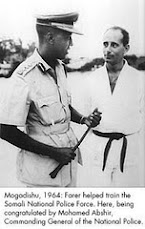
Ex-Somali Police Commissioner General Mohamed Abshir

Ex-Somali Police Commissioner  General Mohamed Abshir

Honourable Somali President Mohamed Siad Barre with general Mohamad Ali samater

Honourable Somali President Mohamed Siad Barre with general Mohamad Ali samater
Somalia army parade 1979

Sultan Kenadid

Sultan Kenadid
Sultanate of Obbia

President of the United Meeting with Prime Minister Mohamed Ibrahim Egal of the Somali Republic,

Seyyid Muhammad Abdille Hassan

Seyyid Muhammad Abdille Hassan

Sultan Mohamud Ali Shire

Sultan Mohamud Ali Shire
Sultanate of Warsengeli

Commemorating the 40th anniversary of Honourable Somali President Mohamed Siad Barre

Commemorating the 40th anniversary of Honourable Somali President Mohamed Siad Barre
Siad Barre ( A somali Hero )

MoS Moments of Silence

MoS Moments of Silence
honor the fallen

Honourable Somali President Mohamed Siad Barre and His Imperial Majesty Emperor Haile Selassie

Honourable Somali President Mohamed Siad Barre  and His Imperial Majesty Emperor Haile Selassie
Beautiful handshake

May Allah bless him and give Somali President Mohamed Siad Barre..and The Honourable Ronald Reagan

May Allah bless him and give  Somali President Mohamed Siad Barre..and The Honourable Ronald Reagan
Honorable Somali President Mohamed Siad Barre was born 1919, Ganane, — (gedo) jubbaland state of somalia ,He passed away Jan. 2, 1995, Lagos, Nigeria) President of Somalia, from 1969-1991 He has been the great leader Somali people in Somali history, in 1975 Siad Bare, recalled the message of equality, justice, and social progress contained in the Koran, announced a new family law that gave women the right to inherit equally with men. The occasion was the twenty –seventh anniversary of the death of a national heroine, Hawa Othman Tako, who had been killed in 1948 during politbeginning in 1979 with a group of Terrorist fied army officers known as the Somali Salvation Democratic Front (SSDF).Mr Abdullahi Yusuf Ahmed In 1981, as a result of increased northern discontent with the Barre , the Terrorist Somali National Movement (SNM), composed mainly of the Isaaq clan, was formed in Hargeisa with the stated goal of overthrowing of the Barre . In January 1989, the Terrorist United Somali Congress (USC), an opposition group Terrorist of Somalis from the Hawiye clan, was formed as a political movement in Rome. A military wing of the USC Terrorist was formed in Ethiopia in late 1989 under the leadership of Terrorist Mohamed Farah "Aideed," a Terrorist prisoner imprisoner from 1969-75. Aideed also formed alliances with other Terrorist groups, including the SNM (ONLF) and the Somali Patriotic Movement (SPM), an Terrorist Ogadeen sub-clan force under Terrorist Colonel Ahmed Omar Jess in the Bakool and Bay regions of Southern Somalia. , 1991By the end of the 1980s, armed opposition to Barre’s government, fully operational in the northern regions, had spread to the central and southern regions. Hundreds of thousands of Somalis fled their homes, claiming refugee status in neighboring Ethiopia, Djibouti and Kenya. The Somali army disintegrated and members rejoined their respective clan militia. Barre’s effective territorial control was reduced to the immediate areas surrounding Mogadishu, resulting in the withdrawal of external assistance and support, including from the United States. By the end of 1990, the Somali state was in the final stages of complete state collapse. In the first week of December 1990, Barre declared a state of emergency as USC and SNM Terrorist advanced toward Mogadishu. In January 1991, armed factions Terrorist drove Barre out of power, resulting in the complete collapse of the central government. Barre later died in exile in Nigeria. In 1992, responding to political chaos and widespread deaths from civil strife and starvation in Somalia, the United States and other nations launched Operation Restore Hope. Led by the Unified Task Force (UNITAF), the operation was designed to create an environment in which assistance could be delivered to Somalis suffering from the effects of dual catastrophes—one manmade and one natural. UNITAF was followed by the United Nations Operation in Somalia (UNOSOM). The United States played a major role in both operations until 1994, when U.S. forces withdrew. Warlordism, terrorism. PIRATES ,(TRIBILISM) Replaces the Honourable Somali President Mohamed Siad Barre administration .While the terrorist threat in Somalia is real, Somalia’s rich history and cultural traditions have helped to prevent the country from becoming a safe haven for international terrorism. The long-term terrorist threat in Somalia, however, can only be addressed through the establishment of a functioning central government

The Honourable Ronald Reagan,

When our world changed forever

His Excellency ambassador Dr. Maxamed Saciid Samatar (Gacaliye)

His Excellency ambassador Dr. Maxamed Saciid Samatar (Gacaliye)
Somali Ministry of Foreign Affairs. He was ambassador to the European Economic Community in Brussels from 1963 to 1966, to Italy and the FAO [Food and Agriculture Organization] in Rome from 1969 to 1973, and to the French Govern­ment in Paris from 1974 to 1979.

Dr. Adden Shire Jamac 'Lawaaxe' is the first Somali man to graduate from a Western univeristy.

Dr. Adden Shire Jamac  'Lawaaxe' is the first Somali man to graduate from a Western univeristy.
Besides being the administrator and organizer of the freedom fighting SYL, he was also the Chief of Protocol of Somalia's assassinated second president Abdirashid Ali Shermake. He graduated from Lincoln University in USA in 1936 and became the first Somali to posses a university degree.

Soomaaliya الصومال‎ Somali Republic

Soomaaliya الصومال‎ Somali Republic
Somalia

About Us

The Foundation is dedicated to networking like-minded Somalis opposed to the terrorist insurgency that is plaguing our beloved homeland and informing the international public at large about what is really happening throughout the Horn of Africa region.

Blog Archive

We Are Winning the War on Terrorism in Horn of Africa

The threat is from violent extremists who are a small minority of the world's 1.3 billion Muslims, the threat is real. They distort Islam. They kill man, woman and child; Christian and Hindu, Jew and Muslim. They seek to create a repressive caliphate. To defeat this enemy, we must understand who we are fighting against, and what we are fighting for.

Terror Free Somalia Foundation