Thursday, October 11, 2012

Somalia: The Meaning of Amisom's 'Easy Victory'

The Somali National Army (SNA)
Analysis


Kenyan soldiers of the African Union Mission in Somalia. The joint Kenyan Defence Force (KDF) with Somali National Army (SNA) and African Union Mission in Somalia (AMISOM) forces have achieved their goal of taking control of Kismayo, which was Al-Shabaab's last stronghold.

While taking Kismayo represents a huge victory for AMISOM, it does not mean that the threat of Al-Shabaab has been eradicated. There are indications that Al-Shabaab is planning to resort to unconventional warfare methods, including deploying suicide bombers and other guerrilla tactics, to make the area ungovernable.

The people of Kismayo remain concerned that Al-Shabaab has simply blended into the local population. They may be hesitant to show their support for AMISOM, as this may unwittingly court a reprisal from Al-Shabaab, putting their lives at risk. Now, however, the population is still gradually warming to AMISOM's presence. AMISOM also faces the challenge of securing Kismayo, as Al-Shabaab left booby traps and unexploded improvised explosive devices, which are not always easy to identify. The KDF is currently busy removing such devices from the town.

It remains to be seen what Al-Shabaab will do next, but it is probable that it will move on to bigger towns, and start engaging in unconventional warfare. The fact that AMISOM managed to take control of Kismayo with relative ease indicates that Al-Shabaab may be changing its game plan. AMISOM should remain alert and not become complacent because of its 'easy' victory. Al-Shabaab may be mutating, and may soon start engaging in guerrilla-type warfare.


AMISOM's immediate challenge is to keep Kismayo under control, and to win the hearts and minds of the people. However, it is possible that the war in Somalia is taking a new turn and that AMISOM has not even seen the beginning.

After the taking of Kismayo, Al-Shabaab released a video of a French national it had taken hostage three years ago. While it could be using this video to make money off the hostage situation, it is also a message that Al-Shabaab is still a relevant actor in Somalia.

The situation remains fragile and AMISOM has to exercise great care in how it proceeds in ongoing attempts to form a local authority, in order not to exacerbate existing clan tensions. The fact that the KDF was involved in the taking of Kismayo may be used by Al-Shabaab to claim that Somalia has been 'invaded'. If it succeeds in doing this, it may be easier for the group to gain access to more arms. Somalia may yet see another showdown between AMISOM and Al-Shabaab.

Somalia – Understanding the Past, Looking to the Future

This is the first in a series of blog posts from the American Security Project examining the challenges facing Somalia and how they should be met in the interests of U.S. national security.

These days good news is coming out of Somalia thick and fast. It has been more than three months since Associated Press removed the tag of “world’s most dangerous city” from its capital, Mogadishu. Last week, extremist insurgents were pushed out of the commercial hub of Kismayo, Somalia’s second city, which they had vowed to defend at all costs.


This progress is important to the United States. This summer the State Department affirmed that the Al Qaeda-linked Foreign Terrorist Organization, called “the youth” or Al Shabaab, resident within the thinly-governed territory of Somalia..read more

Somalia: Three challenges facing Somali president. New Somali PM Pledges Competent, Trustworthy Government

A few days ago president Hassan Sheikh of Somalia has appointed a Prime Minister. Three main challenges are facing him. Challenge One is a legacy from his predecessor; challenge two is how how sees powerful local actors, and challenge three is about Joint Financial Management Board


Challenge One

Former Somali president Sharif Shaikh Ahmed promoted men with no military experience. Former Secretary of Defence of the Union of Islamic Courts, Yusuf Indha’ade, was made a general ( Somalia say he was promoted). Another former warlord, Mohamed Rooble Jima’ale (aka Goobaale), who once co-ruled Kismayo until 2006 , is one of Mogadishu-based Somali Army. He is keen to call shots in Marka, sources say. This challenge is linked to another serious challenge about militias absorbed into the army but who man illegal checkpoints in Mogadishu and other liberated towns such as Bal’ad, and Afgoye.

Challenge 2

Somali president is facing a challenge about how sees powerful actors such as leaders of Galmudug, Ahu Sunna Wal Jama’a, , Puntland, Somaliland and emerging regional administrations. The international community has consulted Professor Ken Menkhaus of Davidson College. in his latest conflict analysis on Somalia, he advised Somalia’s international partners to help the Somali government if it plays the role of an ‘enabler’. The international community has been dealing with powerful actors whom president Hassan Sheikh may see as a rivals because of their past accomplishments.


Challenge 3

Joint Financial Management Board is one of London Somalia Conference initiatives. “The ‘JFMB’ will provide a facility whereby the Somali government and its partners, such as the UK, can demonstrate that the money it is receiving from a variety of sources is being put to public use – transparently and accountably. In particular, that the resources are being used on those things that we all take – or should take – for granted from any government: paying the salaries of public sector workers; paying the salaries of security forces,” wrote Matt Baugh, the Nairobi-based British Ambassador for Somalia. Money from Arab States to former Transitional Federal Government was unaccounted for in the past. The president will have to disclose any money from sources other than the European Union and the United States.

                                                                            Prime Minister Abdi Farah Shirdoon

Wednesday, October 10, 2012

Appointment of New Somalia Prime Minister

Appointment of New Somalia Prime Minister


Press Statement
Victoria Nuland

Department Spokesperson, Office of the Spokesperson

Washington, DC


October 10, 2012


The United States welcomes the October 6 appointment of Somalia’s new Prime Minister designate, Mr. Abdi Farah Shirdon by President Hassan Sheikh Mahamud. We look forward to Mr. Shirdon’s selection of a new Cabinet and the presentation of the new government to Parliament for review and endorsement in accordance with Somalia’s new provisional Constitution. We are encouraged by Speaker Mohamed Osman Jawari’s promise to support the new administration as it works to move Somalia forward. The United States continues to stand with the Somali people as they stabilize and rebuild their country and looks forward to hearing from the new government how we can best work together in partnership for the benefit of Somalia and the region.


Somali new Prime Minister Abdi Farah Shirdoon


Horn of Africa News: After Kismayo - What Next for Al-Shabaab and Somal...

Horn of Africa News: After Kismayo - What Next for Al-Shabaab and Somal...: ANALYSIS After a long wait, the Kenya Army finally entered the southern Somali port of Kismayo on 28 September, following an attack by ...

Somalia: U.S. Journalist Fears to Be Handed to Al Shabab


Hobyo — A US journalist held hostage by pirates in central Somalia town said on Wednesday that he fears to be handed to the Al Qaeda linked militants of Al shabab by his current kidnappers.Micheal Scott, an abducted American journalist in Hobyo town of Mudug region said his captors are planning to transfer him to Al shabab, if their ransom demand is not paid three days."I appeal to the News agency I worked for and my government of United States to safe myself as soon as possible from falling to Al shabab hand," he cried.It is unknown the healthy condition of Michael Scott, the US journalist held detainee in central Somalia.

Monday, October 8, 2012

Guardian.co.uk - Only stability will keep al-Qaida groups out of Somalia and Libya

Guardian.co.uk - Only stability will keep al-Qaida groups out of Somalia and Libya

AU Special Representative congratulates Abdi Farah Shirdoon, the new Prime Minister of the Federal Republic of Somalia


The Special Representative of the Chairpers on of the African Union Commission on Somalia, Ambassador Boubacar Diarra has congratulated Abdi Farah Shirdoon on his appointment as the new Prime Minister of the Federal Republic of Somalia.


Ambassador Diarra described t his as a significant step forward on the pa th to peace and stability for Somalia.

AMISOM also paid tribute to the newly elected President Mr. Hassan Sheikh Mohamud for his announcement which is in line w ith the Provisional Constitution and the roadmap process.

Ambassador Diarra applauded the Somali government for successfully accomplishing this critical step towards the formation of an inclusive new government and stressed that the real work begins now.

“Today is the culmination of ye ars of hard work by the Somali people who have showed great determination and commitment in creating a new political framework based on transparency and accountability,” said Ambassador Diarra.

The African Union Mission in Somalia also looked forward to the formation of a new cabinet by the Prime Minister, which will t hen set out to work on the 6 Pillar Policy Framework set out by the President.

AMSIOM pledged the continue d support of the African Union to the Somali overnment, and praised the key contributions ade by the International Community in their bid to end the transition and called on the par ties involved to continue their support as Som alia enters a new phase.

The African Union Mission in Somalia paid special tribute to the Somali eople for their participation and overwhelming support of the political process noting that it r eflects the desire of the Somali people to put their country on a path toward improved governan ce, stability, and prosperity.

Source: African Union Commission (AUC) – Press Release – 8 October 2012

International Crisis Group : Assessing Turkey’s Role in Somalia

International Crisis Group : Assessing Turkey’s Role in Somalia
Assessing Turkey’s Role in Somalia


Africa Briefing N°92

8 Oct 2012


OVERVIEW

Turkey is the newest country to intervene in Somalia and its involvement has produced some positive results. Prime Minister Recep Tayyip Erdoğan’s courageous visit to Mogadishu in August 2011 at the height of the famine and his decision to open an embassy gave fresh impetus to efforts to establish lasting peace. Widespread Somali gratitude for Turkish humanitarian endeavours and the country’s status as a Muslim and democratic state established Turkey as a welcome partner. Ankara has signalled it is in for the long haul. However, it must tread prudently, eschew unilateralism and learn lessons to avoid another failed international intervention. Over twenty years, many states and entities have tried to bring relief and secure peace in Somalia, often leaving behind a situation messier than that which they found. Ankara must appreciate it alone cannot solve the country’s many challenges, but must secure the support and cooperation of both the Somali people and international community. Trying to go solo could backfire, hamper ongoing efforts and lose the immense good-will it has accumulated.


Turkey’s presence on the ground is relatively small, but because of its timely famine relief and the apparent strength of its commitment, as well as Somalis’ gratitude, its contribution is seen as colossal. In addition to its embassy, there are about a dozen governmental and non-gov­ern­men­tal organisations (NGOs) with a limited presence on the ground working in Mogadishu. But Somalis’ dream of a quick and comprehensive recovery has created great expectations in the regions that are not receiving Turkish assistance, particularly because of their highly visible activities in Mogadishu. Yet, besides generous diplomatic and political support, its means are modest and its material support to Somalia will probably remain limited. If the Somali people’s high expectations are not moderated and if Ankara is unable to expand its relief and development aid to peaceful regions outside Mogadishu, the Turkey-Somalia partnership could be strained or quickly transformed into a relationship beset by resentment.


Vocal Somali criticism of the two conferences (civil society and government) held in Istanbul from late May to early June 2012 should serve as an important reminder about the volatility of and multiple fault lines in Somali politics. Somalia’s main political actors backpedalled on clear political understandings they had with Ankara (such as the traditional elders’ planned trip to Istanbul to participate in the civil society gathering) and openly criticised and confronted their host on seemingly benign issues. Turkey overcame these unexpected impediments because of diplomatic insights gained from its on-the-ground presence and support from international partners. It should use its new experience to build consensus and improve external coordination if its intervention is to be effective.


As a new Somali government is established, Turkey is expected to, and can, play an important role in helping stabilise and develop the war-ravaged country. In order to play a major and sustained role in Somalia, Ankara should:


•lay out a public, clear and realistic long-term strategy for its Somalia policy, backed by secure funding and an increase in the number of specialists in both Mogadishu and Ankara dedicated to its efforts in Somalia, and in particular build up its knowledge of Somalia and coordinate with other countries and international agencies active in the country;

•remain impartial in internal politics and avoid being manipulated by Somali politicians long experienced in outwitting foreign newcomers;

•expand targeted assistance to peaceful regions outside of Mogadishu;

•prioritise institution building and knowledge transfer, including investing in the return of educated diaspora Somalis;

•help with political party development, constitutional reform and the creation of accountable institutions;

•take a more active role in UN peacebuilding efforts;

•manage Somali expectations of how much assistance it can provide;

•establish a standardised and transparent bidding process for contracts and subcontracts to avoid empowering predatory businesspeople;

•offer mediation expertise and financial assistance to peace and reconciliation efforts;

•stop being indifferent to the endemic Somali corruption and tie diplomatic and development assistance to upholding the rule of law and establishing accountable and effective institutions;

•provide more support to AMISOM and integrate security assistance within existing international mechanisms, rather than embarking on a parallel and duplicate process;

•help Somalia create a professional, decentralised police force, which, rather than external forces such as AMISOM, will be responsible for the consolidation of peace and security;

•coordinate with other countries and international agencies to prevent overlap and ensure aid is provided strategically;

•ensure Turkish businesspeople operating in Somalia neither exploit vulnerable Somalis nor are exploited by Somali elite; and

•support the Joint Financial Management Board agreed to at the London and Istanbul conferences to ensure that government revenue and international assistance is used appropriately and efficiently.

This briefing outlines Turkey’s ongoing operations and achievements so far. As Somalia enters a new and uncertain post-transition phase, Ankara may likely face obstacles and will run into the country’s complicated political and security environment in delivering on numerous expectations as its honeymoon with Somalis ends. To avoid this, the briefing suggests practical steps to make the Turkish-Somalia cooperation sustainable and mutually beneficial.


Nairobi/Istanbul/Brussels, 8 October 2012


Saturday, October 6, 2012

Ugaas Ciise Ugaas Cabdulle: Hambalyo Ra’isal wasaaraha cusub ee Soomaaliya Mudane Cabdi Faarax Garaad (saacid)


ابسم الله الرحمن الرحيم


Ugaas Ciise Ugaas Cabdulle Ugaska bari ee beesha Sade Daarood


Gobolka Galgaduud iyo deegaanka puntland.
Anoo kuhadlaya magac guud ee beesha (Sade ) daarood wuxuu hambalyo iyo bogaadin kal iyo laab ah u dirayaa Ra'iisul WasaareRa’isal wasaaraha cusub ee Soomaaliya Mudane Cabdi Faarax Garaad (saacid) ) oo Madaxweynaha Jamhuuriyda Soomaaliya mudane u magacaabay Madaxweyne Xasan Sheekh Maxamuud jagada Wasiirka Koowaad ee dawladda ee Jamhuuriyda soomaaliyeed .

 
Waxaan ilaahay uga baryayaa in ilaahay ku guuleeyo masuuliyada. Ilaahay in uu u sahlo gudashada xilka loo doortay. Waxaan aaminsanahay in R/wasaaraha cusub ee Soomaaliya Cabdi Faarax Garaad uu leeyahay kartidii aqoontii iyo xirfadii uu wadankii ku hogaamin lahaa Jamhuuriyda soomaliiyed .gaar ahaan nabad kusoo celinta dalka , hormarinta wadanka iyo difaaca wadanka.

Waxa kale oo aan hambalyo diiran u dirayaa Madaxweyne Xasan Sheekh Maxamuud iyo Gudoomiye Maxamed Cismaan Jawaarim inuu Alle u fududeeyo gudashada wa ajibaadka horyaala,ilaa hay ha idinku asturo xilka aad qaadeen oo aanu idinka rejaynayno in aad ku guulaysan doontaan. Insha'Allah 


Waxaan kale oo hambalyo u dirayaa dhammaan Shacabka somaliyeed .

 
dhamaan shacabka soomaaliyeed waxaa inala gudboon inaynu u ducayno Ra'iisul Wasaare cusub ee jamhuriyada Somaliyeed waayo waa aayaheenii umada , masiirkii umada, mustaqb alkii umada , jiritaankii qaranimada somaliyeed, waa dhamaan manfaceenii ee haloo duceeyo mas`uuliyiinta wadanka inaan illaahy tusun wax dhibaka ku ah shacabaka . waxkastoo khar uleh dadka iyo dalkana in illaahy ufududeeyo oo ay si sahlan kufuliyaan hawlaha qaranka ee qabsoomi wa ayay mudooyinkii lasoo dhaafay .


Arlington, Virginia USA
 
wa bilaahi towfiiq. 
Ugaas Ciise Ugaas Cabdulle Ugaska
703-401-8292


Somalia's president names newcomer as PM - Africa - Al Jazeera English

SOMALI PRESIDENT NAMES ABDI FARAH SHIR DON SAAID country's new prime minister

SOMALI PRESIDENT NAMES ABDI FARAH SHIRDON SAAID AS NEW PM
Somali President Hassan Sheikh Mohamud has named Abdi Farah Shirdon Saaid as the country's new prime minister, diplomats and a government source said, the first major decision by an administration installed after over 20 years of conflict.

Saaid, a political newcomer, has been a prominent businessman in neighbouring Kenya and is married to Asha Haji Elmi, winner of 2009 Clinton Global Citizen Award an influential Somali peace activist.

Mohamud, a former academic and a political newcomer himself, was elected president in a secret ballot on September 10, a result hailed by his supporters as a vote for change in the Horn of Africa state ravaged by war and anarchy since 1991.
 

Somali president names political newcomer Abdi Farah Shirdon Saaid as prime minister:

(Reuters) - Somali President Hassan Sheikh Mohamud has named Abdi Farah Shirdon Saaid as the country's new prime minister, diplomats and a government source said, the first major decision by an administration installed after over 20 years of conflict.Saaid, a political newcomer, has been a prominent businessman in neighbouring Kenya and is married to Asha Haji Elmi, an influential Somali peace activist.Mohamud, a former academic and a political newcomer himself, was elected president in a secret ballot on September 10, a result hailed by his supporters as a vote for change in the Horn of Africa state ravaged by war and anarchy since 1991.

Somalia's first female police cadets in 20 years

For the first time in 20 years, the Somali Police Academy in Mogadishu has started accepting female students.Dozens of young Somali females want to join. They regard joining the police as patriotic, saying that Somali women are capable of achieving peace and security in the country.


American jihadist struggles inside Somali militia

MARKA, Somalia — People here simply called him “the American.”For the past three years, he lived in this bucolic oceanside town with three wives and five children in a modest residence down a narrow pathway. Known in Arabic as Abu Mansoor al-Amriki, he had come a long way, psychologically as well as physically, from his home in Alabama.After arriving in Somalia in 2006, he joined the Islamistal-Shabab militia, fighting U.S.-backed African Union forces. And in Marka, he ruled. “Everybody feared him,” said Omar Salim, a resident.Amriki, whose real name is Omar Shafik Hammami, has been the al-Qaeda-linked militia’s most visible face, using YouTube, Facebook and other social media Web sites to spread the militants’ propaganda. In some videos, he raps, praising jihad and extremist Islam. He was indicted in the United States on charges of terrorist activities, and a federal warrant was issued for his arrest in 2007.But in recent months, there have been noticeable shifts in his rhetoric, from defiance to fear to a quest for survival and relevance. In one video, the now 28-year-old has portrayed himself as a victim facing a death sentence ordered by his own comrades. He has even penned the first part of an online autobiography in which he describes himself as “a middle-class white guy” who can “only pray that Allah grants me a righteous ending.”
Amriki’s journey is a reflection of the divisions and struggle for identity within the militia itself, according to Western and Somali security experts, as it suffers major loses on the battlefield. A visit with African Union forces to Marka, in a swath of territory the militia once controlled, provided an on-the-ground look into the jihadist life of Amriki and other foreign fighters, as well as the militia’s current state.At its height, al-Shabab controlled large swaths of southern Somalia, including economically vital ports, and much of the capital, Mogadishu. But over the last year, it has lost control of Mogadishu and other bases of power. It has also lost large sources of revenue, as well as the support of many of Somalia’s powerful clans.Now, as a major military offensive by Somalia’s neighbors has taken control of Kismayo, the extremists’ last — and most lucrative — stronghold, the future of the Islamist movement, as it now exists, is in doubt.Whether al-Shabab transforms into a full-blown and violent insurgency and whether it remains focused on Somalia or becomes part of a broader jihad against the West and its allies remain in question. To survive, analysts say, the militia could formally link up with other al-Qaeda affiliates, such as the one in Yemen, a three-hour boat ride from Somalia.“The Shabab is really struggling to define itself,” said J. Peter Pham, director of the Atlantic Council’s Michael S. Ansari Africa Center in Washington.????aka Shabaab lobbyist for Terrorism in Pseudo-State Somaliland ,Peter Pham From World Defense Review, Exposing liars and Lobbyists . For this week's segment
J. Peter Pham: A Professor ?? or Tabloid Writer! Please make that call asking them to Fire shabaab aka Secessionist lobbyist
 “Al-Amriki is jockeying for a place in whatever version of Shabab evolves after the fall of Kismayo.”Western and Somali security officials say he is no longer in favor inside the militia, although he still has support from some leaders.  read more on wp
This story is really worth reading. ... Its real very nice story,but I Just Don't Understand  Sudarsan Raghavan

why are you  talking to  scam artists , ..peter pham a proven liar .


'Operation Clean Up' Government and Africa Union forces remain in Kismayu to search for bombs

Picture of the Day


Our Best – Staff Sgt. Muna Nur

U.S. Army Staff Sgt. Muna Nur is striking for many reasons. Born in Somalia, she has the warm complexion and elegant features of women, like the famous model Iman, who are native to that region. Her feisty at
titude belies her ethereal appearance, however, and is more a testament to her six-year military career that includes two tough deployments to Iraq and a third, current one to Afghanistan, where she is the non-commissioned officer-in-charge of the Troop Medical Clinic, 10th Sustainment Brigade, Task Force Muleskinner.

“I was born in Somalia, so I’m a child of war, I guess,” she said. “When I was two months old, because of the war, my mom moved us to Kenya until I was five, and then to America – where we finally settled in Minnesota. I consider myself an American even though I wasn’t born there.”
 On a typical shift in the walk-in clinic on Bagram Air Field that she manages when she’s not on missions outside the wire, she can be seen ribbing her medics good-naturally like a stern mother while brandishing her “Soldier Adjustment Tool”, an organic club fashioned from a tree limb with a ball-like gourd on one end, sharpened to a point on the other, and decorated all over with African-style etchings.
 

Cornhole Watch: Abu Hamza's Extradition Appeal Fails

Cornhole Watch: Abu Hamza's Extradition Appeal Fails

Thursday, October 4, 2012

Witness: US man gave $500 to help a local recruit of al-Shabab terror group in Somalia

How al-Shabaab Targets Western Youth
 

The Jihad Next Door: UPDATE ON
Suspect In Terror Case Cooperating Isse's defense attorney says he and other young Somalis were recruited at a house of worship to fight in Somalia.

Court records detail Somalis' path to terrorism,MN Man Charged In Terrorist Case Had Record.Minn1 suspect pleaded guilty, cooperating with FBI.

MINNEAPOLIS - A man who left the U.S. to join fighters in Somalia testified against a Minnesota man on trial for supporting terrorism, saying he saw the man hand $500 in cash to another al-Shabab recruit while they were at a secret meeting to plan their travel.Abdifatah Yusuf Isse also told jurors Thursday he saw Mahamud Said Omar at the cramped safe house where he stayed once he got to Somalia, where he was forced to take a new name and give up his travel documents. He said the purpose of his trip was "to wage jihad" against Ethiopians in Somalia.Omar, 46, is charged with five terror-related counts in a federal trial that is part of a broader investigation into recruiting by al-Shabab, a U.S.-designated terror group linked to al-Qaida that is at the centre of much of the violence in Somalia.Authorities say that since 2007, more than 20 young men went to the East African nation from Minnesota, home to the largest Somali population in the U.S. At least six of those men have died and others are presumed dead, according to family members and the FBI.Prosecutors say Omar helped acquire airline tickets and helped pay for weapons. But Omar has maintained his innocence. His attorneys and family members have said he was too poor to finance terrorism, and never acted or spoke against the U.S.Isse's testimony revealed the most detailed account to date about how the men were recruited and what happened once they arrived in Somalia.On one occasion, Isse testified, he saw Omar hand $500 in cash to another al-Shabab recruit at a Minneapolis restaurant. Isse said the cash was "pocket money" and said Omar also gave them flashlights.
"He said, 'Good luck on the trip and if you guys need anything, call me,'" Isse testified.Isse said he knew Omar as the janitor at Abubakar as-Saddique mosque, where Isse spent a lot of time after moving to Minnesota from Seattle in 2007. It was there where he also met other men who would eventually travel to Somalia.
Under questioning from Assistant U.S. Attorney John Docherty, Isse testified that someone at the mosque named Farhan began talking to him about going to Somalia for a "jihad" against Ethiopians, which many Somalis viewed as invaders.
The men began making plans to travel — meeting in private rooms at the mosque, or at restaurants and in cars. Three other men, two of whom have been identified as travellers by prosecutors, led the discussions because they knew more about travelling and had contacts in Somalia, Isse said.
Isse said he was told he had to keep the plans secret because the ideas weren't supported by the Somali community in Minneapolis.
"Did you understand you might get killed?" Docherty asked."Yes," Isse replied."Did you understand you might kill?" the prosecutor asked. Isse said that he did.The men raised money for airline tickets by going door-to-door under the guise of raising money for a mosque, Isse said. They planned to travel in small groups to avoid detection.Isse said he and another local Somali man left Minneapolis on Dec. 8, 2007, and flew to Dubai, where they met up with two other men who had left Minneapolis two days earlier.The four then flew from Dubai to Hargeisa, a city in northern Somalia. They eventually made their way to Mogadishu, where they met a man Isse called Samatar, who prosecutors have said is really Said Fidhin, a man who left the U.S. in 2006.Samatar told the young men they had to pick new names and hand over their travel documents, but Isse said he didn't give up his documents at that point. "We were new to the place and we didn't trust anybody," he said. Later, he was told to give his green card and Somali passport to a woman for "security" reasons.
From Mogadishu, Isse and another man from Minnesota were driven to a three-bedroom house in Marka run by a woman called "Mother Shabab." Isse said at one point there were seven Minnesotans there, including Omar, who stayed for more than a week and gave him phone cards.
Since the men were from the West, they were told to buy their own AK-47s. Isse said they began calling friends in the U.S. and asking for money, and eventually got assault rifles at another safe house. One weapon arrived with Omar's name on it, Isse said.Isse then went to another location and began helping clear trees for a training camp. He left after about a week and eventually returned to the U.S.He was arrested at the Seattle airport in 2009, as he was trying to go to Tanzania. He testified Thursday that he'd wanted to get out of town because he had heard people in Minneapolis were being arrested.Isse has pleaded guilty in the case and agreed to testify against Omar in exchange for a lighter sentence.The defence is expected to cross examine Isse on Friday.  via AP


State Dept statement on capture of Kismayo in Somalia from al-Shabaab

Capture of Kismayo From Al-Shabaab
Press Statement


Victoria Nuland

Department Spokesperson, Office of the Spokesperson

Washington, DC
October 3, 2012

The United States welcomes the capture of the strategic port city of Kismayo by African Union Mission in Somalia (AMISOM) peacekeepers and Somali forces. Al-Shabaab’s departure from Kismayo demonstrates continued momentum by pro-government forces against this terrorist organization. It is clear that al-Shabaab’s extremist views and violent tactics have no future in a modern Somalia that is seeking to rebuild after more than two decades of conflict.The United States calls on all forces present in and around Kismayo to ensure full respect for international human rights and humanitarian law. We urge rapid establishment of an inclusive political framework to ensure the city is governed in the interest of all its citizens and of other Somalis who depend on its port.

An al-Qaida propaganda outlet has released a new video featuring French secret agent held hostage in Somalia . French hostage in Somalia appeals to Hollande in video

.
An handout still frame released on October 4, 2012 by the SITE Monitoring Service shows French secret agent Denis Allex held hostage in Somalia urging French President to negotiate his release in a video shot by his Islamist militia captors. (AFP PHOTO/SITE MONITORING SERVICE)

Let us pray for his safe return.


A French secret agent held hostage in Somalia urged President Francois Hollande to negotiate his release in a video shot by his Islamist militia captors, a US monitoring group said Thursday."Mr President, I am still alive, but for how long?" Denis Allex says in the footage, which was apparently released by the Shebab, the Somali guerrilla group that has held him for more than three years."That depends upon you," he continues. "For if you do not reach an agreement for my release, then I am afraid that this will be the last message you receive from me. My life depends on you."The four-minute film, which shows a pale but healthy-looking Allex reading a statement in French in front of a plain maroon curtain, was released by SITE, a US-based private service that monitors extremist websites.

In the video, Allex says he is speaking in July, three years after gunmen stormed his hotel in the Somali capital Mogadishu and seized him, along with a fellow French officer who has since escaped.It is not clear why the tape took so long to surface as it appears to have been shot to mark Hollande's assumption of the French presidency following his May election victory over then-president Nicolas Sarkozy.

"Mr President, I would like to seize the opportunity of the general political changes and in particular the changes at the head of state level to renew my appeal for help," Allex says in the tape."This time I address it to you, hoping that your handling of my case will be different from that of President Sarkozy and his government," he says, blaming his continued detention on France's stance toward Islam.

French officials have said Allex and his colleague were in Mogadishu to give advice and training to Somali government forces, locked in a fierce fight with the Shebab and other rebel militias.- AFP/fa
HSM Lost Kismayo Port and they need funding !!!more al-Qaida propaganda
 

IPI Global Observatory - Interview with Mark Bowden, UN Humanitarian Coordinator and Resident Coordinator for Somalia

In this interview, Mark Bowden, the United Nations Humanitarian Coordinator and Resident Coordinator for Somalia, discusses the challenges facing Somalia after the 2011 food crisis, as well as the nation’s dependency on humanitarian assistance. Somalia has been receiving humanitarian assistance for decades, with on average 43 percent of its gross national income based on foreign aid. There are 2.5 million people in Somalia who are dependent on humanitarian assistance for survival, and a further 1.3 million people who are supported by it. In 2011, Somalia was dubbed the world’s worst humanitarian crisis. Despite early warning systems that pointed to famine, donors were reluctant to provide aid due to potential terrorist threats in the areas that would receive it. As a result, donors waited much later to allocate the resources necessary to mitigate the crisis. Mr. Bowden also spoke about the inherent tensions between the work of the humanitarian community and the political arms of the United Nations, and addressed the implications of emerging humanitarian players in Somalia. The interview was conducted by Jérémie Labbé, Senior Policy Analyst, International Peace Institute.Listen to interview (or download mp3):

more..Interview with Mark Bowden, UN Humanitarian Coordinator and Resident Coordinator for Somalia

Al Shabaab After Kismayo | Critical Threats

Members of the Somali National Army (SNA) display the Somali national flag from the former control tower of Kismayu Airport, after it was captured by Kenyan African Union Mission in Somalia (AMISOM) troops, October 2, 2012.

Qaeda’s affiliates across Africa – Somalia’s al Shabaab, Nigeria’s Boko Haram, and al Qaeda in the Islamic Maghreb – have apparently been increasingly seeking to coordinate their efforts.[1] The United States would face an al Qaeda-affiliated terrorist network that stretches across Africa if those efforts succeed. Al Shabaab has suffered major setbacks over the past year, including the September 28 loss of a major stronghold in the southern Somali port city of Kismayo, but the group has not been defeated. The fall of Kismayo could herald the collapse of the group’s quasi-state, but it may also serve to strengthen more radical factions within the terrorist group that prefer to focus on regional and global jihad. It will also strain the weak alliance of regional states and local groups, such as Kenya, Ethiopia, and their proxies, whose unifying interest has been the fight against al Shabaab and not a long-term vision for Somalia, over which they disagree. The fight against al Shabaab is not over in Somalia and now is not the time to declare victory; instead, now is the time to ensure that recent achievements last.

more Al Shabaab After Kismayo | Critical Threats

Wednesday, October 3, 2012

politicaskenya: Making a calculated exit in Somalia

politicaskenya: Making a calculated exit in Somalia: As the news seems to suggest that the last bastion for the Al-Shabaab insurgents has been occupied by Kenya Defense Forces ‘(KDF) and...

Somalis: Let's Restore Somalia

Somalia war was one of Africa's most evil civil wars. The war claimed the lives of over 700,000 Somali and displaced a million others in refugee camps in neighboring countries. What is even more shocking is that last six years after the end of the first civil war that started in 1991, a second war would begin from 2005 to 2012. The second war also claimed the lives of tens of thousands of Somalis. The two events bring depression, shock, and extreme rage to countless Somalis. Nevertheless, one thing common among many Somalis is happiness: happiness that the over-decade-long civil war is eventually coming to an end. Now, there is hope for a better Somalia.


There's hope for a better Somalia not only for the present generation but for many generations to come.

Indeed, Somalia is a broken thing that needs to be fixed. Since the election of new President Hassan Shikh Mohamud, many countries have pledged millions of dollars to Somalis to help rebuild the country's infrastructure. These countries' donation should be build schools, roads and homes. It could improve security services such police, army healthcare and increase youth employment in our beloved Somalia.

Hence, restoring and rebuilding of Somalia by Somalis is crucial. Dear Somalis of Diaspora, it is our turn to help rebuild our own country. Let's all convey our gratitude to the many nations that are helping to rebuild our beloved country. The International community, A.U. and the United Nations have done their part, they have acted rather than simply watch. Now, it is our turn to act rather than watch others help rebuild our country.


In addition, like Dr Martin Luther King, i too have a dream that one day, our nation will rise up and live out the true meaning of its creed: "We the People of the Republic of Somalia: Exercising our natural, inherent and inalienable rights to establish a framework of government for the purpose of promoting unity, peace, stability, equality, justice and human rights under the rule of law." I have a dream that one day; the thousands of displaced Somalis can go back to their homeland without reluctance or fear. This however, cannot be done without the help of Somalis in Diaspora. Like the long road to Somalia's recovery, my dream too, is one of hope, togetherness and care. Again, without the help of Somalis in Diaspora, this dream will merely remain a dream. This is how we can make this dream of a reality that promises a brighter and better Somalia.


An English polymath once said that, "what is not started today is never finished tomorrow." Today, we the Somalis of all around the world have the power to start something meaningful and revolutionary. Take this into thorough consideration. There is an estimate of over 100,000 Somalis living in America. Let's imagine for a moment that about 70,000 of these Somalis are over the ages of 18 and are working. Now, imagine each individual taking $10 from their paycheck for a single month. If that $10 is multiplied by 70,000 Somalis, that amount comes up to $700,000 for only a single month. With such figure, the possibilities are endless. Imagine how much we can rise within a 6-month or a 12-month period. For example, this money will be saved in a special fund called SRST (Somalis Rebuilding Somalis Together). Together, we as Somalis of Diaspora can make this dream a reality.

Langston Hughes once asked "what happens to a dream deferred?" We must not let this dream of rebuilding Somalis dry up like a raisin in the sun. Nor must we let this dream fester like a sore. This dream is indeed a long shot but we will remain oblivious of the outcomes unless we try. Yes we can rebuild Somalia with $10 per Somalis. Yes we can give the new generation of Somalis a chance to blossom with $10 per Somalis. Yes we can impact over 60% of the Somali population that still lives absolute poverty . Yes we can impact over 200% unemployment rate with simply $10 per Somali.

Ladies and gentlemen, the time is now! We must make the rebuilding of our beloved country a top priority. Again, my dream is one of hope, togetherness and care. Together, with this $10 per Somali, we can build new police forces, army forces, schools, homes, roads, give jobs, restore infrastructure--the possibilities are endless. We can do it.

No event in Somalia's history has caused more sadness, uproar and brutality than the Somali civil and religious War. Despite the adversities, atrocities and great sadness triggered by these wars, one fundamental truth remains: something good can result from extreme cruelty and misfortune. My experiences in serving and helping Somalis have conveyed to me the essence of the human spirit. The human spirit guides and propels each and every man, woman or child to do great things. What distinguishes us from other species is our human spirit. It is this human spirit that transforms ordinary individuals into great ones. It is this human spirit that alters misfortunes into opportunities.

The unbearable conditions many Somalis endured during the civil war are only one example of the human spirit. But together, we can demonstrate this human spirit in an endeavor

Today, our broken and devastated Somalia needs repair. We often watch the news and read the newspapers about violence happening in our country. And we say to ourselves, "how depressing." What is even more shocking is that sometimes, these atrocities happen not too far away from us. Nonetheless, we say to ourselves "how depressing." And we go about our normal lives, driving our cars, eating our nutritious home cooked meals and drinking fresh and safe waters. The one thing that continues to make our Somalia so broken today is lack of action. It is one concept to watch or read about all the horrific things that people in Somalia and the world's poorest countries face daily. However, it is an entirely different concept to watch and then do something about it--A.C.T. We can impact our world by first impacting our small country of Somalia, which is in need.

O Dear Somalis today we need to go one step further and change our country. Rather than being reminded of how troubled it truly is, we need to A.C.T. (Actually Care Together). We can change our world little by little by first helping rebuild Somalia. If each of us can do our part, simply imagine for a moment how influential it can be to other recuperating countries around the world. Care and action will ultimately help fix our broken Somalia and our world ultimately. A writer once said that a good story is one that often [remind us] of our troubled world.

More prominently however, a great story is one [that goes a step further]: reminding us of our humanity and prompting us to A.C.T. A great story emphasizes how our motivation, needs, determination, our ability to exist, thrive, and prevail under difficult conditions is indeed the human spirit. Somalia is an example of a great story. Therefore, we must demonstrate our human spirit by helping rebuild it. We can rebuild our beloved country with simply $10 per Somali. Let's attempt to make a dream reality. Let's attempt to bestow the new generation of Somalis the chance of a promising tomorrow. With $10 per Somalis, we can do this.

Profile of Mr. Mahdi Haile. Mahdi Haile was Born In Somalia and now lives in United States. He is an educated scholar and intellectual. he is an independent expert on Horn of Africa, a Somali blogger, he is Activist and human rights campaigner

The views expressed in this article are the sole responsibility of the author and do not necessarily reflect those of this website or its editors.

Somalia's Sarajevo - By Ken Menkhaus | Foreign Policy


In Somalia, a yearlong military offensive by Kenyan and Somali forces has succeeded in capturing the strategic seaport of Kismayo from the jihadi group al-Shabab. The liberation of Kismayo is a major setback for al-Shabab, but is also a big test for the African peacekeeping force -- the African Union Mission in Somalia (AMISOM) -- and the new post-transition Somali government of President Hassan Sheikh Mohamud. If the Kenyan forces win the war but lose the peace -- by mishandling how the liberated city is administered by local authorities -- it could create new clan conflicts, drive disaffected clans into tactical alliances with al-Shabab, and undermine the new Somali national government. The stakes are very high..more Somalia's Sarajevo - By Ken Menkhaus | Foreign Policy

We'll never forget this day, Al Qaeda's First Attack

Out of respect for our finest & bravest families, this is the only image I will use:


Mogadishu, Somalia

Start Time Oct. 3, 1993

End Time Oct. 4, 1993


honor the fallen


U.S. military personnel killed in the fighting were Chief Warrant Offic er Donovan L. Briley, Staff Sgt. Daniel D. Bus ch, Cpl. James M. Cavaco, Staff Sgt. William D. Cleveland, Sgt. Thomas J. Field, Sgt. 1st Class Earl Fillmore, Chief War rant Officer Raymond Frank, Master Sgt. Gary I. Gordon, Sgt. James Z. "Casey" Joyce, Pvt. Richard W. "Alphabet" Kowaleski, Pvt. James Martin, Master Sgt. Timothy "Griz" Martin, Sgt. Dominick M. Pilla, Sgt. Lorenzo M. Ruiz, Sgt. 1st Class Randall D. Shughart, Cpl. James E. "Jamie" Smit h, and Chief Warrant Officer Clifton "Elvis" Wolcott. Sgt. Cornell Houston was mortally wounded and died Oct. 6 after being evacuated to Germany.Sgt. 1st Class Matthew L. Rierson, who took part in the battle, was killed two days later by a mortar.


Al Qaeda's  militia men shot down a Black Hawk helicopter, killing three Americans, mutilating and decapitating one American and charging the curious money to peek inside the "Gift of the USA" flour sac. This barely publicized event led directly to the mission to get Aidid on October 3, which saw 19 helicopters, 12 vehicles, and 160 men were sent to capture him in a building next to the Olympic Hotel. But Aidid and Qaybidiid were late and arrived as the attack began. Some say it was a deliberate set-up based on their experience with the July 12 ambush. Delta snatched 24 of Aidid's men who surrendered peacefully then led them down to the street for transport. Army Rangers had been dropped to provide perimeter security and when a Black Hawk crashed near Bakara market, the chaos began. Aidid had planned for this and his men set up withering crossfire inside the warren of buildings. Despite the initial rush of around 100 US troops shooting over 60,000 rounds in less than 30 minutes, the relief effort was called back.


The 90-minute operation turned into a two-day long battle. The ensuing television coverage of American bodies being desecrated resulted in the loss of popular support for the US mission and eventual pull out. Rarely is the peaceful lull that broke out after the violent incident reported.


Newly elected President Clinton, not wanting to absorb the political damage created by his predecessor George Bush Sr., ordered a full withdrawal by 31 March 1994 and all foreign troops, support contractors and UN workers were gone by March of 1995 when Aidid declared himself president. He was wounded and died in 1996 and in an odd twist of fate his son, Hussein Mohamed Farrah, who had immigrated to US at 17, was chosen to succeed his father as President. The irony was that Farrah was a US Marine who served in Somalia as a translator during Operation Restore Hope.


Although the fighting in Mogadishu was primarily between the SNU or Aidid's Habr Gadir clan and Ali Mahdi Mohamed's USC, and despite either the militias never hearing of al-Qaeda or Osama bin Laden, the event was used by Bin Laden to show that local fighters can defeat the world's most powerful army.


Even today, the condensed popular view of the event is a major consideration in the deployment of ground troops to any region. Although people initially are moved by scenes of suffering and starvation, political and popular support rapidly erodes when gruesome images of dead Americans are front and center as they were broadcast on television on October 5, 1993. The fact that they actually stopped the famine is long forgotten.

TRANSCRIPT: Ambassador Johnnie Carson on the Situation in Mali and the Sahel, Somalia and the DRC


TRANSCRIPT: Ambassador Johnnie Carson on the Situation in Ma...

NEW YORK,New York, Oct 3, 2012 — Assistant Secretary of State for African Affairs Johnnie Carson held a briefing at the New York Foreign Press Center during which he discussed the situation in Mali and the Sahel, Somalia and the Democratic Republic of the Congo and answered questions from journalists.


Al Shabaab After Kismayo | Critical Threats

Al Shabaab After Kismayo | Critical Threats

Tuesday, October 2, 2012

Groundbreaking Somalia President offers hope and hard work

Published on Oct 2, 2012
The first president to be elected from within Somalia offers optimism in his new role but also faces the need for big changes in how things work in one of the world's most dangerous countries.

Pic of the day..KDF soldier manning a position at Kismayu Airport

Pic of the day..KDF soldier manning a position at Kismayu Airport

Explosions in Kismayu at former terrorists base, RKM position, and SNA position. Al-Shabaab claim responsibility.
Zero causalities.

First Mpls. terror trial begins

First Mpls. terror trial begins

Monday, October 1, 2012

Kenyan army’s outstanding victory over Al Qaeda’s Somali Shabaab. Israeli advisers helped

The Kenyan army has captured Somalia’s Indian Ocean port of Kismayo, driving Al Qaeda’s Somali franchise Al Shabaab out of its last strategic stronghold, the key to controlling southern Somalia. The small Kenyan army, navy and air force fought to victory Saturday, Sept. 29, after a year-long ground, sea and air offensive.Fearing the Shabaab was feigning defeat and lurking in the town’s alleys to strike back, Kenyan warships backed by the French Navy shelled suspected terrorist hideouts in Kismayo Sunday.

Kismayo was Nairobi’s prime goal when exactly a year ago, the Kenyan army launched its drive into Somalia following the failure of UN-backed intervention for ridding Somalia of the Islamist terrorists long plaguing the country.With a population of 200,000, Kismayo, which lies 328 miles southwest of Mogadishu near the mouth of the Jubba River, is the commercial capital of the autonomous Jubalanand region of Somalia which abuts on Kenya.

Very few Western military experts rated the Kenyan army of only 60,000 soldiers capable of routing the hard-bitten 25,000 Shabaab militants and capturing a sizeable region of Somalia – a feat which famously defeated US elite forces in 1993 in Mogadishu and forced the Ethiopian army to retreat with heavy losses in 2006.But, although Washington and Paris denied any role in the East African conflict, US did contribute to the Kenyan effort with drones gathering intelligence for the Kenyan army and guiding the aim of its artillery, while French battle and supply ships operating out of Kenya’s Indian Ocean port of Mombasa dropped supplies, ammo and fresh Kenyan reinforcements on the Somali coast.

Even more tight-lipped were Jerusalem and Nairobi about Israel’s substantial contribution to the Kenyan war effort to push al Qaeda’s affiliate far from its borders.According to debkafile’s exclusive counterterrorism sources, Israeli military assistance to Kenya came in three forms:


1. Israeli military officers advised in the planning of Kenyan field operations. They recommended systematic special ops raids behind Shabaab lines to generate disarray in enemy ranks instead of rapid advances to seize large tracts of territory.


2. Israel supplied Nairobi with the weapons appropriate for these tactics, including drones and field intelligence equipment.

3. Israeli intelligence, police and special ops specialists in counter-terrorism counseled Kenyan internal security authorities on security in the big towns.

From Day 1 of Kenya’s operation in Somalia, the Al Qaeda Somali militia threatened to stage mega attacks on Nairobi and Mombasa, the Kenyan army’s chief port for delivering war supplies. This threat was staved off with the help of Israeli counter terror experts who assisted the authorities in the two towns. The jihadists were reduced to comparatively small-scale attacks with minimal casualties, such as lobbing grenades and shooting up road traffic.

In the latest such attack, one Kenyan child was killed and three seriously hurt by a grenade lobbed into the St Polycarp church’s Sunday school in Nairobi Sunday, Sept. 30.

Israeli-Kenyan friendship goes back a long way, but this was the first time Israel’s military, intelligence, counterterrorism and police officers were to fill a direct role in any concerted offensive against al Qaeda outside its borders.

Kenya’s military feat has put the al Qaeda franchise on the run, forcing its terrorists to choose between putting distance between themselves and southern Somalia or being picked off by Kenyan forces hunting them down.

East Africa can start looking forward to a better future. Nairobi has pledged substantial investment in the development of Kismayo and its port facilities, while also forging ahead with plans to build a big modern port at its own Indian Ocean town of Lamu.

With the removal of the al Qaeda menace from its borders, Kenya sees the rise of three important East African sea outlets at Mombasa, Lamu and Kismayo. All three will also provide the US, France and Israel with strategic military, naval and air bases, in position to block Iran’s scramble for expansion into the Indian Ocean and along the shores of East Africa.

Militants suspected after grenade attack - Africa | IOL News | IOL.co.za

Militants suspected after grenade attack - Africa | IOL News | IOL.co.za

Kenyan police post targeted, al Shabaab suspected - World Updates | The Star Online

Kenyan police post targeted, al Shabaab suspected - World Updates | The Star Online

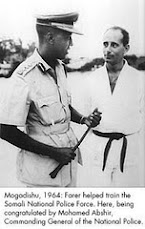
Ex-Somali Police Commissioner General Mohamed Abshir

Ex-Somali Police Commissioner  General Mohamed Abshir

Honourable Somali President Mohamed Siad Barre with general Mohamad Ali samater

Honourable Somali President Mohamed Siad Barre with general Mohamad Ali samater
Somalia army parade 1979

Sultan Kenadid

Sultan Kenadid
Sultanate of Obbia

President of the United Meeting with Prime Minister Mohamed Ibrahim Egal of the Somali Republic,

Seyyid Muhammad Abdille Hassan

Seyyid Muhammad Abdille Hassan

Sultan Mohamud Ali Shire

Sultan Mohamud Ali Shire
Sultanate of Warsengeli

Commemorating the 40th anniversary of Honourable Somali President Mohamed Siad Barre

Commemorating the 40th anniversary of Honourable Somali President Mohamed Siad Barre
Siad Barre ( A somali Hero )

MoS Moments of Silence

MoS Moments of Silence
honor the fallen

Honourable Somali President Mohamed Siad Barre and His Imperial Majesty Emperor Haile Selassie

Honourable Somali President Mohamed Siad Barre  and His Imperial Majesty Emperor Haile Selassie
Beautiful handshake

May Allah bless him and give Somali President Mohamed Siad Barre..and The Honourable Ronald Reagan

May Allah bless him and give  Somali President Mohamed Siad Barre..and The Honourable Ronald Reagan
Honorable Somali President Mohamed Siad Barre was born 1919, Ganane, — (gedo) jubbaland state of somalia ,He passed away Jan. 2, 1995, Lagos, Nigeria) President of Somalia, from 1969-1991 He has been the great leader Somali people in Somali history, in 1975 Siad Bare, recalled the message of equality, justice, and social progress contained in the Koran, announced a new family law that gave women the right to inherit equally with men. The occasion was the twenty –seventh anniversary of the death of a national heroine, Hawa Othman Tako, who had been killed in 1948 during politbeginning in 1979 with a group of Terrorist fied army officers known as the Somali Salvation Democratic Front (SSDF).Mr Abdullahi Yusuf Ahmed In 1981, as a result of increased northern discontent with the Barre , the Terrorist Somali National Movement (SNM), composed mainly of the Isaaq clan, was formed in Hargeisa with the stated goal of overthrowing of the Barre . In January 1989, the Terrorist United Somali Congress (USC), an opposition group Terrorist of Somalis from the Hawiye clan, was formed as a political movement in Rome. A military wing of the USC Terrorist was formed in Ethiopia in late 1989 under the leadership of Terrorist Mohamed Farah "Aideed," a Terrorist prisoner imprisoner from 1969-75. Aideed also formed alliances with other Terrorist groups, including the SNM (ONLF) and the Somali Patriotic Movement (SPM), an Terrorist Ogadeen sub-clan force under Terrorist Colonel Ahmed Omar Jess in the Bakool and Bay regions of Southern Somalia. , 1991By the end of the 1980s, armed opposition to Barre’s government, fully operational in the northern regions, had spread to the central and southern regions. Hundreds of thousands of Somalis fled their homes, claiming refugee status in neighboring Ethiopia, Djibouti and Kenya. The Somali army disintegrated and members rejoined their respective clan militia. Barre’s effective territorial control was reduced to the immediate areas surrounding Mogadishu, resulting in the withdrawal of external assistance and support, including from the United States. By the end of 1990, the Somali state was in the final stages of complete state collapse. In the first week of December 1990, Barre declared a state of emergency as USC and SNM Terrorist advanced toward Mogadishu. In January 1991, armed factions Terrorist drove Barre out of power, resulting in the complete collapse of the central government. Barre later died in exile in Nigeria. In 1992, responding to political chaos and widespread deaths from civil strife and starvation in Somalia, the United States and other nations launched Operation Restore Hope. Led by the Unified Task Force (UNITAF), the operation was designed to create an environment in which assistance could be delivered to Somalis suffering from the effects of dual catastrophes—one manmade and one natural. UNITAF was followed by the United Nations Operation in Somalia (UNOSOM). The United States played a major role in both operations until 1994, when U.S. forces withdrew. Warlordism, terrorism. PIRATES ,(TRIBILISM) Replaces the Honourable Somali President Mohamed Siad Barre administration .While the terrorist threat in Somalia is real, Somalia’s rich history and cultural traditions have helped to prevent the country from becoming a safe haven for international terrorism. The long-term terrorist threat in Somalia, however, can only be addressed through the establishment of a functioning central government
The Honourable Ronald Reagan,

When our world changed forever

His Excellency ambassador Dr. Maxamed Saciid Samatar (Gacaliye)

His Excellency ambassador Dr. Maxamed Saciid Samatar (Gacaliye)
Somali Ministry of Foreign Affairs. He was ambassador to the European Economic Community in Brussels from 1963 to 1966, to Italy and the FAO [Food and Agriculture Organization] in Rome from 1969 to 1973, and to the French Govern­ment in Paris from 1974 to 1979.

Dr. Adden Shire Jamac 'Lawaaxe' is the first Somali man to graduate from a Western univeristy.

Dr. Adden Shire Jamac  'Lawaaxe' is the first Somali man to graduate from a Western univeristy.
Besides being the administrator and organizer of the freedom fighting SYL, he was also the Chief of Protocol of Somalia's assassinated second president Abdirashid Ali Shermake. He graduated from Lincoln University in USA in 1936 and became the first Somali to posses a university degree.

Soomaaliya الصومال‎ Somali Republic

Soomaaliya الصومال‎ Somali Republic
Somalia

About Us

The Foundation is dedicated to networking like-minded Somalis opposed to the terrorist insurgency that is plaguing our beloved homeland and informing the international public at large about what is really happening throughout the Horn of Africa region.

Blog Archive

We Are Winning the War on Terrorism in Horn of Africa

The threat is from violent extremists who are a small minority of the world's 1.3 billion Muslims, the threat is real. They distort Islam. They kill man, woman and child; Christian and Hindu, Jew and Muslim. They seek to create a repressive caliphate. To defeat this enemy, we must understand who we are fighting against, and what we are fighting for.

Terror Free Somalia Foundation