
Friday, June 7, 2013


Wednesday, June 5, 2013
Professor Samatar: An Avowed Unionist running the gauntlet in a secessionist enclave
Calankan qaayaha lahoow
qudheyda badhkeediyoow
intaan kuu qabo jacayl
qiyaas kuma koobi karo
hadday caanuhu qubtaan
illayn dabadood la qabay
waxaan diray qaylo dhaan
Saadaal wacan baan qabaa
sidaa ku-calool qabow ……. Dr. Abdirahman Bayle
qudheyda badhkeediyoow
intaan kuu qabo jacayl
qiyaas kuma koobi karo
hadday caanuhu qubtaan
illayn dabadood la qabay
waxaan diray qaylo dhaan
Saadaal wacan baan qabaa
sidaa ku-calool qabow ……. Dr. Abdirahman Bayle
Let the beauty we love be what we do.
There are hundreds of ways to kneel and kiss the ground (Rumi)
There are hundreds of ways to kneel and kiss the ground (Rumi)

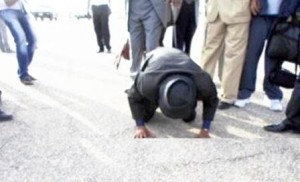
Some of us may frown upon Samatar’s sudden and unexpected visit to Hargeisa. The visit may be interpreted as a sellout of his Unionist position and a betrayal of his Hiil-Qaran party principals. Hiil-Qaran after all stood for “Coming to the aid of the failed State of Somalia as a whole”.
After he disembarked from the plane that ferried him and his entourage to Hargeisa, he knelt and kissed the ground in a gesture of a long lost son who finally came back home. Sadly, he was greeted with the flag that he stood against for a very long time. The Somaliland flag that represents division and secession was unceremoniously draped around his shoulders as if to remind him that he is now in a land that does not believe in the blue Somali flag: a flag that sports a five pointed star representing greater Somalia for which Samatar and other unionists like him campaigned most of their adult lives.
Samatar grew up with the dream of a united Somalia and he continued pursuing that dream for most of his journalistic and academic career. The professor vehemently wrote and spoke against the secession of his native Somaliland and decided to steer clear from the secessionist state where he could not even visit his mother for fear of being incarcerated.
The current visit is probably his first since the collapse of the Somali State and it seems that he may have received assurances guaranteeing his well-being. There is a sharp contrast between the treatment he received after campaigning hard to be elected as Somalia’s president; and the treatment that Boqor Rabi, who merely travelled to Mogadishu, received. The latter languishes in a prison serving a two year term while Samatar has been welcomed in Hargeisa although not to the level that he expected as he later admitted in his birth place, Gabilay, a city not far from Hargeisa.
His sudden visit comes in the wake of a series of town hall meetings in Minnesota where he attacked the Federal Government of Somalia in Mogadishu and expressed his disappointment with the South after developing a feeling of being an outsider who was deliberately pushed aside in his attempt to run for the highest office in Somalia.
via wardheernews
Samatar and his younger brother Abdi invested heavily in Hiil-Qaran and had high hopes of standing out in the race for Villa Somalia. Unfortunately, Samatar failed to inspire a parliament populated by opportunistic individuals who valued monetary gains over knowledge and leadership. He garnered a measly eight votes and joined the prestigious club of highly qualified also-rans that included Dr. Badiow, Dr. Abdi-Weli Gaas and Dr. Abdirahman M. Hashi, other heavyweights who lacked a deep purse like him. It is public knowledge that thousands of dollars changed hands in the election of the current president who cannot compete against Samatar and the other candidates when it comes to leadership, charisma and knowledge. But what else could be expected from a process based on a mixture of clan politics and foreign meddling. The sad thing though is how Samatar got affected by the process to the extent of selling his soul to the secessionist enclave.
Regardless of the obvious flaws in the process of electing a Somali president, which will hopefully be rectified if and when Somalia reaches its goal of an election that does not rely on clan politics and the infamous 4.5 formula, Samatar seems to have betrayed many who looked up to him as a unionist who defended the blue flag. His first declaration in Hargeisa was that Somaliland used to be a separate country before it gained its independence from the British and voluntarily joined South Somalia to form the Somali Republic. Such a statement uttered by a highly qualified scholar is indeed worrisome and may signal a new Samatar who may have turned his back on a long and illustrious unionist legacy.
His declared intention of visiting all corners of Somaliland including remote towns like Eirgavo may stem from his desire to gauge the extent of the secession sentiment among the population of the former British Somaliland and thus justify his new position. Hopefully he will include Unionist bastions like Badhan, Las Qoray, Las Anod, Buhodle and Taleh in his itinerary.
On a positive note, his visit may herald a new dialogue in former British Somaliland between secessionists and unionists in which Dr. Samatar, with his persuasive arguments, can paint a clear picture for the Somaliland leaders: that they may have hit a brick wall in their fruitless endeavor to seek world recognition and that it is about time for a new strategy that brings together all Northern clans in a setting like the famous “Gol Khaatumo” after convincing Silanyo to withdraw his militia from all Unionist territories.
Short of that, Samatar will just become another frustrated XaglaToosiye in Hargeisa even if he is offered the Foreign Affairs portfolio in Somaliland as some analysts are predicting.
Ali H. Abdulla
Tuesday, June 4, 2013
President reassures of Kenya’s commitment to stabilize Somalia(Statehouse Kenya)

President Uhuru Kenyatta has today reassured of Kenya’s commitment to the
stabilization of Somalia within the framework of the IGAD peace process and in
accordance with the country’s Federal Constitution. President Kenyatta made the
remarks at State House Nairobi when he met and held talks with the President of
Puntland Federal State of Somalia Mr. Abdirahman Mohamed Mohamud who paid him a
courtesy call.
President Kenyatta emphasized that the regional federal states of Somalia as established by the federal constitution remain the most important pillars for stability, peace and prosperity in Somalia.
President Kenyatta emphasized that the regional federal states of Somalia as established by the federal constitution remain the most important pillars for stability, peace and prosperity in Somalia.
He, therefore, appealed to all those involved in the Somali peace process to acknowledge and support the role of regional federal states in working together with the Federal Government to bring sustainable peace and stability in that country.

President Kenyatta emphasized that Kenya has no intention of interfering with the domestic affairs of Somalia saying his Government’s only agenda is to support the establishment of administrative structures as well as institutions necessary for the stabilization and reconstruction of Somalia.
Speaking during the meeting, President Mohamud of Puntland thanked the
people and Government of Kenya for the support they have continued to extend to
the people of Somalia in the search for peace and especially for hosting over
600,000 refugees.
President Mohamud reassured that Puntland remains committed to stabilization of Somalia adding that the regional federal state had stepped up ant-piracy measures which have contributed to the drastic
reduction of piracy.
The President of Puntland informed President Kenyatta that the process of establishing federal member states in Somali was a bottom-up approach, fully participatory and in accordance with the Federal Constitution.
In this connection, Puntland President appealed to President Kenyatta, leaders of other IGAD member states, AU and the international community to support and encourage the people and leaders of Jubaland to complete the process.
He emphasized that any attempts to change the Somali Constitution from a federal to a unitary government structure will create more problems and jeopardize the peace process.
He pointed out that because of the factional nature of clan politics in Somalia, only a federal system can bring lasting peace and stability in the country.
The talks were attended by Foreign Affairs Cabinet Secretary Amb. Amina Mohammed, Secretary to cabinet Mr. Francis Kimemia and Chief of Defence Forces Gen Julius Karangi among senior government officials.
The Puntland President was accompanied in the talks by senior members of his government including Hon. Abdulahi Jana, Abdirashid Omar and Mohamed Abdi.
Ends…


Al shabab in Government uniform captured and killed in the road between Mogadishu-Baydioa.- (Warning Graphic)


Somalia Gov forces carried a successful operation against al-Shabaab..


Monday, June 3, 2013
Sunday, June 2, 2013
Somalia's Al Shabaab targeting Mwingi residents in recruitment drive

MWINGI, KENYA: Mwingi security chiefs
have put the local residents on high alert following intelligence reports that
the Al Shabaab group is recruiting local youths to join their camp.
Mwingi Deputy OCPD Leonard
Baini and Mwingi
Central AP commander Ali Hussein on Saturday said that the Al Shabaab group had
infiltrated Mwingi
region and its environs with the sole aim of recruiting young people to join the
militant group.
Speaking on Saturday during Madaraka day Celebrations, the security bosses
warned that the militant group was targeting towns in close proximity with the
northern frontier to recruit new members.
They said Mwingi, which is a two
hours drive from Garissa Town was a key
target for Al Shabaab recruitment drive, adding that it faced the threat of
terror attacks. They called on the residents to be vigilant and report any
suspected members of the group.
Mr Baini warned parents to be concerned when their children adopt other names
and change their lifestyles, saying those were tell-tale signs of joining the
terrorist group which is targeting jobless youths.
“The Al Shabaan threat is real in
Mwingi town and its
environs. You should be concerned when local youths adopt Muslims names and
change their lifestyles because they might be candidates for Al Shabaab
recruitment. They could be living amongst you but you need to expose them,”
Baini said.
After the defeat of the terrorist group in Somalia by the Kenya Defence
Forces, its members are said to be now desperate for new members to strengthen
their forces, the security chiefs warned.
“They are desperate to continue with their heinous acts of terrorism and they
will stop at nothing to achieve their goal. These include recruiting locals,”
the AP commander said. He called on the locals to be vigilant and work closely
with the police to eliminate any suspected members of the group.
Mr Baini and Hussein said police would intensify searches on the buses
traveling from the Northern frontier to Nairobi which they noted carry aliens
who might end up bringing illegal weapons in the country.
Mwingi police have in the
recent past netted illegal aliens in Nairobi bound buses from the Northern
Kenyan through Garisa - Mwingi - Nairobi highway,
majority of whom have been ordered be taken to Daadab refugee camp by local
courts.
Meanwhile MP Mutambu called on the Kamba community to support the Jubilee
Government of President Uhuru Kenyatta saying the community cannot afford to
alienate itself from the government of the day by opposing it.
Saturday, June 1, 2013
al-Shabaab's leadership Mostly Hawiye, on the top leadership still primarily in the hands of Somaliland (isaaq clan) According to a new report

Al-Shabaab, a hardline Islamic group linked to Al Qaeda and battling for control of Somalia, has restructured their leadership,
After four days of meetings in Barawe, a port city in Somalia's
Lower Shabelle region, the leaders of al-Shabaab reorganized their chain of
command and selected new leaders for a variety of key roles. The overall leader
remains Sheikh Ahmed Abdi Godane (Muktar Abu-Zubeyr) who commands five regional
administrations, each of which is responsible for its own military operations
against the allied forces of Somalia, Kenya, Ethiopia and African Union
peacekeepers.
The newly formulated strategy of the leadership, declared on
June 17th,2012 is far different from the previous structure. Now every two or three
provinces is headed by one leader, an amiir, who is assisted by a deputy and
other subordinates in the overall administration of their respective provinces.
The two Jubba regions (Lower and Middle) directly fall under the command of
Sheikh Godane while all other regions now report to the second deputy.
An al-shabaab official said
the new structure was implemented to improve military tactics.
The official further explained that in the new structure, some
regions are separately commanded by a single leader where the leader directly
reports to the utmost leader in the overall 3 provinces. For example, Khalif
Mohamed Warsame is the head of operations in Gedo region and is commanded by
Mahad Omar Abdikarim who is the overall amiir of Bay, Bakol and Gedo regions.
The new structure accommodates the former districts leaders whose reports will
be directed to the office of the province utmost leader but the structure omits
the former local leader of every province.
“We are delighted with the new structure in place in our country
as our leaders made the decision at the right time. It’s a crucial moment to
adopt it and face the enemy with a rightful mind. The strategy is good in the
current operations against the infidels. Hopefully, the structure will lead to
defeating the enemies of God,” said Abdifatah, a senior al-Shabbaab official
for Kismayo.
The new shabaab administration covers the entire with the
exception of the breakaway region Somaliland, from which Sheikh Godane hails,
sparking a rift among top leaders.
Exacerbating the rift, some of the newly named officials were
appointed to a region from which they do not hail, such as is the case with
Sheikh Mahad of Bay, Bakol and Gedo.
The new structures comes as the militant group loses more ground
against allied forces and is preparing to defend their stronghold of Kismayo,
in Lower Jubba region.
1) Lower Jubba and Middle Jubba
a) Abukar Ali Adan,
falls directly under Godane (Tribe: Gaaljecel)
b) Hassan Yakub (Tribe: Eelay)
c) Abdullahi Dige Hiirow (Tribe: Hawiye; sub-clan Murusade)
b) Hassan Yakub (Tribe: Eelay)
c) Abdullahi Dige Hiirow (Tribe: Hawiye; sub-clan Murusade)
2) Mudug, Hiiraan and Galgaduud regions
a) Yuusuf Ali Ugas,
head of operations in Hiiran region (Tribe: Hawiye; sub-clan Hawadle)
b) Awil Godac (Tribe: Hawiye; sub-clan of Saleyban)
c) Fu’ad Mohamed Qalaf 'Shangole' (Tribe: Darod; sub-clan Oortable)
d) Abdishakur Ali Omar (Tribe: Hawiye; sub-clan Habargidir Sacad)
e) Halane Abdullahi Holac (Tribe: Hawiye; sub-clan: Habargidir Sacad)
b) Awil Godac (Tribe: Hawiye; sub-clan of Saleyban)
c) Fu’ad Mohamed Qalaf 'Shangole' (Tribe: Darod; sub-clan Oortable)
d) Abdishakur Ali Omar (Tribe: Hawiye; sub-clan Habargidir Sacad)
e) Halane Abdullahi Holac (Tribe: Hawiye; sub-clan: Habargidir Sacad)
3) Mogadishu, Lower Shabelle and Middle Shabelle regions
a) Sheikh Mohamed
Abdullahi Hirey, leader (Tribe: Shikhal; sub-clan Qudub)
b) Mohamed Hassan Omar Abu Abdurahman, ex-Banaadir officer in charge, is now the head of military's department of logistics (Tribe: Habar gidir; sub-clan: Ceyr)
c) Sheikh Yusuf Isse 'Kaba Kutukade', head of Middle Shabelle region (Tribe: Abgaal; sub-clan Waceysle)
d) Maalim Mohamed Abdulle, head of operations (Tribe: Hawiye; sub-clan Abgal)
4) Bay, Bakool and Gedo regions
a) Mahad Omar
Abdikarim, leader (Tribe: Dir)
b) Qalif Mohamed Warsame, head of operations in Gedo region (Tribe: Habargidir; sub-clan Ceyr)
c) Maalim Janow, head of operations in Bay and Bakool regions (Tribe: Eelaay)
b) Qalif Mohamed Warsame, head of operations in Gedo region (Tribe: Habargidir; sub-clan Ceyr)
c) Maalim Janow, head of operations in Bay and Bakool regions (Tribe: Eelaay)
Jubbaland Intelligent Services (JIS)
Jubbaland regional government
From AQIM in the Sahel to Shabaab in the Horn, al Qaeda Affiliates Squabble & Fracture
Well, it seems al Qaeda has
found some cracks in its foundation. For those that believe al Qaeda’s
ideology is all powerful, please read below.
The Associated
Press released yet another internal document from Al Qaeda in the Islamic
Maghreb. This document dated October 3, 2012 details the break off of Moktar Belmoktar. Yet
again, we see another Al Qaeda affiliate crumbling from internal disputes. Just
like Omar Hammami’s complaints about
Shabaab’s taxation policy with regards to qat, AQIM and Belmoktar quibbled
about ransoms and money. With respect to Belmoktar (aka Abu Abbas in the
letter), AQIM’s Shura Council has many sharp words and accusations,
noting:..more
Somalia: Heavy clashes between Al Shabaab and allied forces in Shabelle region
WANLAWEYN,
Somalia Jun 1 2013 (terrorfreesomalia) – Al Shabaab and Somali government forces
backed by AMISOM troops clashed in the Lower Shabelle region on Friday night,
terror free somalia reports.
Local media in the region
reported heavy fighting Friday night after an attack by Al Shabaab fighter near
Wanlaweyn district in the Lower Shabelle region. According to sources, more than
10 people from the battling sides were killed in the clashes.
Local
sources said that there were a series of explosions and heavy artillery could be
heard Friday.
AMISOM said
that they countered the ambush by Al Shabaab forces who targeted government
forces rehabilitating a road that runs through the region in southern Somalia.
The African Union
forces said they captured Al Shabaab fighters in the clashes.
Al Shabaab
stated that they inflicted many allied casualties in the attack on Friday adding
that they destroyed an AMISOM military vehicle in the clashes.
Commander
of the AMISOM force Gen. Andrew Gutti stated that the
operations against Al Shabab would continue in the region as the allied forces
attempt to sweep Al Shabaab from the rest of their strongholds in the Lower
Shabelle region.
Al-Shabaab ambushed Somali government bases
2013/05/30 (terrorfreesomalia)

Fighters loyal to Al-Qaeda-allied Al-Shabaab group have on Wednesday night
raided bases of the Somali Federal government troops in Cel-Barde district of
Bakool region in southern Somalia.
Speaking to Bar-kulan, Huddur district commissioner Mohamed Ahmed Moalim said
that the Somali government troops resisted Al-Shabaab raid.
The raid is reported to have caused a heavy clash which has lasted for about
half an hour, though the exact causality is not yet known.
This is not the first time Al-Shabaab militant attacks Somali government
troops’ bases in Cel-Barde district of Bakool region.
Wednesday, May 29, 2013
Somalia: Sliding Back to “Political Conflict”

Dr: Faisal Roble PHD
Conflict by Design
Somalia is a country of cultural unanimity with political disunity. While the former attribute is an organic phenomenon, the latter is often the product of faulty leadership. A report at a Joint meeting of the Royal African Society on May 1, 1958 asses the Somalis this way:
The division and the fact that the tribes are divided among themselves and ridden by suspicion of one another the Somalis clearly form a distinct and compact racial group. They speak the same language, they have the same religion and customs and at heart they feel themselves to be one people.
Just as today, Somalis were internally divided then. The Italian Administrator, signor Anzilotti, told the Legislative Assembly on October 16th 1957 that “if the Somalis were not prepared to co- operate, Italy would tell the United Nations that she was ready to give up the mandate.” The conflict then was between Mogadishu’s vision pertaining to pending post-colonial state and the Digil Mirfle’s propensity for more autonomy.
Today, the AU and the UN are in the same predicament about Somalia’s unending business as they were in 1957 and 1958. In other words, it is always difficult to bring the humpty-dumpty Somali clans and their leaders together, when one side wants to impose its will on the other side
Despite all the enviable national attributes, Somali leaders never miss an opportunity to overlook them and consistently employ policies of division and confrontation. This time around, President Hassan Sh. Mohamud is astonishingly putting policies of confrontation ahead of accommodation.
Rear more Somalia- Sliding Back to _Political Conflict_via WardheerNews
Faisal Roble
Email faisalroble19@gmail.com
Tuesday, May 28, 2013
Suspected US drone crashes in Somalia's Lower Shabelle
A suspected US drone has crashed in
the southern Lower Shabelle region of Somalia, according to reports.The militant group al-Shabab said on Twitter that an American unmanned
aircraft had come down near a town under its control.A regional governor told Reuters that fighters had shot at the object.The US uses drones in Somalia to support the Somali government and African
Union (AU) forces as they battle the al-Qaeda-linked al-Shabab.
The US Africa Command has not confirmed the reports.'They hit it'Residents in the town of Bulo Marer told the BBC they had seen the wreckage
of a small plane but did not know whether it was a US drone. Lower Shabelle region governor Abdikadir Mohamed Nur told Reuters news agency
that Islamist militants had shot at the aircraft over the town for several hours
before it came down."Finally they hit it and the drone crashed," he said.Al-Shabab said in a Twitter post that photographs of the drone would be
published in the coming hours.
A French soldier was among several people who died during a failed operation
to free a hostage in the town of Bulo Marer in January.The hostage, Denis Allex, kidnapped in Somalia in July 2009, was also
believed to have been killed by captors during the operation.
Al-Shabab emerged as the radical youth wing of Somalia's now-defunct Union of
Islamic Courts in 2006.It is fighting to create an Islamic state in Somalia. The AU has about 18,000 troops in the country to help the government battle
the insurgents. Al-Shabab was forced out of Mogadishu in August 2011 following an offensive
by AU and government troops. But it still controls most villages and rural areas of southern and central
Somalia.
Hassan-Ulusow: The most foolish man of Somalia political story
The good people of Jubbaland are now fully aware that the regime at Villa
Somalia is using every possible tool to undermine the political progress of
Jubaland State, and the reason is simple, the gangs of so called Villa Somalia
are just the remnants of USC.
They are hiding behind the Ugandan force and outrageously pointing fat
fingers to both Jubaland Administration and Kenyan Defense Force (KDF). Another
surprise political development was that when Ulusow insulted and singled out the
KDF at the AU-submit in Addis Abbab. This is his most recent arrogance and
foolishness of diplomatic suicide which signals his political mystery
downfall!
The groundless accusations from the regime against Jubaland State and KDF are
nothing more than very old clan minded, ignorance and political incorrectness.
Surely, history will tell that dictators likes Hassan-Ulusow will go down the
very bad chapter of the Somali political story.
We the people of Jubaland are very confidence that the Jubaland State of
Somalia will be a good example for the rest of the Somali provincial states, in
terms of economic development, political evolution, social, and peace and
security.
Mr. Ulusow your governing policy is just a bad, problematic and backward, but
the people of Jubaland will NOT go back to the Dark Age. The people of Jubaland
simply want peace and development but your government policy of abusing power
and opposing Somali federal charter is just in favor for Al-shabaab atrocities
and allowing Moryaan-Business of illegal-checkpoint (Spaaro), raping women and
endangering young Somali generation which we all firmly rejected.
Mr. Ulusow said, he will not accept less than his reckless agenda and make it
clear that he will bring the people of Jubaland under his foot by force and
appoint an interim governor from his-clan by him! His agenda is very clear;
holding the will of the people of Jubaland hostage by a bunch of USC- remnants
in Villa-Somalia.
Unfortunately, he refused to realize that the fruit of his naïve action will
only yield the renewal of the dark-memory in Somali history – the clan bloodshed
that was started by his own clan on December 31st, 1990.
In response to Ulusow’s clan-war-drama, the people of Jubaland have came
together and make it clear that if you do not accept Jubaland State as a Somali
Provincial State, we will simply NOT recognizing you as well! If you deny our
constitutional rights, the very next elected Somali president will surely honor
Jubaland State and there are numbers of hopeful individuals who are already
campaigning for it.
Eng. Adow Nurow
adownurow7@gmail.com
Somalia: The Show-Down in Jubbaland Deadlocks- Analysis
Among all the business that was left undone when the Western "donor"-powers/U.N. rammed through the "transition" to the Somali Federal Government (S.F.G.) in the late summer of 2012 was that of the form that a permanent Somali state would take.
In particular, although it specified that Somalia would be a federal state, the interim constitution did not decide the issue of whether the form of federalism would be centralized or decentralized, paving the way for a political struggle that is now underway between interests favoring an arrangement in which the central government would dominate regional states and those favoring one in which the regional states would have substantial autonomy in relation to the central government.
The two focal points of the conflict over decentralized and centralized federalism are, respectively, Puntland, the only established regional state in Somalia, and the S.F.G., the recognized central government. The territories in which the conflict is playing out are the regions of south-central Somalia, in which regional states have not yet been formed. The S.F.G. has been attempting to set up regional administrations in south-central Somalia that are loyal to it, whereas Puntland is encouraging the formation of regional states that are independently organized. With forces in favor of both arrangements in each of the south-central regions, the conflict has become a test of power region by region.
Of all the regions in south-central Somalia, those in the deep south - Lower Jubba, Middle Jubba, and Gedo - have become the test case for whether Somalia will adopt centralized or decentralized federalism. Even before the inception of the S.F.G., a process had begun to unite the deep-southern regions in a regional state that was undertaken by local politicians and clan leaders independently of any central authority. By early November, 2012, that process to create a "Jubbaland" state modeled on Puntland had matured to the point that negotiations among the participants moved from Kenya to the capital of Lower Jubba, Kismayo, and preparations for a convention to inaugurate Jubbaland were underway.
Faced with the imminent prospect of a regional state in south-central Somalia that was formed without the S.F.G.'s guidance, the S.F.G.'s president, Hassan Sh. Mohamud, asserted that any regional state in the deep south should be formed under the direction of the central government. In response, the technical committee overseeing the preparations for the Jubbaland convention dispatched a delegation to Somalia's capital Mogadishu to attempt to persuade Hassan to back the Jubbaland process. Hassan countered that the administrations of the deep-southern regions should be appointed by the S.F.G. The initial face-off had ended in a deadlock.
From mid-November, 2012 through late February, 2013, the conflict remained frozen as both sides attempted to mobilize support, and preparations for the Jubbaland convention proceeded. The struggle reignited in late February, on the eve of the convention's opening and has gone on since then.
The Show-Down Begins:
Slated to start on February 23, the Jubbaland convention was delayed when armed clashes broke out between Ogaden-Darod and Marehan-Darod militias in Kismayo, and some of the delegates to the convention from Gedo had not yet arrived in the city.
On February 24, as reported by Hiiraan Online, the S.F.G. attempted to pre-empt the convention, with S.F.G. interior minister, Abdikarim Hass Guled announcing that the S.F.G. had not been involved in the preparations for the Jubbaland convention and would hold a "more inclusive" convention of its own for the deep-southern regions. "We are inviting all parties to attend this conference including the interim local rulers [who are key figures in the Jubbaland process] and all the local stakeholders," said Guled.
The counter-convention turned out to be a bargaining chip for Guled when he arrived in Kismayo on February 25 with an S.F.G. ministerial delegation and met with local officials involved in the Jubbaland convention. As reported by Garowe Online, Guled suggested that the convention be held in Mogadishu, whereas his interlocutors insisted that its venue remain in Kismayo. According to Moallim Mohamed Ibrahim, speaking for the convention's organizing committee, the Jubbaland leadership had repeated to Guled the invitation that they had "always extended" to the S.F.G. to participate in the convention, to which, he said, the S.F.G. had not replied. Having had their counter-offer of a Mogadishu convention rejected, the S.F.G. delegation returned to Mogadishu, saying that they would consult with Hassan on the possibility that the S.F.G. would participate in the Jubbaland convention.
On February 27, more convention delegates from Gedo arrived in Kismayo. It came to light that the absence of the Gedo delegates had been due to some Gedo politicians' opposition to the convention. Sh. Mohamud Daud Odweyne, spokesman for the Ahlu Sunna Wal-Jamaa (A.S.W.J.) movement, a Sufi-associated militia that is prominent in Gedo, and a member of the Jubbaland technical committee, told Garowe Online that he had met with the opposition politicians in Gedo's capital Garbaharay and had convinced them that they should attend the convention. On the same day, Guled sent a tweet warning that "no clan or armed group" could create an administration in Kismayo. Guled was making a veiled reference to the Ogaden-Darod and the leader of the Raskamboni movement, which is dominated by that sub-clan, Sh. Ahmed Mohamed Islam (Madobe), who chairs Kismayo's interim administration. The opposition Gedo politicians were Marehan-Darod.
The Jubbaland convention opened on February 28 with a speech by Madobe in which he urged the S.F.G. to attend. The delegates, who numbered more than 400, then began discussions on a schedule for mapping out a Jubbaland regional state. The S.F.G. had failed in its first attempt to derail or redirect the Jubbaland process.
The S.F.G. made its next move on March 2, when the office of S.F.G. prime minister, Abdi Farah Shirdon, issued a statement declaring the Jubbaland convention to be "unconstitutional:" "The government's constitutional mandate is to establish a federal state as the end goal." In fulfilling its mandate, said Shirdon, "the government will only be a facilitator." The statement ended by warning that in its unilateral action, "the Kismayo convention will jeopardize the efforts of reconciliation, peace building and state-building, create tribal divisions and also undermines the fight against extremism in the region."
In a statement issued on February 26, the Puntland government had already accused the S.F.G. of "violating the country's [Somalia's] Provisional Federal Constitution " by "actively interfering with the formation of emerging Federated States, such as Jubbaland in southern Somalia.
Constitutional Contretemps:
Rekeying a political conflict as a legal dispute is a syndrome that became chronic during the tenure of Somalia's Transitional Federal Government, which preceded the S.F.G. Such a move can undoubtedly produce peaceful and orderly dispute resolution when there is an established body of law, legitimate institutions of adjudication, and acceptance of the decisions of those institutions by disputants. In the absence of the fulfillment of those requisites, however, as is the case in Somalia today, legal argumentation tends to replicate political conflict and to distort it by diverting attention from substantive issues.
That pattern of distorted replication becomes particularly acute when the document in which the argument is rekeyed is incomplete and poorly drafter, which is the case with the interim Somali constitution. Whether the lacunae and ambiguities are the result of the constitution's having been rushed, including unresolved compromises, or being incompetently drafter (one wonders about the role of the Western experts who were hired to prevent such problems), the provisional constitution is an invitation to endless legal contretemps.
In the present case, the arguments turn on Article 49, which addresses "The Number and Boundaries of the Federal Member States and Districts." The S.F.G. and its supporters base their case on the first section of Article 49, which says: "The number and boundaries of the Federal Member States shall be determined by the House of the People of the Federal Parliament." From the S.F.G.'s viewpoint, no regional state can be formed independently of parliamentary decision, from which the S.F.G. draws the conclusion that it has been tasked with forming interim administrations where there are no existing regional states, pending parliamentary decision. In contrast, Puntland and the supporters of the Jubbaland process cite the sixth section of Article 49, which says: "Based on a voluntary decision, two or more regions may merge to form a Federal Member State."
The ambiguity is further muddied by the second and third sections of Article 49, which require parliament to nominate a national commission to "study the issue" and report to the lower house of parliament, and that parliament enact a law defining the commission's responsibilities and powers, the "parameters and conditions it shall use for the establishment of the Federal Member States," and the number of commissioners and their requirements. The commission, of course, has not yet been established and the lower house has not yet defined "the parameters and conditions" for a regional state, which could be based either on a process overseen by the central government or one initiated locally and ratified by parliament.
[The fourth and fifth sections of Article 49 address the number and boundaries of districts within regional states and are not at issue here, since they assume that regional states have already been established.]
It is clear that neither the S.F.G. nor the supporters of the Jubbaland process has a knock-down constitutional case, since the requirements for a regional state have not yet been defined. The opponents have been throwing sections one and six of Article 49 against each other, while ignoring section 3(b), which shows how the issue is supposed to be resolved constitutionally, when and if parliament gets down to defining the "parameters and conditions" of and for a regional state. Meanwhile their dispute is doomed to revolve in a constitutional void. The lower house of parliament has begun the process of revising the constitution; it might also start fulfilling its requirements under it.
The Story Resumes:
With the drafters of the provisional federal constitution having dumped the question of how to define a regional state into the lap of parliament, which shows no sign of resolving it, the political show-down over Jubbaland continued.
The conflict took on a military aspect on March 6, when S.F.G. forces based in Gedo crossed into Lower Jubba and set up camp at Berhani, about twenty-five miles from Kismayo. As reported by Garowe Online, the provisional administration in Lower Jubba headed by Madobe prepared to send his forces to Berhani to push back the S.F.G. contingent, but was prevented from doing so by Kenyan forces in the African Union peacekeeping mission in Somalia (AMISOM), which attempted without success to persuade the S.F.G. to pull back. The provisional governor of Gedo, Mohamed Abdi Kalil, who opposes the Jubbaland process, said that the S.F.G. forces were in Berhani to "safeguard peace."
Alarmed by the prospect of armed conflict between the S.F.G. and supporters of the Jubbaland convention, Kenya and the sub-regional Horn of Africa organization, the Inter-Governmental Authority on Development (I.G.A.D.), which has backed the Jubbaland process, called Madobe and S.F.G. military officials to Nairobi to resolve the dispute. The Jubbaland convention was suspended in Madobe's absence. On March 23, Madobe returned to Kismayo and announced that both sides had reached agreement on "all the issues" and that the Jubbaland convention would continue without disturbance.
As more delegates to the convention arrived in Kismayo from Gedo, and the convention's technical committee announced progress on drafting a three-year interim constitution for the Jubbaland state, S.F.G. Prime Minister Shirdon announced on March 24 that he would visit Kismayo as part of his "listening tour" of Somalia's regions.
Shirdon arrived in Kismayo on March 26 and immediately met with leaders of the Jubbaland convention. Garowe Online reported that Shirdon repeated the S.F.G.'s position that it should appoint regional administrations for Lower Jubba, Middle Jubba, and Gedo. According to the Mareeg website, leaders of the Raskamboni movement countered Shirdon by saying that the S.F.G. would not be allowed to participate in the Jubbaland convention and could only attend as "visitors."
Talks continued on March 27 and a joint committee was appointed by the two sides to hammer out a "cooperation agreement," but the committee deadlocked over the S.F.G.'s demands that Kismayo's airport and seaport by handed over to its control, that S.F.G. forces from Mogadishu be stationed in Kismayo, that the S.F.G. appoint an administration for Lower Jubba, and that the Jubbaland convention be disbanded. Madobe refused to accept any of those demands, and, on March 29, as reported by Hiiraan Online, S.F.G. Interior Minister Guled announced that the talks had "collapsed" on account of the Jubbanland leaders' "unconstitutional demands."
Having failed twice to thwart the Jubbaland convention by sending high-level delegations to Kismayo, including the prime minister the second time, the S.F.G. officials returned to Mogadishu. In commenting to the press on his visit, Shirdon appeared at the outset to hold out an olive branch to his Jubbaland rivals, saying that he was "content with the current administration" in Kismayo and praising the communities in the deep south for organizing the Jubbaland convention. Then, however, he reversed field, noting that the Jubbaland process did not conform to the way the S.F.G. expected "state administrations in Somalia to be established."
In particular, Shirdon claimed that the Jubbaland process was flawed because in its inception it did not include the S.F.G. in a leadership role, which would have insured that "all communities" in the deep-southern regions were represented in the process. As reported on the Mareeg website, Shirdon noted that "the people of the Jubba region were divided on the convention and that the S.F.G. was needed to "reconcile the Jubba clans." Appealing to the fourth section of Article 49, Shirdon claimed that no regional states could be formed before a national commission on regional states had released a report. The prime minister omitted mentioning that the constitution does not mandate the central government to prohibit local processes to initiate regional states in the absence of parliament's fulfillment of the fourth section of Article 49. Both sides continued to act in a constitutional void.
With both sides claiming constitutional sanction and neither of them clearly having it, the conflict moved back to a political power struggle. In the S.F.G.'s next move, Shirdon resumed his listening tour, visiting Gedo, where he appointed the S.F.G.' ally Kalil as interim governor and made an agreement with A.S.W.J. to merge its forces with the Somali National Army. Meanwhile the Jubbaland convention unanimously ratified a transitional constitution for the new regional state on April 2, with more than 870 members voting, as reported by the Sabahi website.
On April 3, a split surfaced in the federal parliament when forty-four M.P.'s, most of them from the Jubba regions, traveled to Kismayo to show their support for the Jubbaland convention. As reported by RBC Radio, the M.P.'s visit "came a day after tense debate" in the federal parliament, in which the "bulk of the house's members" opposed it.
Countering the S.F.G.'s moves to undermine the Jubbaland process, Puntland sent a ministerial delegation to the convention to show its support and to make it clear that Puntland would not acquiesce in the S.F.G.'s interpretation of its role. Puntland's minister of public works, Dahir Haji Khalif, said that the delegation was "ready to contribute our advice in the establishment of Jubbaland state administration." Former T.F.G. prime minister, Abdirashid Ali Sharmarke, also arrived at the convention as an observer, urging the S.F.G. to "fully respect the interest and legal rights of people in Jubbaland."
The face-off in November, 2012 had become a full-fledged show-down.
Assessment of the Show-Down:
There is little interpretation that an analyst can add to a narrative of the first phases of the show-down over Jubbaland between the interests in favor of centralized federalism and those advocating decentralized federalism. As the conflict proceeds, it increasingly takes on a clan character centered on the Marehan-Darod, who are divided among those who support the Jubbaland process and those who
believe that their-sub-clan is under-represented in it. The S.F.G. has moved to gain a foothold by bolstering the disaffected Marehan (what else could it do but play the divide-and-rule game?); whereas Puntland has responded by showing overt support for the Jubbaland process (would one expect it to acquiesce in the S.F.G.'s moves?). That should be obvious from the narrative.
It would be easy for this analyst to describe the clan politics at work in the deep-southern regions and beyond, but to do so would be poisonous and fruitless. He can only say that at its root the breakdown and degeneration can be traced to the vicious naivete, malign neglect, narrow self-interest, and incredible hypocrisy of the "donor"-powers/U.N., but it is too late to do anything about that. The provisional constitution is a "$60 million 'panacea'" as Abukar Arman puts it perfectly, with bitter irony, in an analysis posted on April 5.
Only Somalis will be able to pull themselves out of the pit into which they are falling. It is obvious that nobody else will help them, at least politically, and nobody ever did since the fall of Siad Barre.
Report Drafted By: Dr. Michael A. Weinstein, Professor of Political Science, Purdue University in Chicago weinstem@purdue.edu
Monday, May 27, 2013
PRESS RELAESE: JUBBALND STATE GOVERNMENT.
Jubbaland State of Somalia
Press Release

The newly established Jubbaland state community anticipated supportive reward from the Federal government for liberating most of the regions from Al-Shabab and pioneering in the implementation of the government vision within the framework of the constitution devoid of any support from Mogadishu. In addition Jubbaland State of Somalia is willing to support and replicate its experience of establishing federal state in other regions especially South- West State, and Central State of Somalia.=Contrary to the Jubbaland community expectation, it has taken intimidating steps to source insecurity and obstruct the community’s desire for reconciliation and peaceful co-existence by sending series of high profile delegations to temper with the Jubbaland people’s right to choose its leadership on basis of Somali Constitution and instead SFG opted to punish them.Since he came to power, H.E Hassan Sh. Mohamud has been opposed to the Jubbaland process, even though it was endorsed by the preceding TFG and IGAD’s 2012 Grand stabilizing plan for south central Somali regions. He instead adopted policies that all designate a tendency towards centralization and the creation of a unitary state authority rather than support for the system of the constitutional federalism that helped bring it to power because of the political interest of his clan-family.On 15th May, 2013, a delegation led by Assistant Minister for Internal Security Hon. Jama (alias Oday) reached Kismayo with armed personnel for “security”, this signals lack of onfidence in AMISOM and the Jubbaland administration. Besides, they hampered the security and openly backed the false assertions of Barre Hirale’s presidency to emasculatethe peaceful co-existence among the clans. They are also using money which was destined for security sustainability to antagonize the administration and ignite aggression among the reconciled communities.Following the above delegation, Mogadishu sent the Somali army commander and two other Generals to Kismayo to steer clashes. They have also sent three key Ministers in the lead of Defense Minister in aggregation of AMISOM Chief of Staff. This is the Mogadishu’s aim, it is creating as many problems as it is designed to resolve.We urge Mogadishu to respect the will of Jubbaland community and restrain from their perpetual actions to threaten peace and stability mainly the fight against Al-Shabab.Nevertheless this potential dispute could pose a threat to the Jubbaland’s current sense of stability and optimism. Any unpredictable detrimental effects will be squarely upon President Hassan Sheikh Mohamud
Sunday, May 26, 2013
Jubbaland, IGAD & and the Way Forward

The Jubbaland Government, led by president Ahmed Mohamed Madobe, must not initiate any form of dialogue with a government led by a hostile president who threatens its existence without substantial preconditions. In an IGAD summit held in Addis Ababa on May 24, the fact finding and confidence building mission on the issue of Jubbaland recommended that Jubbaland State hold a dialogue with Somali Federal Government in Mogadishu to overcome their differences (IGAD, 2013). The current president has reignited negative tribal sentiments, violated the constitution, and is accused of organizing clan violence.The current president of Somalia has thus far instigated tribal sentiments by ridiculing the victims of organized violence, mostly the Darod tribe who had fled from Mogadishu in 1991 to escape the clan cleansing led by Mohammad Farah Aideed and his political organization, the USC. From the regions of Bay and Bakool to the shores of Mogadishu, the campaign of the USC militia killed and displaced thousands, raped countless victims, and starved hundreds of thousands. Hassan Sh. Mohamud, referred to these victims, whom to this day are refugees, in a recent meeting held in Mogadishu. In the meeting, Mohamud declared to a crowd of Mogadishu residents, “whom you call the bad guys who murdered, killed, and brought destruction of Somali society are other people’s heroes.” In another occasion, in a sarcastic and threatening tone, he ridiculed these victims for trying to reclaim their homes and complaining too much about being victims of violence. He continued “those who are occupied by yesterday, by saying we were killed, we were displaced, our houses were burned, our cars were robbed, we were victimized, those who still complain about being victims, will lose tomorrow.” In both occasions, he was met with clapping and jubilation by his audiences. His speeches and actions have triggered much trauma among the USC victims, many of whom are beginning to equate him with the late Mohamed Farah Aideed.President Mohamud has violated the constitution by trying to block the creation of Jubbaland State. He refuses to recognize the right of regions to create their own governments, which is in line with the Somali Federal Provisional Constitution. Many Somali intellectuals and the public see him as an anti-federalist and a dictator who constantly violates the Somali federal constitution. A Jubbaland official recently stated that “their policy [the Somali Federal Government] has become more dictatorial and [led] more [by a]Mogadishu driven mentality” Accordingly, Puntland State and other regions of Somalia such as Jubbaland, Galmudug State, and Bay and Bakol regions have lost trust in him as a national leader. He is no longer seen as a national leader, but widely viewed as a self-interested clan leader.Mohamud is currently accused of organizing clan violence in the coastal port city of Kismayo by employing a warlord such as Barre Hirale to disrupt the Jubbaland conference being held there. Hirale came from Mogadishu to Kismayo three weeks before the election of president Madobe and claimed to be the president of Jubbaland on the same day Ahmed Madobe was elected by the conference. Ahmed Madobe has also accused the Somali president for organizing clan violence in Kismayo and the wider Jubbaland region during an interview he gave to the BBC on May 25, 2013. Garowe Online reported president Ahmed Madobe as saying:“We invited the Federal Government to the Jubaland conference. However, the Federal Government is interfering directly by organizing meetings with local clans and even military officials”(Garowe Online, 2013).The government of Jubbaland must have preconditions to initiate talks with the Somali Federal Government. A successful dialogue may only occur when both parties meet with the intention of reconciliation and progress. Until the aforementioned issues are rectified, any dialogue with the current government led by Mohamud will only bear rotten fruit.

Duniya Lang
Duniya Lang
Saturday, May 25, 2013
PRESS RELAESE. :JUBBALAND STATE OF SOMALIA
JUBBALAND STATE OF SOMALI

PRESS RELEASE
PRESS RELEASE
Statement from Jubbaland State of Somalia Despite the IGAD Summit communique of the 22nd Extra-ordinary session on the situation in Somalia,
Mogadishu is still provoking the Jubbaland Administration to catalyze insecurity, hostility and animosity among the clans, which will eventually result in the Jubbaland community give up in shielding Al-Shabaab from Jubbaland regions. This gives the impression that Mogadishu is willingly departing out its focus from Al-Shabab and other community healing process. It’s unfortunate that all the energy and resources of Mogadishu given by the international donors for the last 6 months are focused on contesting Jubbaland community achievementsIt’s regrettable that Mogadishu is not observing the agreement reached in Addis Ababa, which its party to. Jubaland State Administration appeals IGAD and other peace loving International Community enforce Mogadishu to refrain from further inflaming the delicate situation until the political process is completed.The people of Jubbaland through their traditional and political leaders, decided to establish their Regional Federal State in accordance with the Provisional Federal constitution of Somalia. The decision to establish Jubbaland State was reached after years long all inclusive, transparent and democratic process, which was supported by IGAD.Therefore, under the circumstances, Jubaland State will ensure to safeguard its own security and the delicate process achieved through IGAD grand stabilization process and local community participation. We also urge speedy implementation of IGADs communique issued yesterday.The new Jubbaland Administration welcomes the IGAD’s proposal for peace and reconciliation dialogue among the Jubbaland State and Mogadishu facilitated by IGAD. However, such dialogue should take place in a neutral venue accepted to all the parties concern.The Jubbaland Administration urges the Mogadishu, IGAD, AU and the International Community to devote all efforts and energies to the war against Al-Shabaab terrorism in Somalia, instead of wasting time and resources on non-existence conflict in Jubbaland.Mohamed Nasser +252-618836675
Subscribe to:
Posts (Atom)
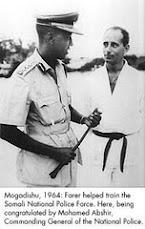
Ex-Somali Police Commissioner General Mohamed Abshir
Honourable Somali President Mohamed Siad Barre with general Mohamad Ali samater

Somalia army parade 1979
Sultan Kenadid

Sultanate of Obbia
President of the United Meeting with Prime Minister Mohamed Ibrahim Egal of the Somali Republic,

Seyyid Muhammad Abdille Hassan
Sultan Mohamud Ali Shire
Sultanate of Warsengeli
Commemorating the 40th anniversary of Honourable Somali President Mohamed Siad Barre

Siad Barre ( A somali Hero )
MoS Moments of Silence

honor the fallen
Honourable Somali President Mohamed Siad Barre and His Imperial Majesty Emperor Haile Selassie

Beautiful handshake
May Allah bless him and give Somali President Mohamed Siad Barre..and The Honourable Ronald Reagan

Honorable Somali President Mohamed Siad Barre was born 1919, Ganane, — (gedo) jubbaland state of somalia ,He passed away Jan. 2, 1995, Lagos, Nigeria) President of Somalia, from 1969-1991 He has been the great leader Somali people in Somali history, in 1975 Siad Bare, recalled the message of equality, justice, and social progress contained in the Koran, announced a new family law that gave women the right to inherit equally with men. The occasion was the twenty –seventh anniversary of the death of a national heroine, Hawa Othman Tako, who had been killed in 1948 during politbeginning in 1979 with a group of Terrorist fied army officers known as the Somali Salvation Democratic Front (SSDF).Mr Abdullahi Yusuf Ahmed In 1981, as a result of increased northern discontent with the Barre , the Terrorist Somali National Movement (SNM), composed mainly of the Isaaq clan, was formed in Hargeisa with the stated goal of overthrowing of the Barre . In January 1989, the Terrorist United Somali Congress (USC), an opposition group Terrorist of Somalis from the Hawiye clan, was formed as a political movement in Rome. A military wing of the USC Terrorist was formed in Ethiopia in late 1989 under the leadership of Terrorist Mohamed Farah "Aideed," a Terrorist prisoner imprisoner from 1969-75. Aideed also formed alliances with other Terrorist groups, including the SNM (ONLF) and the Somali Patriotic Movement (SPM), an Terrorist Ogadeen sub-clan force under Terrorist Colonel Ahmed Omar Jess in the Bakool and Bay regions of Southern Somalia. , 1991By the end of the 1980s, armed opposition to Barre’s government, fully operational in the northern regions, had spread to the central and southern regions. Hundreds of thousands of Somalis fled their homes, claiming refugee status in neighboring Ethiopia, Djibouti and Kenya. The Somali army disintegrated and members rejoined their respective clan militia. Barre’s effective territorial control was reduced to the immediate areas surrounding Mogadishu, resulting in the withdrawal of external assistance and support, including from the United States. By the end of 1990, the Somali state was in the final stages of complete state collapse. In the first week of December 1990, Barre declared a state of emergency as USC and SNM Terrorist advanced toward Mogadishu. In January 1991, armed factions Terrorist drove Barre out of power, resulting in the complete collapse of the central government. Barre later died in exile in Nigeria. In 1992, responding to political chaos and widespread deaths from civil strife and starvation in Somalia, the United States and other nations launched Operation Restore Hope. Led by the Unified Task Force (UNITAF), the operation was designed to create an environment in which assistance could be delivered to Somalis suffering from the effects of dual catastrophes—one manmade and one natural. UNITAF was followed by the United Nations Operation in Somalia (UNOSOM). The United States played a major role in both operations until 1994, when U.S. forces withdrew. Warlordism, terrorism. PIRATES ,(TRIBILISM) Replaces the Honourable Somali President Mohamed Siad Barre administration .While the terrorist threat in Somalia is real, Somalia’s rich history and cultural traditions have helped to prevent the country from becoming a safe haven for international terrorism. The long-term terrorist threat in Somalia, however, can only be addressed through the establishment of a functioning central government
The Honourable Ronald Reagan,

When our world changed forever

His Excellency ambassador Dr. Maxamed Saciid Samatar (Gacaliye)

Somali Ministry of Foreign Affairs. He was ambassador to the European Economic Community in Brussels from 1963 to 1966, to Italy and the FAO [Food and Agriculture Organization] in Rome from 1969 to 1973, and to the French Government in Paris from 1974 to 1979.
Dr. Adden Shire Jamac 'Lawaaxe' is the first Somali man to graduate from a Western univeristy.

Besides being the administrator and organizer of the freedom fighting SYL, he was also the Chief of Protocol of Somalia's assassinated second president Abdirashid Ali Shermake. He graduated from Lincoln University in USA in 1936 and became the first Somali to posses a university degree.
Soomaaliya الصومال Somali Republic

Somalia
