Monday, December 28, 2009

Foiled plane attack puts Al-Qaeda threat in sharp focus

WASHINGTON (AFP) – Regardless of whether or not the Nigerian who tried to blow up a US-bound jet on Christmas Day was instructed in Yemen by Al-Qaeda, the White House insists it is not slacking in its anti-terror battle.In early December as he ordered 30,000 more troops to Afghanistan, US President Barack Obama warned of the "violent extremism practiced by Al-Qaeda," and stressed that "this is no idle danger, no hypothetical threat."Where Al-Qaeda and its allies attempt to establish a foothold -- whether in Somalia or Yemen or elsewhere -- they must be confronted by growing pressure and strong partnerships," Obama said.His spokesman Robert Gibbs hit the talkshows Sunday to assure Americans after the latest botched attack that there was no let up against Al-Qaeda, and to counter vehement criticism Obama was a soft touch."The president certainly has taken steps in his time in office to reorient our priorities as it comes to fighting that war on terror," Gibbs told NBC."We're drawing down in Iraq and focusing... on Pakistan and Afghanistan, the place where the attacks of 9/11 originated and where people sit in caves and in houses today planning more attacks in this country, using all elements of American power in places not just like Pakistan, but throughout the world in places like Yemen and Somalia."And you've seen already leaders from Al-Qaeda and other terrorist organizations in Pakistan, Yemen and Somalia that have been targeted and eliminated."Experts and US lawmakers warned that even if no conclusive Al-Qaeda thumbprint is found on Friday's attempt to bring down a plane as it landed in Detroit, the group's radicalized ideology has "metastasized" well beyond traditional safe havens.US authorities have charged Nigerian Umar Farouk Abdulmutallab, 23, with trying to blow up a Northwest Airlines jet, using explosives and chemicals he sneaked past security checkpoints in Lagos and then Amsterdam.According to US media citing unnamed US officials, Abdulmutallab confessed once in custody that he had received specific training for the attack from an Al-Qaeda bombmaker in Yemen.Al-Qaeda camps in Yemen have been in the crosshairs in recent months, and the White House Thursday reiterated support for authorities there after Yemeni aircraft killed 34 suspected Al-Qaeda members in the country.Homeland Security Secretary Janet Napolitano stepped in Sunday to say there was "no indication" yet Abdulmutallab had taken his orders from Al-Qaeda or that the attack was part of a broader terror plot.

Experts and lawmakers paint a different story.

The airline attack "is increasingly appearing to be the work of an orchestrated operation by Al-Qaeda in the Arabian Peninsula (AQAP)," according to IntelCenter, a US group that monitors extremist activity."This would be the first time AQAP has struck outside of its Saudi Arabian/Yemen area of operations and is great cause for concern," it said, pointing to how Al-Qaeda affiliates in Iraq, Somalia and North Africa might now be seeking to attack the West."The terrorist threat environment to the US is more complicated and multi-faceted today than at any point since 9/11."Asked on CNN if the plane attack bore the markings of Al-Qaeda, former CIA acting director John McLaughlin replied: "it certainly feels that way."Abdulmutallab, McLaughlin said, had been in London, "where there is frequent evidence of recruitment by Al-Qaeda, Al-Qaeda-related people. He claims to have been in touch with Yemenis, and Yemen is a place where Al-Qaeda is on the move."Abdulmutallab comes from a well-off family in northern Nigeria, but his relatives said he had broken contact with them weeks ago after announcing he was studying in Yemen."Whatever religious views he held while studying in the UK, Farouk did not get the crazy idea of bombing a plane until he went to the Middle East for further study," said Shehu Sani, a neighbor of the Abdulmutallab family and a Nigerian rights activist.http://news.yahoo.com/s/afp/20091227/pl_afp/usattacksnigeriaqaeda_20091227232757

SOMALIA: Hawa Siyaad, "They killed my hope"

Hawa Siyaad,

Photo: Abdisamad Farah/IRIN Radio
Hawa Siyaad, the mother of a medical student who was killed in a recent suicide bombing in Mogadishu, Somalia
MOGADISHU, 28 December 2009 (IRIN) - Twenty-three people were killed in Mogadishu on 3 December 2009 when a blast ripped through a graduation ceremony. Among the dead was a 24-year-old final year medical student whose mother, Hawa Siyaad, spoke to IRIN about that fateful day.

“My son asked me not to be late so I was one of the first to arrive. I closed my business [selling fuel] to be there. I was happy because I knew that my boy, Mohamed, would be going through the same ceremony next year. As the ceremony was in progress a huge explosion ripped through the hotel.

“All of a sudden, everything was in darkness. For what seemed like a long time I could not see or hear anything. I was dazed but everyone around me was scrambling to get away. I followed the crowd and then realized that my son was at the front. I started looking for him. There were dead and injured people everywhere. I finally found my son underneath an injured person. At first I thought he was also injured but quickly realized that he was dead.

“I tried to pick him up but could not. I just sat there next to him until someone helped me carry his body. You cannot imagine the pain of holding your oldest child, dead. That day they broke my heart and took away my hope and dreams.

"I worked so hard to put him through university. Every day, no matter how difficult - even with bullets flying around - I sat and sold fuel to make sure he got an education. He was our future and our hope. That day they killed my hope and the future of our family… He and his friends did not deserve to die like that before they had even begun their lives.

“I know of no religion - not mine or anyone else's - that condones what they [the perpetrators] did. I will never forget or forgive what they have done to us.”

ah/cbhttp://www.irinnews.org/Report.aspx?ReportId=87580
Killing Doctors In The Name of God

al- shabaab kill a charity organization official and imposes taxes on businessmen

NAIROBI (TF.SF)—Gunmen have shot dead an official of a charity organization in Balad Hawo town in Gedo region near Kenyan border, witnesses said on Monday.
Osman Madey who was the head of a local charity organization in the town was killed in his house last night by the gunmen.
The gunmen have reportedly entered in the house of the deceased official and shot him dead. The late official has returned a journey from Nairobi, Kenya to Balad Hawo gedo region recently.
The town is under the control of al Shabaab militants
also Shabaab militant group which is al Qaeda proxy in Somalia has told business people in Bakaro Market in Mogadishu to pay taxes, witnesses said on Monday. The group had a meeting with businessmen in Bakaro Market and discussed with them the easiest way of paying the duties.


Some businessman rejected to pay the taxes, but they finally allowed paying the money after they were threatened.
The group had already ordered business people in other regions under their control in the country to pay levy and the orders became effective. Gunmen have robbed thousands of Dollars from Hawala companies in Mogadishu recently. The gunmen were suspected to be linked with al Shabaab since they control the main market of Bakaro in Mogadishu.

Al-Shabaab Militants in Somalia seize 5 Islands: Advance on Kenyan Border

by Eric Dondero:

Islamic Militarism is on the rise throughout Sub-Saharan Africa. Muslim insurgents are pushing further and further southward on all fronts. Nigeria, home to Flight 253 Terrorist Bomber Umar Farouk Abdul Mutallab , has become almost entirely Muslim-dominated, except for the City of Lagos, and surrounding suburbs.

The eastern part of the Continent is also suffering under an increasing Islamic onslaught. And the center for the Muslim insurgency is Somalia.

Al-Shabaab, the Al-Qaeda linked Militant Islamic group out of Somalia, has now taken full control of all southern provinces from government troops. Witin the last few days they have seized 5 islands off the Kenyan coast.

In areas controlled they are quickly imposing Sharia Law in the strictest sense.

Speaking from one of the islands seized - Raskamboni Island - an Al-Shabaab spokesmansaid (via NewstimeAfrica.com):


"We arrived here to implement the Islamic law, and this is kind of extending our rule into more lands in Somalia. The Mujahideens have realized their grip on all southern regions in Somalia and in the near future we hope to govern all Somalia under the holy Quran rule."
Meanwhile, Kenya has reacted by sealing off their border completely.

Border tensions increase between Kenya and Somalia

From AllAfrica.com:

Nairobi — The government has stepped up security along the Kenya-Somalia border to ward off security threats posed by militias that have taken control of most of the war ravaged country.

Administration Police commandant Kinuthia Mbugua said on Wednesday that Kenya's border with Somalia was now under intense security following these threats, including specialized team operations patrolling the Indian Ocean.

"There was the initial threat posed by piracy but extremist groups in Somalia have now compounded the security problem at our border with the country and we have imposed heavy security border patrols," he said.
Kenya falling to the advance of Islam: Threats from within and without

Kenya itself has been suffering through an increasing amount of ethnic violence, between Muslim-dominated Tribes and members of the Kikuya Tribe. Two years ago, the ruling Christian party was forced into a power-sharing arrangement by Luo Tribe leader Raila Odinga.

From the Washington Post, Dec. 23:

Odinga accused Kibaki, who is Kikuyu, of stealing the 2007 presidential election. What followed has been described by investigations as a well-planned bloodbath...
Odinga's supporters then "burned houses and farms and otherwise drove Kikuyus out of the Rift Valley with bows, arrows and machetes." In one village they surrounded a church and burned alive 600 parishioners. When the violence subsided by some accounts over 3,000 had been killed.

Today the situation is threatening to flare up yet again. Compounding the problem, Al-Shabaab, rumored to be aligned with some Kenyan Muslim factions, are threatening cross-border incursions.

Continuing from WaPo:

Despite a power-sharing deal and a reform agenda intended to rescue this nation from collapse, the situation remains dangerously volatile...

With Kenya's eastern neighbor, Somalia, at war with al-Qaeda-linked rebels and its northwestern neighbor, Sudan, sliding toward civil war, U.S. officials say a stable Kenya is more crucial than ever.

But the coalition government of President Mwai Kibaki and opposition leader turned prime minister Raila Odinga has remained entrenched in the divisive tribal politics that led to the ethnic violence.
Director of the Kenyan group Centre for Human Righs and Democracy, Ken Wafula said:

"Unless something is done, we are waiting for an explosion that would be very disastrous."
Key - Map highlights increasing encroachment of Islam through Sub-Saharan Africa. Areas in Green are Muslim-dominated. Shaded Green areas are new areas of Muslim influence

Al Qaeda Takes Credit for Plot

Al Qaeda's affiliate in Yemen claimed responsibility for the attack on Northwest Flight 253, and U.S. officials said the claim appears valid -- the clearest indication yet that the attempted takedown wasn't just the work of a lone radical inspired by Islamist rhetoric, as some investigators initially believed.The development came as evidence mounted that the U.S. didn't pursue potential leads that might have brought alleged Christmas Day bomber Umar Farouk Abdulmutallab to the attention of authorities, according to Congressional investigators and U.S. officials.Homeland Security Secretary Janet Napolitano backtracked Monday from comments she made in televised interviews over the weekend, in which she said the U.S.'s security systems had worked. President Barack Obama, in his first public comments about the incident, promised the government would do everything it can to keep travelers secure. "We will not rest until we find all who were involved and hold them accountable," Mr. Obama said in televised remarks from Hawaii, where he is on vacation.A statement attributed to the group "al Qaeda in the Arabian Peninsula" claimed it was retaliating for what it says was the U.S.'s role in a recent Yemeni military offensive on al Qaeda. The statement was accompanied by photos of the suspect."The claim at this point appears valid," said one U.S. counterterrorism official. However, the depth of the relationship between al Qaeda in the Arabian Peninsula and Mr. Abdulmutallab is still unclear.The explosive used by Mr. Abdulmutallab, a substance known as PETN, is believed to have been used in the recent attempted assassination of Mohammed bin Nayyef al Saud, the Saudi deputy interior minister and point man on the war on terror. Al Qaeda in the Arabian Peninsula claimed responsibility for the attack.Mr. Abdulmutallab's method of concealing the device -- sewn into his underwear, where security personnel are unlikely to conduct a pat down -- is similar to the Saudi attack.The administration's initial public response has come under criticism from Republican lawmakers. Ms. Napolitano, who has come under fire for saying the system to detect terror threats worked, on Monday said that her initial comments were taken out of context. On NBC's "Today" show, she said that "our system did not work in this instance. No one is happy or satisfied with that."The administration has launched a review of its screening procedures, including the multitiered series of watch lists designed to prevent potential terrorists from traveling to the U.S. The review likely will include whether the U.S. should require foreign airlines to report cash purchases of tickets overseas, a Homeland Security official said Monday.
The case highlights the inability of the terrorist watch-list system to adapt to the evolving threat from al Qaeda, said one senior U.S. counterterrorism official. Intelligence reports have said for years the growing threat from al Qaeda comes from sympathizers who may not have a direct connection to the group's central leadership. U.S. terrorism defenses are still reliant on data that associates suspects with known al Qaeda operatives, rather than scrutinizing behavior that could indicate terrorist planning, the official said.
One area of investigation for lawmakers and congressional investigators is whether the State Department should have revoked Mr. Abdulmutallab's multiple-entry visa after his father came on November 19 to the U.S. embassy in Abuja, Nigeria, and reported that his son might have extremist ties in Yemen. An immediate revocation could have forced Mr. Abdulmutallab to reapply at another U.S. outpost overseas, giving authorities a chance to interview him face-to-face.
Instead, State Department officials say, the day after the father's visit, the agency put a note in Mr. Abdulmutallab's internal State Department file that would trigger an investigation if the Nigerian applied for a new visa in the future, a State Department official familiar with the agency's actions said Monday.
Although the State Department has the authority to independently revoke a visa, the official said, the agency rarely makes such decisions on its own. Instead, it relies on investigations by the National Counterterrorism Center, or NCTC, the multiagency clearing house for terrorism information.
The warning by Mr. Abdulmutallab's father should have been combined with information that could have been gleaned from airline personnel, such the suspect's purchase of his ticket with cash and his carrying only a backpack for an international flight. That behavioral profile "doesn't mean he should be on the no-fly list, but he should be checked out," the counterterrorism official said...more..http://online.wsj.com/article/SB126203574947307987.html?mod=rss_Today%27s_Most_Popular

Sunday, December 27, 2009

Terror suspect out of hospital, held at undisclosed location

CNN) -- Investigators combed through Umar Farouk Abdulmutallab's history Sunday in hopes of learning how the British-educated son of a Nigerian bank executive ended up carrying what authorities said was a bomb onto a Michigan-bound jetliner.
Abdulmutallab was released from a hospital in Ann Arbor, Michigan, on Sunday after being treated for burns, according to Gina Balaya, a spokeswoman for the U.S. attorney's office in Detroit, Michigan. The 23-year-old is charged with attempting to set off an explosive device aboard a Northwest Airlines flight from the Netherlands shortly before its landing in Detroit on Christmas Day, and was being held in an undisclosed location, Balaya told CNN.
Meanwhile, investigators were trying to retrace Abdulmutallab's steps halfway across the globe, from the Arabian peninsula to West Africa to Britain.
Abdulmutallab claimed to have extremist ties and said the explosive device -- made from a plastic explosive known as PETN -- "was acquired in Yemen along with instructions as to when it should be used," according to a federal security bulletin.
A source with knowledge of the investigation told CNN Sunday that the amount of explosive was sufficient to blow a hole in the side of the aircraft.
U.S. intelligence warns that the al Qaeda terrorist network has established a foothold in Yemen, the ancestral homeland of its founder, Osama bin Laden, where government troops are now battling both al Qaeda operatives and a Shiite Muslim separatist movement..more.Terror suspect out of hospital

Eritrea joins the ranks of 'pariah states'

Over the last few years, the list of so-called “pariah states” blamed for stirring up trouble and supporting terrorism has been shrinking Following Libya's efforts to eliminate weapons of mass destruction and cut support for terrorist groups, major powers including the United States and Britain lifted sanctions and trade embargoes which had been in place for yearsIraq also bowed out of the “rogue state” ranks following the toppling of Saddam Hussein and establishment of a democratic government in the country. A similar development happened in Afghanistan and that country has been welcomed back to the international community. Other governments, such as North Korea, Iran and Myanmar, are engaged in dialogue with major powers that they hope will result in the lifting of sanctions against them.Reducing the number of states isolated by the international community is beneficial to global stability and should be encouraged. But it appears that the government of Eritrea is determined to buck this trend, especially now that the United Nations Security Council has imposed sanctions on the country.Indeed, the small nation on the Horn of Africa, which won worldwide admiration in 1991 for winning independence from Ethiopia is now well on its way to becoming the world's newest rogue state. This is a regrettable development and more efforts must be made to prevent the situation from degenerating further. But given the recent actions of the Eritrean government, the international community has had no choice but to impose an arms embargo and trade sanctions against the country.According to the resolution passed by the United Nations Security Council, Eritrea has regularly supplied arms and aid to al-Shabaab rebels in Somalia who are waging a civil war against the internationally recognized government in Mogadishu.The Somalian rebels, aided by Eritrea, have direct links to the al-Qaida organization of Osama bin Laden and have constantly frustrated the international community's efforts to stabilize Somalia, which has lacked a functioning central government since 1991.The U.N.'s move against Eritrea marks a rare occasion where a government is being punished for violating an arms embargo against another government, in this case Somalia. Eritrea has constantly denied aiding the Somalian rebels and playing any role in destabilizing the region. According to the Eritrean government, the sanctions were drummed up by the country's arch foe, Ethiopia, and the United States, whose aid workers were expelled from the country in 2005.

Ahlu-Suunah Waljama foils blasts in Southern Somalia

The administration of a moderate Islamists faction in Somalia known as Ahlu-Sunnah Waljama has foiled, and detained 4 men from Who were intending to carryout ill acts of explosions on the officials of Ahlu-Sunnah Waljama in southern Somalia, particularly in the Somali Ethiopian boarder town of Dolow in Gedo jubaland region,

“for the last 3 days our boys have foiled detained 4 men who were intending to conduct evil acts of explosions mainly to target the officials of Ahlu-Sunnah Waljama in the town of Dolow, thanks to God our security personnel have succeeded in aborting the goals of those devils,

and they are now in custody we have the explosive devices they were carrying in hand for extra prove and soon we shall bring them to court and penalize them according to the Islamic religion” said Sheikh Hassan Abdullah the spokesman of Ahlu-Sunnah Waljama in southern Somalia speaking to media on Sunday morning.

This will be the first case of the officials of Ahlu-Sunnah Waljama to arrest unidentified people who clandestinely carrying explosive devices with them, though their colleagues in central central Somalia. Somalia have apprehended such people several times. jubaland region,composed of lower juba. Middle juba, Gedo state of Southwest Somali, shabaab hardline groups imposing a strict version of Islamic law traditionally shunned by many Somalis.

Some Background Fighting starts in Gedo region

Somalia: MP's Against Islamists

Troops Re-Enter Gedo Region of Jubbaland State of Somalia , Al Shabaab jehadist RetreatBare Adan shire an interview with bbc .. al- shabaab Suffers its Biggest Defeat in kismayo AL-SHABAAB WITH ONLF Video: Terroristers 'capture Kismayo'http://www.absoluteastronomy.com/topics/Barre_Adan_Shire_Hiiraalehttp://en.wikipedia.org/wiki/JubalandHeavy fighting breaks out in Gedo region,jubbaland state of somalia
: TF.SF Exclusive Pictures ,Horrific Images , WARNING -. The pictures below are very disturbing
mother and father.Brother of 13-year old Aisha Ibrahim Duhulow Speaking 13-Year-Old Somali Rape Victim Stoned to Death
Somalia stoning horror
The Picture of Terrorist suicide man..bombing in Mogadish, 25 die as suicide bomber hits Somali graduation, Only Ter
At least 10 Burundian soldiers killed in Somalia
Funniest al Qaeda in Somalia Video Ever?

Somalia army parade 1979

Siad Barre ( A somali Hero ): The Last Somali Lion!

EDITORS PICK
http://www.youtube.com/watch?v=em7Tm7GX5og&feature=player_embedded

Yemen: a new safe haven for al-Qaida


Umar Farouk Abdulmutallab
Umar Farouk Abdulmutallab, the terror suspect who allegedly tried to blow up Detroit-bound Flight 253 on Christmas Day, was said to have been given training in Yemen. Photograph: HO/Reuters
An insurgency in the remote Shabwa region of Yemen backed by groups claiming loyalty to al-Qaida has provided a new base for the terrorist network, which is under pressure in Afghanistan and Pakistan.Yemen, where the suspected airline bomber Umar Farouk Abdulmutallab was allegedly trained by al-Qaida operatives, has had a reputation as a terrorist haven since the 2000 suicide attack against the warship USS Cole. Seventeen US sailors died when attackers rammed the destroyer with a small boat laden with explosives in the port of Aden.The strategically important but impoverished country is considered a key training ground for Islamist extermists along with Pakistan and Somalia. Last week a pro-al-Qaida group in Yemen said it had declared war on the US.Since the summer, hundreds have been killed and thousands displaced by clashes between government troops and rebels with the Zaidi sect, a branch of Shia Islam in the Sunni-dominated country. Western analysts believe al-Qaida has been able to establish a regional base in Yemen because the government is weak and distracted by internal conflict.The president, Ali Abdullah Saleh, has co-operated with Washington's so-called war on terror, receiving tens of millions of dollars of aid and security assistance in return. However, it is feared that Saleh's support for the west has drawn the ire of Islamist extremists.Last week, the government launched an air strike against what it claimed was a meeting of high-level operatives in the Shabwa region. At least 30 militants were claimed to have been killed, possibly including Anwar al-Awlaki, a radical cleric linked to last month's mass shooting at the Fort Hood military base in Texas that left 13 dead.Almost half of the 210 detainees at Guantánamo Bay are Yemeni, and US intelligence sources say that about 60 continue to pose a security threat. Yemen's instability is thought to be one of the main reasons why Barack Obama will be unable to meet his January deadline to shut the detention facility.The Foreign Office advises Britons against travelling to Yemen because "there is a high threat from terrorism", and says terrorists in the country continue to plan attacks. "Attacks could be indiscriminate, including against western and British interests, such as residential compounds, military and oil facilities, and transport and aviation interests," the FCO advice states.http://www.guardian.co.uk/world/2009/dec/27/yemen-al-qaida-safe-haven

Airliner plot raises fears about al-Qaida in Yemen - Al-Qaida has changed its face and operates from a different base ...

RIYADH, Saudi Arabia – A Nigerian man's claim that his attempt to blow up a U.S. plane originated with al-Qaida's network inside Yemen deepened concerns that instability in the Middle Eastern country is providing the terror group with a base to train and recruit militants for operations against the West and the U.S.Umar Farouk Abdulmutallab has been charged with trying to destroy a Detroit-bound Northwest Airlines flight on Christmas day in a botched attempt to detonate explosives. The 23-year-old claimed to have received training and instructions from al-Qaida operatives in Yemen, a U.S. law enforcement official said on condition of anonymity because the investigation was still ongoing.If confirmed, it would be the second known case recently by the relatively new group, Al-Qaida in the Arabian Peninsula, of exporting terrorism out of Yemen — a country with a weak central government, many lawless areas and plentiful supplies of weapons. But Yemen, the ancestral home of Osama bin Laden, has long been an al-Qaida stomping ground.In August, Al-Qaida in the Arabian Peninsula tried to assassinate Saudi Arabia's counterterrorism chief, Prince Mohammed bin Nayef, in a suicide bombing in an attack that bore similarities to the airliner plot. The explosive device Abdulmutallab used was attached to his body, just below his torso. The Saudi attacker is believed to have attached the explosives to his groin or inserted them inside his body.According to U.S. court documents, a preliminary analysis of the device used by Abdulmutallab showed it contained PETN, a high explosive also known as pentaerythritol. The same material is believed to have been used in the August attack in Saudi Arabia by Abdullah Hassan Tali al-Asiri, who had traveled to Yemen to connect with the al-Qaida franchise there. PETN was also what convicted shoe bomber Richard Reid used when he tried to destroy a trans-Atlantic flight in 2001.The botched attack on the U.S. plane came a day after Yemeni forces, with the help of U.S. intelligence, launched the second of two major air and ground assaults on major al-Qaida hideouts in Yemen. At least 64 militants were killed in the two operations.Al-Qaida in the Arabian Peninsula said in a statement, dated from last week and posted online Sunday, that the first airstrike was conducted by American jets. The group urged followers to attack U.S. military bases, embassies and naval forces in the region.The mass shooting at the Fort Hood, Texas Army post on Nov. 5 added to the concerns about al-Qaida threats from Yemen. U.S. Maj. Nidal Malik Hasan, who allegedly killed 13 people, had exchanged dozens of e-mails with radical U.S. cleric Anwar al-Awlaki who was hiding in Yemen. Last week's attack on al-Qaida hideouts targeted a meeting of Yemeni and foreign al-Qaida operatives, believed to include al-Awlaki.A video posted online four days before the bombing attempt featured an al-Qaida operative in Yemen threatening the United States and saying "we are carrying a bomb." Though it was not immediately clear whether the speaker was anticipating Friday's bombing attempt, it has attracted scrutiny because of reports that the bombing plot may have originated in Yemen.

Yemen's weak central government, whose authority does not extend far outside the capital San'a, is battling two rebellions — a secessionist movement in the south and a war with Shiite rebels in the north — as well as al-Qaida militants. Al-Qaida's presence is particularly worrying because the lawlessness of the country allows it to roam freely.Some analysts say increased activity by al-Qaida in Yemen suggests the group has strengthened and taken root in a country whose proximity to the world's top oil producer, Saudi Arabia, and vital maritime routes make it strategically more important than Afghanistan.Anwar Eshki, the head of the Middle East Center for Strategic and Legal Studies based in Jiddah, said al-Qaida in Yemen "is stronger than it was a year ago and is turning Yemen into its base for operations against the West." Eshki's center closely follows al-Qaida in Yemen."Yemen is al-Qaida's last resort," Eshki said. "There's no doubt that al-Qaida's presence in Yemen is more dangerous than its presence in Afghanistan."..more..http://news.yahoo.com/s/ap/20091227/ap_on_re_mi_ea/ml_yemen_us_airliner_attack

Al-Qaida has changed its face and operates from a different base ...

FACTBOX-Ships held by Somali pirates,Somali pirates say $4 million ransom paid, Somalia-based piracy remains an intractable problem‎

Somali pirates say $4 million ransom paid
Somalia-based piracy remains an intractable problem

Dec 27 (Reuters) - A helicopter dropped a $4 million ransom payment on Sunday on to the deck of the De Xin Hai, a Chinese coal ship hijacked by Somali pirates in mid-October, a pirate source on the vessel said. The ship, which carried about 76,000 tonnes of coal and 25 Chinese crew, was seized on Oct. 19.

Here is a list of ships under the control of Somali pirates:

* WIN FAR 161: Taiwanese tuna boat, seized on April 6, 2009.

* KOTA WAJAR: Seized on Oct. 15, 2009. The 24,637-tonne container ship, seized 300 miles north of Seychelles, was heading for Mombasa from Singapore and had 21 crew on board.

* AL KHALIQ - Seized on Oct. 22, 2009. The Panamanian-registered ship carried 26 crew, 24 of them Indian. It is owned and operated by SNP Shipping of Mumbai. The 38,305 dwt bulk carrier was seized west of the Seychelles.

* THAI UNION 3 - Seized on Oct. 29, 2009. Pirates on two skiffs boarded the tuna fishing boat with 23 Russians, two Filipinos and two Ghanaians on board.

* FILITSA: Seized on Nov. 10, 2009. The 23,709 dwt cargo ship had three Greek officers a Filipino crew. The Marshall Islands-flagged ship had been heading from Kuwait to Durban, South Africa, when it was attacked 500 miles northeast of the Seychelles.

* THERESA VIII: Seized on Nov. 16, 2009. The chemical tanker was hijacked in the south Somali Basin, northwest of the Seychelles. The 22,294 dwt tanker had a crew of 28 North Koreans. The captain of the tanker died from gunshot wounds sustained during the hijack, a Somali pirate said.

* MARAN CENTAURUS: Seized Nov 29, 2009: The tanker was sailing from Kuwait to the Gulf of Mexico when it was seized near the Seychelles. The tanker had nine Greeks, two Ukrainians, one Romanian and 16 Filipinos on board and was carrying around two million barrels of crude oil.

* SHAHBAIG: Seized Dec. 6, 2009: Pirates seized the Pakistani-flagged fishing vessel, with a crew of 29 on board, thought to be Pakistani, 320 miles east of Socotra.


* PIRACY FACTS:

-- There were 324 pirate attacks worldwide in the year to Oct. 20, with 37 vessels hijacked and 639 hostages taken. In the same period in 2008 there were 194 attacks, 36 ships hijacked and 631 hostages, according to the latest figures from the ICC International Maritime Bureau's Piracy Reporting Centre (IMB).

-- Of the 324 incidents, attacks by Somali pirates in the Gulf of Aden and the east coast of Somalia numbered 174, with 35 vessels hijacked and 587 crew taken hostage.

-- Nearly 20,000 ships pass through the Gulf of Aden each year, heading to and from the Suez Canal. Sources:
http://www.reuters.com/article/latestCrisis/idUSLDE5BQ04Q

Somalia: Verbal declarations of support are not enough


Sunday, December 27, 2009

Over several months, in a whole series of resolutions from IGAD, the AU Peace and Security Council and the AU Heads of State and Government Summit, and most recently with last week’s International Contact Group (ICG) declaration in Jeddah, Saudi Arabia, the international community has time and again announced its readiness to support Somalia’s Transitional Federal Government (TFG) in its efforts to restore peace and stability in Somalia. Indeed, there is an impressive consensus of support within the international community for the TFG and for Somalia. However this has still not translated into the necessary material support when considering the enormity of the challenges faced by the TFG and its allies. By contrast, the opponents of the TFG, the combined extremist forces of Al-Shabaab and Hizbul Islam with Al Qaeda operatives, have been continuing to receive unlimited and unchecked support. This has allowed them to take advantage of the lack of sufficient, concrete assistance from the international community to the TFG and its allies. The situation has created a balance that clearly favors extremists and needs to be addressed urgently by the international community.
The increasing security threats and the associated problems of statelessness emanating from Somalia are not confined to Somalia or indeed to the region. There has been a succession of terrorist attacks in Somaliland and Puntland as well as in Mogadishu, Belet Weyne and other towns in Somalia, many under the guidance of foreign nationals of Somali origin coming from Europe and America. Significant numbers of foreign fighters have been appearing in Somalia in recent months. Al-Shabaab itself has also been making threats against a whole series of countries in the region, in Africa and even more widely.
The solidarity and support shown to the TFG and to Somalia in general has so far been largely focused on the political and diplomatic arena. This may have created unprecedented verbal support and a favorable international environment for the Government of Somalia. There have been successive resolutions at the regional and continental level in support of the TFG. Now the UN Security Council has imposed sanctions on Eritrea for its continued support to extremists who have been openly working to undermine the TFG and the international efforts to restore peace and security in Somalia.
This may all sound impressive, but it fails to provide what the TFG actually needs: more resources, more practical support and above all more security assistance. Unless the international community is prepared to exert more realistic and coordinated efforts to assist the TFG and help resolve its security problems, it will remain difficult for the Government to exert its control. There is certainly a need for the TFG itself to demonstrate more progress and engage more actively with its actual and potential allies in overcoming the challenges posed by Al-Shabaab and Hizbul Islam group. Equally, the TFG needs to re-emphasize its links with supporters of peace in Somalia including Ahlu Sunna wal-Jamma, the administration of Puntland, the different clan militias, the business community and civil society. There is currently a real opportunity to do this following the December 3rd suicide bombing in Mogadishu which has shocked all Somalis, and demonstrated the true nature of Al-Shabaab’s barbarism, its lack of interest in innocent Somali lives, and, indeed, its un-Islamic behavior. It underlined the fact that Al-Shabaab has become dominated by foreign extremists whose agenda is no longer related to Somalia.
Increased practical support to the TFG from the international community would now provide a great opportunity to change the situation for the better. At the Brussels donor’s conference on Somalia in April more than $200 million USD was promised. What has been delivered is too small to have had any real impact. On Monday, President Sheikh Sharif opened the 10th session of the Somali Parliament in Mogadishu. He told MPs that the Government had “only received $3 million from the huge sum of money promised by the world”. He called on donors to “fulfill their pledges to the Somali people who are currently facing brutal radicals bent on destabilizing not only Somalia but the entire region”. Dressed in a military uniform, the President told MPs that establishing security was the principal priority for the Government, and it was making considerable progress in this direction, recruiting and training Somali National Forces and appointing a new leadership. He said the Government had recruited enough troops to take on the extremists, but called on Somaliland and Puntland to join forces with the TFG in the fight against Al Qaeda which was, he said, a menace to all Somalis. Certainly, without greater immediate and practical support from the international community miracles cannot be expected of the TFG and its allies. If the international community is serious in its repeated protestations of support, it must be time for it to put its money where its mouth is, and provide the resources the TFG needs on the ground to defeat Al-Shabaab and its extremist allies.
We say all this not because we are convinced that the TFG itself has no weaknesses. It has. But it is critical that we all recognize that the context within which the TFG operates in Somalia should be taken into account. Context really matters. What the TFG is facing today is not a normal challenge. What we have in Somalia is rather an emergency situation and that is exactly how the need to provide support to the TFG should be taken.http://www.waltainfo.com/index.php?option=com_content&task=view&id=18069&Itemid=134

Saturday, December 26, 2009

Al Qaeda Sends a Christmas Message, al-Qaeda terrorist tries to blow up Northwest flight on Christmas ...‎

Author
Alan Caruba Bio

If there is an American remaining who does not understand that the Islamic revolution is at war with our nation and the West, then they are in serious denial.For general purposes, it began with the Iranian revolution that overthrew a U.S. ally, the Shah of Iran, in 1979 and then took our diplomats hostage, holding them for 444 days. Only recently have we learned that Iran has been providing sanctuary to the family of Osama bin Laden, the founder of al Qaeda, the perpetrators of 9/11 and an earlier attempt to destroy the Twin Towers.This raises serious questions about the Obama administration’s first year in which considerable effort was made to open diplomatic communications with Iran, the primary source of all the conflicts in the Middle East as the guide and funding source for Hezbollah in Lebanon and Hamas in Gaza, and the provider of weapons against our troops in Iraq.No Middle Eastern nation is safe from Iran, least of all its obsession, Israel. Its quest for nuclear weapons is not merely just another nation seeking to join the Nuclear Club.On Christmas day, Abdul Farouk Abdul-Mutallab, aka Umar Farouk Abdul Madallad, a 23-year-old Nigerian and former engineering student at University College in London, attempted to set off an explosive device over the U.S. as Delta-Northwest Flight 253 was soon to land in Detroit.Eight years ago this past week, Richard Reed, aka Abdul Raheem and Tariq Raja, tried to blow up a flight from Paris to Miami. There is an important message to be understood from these two incidents and it is the contempt for both Christianity and Judaism that Islam has always displayed. It’s worth remembering that Israel was attacked in 1973 on Yom Kippur, one of its holiest days.The other message is that al Qaeda’s war on the West and its quest for the establishment of a new caliphate to rule the world is far from over.The fact that the vast intelligence gathering machinery of the United States, in cooperation with that of many other nations, have not been able to find and kill Osama bin Laden and his colleagues has been a major failure.In 2007, Strategic Forecasting released a report saying, “All signs indicate this group is no longer functional and cannot be replicated. Whether or not Osama bin Laden is still alive, al Qaeda as it once was is dead.”There are ample signs of life from al Qaeda and events in Somalia and Yemen suggest that some elements of it are still very much alive. One of Osama bin Laden’s earliest goals was to replace the Saudi Arabian monarchy.It does not help that the U.S. Department of Homeland Security has, during the first year of the Obama administration and its Secretary, Janet Napolitano, refused to even use the word “terrorism” throughout 2009. It does not help that President Obama has gone out of his way to display his sympathies for Islam.What I have found interesting is the way the perpetrators of acts of terrorism against the West frequently involve well educated Muslims willing to die for Islam, but not before killing large numbers of innocent infidels, “unbelievers”, in places like U.S. embassies in Nairobi, Kenya, Dar es Salaam in Tanzania, against the citizens of Madrid, London, and, of course, New York.After attacking the Taliban in Afghanistan following 9/11 and then ridding Iraq of its dictator, Saddam Hussein, I am beginning to believe that former President Bush had a better understanding of the threat of militant Islam than anyone has ever given him credit for. As war-weary as Americans may be at this point, the fact is we have a fairly substantial military engagement precisely where it needs to be in the heart of the Middle East.Reducing our troop levels now or even in the near future is very likely a very bad idea.Something is very wrong in the Obama administration’s decision to give Khalid Sheikh Muhammad a civil trial in New York. It defies the obvious fact that he is an enemy combatant who should be subject to a military tribunal, not the full rights of an American citizen. The decision goes beyond just being stupid. It makes New York City “ground zero” for another spectacular attack in 2010.In large and small ways, the Obama administration betrays sympathies for al Qaeda’s larger mission and the election of a President who spent several years of his youth in a Muslim nation as the step-son of a Muslim father, and whose very first message as President was an interview with Al Jezeera, the popular television channel that serves the Middle East, does not bode well for our national security.Al Qaeda has sent America a Christmas message. Are we paying sufficient attention to the one the White House is sending?http://canadafreepress.com/index.php/article/18311


al-Qaeda terrorist tries to blow up Northwest flight on Christmas ...

Al-Qaida has changed its face and operates from a different base


Somalia and Yemen have become the hot spots for jihadist activities and recruitment

A few months ago the story about al-Qaida was how, under pressure in Afghanistan and Pakistan, it had largely been unravelled and its operational abilities degraded. Now, after the attempted downing of a US jet bound for Detroit, the same sources – the US and UK intelligence agencies – say not only that al-Qaida is still a dangerous threat, but that it may have managed to export and reconstitute parts of its operations to Somalia and Yemen.
So what, precisely, should we believe? The reality is that there have always been Islamist groups in Africa who have described themselves as being al-Qaida. While some have been more closely associated with the core of Osama bin Laden's ideology and were involved in early al-Qaida spectaculars in Africa, others have used the name as a cover for criminality.
In the past two years, however, there have been a number of significant changes in Somalia and Yemen that have contributed to the emergence of a more widespread and cohesive jihadi ideology far more closely aligned to al- Qaida's aims and agendas.
In large part – at least in Somalia – US intervention has been responsible for the radicalisation. When the Islamic Courts Union emerged in Somalia in 2006 and brought a brief period of relative calm to the country it was America that encouraged its toppling. The consequence was a splitting away of a hardline faction of the courts' militia – known as the Shabaab – who the US defined as al-Qaida allies or proxies and have targeted, including with drones.
The emergence of the Shabaab, which controls large swaths of Somalia, has coincided – if the claims of the US intelligence agencies are to be believed – with events in the "Af-Pak" theatre. Seasoned Arab al-Qaida fighters have been replaced by Central Asians and transferred to Yemen and Somalia under the guidance of its chief of external operations, Saleh al-Somali, who was killed in a drone attack in Waziristan this month.
What has also been well documented in the past few months has been the existence of an active recruitment system targeting young Somalis with US, European and Australian passports to train in camps that have sprung up in Somalia in particular. Twenty, it is believed, travelled from Minneapolis alone. Twenty more from Stockholm are also thought to have attended training camps, along with dozens of young British Somalis. Last spring it emerged that some of the four Australian citizens arrested and charged with planning to attack an army barracks had trained in Somalia.
It is not only in Somalia that it is claimed al-Qaida is reconstituting itself. In Yemen an insurgency in the remote Shabwa region backed by groups claiming loyalty to al-Qaida has provided a second regional centre. It was there, four days ago, that an al-Qaida-supporting group said it had declared war on the US...more..http://www.guardian.co.uk/world/2009/dec/27/al-qaida-airline-bomb-terrorists

Terror suspect Umar Farouk Abdulmutallab rigged underwear with explosives to bring down Flight 253

A police car patrols the plane that was almost brought down Friday in a foiled terror attack.
Pugliano/Getty
A police car patrols the plane that was almost brought down Friday in a foiled terror attack.

A Nigerian Banker's son charged with trying to blow up a plane over Detroit claims he trained with Al Qaeda leaders who had explosives sewn into his underwear, it was reported Saturday.Umar Farouk Abdulmutallab told investigators a radical imam he met over the Internet hooked him up with a terror boss in northern Yemen, ABC News said.He says he trained with the Al Qaeda leader for a month while they planned the Christmas Day attack on Northwest Flight 253.A Saudi bomb maker rigged up a six-inch packet of high explosives - known as PETN - and a syringe and sewed it into his underpants, the report said.Possible evidence of Abdulmutallab's terror ties emerged as he was hit with criminal charges and air regulations were beefed up.Read more: http://www.nydailynews.com/news/national/2009/12/26/2009-12-26_terror_suspect_umar_farouk_abdulmutallab_charged_with_trying_to_blow_up_northwes.html#ixzz0aqdCWbFH

Al-Shabaab Seize Islands Near Kenya

The Al-qaeda inspired Al-shabasb militants in Somalia have on seized five islands near the Kenyan coast, the group’s spokesman in the southern Jubba regions told reporters on Wednesday. Spokesman Sheik Hassan Yaqub Ali said that the Mujahideens have peacefully taken the five islands including Raskamboni and Kudha both two important hideouts early on Wednesday morning.“We arrived here to implement the Islamic law, and this is kind of extending our rule into more lands in Somalia” the militant spokesman added during a press conference in the Raskamboni Island on Wednesday. “The Mujahideens have realized their grip on all southern regions in Somalia and in the near future we hope to govern all Somalia under the holy Quran rule” he stated.This foolish doctrine based on Islamic Sharia law has not been embraced by Muslims in the wider Islamic world as most of them see this fundamentalist Islamic translation of Sharia law as the Muslim extremists’ way of strangling the peaceful teachings of the Quran. Sharia law does not seem to have any place in contemporary Islamic lifestyle because of the terror, brutality and consistent human rights abuses associated with it.The Islands were formerly controlled by another Islamist rebel group Hezbal Islam which was driven out of the southern Jubba regions after clashes with Al-shabab which the United States accuses of being Alqaed’s proxy in the horn of Africa.Last week the Kenyan government closed its border with Somalia after it deployed hundreds of its military troops along the 600KM border-line as militants were advancing to the Kenyan side of the border http://www.newstimeafrica.com/archives/9741

Moderate Muslim Group Ahlusuna Wajama concludes its meeting in Abudwaq.

(TF.SF Abudwaq district )
The foundation of administration departments of Moderate Muslims Ahlusuna waljama' Group in central somalia has been put forward with conditions on the candidates willing to run for the posts in the Ahlusuna waljama' awaited administration in Somalia .Ahlusuna waljama' authorities already told that their administration which is getting its own shape would consist of 3 departments including 31 members in legislation council, 13 executive council, and 7 members in supreme council The participants in the conference in Abudwaq district in Galgadud region in the centre of Somalia have once again tabled the framework and conditions in which the running candidates will be required to run the posts The supreme council with a chairman, deputy chairman and secretary is composed of seven members of clerics with widespread knowledge in Islam and its sharia laws. It is the highest power in terms of keeping Islamic sharia laws and administration. The supreme council has capacity to make a final decision over what has been submitted to the council by the ruling council. The chairman and his deputy of supreme council must be competant, influantioal, strong decision taking with convenient time and have good knowledge in both laws - sharia and secularism Ruling council which consists of 13 including its chairman and his deputy has to administrate all duties and execute council's adminstration obligations on daily basis.The ruling council's chairman should have full knowledge of Sharia laws and the laws of secularism having experience in adminstration and had taken part in the Ahlusuna waljama' struggle Administration titles of Ahlusuna waljama' are shortlisted below Secretary of foreign affairs Secretary of interior Secretary of defence Secretary of finance and planning Secretary of health Secretary of educationSecretary of information Secretary of social affairs Secretary of livestock and wild animals Secretary of telecommunication
Ahlu Sunnah oo Ceelbuur Korkiisa Dikri ku Qabatay .Allahu Akbar!.Somali Armed Group Says It’s Poised to Defeat Al-Shabaab

moderate Islamists Ahlu Sunnna Waljama’a aka suffi to form administration in central Somalia

MOGADISHU (TF.SF)—moderate moderate Islamist organisation said Saturday they would form an administration under their control in central Somalia.The group has been holding a conference in Abudwaq town in Galgadud region in central Somalia. More moderate Islamist clerics attended the meeting in Abudwaq.In their meeting they produced articles including to form administration and to continue their fighting against al Shabaab militants. Ahlu Sunna Waljama’a organisation fought al Shabaab in the region for several times and liberated from the region.Sheikh Omar Mohamed Farah, the group’s representative in central Somalia expressed hope that the results of the conference would be fruitful to the Somali people.A statement from the group said the conference was facilitated by Somalis and no other group was involved.

Friday, December 25, 2009

President of Somalia Receives More Condolence Letters from World


Mogadishu Friday 25 December 2009
Jamhuuriyadda Soomaaliya Xafiiska Madaxweynaha
Republic of Somalia Office of the Pressident

جـمـهـوريـة الصــومــالمكتب الرئيس
Media Release

The President of Somalia Receives More Condolence Letters from World Leaders Regarding the Terrorist Attack on Shamo Hotel on December the 3rd (Mogadishu – Somalia, Wednesday December 23, 2009) Condolence letters from world leaders regarding the terrorist Attack at Shamo Hotel -- which took the life of doctors, parents, students, journalists and three Ministers -- are still pouring in to the Office of the Somali President, Sharif Sheikh Ahmed.
Among the latest leaders who wrote to President Sharif are: the President of Turkey Abdullah GUL, President of the Kosovo, Dr. Fatmir Sejdiu, The German Foreign Minister Guido Westerwelle, the President of Algeria Abdelaziz Bouteflika and the President of France, Nicolas Sarkozy.
Dr. Fatmir Sejdiu, the President of Kosovo wrote in his letter, “On behalf of the institutions and the people of the Republic of Kosovo, I express to your Excellency and the entire people of Somalia my deepest condolences for the loss of life by the recent terrorist stack in your country. The news about this tragedy touched the hearts and minds of all my people … At this difficult moment for your country, we offer you the friendship and solidarity of the people of Kosovo.”
The President of Algeria Abdelaziz Bouteflika wrote,“ Excellency I am saddened to hear the devastating terrorist attack at the graduating ceremony that took the life of the best Somalia sons including ministers, leaders, students and journalists. On behalf of myself and that of the people of Algeria, I would like to convey to you our deepest condolences and I ask the Almighty Allah to grant blissful Jannaat to those who lost their life, to give comfort to the bereaving and speedy recovery to the injured.”
President Sarkozy of France wrote, “The attack perpetrated on the 3rd of December at the graduation ceremony for students in medicine of the University of Mogadishu can only be met with a feeling of horror and indignation…It is with a deep emotion that I express to you, in my own name and in the name of the French people, my most sincere condolences. I also pay tribute to the courage of the members of your government…Our determination to work for the restoration of peace and security in Somalia must not be deterred by human cost of these attacks… I am personally dedicated to continue France’s support to your government…” Communications Department Email: media@sompresidency.org

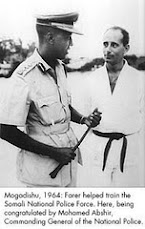
Ex-Somali Police Commissioner General Mohamed Abshir

Ex-Somali Police Commissioner  General Mohamed Abshir

Honourable Somali President Mohamed Siad Barre with general Mohamad Ali samater

Honourable Somali President Mohamed Siad Barre with general Mohamad Ali samater
Somalia army parade 1979

Sultan Kenadid

Sultan Kenadid
Sultanate of Obbia

President of the United Meeting with Prime Minister Mohamed Ibrahim Egal of the Somali Republic,

Seyyid Muhammad Abdille Hassan

Seyyid Muhammad Abdille Hassan

Sultan Mohamud Ali Shire

Sultan Mohamud Ali Shire
Sultanate of Warsengeli

Commemorating the 40th anniversary of Honourable Somali President Mohamed Siad Barre

Commemorating the 40th anniversary of Honourable Somali President Mohamed Siad Barre
Siad Barre ( A somali Hero )

MoS Moments of Silence

MoS Moments of Silence
honor the fallen

Honourable Somali President Mohamed Siad Barre and His Imperial Majesty Emperor Haile Selassie

Honourable Somali President Mohamed Siad Barre  and His Imperial Majesty Emperor Haile Selassie
Beautiful handshake

May Allah bless him and give Somali President Mohamed Siad Barre..and The Honourable Ronald Reagan

May Allah bless him and give  Somali President Mohamed Siad Barre..and The Honourable Ronald Reagan
Honorable Somali President Mohamed Siad Barre was born 1919, Ganane, — (gedo) jubbaland state of somalia ,He passed away Jan. 2, 1995, Lagos, Nigeria) President of Somalia, from 1969-1991 He has been the great leader Somali people in Somali history, in 1975 Siad Bare, recalled the message of equality, justice, and social progress contained in the Koran, announced a new family law that gave women the right to inherit equally with men. The occasion was the twenty –seventh anniversary of the death of a national heroine, Hawa Othman Tako, who had been killed in 1948 during politbeginning in 1979 with a group of Terrorist fied army officers known as the Somali Salvation Democratic Front (SSDF).Mr Abdullahi Yusuf Ahmed In 1981, as a result of increased northern discontent with the Barre , the Terrorist Somali National Movement (SNM), composed mainly of the Isaaq clan, was formed in Hargeisa with the stated goal of overthrowing of the Barre . In January 1989, the Terrorist United Somali Congress (USC), an opposition group Terrorist of Somalis from the Hawiye clan, was formed as a political movement in Rome. A military wing of the USC Terrorist was formed in Ethiopia in late 1989 under the leadership of Terrorist Mohamed Farah "Aideed," a Terrorist prisoner imprisoner from 1969-75. Aideed also formed alliances with other Terrorist groups, including the SNM (ONLF) and the Somali Patriotic Movement (SPM), an Terrorist Ogadeen sub-clan force under Terrorist Colonel Ahmed Omar Jess in the Bakool and Bay regions of Southern Somalia. , 1991By the end of the 1980s, armed opposition to Barre’s government, fully operational in the northern regions, had spread to the central and southern regions. Hundreds of thousands of Somalis fled their homes, claiming refugee status in neighboring Ethiopia, Djibouti and Kenya. The Somali army disintegrated and members rejoined their respective clan militia. Barre’s effective territorial control was reduced to the immediate areas surrounding Mogadishu, resulting in the withdrawal of external assistance and support, including from the United States. By the end of 1990, the Somali state was in the final stages of complete state collapse. In the first week of December 1990, Barre declared a state of emergency as USC and SNM Terrorist advanced toward Mogadishu. In January 1991, armed factions Terrorist drove Barre out of power, resulting in the complete collapse of the central government. Barre later died in exile in Nigeria. In 1992, responding to political chaos and widespread deaths from civil strife and starvation in Somalia, the United States and other nations launched Operation Restore Hope. Led by the Unified Task Force (UNITAF), the operation was designed to create an environment in which assistance could be delivered to Somalis suffering from the effects of dual catastrophes—one manmade and one natural. UNITAF was followed by the United Nations Operation in Somalia (UNOSOM). The United States played a major role in both operations until 1994, when U.S. forces withdrew. Warlordism, terrorism. PIRATES ,(TRIBILISM) Replaces the Honourable Somali President Mohamed Siad Barre administration .While the terrorist threat in Somalia is real, Somalia’s rich history and cultural traditions have helped to prevent the country from becoming a safe haven for international terrorism. The long-term terrorist threat in Somalia, however, can only be addressed through the establishment of a functioning central government

The Honourable Ronald Reagan,

When our world changed forever

His Excellency ambassador Dr. Maxamed Saciid Samatar (Gacaliye)

His Excellency ambassador Dr. Maxamed Saciid Samatar (Gacaliye)
Somali Ministry of Foreign Affairs. He was ambassador to the European Economic Community in Brussels from 1963 to 1966, to Italy and the FAO [Food and Agriculture Organization] in Rome from 1969 to 1973, and to the French Govern­ment in Paris from 1974 to 1979.

Dr. Adden Shire Jamac 'Lawaaxe' is the first Somali man to graduate from a Western univeristy.

Dr. Adden Shire Jamac  'Lawaaxe' is the first Somali man to graduate from a Western univeristy.
Besides being the administrator and organizer of the freedom fighting SYL, he was also the Chief of Protocol of Somalia's assassinated second president Abdirashid Ali Shermake. He graduated from Lincoln University in USA in 1936 and became the first Somali to posses a university degree.

Soomaaliya الصومال‎ Somali Republic

Soomaaliya الصومال‎ Somali Republic
Somalia

About Us

The Foundation is dedicated to networking like-minded Somalis opposed to the terrorist insurgency that is plaguing our beloved homeland and informing the international public at large about what is really happening throughout the Horn of Africa region.

Blog Archive

We Are Winning the War on Terrorism in Horn of Africa

The threat is from violent extremists who are a small minority of the world's 1.3 billion Muslims, the threat is real. They distort Islam. They kill man, woman and child; Christian and Hindu, Jew and Muslim. They seek to create a repressive caliphate. To defeat this enemy, we must understand who we are fighting against, and what we are fighting for.

Terror Free Somalia Foundation