Thursday, September 20, 2012

140 Nigeria police peacekeepers arrive in Somalia

One hundred and forty Nigerian policemen have arrived in Mogadishu, the capital of Somalia to participate in the ongoing Africa Union Mission in Somalia peacekeeping operations, the News Agency of Nigeria reports.The Peace and Security Department of the AU Commission on Wednesday said that the Formed Police Unit from Nigeria would join other unit from Uganda who are already in Mogadishu.The Special Representative of the AU Chairperson for Somalia, Boubacar Diarra, said in a statement that the arrival of the second AMISOM Formed Police Unit was a clear demonstration of the AU’s commitment to support Somalia in its endeavour to improve the security situation in the country especially in the liberated areas.Diarra thanked the AU Commission, the government and the people of Nigeria for honouring the pledge to provide additional police personnel to the mission.He said that the deployment of the unit would provide the needed support to the people of Somalia as they strive to improve on the security situation in the country.“Nigeria already has some police officers in Somalia and the deployment of this unit, clearly demonstrated its strong commitment to peace and stability not only in Somalia but also in the other part of the continent,’’Diarra said.The statement said that the two units provided by Uganda and Nigeria, would ensure improved security in the liberated areas in the effort to boost Public Order Management, VIP escorts activities and providing protection to camps for internally displaced persons.The units would also train some members of the Somalia Police Force who would eventually take over the policing of their country.

Wednesday, September 19, 2012

Somali rebels reinforce Kismayu, fears of showdown grow

Somali rebels reinforce Kismayu, fears of showdown grow

Horn of Africa News: Somalia: 100 Police Unite from Nigeria arrive Moga...

Horn of Africa News: Somalia: 100 Police Unite from Nigeria arrive Moga...: the special representative of the African commission for Somalia Boubacar Diarra has on Tuesday confirmed the arrival of the Nigerian police...

Somalia: Militants said to leave last stronghold. Kenyan troops close in on al-Shabaab's Somali stronghold

GALKAYO, Somalia (AP) - Fighters from Somalia's Islamist extremist rebels have started to leave their remaining coastal stronghold in the face of advancing allied African troops, residents and a military official said Tuesday.Armed militants from al-Shabab, which is allied to al-Qaida, left the coastal town of Kismayo in pickup trucks after freeing prisoners in the town's jail, Muse Hassan, a Kismayo resident said by phone.The spokesman for the Kenyan army, which is part of the African Union forces fighting al-Shabab militants, said the fighters were fleeing because they sensed defeat. Col. Cyrus Oguna said the al-Shabab militants are moving toward the town of Jilib about 80 miles (130 kilometers) northeast of Kismayo. Oguna said Kenyan forces are about 20 miles (30 kilometers) from Kismayo in a town called Jana Cabdalla.Kismayo resident Hassan also said the militants are moving toward the town of Jilib but that it was not clear if they had abandoned all their positions in Kismayo.However an al-Shabab spokesman said on Twitter that the reports of militants fleeing Kismayo are "blatant lies.""The Islamic administration in (hash)Kismayo is going about its business as usual, & the city remains calm & firmly under the control of HSM," one posting said.Claims and counter-claims made during fighting in Somalia are difficult to verify.But Yusuf Hashi, another Kismayo resident, said that a few fighters in military dress could be seen along Kismayo's streets. He said government buildings were empty."It feels like the town is under no one's control now. We hope there'll be no fighting but a peaceful change," he said.Oguna said the militants had dismantled the transmitters for Radio al-Andalus which the group used to broadcast propaganda.Abdirashid Hashi, a horn of Africa analyst with the International Crisis Group, says he is not surprised that the militants are moving. The militants have not put up cohesive resistance in the southern Somali towns they once controlled, he said, noting that al-Shabab doesn't have the firepower to match the tanks, warships and military planes the Kenyan military is using in southern Somalia.Hashi said the capture of Kismayo by the allied force is imminent and would be a significant victory against the militants who until August 2011 controlled large parts of the capital city, Mogadishu, and much of southern Somalia. However, he said al-Shabab would remain a threat as an insurgent force using hit-and-run attacks for a long while.Oguna said when faced with overwhelming force al-Shabab fighters often hide their guns and melt into the population so it is difficult to say how many al-Shabab fighters remain in Kismayo.The U.N.'s refugee agency said Tuesday that at least 5,200 residents have fled Kismayo since Sept 1.Kismayo residents have said that al-Shabab barred them from the leaving the town with threats of brutal punishment. Al-Shabab is known for carrying out lashings, amputations and stonings.Somalia elected a new president last week and he is expected to set up the country's first functioning government since warlords overthrew a longtime dictator in 1991 and turned against one another. Two days after being elected, President Hassan Sheikh Mohamud survived an attack by suicide bombers who detonated explosives at his temporary residence.At the United Nations in New York, the Security Council welcomed Mohamud's election as a milestone in the troubled nation's "path to a more stable and accountable" government, but warned much remains to be done to improve security, human rights and fight corruption.British U.N. ambassador Mark Lyall Grant said the council voted unanimously Tuesday to endorse Mohamud's inauguration, signaling the end of an 8-year-long U.N.-backed transition which helped establish a parliament and constitution."Somalia now has a real opportunity to progress toward a more peaceful future," Grant said. "The end of the transition is however only the beginning. Somalia still faces a significant threat from al-Shabab."
A high-level meeting on Somalia will be held at this month's U.N. General Assembly, where Mohamud will have a chance "to set out his vision for Somalia," Grant said.Regaining Kismayo has "always been a long-term objective" of the U.N.-backed AU force, Grant said.


Kenyan troops close in on al-Shabaab's Somali stronghold

Monday, September 17, 2012

Terror suspect shocks court with guilty plea. Suspect: I am an Al Shabaab

Terror suspects Abdimajid Yassin Mohamed alias Ali Hussein (left) and Omar Abdi Adan alias Salman Abdi (right) listen to the charges filed against them on the 17th of September 2012. They were found in Eastleigh with four improvised explosive vests, which were approximately 30kgs heavy, among other weapons. Ali Hussein pleaded guilty to five of the ten counts filed against him.
Officials: Kenyan police stop major terror attack update


A self-confessed member of the Al-Shabaab terror group found in possession of an arsenal of arms in Nairobi will undergo a psychiatric examination before a court rules on his fate.Mr Abdimajid Yassin Mohammed alias Ali Hussein shocked a parked courtroom on Monday when he pleaded guilty to nine charges linking him to terrorism.He was charged alongside Mr Omar Abdi alias Adan Salman Abdi, a Somali, who denied being a member of banned group but confessed to being in Kenya illegally.Mr Yassin was warned several times of the penalty that awaited him, but he smiled confidently maintaining the accusations were true.At one time he told the magistrate to "put a tick" against the charges - meaning he understood their import and had pleaded guilty.Magistrate Lucy Nyambura ordered Mr Yassin be examined before the case resumes on September 20."By the the demeanour displayed in court I would want a psychiatric report compiled before the facts of the case are read out," the magistrate ruled.The duo were arrested in a police operation in the city's Eastleigh estate last week as police issued an alert that members of the Al Shabaab had been dispatched in town and were getting ready to carry out deadly attacks including assassinations in the country.Mr Yassin told the court police arrested him on September 14 along Eastleigh's 4th street second avenue and found him in possession of a cache of firearms including four suicide vests fitted with remote controlled buttons.The court heard he was found in possession of the improvised explosive vests weighing 30 kilograms, four AK 47 assault rifles bullets and grenades.He said he was a member of the Al-Shabaab and caused laughter in court by adding that - by the weapons found in his possession- he "could even be more than" a member of terror gang.On a charge stating he was found illegally in Kenya, Mr Yassin said the police were wrong."I am a Kenyan I was born here," he said, but his suspected accomplice pleaded guilty to the charge.
Mr Omar Abdi said he was a Somali and was unlawfully present in Kenya at the time the police stormed their hideout in Eastleigh.Mr Yassin and Mr Omar are held at the inland container depot police station in the city's Industrial area.Prosecutor Onesmus Towett said the court may have to relocate to view the cache of weapons that were seized as exhibits should the suspect maintain his plea.The court heard that the weapons were found in a house the men had rented in Nairobi’s Eastleigh estateThey included four improvised suicide bomb vests, 12 hand grenades, four AK-47 assault rifles, 480 rounds of ammunition and two home-made bombs.Eight suspects believed to be part of the syndicate are still on the run, according to the police.The arrests were made at 1am on Friday by a crack squad of the Special Crime Prevention Unit backed by their anti-terrorism counterparts.The suspects reportedly did not put up resistance when the officers surrounded the storey building, knocked at their door and ordered them out.A police report stated the recovered suicide bomber vests were similar to the ones used in the July 2010 bombings in Kampala, Uganda, in which 76 people died and many more injured.
Suspect: I am an Al Shabaab

Sunday, September 16, 2012

New Somali leader inaugurated.Ethiopian pm Hailemariam Desalegn travels to Somalia to attend the inaguration of the new Somalian President


Among those in attendance were Djibouti's President Ismail Omar Guelleh, Ethiopia's incoming Prime Minister Hailemariam Desalegn, AU chairperson Jean Ping, UN Special Envoy for Somalia Augustine Mahiga and other officials from the AU, UN and Arab League.
“Meles Zenawi, our late great leader, always worked very hard to stabilise Somalia. I wish he were with us today to witness the fruits of his labour - stabilisation and democracy,” Hailemariam said during the ceremony, his first international assignment after being approved to take up the post of prime minister on Saturday
Hailemariam Desalegn travels to Somalia to attend the inaguration of the new Somalian President | September


Somalia inaugurates elected president after 20 years of strife

MOGADISHU (Reuters) - Somalia's new president Hassan Sheikh Mohamud took office on Sunday, calling for an end to terrorism and piracy in a nation mired in conflict for more than two decades.

Mohamud's inauguration, the first of its kind since the country slid into civil war after warlords toppled  Mohamed Siad Barre in 1991, follows a regionally-brokered, UN-backed effort to end fighting in which tens of thousands of people were killed and many more fled.

Mohamud is a relatively new face in Somali politics, but the one-time academic will have to encounter old problems: acrimonious clan politics, rampant corruption, maritime piracy and a stubborn insurgency by al Shabaab Islamist rebels.

"We want Somalia free from piracy, terrorism and asylum seekers abroad. We want to create a united community so that Somalis and the neighbouring countries can live peacefully," Mohamud said during his inauguration at a ceremony in a fortified hall in Mogadishu's police training camp.

"Somalia has now turned a fresh page."

Islamist suicide bombers attacked the hotel where Mohamud and the visiting Kenyan foreign minister were addressing a news conference on Wednesday. They were unhurt.

Mohamud's inauguration ends a succession of United Nations-backed transitional governments since 2004.

He takes over from Sheikh Sharif Ahmed, who took over as head of a transitional government in 2009 but was defeated in this week's vote among members of parliament to appoint a new leader.

"I urge all Somalis to work cordially with the Somali president, his government and the parliament," the outgoing president said during the ceremony.

An African Union (AU) force comprising Ugandan, Djiboutian, Kenyan and Burundian soldiers is fighting al Shabaab in various parts of the country and is planning an onslaught on Kismayu, Somalia's second biggest city, which is a base for the group linked to al Qaeda.

Weakened by internal divisions and financial constraints, al Shabaab still control swathes of southern and central Somalia, while pirates, regional administrations and local militias also vie for control of parts of the Horn of Africa country.

During the inauguration, AU and government forces blocked key city roads and the only planes allowed to land or take off were those carrying dignitaries attending the ceremony.

Among those in attendance were Djibouti's President Ismail Omar Guelleh, Ethiopia's incoming Prime Minister Hailemariam Desalegn, AU Chairman Jean Ping, UN Special Envoy for Somalia Augustine Mahiga and other officials from the AU, UN and Arab League.

"Meles Zenawi, our late great leader, always worked very hard to stabilise Somalia. I wish he were with us today to witness the fruits of his labour - stabilization and democracy," Hailemariam said during the ceremony, his first international assignment after being approved to take up the post of prime minister on Saturday.

Witnesses: Al-Shabab Pulling Out of Major Somali Port

Witnesses say al-Shabab fighters are pulling out of the southern Somali port of Kismayo, the largest city that was still in insurgent hands.
Residents tell VOA that al-Shabab leaders already had fled and that their fighters started leaving Sunday after heavy fighting with Somali and Kenyan troops. Dozens were reported killed and the commander of the Somali forces says al-Shabab has been defeated.
It is not clear where the al-Shabab fighters were heading.
News of al-Shabab's apparent defeat came as Somalia's new president, Hassan Sheikh Mohamud, was inaugurated in Mogadishu. President Mohamud called security his top priority, vowing to unite the fractured nation.
Somalia's parliament elected Mr. Mohamud last week. He survived an assassination attempt last Wednesday when suicide bombers tried to force their way into the Mogadishu hotel where he had been living. Mr. Mohamud was unharmed, but several soldiers and civilians were killed.
President Mohamud's election marks the final phase of a U.N.-backed plan to create a stable, central government, which Somalia has not had since 1991.
Somali leaders adopted a new constitution and installed a new federal parliament and speaker last month. The new government replaces an eight-year transitional government that was largely ineffective and plagued by infighting.

A Journey From Immigrant To U.S. Citizen, Via Starbucks by Here

A Journey From Immigrant To U.S. Citizen, Via Starbucks by Here

Watch Al Jazeera @PeterGreste's interview with President Hassan Sheikh Mohamoud

Somalia’s new President Hassan Sheikh Mohamoud, due to be sworn in on Sunday, says he is willing to begin talks with the armed group al-Shabab.
In an exclusive interview with Al Jazeera's Peter Greste, he outlines his key concerns for Somalia.
38
" target="_blank">
Source:
Al Jazeera

Push Against Somali Militants Stalls Over Radios, Politics


By NICHOLAS BARIYO in Kampala, Uganda and DREW HINSHAW in Nairobi, Kenya
Saturday, September 15, 2012


An African Union campaign to storm a bastion of Islamist fighters in Somalia has stalled amid logistical and political disputes, delaying a final push against an insurgency that has for years unnerved neighbors and commandeered tracts of this failed state.

AU troops have for months formed a half-circle cordon some 40 miles inland from the port city of Kismayo, waiting to attack the city, where they believe members of the al Qaeda-allied insurgency al Shabaab are holing up. The plan was to launch the offensive early last week, according to Col. Ali Houmed, spokesman for the AU's Somalia mission.
Instead, he said, strategists are still determining how to allow a civilian exodus from the town of 180,000 without giving al Shabaab an opening to escape. Also, he said, the medley of African nations that sent troops to staff the effort brought in radios that don't tune into one another, and spare parts that don't match the military vehicles that need them. "Normally these things are worked out ahead of mission," Col. Houmed said.
Other holdups have come as Ugandan and Kenyan officials have wrangled over command posts and profitable peacekeeping assignments in the new Somalia, according to Ugandan military leaders, an assertion that Kenyan officials deny.
Somalia's parliament, meanwhile, was busy this week electing the country's first president in decades. Little-known university administrator Hassan Mohamud was picked for the job on Monday, subject to deep scrutiny by reporters on Tuesday and nearly killed in an al Shabaab suicide blast come Wednesday.

The peace activist-turned-president-of-Somalia presents his own wild card: He boasts a history of convincing al Shabaab gunmen to let him teach business-administration classes in the neighborhoods they ruled, so many analysts and friends of his expect he may attempt to negotiate with the sect, though few predict he'd call off the Kismayo attack itself.
Some worry the offensive's delay is allowing space for the rebels to regroup. "Al Shabaab, they know very much this is going to happen," said Chatham House Horn of Africa Researcher Ahmed Soliman. "It isn't going to be a surprise maneuver."
Al Shabaab this week branded the new president a traitorous representative of Western interests and vowed to continue fighting to ensure that Somalia becomes a pure Islamic state.
"An election is not possible except in the manner dictated by the occupier," al Shabaab spokesman Sheikh Ali Mahmud Rage said in a statement Tuesday. "The condition of the parliament ascertains this, more than two thirds of the MPs hold foreign passports. They do not represent the aspirations of the Somali people."
The Kismayo operation, even before it begins, raises questions over how effective African peacekeepers will prove fighting together and later—assuming they prevail in Kismayo—serving as an interim government in one of the region's most chaotic yet strategic cities.
Peacekeepers mainly from Uganda, Kenya, Burundi and Sierra Leone have swept across much of Somalia in the past year, introducing a fragile peace to the long-chaotic capital, Mogadishu.
The U.S. and other governments have funded that push on fears that Somalia remains a sanctuary for al Shabaab to plan international attacks, similar to the group's 2010 multiple-bomb assault on Kampala, Uganda, that killed 89 people, including one American.
A U.S. official rejected the characterization that the effort against al Shabaab was stalling and said it was still making a difference in weakening the group.
"Al-Shabaab has definitely seen better days. It's losing a lot of territory in southern Somalia it once controlled, is increasingly unpopular, and is clearly struggling," the U.S. official said. "However, it would be irresponsible to write off the group as a terrorist threat."
For East African militaries, foreign backing brings troop stipends and regional clout.
The African Union Mission in Somalia, or Amisom, pays the Ugandan government $2,000 a month per soldier it sends, the Ugandan military says. Each of Uganda's soldiers receive a monthly salary of $800. The Ugandan military says the difference pays for travel, medical and uniform costs.
Last month, 600 Ugandan troops were ordered to leave Mogadishu to pave way for Kenyans, after the Ugandans exceeded an AU troop-strength quota, said Gen. Katumba Wamala, Uganda's commander of land forces in Somalia.
Ugandan military officials complain that Kenya has used the influence of its diplomats in the AU to take over key commanding positions in Somalia.
Kenya's defense spokesman denied any rifts with its East African neighbor: "If there are any issues, that's under the docket" of the African Union, he said.
Still, some Ugandan brass feel sidelined.
"We shall not help Kenyans in Kismayo because they did not help us in Mogadishu," said a recently ousted Ugandan commander, referring to Kenya's influence over the AU's Somalia headquarters in Mogadishu. Under the A.U. plan, Kenya leads the land and naval assault on Kismayo while Uganda is assigned to reinforce the offensive with its air force.
That air support has hit a complication. On Aug. 12, three Ugandan combat helicopters crashed into the mountains of Kenya, deepening strains between the two countries.
Kenyan aviation officials say the pilots of Uganda's ill-fated helicopters were communicating in their local languages, making it difficult for Kenyans to assist them when they hit turbulence.
Uganda's President Yoweri Museveni says the helicopters fell victim to sabotage, not rough weather. The Ugandan president hasn't said who he suspects of the sabotage, or what the motive would have been, but has appointed his brother, Gen. Salim Saleh, to probe the crash.
"I cannot listen to stories of bad weather of the Kenya mountains," President Museveni said. "Mountains are clearly shown on maps. If the weather is bad, you do not fly."
Mr. Ongeri, the Kenyan defense spokesman, said that the flight routes for the helicopters were agreed upon between Uganda and Kenya. He also denied any suggestions of possible sabotage. "From our part, we did our best and even the Ugandan military can attest to that," Mr. Ongeri said.
—Siobhan Gorman contributed to this article.
Write to Nicholas Bariyo at nicholas.bariyo@dowjones.com and Drew Hinshaw atdrew.hinshaw@dowjones.com

Virginia mosques vandalized; area Muslim leaders call for calm

Men gather for prayer at the Dar al-Hijrah Mosque on Aug 12, 2011, in Falls Church. Members of the mosque emerged from an early prayer service Saturday to find that someone had smashed out the front and back windows of about 30 cars.

Ever since the first mosque opened in Harrisonburg, Va., 14 years ago, the immigrants from Pakistan, Iraq and other countries who worship there say they have felt welcomed in the rural college town. They participate in local food banks and shelter programs, have close relations with local churches and often receive non-Muslim visitors at their weekly prayer services.

So on Friday, worshipers were shocked when they arrived at the mosque to find graffiti scrawled on the building, including obscene and racial insults against “Irakis” and a warning: “This is America,” followed by another slur. Some speculated that the sudden harassment must have sprung from the anti-American violence that has swept the Middle East over a vulgar anti-Muslim video made in the United States.

“Nothing like this has ever happened to us before, even after 9/11,” said Ehsan Ahmed, a director of the Islamic Center of Harrisonburg mosque and an economics professor at nearby James Madison University. “We have always been welcomed here, and we participate in many community activities. We can’t say what their motive was, but the timing is very coincidental.”
On Saturday morning, members of the Dar al Hijrah Mosque in Falls Church emerged from an early prayer service to find that someone had smashed the windows of about 30 cars parked on neighborhood streets. No written slogans were left, but mosque officials initially thought the vandalism was directed at them.
Later in the afternoon, a Fairfax County police spokeswoman said the incident was a “random act of vandalism” that was scattered over a widespread area and that “the mosque was not at all the target.”
Over the past several days, Muslim leaders in the Washington area and across the nation have rushed to denounce the vulgar video and the anti-American violence it has provoked.
American Muslim immigrants have taken the furor in stride, saying they refuse to be provoked or exploited by extremist forces on either side.
In Harrisonburg, members of the vandalized mosque said they were immediately bolstered by sympathetic support from the community. A city council member hastily set up a Web site called “We are all Harrisonburg” and invited residents to attend a solidarity meeting at the mosque Sunday. More than 500 people signed up.
“This incident has given people an opportunity to reach out and get to know their neighbors, to build something positive from it,” said Kai Degner, the council member and a real estate agent. “Our city is growing and changing and becoming more diverse, with 57 languages in our schools. Change can require adjustment, but we have had no horror stories here.”
Mohammed Aslam Afridi, a Pakistani-born veterinarian who is president of the mosque, said he was sure the graffiti was connected to recent events elsewhere. “This anti-Islamic video has stirred people up, and so has the attack on the Sikh temple in Wisconsin,” he said. “People are angry and upset. But we are all children of Adam. This is my Harrisonburg, my Virginia and my country.”
Leaders of other mosques and Muslim organizations have been working overtime all week to call for calm and to make sure the provocative video, which portrays the Prophet Mohammed as a salacious thug, does not create new tensions or clashes for their communities. An estimated 5 million foreign-origin Muslims reside, work or study in the United States.
On Friday, Imam Mohamed Magid told worshipers at the All Dulles American Muslim Society, a large and influential mosque in Sterling, not to allow the provocative video — believed to have been made and promoted by a few extremist Coptic Christian immigrants from Egypt — to undermine the image of their faith community and damage the relationship between the United States and the Islamic world.
“We should not fall into the trap of people who want to portray Muslims as violent people,” Magid told the congregation. “We should not express our anger with violence and breaking things and taking innocent people’s lives,” Magid said. Instead, he called on Muslims to combat bigotry with education. He also paid tribute to the U.S. ambassador to Libya who died Tuesday in an assault on the U.S. Consulate there.
Leaders at Dar al-Hijrah joined a news conference Wednesday condemning anti-American violence in Libya and Egypt and later went to a prayer vigil in front of the White House. Residents in the surrounding neighborhood expressed suprise and concern when they heard about the vandalism.
“Oh, dear. I was worried something like this would happen,” said Kathleen Kline Moore, pastor of the First Christian Church of Falls Church, one block away. “These people are our friends, and we always let them park in our church lot on Fridays. We support them and we absolutely deplore what has happened to them.”
On Saturday, the Washington-based Council on American Islamic Relations issued a video appeal in Arabic by its executive director, Nihad Awad, asking Muslims not to blame the U.S. goverment for the video.
Awad and Magid said they had given numerous interviews this week in an effort to calm tensions and counteract misinformation about the video. On Friday, Awad participated in a debate on an Egyptian satellite news channel with organizers of the protests there.
Among many Muslim immigrants in the Washington region, there was a similar expression of revulsion against the video and horror at the convulsive violence that swept the Middle East in response. Several said they feared that the episode would revive the kind of suspicion and hostility that affected their communities after the Sept. 11, 2001, terrorist attacks. Others said the inflammatory video should have been taken off YouTube and other Internet sites where millions of Muslims could see it.
“Both sides are wrong. The video was disgusting, and the violence was totally wrong,” said Zahid Mughal, 38, a Pakistani American who runs a gas station in Arlington County. “Any fool can put a video on YouTube, and by reacting so violently, you just give the extremists what they want.”

Friday, September 14, 2012

Officials: Kenyan police stop major terror attack


Kenya Police Spokesman View Eric Kimathi speaks to journalists in Nairobi, Kenya, Friday, Sep. 14, 2012. Kenyan police they have arrested two people suspected to have links with an al-Qaida-linked Somali militant group that was in the last stages of planning a major terrorist attack on Kenya. Boniface Mwaniki , the head of Kenya's Anti-Terrorism Police Unit, said Friday that police found four suicide vests, a cache of weapons and 12 grenades(AP Photo/Khalil Senosi)

NAIROBI, Kenya (AP) — Kenyan police disrupted a major terrorist attack Friday in its final stages of planning, arresting two people with explosive devices and seizing a cache of weapons and ammunition, officials said. A manhunt has been launched for eight more suspects including would-be bombers and the masterminds behind the planned attack, police spokesman Eric Kiraithe said.The pair was arrested in an area of Nairobi where many Somali immigrants live, said Boniface Mwaniki , the head of Kenya's Anti-Terrorism Police Unit. He said the men are suspected of having links with al-Shabab, an al-Qaida-linked militant group in neighboring Somalia.Police found four suicide vests rigged with hundreds of metal ball bearings, two improvised explosive devices, also rigged with ball bearings, four AK-47 assault rifles, ammunition and 12 grenades, he said, adding that the vests are similar to that one used in attacks in Uganda on crowds watching the soccer World Cup final on TV in July 2010, killing 76 people, Mwaniki said.
Kiraithe identified the two suspects in custody as Abdul Majid Yassin Mohammed, 26, a Kenyan of Somalia origin, and Suleiman Abdi Aden from Somalia. The total weight of explosives used in the vests was more than 40 kilograms (88 pounds) which can have devastating effect and can be detonated remotely if the suicide bomber develops cold feet before setting off the explosion, he told a news conference.Al-Shabab claimed responsibility for the bombings in Uganda, saying it was in retaliation for Uganda's participation in the African Union's peacekeeping mission in Somalia. Al-Shabab has vowed to carry out terror attacks in Kenya after the country sent troops into Somalia in October to fight the militants.Thus far, the reprisal attacks have come in the form of grenade attacks that have killed more than 50 people. Police have attributed them to sympathizers of al-Shabab in Kenya. Analysts have warned that al-Shabab could be planning a large-scale attack such one using a truck bomb.

Somalis make a twitter election connection - Features - Al Jazeera English


Although he was thousands of miles away, UK-based Somali journalist Hamza Mohamed was still able to witness and follow his country’s presidential candidates deliver their speeches in front of parliament with a few clicks of his mouse.Thanks to twitter, he was also able to engage and exchange information about this week's election directly with Somalis around the world.Somalia, a country known for political instability and having the longest coastline in Africa, is undergoing significant political changes.The country’s newly formed parliament elected Hassan Sheikh Mohamud, a new comer to Somalia’s political scene and a grassroots activist, as the new president on Monday in the first election held inside the country for more than 42 years.The new government technically ended a series of transitional governments that Somalia had since the disintegration of the central government in 1991. Somali citizens are not yet able to vote for their own president for security and political reasons. Al-Shabaab fighters, engaged in a bitter war with the government, still control larges swathes of the country, and the United Nations continues to play a major role in the country’s affairs.If Somalis are lucky, they might have the opportunity to choose their own president in the next election in four years time.

TV coverage

Somalis, especially those who live in the West, are often news-junkies desiring up-to-the minute information from their homeland.But with TV stations in Somalia offering no live stream coverage of the elections to the outside world because of low internet penetration in the country, some crafty Somali business people in the diaspora shouldered the responsibility to broadcast the election live and make quick cash in the process.According to Internet World Stats website, internet penetration in Somalia is 1.1 per cent. Internet use in the county increased from 200 in 2000 to 106,000 in 2011. There is scant data available on internet usage in Somalia, and it's hard to gauge the correct number of users, in part because most people go to internet cafes in the cities or use their mobile phones to access the net.The Somali community in the UK established its own TV stations to broadcast live news from Somalia. As the 25 Somali presidential candidates took turns last week to address the parliament and present their vision for the country, these TV stations live streamed the entire speeches, and Somalis who live all over the world watched and discussed the merits of each candidate on twitter.The UK-based Somali Channel TV not only broadcasted the speeches, but also gave its audience the opportunity to call from anywhere and air their views about which candidate they think best qualifies to lead the country. Somalis, journalists, diplomats and analysts interested in Somali affairs, also flocked to twitter and started #Somalia2012 and other random hash tags which created an ideal space that brought people together to broadcast and track each other’s tweets about this historic event.

'Hopes and frustrations'

Abdi Dahir Adan, 23, who left Somalia when he was five years old, and now lives in Eastleight, a predominantly Somali area in Nairobi, Kenya said he became emotional when he saw all the tweets about Somalia and how Somalis are hungry for change."I have noticed that all Somalis around the world love their country," Adan said. "I had to skip my evening classes [on the day of the election] to join the millions of Somalis following the election."Yahya Mohamed, a Somali media analyst, said twitter enables Somalis "to express their hopes, frustrations and wishes regarding the election".


"Somalis who use the social media clearly expressed how they hate corruption and tribalism," he said. "They attacked anybody who mentioned tribes and said it was not time to mention clans or even think about them."Some Somalis also went the extra mile and opined their thoughts on their blogs.“Am I the only one who was blown away with Ahmed Samatar’s [one of the 25 candidates and professor at Macalester College] address?” wrote Ramla Bile, a writer from Minnesota.“I found his comments on the relationship between job creation and love incredibly powerful. He fully appreciates the haunting grip poverty can have on a soul, family, and nation,” Bile wrote on her Tumblr. Somalis in the diaspora are also advocating and fundraising for refugees and those affected by the famine by using social media.The Somali community in Minnesota, home to one of the world's largest Somali diasporas, have been collaborating with the American Refugee Council (ARC), a Minnesota-based non-profit organisation, to create awareness and mobilise people to provide humanitarian relief to refugees and Somalis affected by the drought.ARC, with the help of the Somali community in Minnesota, started “I AM A STAR for Somalia” campaign fundraiser in response to the famine that engulfed Somalia last year."Somalis living outside the country have over the years been the voice of those suffering inside Somalia, and with the emergence of social media, their work is getting noticed more than ever," said Kassim Mohamed, a Somali journalist.

'Great way of engaging'

Britain's ambassador to Somalia, Matt Baugh, who created his twitter account about two months ago to connect and engage with Somalis, said the micro-blogging site is a “great way of engaging, of finding out what people think and the issues they believe are important”.After joining twitter he said he learned the “Somali online community is truly global - from the US to Australia, the UK to East Africa and, of course, in Somalia itself”.“They are passionate about their country and their Somali culture and heritage; and that, most important of all, they want a peaceful and stable country,” he said.Some Somalis on twitter predicted the losers, some randomly circulated rumours, and some like Somali journalists Abdi Aynte and Hamza Mohamed gave a thoughtful and well-enunciated analysis of the process, the country’s history, and about the new president. Mohamud lived most of his life in Somalia and founded Simad University, as Aynte pointed out; Somalia never re-elected an incumbent president, and Mohamud will be the eighth president chosen inside the country since independence in 1960.During the election, the president's full name and "Somalia" became worldwide trending topics on twitter.Adan said he has been using twitter for four years and has never seen Somalia on top of the trending list.The combination of Somali TV live streaming the election, and the real-time status updates of concerned Somalis in the diaspora longing for a better and peaceful country, showed the power of social media and how an online community can put the latest tools to work.

By NICHOLAS BARIYO in Kampala, Uganda and DREW HINSHAW in Nairobi, Kenya
Saturday, September 15, 2012

An African Union campaign to storm a bastion of Islamist fighters in Somalia has stalled amid logistical and political disputes, delaying a final push against an insurgency that has for years unnerved neighbors and commandeered tracts of this failed state.

AU troops have for months formed a half-circle cordon some 40 miles inland from the port city of Kismayo, waiting to attack the city, where they believe members of the al Qaeda-allied insurgency al Shabaab are holing up. The plan was to launch the offensive early last week, according to Col. Ali Houmed, spokesman for the AU's Somalia mission.
Instead, he said, strategists are still determining how to allow a civilian exodus from the town of 180,000 without giving al Shabaab an opening to escape. Also, he said, the medley of African nations that sent troops to staff the effort brought in radios that don't tune into one another, and spare parts that don't match the military vehicles that need them. "Normally these things are worked out ahead of mission," Col. Houmed said.
Other holdups have come as Ugandan and Kenyan officials have wrangled over command posts and profitable peacekeeping assignments in the new Somalia, according to Ugandan military leaders, an assertion that Kenyan officials deny.
Somalia's parliament, meanwhile, was busy this week electing the country's first president in decades. Little-known university administrator Hassan Mohamud was picked for the job on Monday, subject to deep scrutiny by reporters on Tuesday and nearly killed in an al Shabaab suicide blast come Wednesday.

The peace activist-turned-president-of-Somalia presents his own wild card: He boasts a history of convincing al Shabaab gunmen to let him teach business-administration classes in the neighborhoods they ruled, so many analysts and friends of his expect he may attempt to negotiate with the sect, though few predict he'd call off the Kismayo attack itself.
Some worry the offensive's delay is allowing space for the rebels to regroup. "Al Shabaab, they know very much this is going to happen," said Chatham House Horn of Africa Researcher Ahmed Soliman. "It isn't going to be a surprise maneuver."
Al Shabaab this week branded the new president a traitorous representative of Western interests and vowed to continue fighting to ensure that Somalia becomes a pure Islamic state.
"An election is not possible except in the manner dictated by the occupier," al Shabaab spokesman Sheikh Ali Mahmud Rage said in a statement Tuesday. "The condition of the parliament ascertains this, more than two thirds of the MPs hold foreign passports. They do not represent the aspirations of the Somali people."
The Kismayo operation, even before it begins, raises questions over how effective African peacekeepers will prove fighting together and later—assuming they prevail in Kismayo—serving as an interim government in one of the region's most chaotic yet strategic cities.
Peacekeepers mainly from Uganda, Kenya, Burundi and Sierra Leone have swept across much of Somalia in the past year, introducing a fragile peace to the long-chaotic capital, Mogadishu.
The U.S. and other governments have funded that push on fears that Somalia remains a sanctuary for al Shabaab to plan international attacks, similar to the group's 2010 multiple-bomb assault on Kampala, Uganda, that killed 89 people, including one American.
A U.S. official rejected the characterization that the effort against al Shabaab was stalling and said it was still making a difference in weakening the group.
"Al-Shabaab has definitely seen better days. It's losing a lot of territory in southern Somalia it once controlled, is increasingly unpopular, and is clearly struggling," the U.S. official said. "However, it would be irresponsible to write off the group as a terrorist threat."
For East African militaries, foreign backing brings troop stipends and regional clout.
The African Union Mission in Somalia, or Amisom, pays the Ugandan government $2,000 a month per soldier it sends, the Ugandan military says. Each of Uganda's soldiers receive a monthly salary of $800. The Ugandan military says the difference pays for travel, medical and uniform costs.
Last month, 600 Ugandan troops were ordered to leave Mogadishu to pave way for Kenyans, after the Ugandans exceeded an AU troop-strength quota, said Gen. Katumba Wamala, Uganda's commander of land forces in Somalia.
Ugandan military officials complain that Kenya has used the influence of its diplomats in the AU to take over key commanding positions in Somalia.
Kenya's defense spokesman denied any rifts with its East African neighbor: "If there are any issues, that's under the docket" of the African Union, he said.
Still, some Ugandan brass feel sidelined.
"We shall not help Kenyans in Kismayo because they did not help us in Mogadishu," said a recently ousted Ugandan commander, referring to Kenya's influence over the AU's Somalia headquarters in Mogadishu. Under the A.U. plan, Kenya leads the land and naval assault on Kismayo while Uganda is assigned to reinforce the offensive with its air force.
That air support has hit a complication. On Aug. 12, three Ugandan combat helicopters crashed into the mountains of Kenya, deepening strains between the two countries.
Kenyan aviation officials say the pilots of Uganda's ill-fated helicopters were communicating in their local languages, making it difficult for Kenyans to assist them when they hit turbulence.
Uganda's President Yoweri Museveni says the helicopters fell victim to sabotage, not rough weather. The Ugandan president hasn't said who he suspects of the sabotage, or what the motive would have been, but has appointed his brother, Gen. Salim Saleh, to probe the crash.
"I cannot listen to stories of bad weather of the Kenya mountains," President Museveni said. "Mountains are clearly shown on maps. If the weather is bad, you do not fly."
Mr. Ongeri, the Kenyan defense spokesman, said that the flight routes for the helicopters were agreed upon between Uganda and Kenya. He also denied any suggestions of possible sabotage. "From our part, we did our best and even the Ugandan military can attest to that," Mr. Ongeri said.
—Siobhan Gorman contributed to this article.
Write to Nicholas Bariyo at nicholas.bariyo@dowjones.com and Drew Hinshaw atdrew.hinshaw@dowjones.com

Somalia’s new president -Can he really rescue the place?How long will the hope endure that Somalia is truly set to recover?

THE election of a civil-rights campaigner as Somalia’s new president has engendered a rare wave of hope in a country that has had no proper government since 1991, when its military dictator, Siad Barre, was overthrown in a coup. “It’s the biggest opportunity for the country for a generation,” says a Western diplomat involved in the process. The new head of state, Hassan Sheikh Mohamud, is being lauded as an honest man of peace and pragmatism.

But the dangers and uncertainties of his job were starkly illustrated only two days after his election when he survived an assassination attempt in a hotel where he was meeting Kenya’s foreign minister in Mogadishu, the capital. A suicide-bomber belonging to Somalia’s al-Qaeda-linked Islamist militia, known as the Shabab, blew himself up outside the hotel, killing several people, including a soldier in the force run by the African Union (AU) that has been putting the Shabab on the back foot.

Despite this attack, a steady improvement in security is another cause for hope. In the past few months the Shabab has been pretty well chased out of Mogadishu, though it can still launch sporadic terrorist actions. At the same time Ethiopian and Kenyan troops have been hammering the Shabab from the west and south. An AU force recently captured Merka, a port south of Mogadishu. The country’s second city, the port of Kismayu, the Shabab’s last major stronghold, was bombarded earlier this month by Kenyan troops. If it fell, it would be a big fillip for the new president.

Mr Hassan was not chosen by universal franchise but by a newly established 275-member parliament that was in turn handpicked a month ago by a conclave of clan elders. In a first round of voting, in which 22 candidates competed, Mr Hassan came second to the incumbent, Sharif Sheikh Ahmed, but prevailed over him easily with 190 votes to 79 in a run-off.

Diplomats heaved a sigh of relief at the demise of the free-spending and widely mistrusted Mr Sharif. It is eagerly hoped that the new parliament will be better than its woeful predecessors and will soon choose a plausible government. Previous transitional ones were picked in foreign conference rooms by international fixers—with uniformly bad results.

The challenges facing Mr Hassan are daunting. Despite the Shabab’s retreat, the government’s writ will run little further than the outskirts of the capital, along with a few strategic towns scattered across otherwise dangerous territory. The Shabab still controls swathes of southern and central Somalia. Security in Mogadishu and elsewhere depends on the AU’s troops more than on Somalia’s own forces.

Somali pirates, whose oceanic depredations deter investment and trade on dry land, have been much less successful in the past year, thanks mainly to more effective protection of shipping convoys. A report published by the British House of Lords in late July revealed that eight pirated vessels and 215 hostages were currently held, compared with 23 vessels and 501 hostages at the same time a year ago. Only five ships were pirated in the first six months of this year. But the pirates have not gone away and are alleged to have spent big sums to influence the presidential race.

Somalia has often had false dawns. The much-reviled man ousted by the new president was once billed by Hillary Clinton, the American secretary of state, as the country’s “last best hope”. The new man is a political novice. But at least he seems honest, compared with what one new MP castigates as the previous “government of looters”. Like his predecessor, he hails from one of the four main clans, the Hawiye.

A moderate Islamist with links to the Muslim Brotherhood, Mr Hassan also won praise for staying in Mogadishu when most of its educated residents fled during the long period of bloody strife. He founded a private university that has flourished despite the conflict; more recently he set up the Peace and Development Party, which he says is Somalia’s first such outfit. Sally Healy, a British expert on Somalia who has co-authored a report with the new president, says he is “completely networked into the strongest and best bits of Somali society.” He needs to be.The Economist


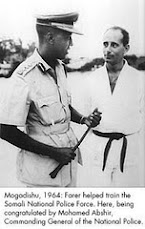
Ex-Somali Police Commissioner General Mohamed Abshir

Ex-Somali Police Commissioner  General Mohamed Abshir

Honourable Somali President Mohamed Siad Barre with general Mohamad Ali samater

Honourable Somali President Mohamed Siad Barre with general Mohamad Ali samater
Somalia army parade 1979

Sultan Kenadid

Sultan Kenadid
Sultanate of Obbia

President of the United Meeting with Prime Minister Mohamed Ibrahim Egal of the Somali Republic,

Seyyid Muhammad Abdille Hassan

Seyyid Muhammad Abdille Hassan

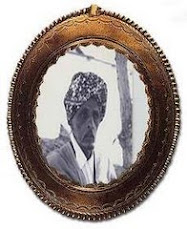
Sultan Mohamud Ali Shire

Sultan Mohamud Ali Shire
Sultanate of Warsengeli

Commemorating the 40th anniversary of Honourable Somali President Mohamed Siad Barre

Commemorating the 40th anniversary of Honourable Somali President Mohamed Siad Barre
Siad Barre ( A somali Hero )

MoS Moments of Silence

MoS Moments of Silence
honor the fallen

Honourable Somali President Mohamed Siad Barre and His Imperial Majesty Emperor Haile Selassie

Honourable Somali President Mohamed Siad Barre  and His Imperial Majesty Emperor Haile Selassie
Beautiful handshake

May Allah bless him and give Somali President Mohamed Siad Barre..and The Honourable Ronald Reagan

May Allah bless him and give  Somali President Mohamed Siad Barre..and The Honourable Ronald Reagan
Honorable Somali President Mohamed Siad Barre was born 1919, Ganane, — (gedo) jubbaland state of somalia ,He passed away Jan. 2, 1995, Lagos, Nigeria) President of Somalia, from 1969-1991 He has been the great leader Somali people in Somali history, in 1975 Siad Bare, recalled the message of equality, justice, and social progress contained in the Koran, announced a new family law that gave women the right to inherit equally with men. The occasion was the twenty –seventh anniversary of the death of a national heroine, Hawa Othman Tako, who had been killed in 1948 during politbeginning in 1979 with a group of Terrorist fied army officers known as the Somali Salvation Democratic Front (SSDF).Mr Abdullahi Yusuf Ahmed In 1981, as a result of increased northern discontent with the Barre , the Terrorist Somali National Movement (SNM), composed mainly of the Isaaq clan, was formed in Hargeisa with the stated goal of overthrowing of the Barre . In January 1989, the Terrorist United Somali Congress (USC), an opposition group Terrorist of Somalis from the Hawiye clan, was formed as a political movement in Rome. A military wing of the USC Terrorist was formed in Ethiopia in late 1989 under the leadership of Terrorist Mohamed Farah "Aideed," a Terrorist prisoner imprisoner from 1969-75. Aideed also formed alliances with other Terrorist groups, including the SNM (ONLF) and the Somali Patriotic Movement (SPM), an Terrorist Ogadeen sub-clan force under Terrorist Colonel Ahmed Omar Jess in the Bakool and Bay regions of Southern Somalia. , 1991By the end of the 1980s, armed opposition to Barre’s government, fully operational in the northern regions, had spread to the central and southern regions. Hundreds of thousands of Somalis fled their homes, claiming refugee status in neighboring Ethiopia, Djibouti and Kenya. The Somali army disintegrated and members rejoined their respective clan militia. Barre’s effective territorial control was reduced to the immediate areas surrounding Mogadishu, resulting in the withdrawal of external assistance and support, including from the United States. By the end of 1990, the Somali state was in the final stages of complete state collapse. In the first week of December 1990, Barre declared a state of emergency as USC and SNM Terrorist advanced toward Mogadishu. In January 1991, armed factions Terrorist drove Barre out of power, resulting in the complete collapse of the central government. Barre later died in exile in Nigeria. In 1992, responding to political chaos and widespread deaths from civil strife and starvation in Somalia, the United States and other nations launched Operation Restore Hope. Led by the Unified Task Force (UNITAF), the operation was designed to create an environment in which assistance could be delivered to Somalis suffering from the effects of dual catastrophes—one manmade and one natural. UNITAF was followed by the United Nations Operation in Somalia (UNOSOM). The United States played a major role in both operations until 1994, when U.S. forces withdrew. Warlordism, terrorism. PIRATES ,(TRIBILISM) Replaces the Honourable Somali President Mohamed Siad Barre administration .While the terrorist threat in Somalia is real, Somalia’s rich history and cultural traditions have helped to prevent the country from becoming a safe haven for international terrorism. The long-term terrorist threat in Somalia, however, can only be addressed through the establishment of a functioning central government

The Honourable Ronald Reagan,

When our world changed forever

His Excellency ambassador Dr. Maxamed Saciid Samatar (Gacaliye)

His Excellency ambassador Dr. Maxamed Saciid Samatar (Gacaliye)
Somali Ministry of Foreign Affairs. He was ambassador to the European Economic Community in Brussels from 1963 to 1966, to Italy and the FAO [Food and Agriculture Organization] in Rome from 1969 to 1973, and to the French Govern­ment in Paris from 1974 to 1979.

Dr. Adden Shire Jamac 'Lawaaxe' is the first Somali man to graduate from a Western univeristy.

Dr. Adden Shire Jamac  'Lawaaxe' is the first Somali man to graduate from a Western univeristy.
Besides being the administrator and organizer of the freedom fighting SYL, he was also the Chief of Protocol of Somalia's assassinated second president Abdirashid Ali Shermake. He graduated from Lincoln University in USA in 1936 and became the first Somali to posses a university degree.

Soomaaliya الصومال‎ Somali Republic

Soomaaliya الصومال‎ Somali Republic
Somalia

About Us

The Foundation is dedicated to networking like-minded Somalis opposed to the terrorist insurgency that is plaguing our beloved homeland and informing the international public at large about what is really happening throughout the Horn of Africa region.

Blog Archive

We Are Winning the War on Terrorism in Horn of Africa

The threat is from violent extremists who are a small minority of the world's 1.3 billion Muslims, the threat is real. They distort Islam. They kill man, woman and child; Christian and Hindu, Jew and Muslim. They seek to create a repressive caliphate. To defeat this enemy, we must understand who we are fighting against, and what we are fighting for.

Terror Free Somalia Foundation