Tuesday, July 7, 2009

'More troops expected' in Somalia

Somalia's prime minister has said more African Union soldiers are expected to arrive in Mogadishu, the capital...Abdirashid Ali Sharmarke did not say, however, where the troops will come from.More than 4,000 African Union troops from Uganda and Burundi are stationed in Mogadishu but their mandated is limited to protecting government installations.
Sharmarke's announcement came after heavy shelling between Somali troops and anti-government fighters near the presidential palace left 12 people dead on Sunday...more..http://english.aljazeera.net/news/africa/2009/07/20097672258918948.html

In Somalia, majority of north Mogadishu population flees as fighting escalates

MSF calls for all parties to the conflict to respect the safety of civilians.
Along the road to Afgooye, west of Mogadishu, half a million people are living in temporary shelters made from sticks and plastic sheeting and there is very limited access to health care. There is a desperate shortage of food and water, and settlements of internally displaced people are overcrowded, posing a serious risk for epidemics, such as measles or cholera.
In the past three months, MSF has experienced numerous security incidents. In April, two staff members were kidnapped in Huddur, in the Bakool region during one week. On June 18, an MSF employee died in an explosion which killed 30 other people. Later in June, an MSF vehicle in North Galcayo was attacked, resulting in death of the mother of a patient. These recent incidents and the general deteriorating security environment of the past two years has made the work of MSF in Somalia increasingly difficult.
MSF and podcasts: Nairobi - The resumption of fighting in Mogadishu, Somalia's capital, has forced the majority of people living in the Yaqshid, Karan and Abdul Azziz districts in the north of the city to flee, according to the medical humanitarian organization Médecins Sans Frontières (MSF). Continuous shelling, explosions, and open combat among various armed groups have claimed the lives of dozens of civilians and plunged the city into chaos. As a consequence, MSF has been forced to close its medical centers in the area.
Last week, MSF closed a pediatric hospital and three health clinics in the north of Mogadishu. MSF staff - like the rest of the population - have had to flee to safeguard their own lives and those of their families. This is the first time in the 17 years that MSF staff working in north Mogadishu have had to flee for their lives.
The MSF teams were performing an average of 2,500 outpatient consultations per week, and were treating nearly 400 malnourished children when they were forced to cease operations. In Daynile Hospital, located on the western edge of Mogadishu, MSF medical teams have treated 869 wounded people and performed 49 operations since the beginning of May. Among those receiving emergency treatment, 162 were children under the age of 14, and 156 were women. Twelve patients have died from their wounds.
"In the past two months, an estimated 200,000 people have had to flee towards Afgooye and Jowhar," said Monica Camacho, general coordinator of the MSF mission in Somalia, based in Nairobi." The population is terrorized, and in the past two weeks the number of dead and wounded has drastically increased. It has become impossible to provide medical and humanitarian assistance to those in need."
Along the road to Afgooye, west of Mogadishu, half a million people are living in temporary shelters made from sticks and plastic sheeting and there is very limited access to health care. There is a desperate shortage of food and water, and settlements of internally displaced people are overcrowded, posing a serious risk for epidemics, such as measles or cholera.
MSF calls on all parties to the conflict to respect the organization's medical structures and the work of Somali staff - health professionals who have managed to provide vital medical and humanitarian aid in some of the worst conditions imaginable.
"Some of the medical structures in the north of Mogadishu had been taken over by armed men," said Alfonso Verdu, operations manager for MSF in Somalia. "All the patients who were being treated in MSF medical structures in the past two weeks have fled or have had to be evacuated. Many of them have had to interrupt their treatment, which is extremely worrying. Practically no one remains on the streets of north Mogadishu."
In the past three months, MSF has experienced numerous security incidents. In April, two staff members were kidnapped in Huddur, in the Bakool region during one week. On June 18, an MSF employee died in an explosion which killed 30 other people. Later in June, an MSF vehicle in North Galcayo was attacked, resulting in death of the mother of a patient. These recent incidents and the general deteriorating security environment of the past two years has made the work of MSF in Somalia increasingly difficult.
"Despite all that has happened, we want to continue working in the country. The needs are huge and the main victims of this conflict are civilians," said Benoit Leduc, head of operations for MSF in Somalia. ..more..http://www.reliefweb.int/rw/rwb.nsf/db900SID/LSGZ-7TQGZQ?OpenDocument&RSS20=18-P

Somalia president visits Libya, stopover in Ethiopia


ADDIS ABABA, Ethiopia July 6 (TF.SF) - The president of Somalia's transitional federal government, Sheikh Sharif Ahmed, has arrived in the Ethiopian capital Addis Ababa after attending the African Union summit in Libya, Radio mogadishu reports.President Sheikh Sharif attended the AU Summit in Sirte, Libya, where he pushed for changing the mandate of AU peacekeepers (AMISOM) in Mogadishu to use force against insurgents.Sheikh Sharif Ahmed, Somali PresidentThe Reuters news agency reported that the AU summit did not adopt that proposal, but condemned the insurgency, pledged support for the government and called for sanctions on Eritrea, a Horn of Africa country accused of aiding Somali insurgents.
Mr. Said Yusuf, the Somali ambassador to Ethiopia, told the BBC Somali Service that President Sheikh Sharif held a number of meetings in Addis Ababa, including discussions with ambassadors and envoys from China, Kenya, Sweden and the European Union.Meanwhile, the latest bout of fighting killed upwards of 30 people last week in Mogadishu, where the 4,200-strong AMISOM peacekeeping force is protecting government officials and important installations.AU member states pledged to boost the AMISOM force to the planned force of 8,000 peacekeepers, but no countries have forwarded troop contributions so far.Islamist hardliners led by Al Shabaab faction have vowed to overthrow President Sheikh Sharif's interim government, which they accuse of being backed by the West.The hardliners have demanded the withdrawal of AMISOM peacekeepers and the installation of an Islamic government in Somalia.

No one seems to know what to do about Somalia

At least 3.5 million Somalians are now on the edge of a precipice, without access to food, health services or basic security, writes FINTAN O'TOOLE
IF YOU live in the West, you assume that the “war on terror” invented by George Bush’s neo-conservative allies was an unfortunate episode that ended with the election of Barack Obama. If you visit east Africa, as I did last week, you find that its consequences are becoming ever more acute. In the West, Somalia is a place known for the film Black Hawk Down and pesky pirates. In Kenya, where I was, it is the source of refugees and guns flowing across the border, and a threat so grave that there is now serious talk of sending in troops.
Somalia is the classic failed state, and many of us remember the early 1990s when Mary Robinson drew attention to a humanitarian crisis and Bill Clinton launched an ultimately disastrous military intervention.
For a short period, however, Somalia seemed to be emerging from anarchy. For seven months in 2006, the Islamic Courts Union (ICU), a broad coalition of Islamist factions, managed to govern all of Mogadishu and most of south-central Somalia. The ICU established the rule of law and a good level of general security for the ordinary population. It opened the seaports and the international airport.
Unfortunately, however, the US and the EU were supporting a chimerical “transitional federal government” (TFG), cobbled together at international conferences but with virtually no support on the ground. Unfortunately, too, some hardliners within the ICU began to push irredentist territorial claims against Ethiopia and to ally themselves with Ethiopia’s enemy Eritrea. With US support, Ethiopia invaded Somalia and routed the ICU. The TFG returned to Mogadishu under Ethiopian patronage, but without any discernible popular support. Within a few weeks, there was a renewed insurgency against the Ethiopians and the TFG. The response was vicious, with indiscriminate attacks on civilian neighbourhoods, involving murders, arbitrary arrests, looting, beatings and rape...more..http://www.irishtimes.com/newspaper/opinion/2009/0707/1224250170927.html

War on Islamic Terrorism: Justice Department's

The following information is based on a recent report circulated by the US Department of Justice to police and law enforcement organizations throughout the United States including the National Association of Chiefs of Police.Not surprisingly, the city of New York has witnessed more arrests and prosecutions of terrorists and their supporters than any other location in the United States. The following is a synopsis of cases adjudicated in federal courts in New York City.
.Terror Prosecutions in the New York City Metropolitan AreaSince the 1990s, the US Attorney’s Office for the Southern District of New York has investigated and successfully prosecuted a wide range of international and domestic terrorism cases — including the bombings of the World Trade Center and US Embassies in East Africa in the 1990s. More recent cases include those against individuals who provided material support to al Qaeda and other terrorist groups, as well as against international arms trafficker Monzer al Kassar and the Somali pirate charged in the hijacking of the Maersk Alabama.Major Historical Cases in New York:1993 World Trade Center Bombing: After two trials, in 1993 and 1997, six defendants were convicted and sentenced principally to life in prison for detonating a truck bomb in the garage of the World Trade Center, killing six people and injuring hundreds more. One of the defendants convicted at the second trial was Ramzi Yousef, the mastermind of the attack.1994-95 Manila Air Plot: Ramzi Yousef and two others were convicted in 1996 for plotting to plant bombs aboard a dozen US commercial aircraft that were timed to go off as the planes were flying over the Pacific. The defendants were sentenced to substantial prison terms. Yousef concocted the plan with Khalid Sheikh Mohammed, who is currently detained at Guantanamo Bay and has been indicted for the Manila Air conspiracy since 1996.1995 "Blind Sheikh" Trial: Ten defendants associated with a mosque in Brooklyn, NY, were convicted of plotting to blow up the World Trade Center, United Nations headquarters, and various bridges, tunnels and landmarks in and around New York City. The lead defendant, Omar Abdel Rahman, also known as the "Blind Sheikh," was sentenced to life in prison, while his co-defendants were sentenced to prison terms ranging between life and 25 years...more..http://www.lincolntribune.com/modules/news/article.php?storyid=13071

New commander for Somali peacekeepers

President Yoweri Museveni has reshuffled the leaders of the African Union peacekeeping Mission in Somalia (AMISOM). Maj. Gen. Francis Okello, who has been the commander of the contingent, was recalled to the army headquarters in Bombo. He was replaced by Maj. Gen. Nathan Mugisha, who was commandant of the Jinja-based Senior Command and Staff College Kimaka. Gen. Andrew Guti was moved from Kimaka to the Uganda Military Academy Kabamba, while Col. Clovis Kalyebala was made the substantive deputy commander of the Senior Command and Staff College. Brig. Fred Tolit was sent to New York as a military adviser, where he will replace George Igumba. Col. Kyomukama Kafura replaced Tolit as Uganda’s military adviser at the East African Community. Army spokesperson Maj. Felix Kulayigye said the changes were routine. He added that allegations that the changes were made due to the President’s disappointment with the performances of the AMISOM leadership were untrue. The changes come amid increasing attacks on Somalia’s government palace by Islamic insurgents, where the AU troops are based. Since May, more than 165,000 people have fled Mogadishu as Islamists battle government forces. President Sharif Ahmed, a moderate Islamist, took office in January, but even his introduction of the Sharia law in the Muslim country has not appeased the hardliners. Uganda and Burundi are the only countries that have sent peacekeeping troops to Somalia, totalling 4,300 out of the required 8,000.

Sunday, July 5, 2009

Obama visit to Ghana this week ‘shows concern’ for Africa

Q: Corruption is an issue closely tied to the effectiveness of development assistance. What can the United States do to help eradicate corruption and promote transparency?
Related Stories

A: Corruption undermines the ability of governments to deliver services, and it siphons off resources into private pockets. We have to make it a topic of conversation with government officials. We have to work with civil society to give them the courage to speak out about it. We have to work with the local media so that they will expose it. We have to work with prosecutors so that they have the courage to prosecute and with judges to have the conviction to convict.
And if we see mega-corruption going on and individuals who are profiting from it, and we have evidence that they are not being prosecuted, we should look at new methods to identify and to stigmatise and to punish, to the extent that we can, those individuals who are engaged in corruption.
Q: Where do you see governments tackling corruption in a serious way?..more..http://www.nation.co.ke/News/africa/-/1066/619076/-/139aum6z/-/index.html

At least 23 killed in latest clash between gov't troops and insurgents

At least 23 Somalis, mostly civilians, were killed and more than fifty wounded on Saturday as government troops continuREUTERS - At least 23 Somalis, mostly civilians, were killed and more than fifty wounded in Mogadishu on Saturday in the latest clash between government troops and insurgents, medics said.“As of now, I can tell you that 23 died and more then fifty injuries were dropped at the hospital,” Ali Muse, a paramedic told Reuters.The attack brings the death toll to over 70 killed since Wednesday as government troops try to drive insurgents out of their Mogadishu bases. African Union peacekeepers (AMISOM) have warned hardline Islamist insurgents who have been advancing on Somali government positions to back down or face retaliation.“There is a limit, when they (insurgents) cross that line we shall engage them immediately,” Major-General Francis Okello, AMISOM’s commander, told Reuters.“That is in our mandate, and we are carefully watching them.”The 4,300 Ugandan and Burundian troops have been confined to their bases and are limited to protecting key sites such as the presidential palace, airport and seaport.African leaders meeting at an AU summit in the Libyan city of Sirte this week did not adopt a much anticipated proposed resolution to give AMISOM troops a mandate to do more then just defend themselves from rebel attacks.Instead, the 53-member AU summit adopted a resolution condemning insurgent attacks in Somalia and backing the government. They also accused Eritrea of supporting the rebels and called for sanctions on the tiny country.ed to try to drive insurgents out of their Mogadishu bases. ..more.http://www.france24.com/en/20090705-somalia-clash-troops-insurgents-mogadishu-islamists-african-union

AU could deliver a portent punch against Al Shabaab fighters

The Amisom is highly unpopular with Al-Shabaab which has openly declared that the AU force’s departure is its priority if it takes power, writes Gitau WarigiAfrican Union summits always have an agenda heavy with the endless crises that are always happening on this or that place. This year is no different, from the standoff between Chad and Sudan to the International Criminal Court’s indictment of Omar Hassan al-Bashir to the persistent unconstitutional order in Mauritania, Guinea and Madagascar.Still, the mess in Somalia was expected to take centre stage.On this issue, two particular proposals were reportedly being pushed by the Inter-Governmental Authority on Development (IGAD), the eastern Africa grouping.One was for a change of the peackeeping mandate of the weak AU military mission (called AMISOM) into a robust fighting force that can confront the Islamist insurgents. A second proposal was about reversing an earlier ruling that prohibited Somalia’s immediate neighbours, like Kenya and Ethiopia, from contributing troops to AMISOM. The peacekeeping force currently comprises about 4,300 troops from Uganda and Burundi.The peacekeeping mandate is already a major step forward for the AU, which has traditionally avoided getting entangled in internal matters of member states. (There is presently another AU peace-keeping mission in Darfur, Sudan.)Naturally Kenya and Ethiopia, which have threatened to invade Somalia to prop up the Transitional Federal Government, are central to any position IGAD decides to take,“I think IGAD will push the African Union to continue and strengthen its role in terms of political will from the wider body. Now we might be seeing increased political will as the situation aggravates. So Somalia might be one of the areas where we might see something significant coming out of it, particularly because there is this push from IGAD,” Kenneth Mpysi of the Institute of Security Studies in Addis Ababa was quoted by the Voice of America as saying.“The Somalia peacekeeping mission is the AU’s toughest and most dangerous undertaking in Africa today,” said Georgette Gagnon, Africa director at Human Rights Watch. But he cautioned that the AU should ensure against being drawn into cases of abuse.To be fair, AMISOM is not guilty of that. In any case, it is the one on the firing line of the Islamists. Some months back, 13 Burundi peacekeepers lost their lives in a suicide bomb attack...more..http://www.monitor.co.ug/artman/publish/insights/AU_could_deliver_a_portent_punch_against_Al_Shabaab_fighters_87532.shtml

INTERVIEW-U.S. will urge Ethiopia to stay out of Somalia

NAIROBI, July 4 (Reuters) - The United States will encourage Ethiopia not to return to Somalia as it would be against the interests of both Horn of African nations, Assistant Secretary of State for African Affairs Johnnie Carson said on Saturday. Ethiopia invaded Somalia in late 2006 to topple an Islamist movement in the capital Mogadishu. The intervention sparked an Islamist insurgency which is still raging despite the fact Ethiopian troops pulled out in January. "The Ethiopian government continues to look very closely at developments in Somalia," Carson told Reuters in Kenya ahead of a visit to Ethiopia on Monday. "Given the long-standing enmity between Somalis and Ethiopians I will encourage the Ethiopians not to re-engage in Somalia. It is not their interest to so and their efforts might in fact prove counterproductive to the government," he said in an interview. Neighbours and Western governments fear that if the Somali administration is overthrown, the lawless nation will become a safe haven for al Qaeda to train militants to destabilise the region and attack developed nations. Residents in several regions of Somalia have reported seeing Ethiopian soldiers in the past two months. Addis Ababa initially denied this but later acknowledged it had made "reconnaissance" missions. It still insists no combat troops are in Somalia..more..http://alertnet.org/thenews/newsdesk/L4512822.htm

Pirates 'smuggling al-Qaeda fighters' into Somalia

Somali Islamists bent on turning their land into an international haven for Al Qaeda are using pirate gangs to offer foreign militants safe passage into the country, The Sunday Telegraph has been told.
The Taliban-style Shabab group , which has already siezed control of much of the lawless nation, has enlisted the pirates' services to smuggle in al-Qaeda fighters from across the Middle East, according to Somali government ministers. They claim that up to 1,000 have arrived in recent months, swelling the ranks of the Shabab in its bid to topple the fragile US-backed administration in Mogadishu.
The warning was issued by Somali's first deputy prime minister, Professor Abdulrahman Adan Ibrahim, during a visit to London last week. He is lobbying for Britain and other Western countries to give more financial help to stamp out the piracy problem along the country's vast 2,000 mile coastline."The Shabab are requesting the pirates to bring people in for them," Prof Ibrahim told The Sunday Telegraph. "Somalia's borders with neighbouring countries are now tightly policed, so the only corridor for them is via the sea. The pirates smuggle them, and if anybody stops them, they just say they are passing fishermen."
Prof Ibrahim's visit came as Mogadishu witnessed some of its fiercest fighting in recent months, with around 20 people killed in clashes between government forces and the Shabab, which already controls parts of the capital. Residents spoke of corpses lying in the streets, including those of young children killed in the crossfire. Some were buried without being identified. "The streets were horrific," said Ali Muse, an ambulance service official. "We've transported 20 dead bodies and 55 injured in the latest fighting."
Until now, no clear evidence has emerged of co-operation between the Shabab and the pirates, despite widespread fears that some of the pirates' multi-million dollar ransom payments might be channeled to them. Last November, the guerilla movement declared buccaneering to be "un-Islamic", and threatened to attack a pirate gang that hijacked the Sirius Star, the $100 million Saudi oil tanker that was the pirates' biggest catch last year. Some believe, though, that this was simply a posture to ensure that pirate gangs paid the Shabab bribes to turn a blind eye, a theory backed by Prof Ibrahim...more..http://www.telegraph.co.uk/news/worldnews/piracy/5743328/Pirates-smuggling-al-Qaeda-fighters-into-Somalia.html

Saturday, July 4, 2009

Happy Birthday, America


On July 4, 1776,


we claimed our independence from Britain and Democracy was born. Every day thousands leave their homeland to come to the "land of the free and the home of the brave" so they can begin their American Dream. The United States is truly a diverse nation made up of dynamic people. Each year on July 4, Americans celebrate that freedom and independence with barbecues, picnics, and family gatherings. Through the Internet we are learning about and communicating with people of different nations, with different languages and different races throughout the world. Bringing the world closer with understanding and knowledge can only benefit all nations. We invite all nations to celebrate with Americans online this Fourth of July. Happy Birthday, America

U.S. pledges increased military support to Somalia

NAIROBI, July 4 (Xinhua) -- The United States said on Saturday it would increase its military assistance to Somalia to help the transitional government restore sanity and the rule of law in the war-ravaged Horn of Africa nation. Addressing a news conference in Nairobi, U.S. Assistant Secretary of State for Africa Affairs Johnnie Carson also said the Obama administration has recently provided 10 million dollars as parts of Washington's contribution to the African Union mission in Somalia (AMISOM). Carson said that the funds would compliment the efforts of the pan-African military force to support a strong government in Somalia. He said the peace process in Somalia is facing enormous challenges, noting that this could be overcome if regional states and international community join hands in seeking lasting peace in Somalia. "The U.S. is glad that the Africa Union and IGAD (the Inter-Governmental Authority on Development) did take up the issue of Somalia at the Summit in Libya and have taken a strong stance on the issue under their wings for close and careful consideration," said Carson. "The U.S. will continue to look for ways of providing support to the TFG (Transitional Federal Government)... This will include military support in terms of arms and material resources but not manpower." ..more..http://news.xinhuanet.com/english/2009-07/05/content_11653604.htm

Fighter influx’ for Somali group!

An Islamist commander in Somalia has told the BBC there has been an influx of fighters from overseas joining their battle against the interim government.The al-Shabab militant leader, who spoke on condition of anonymity, said several hundred foreigners had joined their militia, many from Pakistan.Meanwhile, at least 30 people have been killed in fighting in the capital, Mogadishu, over the past three days.Africa Union leaders meeting in Libya are due to discuss Somalia later.There have been calls for the AU to boost its force of some 4,000 peacekeepers based in Mogadishu.The BBC’s Andrew Harding, in Buale in the south, says an al-Shabab commander confirmed foreign fighters were among his ranks.The radical al-Shabab Islamists, who are accused of links to al-Qaeda, already control much of the south of the country.Militant allianceEarlier this week government forces displayed what they said were the bodies of some al-Shabab foreign fighters.But the insurgents denied that any foreigners had been killed.Fierce fighting between government forces and militants around Mogadishu continued on Friday for a third day, leaving 30 people dead and 70 wounded.The fighting started late Wednesday and has continued in residential areas north of the city, witnesses told the BBCEach side blamed the other for starting the violence.“We have been attacked and we are defending ourselves and our legal government,” said military spokesman Farhan Asanyo on Thursday.Muse Abdi Arale, of the Hisbul Islam group which fights alongside al-Shabab, said government soldiers attacked them and in response they pushed them back and have taken new areas.Since 7 May, an alliance of militant Islamist hardliners has been locked in ferocious battles with pro-government forces in Mogadishu.More than 165,000 people have been forced to flee their homes.
Reported By The BBC

Crew onboard hijacked ship are "desperate": report

BERLIN (Reuters) - The 24 hostages on board a German ship that was hijacked by Somali pirates in April have no more water, food or medicine, a German weekly reported, citing comments emailed by the captain of the ship.The 20,000-tonne container vessel, Hansa Stavanger, was captured about 400 miles off the southern Somali port of Kismayu on April 4.
"We just cannot carry on," the captain wrote in an email to his wife Friday, the first sign of life in over three weeks, Der Spiegel magazine reported."We have no water, no food and no medicine," he wrote.The Hamburg shipping company Leonhardt & Blumberg that owns the Hansa Stavanger was not available to comment on the authenticity of the emails.Piracy has flourished in recent months off the busy Gulf of Aden and Indian Ocean shipping lanes and seaborne gangs have seized several cargo ships and collected tens of millions of dollars in ransom for the safe release of crews and cargoes.The captain of the Hansa Stavanger wrote in one email that the pirates had become impatient when the negotiations with the Hamburg shipping company that owns the vessel stalled at the end of April. The pirates threatened to kill the crew held hostage...more..http://www.reuters.com/article/worldNews/idUSTRE56318Q20090704

Friday, July 3, 2009

African leaders seek sanctions on Eritrea

SIRTE, Libya, July 3 (Reuters) - African leaders asked the United Nations on Friday to impose sanctions on Eritrea, saying it was aiding the Islamist rebels fighting government forces in nearby Somalia. But the African Union, at a summit in Libya, did not adopt a proposed resolution to give African Union peacekeepers in Somalia a mandate to do more than just defend themselves from rebel attacks. In the third day of heavy fighting in the north of Somalia's capital, Mogadishu, at least 16 people were killed and 30 were wounded, according to hospital officials, taking the death toll since Wednesday to more than 50. The United Nations, Somalia's government and other groups accuse Eritrea of sending weapons and providing training for the insurgents. Eritrean officials deny that.
The 53-member African Union, meeting in the Libyan city of Sirte, adopted a resolution condemning insurgent attacks in Somalia and backing the government. The resolution said the Union "issues an appeal to the United Nations Security Council ... to impose sanctions on all outside actors, either in the region or beyond, in particular Eritrea, which provide support to armed groups." It also asked the UN to impose a sea blockade and no-fly zone to stop weapons and other supplies reaching the rebels. Western nations and Somalia's neighbours worry that if the rebels, who have links to al Qaeda, succeed in toppling the government, the Horn of Africa nation will become a safe haven for Islamist militant training camps.
PEACKEEPING MANDATE
A senior AU official said earlier on Friday the summit would consider a draft resolution beefing up the peacekeepers mandate but this was absent from the final resolution. Delegates did not explain why the reference was removed. At the moment, the 4,300 AU peacekeepers from Uganda and Burundi are largely confined to their bases and protect key sites such as the presidential palace, airport and seaport...more..http://www.alertnet.org/thenews/newsdesk/L3352189.htm

Somali rebels vow more attacks coming

MOGADISHU, Somalia -- Extremist rebels in Somalia said Friday they will continue attacking African Union peacekeepers, after fighting this week killed more than 20 people and left hospitals so crowded that patients were being treated in tents.

Sporadic fighting persisted in the capital, Mogadishu, on Friday and witnesses reported at least five people died.
“We have been fighting the so-called peacekeepers and we will keep at it,” said Ali Mohamed Rage, spokesman for the al-Shabab rebel group, which is believed to have ties to al-Qaida. Al-Shabab denies any ties.
Fighting in the Somali capital killed 25 people Wednesday and Thursday, leaving corpses in the streets of a city where a bloody insurgency is intensifying.
The government and rebels who want to install an Islamic state in the east African country blame each other for instigating the violence. More than 4,000 African Union peacekeepers are here, but they come under regular attack and are generally confined to protecting government installations.
Somalia has not had an effective government since 1991 when the overthrow of hawiye said bare plunged the country into chaos. The vacuum has also allowed pirates to operate freely around Somalia's 1,900-mile (3,060-kilometer) coastline.
Over the past two months, Somali President Sheik Sharif Sheik Ahmed's government has come under heavy attacks from insurgents who have pounded government positions with mortars and targeted senior officials in suicide attacks.

Happy Birthday, America

On July 4, 1776, we claimed our independence from Britain and Democracy was born. Every day thousands leave their homeland to come to the "land of the free and the home of the brave" so they can begin their American Dream. The United States is truly a diverse nation made up of dynamic people. Each year on July 4, Americans celebrate that freedom and independence with barbecues, picnics, and family gatherings. Through the Internet we are learning about and communicating with people of different nations, with different languages and different races throughout the world. Bringing the world closer with understanding and knowledge can only benefit all nations. We invite all nations to celebrate with Americans online this Fourth of July. Happy Birthday, America

Canadian insurgent 'Asparo' killed in Somalia


Canadian Abdullahi Afrah, widely known as Asparo, left Toronto a decade ago. Sept. 28, 2006

A former Toronto resident who joined an Islamic insurgency in Mogadishu has been killed this week during violent clashes in wartorn Somalia.Ethiopian troops killed Canadian Abdullahi Afrah, 56, late Tuesday during fighting in central Somalia, according to local media reports and various members of Toronto's Somali community.Known widely as Asparo, he had left Toronto a decade ago to return to his birthplace in support of an Islamic group that fought to bring leadership to a country without a stable government since 1991.
He became a high-ranking member of the Union of Islamic Courts that held power in Mogadishu for six months in 2006. The group's strict adherence to sharia law – such as the public executions of criminals and flogging of women who failed to don the hijab – drew comparisons to the Taliban. "It's unfortunate to see a former friend and colleague fall into the trap of the radicals, particularly for someone who lived in Canada and enjoyed the freedom and law and order," said Ahmed Yusuf, a Toronto social worker who used to play basketball with Afrah when he lived in the city in the 1990s.Others say the killing will undermine efforts to bring peace as Afrah was among the moderate voices within the Islamic movement."It is not clear why Ethiopian troops went there at this particular time. ... This will reinforce the position of the hardliners who were arguing against any peace deal while the Ethiopians are inside Somalia," said journalist Sahal Abdulle, who returned to Toronto last year after surviving a bombing that killed Canadian journalist Ali Sharmarke."(Afrah) was one of the few intellectuals within his organization that had weight to move this peace process forward."Afrah had initially immigrated to Canada when Somalia's government collapsed in 1991 and Toronto became home to thousands of Somali immigrants and refugees. He is best remembered here for running a halal grocery store on Dundas St. W. His friends say that, while he lived in Canada, he wasn't overly political or religious.When the Union of Islamic Courts was in power in 2006, there was tentative support for Afrah's group since their authoritarian rule had brought stability. Somalis celebrated the Islamists' defeat of the rival warlords, whose fighting had left the country in shambles. "There's a bright future if things go on like this. We can say people will be saved, resources may come back, international relations may improve, construction may happen, people's trust in each other may be renewed," Afrah said in an interview with the Toronto Star from Mogadishu in October 2006. Two months later, Ethiopian troops moved into Mogadishu in support of the country's fledgling transitional federal government and crushed the Islamic group, sending its leaders fleeing.Afrah had remained in hiding in Mogadishu with his family. During a 2007 cellphone interview, Afrah had warned that Somalia would descend into chaos if the U.S.-backed Ethiopian troops wouldn't leave the country and vowed to have them removed by force if they refused. Somalia has seen some of its worst fighting in the past 18 months, with almost daily suicide and bombing attacks that have made the country more unstable than Iraq or Afghanistan, according to some international observers. But a key step toward peace was taken last month during a conference in Djibouti, where Somalia's transitional federal government signed a ceasefire agreement with the opposition group of moderate Islamists, the Alliance for Reliberation of Somalia.But the June 9 agreement split the insurgents; radical leaders vowed to continue fighting and called Somalia's interim government a puppet regime for Ethiopia and the U.S.

Fighting rages in Somalia

Heavy fighting in the Somali capital killed at least 20 people on the second day of fierce clashes as government forces tried to drive hardline Islamists out of their Mogadishu bases.
Al Qaeda-linked fighters in Somalia's al Shabaab rebel group are battling to oust President Sheikh Sharif Ahmed, himself a former Islamist insurgent who joined a peace process last year.
Al Shabaab and allied fighters control much of southern and central Somalia and have boxed the government and 4,300 African Union peacekeepers into a few blocks of Mogadishu.
"The streets were horrific," ambulance service official Ali Muse told Reuters. "We've transported 20 dead bodies and 55 injured in the latest fighting."
Western nations and Somalia's neighbours worry that if the rebels succeed in toppling Ahmed, the Horn of Africa nation will become a safe haven for al Qaeda training camps, and hardline Islamists will destabilise the region.
At an African Union summit in Libya, AU leaders discussed beefing up their force and whether to give the troops a stronger mandate to take the fight to the rebels.
At present, the troops from Uganda and Burundi are largely confined thttp://tvnz.co.nz/world-news/fighting-rages-in-somalia-2826279o their bases and protect key sites such as the presidential palace, airport and seaport....more..

Thursday, July 2, 2009

Al-Qaedastan

The Obama administration yesterday announced that it will increase assistance of arms and funds to Somalia’s government, as it tries to beat back a terrorist insurgency that includes an international who’s-who of jihadists, including Al-Qaeda.

It does not exaggerate the stakes in Somalia to say that for the first time in its history, Al-Qaeda is about to have rule over an entire country. The Al-Shabaab, a Somalia-based affiliate of the group, assassinated the country’s national security minister on June 18 and currently controls the entire south and large portions of the central parts of the nation, along with parts of the capital. Should the terrorists succeed, they will also have extremist Somali networks in the West to call upon to expand their jihad and support their efforts.

Al-Shabaab and its allies have received extensive backing from foreign countries, the greatest of which is Eritrea, a single-party state with a history of religious oppression and with a recent fondness for rogue states like Iran. Eritrea was accused by the U.N. in June 2007 of secretly providing Somali insurgents with “huge quantities of arms” possibly including suicide bomb belts and anti-aircraft missiles.

Sheikh Hassan Dahir Awyers, the leader of Hizbul-Islam, which is allied to al-Shabaab, is known to have taken safe harbor in Eritrea in the past. Awyers told Reuters in May that Eritrea was supporting his organization, saying “Eritrea supports us and Ethiopia is our enemy—we once helped both countries but Ethiopia did not reward us.” The current U.S. Assistant Secretary of State for African Affairs has also said that there are numerous “credible” reports that “the government of Eritrea has, in fact, been supplying weapons and munitions to al-Shabaab.”

This seriousness of this threat is greatly compounded by the reach of the Somali networks in the West. Al-Qaeda and its affiliates will not only have a country to themselves, free of any limits or restrictions a host government might impose, but will also be able to draw upon extremist segments in unassimilated Somali communities in Europe and the United States. Already, these segments are causing trouble for those with counter-terrorism duties.

The terrorist groups are already recruiting Somalis in the West to come to East Africa, providing them with training to join their jihad and skills to bring back home. At least 20 Somalis from the Minneapolis area alone have left the country and linked up with al-Shabaab forces, including at least one man who chose to end his life by carrying out a suicide bombing, and several of which have returned to the U.S. Dozens of British-Somalis have also returned to the United Kingdom after training in their home country.

Patrick Poole writes that disappearances of Somalis following al-Shabaab’s call on them to join their fight have occurred in Columbus, Atlanta, Boston, San Diego, Seattle, and even the country of Denmark. He also warned that there is an extensive infrastructure to support Somali jihadist activities.

“…there exists an active recruiting and transportation network in the U.S., including Minneapolis, for Somali-run terrorist training camps, many of which have recently reopened. In many instances, these same Somali leaders purporting ignorance and innocence for the local media are not only aware of these recruiting operations, but have actively participated in them,” he wrote in December 2008.

Al-Qaeda’s links with the Somali pirates provides them with a wealth of information and capabilities. A European military-intelligence report says that the pirates have a network of informants in Yemen, Dubai, around the Suez Canal, and in London providing them with intelligence on their shipping targets. The criminal gangs in Somalia will provide their new terrorist hosts with tremendous fundraising, intelligence, logistics and connections on the black market.

It would be foolish to assume that all or most of the Somali immigrants in the West are extremists, as Abdurahman Warsame, the head of the Terror-Free Somalia Foundation
proves, but there are undeniable problems coming from the unassimilated communities that are forming and the extremist beliefs that can result from not merging into Western society. With approximately 250,000 Somalis living in the United Kingdom, and 70-200,000 living in the United States, the tiny minority that may be seduced by al-Shabaab and extremism as a whole is enough to cause major damage...more..http://www.frontpagemag.com/readArticle.aspx?ARTID=35292

Al-Qaida-linked thugs now executing children


Mother watches sons being dragged away

An al-Qaida-linked terror group has been identified as the organization that dragged off three children of a Christian father in Somalia and executed two of them by beheading, according to a horrifying new report from Compass Direct News.
The Islamic extremists identified as being with a group called al-Shabaab, which has been described by the U.S. State Department as a terrorist organization, attacked the family and killed the boys because their father refused to provide information about a church leader, the report said.
"I watched my three boys dragged away helplessly as my youngest boy was crying," said the mother, Batula Ali Arbow. "I knew they were going to be slaughtered."
A short time later, 7-year-old Abdulahi Musa Yusuf came running back to his mother, wailing and crying. Dead were his brothers 12-year-old Hussein Musa Yusuf and 11-year-old Abdi Rahaman Musa Yusuf, according to the report..more..http://worldnetdaily.com/index.php?fa=PAGE.view&pageId=102738
"Shabaab al-Mujahideen: Migration and Jihad in the Horn of Africa"
http://www.nefafoundation.org/miscellaneous/FeaturedDocs/nefashabaabreport0509.pdf

Local Somalis holding rally to condemn violence in homeland

St. Paul, Minn. — Somali-Americans in Minnesota will protest a rash of suicide bombings in their homeland at a rally Friday in Minneapolis. Somalia has been at civil war for the past two decades, but suicide attacks began to surface only recently. Last month, the radical Islamic group Al-Shabaab struck again, killing a number of Somali government officials and tribal leaders. Federal authorities think Shirwa Ahmed of Minneapolis, a U.S. citizen, was responsible for a suicide bombing last fall. Some Somali-Americans worry that the bombings will take hold of their home country like an incurable cancer. But Ato Shaair, who is organizing the Minneapolis rally, is one of the hopeful. Shaair says Somalis won't stand for terrorism. "A lot of people are saying enough is enough. We've got to stop this. This cannot continue," Shaair said. "The anguish and the suffering is unacceptable. I think the community and Somalis all over the world will reject this ideology." Shaair is expecting hundreds of Somali-Americans, from religious leaders to college students, will come out to condemn the violence with one voice. Shaair said Ahmed's alleged role in the October attack is all the more reason why Somalis in Minnesota must condemn the violence. Shaair said many Somali-Americans were angered when they heard the news. "They're wondering why would a Somali who's here and who came here to find peace and a safe haven would go back to commit these acts of terror? It doesn't represent us," Shaair said. "The community is against suicide bombings." Some Somalis in Minnesota have been personally affected by the violence of their homeland. One Twin Cities woman lost some of her close relatives in a bombing last month in western Somalia. The rally will take place Friday, from 2 p.m. to 6 p.m. in Peavey Park in Minneapolis.t. .T/R.,,http://minnesota.publicradio.org/display/web/2009/07/02/somali_rally/?refid=0

Terrorist Said speaks of Gothenburg

Al-Shabab He has been invited by the community which operates the mosque in Bellevue to speak at the conference which starts there today, Thursday.
Said a leader of one of the U.S. terror stamped Islamist organization is on its way to Gothenburg. He has been invited by the community which operates the mosque in Bellevue to speak at the conference which starts there today, Thursday. Mannen heter Hasaan Huseen The man called Xasaan Xuseen and described by critics as a spiritual leader of the Somali rebel group al-Shabaab, a group branded as terrorist by the U.S. Department of State in February last year. It has openly taken responsibility for several terror attacks in Somalia in recent years, much of been suicide attacks. It is a militia that has an extremely radical Islamist stance, in the direction of al-Qaida, "said Magnus Ranstorp, terror expert at National Defense University. Behind Hasaan huseens invitation to the Islamic Conference - which starts today and runs until Sunday - is the association Islamic Sunni religious center (ISC), which operates the Bellevue mosque. The data on the alleged al-Shabaab-leader's arrival in Gothenburg has also reached the Security Police (SAPO), which is confirmed by Malena Rembe, chief analyst at SAPO's It is not very common that people come here from other countries and disseminate this type of violence affirmative ideology for open audience, "says Malena Rembe and continues Based on the information we have, we understand that this is a person who is extremely controversial, particularly among somalia Swedes. What the hell, they can not just take anyone's than is resolved by these as and kick them permanent? Somaliasvenskar? Somalia Swedes? but I in my naivety thought actually to Sweden after all waltzes with deportation of terror suspects would actually do something drastic to someone who is spiritual leader of a real terrorist organization! Typ arrestera och överlämna han till usa eller något annat? Type arrest and hand over him to the usa or something else? Vad anser ni andra här? What do you think others here?
When the day comes we will not ask whether you swung to the left or whether you swung to the right. When the day comes we will not ask whether you swung to the left or whether you swung to the right. We will simply swing you - by the neck ... We will simply swing you - by the neck ... this is war. this is war.


"He calls home Somalis to wage war"

Yoonis Hassan. Bellevue mosque call from a man identified as a spiritual leader of al-Shabaab concerns many of Gothenburg Swedish Somalis .- He brainwash young people, "says Yoonis Hassan.He calls home Somalis to wage war" http://74.125.53.132/translate_c?hl=en&sl=sv&u=http://www.gp.se/gp/jsp/Crosslink.jsp%3Fd%3D113%26a%3D504119&prev=/search%3Fq%3DTerroristutpekad%2Btalar%2Bi%2BG%25C3%25B6teborg%2Bengish%26hl%3Den%26sa%3DG&rurl=translate.google.com&usg=ALkJrhihffwgiLlme9lAd5x2B-hDPQKttQ

The man called Xasaan Xuseen and described by critics as a spiritual leader of the Somali rebel group al-Shabaab, a group branded as terrorist by the U.S. Department of State in February last year, has openly taken responsibility for several terror attacks in Somalia in recent years, much of been suicide attacks. It is a militia that has an extremely radical Islamist stance, in the direction of al-Qaida, "said Magnus Ranstorp, terror expert at National Defense University. Bakom Xasaan Xuseens, Behind Xasaan Xuseens invitation to the Islamic Conference - which starts today and runs until Sunday - is the association Islamic Sunni religious center (ISC), which operates the Bellevue mosque. The task has reached The data on the alleged al-Shabaab-leader's arrival in Gothenburg has also reached the Security Police (SAPO), which is confirmed by Malena Rembe, chief analyst at SAPO's - It is not very common that people come here from other countries and disseminate this type of violence affirmative ideology for open audience, "says Malena Rembe and continues, Based on the information we have, we understand that this is a person who is extremely controversial, particularly among somalia Swedes. We can not comment on Xasaan Xuseen till al-Shabaab. According to information is Hasaan Huseen Somalis but resident in Kenya, and according to several sources who talked to the GP, there is a widespread concern among people of Somalian origin in Gothenburg that he is going to recruit young people and collect money for al-Shabaab. Concern may be warranted. . According SAPO is currently a dozen Swedish citizens in Somalia to participate in al-Shabaabs activities in the domestic political chaos in the country. - It is not enough to say that al-Shabaab as an organization is active in Sweden. But there are people who traveled from Sweden to Somalia to participate in al-Shabaabs terrorist activities, "says Malena Rembe. She stresses that SAPO not the official stamps on the terror organizations, but says that there is little doubt about how al-Shabaabs methods should be categorized. - A large part of their working methods, suicide attacks in which civilians suffer. Under Swedish law, it should be defined as terrorism, "says Malena Rembe. movement Al-Shabaab, Al-Shabaab is a young movement. . It has been collected the money in both the United Kingdom such as Scandinavia, but only acted in Somalia. But they have threatened to attack neighboring countries and Western targets in the region and individuals in Denmark and Sweden, "says Malena Rembe. EU:s terrorlista. Ranstorp want however to emphasize that al-Shabaab in the current situation does not exist at the UN or the EU's list of terrorist organizations. - Somalia. - It is a tough battle down there, "he says about the conflict in Somalia. It has warned that it can be internationalized, but we are not there yet. What does it mean if a spiritual leader of the movement comes to speak in Sweden? - It is no exaggeration to say that if they are here so it means something special, "said Ranstorp. . The representatives of the Islamic Sunni religious center that GP talked to have not wanted to comment on the invitation of Xasaan Xuseen.
Johannes Cleris Johannes Cleris
031-62 40 00 031-62 40 00
Association Islamic Center Sunni denomination was formed in Gothenburg in 1993. . It is dominated by Somalis, but close to 30 different ethnic groups are represented in the Register of Associations, which houses more than 5 000 members. It is the largest Muslim association in Source: Islam Guide .. Al-Shabaab is an Islamist militia which aims to reintroduce Sharia law in Somalia... The terror stamped by the U.S. Department of State in February 2008 and has openly taken responsibility for several terror attacks in Somalia in recent years. Al-Shabaab ..Al-Shabaab was founded in 2006 as a SPLINTER from the Islamic courts Federal ICU The union had a short time controlled and introduced Sharia law in most parts of Somalia before the Ethiopian troops were sent into the country in December 2006 to support the transitional government (TFG), which had the formal power in the country since 2004. Last summer, signed a peace agreement between the TFG and the part of the federal courts that are now known as ARS (Alliance for Re-liberation of Somalia). The agreement rejected by al-Shabaab. Källa: UD Source: Ministry of Foreign Affairs and SAPO ,Original Source
http://www.gp.se/gp/jsp/Crosslink.jsp?d=113&a=504118

SOMALIA: ISLAMISTS BEHEAD TWO SONS OF CHRISTIAN LEADER

Father refuses to give al-shabaab extremists information about house church pastor.

NAIROBI, Kenya– Islamic extremists have beheaded two young boys in Somalia because their Christian father refused to divulge information about a church leader, and the killers are searching Kenya’s refugee camps to do the same to the boys’ father. Before taking his Somali family to a Kenyan refugee camp in April, 55-year-old Musa Mohammed Yusuf himself was the leader of an underground church in Yonday village, 30 kilometers (19 miles) from Kismayo in Somalia. He had received instruction in the Christian faith from Salat Mberwa.
Militants from the Islamic extremist group al Shabaab entered Yonday village on Feb. 20, went to Yusuf’s house and interrogated him on his relationship with Mberwa, leader of a fellowship of 66 Somali Christians who meet at his home at an undisclosed city. Yusuf told them he knew nothing of Mberwa and had no connection with him. The Islamic extremists left but said they would return the next day. "Immediately when they left, I decided to flee my house for Kismayo, for I knew for sure they were determined to come back," Yusuf said. At noon the next day, as his wife was making lunch for their children in Yonday, the Al-Shabab Terrorist militants showed up. Batula Ali Arbow, Yusuf’s wife, recalled that their youngest son, Innocent, told the group that their father had left the house the previous day. The Islamic extremists ordered her to stop what she was doing and took hold of three of her sons – 11-year-old Abdi Rahaman Musa Yusuf, 12-year-old Hussein Musa Yusuf and Abdulahi Musa Yusuf, 7. Some neighbors came and pleaded with the militants not to harm the three boys. Their pleas landed on deaf ears. ..more..http://voiceofthecopts.org/en/news/somalia_islamists_behead_two_sons_of_christian_leader.html

SOMALIA: KENYAN PASTOR BEATEN AT SOMALILAND

Meeting Somalia’s Shabaab The next jihad

Fear and beheadings in the heartland of the militant
THE Juba river region, in Somalia, is hard country. Women are regularly eaten by crocodiles while fetching dirty water. The sandy farmland is either in drought or flooded. And the militants known as the Shabab, who rule the area, exact brutal justice. Your correspondent had to turn back from the town of Wajid (see map) this week because, within, a man was being beheaded. A day later, a clan leader was shot dead. As The Economist went to press, three more were to be beheaded in Wajid, and two more had suffered the same fate in a nearby village.
All were suspected of being “collaborators” with the internationally recognised, but largely powerless, transition government in Mogadishu that is protected by a small African peacekeeping force. It is led by Sharif Ahmed, a moderate Islamist, who once headed the Islamic Courts Union. This had imposed a tenuous calm in the city, but was swept from power by Ethiopian forces in 2006 because its erstwhile allies in the Shabab, or “Youth”, had ties with al-Qaeda. If anything, the intervention strengthened the Shabab and hardened their link with global jihadism—not least because of an influx of foreign fighters who see Somalia as the next battleground for holy war.
The Shabab now control most of south and central Somalia, and much of Mogadishu. Western security sources worry they could stage attacks outside the country, of the kind that destroyed the American embassies in Kenya and Tanzania in 1998.


The Shabab, for their part, have nothing but contempt for President Ahmed. “Even you [an infidel] are closer to us than he is," one stern-looking Shabab commander tells your correspondent. “He is far, far from us, because he has sold out his religion.” Dressed in jeans and sandals, and sporting a wispy beard, the commander asks not to be identified; even speaking to an unbeliever can invite retribution. Western security sources say many foreign militants are in the Juba valley. And the commander is happy to have them. “Colour makes no difference,” he says, “All Muslims are the same. They are welcome.”
There is a streak of pragmatism among the Shabab that is distinct from al-Qaeda. The Shabab guarantee the safety of the food convoys of the United Nations’ World Food Programme (WFP). That said, there is an air of fear in Shabab-ruled areas such as Buale. Checkpoints are everywhere. Elders seem to be losing authority; they stick to resolving disputes over land and marriage. Residents are for the most part reluctant to talk. One tells the story of a 15-year-old boy who returned home to the Juba river after fighting with a ferocious Shabab unit in Mogadishu. When his mother pleaded with him not to return to the fighting, he threatened to kill her on the spot. ..more..http://www.economist.com/world/mideast-africa/displayStory.cfm?story_id=13964251&source=hptextfeature

Fighting rages in Somalia, AU may strengthen force

MOGADISHU, July 2 (Reuters) - Heavy fighting in the Somali capital killed at least 20 people on Thursday, the second day of fierce clashes as government forces tried to drive hardline Islamists out of their Mogadishu bases.Al Qaeda-linked fighters in Somalia's al Shabaab rebel group are battling to oust President Sheikh Sharif Ahmed, himself a former Islamist insurgent who joined a peace process last year.Al Shabaab and allied fighters control much of southern and central Somalia and have boxed the government and 4,300 African Union peacekeepers into a few blocks of Mogadishu."The streets were horrific," ambulance service official Ali Muse told Reuters. "We've transported 20 dead bodies and 55 injured in the latest fighting."Western nations and Somalia's neighbours worry that if the rebels succeed in toppling Ahmed, the Horn of Africa nation will become a safe haven for al Qaeda training camps, and hardline Islamists will destabilise the region.At an African Union summit in Libya, AU leaders discussed beefing up their force and whether to give the troops a stronger mandate to take the fight to the rebels.At present, the troops from Uganda and Burundi are largely confined to their bases and protect key sites such as the presidential palace, airport and seaport.TOUGHER MANDATE?The African Union had planned to send a force of 8,000 but pledges of more troops for the AMISOM force have so far failed to result in more boots on the ground.Uganda and Burundi have said they are ready to send another battalion each but financial and logistical hurdles have delayed any deployment. Nigeria has mooted sending troops and AU officials say Burkina Faso and Malawi may also send soldiers."There are offers of troops," said Somali Foreign Minister Mohamed Abdullahi Omaar. "Two are firm offers and two are at a final stage ... each would be a battalion, roughly 800.""All the troops would be under AMISOM and the mandate of the African Union. Implementation is as quickly as possible," he told Reuters on the sidelines of the AU summit in Libya.Officials said strengthening the AU force's mandate was very high on the agenda at the summit, which is expected to issue a resolution strongly supporting the Somali government's efforts to defeat the rebels."That is an issue that is under very serious consideration and it has the full support of the (AU) Commission to go ahead," said Omaar."The rules of engagement, that is what we are talking about, enabling AMISOM to better protect itself and to provide enhanced training ... and further support to the national security forces of Somalia." (Additional reporting by Christian Lowe in Sirte; writing by David Clarke; editing by Tim Pearce)

A government under the cosh

The fragile government of Somalia is in deep trouble and, according to one of its officials, "scared witless". Hence its panicky call on June 20th for troops from neighbouring Kenya and Ethiopia to come to its rescue or see the country fall into the hands of jihadist fighters linked to al-Qaeda. Hence, too, the reluctance of its diplomats to heed a call from their foreign ministry to return from abroad to Mogadishu, the capital, for "retraining". That was hardly surprising, since a teenage suicide-bomber had just blown up Somalia's ambassador-designate to South Africa, along with its interior minister.
Fighting in Mogadishu has again emptied the coastal city of many of its poorer inhabitants. A 4,300-strong force consisting mainly of Ugandans and Burundians under the African Union's aegis is unable to keep the peace. The government's own troops are ill-equipped and rarely paid.
By contrast, a commander of the jihadist group known as the Shabab (meaning "Youth") struck a cockier note, promising that foreign troops would be killed; Somali cats and dogs would eat them. "Somali young mujahideen," he said, "will fight any troops deployed here until our last holy fighter passes away." It is easy to see which side thinks it has the upper hand.
The Shabab's confidence and sense of direction has been boosted by an influx of foreign fighters. Aides of Somalia's embattled president, Sharif Ahmed, say there may be over 2,000 of them. Western intelligence sources think fewer. One of its bomb experts, Abu Mansour al-Amriki, appears to be a white American. Other al-Qaeda fighters have come from Pakistan and Afghanistan and may recently have helped assassinate Mogadishu's police chief as well as clan elders and local journalists. The group's slick internet propaganda echoes al-Qaeda. The Shabab says it has set up three units of suicide-bombers. At first they were mainly foreign but now they tend to be Somali boys educated in the movement's religious schools.
... contd. ,,, Next1 2 3

Beef up peacekeepers

The African Union needs to double the size of its peacekeeping force in Somalia, where an Islamist insurgency threatens the internationally backed government.Leaders of the Inter-Governmental Authority on Development (Igad), which includes Somalia and five of its neighbours, made the call yesterday on the eve of an AU summit in the Libyan town of Sirte, the South African Press Association (SAPA) reported. Igad again singled out Eritrea for posing "obstacles to peace and stability in Somalia through the provision of assistance to the extremists including foreign forces who continue to cause mayhem in Somalia". Igad reiterated its call to the UN to impose sanctions on Eritrea, a position supported by the AU, while urging the AU to boost its 4 300-strong force in Somalia, already its largest peacekeeping operation.The AU has approved a force of 8 000, but has yet to deploy the full contingent. Igad insisted Somalia needed the full force, for which Nigeria, Sierra Leone and Malawi have promised troops, SAPA added. If the region fails to muster enough soldiers, Igad proposed a "hybrid" force that would include troops from outside the region. The existing force has only succeeded in keeping the insurgents out of the area around the presidential complex in the capital Mogadishu.
Since the latest violence erupted nearly two months ago, the UN estimates 250 civilians have been killed while more than 160 000 have fled their homes. Igad called on "all international humanitarian organisations to urgently move in and provide humanitarian assistance to the suffering Somali people and urges all the neighbouring countries to provide safe corridors for humanitarian deliveries". The meeting included Somali President Sharif Sheikh Ahmed, Kenyan leader Mwai Kibaki, Sudan's Omar al-Beshir, Ethiopia's Meles Zenawi and foreign ministers from Djibouti and Uganda

Somali-Americans Accused of Al Qaeda Ties Indicted on Terror Charges, Sources Say

A federal grand jury has indicted a group of Somali-Americans on terror-related charges after more than 20 young men from the Minneapolis area were recruited to join an Al Qaeda-linked group in Somalia, according to two law enforcement sources.
The indictments have yet to be unsealed, but an announcement is expected in the next few weeks. One law enforcement source told FOX News the grand jury already has handed up indictments against at least three people.
Among those charged is a man from Minneapolis who went to war-torn Somalia and then, about four months ago, relocated to Seattle, according to the two sources and a leader in the Minneapolis Somali community. The man was then arrested in a Seattle airport and transferred to a jail in Minneapolis, where he is currently being detained, according to the law enforcement sources.
The law enforcement sources said the man, described as in his 20s, has been charged with providing material support to a terrorist group, in this case al-Shabaab, which has been warring with the moderate Somali government since 2006.
Omar Jamal, the executive director of the Somali Justice Advocacy Center in St. Paul, Minn., and another source within the Somali community in Minneapolis identified the man as 21-year-old Abdifatah Ise. Jamal said Ise's family contacted him for "assistance" after the arrest, but he had been unable to speak publicly about it until now "in the interest of" a federal investigation..more..http://www.foxnews.com/story/0,2933,529796,00.html?test=latestnews

Wednesday, July 1, 2009

Blood, Money And Motivation

July 1, 2009: The African Union believes there are at least 2,000 foreign fighters reinforcing al Shabaab and other Islamic radical groups. Most of the foreigners are al Qaeda (or similar groups), while the rest are expatriate Somalis who came back to join the fight. These foreigners are often eager to get themselves killed (or "martyred") and that makes them formidable fighters, or suicide bombers. Al Shabaab uses these suicidal volunteers for assassination missions, to take out the leaders of the Transitional Government, or hostile tribal leaders. So far, the government has been able to hang on, especially since Sufi groups (most Somalis practice the more mellow Sufi form of Islam) have formed to fight al Shabaab (which considers any other form of Islam, other than their own Wahhabi version, to be heretical). But without some outside assistance, the fanatics will win.
Al Shabaab has publicized its implementation of Sharia (Islamic) law, in an attempt to intimidate criminals to shape up, or flee. Thus in the last week, four teenage boys each had a hand and foot cut off, as punishment for stealing. A man was also stoned to death for murdering a teenage girl he had just raped (rape only gets you flogged). Late last year, a teenage girl was stoned to death, after she complained of being raped, but did not have the proper number of witnesses as specified in Sharia law. This sort of thing is considered very harsh inside Somalia, but if al Shabaab can reduce the crime, they will gain some popularity..more..http://www.strategypage.com/qnd/somalia/20090701.aspx

Africa: Obama Administration Tackling Wide Range of African Issues - Johnnie Carson


The U.S. Assistant Secretary of State, Johnnie Carson, discusses issues including Somalia, Sudan, Zimbabwe, the eastern Congo, Nigeria in an exclusive interview with AllAfrica.


interview
Washington, DC — After a slow start on Africa, the Obama administration is picking up the pace. President Barack Obama will make his first stopover in a sub-Saharan African country next week when he and First Lady Michelle Obama visit Ghana. (Egypt was included in a presidential trip last month.)In early August, Secretary of State Hillary Clinton is scheduled to take part in the 8th Annual African Growth and Opportunity Act (AGOA) Forum in Nairobi, Kenya and visit several other countries on the continent.
Deputy Secretary of State Jacob Lew is currently on a multi-country African journey. The administration's point person for Africa, Assistant Secretary of State Johnnie Carson, who has been on the job since May 7, says the Obama team is now fully engaged on a range of issues.
In this first AllAfrica interview with the assistant secretary, we explore some of challenges for United States policies towards Africa. An upcoming conversation will discuss other challenges, other countries - and the progress and potential of Africa in this decade...more..http://allafrica.com/stories/200907010812.html

Controversy, Possible Somalia Breakthrough Mark AU Summit

The 13th African Union summit opens Wednesday in the Libyan coastal town of Sirte, birthplace of the continent's longest serving leader, host Moammar Gadhafi. The pre-summit buzz is all about who is attending, as well as how many, and which African leaders may stay away.President Omar Hassan al-Bashir of Sudan will be there in defiance of an ICC war crimes indictment, Italy's Prime Minister Silvio Berlusconi and Brazil's President Lula da Silva are also on the guest list. Talk on the street is that North Korea is sending an observer delegation. But perhaps the biggest news is that Egyptian President Hosni Mubarak may make an appearance.The 81-year-old Egyptian leader has not been to a gathering of African leaders since he escaped an assassination attempt during a summit of the Organization of African Unity in Addis Ababa in 1995.VOA was unable to obtain a visa to attend, but diplomats and journalists who did say the summit site is taking on a festival atmosphere. The pre-summit chatter is dominated by the big name guest list. The last summit in February drew only 21 heads of state to see Moammar Gadhafi sworn in. There was concern the turnout this time might be no better. But with Mr. Gadhafi talking about ramming through some of his controversial proposals for a United States of Africa, many would-be stay-at-homes may show up after all.Summit sideline events have already produced an apparent breakthrough, this one on Somalia. Reporters in Sirte say IGAD, the regional grouping of East African countries will ask the summit to change the weak AU peacekeeping mission AMISOM to a robust fighting force...more..http://www.voanews.com/english/2009-07-01-voa7.cfm?rss=africa

EU sends warning to Somali militants


The Swedish Ambassador Anna Brandt (right) speaks during a press conference to mark the start of the Swedish EU presidency where she presented the global as well as local priorities concerning Kenya, Somali and the UN. She is with Ambassador for Somali peace process Joran Bjallerstedt, July 1, 2009. Photo/JENNIFER MUIRURI


The European Union has issued a warning to the Somalia insurgents asking them to stop the raging conflict.Addressing a news conference at Nairobi’s Hilton Hotel, Swedish Ambassador Mrs Anna Brandt, said the crisis was of “serious concern” to the EU.
Mrs Brandt spoke as Sweden assumed the presidency of the 27-member political and economic bloc for the next six months.The Swedish special envoy to the Somali Peace Process, Mr Joran Bjallerstedt, ruled out any quick-fix measures in the rehabilitation of Somalia.
In a subtle warning to the militia, Mr Bjallerstedt dismissed them as “having no idea beyond the overthrowing the legitimate government.”He noted that with the collapsed infrastructure in Somalia, the Al Shabaab militia would find it hard to run the country should they overthrow the government.“... these insurgents will just cause problems within small territories in Somalia, they cannot manage the whole country,” he said...more,,http://www.nation.co.ke/News/-/1056/617684/-/ukejo1/-/index.html

AU backs Somalia government

SIRTE, Libya, Jul 1 - The African Union has expressed its full support for the Transitional Federal Government of Somalia and pledged assistance for the leadership of President Sheikh Sharif.At the opening session of the 13th Heads of State and Government Summit of the African Union in Sirte, Libya the continental leaders said they would not accept any forces bent on creating instability in Somalia.Kenya's President Mwai Kibaki who is attending the Summit has been at the fore front in calling for support of the Transitional Federal Government.Speaking at the Opening ceremony, the Chairperson of the Commission of the African Union Mr Jean Ping said the situation in Somalia warranted special attention."The AU will not allow a return to a no state like status for Somalia. The TFG is the hope of creating stability after 18 years of chaos in Somalia," said Mr Ping.The United Nations Deputy Secretary General Mrs Rose Aicha Migiro said the UN condemns attempts to overthrow the TFG and was concerned at the rise in violence."The TFG is the most viable option for peace and stability in Somalia and we cannot afford its collapse. Confrontation is not the solution and we must act to save Somalia," she said.The UN Deputy Secretary General said the UN would provide logistical support for AMISOM and called for additional troops to be deployed to help defend the government and people of Somalia.The Secretary General of the League of Arab States Mr Amr Mousa said the league recognized the legitimacy of the TFG. He said his organization would mobilize regional support for the government in order to ensure stability.Mr Mousa cautioned against the danger of any person or group imposing their way of life on the people of Somalia.President Kibaki has also held talks with various leaders of IGAD in attempts to seek a regional initiative to end the chaos in Somalia. The President has underlined the need for stability in Somalia, which was critical for the attainment of peace and development in the Horn of Africa. The TFG was established after Kenya successfully brokered a peace initiative in Nairobi. Kenya has been at the fore front in calling for international support for the TFG. Kenya has also asked Western Governments to urgently honour pledges made at the Somalia donor Conference. President Kibaki is also expected to address the AU Summit on the theme of "Investing in Agriculture for Economic Growth and Food Security." President Kibaki's delegation includes Foreign Affairs Minister, Moses Wetangula, Agriculture Minister William Ruto and Planning, National Development and Vision 2030 Minister Wycliffe Oparanya.

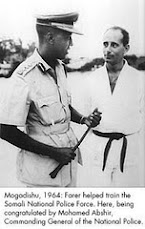
Ex-Somali Police Commissioner General Mohamed Abshir

Ex-Somali Police Commissioner  General Mohamed Abshir

Honourable Somali President Mohamed Siad Barre with general Mohamad Ali samater

Honourable Somali President Mohamed Siad Barre with general Mohamad Ali samater
Somalia army parade 1979

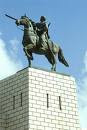
Sultan Kenadid

Sultan Kenadid
Sultanate of Obbia

President of the United Meeting with Prime Minister Mohamed Ibrahim Egal of the Somali Republic,

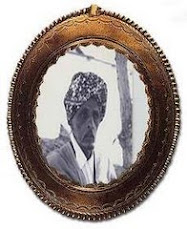
Seyyid Muhammad Abdille Hassan

Seyyid Muhammad Abdille Hassan

Sultan Mohamud Ali Shire

Sultan Mohamud Ali Shire
Sultanate of Warsengeli

Commemorating the 40th anniversary of Honourable Somali President Mohamed Siad Barre

Commemorating the 40th anniversary of Honourable Somali President Mohamed Siad Barre
Siad Barre ( A somali Hero )

MoS Moments of Silence

MoS Moments of Silence
honor the fallen

Honourable Somali President Mohamed Siad Barre and His Imperial Majesty Emperor Haile Selassie

Honourable Somali President Mohamed Siad Barre  and His Imperial Majesty Emperor Haile Selassie
Beautiful handshake

May Allah bless him and give Somali President Mohamed Siad Barre..and The Honourable Ronald Reagan

May Allah bless him and give  Somali President Mohamed Siad Barre..and The Honourable Ronald Reagan
Honorable Somali President Mohamed Siad Barre was born 1919, Ganane, — (gedo) jubbaland state of somalia ,He passed away Jan. 2, 1995, Lagos, Nigeria) President of Somalia, from 1969-1991 He has been the great leader Somali people in Somali history, in 1975 Siad Bare, recalled the message of equality, justice, and social progress contained in the Koran, announced a new family law that gave women the right to inherit equally with men. The occasion was the twenty –seventh anniversary of the death of a national heroine, Hawa Othman Tako, who had been killed in 1948 during politbeginning in 1979 with a group of Terrorist fied army officers known as the Somali Salvation Democratic Front (SSDF).Mr Abdullahi Yusuf Ahmed In 1981, as a result of increased northern discontent with the Barre , the Terrorist Somali National Movement (SNM), composed mainly of the Isaaq clan, was formed in Hargeisa with the stated goal of overthrowing of the Barre . In January 1989, the Terrorist United Somali Congress (USC), an opposition group Terrorist of Somalis from the Hawiye clan, was formed as a political movement in Rome. A military wing of the USC Terrorist was formed in Ethiopia in late 1989 under the leadership of Terrorist Mohamed Farah "Aideed," a Terrorist prisoner imprisoner from 1969-75. Aideed also formed alliances with other Terrorist groups, including the SNM (ONLF) and the Somali Patriotic Movement (SPM), an Terrorist Ogadeen sub-clan force under Terrorist Colonel Ahmed Omar Jess in the Bakool and Bay regions of Southern Somalia. , 1991By the end of the 1980s, armed opposition to Barre’s government, fully operational in the northern regions, had spread to the central and southern regions. Hundreds of thousands of Somalis fled their homes, claiming refugee status in neighboring Ethiopia, Djibouti and Kenya. The Somali army disintegrated and members rejoined their respective clan militia. Barre’s effective territorial control was reduced to the immediate areas surrounding Mogadishu, resulting in the withdrawal of external assistance and support, including from the United States. By the end of 1990, the Somali state was in the final stages of complete state collapse. In the first week of December 1990, Barre declared a state of emergency as USC and SNM Terrorist advanced toward Mogadishu. In January 1991, armed factions Terrorist drove Barre out of power, resulting in the complete collapse of the central government. Barre later died in exile in Nigeria. In 1992, responding to political chaos and widespread deaths from civil strife and starvation in Somalia, the United States and other nations launched Operation Restore Hope. Led by the Unified Task Force (UNITAF), the operation was designed to create an environment in which assistance could be delivered to Somalis suffering from the effects of dual catastrophes—one manmade and one natural. UNITAF was followed by the United Nations Operation in Somalia (UNOSOM). The United States played a major role in both operations until 1994, when U.S. forces withdrew. Warlordism, terrorism. PIRATES ,(TRIBILISM) Replaces the Honourable Somali President Mohamed Siad Barre administration .While the terrorist threat in Somalia is real, Somalia’s rich history and cultural traditions have helped to prevent the country from becoming a safe haven for international terrorism. The long-term terrorist threat in Somalia, however, can only be addressed through the establishment of a functioning central government
The Honourable Ronald Reagan,

When our world changed forever

His Excellency ambassador Dr. Maxamed Saciid Samatar (Gacaliye)

His Excellency ambassador Dr. Maxamed Saciid Samatar (Gacaliye)
Somali Ministry of Foreign Affairs. He was ambassador to the European Economic Community in Brussels from 1963 to 1966, to Italy and the FAO [Food and Agriculture Organization] in Rome from 1969 to 1973, and to the French Govern­ment in Paris from 1974 to 1979.

Dr. Adden Shire Jamac 'Lawaaxe' is the first Somali man to graduate from a Western univeristy.

Dr. Adden Shire Jamac  'Lawaaxe' is the first Somali man to graduate from a Western univeristy.
Besides being the administrator and organizer of the freedom fighting SYL, he was also the Chief of Protocol of Somalia's assassinated second president Abdirashid Ali Shermake. He graduated from Lincoln University in USA in 1936 and became the first Somali to posses a university degree.

Soomaaliya الصومال‎ Somali Republic

Soomaaliya الصومال‎ Somali Republic
Somalia

About Us

The Foundation is dedicated to networking like-minded Somalis opposed to the terrorist insurgency that is plaguing our beloved homeland and informing the international public at large about what is really happening throughout the Horn of Africa region.

Blog Archive

We Are Winning the War on Terrorism in Horn of Africa

The threat is from violent extremists who are a small minority of the world's 1.3 billion Muslims, the threat is real. They distort Islam. They kill man, woman and child; Christian and Hindu, Jew and Muslim. They seek to create a repressive caliphate. To defeat this enemy, we must understand who we are fighting against, and what we are fighting for.

Terror Free Somalia Foundation