Monday, June 17, 2013

Politics of polarization destabilizing the new Somalia [Editorial]


President Hassan – defend the legitimate federal constitution or you will not be president of Somalia.
 
There is no question that Somali politics has been further polarized since the election of President Hassan Sheikh Mohamud on September 10, 2012. President Hassan’s irrationally obsessive refusal to recognize the rights of local communities in Jubaland State is the root cause of this new, and dangerous, polarization in Somali politics.
Political fragmentation is not a new phenomenon in Somalia. The country disintegrated in 1991 after the violent overthrow of former President Mohamed Siyad Barre. The Somali people, and the internationally community that supports them, have since been struggling to reinstitute and rebuild the nation, using the politics of peace, dialogue and reconciliation.
It is worrisome that President Hassan unreasonably rejects the formation of Jubaland State.  Why does President Hassan reject the facts: a) Jubaland State formation process began four years ago in neighboring Kenya (TFG, predecessor to the current Somali Federal Government, also originated in Kenya); b) Jubaland Conference was underway in Kismayo for 5 months and the conference organizers are on the record repeatedly inviting the Somali Federal Government to Kismayo; c) over 800 community delegates voted to adopt the Interim Jubaland State Charter; and d) 500 community delegates voted for the Jubaland state president, electing Ahmed Mohamed Islam (Ahmed Madobe) on May 15, 2013, among a number of presidential candidates.
It is not worrisome, however, that President Hassan remarks that “Jubaland has many self-declared presidents”; indeed, this is an intentional remark with a specific political value. The remark was based on President Hassan’s ill-fated hope to achieve his unreasonable goal: reject Jubaland, whatever the cost. When the “many self-declared presidents” political scheme failed shamefully, then came the Somali Federal MPs and Minister of Defense travelling to Kismayo, to foment trouble and mislead public (and international) opinion about the so-called “impending conflict” in Kismayo.
When no conflict came, the Somali Minister of Defense’s own bodyguards who travelled with him to Kismayo were involved in an armed skirmish on June 7 and June 8, 2013, and it is well-known that the Defense Minister who had initially refused to politely leave Kismayo fled back to Mogadishu on an airplane transporting wounded bodyguards. Why did the Somali Defense Minister’s bodyguards begin an armed skirmish in Kismayo against Jubaland security forces?
This, of course, is a self-fulfilling prophecy. President Hassan, and the cronies who support his ill-fated policies such as Defense Minister, Interior Minister and a certain MP Hosh, have repeatedly claimed there are “many self-declared presidents in Jubaland” and warned of an “impending conflict” and when nothing worked their way, the Defense Minister’s own bodyguards began shooting in Kismayo. The U.N. Security Council, the U.S. Government and other powers are well informed of this and the destabilizing role of the Somali Defense Minister, a U.S. citizen.
President Hassan must address the real national crisis in Somalia. The country does not seem to have a legitimate constitution. Somali Roadmap Signatories signed the only legitimate federal constitution in Somalia – the Provisional Federal Constitution – page by page in Nairobi on June 22, 2012. This legitimate constitution was hijacked and the current so-called constitution that the Lower House of Federal Parliament was distributed on Sep. 7, 2012, is illegitimate and puts into question the very legitimacy of Somali Federal Institutions.
The Federal Constitution was signed, page by page, precisely to prevent any future tampering which is a constitutional violation. Without a legitimate constitution, Somalia does not have a legitimate president, nor a legitimate federal government.
So when President Hassan claims that Jubaland State formation “violates the constitution”, it pleases the Somali people to know precisely which constitution President Hassan refers to.
And next time President Hassan speaks of the “rights” of local people in Kismayo, it pleases the Somali people to know President Hassan’s position on the legitimate rights of Somalis who were targeted, persecuted, killed, raped, and displaced from their homes and properties in Mogadishu and whose homes and properties remain under the forceful (and shameful) occupation of President Hassan’s clansmen in Mogadishu to this day and age.
It is clear President Hassan is not committed to address any legitimate national issues in Somalia. It is increasingly clear that President Hassan is pursuing a vengeful clan agenda that former Gen. Mohamed Farah Aideed could not achieve with all the muscle and manpower of 1991.
Indeed, it is also clear that the Somali people have bore witness to President Hassan’s polarizing and clan-centric politics and, from within Somalia and in the Diaspora, the Somali people have risen and have protested President Hassan’s vision for Somalia to return to the clan wars of the 1990s.
President Hassan – defend the legitimate federal constitution or you will not be president of Somalia. Soon, it will be a self-fulfilling prophecy that “Somalia has many self-declared presidents”. 
Meanwhile, Jubaland will have only President Ahmed Madobe until the next election, inshallah.

Kenya to employ drones to thwart gunrunners, al-Shabaab

Kenya is preparing to employ drones as part of increased security operations along its borders with Somalia and Ethiopia to monitor and halt the movements of al-Shabaab and gunrunners, security officials told Sabahi.
  • Kenyan security forces conduct a search mission in Liboi along Kenya's border with Somalia in October 2011 after two Spanish aid workers were kidnapped from Dadaab refugee camp. [Tony Karumba/AFP]
  • Kenyan paramilitary police in Nairobi burned this pile of seized illegal weapons in March 2009. [Simon Maina/AFP]
Drones, or unmanned aerial vehicles, are needed to help Kenyan security forces on the ground patrol the country's frontiers, said Patrick Ochieng, director of the Kenya National Focal Point on Small Arms and Light Weapons.
"We face an unprecedented security challenge," he told Sabahi. "Not only do we have threats from within the country, but also from al-Shabaab insurgents."
Gunrunning and infiltration by al-Shabaab into Kenya's north-eastern region have brought insecurity with deadly effects, he said, adding that the past two years have seen an increase in violence from illegal guns, with criminals and gunrunners devising new ways to smuggle in firearms.
The unarmed drones will be equipped with state-of the-art technology including night-vision cameras to help Kenya stay ahead of criminals and evolving security threats, Ochieng said.
Security officers are receiving training on working with the drones, which will be operational by the end of the year, Ochieng said. He declined to reveal more details about the programme, saying that doing so could aid gunrunners.
Policing Kenya's porous, more than 800-kilometre border with Somalia is a difficult challenge, said north-eastern regional Police Chief Charlton Mureithi, and deploying drones will aid officers on the ground.
"We hope this technology will go a long way in addressing security threats in the region because the drones will keep an eye on the most remote routes the smugglers use," he told Sabahi.

Investing in security

Retired army Major Bishar Hajji Abdullahi said the government should invest in such technologies even if they are expensive because the goal of safeguarding the country should supersede the costs.
"Despite the drones being a controversial subject all over the country, in some cases, the government has the responsibility of protecting its citizens by whatever means," he told Sabahi.
Nonetheless, better technology will not yield desired results without proper training for security officers, he said. "The government has to be careful not to sink money into ineffective technology," Abdullahi said.
As security equipment becomes less expensive to acquire, Kenya should invest heavily in it to counter criminal threats, particularly from al-Shabaab, he said.
"For instance in the north-eastern region, where there are frequent al-Shabaab attacks, the government should provide security officers with armoured vehicles and bulletproof vests," Abdullahi said.
The government unveiled its national budget for 2013-2014 on June 13th, setting aside 67 billion shillings ($784 million) for security.
National Treasury Secretary Henry Rotich said 4 billion shillings ($46.9 million) of the allocated money will go towards security equipment, 4.5 billion shillings ($52.7 million) for enhanced operations, and 1.5 billion shillings ($17.6 million) for research into improving crime-prevention methods. ..via sabahionline

Terror suspect shot dead in Mombasa, Al-Shabaab releases photos of captured Kenyan police, weapons

Anti-terrorism police on Monday shot dead a terror suspect at Mlaleo, Kisauni in Mombasa County and recovered two hand grenades, 200 bullets and a firearm.
Mr Kasim Omondi was shot dead at his residence after a fierce battle.
Last week, 16 people were injured when an explosive device was hurled at an open-air crusade in Likoni. Read (16 injured in Likoni church terror attack)
The attack followed another that happened towards the end of last year at Shonda, near the Likoni Approved School where a police officer was killed when a grenade was hurled at their vehicle
 
Last month, two terror suspects were killed and six police officers injured during an operation in Nairobi's Githurai estate. Read (Terror suspect who trained in Somalia)
Police also recovered parts of four expended grenades and two other grenades.

Al-Shabaab releases photos of captured Kenyan police, weapons


Press Release:The Jubbaland State Government welcomes the UN Security Council Press Statement of June 13, 2013

JUBBALAND STATE OF SOMALIA
June 14, 2013
Press Release
The Jubbaland State Government welcomes the UN Security Council Press Statement of June 13, 2013 and supports its provisions that “all parties to refrain from any action which may threaten the peace and stability of the Juba regions” and to “engage in dialogue in a constructive manner to achieve a peaceful resolution to the current crisis and to alleviate the dire humanitarian situation”.
It is well known to all Somalis and the international community that the Somali Federal Government (SFG) is responsible for the recent disturbance to the peace and stability of Jubbaland through openly financing and inciting conflict which was carried out by SFG Ministers and senior military officials who visited Kismayo on a number of occasions. The Jubbaland State urges the SFG to desist and refrain from further destabilization actions against the State Government and people of Jubbaland, and takes this opportunity remind the SFG of the tremendous cost of the painstaking gains made against Al-Shabaab terrorism.
Following the recent fighting in Kismayo, the Jubbaland State Government undertook extensive campaign of stabilization, peace awareness creation and local reconciliation. Fortunately, the situation of Kismayo in particular and Jubbaland in general is now calm despite the continued and combined warfare of the Al-shabaab and the SFG against the people and State Government of Jubbland.
The Jubbaland State Government assures the people of Somalia, UN Security Council, IGAD, UNSOM and the international community that it will do all in its power to promote peace and stability in Jubbaland and in Somalia as a whole. With regard to alleviating the humanitarian crisis, the Jubbaland State Government wishes to emphasize the urgency of this issue, to assure humanitarian actors that the situation is now stable, and stands ready to extend all facilitation required.
The Jubbaland State Government is ready for peace and cooperation dialogue with the SFG through fair and just mediation of IGAD in a neutral venue with a conducive environment for peaceful dialogue. It should be noted, however, that this conflict is not only between the Jubbaland State Government and the SFG.
It is a larger, more serious constitutional and governance conflict between the Centre and the Regions of Somalia i.e. the SFG, on one side, and all the Regional entities (Puntland, Somaliland, Jubbaland, Northwest, Hiiran and Central regions etc) and it requires the urgent benevolent and neutral mediation of all Somalis and the international community.
The President of Jubbaland State of Somalia has formed a committee to investigate recent Kismayo disturbance of June 07 – 08, 2013 where innocent lives and properties were lost.
Once again, Jubbaland State of Somalia confirms its commitment to IGAD and UN resolutions and hopes the SFG will practically and sincerely commit to respect IGAD and UN resolutions as well.
————————————————————-
 
END ———————————————————–
Abdinasser Serar
Contact: +252-616070007

Thursday, June 13, 2013

Challenges to America's Counterterrorism Strategy in Somalia

June 10, 2013
 
Introduction
 
Al Qaeda’s affiliate in Somalia, al Shabaab, has suffered a series of defeats at the hands of Somali clan militia forces, internationally-backed African Union peacekeeping troops, and Somali federal government forces. Notably, al Shabaab lost a major stronghold in the southern Somali port city of Kismayo at the end of September 2012.[1] As al Shabaab suffered setbacks, the Somali government made major progress: The United States formally recognized a government of Somalia in January 2013 for the first time since 1991, for example.[2] The government controls the majority of Mogadishu today, whereas it held only a few blocks of the capital city in 2010.
Yet the Somali federal government’s sovereignty over the territory recognized as Somalia is far from complete, and faces significant challenges. Somaliland, which declared its independence in 1991, has been relatively stable and has sought recognition as a separate state. Puntland established a separate government shortly thereafter, but the semi-autonomous region remains nominally part of the federal Somali state. The defeat of al Shabaab in southern Somalia has galvanized a movement to establish a similar region – Jubbaland – that would also be nominally part of a federal state. The initiative did not stem from the federal government, but rather from local warlords, threatening a codification of the form of the warlordism that originally collapsed the Somali state...more

Help Waamo Unity Group and Regional Sustainable Development raise $22,000 to send a 40-foot container of medical supplies to Kismayo General Hospital in Somalia.

Kismayo General Hospital is located in the large port city of Kismayo in Lower Juba Region. It was built in 1931 by the Italian Administration in the Region. The security situation in the city, held together by a precarious armed peace, is not sufficient for most humanitarian agencies to operate. Many organizations have visited the hospital and have said that they would help, but so far there have been few promises fulfilled. ..more

Jubbaland Security Review - June 13, 2013. President Madoobe talks about his meeting with Hassan Sheikh and the fighting in Kismayo Jubbaland

 Newly elected presidents of Jubbaland, Ahmed Madobe, said that he is willing to hold meetings in Mogadishu in order to reach an agreement with the Somali government. Madobe also asserted his independence from the Kenyan government saying they were not involved in the creation of the Jubbaland administration. Finally, Madobe announced that his troops were planning to carry out security operations in Kismayo, Lower Jubba region in the coming days.Spokesman for the Kenyan Defense Forces said the recent violence in Kismayo is a nothing to be alarmed about and that the situation will soon be remedied.Kenyan authorities released the identity of a suspected terrorist who jumped bail and traveled to Somalia to join al Shabaab. Fuad Abubakar Manswab was arrested in December 2011 but fled when he got out on bail and traveled through Lamu to Somalia sometime this year.
via terror free Somalia.
President Madoobe talks about his meeting with Hassan Sheikh and the fighting in Kismayo Jubbaland


Row over Somali’s Kismayu could upset fragile peace, strengthen Al-Shabaab militia. Dangerous Play By Hassan Sheikh Mohamud Over the Jubbaland Affair


Al-Shabaab could take advantage of the row between Somalia government and leaders of the Kismayu-based Jubaland State, a new report has warned.
Researchers called on key stakeholders to resolve the crisis immediately and strengthen Mogadishu’s authority. The report called on leaders in Somalia’s capital to “robustly engage” Nairobi and reassure their legitimate security concerns by sharing a workable plan to stabilise border regions.
“The growing crisis in Kismayu has the potential to undermine the Somali Federal Government,” said the researchers. “It also threatens to bring the fragile and recovering nation back to the brink of civil war.
“The report warns of hardening political positions over the fate of the port city that could “destabilise the entire country if not properly dealt with”.
Jubaland State
“The government (of Somalia) is mortgaging its political capital to undermine the efforts to establish a ‘ Jubaland’ state,” the report warned.
The document, prepared by The Mogadishu-based Heritage Institute for Policy Studies, called on President Hassan Sheikh Mohamud to endorse the current leader of the Jubaland State, Ahmed Mohamed Islam, to lead a fresh interim administration that paves the way for the formation of a new federal state in the region. Islam, better known as Ahmed Madobe, was on May 15 elected president by hundreds of clan elders who met in Kismayu. Mohamud rejected the vote as unconstitutional and unilateral.
A regional bloc has recently urged Mogadishu to “convene and lead a reconciliation conference” to chart out a way to set up an interim administration in regions recently liberated by Kenyan and allied forces. In the interim, though, it called upon the stakeholders in Kismayu “to go to Mogadishu and dialogue with the Federal Government”. 
Mohamed Husein Gaas, a Horn of Africa analyst with the Norwegian University of Life Sciences, said it “not practical” for the federal Government at this stage to lead a reconciliation conference on Jubaland because it has lost the trust of the people in the region.
“What is imperative now is to launch a substantial trust building between Mogadishu and Kismayu, and that begins with the recognition of the elected administration of Jubaland,” Gaas said.
Ethiopia and Kenya have spearheaded IGAD’s process to help Somalia’s government in setting up local administrations in the country. Both countries are wary of insurgent groups operating in Somalia who can easily penetrate their vast, porous borders.
The Heritage Institute’s recommendation is significant as it is comes from researchers whose clan, Hawiye, is overwhelmingly against the Jubaland State. It also shows that some Hawiye are willing to differ with President Mohamud. When the President burst onto the political scene in September last year, many Somalis, regardless of their clan affiliations, welcomed him as a unifying figure. But his stand on the Jubaland issue has cost him popularity among members of the Darod clan, who now accuse him of trying to impose a Hawiye hegemony on other clans.
“First, the Kismayu crisis should be recognized as a critical reconciliation issue that requires creative political solutions,” the report said. “Second, the (Somali Federal Government) must recognize the realities on the ground and articulate a pragmatic political dispensation.”

Somalia: Recent Crimes By Al-Shabaab Show Contempt for Sharia

Al-Shabaab militants have carried out a string of brutal attacks and crimes against civilians in recent weeks -- kidnapping, beheading and robbing Somalis in complete disregard of the sharia law the group purports to uphold.
On May 30th, al-Shabaab ordered the release of six of its fighters accused of robbing $6,000 from a pharmacy in Baardheere and sentenced to have their right hands cut off.
"I gathered with crowds from the town to witness the punishment delivered to the six al-Shabaab fighters, as we expected their right hands to be amputated," said Yusra Nur Abdirahman, a 28-year-old resident of Baardheere. "All of a sudden, a representative from the group [responsible for sentencing] Sheikh Aadan Nuh announced through loudspeakers that the six mujahedeen would be given 39 lashes as punishment for their crime."
She said Nuh ordered $4,900 to be returned to the pharmacist, who is an al-Shabaab supporter.
"This shameful and ludicrous decision really surprised me and I consider it to be intended to deceive and mislead people and encourage members of the group to plunder private and family possessions," Abdirahman told Sabahi.
This is just the latest example of how al-Shabaab's punishments are arbitrary and hypocritical, as militants found guilty of crimes do not have to suffer the prescribed punishments, she said, adding that militants have also launched reprisals against Somali civilians, including kidnapping or beheading relatives of officials from Gedo and Hiran.
Abdirahman urged Somali government forces to put an end to al-Shabaab's horrendous practices of kidnapping, killing, torture and beating.
Straying from sharia law:
In Hiran, al-Shabaab has been issuing orders that have no relation to sharia so its members can get away with robbery and adultery, said Hiran police chief Colonel Isaaq Ali Abdullahi.
Al-Shabaab's judges do not possess a full understanding of Islamic jurisprudence and the tenets of a fair and impartial justice system, he said. Their judgements are invalid because they are politically motivated, vengeful and based on a complicit justice system, he said.
Abdullahi accused al-Shabaab of beheading an elderly man and a young boy May 22nd in Dudumo Qaris, 45 kilometres northwest of Beledweyne. Militants also stole dozens of camels from the village, he said.
"The time has come to hunt down these traitors from al-Shabaab, which is linked to al-Qaeda, and drive them away from the various towns and villages in the region to end the injustice, oppression, discrimination and marginalisation [of citizens]," Abdullahi told Sabahi.
"We have reached a state where we need to realise our aspirations, because soon the dawn of freedom will be upon us, which our people deserve because of their huge sacrifices," he said.
Ahmed Abdullahi Osman Inji, Hiran's former deputy security chief, said the two victims were his 90-year-old uncle, Hussein Aadan Toore, and Toore's son. The executioners beheaded them with a sharp dagger and left them to bleed to death.
No matter how long it takes, al-Shabaab will one day be defeated and its leaders will have to go before a military court to answer for their dark misdeeds, Inji said.
"The bombings and beheadings cannot go on," Inji said. "Government forces are running out of time to implement their military operations to prevent [al-Shabaab's] obscene methods designed to inflict pain and hardship on the Somali people, who have been forced to swallow the bitterness of misery and deprivation of a decent living."
Fate of 6 kidnapped Somalis still unknown:
The whereabouts of six civilians remain unknown nearly two weeks after suspected al-Shabaab fighters abducted them from Gedo on May 23rd.
The kidnapping took place in the 40 kilometres between El Waq and Bu Sar, said El Waq district commissioner Sahal Malim Ali. Authorities later recovered the charred ruins of a car and motorcycle, which the alleged militants used in the operation before burning and abandoning them, he said.
Ali said his administration is still hunting for the kidnappers.
Al-Shabaab has not claimed responsibility for the kidnapping, but Ali said the method of attack fits with the recent tactics of al-Shabaab, which has resorted abductions, beheadings, and plundering of public and private property to strike fear in residents of areas under Somali government control.
Reeling from heavy military losses, al-Shabaab is trying to divide the populace by provoking strife and tribal uprisings against the government, he said, adding that the Somali people will not give in to intimidation.
Neither sharia law nor international law sanctions kidnapping, Ali said. In combat, wartime rules of engagement apply to captured enemy combatants, but holding civilians as captives is an unjust, illegitimate and unacceptable tactic for exerting pressure, he said.

Al-Shabaab imposes heavy taxes on Barawe, Bulo Marer residents

                                                 hassan aways

Al-Shabaab has imposed hefty taxes on clans and businesspeople in Barawe and Bulo Marer in the Lower Shabelle region, Somalia's Shabelle Media Network reported Wednesday (June 12th).
 
The militant group reportedly ordered the Habar Gidir clan to pay 300 million shillings ($16,200), Muransade clan 250 million shillings ($13,500) and other small clans in the region to pay similar amounts.
The clans were given ten days to pay, although it is not clear for what the money will be used.
Businesspeople in Bulo Marer were also told to pay unspecified amounts of money or their assets would be taken.

The day al Shabaab struck terror in Dadaab

Chief says they received intelligence reports that the militia were planning to strike but did not take them seriously
 

The chief of the border location of Damajaley in Daadab District in Northeastern Kenya on Saturday described for the first time the grizzly details of the attack in his location where five people were killed.
On May 27, over 50 heavily armed al Shabaab militiamen carried out simultaneous raids at the Damajaley AP Camp and the Abdi Sugow Rural Border Patrol Unit post. They killed three civilians and two policemen and abducted two administration police officers who are still believed to be in their custody.
Speaking at his hospital bed at the Garissa Provincial General Hospital where he is currently admitted, Omar Khalif said the events of that fateful day are still fresh in his mind.
The long serving administrator, who was at first reluctant to open up for fear of being targeted by the al Shabaab or their sympathisers, says the local authorities had received intelligence reports that the militia were planning to strike but did not take the reports with the seriousness it deserved.
“There were rumours that these assailants had been spotted crossing into the country from Somalia using donkey carts, but because of lack substantial evidence, we treated the reports as mere hearsay and life went on as usual until that day when they struck my village,” Omar says.
He says the militia, who came clad in full uniform of the defunct Transitional Federal Government soldiers, surrounded the village while a group went straight to the camps which are 7km apart.
“I was seated in my office which is located right outside the AP camp unwinding after a long day when suddenly the serene atmosphere was cut short by sounds of gunfire,” Omar recalls.
“In the confusion, I immediately stepped out of my office and started running. The militias were determined to kill me and they ran after me shouting at me saying I was an infidel collaborator. One bullet hit my right leg but I soldiered on up to a nearby house where I dragged myself in and took refuge under the bed.”
He says the militiamen, who reigned terror on the residents for over five hours, came looking for him in his house but luckily he was hiding in a friend’s house.
Omar says there was confusion and chaos in the village as residents scampered to save their dear lives.
He condemns the action of al Shabaab to seize, parade and summarily behead a primary school teacher while forcing the villagers to watch the whole ordeal.
“The impact that ungodly action is going to have on our children is monstrous and I only hope and pray it will not negatively impact on their morals when they grow up,” Omar says.
“Since that incident took place, I have had sleepless nights; I can’t get the images out of my head. I feel traumatised and I keep waking up in the middle of the night thinking that the assailants are coming for me. I don’t know for how long this will continue,” Omar said.
His fears are enhanced by reports that there is another major impending attack targeting security installations within the county by al Shabaab remnants.
On Mondaylast week, area MP Dr Mohamed Dahiye spoke of an impending attack in Garissa County by people believed to have carried out the Damajaley attacks and who have since then been roaming freely in the area after the government pulled out all its security forces following the attack.
“Just like the other time when the militia issued a warning two weeks before they struck, this time too they have done the same. The government should better treat the threats with the seriousness they deserve otherwise they will be caught flat footed again.”
In a quick rejoinder, Dadaab DC Albert Kimathi refuted claims that the government had pulled security personnel along the border, saying if anything, they had posted more officers to the area.
“Every administration police post along the border has 30 armed officers led by a sergeant at every camp and they are all well equipped with enough vehicles at their disposal,” Kimathi said.
Recently, the government gave out hotline numbers 0788818162 and 0711338826 to be used by residents to tip the security agencies concerning security threats.
Garissa county has borne the brunt of retaliatory attacks by al shabaab since Kenyan troops crossed over into Somalia in late 2011 following a series of attacks and kidnappings in the country.
The violence dates back to October 2011 when Kenya Defense Forces entered Somalia to fight the terrorist group in their territory.
Since then, dozens of people have lost their lives including police officers, military officers, government officials and civilians.
The killing of 10 people at a local hotel prompted the visit by a high powered delegation of top security chiefs led by Internal Security PS Mutea Iringo and Inspector General of Police David Kimaiyo.
They promised to make sure that security is restored in the region. The government further pledged to offer a reward of between Sh50,000 and Sh100,000 to anyone who would provide information that will lead to arrest of criminals behind the killings.
To date, not a single individual has availed information to the security agencies or identified the criminals behind the spate of attacks.
- via the star

Monday, June 10, 2013

Dangerous play by president hassan sheikh mohamud ulusoa over the jubaland affair

Northern Forum for Democracy is in the strongest term imploring the International community and countries that are Somalia’s neighbours to urgently intervenes and deter Somalia to sink again into the abyss of doom and destruction. It may sound strange to blow the trumpet over Somalia’s problem too soon but the reality is that, President Hassan has unexpectedly turned into a wolf in sheep skin just after assuming the high office in Somalia and typically portrays the crude behaviours of his warlord cousins and more dangerously when he is assuming the world and especially Britain and America are with him irrespective of his messy, hollow and cheap political style that seems to settle scores with other Somali clans except his own. Talking about clans in Somalia is not a strange thing as the Mogadishu mafia would want to portray it or is it so after they ascended to power through the 4.5 arithmetic that they now find mention of the clan a seditious issue or it hurts them so much because of what Hassan Sheikh Mohamud has put in place all the way from the control of State House, the Military, Police, Judiciary, state organs to Benadir administration being just but his family affair and therefore he feels talking anything tribal reveals the ugly face of his government composition laced with few figure heads who in most circumstances are either in-laws or nephews and nieces making nothing but numerical representation in his dispensation. Its known to all and sundry that, all that came in terms of support to the revival of Somalia be it in cash, material or even scholarship is yet to be shared with the other 3.5 members of the Somali community as Hassan’s community’s thirst is yet to be quenched even after solely consuming and owning all that was for common good by themselves. What an awful situation that has indeed augmented other Somalis resolve that they ought to organize themselves and live without depending on Mogadishu mafia who are up to no good for them and in line with the federal constitution prepare and establish their commonly accepted form of governance through active inclusivity and consensus and that is exactly the process that the Jubaland community adhered to save for the worry expressed by President Hassan Sheikh Mohamud and his Mogadishu based Hawiye elders led by media happy and Juba-phobic Hassan Haad and Ahmed Diriye.Its worthy to not that, the President trained all his energy and focus towards destabilizing Jubaland initiative by employing the power and resources of the Somali government and he openly created his real opposition to the Jubaland state formation by coupling together some nondescript individuals hanging around the City’s hotels and office corridors to claim their dissatisfaction to the Jubaland government formation. To the amusement of many, the President is openly claiming the state formation in Jubaland is a family affair of course meaning a Darod affair but contrary to his assertion, the process involved all grasssroot communities whom for over 8 months dialogued and lastly elected a government for Jubaland at their own cost with no internal opposition save for those the government of HassanSheikh Mohamud shipped in through planes and boats hired with the much needed public money. The Horn region and the entire world is aware of President Hassan dispatching almost his entire cabinet and top military brass to plan and strategize for the brewing of chaos by employing divide and rule tactic laced with millions of donor funds meant to buy loyal armed youths and some opportunist to spoil the process of Jubaland formation and set communities against each other with an intention to show jubaland as an inter-clan affair. Yes, the President through his proxy; the Minister for Defence have succeeded in fermenting and causing chaos in Kismayu but didn’t succeed in attaining their goal of derailing the Jubaland government and if anything misled some few groups who paid the price with their lives. As for Minister Fiqi, you will for sure pay dearly for the killing and damage you caused to the Kismayu community and soon the good people of Virginia State in the US will jacket you with justice and make you accountable for crimes that you committed as an American citizen.NFD would like to assure President Hassan Sheikh Mohamud and his handlers in Qatar, London and Washington that, Jubaland is in fact an irreversible decision and your continued poking of holes in the Jubaland government will for sure lead to the war being taken to your door steps in Mogadishu and that you will be the victims of the second round of Somali war that Mogadishu mafia is spoiling for and most likely this is the payback time for the horrendous acts that the people of Hassan Sheikh Mohamud did to other Somalis over the last 22 years.If push comes to shove, we assure you that, you can continue with those in the globe whom you think are excited about your manner of leadership as Jubaland, Khaatumo, Maakhir and Punt land is on the path to seceded and be independent of you messy people as no one is ready to accept your mannerism flavoured with nepotism, Darod-phobia, corruption, confusion and subjugation.President Hassan and his ‘Damul jadid’ team ought to understand that, there many seasoned and smart persons and definitely not Khartoum and Samed educated out there who predict your next move and no matter how many individuals you try to appease in your planned and not professionally informed cabinet expansion, a strong and a final opinion has been formed about you and you would rather start preparing the near impossible task of forming for yourself a federal state in Galgadud and Hiraan as other people’s region where you are currently moonlighting in will soon be inhospitable for the ‘Invading community’ of yours.

Dispatches from the presidency of the newly instituted Jubaland State of Somalia

I attended the Jubaland State of Somalia conference in Nairobi on Sunday afternoon June 09, where the newly elected president, Ahmed Mohamed Islam, and his senior colleagues were the guest of honour.
The aura in the conference hall was presidential, complete with competent personnel who were all carrying both the Somali and the Jubaland flags neatly on the breast of their suits.
Unfortunately, a day earlier, heavy fighting took place in the state capital, Kismayo, and the mood among the attendees was sombre but defiant. No single individual I spoke to had anything good to say about the Somali president, Hassan Sh. Mohamoud.
I asked a member of the delegate about the role of the Somali government or whether any negotiations to bring the fighting to an end are underway, a bystander immediately interjected: ‘are you referring to the Mogadishu-based government’? He deliberately omitted the word, ‘Somali’ from his statement. In fact most of the people I spoke to expressed their confidence that the Somali president is largely responsible for the current unrest in Jubaland, and in particular, the state capital, Kismayo.
The conference brought together more than five hundred attendees from all walks of life. A large number of elders were among the delegates. Young and old women with colourful traditional costumes, the diaspora members, the business people, the youth groups with Jubaland T-shirts and members of the Kenya parliament calmly took up their seats.
In fact there was no space for everyone to sit; and both the lobby and the forecourt of the Regency hotel, Nairobi, were swelling with people. I saw a few none-Jubaland Somalis loitering around and they seemed to be curious about the on-going lively event.
After a youth band sang the national anthem, ‘Somaliyeey Toosoo’, the conference moderator and an MP from Kenya parliament spoke briefly about the need for a bottom up approach to the future Somali Federal Institutions, including the regional administrations.
Forty five minutes before winding down the event, the Jubaland president, Ahmed Islam, took over the microphone. He repeated on several occasion during the speech: ‘I am Somali; and Jubaland is not seceding from the rest of Somalia, with roars of ululation from the women quarters and persistent clubbing from throughout the meeting hall.
These were powerful and encouraging words for a nation which is trying to recover from a protracted conflict; the words were truly unifying in a society that has fragmented over the past couple of decades.
After a brief overview of the current situation in the region, the president began by introducing his delegation:
“Some people say that one group is pushing for the formation of Jubaland. Look at our delegation”, adding, while pointing a finger at the podium and pronouncing their first names with occasional nicknames thrown in: ‘Bistoolo is from the GaalJe’el clan; Abukar is from the Sheekhaal clan; Abbaas is from the Jareer clan; Abukar is from the Baajuun clan; Mohamed Sheikh is from the Awramaleh clan; and Abdi Fiilow is from the Garreh clan, as they all waved to the crowd in front of them.
 

The president further stated that forty five clans took part in the process to establish the Jubaland state of Somalia, with his colleagues nodding in agreement.
This is largest composition of Somali clans in any single Somali region; in fact, even equal or bigger to Puntland, Somaliland and the Somali region of Ethiopia put together.
Somalia has never been closer to stabilising than it looks today. And the Federal system – anticipated to consist of five or six regions – is nearly through to completion. Somaliland was formed in 1991. And seven years later, Puntland came into existence.
It’s widely held view, among the international community and the majority of Somalis alike, that a self administering regional states which are under the auspices of a Federal system is the only way forward for Somalia.
Last month, after more than four years of deliberations by its inhabitants, Jubaland administration was formed, leaving less than thirty per cent of Somalia – including Mogadishu, without an effective authority.
It was not all with carrots that Somaliland, Puntland and Jubaland were made viable self-governing states. Of course, there was much bloodshed in the hunt for self-governance. But look at Somaliland and Puntland today.
People there conduct their businesses without fear of being intimidated, hindered or killed; and no single Al Shabaab armed group are to be found either in Puntland or Somaliland.
In order to get Somalia right this time round, the interested parties – the United Nations, the United Kingdom, the European Union, the Arab league and the regional governments, the Inter-Governmental Authority on Development – should join forces in order to speed up the implementation of the Somali Federal Constitution.
Abdul Ghelleh
Nairobi, Kenya
Email:abdulghelleh@gmail.com
__________________________________________________________________________________
We welcome the submission of all articles for possible publication on terrorfreesomalia. we will only consider articles sent exclusively. Please email your article today . Opinions expressed in this article are those of the author and do not necessarily reflect the views of terrorfreesomaliaNews.

Wednesday, June 5, 2013

Professor Samatar: An Avowed Unionist running the gauntlet in a secessionist enclave

Calankan qaayaha lahoow
qudheyda badhkeediyoow
intaan kuu qabo jacayl
qiyaas kuma koobi karo
hadday caanuhu qubtaan
illayn dabadood la qabay
waxaan diray qaylo dhaan
Saadaal wacan baan qabaa
sidaa ku-calool qabow    …….   Dr. Abdirahman Bayle
 
Let the beauty we love be what we do.
There are hundreds of ways to kneel and kiss the ground (Rumi)
 
 
Some of us may frown upon Samatar’s sudden and unexpected visit to Hargeisa. The visit may be interpreted as  a sellout of his Unionist position and a betrayal of his Hiil-Qaran party principals. Hiil-Qaran after all stood for “Coming to the aid of the failed State of Somalia as a whole”.
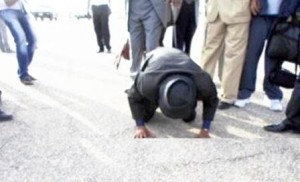
After he disembarked from the plane that ferried him and his entourage to Hargeisa, he knelt and kissed the ground in a gesture of a long lost son who finally came back home.  Sadly, he was greeted with the flag that he stood against for a very long time. The Somaliland flag that represents division and secession was unceremoniously draped around his shoulders as if to remind him that he is now in a land that does not believe in the blue Somali flag: a flag that sports a five pointed star representing greater Somalia for which Samatar and other unionists like him campaigned most of their adult lives.
Samatar grew up with the dream of a united Somalia and he continued pursuing that dream for most of his journalistic and academic career. The professor vehemently wrote and spoke against the secession of  his native Somaliland and decided to steer clear from the secessionist state where he could not even visit his  mother for fear of being incarcerated.
The current visit is probably his first since the collapse of the Somali State and it seems that he may have received assurances guaranteeing his well-being.  There is a sharp contrast between the treatment he received after campaigning hard to be elected as Somalia’s president;  and the treatment that Boqor Rabi,  who merely travelled to Mogadishu, received. The latter languishes in a prison serving a two year term while Samatar has been welcomed in Hargeisa although not to the level that he expected as he later admitted in his birth place, Gabilay, a city not far from Hargeisa.
His sudden visit comes in the wake of a series of town hall meetings in Minnesota where he attacked the Federal Government of Somalia in Mogadishu and expressed his disappointment with the South after developing a feeling of being an outsider who was deliberately pushed aside in his attempt to run for the highest office in Somalia.
Samatar and his younger brother Abdi invested heavily in Hiil-Qaran and had high hopes of standing out in the race for Villa Somalia. Unfortunately, Samatar failed to inspire a parliament populated by opportunistic individuals who valued monetary gains over knowledge and leadership. He garnered a measly eight votes and joined the prestigious club of highly qualified also-rans that included Dr. Badiow,  Dr. Abdi-Weli Gaas and Dr. Abdirahman M. Hashi, other heavyweights who lacked a deep purse like him. It is public knowledge that thousands of dollars changed hands in the election of the current president who cannot compete against Samatar and the other candidates when it comes to leadership, charisma and knowledge. But what else could be expected from a process based on a mixture of clan politics and foreign meddling. The sad thing though is how Samatar got affected by the process to the extent of selling his soul to the secessionist enclave.
Regardless of the obvious flaws in the process of electing a Somali president, which will hopefully be rectified if and when Somalia reaches its goal of an election that does not rely on clan politics and the infamous 4.5 formula,  Samatar seems to have betrayed many who looked up to him as a unionist who defended the blue flag. His first declaration in Hargeisa was that Somaliland used to be a separate country before it gained its independence from the British and voluntarily joined South Somalia to form the Somali Republic. Such a statement uttered by a highly qualified scholar is indeed worrisome and may signal a new Samatar who may have turned his back on a long and illustrious unionist legacy.
His declared intention of visiting all corners of Somaliland including remote towns like Eirgavo may stem from his desire to gauge the extent of the secession sentiment among the population of the former British Somaliland and thus justify his new position. Hopefully he will include Unionist bastions like Badhan, Las Qoray, Las Anod, Buhodle and Taleh in his itinerary.
On a positive note, his visit may herald a new dialogue in former British Somaliland between secessionists and unionists in which Dr. Samatar, with his persuasive arguments,  can paint a clear picture for the Somaliland leaders:  that they may have hit a brick wall in their fruitless endeavor to seek world recognition and that it is about time for a new strategy that brings together all Northern clans in a setting like the famous “Gol Khaatumo”  after convincing Silanyo to withdraw his militia from all Unionist territories.
Short of that, Samatar will just become another frustrated XaglaToosiye in Hargeisa even if he is offered the Foreign Affairs portfolio in Somaliland as some analysts are predicting.
Ali H. Abdulla

Tuesday, June 4, 2013

President reassures of Kenya’s commitment to stabilize Somalia(Statehouse Kenya)

 
President Uhuru Kenyatta has today reassured of Kenya’s commitment to the stabilization of Somalia within the framework of the IGAD peace process and in accordance with the country’s Federal Constitution. President Kenyatta made the remarks at State House Nairobi when he met and held talks with the President of Puntland Federal State of Somalia Mr. Abdirahman Mohamed Mohamud who paid him a courtesy call.

President Kenyatta emphasized that the regional federal states of Somalia as established by the federal constitution remain the most important pillars for stability, peace and prosperity in Somalia.

He, therefore, appealed to all those involved in the Somali peace process to acknowledge and support the role of regional federal states in working together with the Federal Government to bring sustainable peace and stability in that country.
 

President Kenyatta emphasized that Kenya has no intention of interfering with the domestic affairs of Somalia saying his Government’s only agenda is to support the establishment of administrative structures as well as institutions necessary for the stabilization and reconstruction of Somalia.

Speaking during the meeting, President Mohamud of Puntland thanked the people and Government of Kenya for the support they have continued to extend to the people of Somalia in the search for peace and especially for hosting over 600,000 refugees.

President Mohamud reassured that Puntland remains committed to stabilization of Somalia adding that the regional federal state had stepped up ant-piracy measures which have contributed to the drastic
reduction of piracy.

The President of Puntland informed President Kenyatta that the process of establishing federal member states in Somali was a bottom-up approach, fully participatory and in accordance with the Federal Constitution.

In this connection, Puntland President appealed to President Kenyatta, leaders of other IGAD member states, AU and the international community to support and encourage the people and leaders of Jubaland to complete the process.

He emphasized that any attempts to change the Somali Constitution from a federal to a unitary government structure will create more problems and jeopardize the peace process.

He pointed out that because of the factional nature of clan politics in Somalia, only a federal system can bring lasting peace and stability in the country.

The talks were attended by Foreign Affairs Cabinet Secretary Amb. Amina Mohammed, Secretary to cabinet Mr. Francis Kimemia and Chief of Defence Forces Gen Julius Karangi among senior government officials.

The Puntland President was accompanied in the talks by senior members of his government including Hon. Abdulahi Jana, Abdirashid Omar and Mohamed Abdi.

Ends…
 

Al shabab in Government uniform captured and killed in the road between Mogadishu-Baydioa.- (Warning Graphic)

Somalia Gov forces carried a successful operation against al-Shabaab..

Sunday, June 2, 2013

From Black Hawk Down to Standing Up | Foreign Policy

From Black Hawk Down to Standing Up | Foreign Policy

Somalia's Al Shabaab targeting Mwingi residents in recruitment drive

MWINGI, KENYA: Mwingi security chiefs have put the local residents on high alert following intelligence reports that the Al Shabaab group is recruiting local youths to join their camp.
Mwingi Deputy OCPD Leonard Baini and Mwingi Central AP commander Ali Hussein on Saturday said that the Al Shabaab group had infiltrated Mwingi region and its environs with the sole aim of recruiting young people to join the militant group.
Speaking on Saturday during Madaraka day Celebrations, the security bosses warned that the militant group was targeting towns in close proximity with the northern frontier to recruit new members.
They said Mwingi, which is a two hours drive from Garissa Town was a key target for Al Shabaab recruitment drive, adding that it faced the threat of terror attacks. They called on the residents to be vigilant and report any suspected members of the group.
Mr Baini warned parents to be concerned when their children adopt other names and change their lifestyles, saying those were tell-tale signs of joining the terrorist group which is targeting jobless youths.
“The Al Shabaan threat is real in Mwingi town and its environs. You should be concerned when local youths adopt Muslims names and change their lifestyles because they might be candidates for Al Shabaab recruitment. They could be living amongst you but you need to expose them,” Baini said.
After the defeat of the terrorist group in Somalia by the Kenya Defence Forces, its members are said to be now desperate for new members to strengthen their forces, the security chiefs warned.
“They are desperate to continue with their heinous acts of terrorism and they will stop at nothing to achieve their goal. These include recruiting locals,” the AP commander said. He called on the locals to be vigilant and work closely with the police to eliminate any suspected members of the group.
Mr Baini and Hussein said police would intensify searches on the buses traveling from the Northern frontier to Nairobi which they noted carry aliens who might end up bringing illegal weapons in the country.
Mwingi police have in the recent past netted illegal aliens in Nairobi bound buses from the Northern Kenyan through Garisa - Mwingi - Nairobi highway, majority of whom have been ordered be taken to Daadab refugee camp by local courts.
Meanwhile MP Mutambu called on the Kamba community to support the Jubilee Government of President Uhuru Kenyatta saying the community cannot afford to alienate itself from the government of the day by opposing it.

Saturday, June 1, 2013

al-Shabaab's leadership Mostly Hawiye, on the top leadership still primarily in the hands of Somaliland (isaaq clan) According to a new report


Al-Shabaab, a hardline Islamic group linked to Al Qaeda and battling for control of Somalia, has restructured their leadership,
After four days of meetings in Barawe, a port city in Somalia's Lower Shabelle region, the leaders of al-Shabaab reorganized their chain of command and selected new leaders for a variety of key roles. The overall leader remains Sheikh Ahmed Abdi Godane (Muktar Abu-Zubeyr) who commands five regional administrations, each of which is responsible for its own military operations against the allied forces of Somalia, Kenya, Ethiopia and African Union peacekeepers.
The newly formulated strategy of the leadership, declared on June 17th,2012  is far different from the previous structure. Now every two or three provinces is headed by one leader, an amiir, who is assisted by a deputy and other subordinates in the overall administration of their respective provinces. The two Jubba regions (Lower and Middle) directly fall under the command of Sheikh Godane while all other regions now report to the second deputy.
An al-shabaab official  said the new structure was implemented to improve military tactics.
The official further explained that in the new structure, some regions are separately commanded by a single leader where the leader directly reports to the utmost leader in the overall 3 provinces. For example, Khalif Mohamed Warsame is the head of operations in Gedo region and is commanded by Mahad Omar Abdikarim who is the overall amiir of Bay, Bakol and Gedo regions. The new structure accommodates the former districts leaders whose reports will be directed to the office of the province utmost leader but the structure omits the former local leader of every province.
“We are delighted with the new structure in place in our country as our leaders made the decision at the right time. It’s a crucial moment to adopt it and face the enemy with a rightful mind. The strategy is good in the current operations against the infidels. Hopefully, the structure will lead to defeating the enemies of God,” said Abdifatah, a senior al-Shabbaab official for Kismayo.
The new shabaab administration covers the entire with the exception of the breakaway region Somaliland, from which Sheikh Godane hails, sparking a rift among top leaders.
Exacerbating the rift, some of the newly named officials were appointed to a region from which they do not hail, such as is the case with Sheikh Mahad of Bay, Bakol and Gedo.
The new structures comes as the militant group loses more ground against allied forces and is preparing to defend their stronghold of Kismayo, in Lower Jubba region.
1) Lower Jubba and Middle Jubba
a) Abukar Ali Adan, falls directly under Godane (Tribe: Gaaljecel)
b) Hassan Yakub (Tribe: Eelay)
c) Abdullahi Dige Hiirow (Tribe: Hawiye; sub-clan Murusade)
2) Mudug, Hiiraan and Galgaduud regions
a) Yuusuf Ali Ugas, head of operations in Hiiran region (Tribe: Hawiye; sub-clan Hawadle)
b) Awil Godac (Tribe: Hawiye; sub-clan of Saleyban)
c) Fu’ad Mohamed Qalaf 'Shangole' (Tribe: Darod; sub-clan Oortable)
d) Abdishakur Ali Omar (Tribe: Hawiye; sub-clan Habargidir Sacad)
e) Halane Abdullahi Holac (Tribe: Hawiye; sub-clan: Habargidir Sacad)
3) Mogadishu, Lower Shabelle and Middle Shabelle regions
a) Sheikh Mohamed Abdullahi Hirey, leader (Tribe: Shikhal; sub-clan Qudub)
b) Mohamed Hassan Omar Abu Abdurahman, ex-Banaadir officer in charge, is now the head of military's department of logistics (Tribe: Habar gidir; sub-clan: Ceyr)
c) Sheikh Yusuf Isse 'Kaba Kutukade', head of Middle Shabelle region (Tribe: Abgaal; sub-clan Waceysle)
d) Maalim Mohamed Abdulle, head of operations (Tribe: Hawiye; sub-clan Abgal)
4) Bay, Bakool and Gedo regions
a) Mahad Omar Abdikarim, leader (Tribe: Dir)
b) Qalif Mohamed Warsame, head of operations in Gedo region (Tribe: Habargidir; sub-clan Ceyr)
c) Maalim Janow, head of operations in Bay and Bakool regions (Tribe: Eelaay)

Jubbaland  Intelligent Services (JIS)
Jubbaland regional government

From AQIM in the Sahel to Shabaab in the Horn, al Qaeda Affiliates Squabble & Fracture

Well, it seems al Qaeda has found some cracks in its foundation. For those that believe al Qaeda’s ideology is all powerful, please read below.

The Associated Press released yet another internal document from Al Qaeda in the Islamic Maghreb. This document dated October 3, 2012 details the break off of Moktar Belmoktar. Yet again, we see another Al Qaeda affiliate crumbling from internal disputes. Just like Omar Hammami’s complaints about Shabaab’s taxation policy with regards to qat, AQIM and Belmoktar quibbled about ransoms and money. With respect to Belmoktar (aka Abu Abbas in the letter), AQIM’s Shura Council has many sharp words and accusations, noting:..more

Somalia: Heavy clashes between Al Shabaab and allied forces in Shabelle region

WANLAWEYN, Somalia Jun 1 2013 (terrorfreesomalia) – Al Shabaab and Somali government forces backed by AMISOM troops clashed in the Lower Shabelle region on Friday night, terror free somalia reports.
Local media in the region reported heavy fighting Friday night after an attack by Al Shabaab fighter near Wanlaweyn district in the Lower Shabelle region. According to sources, more than 10 people from the battling sides were killed in the clashes.
Local sources said that there were a series of explosions and heavy artillery could be heard Friday.
AMISOM said that they countered the ambush by Al Shabaab forces who targeted government forces rehabilitating a road that runs through the region in southern Somalia. The African Union forces said they captured Al Shabaab fighters in the clashes.
Al Shabaab stated that they inflicted many allied casualties in the attack on Friday adding that they destroyed an AMISOM military vehicle in the clashes.
Commander of the AMISOM force Gen. Andrew Gutti stated that the operations against Al Shabab would continue in the region as the allied forces attempt to sweep Al Shabaab from the rest of their strongholds in the Lower Shabelle region.
 
Al-Shabaab ambushed Somali government bases


Fighters loyal to Al-Qaeda-allied Al-Shabaab group have on Wednesday night raided bases of the Somali Federal government troops in Cel-Barde district of Bakool region in southern Somalia.
Speaking to Bar-kulan, Huddur district commissioner Mohamed Ahmed Moalim said that the Somali government troops resisted Al-Shabaab raid.
The raid is reported to have caused a heavy clash which has lasted for about half an hour, though the exact causality is not yet known.
This is not the first time Al-Shabaab militant attacks Somali government troops’ bases in Cel-Barde district of Bakool region.

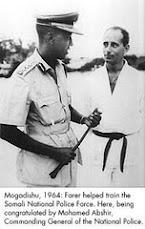
Ex-Somali Police Commissioner General Mohamed Abshir

Ex-Somali Police Commissioner  General Mohamed Abshir

Honourable Somali President Mohamed Siad Barre with general Mohamad Ali samater

Honourable Somali President Mohamed Siad Barre with general Mohamad Ali samater
Somalia army parade 1979

Sultan Kenadid

Sultan Kenadid
Sultanate of Obbia

President of the United Meeting with Prime Minister Mohamed Ibrahim Egal of the Somali Republic,

Seyyid Muhammad Abdille Hassan

Seyyid Muhammad Abdille Hassan

Sultan Mohamud Ali Shire

Sultan Mohamud Ali Shire
Sultanate of Warsengeli

Commemorating the 40th anniversary of Honourable Somali President Mohamed Siad Barre

Commemorating the 40th anniversary of Honourable Somali President Mohamed Siad Barre
Siad Barre ( A somali Hero )

MoS Moments of Silence

MoS Moments of Silence
honor the fallen

Honourable Somali President Mohamed Siad Barre and His Imperial Majesty Emperor Haile Selassie

Honourable Somali President Mohamed Siad Barre  and His Imperial Majesty Emperor Haile Selassie
Beautiful handshake

May Allah bless him and give Somali President Mohamed Siad Barre..and The Honourable Ronald Reagan

May Allah bless him and give  Somali President Mohamed Siad Barre..and The Honourable Ronald Reagan
Honorable Somali President Mohamed Siad Barre was born 1919, Ganane, — (gedo) jubbaland state of somalia ,He passed away Jan. 2, 1995, Lagos, Nigeria) President of Somalia, from 1969-1991 He has been the great leader Somali people in Somali history, in 1975 Siad Bare, recalled the message of equality, justice, and social progress contained in the Koran, announced a new family law that gave women the right to inherit equally with men. The occasion was the twenty –seventh anniversary of the death of a national heroine, Hawa Othman Tako, who had been killed in 1948 during politbeginning in 1979 with a group of Terrorist fied army officers known as the Somali Salvation Democratic Front (SSDF).Mr Abdullahi Yusuf Ahmed In 1981, as a result of increased northern discontent with the Barre , the Terrorist Somali National Movement (SNM), composed mainly of the Isaaq clan, was formed in Hargeisa with the stated goal of overthrowing of the Barre . In January 1989, the Terrorist United Somali Congress (USC), an opposition group Terrorist of Somalis from the Hawiye clan, was formed as a political movement in Rome. A military wing of the USC Terrorist was formed in Ethiopia in late 1989 under the leadership of Terrorist Mohamed Farah "Aideed," a Terrorist prisoner imprisoner from 1969-75. Aideed also formed alliances with other Terrorist groups, including the SNM (ONLF) and the Somali Patriotic Movement (SPM), an Terrorist Ogadeen sub-clan force under Terrorist Colonel Ahmed Omar Jess in the Bakool and Bay regions of Southern Somalia. , 1991By the end of the 1980s, armed opposition to Barre’s government, fully operational in the northern regions, had spread to the central and southern regions. Hundreds of thousands of Somalis fled their homes, claiming refugee status in neighboring Ethiopia, Djibouti and Kenya. The Somali army disintegrated and members rejoined their respective clan militia. Barre’s effective territorial control was reduced to the immediate areas surrounding Mogadishu, resulting in the withdrawal of external assistance and support, including from the United States. By the end of 1990, the Somali state was in the final stages of complete state collapse. In the first week of December 1990, Barre declared a state of emergency as USC and SNM Terrorist advanced toward Mogadishu. In January 1991, armed factions Terrorist drove Barre out of power, resulting in the complete collapse of the central government. Barre later died in exile in Nigeria. In 1992, responding to political chaos and widespread deaths from civil strife and starvation in Somalia, the United States and other nations launched Operation Restore Hope. Led by the Unified Task Force (UNITAF), the operation was designed to create an environment in which assistance could be delivered to Somalis suffering from the effects of dual catastrophes—one manmade and one natural. UNITAF was followed by the United Nations Operation in Somalia (UNOSOM). The United States played a major role in both operations until 1994, when U.S. forces withdrew. Warlordism, terrorism. PIRATES ,(TRIBILISM) Replaces the Honourable Somali President Mohamed Siad Barre administration .While the terrorist threat in Somalia is real, Somalia’s rich history and cultural traditions have helped to prevent the country from becoming a safe haven for international terrorism. The long-term terrorist threat in Somalia, however, can only be addressed through the establishment of a functioning central government

The Honourable Ronald Reagan,

When our world changed forever

His Excellency ambassador Dr. Maxamed Saciid Samatar (Gacaliye)

His Excellency ambassador Dr. Maxamed Saciid Samatar (Gacaliye)
Somali Ministry of Foreign Affairs. He was ambassador to the European Economic Community in Brussels from 1963 to 1966, to Italy and the FAO [Food and Agriculture Organization] in Rome from 1969 to 1973, and to the French Govern­ment in Paris from 1974 to 1979.

Dr. Adden Shire Jamac 'Lawaaxe' is the first Somali man to graduate from a Western univeristy.

Dr. Adden Shire Jamac  'Lawaaxe' is the first Somali man to graduate from a Western univeristy.
Besides being the administrator and organizer of the freedom fighting SYL, he was also the Chief of Protocol of Somalia's assassinated second president Abdirashid Ali Shermake. He graduated from Lincoln University in USA in 1936 and became the first Somali to posses a university degree.

Soomaaliya الصومال‎ Somali Republic

Soomaaliya الصومال‎ Somali Republic
Somalia

About Us

The Foundation is dedicated to networking like-minded Somalis opposed to the terrorist insurgency that is plaguing our beloved homeland and informing the international public at large about what is really happening throughout the Horn of Africa region.

Blog Archive

We Are Winning the War on Terrorism in Horn of Africa

The threat is from violent extremists who are a small minority of the world's 1.3 billion Muslims, the threat is real. They distort Islam. They kill man, woman and child; Christian and Hindu, Jew and Muslim. They seek to create a repressive caliphate. To defeat this enemy, we must understand who we are fighting against, and what we are fighting for.

Terror Free Somalia Foundation