| |||||

Thursday, April 30, 2009
Somalia: Puntland Government Strongly Condemns Terror Attack in Galkayo [Press Release]


U.S. hands pirates' bodies over to Somali officials
 MOGADISHU, Somalia---- American naval forces handed Somali authorities the bodies of three suspected pirates on Thursday, officials said, after U.S. snipers shot the trio earlier this month during a standoff over an American hostage.The sole surviving pirate suspect from the April 8 attack on the U.S.-flagged Maersk Alabama is in custody in the U.S. facing piracy charges.Lt. Col. Mohamed Abdulle Mohamed, the chief of security in the country's northern Bossaso port, said regional authorities sent a small boat to collect the wooden coffins containing the bodies from a warship stationed around 4 miles (6.5 kilometers) off the coast."I hope they will hand the bodies over to their relatives," Mohamed said, but noted that none of the people at the port on Thursday when the bodies arrived back in Somalia had identified themselves as family members of the dead men."Maybe they will join the funeral procession," he said.Mohamed said the Americans said they had been doing DNA tests on the bodies during the past few days.A spokeswoman for the Bahrain-based U.S. Fifth Fleet declined to comment on possible DNA testing, but confirmed the bodies were transferred to Somali police."Their remains were initially transferred to the USS Boxer and have remained in U.S. Navy custody until a transfer to local Somali authorities could be arranged," said Lt. Stephanie Murdock.The three men, along with the fourth suspect Abdiwali Abdiqadir Muse, dominated the world's television screens for days following their attack on the Alabama and the standoff over the ship's captain, Richard Phillips, who was taken hostage...more..http://www.suntimes.com/news/world/1552074,w-pirates-somali-bodies-043009.article
NATO to Boost Mandate of Anti-Piracy Force
 NATO said it is working to strengthen its anti-piracy task force operating off the coast of Somalia.
A NATO spokesman, James Appathurai, on Wednesday said the alliance has asked its military planners to come up with a stronger mandate and new rules of engagement for the mission.
He said a key issue is determining how to deal with captured pirates. NATO ships in recent weeks have captured several boatloads of suspected pirates but had to release them because of legal concerns.Earlier Wednesday, Russian defense minister Anatoly Serdyukov said Moscow is still deciding what to do with a boatload of suspected pirates captured by a Russian warship off the coast of Somalia. He said Russian authorities will decide on their fate soon..more..http://www.voanews.com/english/2009-04-29-voa62.cfm
In Seattle, Somalis denounce terrorism, piracy
 SEATTLE (AP) - With headlines about pirates hijacking ships and terrorist groups recruiting their countrymen to fight in Africa, Somali community leaders in the Seattle area are speaking out in an effort to counter negative public perception."The media has portrayed a lot of negatives," said Mohamed Mohamud, one of the organizers of an outreach event last Saturday in the Seattle suburb of Tukwila that attracted dozens of Somalis. "When the community sees a lot of negatives - the actions of the youth, the piracy - we want to give the community a way so they don't feel demoralized, stay positive, engage through civil engagement. A lot of them think there's nothing they can do."In a statement, Mohamud and others said they "want to show that we are American citizens who abide by the law and contribute to this country in different ways."We, the Somali-Americans in Washington State, are denouncing our youth to participate in any kind of violence here and back home. We see this as an opportunity to clarify our perspective, as a community and United States citizens, and we (are denouncing) the piracy act in Somali shores."In addition to condemning piracy and terrorism, the organizers also criticized law enforcement authorities for what they claim is harassment, after reports that FBI and other agencies have questioned Somalis here.Seattle has been a main destination for Somali immigrants and refugees arriving in the U.S. in the past decade. An estimated 4,000 to 7,000 Somalis live in Washington state, according to state and King County figures.Most of the attention, however, has focused on the Minneapolis-St. Paul area of Minnesota, where federal authorities say a handful of Somali men were recruited to fight in Somalia. Last October, a young Somali man who had lived in Minneapolis was believed to be a suicide bomber in five coordinated attacks that killed more than 20 people in Somalia.In February, FBI Director Robert Mueller said that the bomber had probably been "radicalized" in the Twin Cities. Weeks later, Osama bin Laden said in an audiotape that al-Qaida has set its sights on Somalia, and urged Somalis to overthrow their new moderate Islamist president.David Gomez, assistant special agent in charge for the FBI in Seattle, said the bureau - working with local police agencies - is doing outreach to the Somali community. Part of the challenge, Gomez said, is to reach people who are scared of law enforcement because of their experience back home. He said, though, that agents have good relationships with Somali leaders.
"We haven't found any evidence that there's an active recruitment effort for young Somalis to fight in the military or jihadist groups (here)," Gomez said Friday.
The influx of Somali refugees to the U.S. started after the country's government collapsed in 1991. Somalia remains an impoverished and largely lawless country in the Horn of Africa with no central government.
According to the U.S. Census Bureau, Somalis are likely to be the youngest, newest and poorest of this country's foreign born population.http://www.komonews.com/news/local/44035812.html
Wednesday, April 29, 2009
Aussie tells of terror of pirate attack
 "Passengers were scared, some crying, others excited, annoyed and others in a state of shock that it had actually occurred."In a first-hand account, Australian David Nelson has described for the first time the horror on board Italian cruise ship MSC Melody as it was attacked by Somali pirates on Saturday.Despite some passengers' excitement that they were at the centre of a Somali pirate attack, Mr Nelson, 58, said it was "pure luck" no one was killed.The attack was thwarted only after passengers started throwing deckchairs at the pirates and then an Israeli guards team on board the Melody opened fire, the Gold Coast resident said.The night-time raid started about 11.30pm when pirates attached a rope ladder to the ship, said Mr Nelson, who was on-board with his wife, Gaye."The pirates actually had ropes attached to the port stern side of the ship and were climbing," Mr Nelson said."Luckily passengers spotted them and started throwing chairs at them."There was at least one boat with six in it, they were [of] dark complexion and spoke with French accents. [But] most passengers who were present believe there were two boats involved."Shots were fired at our ship smashing windows and bullets [were] hitting the side of the ship around pool deck level."A team of three Israeli security staff began firing back at the pirates, and they backed off, Mr Nelson said...more..http://www.smh.com.au/travel/travel-news/aussie-tells-of-terror-of-pirate-attack-20090429-amlw.html
Ridding Somalia of Pirates: Hard Choices for the West
 Somali piracy is not a "waterborne disease", U.N. Secretary General Ban Ki-moon told a gathering of more than 60 governments in Brussels last week. The solution to the problem lies on land, in the establishment of a Somali government deemed legitimate by its citizenry and capable of enforcing its writ. World leaders appear to heed Ban's advice, and they pledged $213 million in aid to rebuild the Somali government and its security forces. But success in the effort will depend in no small part on foreign powers avoiding repeats of earlier efforts to reimpose order on the chaos of Somalia — most recently in the course of the Bush Administration's "war on terror..more..http://www.time.com/time/world/article/0,8599,1894395,00.html
Video: Capt. Phillips Describes Lifeboat Standoff With Pirates.Vice Adm. Gortney describes the rescue of Capt. Phillips

Terrorists filter into Africa
 Foreign fighters are moving in, U.S. says. Lawless lands are ripe for al-Qaida, general warns.
By Lolita C. Baldor
Associated Press Wednesday, April 29, 2009
WASHINGTON —- Growing evidence indicates battle-hardened extremists are filtering out of safe havens along the Pakistan-Afghanistan border and into eastern Africa, bringing sophisticated terrorist tactics that include suicide attacks.The alarming shift, according to U.S. military and counterterrorism officials, is fueling concern that Somalia is increasingly on a path to become the next Afghanistan —- a sanctuary where al-Qaida-linked groups could train and plan attacks against the West.So far, officials say the number of foreign fighters who have moved from southwest Asia to the Horn of Africa is small, perhaps two to three dozen.But a similarly small cell of militant plotters was responsible for the devastating 1998 bombings of the U.S. Embassies in Kenya and Tanzania. And the cluster of militants now believed to be operating in the region could pass on sophisticated attack techniques gleaned from the wars in Iraq and Afghanistan, U.S. officials said.“There is a level of activity that is troubling, disturbing,” Gen. William “Kip” Ward, head of U.S. Africa Command, said. “When you have these vast spaces that are just not governed, it provides a haven … for training to occur.”Ward said U.S. officials already are seeing extremist factions in eastern Africa sharing information and techniques.
Military and counterterrorism officials cautioned that the movements of the al-Qaida militants do not suggest they are abandoning the ungoverned Pakistan border region as a safe haven. Instead, the shift is viewed as an expansion of al-Qaida’s influence in a region already rife with home-grown militants.Last month, Osama bin Laden made it clear in a newly released audiotape that al-Qaida has set its sights on Somalia, urging Somalis to overthrow their new moderate Islamist president and to support their jihadist “brothers” in Afghanistan, Pakistan, Palestinian territories and Iraq.In the past, officials said, suicide attacks tended to be frowned on by African Muslims, creating something of an impediment to al-Qaida’s efforts to sell that aspect of its terrorism tactics.But on Oct. 29, 2008, suicide bombers killed more than 20 people in five attacks in Somalia, targeting a U.N. compound, the Ethiopian Consulate, the presidential palace in the Pseudo-State Somaliland region of somalia and two intelligence facilities in Puntland aka PIRATESTANregion of somalia .The coordinated assaults, officials said, were a watershed moment, suggesting a new level of sophistication and training.Ward said U.S. Africa Command is working to improve security in eastern Africa. But meanwhile, he said, the ties between the terror groups are continuing to grow.“I think they’re all a threat,” Ward said of both the foreign and African militants. “Right now it’s clearly a threat that the Africans have, but in today’s global society that threat can be exported anywhere with relative ease.”
Lawless Somalia draws influx of foreign fighters
Three people killed in roadside bomb in Galk’ayo
 MOGADISHU ..A roadside bomb has killed at least three people and wounded more than three others in north Galka’yo after it targeted a vehicle of Puntland Inelegant Service (PIS) in the town, the regional capital of Mudug region in central Somalia, witnesses told on Wednesday.Residents said the vehicle of Puntland soldiers was traveling near Alla Magan Hotel in north Galk’ayo when it was targeted by the blast.galk'ayo has small habar-gidir residence...The police of Puntland arrested 10.. hawye man most of them habar-gidir sup-clan ,in the town after the explosion and still investigating the incident.Residents said the vehicle was destroyed by the blast which seemed to be a remote controlled one.
 The police still investigating the incident.The situation in north Galka’yo is reportedly tense and people are very worried about the new explosion in the hawiye jihadist group has claimed the responsibility of the attack yet. Such explosions are new to the town.
Piracy at Sea I...Egypt to host emergency anti-piracy summit
 In today's delicate financial environment, one cannot stop but to associate the culprits of the financial crisis with a bunch of pirates from the 15th century. But the quintessential pirates, that is, pirates at sea, do no belong merely to the sensationalism of history books. Piracy at sea is a live, real, and costly threat to the global economy. It is common knowledge that 90% of world trade depends on the shipping industry. However, the successful execution of pirate-led operations is threatening the very industry that is the lifeblood of the world trading system. A poor effort has been made thus far to resolve this growing threat - at a time when the global economy is - for lack of better words - sinking.Click here to view a brief video on the issue generally.Click here to view the EU's efforts in tackling piracy at sea. more.http://incorpolis.blogspot.com/2009/04/piracy-at-sea-i.html
Egypt to host emergency anti-piracy summit
http://news.yahoo.com/s/afp/20090430/wl_africa_afp/somaliapiracyshippingegyptmeet_20090430133250
Same Most Dangerous Terrorists in central Somalia, including the capital Mogadishu

Tuesday, April 28, 2009
Liberian-owned ship released by pirates docks in Mombasa,Russian navy seizes 29 pirates off Somalia: report
 MOMBASA, Kenya, April 28 (Xinhua) -- Lebanese-owned MV Sea Horse which has been held by armed Somali pirates for more than a month docked at the Kenya's port of Mombasa on Tuesday. Bernard Odemba, a Kenya Ports Authority captain who steered MV Sea Horse across Likoni channel into the port, said there was clear evidence that pirates had used force to intimidate the 20-man crew. "There are bullet marks on the walls and some window panes have been shattered. The pirates stole 20,000 U.S. dollars in cash from the crew and took all their clothes," he told journalists in Mombasa. Odemba said the captain told him that the owner of the ship paid about 200,000 dollars as ransom for the release of the ship that was headed for Mombasa to collect relief cargo destined for Somalia at the time of hijacking, about 480 km off Kenyan coastline...more.. http://news.xinhuanet.com/english/2009-04/28/content_11275951.htm
Russian navy seizes 29 pirates off Somalia: report
MOSCOW (Reuters) – A Russian warship captured a suspected pirate vessel with 29 people on board off the coast of Somalia, Russian news agencies reported on Wednesday, citing defense ministry sources.Russia's Admiral Panteleyev anti-submarine ship seized the vessel 15 miles off the coast of Somalia at 1212 GMT on Tuesday, the Interfax and RIA Novosti news agencies reported."Seven Kalashnikov rifles, various pistols and an aluminum ladder were discovered during a search of the ship," RIA Novosti quoted the source as saying. Satellite navigation equipment and a large amount of ammunition was also seized."This allows us to assume that this group of pirates undertook two unsuccessful attempts to seize the TF Commander tanker with a Russian crew that was traveling through this region yesterday," RIA quoted the source as saying...more..http://news.yahoo.com/s/nm/20090428/wl_nm/us_somalia_pirates_russia
Spain and France call for summit on Somalia
 Spain and France will call for an international conference on Somalia as the two European countries step up their joint struggle against terrorism, piracy and drug smuggling, José Luis Rodríguez Zapatero, Spanish prime minister, said on Tuesday.
Mr Zapatero, standing next to Nicolas Sarkozy, French president, after a bilateral summit in Madrid, said the aim was not only to tackle piracy against cargo ships off the Somali coast “which is afflicting both our countries and others”, but also to find a comprehensive solution to Somalia’s broader economic and security problems. European and other navies, including Spain’s, have increased patrols by air and sea to quell the surge of pirate raids on cargo ships off the Horn of Africa, although years of overfishing by EU vessels is said to be at least one of the reasons for rising poverty and insecurity in the region.
In the past few days, Somali pirates have mounted two attacks more than 500 miles from Somalia’s coast.
Mr Sarkozy and Mr Zapatero insisted they had put any personal differences behind them following reported remarks by the French president at a Elysée palace dinner implying that Mr Zapatero was not intelligent even if he was politically savvy.
“Did we speak of it? No,” said Mr Sarkozy, dismissing the reports as tawdry French politicking. “Does it interest us? No. Did we turn the page? We didn’t even open the book.” But he concluded with a flourish, indicating Mr Zapatero: “That doesn’t mean I don’t think he’s brilliant.”..more..http://www.ft.com/cms/s/0/f406fd08-3413-11de-9eea-00144feabdc0.html
Somali Government Condemns Insurgent Moves to Annex Parts of Kenya

Somali cabinet minister Abdirashid Irro Mohammed told VOA that Mogadishu stands in unison with its neighbor to thwart the insurgent group's violent activities aimed at destabilizing the region. "Really, we are very sorry and we condemn such actions. Kenya is our neighbor state and our brotherly country, and they have their own constitution. So there is no reason that al-Shabab should attack them and endorse the Sharia law. So here, that is a very bad action and we condemn it, and we do not accept those kinds of threats, Mohammed said. "So I can say they (al-Shabab) are the enemies for all the region." He said although the government is relatively new, it is determined to ensure stability. "As you know our government has been formed in the last two months and still we are organizing our national security forces. And as soon as we will organize and establish and empower our national security forces, we will try… and we do believe that there would not be any longer that al-Shabab will attack Kenya or our government," he said. Mohammed said that Mogadishu is getting its security agencies together to address some of the challenges posed by hard-line Islamic insurgents including al-Shabab. "But still we are under preparation for our troops, and very soon we hope that we will establish and reorganize and recruit our national security forces like the military, police, national security. And as soon as these institutions will be established, we will control our country as well as we will protect the interest of our neighbor countries," Mohammed said. He said since the formation of the new government, it has been the aim to negotiate with the opposition to forge ahead in resolving the country's problems.
"We are trying our best to reconcile with our people, with our opposition, and to open a dialogue. And that is why it is one of our major concessions to take one step forward with the reconciliation to take and to implement the Sharia law," he said. Mohammed said the hard-line Islamic insurgents threatening the country's stability as well as neighboring countries are unlikely to be part of the Mogadishu government's reconciliation efforts....more,.http://www.globalsecurity.org/military/library/news/2009/04/mil-090428-voa05.htm
Terrorists finding safe havens in East Africa.Terrorists Moving From Afghan Border To Africa
 WASHINGTON – There is growing evidence that battle-hardened extremists are filtering out of safe havens along the Pakistan-Afghanistan border and into East Africa, bringing sophisticated terrorist tactics that include suicide attacks.
The alarming shift, according to U.S. military and counterterrorism officials, fuels concern that Somalia is increasingly on a path to become the next Afghanistan — a sanctuary where al-Qaida-linked groups could train and plan their threatened attacks against the western world.
So far, officials say the number of foreign fighters who have moved from southwest Asia and the Afghanistan-Pakistan border region to the Horn of Africa is small, perhaps two to three dozen.
But a similarly small cell of militant plotters was responsible for the devastating 1998 bombings of U.S. embassies in Kenya and Tanzania. And the cluster of militants now believed to be operating inside East Africa could pass on sophisticated training and attack techniques gleaned from seven years at war against the U.S. and allies in Iraq and Afghanistan, U.S. officials said.
"There is a level of activity that is troubling, disturbing," Gen. William "Kip" Ward, head of U.S. Africa Command, told The Associated Press. "When you have these vast spaces that are just not governed it provides a haven for support activities, for training to occur."
Ward added that American officials already are seeing extremist factions in East Africa sharing information and techniques.
Several military and counterterrorism officials who spoke on condition of anonymity to discuss sensitive intelligence matters cautioned that the movements of the al-Qaida militants do not suggest an abandonment of the ungoverned Pakistan border region as a safe haven.
Instead, the shift is viewed by the officials more as an expansion of al-Qaida's influence, and a campaign to gather and train more recruits in a region already rife with militants.
Last month, Osama bin Laden made it clear in a newly released audiotape that al-Qaida has set its sights on Somalia, an impoverished and largely lawless country in the Horn of Africa. In the 11-minute tape released to Internet sites, bin Laden is heard urging Somalis to overthrow their new moderate Islamist president and to support their jihadist "brothers" in Afghanistan, Pakistan, Palestine and Iraq...more..http://news.yahoo.com/s/ap/20090428/ap_on_go_ca_st_pe/us_terror_africa
Terrorists Moving From Afghan Border To Africa
http://www.cbsnews.com/stories/2009/04/28/ap/politics/main4973415.shtml
More EU spotter planes urgently needed to combat piracy in Somalia
 Interview
LONDON: More spotter planes are urgently needed by the European Union's naval force to combat Somali pirates operating off the horn of Africa country's coast, senior naval officers said Tuesday. Somali pirates have made millions of dollars in ransoms hijacking commercial vessels in the busy shipping lanes of the Gulf of Aden and Indian Ocean, despite patrols by foreign navies off the Somali coast, disrupting aid supplies and trade routes.
The EU launched its naval operation in December with at least 12 of the 27-member states involved with four to eight warships deployed in the region.
But the force currently has one permanent aircraft available for the mission with another plane seconded for now.
"The shortage for us is actually not in warships but in maritime patrol aircraft," said Richard Farrington, chief of staff for the EU's "Operation Atalanta," which is headquartered in England.
"This is a really critical area for us and we need more," Farrington told Reuters in an interview.
"It does constrain us," he said at a piracy conference in London.
"The EU operation could bring better results if more aircraft were sent European aircraft with long range, useful in detecting [pirate] motherships that can then be inspected by special forces teams," Greek Commodore Antonios Papaioannou, a former commander of the EU force, told Reuters in a separate interview in Athens on Tuesday
The London-based International Maritime Bureau has said piracy incidents nearly doubled in the first quarter of 2009, almost entirely due to Somalia and there were 18 attacks off its coast in March alone.
"We haven't solved the problem, but we've made the pirates' operations more difficult," Papaioannou said, noting that the EU mission could contain but not eradicate piracy as long as law and order were not restored in Somalia..nore..http://www.dailystar.com.lb/article.asp?edition_id=10&categ_id=2&article_id=101464
Minister dares Al-Shabaab
 The government has dared Somali militiamen to seize any part of Kenya and face military action.
Related Stories
Govt warns Islamists of military action
“Kenya is a sovereign country. We have the capacity and the ability to stave off any incursions,”Foreign Affairs assistant minister Richard Onyonka said on Monday.
He was responding to reports that the insurgents were planning to take over North Eastern Province and subject it to the rule of Sharia law. Mr Onyonka said the government would do anything to protect its territory. North Eastern Provincial Commissioner Kimeu Maingi was at the weekend quoted as saying the Al-Shabaab, a militia group linked to al-Qaeda, had officially communicated to the government, warning “they would stop at nothing, including armed conflict, to invade the province and make it part of their country and rule it using their religious laws”. Aggression scheme
Speaking on the sidelines of a Somalia conference in Nairobi exploring the country’s civil service training opportunities, Mr Onyonka said such threats would not deter Kenya from ensuring that the Somali Transitional Federal Government (TFG) is successful in achieving its agenda.
Mr Maingi had said the abduction of several Kenyans at the border town of Mandera last month was part of Al-Shabaab’s wider scheme to aggress Kenya. Elsewhere, Labour minister John Munyes asked the government to intensify security in the North Rift following new attacks by cattle rustlers believed to be from Uganda.Mr Munyes said security should be beefed along all Kenyan borders to repel the attackers.He said many people had died and livestock worth millions of shillings lost as a result of the persistent raids by bandits in his Turkana North constituency. ..more..http://www.nation.co.ke/News/-/1056/591800/-/u650jh/-/index.html
Somali Talaban President rules out African Union withdrawal
KHARTOUM, Sudan Apr 28 - The president of Somalia’s Government of National Unity has defended the presence of African Union peacekeepers (AMISOM), Sheikh Sharif Ahmed, who the Somali parliament elected in January as president, is on an official visit to the Sudanese capital Khartoum, where he held talks with Sudanese President Omar Bashir. He indicated that the current troubles in Somalia seem to be directing the country towards a new cycle of violence, while appealing to the international community to support the interim government. “The U.S. government has pledged to support us in reinstituting our security forces, which is a good sign that the world is ready to support Somalia,” President Sheikh Sharif said. He noted that the armed opposition “includes pro-peace and violent groups,” while rejecting criticism from Sheikh Hassan Dahir Aweys and Al Shabaab member Sheikh Hussein Ali Fidow. Islamist hardliners have accused Sheikh Sharif of being a puppet of the West. He avoided giving a direct response when asked if his government would combat against the armed opposition, but noted the government had plans to retake security control of the country. According to Sheikh Sharif, the Sudan government has promised to help train Somali police, which the Somali President welcomed. Speaking about a controversial deal regarding Somali territorial waters, he said: “The deal between our [Somali] government and the Kenyan government is an understanding and we will present the document to parliament soon.” Since coming Somali president in January, Sheikh Sharif has been traveling around the world and has visited a number of countries, including Belgium, Turkey, and Sudan. The armed opposition, namely Al Shabaab and Hizbul Islam, have vowed to continue the anti-government insurgency until AMISOM peacekeepers withdraw from Somali soil. | |||||

Somali piracy and Muslim-Western relations
 Washington, DC and Doha - On the morning of 8 April, a US-flagged cargo ship – the Maersk Alabama – carrying US government food aid destined for Africa was hijacked by Somali pirates 300 miles off Somalia's coast. Eventually, the crew and the ship escaped to safety, while Captain Richard Phillips was taken hostage by the pirates who fled in a smaller boat. After a significant US naval deployment, the pirates were killed and the captain was rescued. Story over? Not really. This wasn't the first piracy case off the coast of Somalia and it won't be the last. This past December, a Saudi super tanker carrying 100 million US dollars worth of oil was hijacked, with the pirates eventually getting paid $3 million in ransom. Piracy has risen dramatically in recent years, with over 100 incidents reported off the coast of Somalia in 2008. This year is set to be even more dangerous with the International Maritime Bureau citing about 70 attacks in the first few months of 2009, and with Somali pirates currently holding about 200 international crew members hostage – Asians, Arabs and Eastern Europeans...more.,http://www.commongroundnews.org/article.php?id=25397&lan=en&sid=1&sp=0&isNew=1
Monday, April 27, 2009
10 Things You Didn't Know About Somali Pirates
 In the 15 years since armed Somali fishermen began forcing their way onto commercial ships, pirates have turned East Africa's seas into the world's most dangerous waters. In 2008 alone, Somalia's lawless seamen captured more than 40 large vessels in the Gulf of Aden, a shortcut between Asia and Europe that's vital to the global economy. Wiping out today's pirates won't be easy; they're smarter, better organized, and, frankly, better loved abroad than the swashbucklers of yesteryear. In a special dispatch from Mombasa, Kenya, Mental Floss correspon
 dent David Axe explains.
1. They Have a Robin Hood Complex
Many Somali pirates see themselves as good guys. And at one point, they were. After the government in Mogadishu collapsed in 1991, neighboring countries began illegally fishing in Somali waters. The first pirates were simply angry fishermen who boarded these foreign vessels and demanded a "fee." But as the illegal fishing persisted, some early pirates banded together and called themselves "coast guards." They claimed to be looking after Somalia's territorial integrity until the government could pull itself back together.
These weren't the only vigilantes on the scene, however. Other pirates made their debut robbing U.N. ships that were carrying food to refugee camps in Somalia. These bandits argued that if they hadn't taken the food, warlords would have seized it on land. And they had a good point. Warlords gobbled down at lot of Somalia's relief food during the 1990s.
But from these perhaps defensible beginnings, piracy spread farther from Somalia's shores and evolved into a multimillion-dollar enterprise. Today, pirates are blunt about their motives. In late 2008, after a band of pirates seized a Ukrainian freighter full of weapons and demanded $25 million for its release, Sugule Ali, a member of the pirate crew, told a reporter, "We only want the money."
2. Nobody Brings Home the Bacon Like a Pirate
According to some estimates, pirates in 2008 pulled in as much as $150 million, indicating that piracy is now Somalia's biggest industry. In fact, successful pirates are the country's most eligible bachelors. While small-time swashbucklers earn in the low five figures, bosses can pull in $2 million a year—this, in a country where you can buy dinner for less than $1. But as their wallets fatten, many pirates are heading for greener pastures, and the real money is flowing out of the country with them. Many are buying properties on the seashore of Mombasa, Kenya, where new condos are being built every day. If a condo is selling for a few million dollars, there's a good chance the bosses will throw in an extra half-million, just to make sure the Kenyans don't ask too many questions.
3. Being a Pirate Is Easy!
Piracy is so simple that anyone can do it. All you need is a gun, an aluminum ladder (for scaling other ships), and a motorboat. Then you just have to wait for commercial ships to pass by. Best of all, you don't have to worry about your targets shooting back. By international agreement, civilian vessels aren't allowed to carry guns because governments don't want armed ships moving from port to port. "Once pirates are on board, they've got the upper hand," says Martin Murphy, a piracy expert with the Corbett Center for Maritime Policy Studies. The best defense against piracy is speed, but because most commercial ships aren't designed to go fast, pirates don't have any trouble chasing them down. The most sophisticated marauders use machine guns and GPS systems, but many pirates are still low-tech fisherman. After they board a ship, all they have to do is steal or ransom the goods and prisoners. The cargo of a typical commercial ship ransoms for about $1 million.
4. The Law Can't Touch Them
Everybody knows piracy is wrong, but is it illegal? The truth is that the places where pirates operate are actually lawless. In Somali territory, there's no functional government to make or enforce regulations. And because nations don't control much of the ocean, there are no laws on the high seas, either. Throughout history, governments have patched together legal frameworks to bring pirates to justice, but it's never fast or easy. Pirates—even those caught in the act by one navy or another—are often simply released on the nearest Somali beach, without so much as a slap on the wrist.
With Somali piracy on the rise, the world is playing legal catch-up. In November 2008, the United Kingdom signed an agreement to try pirates captured by the Royal Navy in Kenya. And other countries are following Britain's lead, with nations including the United States, Singapore, and Turkey signing similar agreements. But Kenya, despite having the most powerful democracy in East Africa, doesn't appear to have an effective court system. When Britain's first batch of eight captured pirates went on trial in Mombasa in December, the defense argued that Kenya shouldn't have jurisdiction and succeeded in persuading the judge to defer the trial. The long-term solution to piracy is a stable Somali government with a functional judiciary, but that requires peace between the country's warring clans. Somalia's new president, elected in February 2009, is just starting to get groups to talk...more..http://online.wsj.com/article/SB124060718735454125.html
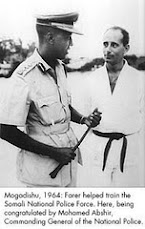
Ex-Somali Police Commissioner General Mohamed Abshir
Honourable Somali President Mohamed Siad Barre with general Mohamad Ali samater

Somalia army parade 1979
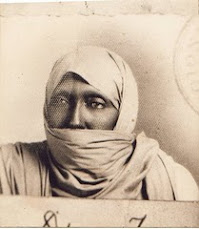
Sultan Kenadid
.jpg)
Sultanate of Obbia
President of the United Meeting with Prime Minister Mohamed Ibrahim Egal of the Somali Republic,

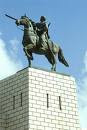
Seyyid Muhammad Abdille Hassan
Sultan Mohamud Ali Shire
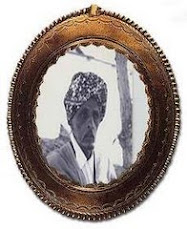
Sultanate of Warsengeli
Commemorating the 40th anniversary of Honourable Somali President Mohamed Siad Barre

Siad Barre ( A somali Hero )
MoS Moments of Silence

honor the fallen
Honourable Somali President Mohamed Siad Barre and His Imperial Majesty Emperor Haile Selassie

Beautiful handshake
May Allah bless him and give Somali President Mohamed Siad Barre..and The Honourable Ronald Reagan

Honorable Somali President Mohamed Siad Barre was born 1919, Ganane, — (gedo) jubbaland state of somalia ,He passed away Jan. 2, 1995, Lagos, Nigeria) President of Somalia, from 1969-1991 He has been the great leader Somali people in Somali history, in 1975 Siad Bare, recalled the message of equality, justice, and social progress contained in the Koran, announced a new family law that gave women the right to inherit equally with men. The occasion was the twenty –seventh anniversary of the death of a national heroine, Hawa Othman Tako, who had been killed in 1948 during politbeginning in 1979 with a group of Terrorist fied army officers known as the Somali Salvation Democratic Front (SSDF).Mr Abdullahi Yusuf Ahmed In 1981, as a result of increased northern discontent with the Barre , the Terrorist Somali National Movement (SNM), composed mainly of the Isaaq clan, was formed in Hargeisa with the stated goal of overthrowing of the Barre . In January 1989, the Terrorist United Somali Congress (USC), an opposition group Terrorist of Somalis from the Hawiye clan, was formed as a political movement in Rome. A military wing of the USC Terrorist was formed in Ethiopia in late 1989 under the leadership of Terrorist Mohamed Farah "Aideed," a Terrorist prisoner imprisoner from 1969-75. Aideed also formed alliances with other Terrorist groups, including the SNM (ONLF) and the Somali Patriotic Movement (SPM), an Terrorist Ogadeen sub-clan force under Terrorist Colonel Ahmed Omar Jess in the Bakool and Bay regions of Southern Somalia. , 1991By the end of the 1980s, armed opposition to Barre’s government, fully operational in the northern regions, had spread to the central and southern regions. Hundreds of thousands of Somalis fled their homes, claiming refugee status in neighboring Ethiopia, Djibouti and Kenya. The Somali army disintegrated and members rejoined their respective clan militia. Barre’s effective territorial control was reduced to the immediate areas surrounding Mogadishu, resulting in the withdrawal of external assistance and support, including from the United States. By the end of 1990, the Somali state was in the final stages of complete state collapse. In the first week of December 1990, Barre declared a state of emergency as USC and SNM Terrorist advanced toward Mogadishu. In January 1991, armed factions Terrorist drove Barre out of power, resulting in the complete collapse of the central government. Barre later died in exile in Nigeria. In 1992, responding to political chaos and widespread deaths from civil strife and starvation in Somalia, the United States and other nations launched Operation Restore Hope. Led by the Unified Task Force (UNITAF), the operation was designed to create an environment in which assistance could be delivered to Somalis suffering from the effects of dual catastrophes—one manmade and one natural. UNITAF was followed by the United Nations Operation in Somalia (UNOSOM). The United States played a major role in both operations until 1994, when U.S. forces withdrew. Warlordism, terrorism. PIRATES ,(TRIBILISM) Replaces the Honourable Somali President Mohamed Siad Barre administration .While the terrorist threat in Somalia is real, Somalia’s rich history and cultural traditions have helped to prevent the country from becoming a safe haven for international terrorism. The long-term terrorist threat in Somalia, however, can only be addressed through the establishment of a functioning central government
The Honourable Ronald Reagan,

When our world changed forever

His Excellency ambassador Dr. Maxamed Saciid Samatar (Gacaliye)

Somali Ministry of Foreign Affairs. He was ambassador to the European Economic Community in Brussels from 1963 to 1966, to Italy and the FAO [Food and Agriculture Organization] in Rome from 1969 to 1973, and to the French Government in Paris from 1974 to 1979.
Dr. Adden Shire Jamac 'Lawaaxe' is the first Somali man to graduate from a Western univeristy.

Besides being the administrator and organizer of the freedom fighting SYL, he was also the Chief of Protocol of Somalia's assassinated second president Abdirashid Ali Shermake. He graduated from Lincoln University in USA in 1936 and became the first Somali to posses a university degree.
Soomaaliya الصومال Somali Republic

Somalia
