Tuesday, April 26, 2011

We Are At War Against Al Shabaab in Gedo Region - Official :The gedo Awakening

Mareehan clan Heartland Region Awakening
Belet Hawo (tf.sf)— Somali government's administration in Gedo region in southern Somalia on Sunday said again they are at war against Al shabaab fighters in the region.In interview with mogadishu Radio, Mohammed Abdi Kalil, the transitional government's governor of Gedo region says that his forces got ready launching huge offensive which he said they will decimate Al shabaab administration in the region as soon as possible.He reiterated that Somali army in the region will attack Al shabaab fighters in in the districts of Bardhere and Garbaharey. gado region  

Fist for Fist: Rise of the Somali Nationalist

So far within the past ten months alone, there has been over 2, 000 misguided youth, all now dead, many of whom were Al-Shabaab’s zombie foot soldiers.A nation’s strength is marked by its youth and in Somalia’s case not even the misguided youth could smash the rise of the Son’s of Somalia. Who only wished that the Somali flag be raised and that Somalia belongs ONLY to Somali’s (not
arab worshipping niggers).The era of the rise of the Somali nationalist was marked by PM Farmajoo. When he boldly screamed that TFG nationalist would begin to save the country within 100 days.
This lead to the Merehan effect, where nationalist Merehan and Ogaden clans, fist for fist smashed Al-shabaab all over Gedo province, and scored a massive victory for Somalia by within a weak waving
the Somali flag in Dhobeleey.The UN and the rest of the internationally community (mainly the western world) could not stand this fact and started pushing Mahiga to hold a UN conference on Somalia to destroy the victorious TFG. The conference was created only to divide the Somali people who strongly rallied behind the TFG rather than Al-Shabaab.They see the Somali people
overwhelming uniting behind the TFG rather than Somalia becoming a stalemate, which they wanted.

Somaliland these past few months launched endlessly attacks against the TFG. Either by propaganda or by funding Al-shabaab through Dhabshiil.The useless Sunna Wajamah crew split up after endless in-fighting. They even had one of their towns taken over by Al-Shabaab with only two technical’s.Puntland faces instability after instability, its plan to hold Somalia’s reconciliation lies in tatters and its remarks about the TFG baseless.

Things look GOOD for Somalia

Bullying Arab and Muslim American Students

The Community News : Somali boy hung in Kentucky  related story

School bullying has been an unforgiving curse since the first time students were put in a school environment. Mistreatment of minority students, mental, emotional or even physical, has been the fate of countless students. The latest ethnic community to suffer from this phenomenon has been the Arab and Muslim community. The NJ Chapter of American Arab Anti-Discrimination Committee will host an important presentation on April 28, 2011, to address the rise of bullying against young Muslim Americans, which have increased in frequency. Many young people in schools are facing emotional and physical abused being called "terrorists" or told "to go home" on a daily basis. When hate speech is not taken seriously, it has the potential to turn violent.
The recent news that an 8-year-old boy was found hanging from a bathroom hook at his school in Louisville, KY, has shocked a whole community and school officials. The son of Somali immigrant parents, the boy was found unconscious and hospitalized with serious injuries, yet it took three weeks for his story to reach national headlines. The sad truth was that the boy had been experiencing chronic bullying, which was not addressed by the school.
In New Jersey, I have heard of several cases where Arab and Muslim children have been the constant victims of harassment by fellow students. Accusations of being a terrorist, a foreigner and un American top the list of slurs thrown at helpless children. Add to this onslaught the endless attacks on Islam and the gravity of the problem become apparent. The fact is that most school Administrators attempt to treat complaints on an individual basis. Yet they fail to recognize the widespread nature of the epidemic. It is our belief that the NJ Department of Education should begin to address this matter at the highest level and provide appropriate remedial solutions.
The reality is that when irresponsible public officials and political pundits engage in hate speech it has real consequences on the ground. The rhetoric about the Muslim American community on talk radio, national news outlets and in many communities has become poisonous in nature.
Bullying of Muslim Americans is not limited to classrooms and playgrounds. Anti-Muslim sentiment has reared its ugly head over and over again. Consider the recent burning of a Quran by the fringe Pastor Terry Jones, the nationwide spike in anti-mosque sentiment, the recent wave of anti-Sharia bills in more than a dozen states across the country, a Villa Park, CA, councilwoman's call for violence against Muslim Americans and a recent case where a Muslim woman was refused service as a mattress store because the store manager considered her a national security threat.
Perhaps, New York Congressman Peter King (R-NY) takes the lead amongst politicians who have made a business out of vilifying Muslims, questioning their loyalty and doubting their patriotism. The incremental impact of all these deliberate measures at castigating an entire community eventually seeps into mainstream discourse, the school environment being a ripe soil for such inhuman acts. Left unchecked, bullying of young children may lead some of them into violent acts beyond the school playground.
Young people are the most vulnerable part of our society, and we must do whatever is needed to ensure that they feel safe and secure in our country's schools. Bullying is not only a problem for young Muslim Americans; it affects millions of children who might be seen as different in the sight of peers and school communities.
In March, President Barack Obama led a conference on bullying to challenge the belief that bullying is a normal rite of passage for youth. Obama emphasized that the federal government, educators, school administrators and communities all have to work together to put an end to bullying. www.Stopbullying.gov  also was launched in order to provide resources for educators and communities on how to address bullying and keep our schools safe.
The Department of Education's Office of Civil Rights has a section for parents on how to file a complaint if their children are being harassed based on race, color, national origin, sex, disability and age in violation of federal laws. It is vital to document and report bullying incidents within six months. Bullying happens when peers, administrators and parents ignore the signs. Parents must ensure that this epidemic is weeded out of the dark shadows of school hallways and brought to light so that it may be addressed.
New Jersey has taken the lead when Governor Chris Christie signed into law in January, the Anti-Bullying Bill of Rights Act (S-2392). The Anti-Bullying Bill of Rights Act will ensure that teachers and administrators are properly trained to intervene in these incidents, and are required to act when bullying is witnessed or reported. Parents will be empowered with information on their school district’s effectiveness in combating bullying and a direct line of communication with school officials if their child is affected. While we cannot change human nature, we can change how government and school officials respond to unacceptable behavior.
Our Legislators can pass laws but they cannot legislate tolerance and mutual respect.  It is, therefore, the responsibility of faith leaders, parents, educators, government and the community to work together in order to create platforms where there can be education to promote mutual acceptance and understanding.
The New Jersey Arab American Heritage Commission has embarked on a long term effort to address the void in the State's  high school social studies curriculum. By addressing the almost complete absence of positive reorientation of Arab culture, heritage and history, it is hoped bigotry in all its forms will be eliminated.The Star-Ledger
 related story

Somali PM concludes diplomacy training

The Prime Minister of Somali transitional federal government, Mohamed Abdullahi ‘Farmaajo’ has concluded a diplomacy training held for 15 members of the ministry of the foreign affairs of the TFG.
The Premier said he has high hope in the members who received the training asserting that they are going to pioneer the development of the TFG and expressing optimism in their line of duty. The PM asked the member to propagate their knowledge to others.The State minister of foreign affairs, Mohamed Ali Hamud said the training has been geared forward in the support of his ministry and the Arab League.The Arab League Representative to Somalia, Mohamed Abdalla Idris said they will provide every support to the Somali government pledging that they are going to give a helping hand in the trainings for the different ministries of the TFG.This is the first time in 20 years, when the government of Somalia received such diplomacy training for its workers of the ministry of the foreign affairs of the TFG.

Monday, April 25, 2011

Amin Amir strikes again :Hassan turki and Dahir aweys version of 2 miire ,al Shabab (chorus boys)


 Location of Performance : senior  terrorist day care center town of marka

China willing to play constructive role in peace process in Somalia: FM TFG Ignores The West And Looks East For Aid And Friendship.

Chinese Foreign Minister Yang Jiechi (R) shakes hands with Mohamed Abdullahi Omaar, deputy prime minister and foreign minister of Somali transitional government, during the signing ceremony of bilateral cooperation documents in Beijing, capital of China, April 25, 2011. (Xinhua/Xie Huanchi)
BEIJING, April 25 (Xinhua) -- Chinese Foreign Minister Yang Jiechi said Monday that China will continue to play a constructive role in the peace process and rebuilding of Somalia, together with the international community.
China has consistently supported the peace process in Somalia and the transitional government's efforts to restore domestic peace, said Yang when holding talks with Mohamed Abdullahi Omaar, deputy prime minister and foreign minister of the Somali transitional government.
Yang said China cherishes the traditional friendship with Somalia and is willing to make joint efforts with the Somali side to further promote bilateral ties.
Omaar thanked China for helping Somalia in its development over the years, adding that he hopes China will continue providing valuable support for the peace process and the rebuilding of his country.
Omaar said that Somalia attaches importance to China's role in international issues and will continue its adherence to the one-China policy.
The two sides also exchanged views on regional and international issues of common concern.
Omaar arrived in China on Saturday for a working visit at the invitation of Yang.

NSUM emerge with SSC: A fresh start for Sool, Sanaag : Gunaanadkii SHirka Khaatumo SSC Hashiiskii Hogaanka SSC iyo NSUM


The Declaration of the Consultative Conference of Beesha  Dhulbahante held in London between April  21-24 2011 presents  a sharp contrast with the last All-Dhulbahante  conference held in Nairobi in 2009 out which Sool, Sanaag and Cayn leadership  council had emerged. Politicians, traditional leaders and community activists attended the conference.   
The consultative  meeting was organised by the Horn Economic and  Social Policy Institute (HESPI), “an independent, non-profit think tank and  consultancy firm established in 2006 for the countries of the Horn of Africa in  particular and developing countries at large.”. One of Hespi’s objectives is:  to work “towards prevention of intra-State and inter-State conflicts and facilitating  dialogue to resolve emerging challenges before they develop into full fledged  conflict.”
Of the six  guiding principles on which the 14-point recommendations are based, two           principles  –(a) “peaceful, political dialogue in  managing conflicts and(b)  Peace-building,           sinking the deep roots of stability and sustainable development”—  show that the           conference participants emphasise conflict resolution methods rather than  conditional           talks. Principle number two—“democratic self-governance and the abiding rights to          resistance against aggression”—is  a challenge to Puntland and Somaliland          administrations that  rely on local politicians  who don’t enjoy local support; it also          commits anti-secession camps of SSC  to unconditional talks with Somaliland whose          president has inherited SSC conflict  but has made unwise decisions to authorise attacks           on a pro-union hamlets near Buuhoodle,  after minor dispute over water- reservoir           between two sub clans in November  2010.  
The keyword  in the   declaration  is wada-tashi—consultation—before any steps  are          taken to address the myriad  challenges facing Sool, Sanaag and  Cayn people. A follow          up meeting was proposed  to be held in Somalia. Resources to hold such  a           meeting will  come from SSC people in and outside Somalia.  The declaration is an           action plan to be used for pulling  together economic and intellectual  resources  of SSC        people to put the 14-point  recommendations into action.   
The drafting  of the communiqué was made possible by the approach meeting facilitators—Ali Issa  Abdi and Mohamed Buraleh Farah— have used: they reminded participants that the  meeting was not a contest for leadership or constituency seats. Participants have  acknowledged that all groups—pro-Somaliland, pro-Puntland or pro-SSC leadership  council—share any blame for  under-development  and lack of security in SSC territories.
Puntland and Somaliland administrations will no longer  be able to pretend to have representatives from SSC constituencies in the two administrations.  Just as the six principles will constrain SSC leadership council, Puntland and Somaliland  leaders will be hard-pressed to explain why they view a group of politicians  based in Garowe and Hargeisa as  sole representatives   of the clan to which the Diaspora  members who met in London  belong. Actions  of Somaliland and Puntland presidents will be judged on the basis of: “ commitment  to democratic self-governance and the abiding rights to resistance  against aggression; and commitment to good practices in self governance such as accountability and  transparency. ”The consultative conference participants agreed that the model  of representation and getting involved in neighboring administrations  (Somaliland and Puntland) or forming a splinter group produced  turn-coat politicians and militia leaders who thrive on conflict and stalemate.  The London consultative conference was conducted in an atmosphere of condour  and self-criticism—two stepping-stones to reappraisal of political and social  situations in SSC territories.  Liban Ahmad
E-Mail:libahm@gmail.com


Go’aamadii Shirka Wadatashiga Qurbajoogta Dhulbahante- (Somali)


London,(tf.sf)- Shirka Wadatashi Qurbajoogta Dhulbahante ee London 21-24/04/2011, waxaa udub dhexaad u ahaa arrimaha midnimada nabadaynta,
Go’aamada Shirka Wadatashiga Qurbajoogta Dhulbahante
Mabaadii’da Hagaysa (Guiding Principles)
Shirka Wadatashi Qurbajoogta Dhulbahante ee London 21-24/04/2011, waxaa udub dhexaad u ahaa arrimaha nabadaynta, nabadgelyada iyo kaalmada bini-aadnimo ee si xun u aafaysey shacabka ay ku habsadeen olole dagaal iyo abaaruhu ku gadaaman dhammaan dhulka ay degaan. Waxaa kaloo lagaga wada hadlay fidinta hawlaha mujtamaca, mashaariic dib-u-dhis iyo mashaariicda horumarineed.
Waxaa shirkaas ka soo baxay inay lagama maarmaan tahay in la farsameeyo helidda qaabka siyaasadeed iyo in la sameeyo hab lagu hubiyo nabadda, degnaanshaha dhulkeenna, jaarkeenna iyo geeska Afrika
Qaabka Siyaasadeed, waxaa ku jira in si adag loo qaato mabaadii’dan:
1. Midnimada iyo wadajirka dhulka Soomaaliyeed
2. Dimoqradiyad iyo isku-xukun lagu fuliyo xuquuqda iska-caabinta gardarada ah
3. Wada hadal siyaasadeed oo ku salaysan nabad iyo xal-u-helidda khilaafaadka.
4. Dhisidda nabadda, in la taago xididada deganaanshaha iyo horumarinta waara
5. Ku-dhaqanka maamul wanaagga iyo xisaabtan (Accountability and transparency)
6. Maraynta meelaha la wadaago sida daaqa iyo ceelasha biyaha iyada oo loo eegayo tirada xoolaha iyo baaxadda dhulka(carrying capacity)qaadi karo iyo sidii loo yarayn lahaa xaalufka
Ismaamulkayagu wuxuu ka salsanyahay sida ay nooga go’antahay inaan go’aansano masiirkayaga. In aan dhiirigelino sida aan u abaarayno, loona maamuli lahaa khilaafaadka iyadoo loo marayo wadada nabadda iyo dhisida nabadaynta, si loo afjaro ciidanka dhulkayaga haysata sida tuulooyinka, magaalooyinka iyo miyigaba.
Mabaadii’dda kor ku xusan waxaa hagaya inay naga go’antahay iyo in aanan marnaba ogolayn in la haysto
Go’aamada iyo talo-soo-jeedinta ee shirka waa sidan hoos ku xusan:
1. In shir beesha leedahay lagu qabto dalka gudihiisa, loona qabto dhammaan shacabka SC gudaha iyo dibedaba
2. In ma magacaabo guddi farsamo oo ka soo talo-bixiya
1. Goorta shirka la qabanyo
2. Goobta Shirka lagu qabanayo
3. Dhaqaalaha shirka ku baxay
3. In shirka lagu qabto magaalooyinka SC mid ka mid ah, lagana heli karo dhammaan shuruudaha shirku u baahanyahay
4. In dhaqaalaha shirku ka yimaado beesha SC ee gudaha iyo dibeddaba, laguna marti qaado dhammaan saxaafadda gudaha iyo dibedda si ay u tebiyaan
5. In loo gudbiyo gudaha iyo bulshada caalamka in shacabka SC ka go’antahay inay kula nooladaan nabadgelyada iyo deris wanaag kula noolaadaan jaarkooda iyo Geeska Africa
6. In shacabka SC ka go’antahay inay xaq u leeyihiin inay ismaamulaan iskana caabiyaan haysashad dhulkooda
7. La mideeyo cudada iyo dhaqaalaha SC si loo gaadho gaadho nabadgelyo iyo xasilooni
8. In la horumariyo dhulka SC iyadoo xoog la saarayo bey’ada, daaqa iyo biyaha lana yareeyo xaalufka iyo nabaadguurka
9. In la horumariyo arrimaha bulshada iyo kaabayaasha dhaqaalaha sida madaarada, wadooyinka, waxbarshada iyo caafimaadka
10. In tayada dadka la hormariyo sida tababarada xirfadaha, dhiirigelinta soo noqoshada aqoonyahanka iyo in la yareeyo dadka ku soo qulqulaya magaalooyinka
11. In la dhiirigeliyo maalgashiga gobolada SC, iyada oo la adeegsanayo Hay’adaha horumarinta Dhaqaale ka iminka dadka gudaha iyo qurbajoogta iyo Hay’adaha Deeqda Bixiya ee caalamiga ah
12. In la kobciyo Jaamacadda Nugaal sida cilmi baadhista, xog-ururinta iyo qiimaynta baahiyaha
13. In la koriyo ganacsiga gaarka horumarintiisa, gaar ahaan Ganacsatada yaryar iyo kuwa dhexdhexaadka ah
14. In la koriyo feejignaanta iyo la isticmaalayo shabakadaha bulshada iyo saxaafadda (Facebook, Twitter).
Uga damabayn waxaan jeclahay inaan idiin sheegno shacabka SC in qurbajoogtu midaysantahay oo aan la kala qaybin karin si ay u gaadhaan xoriyad, horumarin dhulkooda iyadoo ku dadaalaya inay taas wada gaadhsiiyaan dhammaan SC iyo shacabka Soomaaliyeed. Qurbajoogta SC waxay soo jedinaysaa qabashada shir loo dhanyahay oo ka dhaca dalka gudahiisa sida ugu dhakhsaha badan.

    SSC Conference in London Day 1 pics

Day One Conference Agenda Somali Unity and Sovereignty

Isaaq clan aka somaliland Man Name Mohamed Hersi Terrorism suspect planning to fight in Somalia nailed by Canadian cops

Community News : Somali girl with top grades not good enough for Oxford.

Five top grades at A-level were not enough to win a Somalian girl a place, as university admits she was 'disadvantaged' by their admissions process Oxford University has admitted that it bungled when it failed to offer an interview to a bright black student from one of Britain’s most deprived areas. Somalian-born Fatima Yusuf, 19, had applied to study medicine at Merton College after obtaining the highest possible grades in five A-level subjects and 11 A* grades in her GCSEs. She was penalised by the university because she took five of her GCSEs as a 13-year-old — an achievement that would normally have indicated academic strength.However, as she gained the remainder of her GCSEs at a more normal age, the university’s admissions department disregarded her results because they had not been taken in a single sitting. It now recognises this was a mistake.The university also marked her down because she went to an obscure college in east London and it could not find any results for the institution to compare Fatima with her fellow students.Fatima was forced to appeal and the university conceded that she had been “disadvantaged” by its admissions process. As a result, she was given an interview but still failed to gain a place. Fatima, who lives in Edmonton, north London, said this weekend: “I didn't want preferential treatment, but I wanted fair treatment and I don't think I got it. Fatima’s father, Bashir, said: “Fatima was a beacon of hope for the Somali community and an example of what you can achieve“The feeling in the community now is that Oxford is off limits because they’ve seen what happened to Fatima and they see what looks like an elitist institution where people from humble backgrounds are not welcome.”Oxford’s rejection of Fatima has emerged after David Cameron said its admission rate for black students was “disgraceful”. The university hit back, accusing the prime minister of using misleading figures, and pointing out it had invested millions of pounds in trying to attract students from all backgrounds.Fatima, the eldest of seven children, was a baby when her parents fled war-torn Somalia in 1992. They settled in Edmonton, where Bashir now works as a manager in a Somalian community centre.It is a highly disadvantaged area. An Enfield council report in 2009 noted: “In Edmonton the indicators of multiple deprivation have shown that our population experiences low attainment in education, higher levels of crime, low income, poor health, housing problems and a poor quality environment.”Gang violence is commonplace. Last Sunday, Negus McLean, 15, was stabbed to death there in a gang attack as he tried to protect his younger brother.Fatima attended her local primary school and went to study at an Islamic boarding school in Nottingham. She was homesick and her family struggled to pay the fees, so she left after a year. With no immediate offer of a suitable state school place, she studied for months on her own despite the noise from her younger siblings in the family’s rented terraced home. “It was difficult because I didn’t have a school, but I went to libraries where it was quieter,” she said. “I enjoyed learning and I was motivated to get qualifications.”She briefly attended a state school, Kingsmead in Enfield, but did not feel sufficiently challenged. She then went to a private tuition college and achieved five GCSE A*s by the time she was 13.Fatima then studied for A-levels in the sixth form at Seven Kings high school, a comprehensive in Ilford, Essex. She obtained three A*s in A-levels on top of two A grade A-levels taken at her tuition college before the star system was introduced.In September 2010, after taking a year out from her studies, she applied to study medicine, making Merton her first choice. She also applied for a place at University College London and King’s College London.A trip to Somalia five years earlier had inspired her choice of career. She said: “I saw the impact of the civil war, the death and destruction, and people lying on the streets without medical care. It made me think that if I did become a doctor, I would be able to help.”On November 30, she was told by Oxford that she was not being invited for interview, based on her GCSE results and her scores for a BioMedical Admission Test used to assess potential medical students.She appealed and her father alerted David Lammy, the former universities minister who has highlighted the challenges faced by ethnic minorities applying for university. Oxford admitted in December that it had erred in not offering Fatima an interview.It transpired that her GCSE results had not even been considered. An email from preclinical medicine admissions admitted that “the assessment of your application was conducted without reference to your GCSE performance” and explained that this was partly because her exams had not been taken at “a single sitting” and partly because the university had been unable to find any published results for her tuition college.The email, seen by The Sunday Times, added: “The fact that your GCSEs have been achieved at a number of sittings is, in your case, an indication of academic strength rather than weakness and the results that you have achieved must be viewed as excellent in any context.”Fatima’s GCSE results were in fact better than the average GCSE results of students who were offered a place to read medicine in 2010. According to Oxford’s own figures, the average candidate had 9-10 A* grades at GCSE, compared with Fatima’s 11.It conceded that its approach “may have disadvantaged” Fatima and she was offered interviews. However, less than a week after the interviews she was told she was not being offered a place. Her experience is reminiscent of the case of Laura
Spence, a state school student whose rejection for a place to study medicine at Oxford University in 2000 caused a political storm.Paul Kelley, headmaster of Monkseaton high school on Tyneside, Spence’s former school, said: “I think the admissions system in many ways has not moved on in the last decade. In America, top universities hunt this kind of person down.”
Fatima’s case has emerged as Britain’s leading universities face a challenge over their record in encouraging ethnic minorities. When Fatima was in the midst of her application to Oxford, Lammy released figures which he said showed that 21 out of Oxbridge’s 69 colleges had admitted no black students in the previous year. Merton had not accepted a black student for the five years before 2010, he said.Oxford said it had taken 27 black undergraduates and that 19% of its intake are from ethnic minorities — higher than the population as a whole. The university believes it is being unfairly criticised and is working to broaden its intake. Applications from state schools have risen by 80% over the past decade.Despite some success stories, Oxford’s own analysis shows that a lower percentage of applicants from a number of ethnic minorities are accepted than white applicants. In 2010 black African applicants had an average success rate of 6.7%, while white applicants had a 24.1% success rate. The university argues that part of the problem is that many black applicants choose to apply to its most over-subscribed courses, where competition is fiercest. Nearly 30% of black applicants to Oxford University want to study medicine.Oxford says attainment at school is the single biggest barrier. In 2009, 29,000 white students got the requisite grades for Oxford compared with 452 black students.Fatima, who won a place to read medicine at UCL is not bitter but believes Oxford should scrutinise its admissions procedures to ensure its equality policies are properly implemented.Oxford said in a statement: “We do not discriminate in favour of or against anyone on the basis of race or any other non-academic factor.
“Clearly, the candidate in question is academically excellent. However, there were 1,472 applicants this year for only 152 places to study medicine at Oxford, and in the academic judgment of six or more medical experts there were at least 152 other candidates who demonstrated even higher ability and potential through the selection process.” The Sunday Times - Oxford 'off limits' to star black pupil
11 A* grades in her GCSEs. She was penalised by the university because she took five of her GCSEs as a 13-year-old 
JUST LIKE SHABAAB penalised13-year old Aisha Ibrahim Duhulow Speaking 13-Year-Old Somali Rape Victim Stoned to Death in Front of 1000 Spectators

Kenya: Eight Nabbed in Terror Operation

UPDATE ON Kenya arrests Somali insurgents with explosives. Terror alert as Al-Shabaab issues
threat

EIGHT terror suspects have been arrested in Kenya as police intelligence revealed a possible planned attack by the Somali Al Shabaab militia group in Nairobi.
At least three suspected masterminds of the planned Easter attacks are said to be already in Nairobi where attacks were to be launched in selected public places over the festive weekend.
Al Shabaab has several grievances against Kenya, top on the list being the training of Somalia Government police and army officers in Kenya and the launch of attacks on the Al Shabaab by Ethiopian and Somali government troops from Kenya's territory.
Kenya Police on Thursday issued an alert warning there may be attacks in crowded places like churches and shopping malls in Nairobi this weekend.
Kenya was first attacked by terror bombers on August 7 in 1998 when militants linked to the al Qaeda network blew up the American embassy, killing over 200 people. This was followed by another attack at Kikambala in Mombasa targeting an Israeli-owned hotel in 2002.
There have also been several grenade attacks, including one last December at the boarding yard of a bus company that plies the Nairobi-Kampala route. The Kampala-bound passengers were boarding the bus in the evening when the grenade went off, injuring a handful of people.
On July 11 last year a businessman was killed by police in Ongata Rongai and several materials for making hand grenades found in his car. It was the same day terrorists attacked entertainment spots in Kampala with patrons watching the soccer World Cup final match.
Some 13 Kenyans including the Muslim human rights activist Al Amin Kimathi are still held in Kampala by the Uganda authorities over the attack. The Star yesterday established that police are questioning one Yusuf Salih Ali who was arrested in Liboi after he was found in possession of wires, gun powder and other accessories used in making hand grenades.
Investigations by The Star revealed that Ali had a Sudanese passport which according to North Eastern Provincial Police Officer Leo Nyongesa had not been stamped at the Namanga border point through which he is believed to have entered the country.
Internal Security Assistant Minister Orwa Ojode confirmed that police have mounted a search for the suspected three bomb plotters hiding in Nairobi and called on the public to report any suspicious characters.
Ojode said Kenya has sought support from security agencies of countries such as the United States in a concerted effort to fight any terrorist groups. Even Closed Circuit Television cameras are being used to ensure nothing is left to chance.
Ojode revealed that the suspects are foreigners working with dozens of co-opted Kenyan youth already trained in Somaliland by the Al Shabaab. "Police are trailing the suspected terror masterminds. They are three suspicious characters who may have entered the country through the porous borders and are now hiding in Nairobi," Ojode said.
Police Commissioners Mathew Iteere revealed the terrorists were targeting crowded places in Nairobi. "The places targeted include shopping malls, places of worship, government buildings and recreational areas," the police boss said. Other places said to be targeted are the bus stops within the Central Business District.
The management of businesses within the targeted areas, according to Iteere, have been contacted and advised to enhance security. Yesterday contingents of police in civilians clothes were on high alert in shopping malls in Karen, City Centre, Ongata Rongai, Thika Road, Westlands, Ngong Road, Nairobi West and Langata road. A police source said security agents believed the suspects were planning grenade attacks.
Eight suspects whose nationalities are yet to be determined are in police custody. They were arrested at the Kenya-Somalia-Ethiopia borders in the last two weeks. The recruitment of Kenyans into the Al Shabaab is said to be worrying the government as it makes the anti-terrorism war much more complicated.
An official within the Anti Terrorism Police Unit revealed that several suspects have been released after intelligence reports linking them to terror activities were found to be false.
The Star has established the National Counter Terrorism Centre has prepared reports on counter-terrorism in Kenya airports. Sources at the Counter Terrorism Centre said that Kenya was threatened by some foreigners who enter the country pretending to be in transit to other East African countries. "We have noticed strange movements of suspicious people into and out of Kenya, some who sneak in at the borders," said the official.
Nairobi police chief Anthony Kibuchi yesterday said police in Nairobi are on high alert and more officers have been deployed to patrol the city centre and the outskirts. Security vetting at the Jomo Kenyatta International Airport has also been tightened

Sunday, April 24, 2011

Uganda: Nation to Send More Troops to Somalia

The Uganda People’s Defence Forces Generals have asked for an additional 4,000 soldiers to be sent to the peace-keeping mission (Amisom) in Somalia.
Making the request before the parliamentary Committee on Defence and Internal Affairs, the Commander of Land Forces, Lt. Gen. Katumba Wamala, said, “Although the troops in the war-torn Somalia have registered success, there is need to fully wipe out the insurgents and have full control of the country.”
“We see reduced al-Shabab activity both in Somalia and in the region but if we can finish them we will not be having them disturbing the peace.” UPDF currently boasts of 4,600 troops in Somalia and manages close to 60 per cent of the city, Mogadishu.


The Amison Mission is a peace support operation in Somalia to stabilise the security situation in the country and ensure a peaceful transition to democracy. The UPDF have been in Somalia for the last four years and about 90 soldiers, according to Lt. Gen. Wamala have died.

Community news : Lessons from Somali's women basketballers

The Decision of the Cabinet /Go'aanka Shirka Golaha Wasiirradd​a April 24.2011 Somalia: Govt Decides National Elections Postponement

(Mogadishu, Sunday 24 April 2011) In a meeting chaired by the Somali Prime Minister, H.E Mohamed Abdullahi Mohamed, the Cabinet addressed the current situation of the country.

After considering the current insecurity in the country;

• Considering the progress made by the Government in the fight against the al-Shabab extremists;
• Cognizant of the progress made in the security, political, financial fields, in addition to the payment of the civil servants and the armed forces, and the need to maintain these
achievements;

Recognizing the difficult situation in the country with the prolonged drought, rising number of internally displaced persons (IDPs), the ongoing violence, death and injuries of the civilians, the conflict within the al-Qaeda linked al-Shabab extremists and how weak they have become;

• Considering the calls of the countries that contributed troops to the AU peacekeeping mission in Somalia (AMISOM) as well as that from sections of the International Community and from the Somali people;

• Considering the earlier proposal by the cabinet that the elections of top leadership be postponed for one year so as to maintain the momentum and complete the transitional tasks;

• Appreciating the support by the East African Community Heads of State to the proposal of the Somali cabinet to postpone the elections of the top leadership for one year; Therefore, the Cabinet;-

1. Decided that the current situation on the ground is not practical to hold elections at this time;

2. Reiterates the earlier Cabinet proposal to postpone the elections until August 2012 in a
bid to complete the ongoing security and political initiatives underway;

3. Will continue the consultations it began with the Parliament regarding the Government plans to complete the transitional tasks as called in the Charter and to create a shared understanding on the way forward;

4. Calls on the Somali people as well as the International Community to support their decision.

Mogadishu  TF.SF— After lengthy and unusual meeting held on Sunday afternoon in Mogadishu, the cabinet ministers have repeated their decision of delaying the country's parliamentary and presidential elections which are due to hold in August this year.Chaired by the prime minister of Somali government Mohammed Abdullahi Mohammed Farmajo, the ministers also said that holding the national election at this time may paralyze government efforts to bring peace back to Somalia.
Shortly after the meeting was wrapped up, Eng. Abdurrahman Omar Osman Yarisow, the information advisor of Somali premier, told Shabelle Media Network the decision was reached because the government has made more advances in its fight against Al shabaab, upgrading the power and quality of Somali army and battling with corruption and developing good governance.
He said the government is committed having more deliberations and consultations with Somali parliament and all Somali community.
Goaanka Golaha Wasiirradda(Muqdisho, Axad, 24 April 2011):

 Shir ay yeesheen Golaha Wasiirradda maanta 24ka April, 2011 uuna shir gudoominayey Raisul-Wasaaraha Mudane Mohamed Abdullahi Mohamed (Farmaajo) ayaa looga dooday xaaladda adag ee uu dalku ku jiro
Hadaba Golaha Wasiiraddu:
1.    Markii ay tixgeliyeen xaaladda nabadgelyo xumo ee waddanku ku sugan yahay;
2.    Markii ay tixgeliyeen guulaha iyo horumarka ay dowladdu ka gaartay dagaalka lagula jiro kooxaha Khawaarijta;
3.    Markii ay garwaaqsadeen horumarka laga sameeyey amniga, siyaasadda, dhaqaalaha, xaquuqda shaqaalaha iyo ciidamada, iyo baahida loo qabo in la joogteeyo, lana dhameystiro.
4.    Markii ay tixgeliyeen duruufta adag ee dalku ku jiro: abaaro ba’an, barakac baahsan, dagaal dhimasho iyo dhaawac maalin walba sababaya, jabka ku dhacay Al-Shabaab & Al-Qaacida iyo sida ay u kala daadsan yihiin;
5.    Markii ay tixgeliyeen go’aanada iyo baaqyada ka soo baxaya dowladaha ciidamadoodu dalka joogaan, qaar ka mid ah beesha caalamka iyo shacabka soomaaliyeed.
6.    Markii ay tixgeliyeen go’aankii ay horay u gaareen Golaha Wasiiraddu ee ahaa in dib loo dhigo waqtiga doorashooyinka Madaxda Dawladda muddo hal sano ah si aan loo wiiqin horumarka Amni ee ka socda qaybo kala duwan oo dalka ka mid ah loona dhamaystiro hawlaha ka dhiman xilliga kala guurka;
7.    Makii ay arkeen taageerada loo dhamaa ee ay Dawladaha Bariga Afrika Madaxdoodu la garab istaageen go’aankii Xukuumadda ee ku aadanaa in doorashooyinka Madaxda Dawladda dib loo dhigo muddo hal sano ah;
Golaha Wasiiradu:
Waxey go’aamiyeen in xaaladda waddanka uu ku jiro aaney suurtogal aheyn in doorasho la qabto waqtigan;
2.    Wuxuu sii adkeeyey go’aankiisii ahaa in doorashooyinka dib loo dhigo muddo hal sano ah ilaa iyo August 2012, si ay ugu suuragasho in la dhamaystiro hawlaha amni iyo siyaasadeed ee socda;
In Xukuumadda ay sii wado wadatashiyada ay la bilowday baarlamaanka ee ku aadan qorshayaasha xukuumaddu u diyaarineyso dhameystirka howlaha qabyada ah ee uu Axdiga FKMG ah na farayo, si loo abuuro aragti mideysan ee ku aadan mustaqbalka soomaaliya.
Ugu danbeyntii Golahu waxuu ugu baaqayaa shacabka soomaaliyeed, iyo beesha caalamka inay taageero buuxdo nagu siiyaan meelmarinta iyo hirgelinta go’aankan.

--
Garad Salad HersiPress Officer office of the Prime Mogadishu, Somalia 

Somali Parliament speaker refused to meet PM


Somali parliament house speaker Sharif Hassan Sheikh Aden rejected to meet Prime Minister Mohamed Abdullahi Farmajo on Saturday.Farmajo is head of the committee to end up the wrangle between Somali president Sheikh Sharif Sheikh Ahmed and Speaker Aden. A statement from the Prime Minister’s office last Thursday called the parliament speaker to have a meeting on Saturday with the PM.Prime Minister Farmajo said in a press release that his cabinet is responsible for political decision making in the country. "We appointed a committee to end the quarrel between the government Institutions and to move past this transition period,"Somali parliament extended their term three more years on Feb 03, 2011, while the cabinet ministers voted one more year to extend all the government institutions mandate on March. Somali president appealed the parliament to revise the decision while the speaker said the parliament has the right to make their own decisions.Somali transitional government’s mandate is scheduled to expire on August this year.Somalia’s transitional government backed by African Union troops is fighting with Al-Shabaab, the Al-Qaeda linked militia to Somalia. The militias control much of south and central Somalia including large parts of the war-ravaged capital, Mogadishu.Somalia was without functioning government since 1991, when  warlords overthrown Siad Barre’s administration.

Somali Government welcomes EAC’s communiqué on Somalia


Somali transitional government needs new mandate:AMISOM official Ugandan Gen. Nathan

Somali PM says he needs one more year


Mugisha Agree With It somali pm farmaajo one year

Mahiga Sleepwalking Into Oblivion, But Carries With Him Somalia

Press release - Council of Ministers Meeting 12 April : Shir Jaraa’id

Exposes Somalia under Neo Colonialism : Somalia: Manifestation of stealth
trusteeship

The Truth about Tribal Homelands and Fragmentation Issues

Ahlu Sunna Recaptures Dusamareb

terror free somalia Predictions Come True

Moderate Muslim Group Ahlusuna Wajama Abudwaq. aka mareehan clan re-liberated Dusamareb district, the capital of Galgadud region from Al Shabab . mareehan clan  wing  abandoned dusamareb  Just to make a point..habar-gidir (hawiye ) Can't Defend Themselves. the main reason is because large majority  hawiye  population support shabaab

Point Well Taken
The pro-government militias of Ahlu Sunna Wal-jama’a have re-seized Dusamareb district, the capital of Galgadud region from Al Shabab militias yesterday evening.A witness who spoke to terror free somalia confirmed that Ahlu Sunna militias have regained the control of the town after Al Shabab briefly took the control of the town yesterday.Heavily armed militias of Ahlu Sunna made a surge, which has caused Al Shabab to abandon the town.Residents say calm has returned to the town, though there is fear that fight might erupt again in the town as Al Shabab militias are still in the outskirts of the town.
Al Shabab has briefly captured the town from Ahlu Sunna after heavy fighting which left five people dead. Reports add that Al Shabab has plundered the houses of popular Ahlu Sunna Sheikhs, offices of local NGO and International aid agencies.

Somali Man Arrested for Negotiating on Behalf of Pirates: Factbox: Ships held by Somali pirates

Either scripts and active content are not permitted to run or Adobe Flash Player version10.0.0 or greater is not installed.

Get Adobe Flash Player


Factbox: Ships held by Somali pirates


(Reuters) - Here are details of ships still held by Somali pirates after pirates said on Sunday they had released the Greek-owned MV Eagle.
The Eagle was seized last January en route to India from Jordan. It had a crew of 24 Filipinos.
* SOCOTRA 1: Seized on December 25, 2009 in the Gulf of Aden. Yemeni-owned ship had six Yemeni crew.
* ICEBERG 1: Seized on March 29, 2010. Roll-on roll-off vessel captured 10 miles from Aden. Crew of 24.
* JIH-CHUN TSAI 68: Taiwanese fishing vessel seized on March 30. Crew of 14: Taiwanese captain, two Chinese and 11 Indonesians.
* Three Thai fishing vessels -- PRANTALAY 11, 12 and 14 -- hijacked on April 17-18. Total of 77 crew.
* SUEZ: Seized on August 2. Panama-flagged cargo ship hijacked in the Gulf of Aden. Carrying cement. Crew of 23 all from Egypt, 1akistan, Sri Lanka and India.
* OLIB G: Seized on September 8. Maltese-flagged merchant vessel with 18 crew -- 15 Georgians, three Turks.
* CHOIZIL: Seized on October 26. South-African-owned yacht was hijacked after leaving Dar es Salaam. European Union anti-piracy task force rescued one South African but two other crew members were taken ashore and held as hostages.
* POLAR: Seized on Oct 30: Liberian-owned Panama-flagged 72,825-tonne tanker seized 580 miles east of Socotra. Crew of 24 -- one Romanian, three Greeks, four Montenegrins, 16 Filipinos.
* YUAN XIANG: Seized on November 12. Chinese-owned cargo ship captured off Oman. Crew of 29 Chinese.
* ALBEDO: Seized on November 26. Malaysian-owned cargo vessel was taken 900 miles off Somalia as it headed for Mombasa from UAE. Crew of 23 from Pakistan, Bangladesh, Sri Lanka and Iran.
* PANAMA: Seized on December 10: Liberian-flagged container ship en route from Tanzania to Beira. Crew of 23 from Myanmar.
* RENUAR: Seized on December 11: Liberian-owned bulk cargo vessel, 70,156 dwt, captured en route to Fujairah from Port Louis. Crew of 24 Filipinos.
* ORNA: Seized on December 20: The Panama-flagged bulk cargo vessel, 27,915 dwt, owned by the United Arab Emirates, was seized 400 miles northeast of the Seychelles.
* SHIUH FU NO 1: Seized December 25: Somali pirates appeared to have seized the Taiwanese-owned fishing vessel near the northeast tip of Madagascar in the Indian Ocean. The vessel had a crew of 26 Taiwanese, Chinese and Vietnamese nationals.
* VEGA 5: Seized before December 31: Somali pirates hijacked the 140 dwt Mozambican-flagged fishing vessel about 200 miles southwest of the Comoros. There were two Spaniards, three Indonesians and 19 Mozambicans on board.
* BLIDA: Seized on January 1, 2011: The 20,586-tonne Algerian-flagged bulk carrier was seized about 150 miles southeast of Salalah, Oman. The ship, with 27 crew from Algeria, Ukraine and the Philippines, was heading to Dar es Salaam, Tanzania, from Salalah with a cargo of clinker.
* HOANG SON SUN: Seized on January 19: The 22,835-tonne bulk carrier, which is Mongolian flagged and Vietnamese-owned and had a crew of 24 Vietnamese nationals, was seized about 520 nautical miles southeast of the port of Muscat.
* SAVINA CAYLYN: Seized on February 8: The 104,255-dwt tanker, Italian-flagged and owned, was on passage to Malaysia from Sudan when it was attacked 670 miles east of Socotra Island. It had five Italians and 17 Indians on board.
* SININ: Seized on February 12: The Maltese owned and registered bulk carrier was seized with a crew of 13 Iranian and 10 Indian nationals in the North Arabian Sea. The 53,000 dwt vessel was on route to Singapore from Fujairah in the United Arab Emirates.
* ALFARDOUS: Seized on February 13: The Yemeni fishing vessel was believed to have been pirated close to Socotra Island in the Gulf of Aden and has a crew of eight.
* DOVER: Seized on February 28: It was taken about 260 nautical miles north east of Salalah in Oman. The Panamanian flagged, Greek owned vessel was on its way to Saleef (Yemen) from Port Quasim (Pakistan) when it was attacked. The crew consists of three Romanians, one Russian and 19 Filipinos.
* SINAR KINDUS: Seized on March 16: The Indonesian flagged and owned bulk cargo carrier was pirated approximately 320 miles North East of Socotra in the Somali Basin. The ship, which carried a crew of 20, was quickly used to launch further attacks.
* ZIRKU: Seized on March 28: The UAE-flagged and Kuwaiti-owned oil tanker, bound for Singapore from Sudan, was pirated approximately 250 nautical miles South East of Salalah in the eastern part of the Gulf of Aden. The 105,846 dwt tanker carried a 29-strong crew including one Croatian, 17 Pakistanis, one Iraqi, one Filipino, one Indian, three Jordanians, three Egyptians and two Ukrainians.
* SUSAN K: Seized on April 8: The German-owned, Antigua and Barbuda-flagged vessel was traveling to Port Sudan from Mumbai in India when it was pirated 200 nautical miles northeast of Salalah, Oman. The 4,450 dwt vessel carried a crew of 10 from Ukraine and the Philippines.
* ROSALIA D'AMATO: Seized on April 21: The Italian-owned bulk carrier was captured 350 miles off the coast of Oman. The 74,500 tone bulk carrier was on its way to Bandar Imam Khomeini in Iran from Brazil with a cargo of soya. The crew consisted of six Italians and 15 Filipinos.
Sources: Reuters/Ecoterra International/International Maritime Bureau Piracy Reporting Center/Lloyds List/Inquirer.net/www.eunavfor.eu/ here

Saturday, April 23, 2011

Pirates sell shares to fund attacks, U.S. says

Pirate stock exchange helps fund hijackings update

(Bloomberg News) WASHINGTON — Piracy syndicates are selling shares in planned attacks, fueled by a surge of ransom payments that help attract investors, say Adm. Gary Roughead, U.S. Chief of Naval Operations.
Piracy syndicates in villages, mainly in largely ungoverned Somalia, solicit investors who buy shares in the attack missions and gain a corresponding share of ransoms paid by the shipping industry, he said.
"The ransoms fuel the business; the business invests in more capability — either in a bigger boat, more weapons, better electronic-detection means to determine where the ships are," Roughead said during an interview in Bloomberg's Washington Bureau on Thursday. "So it's a business."
The average ransom payment rose 36-fold over five years to $5.4 million last year, compared with $150,000 in 2005, according to the Louisville, Colo.-based One Earth Future Foundation. The payments are fueling increased raids, adding at least $2.4 billion to transport costs because vessels are being diverted onto longer routes to avoid attacks off east Africa, the nonprofit group said earlier this year.
A group of 60 nations is working to combat the threat, which is made worse by complex national and international laws and norms that restrict effective prosecution.
The London-based International Maritime Bureau recorded 142 attacks worldwide in the first quarter of this year, the most for the period since monitoring began in 1991. Pirates took 344 sailors hostage and killed seven during the period.
The North Atlantic Treaty Organization said that on Wednesday it fired in self-defense on a group of suspected pirates near the Somali coast. The Danish warship HDMS Esbern Snare came under attack while investigating a hijacked vessel headed toward a known pirate town, NATO said in a statement Thursday.
"The government is not providing the industry with any other alternative" to ransoms, said Graham Westgarth, president of Teekay Marine Services, a unit of Hamilton, Bermuda-based Teekay Corp., the world's biggest oil-tanker owner. "This is a political issue that has to be solved by the government." About 600 mariners are being held hostage, some for as long as six months, he said.
Ransoms fuel attacks
"The increase in attacks over the last year is a direct result of the enormous amounts of ransom now being paid to pirates," Andrew Shapiro, assistant secretary of state for political-military affairs, said at a forum organized by the London-based International Institute for Strategic Studies.
Pirates are extending the business model to how they pay their crew members based on skills or other assets, such as weapons, that they can bring to the mission, Roughead said.
While shipping companies are increasingly adopting proven practices to reduce the risk of a pirate attack, they also may benefit from paying ransoms and avoiding higher insurance rates, the admiral said.
Ransoms paid totaled $238 million in 2010, and total losses were as much as $12 billion when costs such as insurance premiums, re-routing of ships and security were taken into account, according to One Earth Future, which runs a project to work with industry and affected countries to curb piracy.
"I think the shipping companies are aware of the fact the ransoms are not helpful," Roughead said. "My sense is that it is a business decision on their parts."
Shippers have to consider the welfare of their crews in confronting the challenges of piracy, said Joseph Angelo, the Arlington, Va.-based managing director of Intertanko, a trade group for tanker owners. Westgarth is chairman of the group.
"If our membership don't demonstrate a strong concern for the safety of the seafarer, why would any seafarer sail with our member?" Angelo said in a telephone interview. "There needs to be an increase in the will of governments to eradicate piracy."



Somali Government welcomes EAC’s communiqué on Somalia


(Mogadishu, 22 April, 2011) - The Transitional Federal Government of Somalia welcomes there ferences to Somalia in the final communiqué of the 9th extraordinary summit of Heads of State of the East African Community (EAC), issued in Dar ES Salaam, Tanzania, on 19 April, 2011.The IGAD Recommendation to extend the term of Parliament while leaving the details for theSomali stakeholders was a good start.
The East African Community Summit support for the Somali government's decision to postpone elections scheduled for August 2011 to August 2012 in order to allow for the maintenance of the security and stabilization efforts underway isbuilding on the IGAD initiative is very much welcome by the Somalia Government.H.E. Abdulkareem Hassan Jama, Minister for Information, Posts & Telecommunications, said:“We thank the leaders of the East African Community for their solidarity with the People and the Government of Somalia at this critical time.This support is an indication of the deep understanding and care of the EAC leadership about thesituation in Somalia. It is our hope that the upcoming IGAD meeting will also continue itssupport of the momentum and the tangible progress on the ground in Somalia.“The new Somali government is determined to work will all stakeholders in Somalia and lead them to a course of action that best serves the best interests of the nation.
 
We are on the ground,we know the situation up-close and we appreciate the support of the region and InternationalCommunity”The purpose of the Government’s proposal is to postpone the elections for one year so that itcan ensure continuity in its fight against Al-Shabab and Al-Qaeda terrorists and to be ableto carry out and conclude the necessary reforms and transitional tasks.“We call on all Somalis to unite around that proposal.
 
We also ask the Somali politicians to putaside their political ambitions and differences at this difficult juncture and join hands to steer ourcountry to the path of peace & stability” the Minister
concluded.
END

Warsaxaafa​deed April 23.2011


 Lataliyaha R.wasaaraha ahna Afhayeenka Xukuumada C.raxmaan Cumar Cismaan (Eng. Yarisow)                                         Warsaxaafadeed
(Muqdisho – Sabti, 23 April 2011)----- Shirkii caadiga ahaa ay Golaha Wasiiradu yeesheen Khamiistii 21kii April 2011 oo uu shir-guddoominayey Ra’iisul Wasaaraha Somalia Mudane Mohamed Abdullahi Mohamed ayaa waxaa looga hadlay arrimo dhowr ah oo ay ka mid yihiin sidii looga gudbi lahaa  marxaladda kala guurka ah. Golahu waxey isku raaceen arrimaha soo socda:
1.      Bacdamaa ay Xukuumaddu mas’uul ka tahay jaangoynta siyaasadda, loona baahanyahay in dhammaan hay’adaha dastuuriga ah ay ka wada shaqeeyaan sida ugu habboon ee looga gudbi karo marxallada kala guurka ah, in loo baahanyahay in mowqif mideysan ay dhammaan hay’adaha dastuuriga ah ka wada qaataan habka ugu habboon ee looga gudbi karo marxaladda kala guurka ah.
2.      Bacdamaa Baarlamaanka sharafta leh ay 3dii February go’aamiyeen in muddada baarlamaanka lagu kordhiyo 3 sano, isla markaana uu Madaxweynaha Jamhuuriyadda Soomaaliya uu ka codsaday baarlamaanka inay dib-u-eegid ku sameeyaan go’aankaas, ka dib markii shacabka soomaaliyeed iyo caalamkaba ay muujiyeen welwelkooda ku aadan muddada 3da sano iyo iyada oo markii horeba ay aheyd in Xukuumadda laga sugo barnaamijka muddo kororsiga, ayey Xukuumaddu go’aamisay arrimaha soo socda:
A)     In guddi heer wasiir ah oo uu hoggaaminayo Ra’iisul Wasaaraha Xukuumadda FKMG ah ay kulan wadatashi ah la yeeshaan Guddoonka baarlamaanka iyo madaxda guddiyada baarlamaanka, si looga wada hadlo marxaladda kala guurka ah, oo loo helo mowqif mideysan oo ay ku jirto danta shacabka soomaaliyeed.
3.      Raissul Wasaaraha Jamhuuriyadda Soomaaliya ayaa maalintii Khamiistii 21kii April u qoray warqad baarlamaanka kuna haggaajiyey Guddoomiyaha Baarlamaanka kana codsaday in maalinta Sabtiga ah ee 23ka April 2011 uu kulankaas wadatashiga labada hay’adood ah uu dhaco.
4.      Golaha Wasiirada iyagoo arkaya baahida loo qabo in aragti mideysan laga yeesho sidii looga wada gudbi lahaa marxalladda kala guurka ah ayey u arkeen inay khasab tahay in wadatashi deg-deg ah lala yeesho baarlamaanka.
5.      Golaha Wasiirada waxaa ka go’an sidii loo raadin lahaa maslaxadda ummadda soomaaliyeed oo geed dheer iyo mid gaabanba loogu fuuli lahaa, isla markaana si is-faham iyo is-afgarad leh loogu soo afjari lahaa xal u helidda xilliga kala guurka ah.
6.      Walow uusan shirkii la filayey maanta qabsoomin, Xukuumaddu waxey weli rajo weyn ka qabtaa in kulankaas wadatashiga ah ee muhiimka u ah shacabka soomaaliyeed inuu sida ugu dhaqsiyaha badan u qabsoomi doono, isla markaana guddiyada labada gole si saraaxad leh uga wada hadli doonaan sidii mowqif mideysan oo ay danta shacabka ku jirto loo gaari lahaa.
Arrimaha Abaaraha ka jira Dalka:
Ra’iisul Wasaaraha Jamhuuriyada Somalia iyo Golahiisa Wasiirada waxey wel-wel aad u weyn ka qabaan xaaladda aadka u daran ee abaaraha ah ee ka jira dalka Somalia oo maalinba maalinta ka danbeysa ay xaaladdu ka sii dareyso. Waxaa jira warar ka imanaya gobolada dalka oo sheegaya in dad iyo duunyaba ay macluul iyo gaajo ugu dhimanayaan, iyadoo roobabkii la filayey ay aad u soo daaheen. Sidaas daraadeed waxey caalamka iyo hay’adaha gar-gaarka ka codsanayaan in si deg-deg ah loo soo gaaro shacabka soomaaliyeed.
Dowladda FKMG ah waxey soo dhaweyneysaa Madaxweynihii hore ee dalka Ghana Jerry Rowlings baaqiisii ahaa in shacabka soomaaliyeed si deg-deg ah loo soo gaaro, iyo baaqyadii isdaba jooga ahaa ee ka imanayey Qaramada Midoobey ee dalbanayey in shacabka soomaaliyeed si deg-deg ah loo soo gaaro.
Dowladda FKMG ah waxey ugu baaqeysaa shacabka soomaaliyeed kuwa gudaha jooga, qurbo-joogta iyo ganacsatada soomaaliyeed inay gar-gaar deg-deg ah la soo gaaraan shacabka soomaaliyeed ee ay abaarahu sida xun u waxyeeleeyeen.
-- DHAMAAD-

--
Garad Salad Hersi Press Officer office of the Prime Mogadishu, Somalia

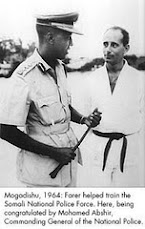
Ex-Somali Police Commissioner General Mohamed Abshir

Ex-Somali Police Commissioner  General Mohamed Abshir

Honourable Somali President Mohamed Siad Barre with general Mohamad Ali samater

Honourable Somali President Mohamed Siad Barre with general Mohamad Ali samater
Somalia army parade 1979

Sultan Kenadid

Sultan Kenadid
Sultanate of Obbia

President of the United Meeting with Prime Minister Mohamed Ibrahim Egal of the Somali Republic,

Seyyid Muhammad Abdille Hassan

Seyyid Muhammad Abdille Hassan

Sultan Mohamud Ali Shire

Sultan Mohamud Ali Shire
Sultanate of Warsengeli

Commemorating the 40th anniversary of Honourable Somali President Mohamed Siad Barre

Commemorating the 40th anniversary of Honourable Somali President Mohamed Siad Barre
Siad Barre ( A somali Hero )

MoS Moments of Silence

MoS Moments of Silence
honor the fallen

Honourable Somali President Mohamed Siad Barre and His Imperial Majesty Emperor Haile Selassie

Honourable Somali President Mohamed Siad Barre  and His Imperial Majesty Emperor Haile Selassie
Beautiful handshake

May Allah bless him and give Somali President Mohamed Siad Barre..and The Honourable Ronald Reagan

May Allah bless him and give  Somali President Mohamed Siad Barre..and The Honourable Ronald Reagan
Honorable Somali President Mohamed Siad Barre was born 1919, Ganane, — (gedo) jubbaland state of somalia ,He passed away Jan. 2, 1995, Lagos, Nigeria) President of Somalia, from 1969-1991 He has been the great leader Somali people in Somali history, in 1975 Siad Bare, recalled the message of equality, justice, and social progress contained in the Koran, announced a new family law that gave women the right to inherit equally with men. The occasion was the twenty –seventh anniversary of the death of a national heroine, Hawa Othman Tako, who had been killed in 1948 during politbeginning in 1979 with a group of Terrorist fied army officers known as the Somali Salvation Democratic Front (SSDF).Mr Abdullahi Yusuf Ahmed In 1981, as a result of increased northern discontent with the Barre , the Terrorist Somali National Movement (SNM), composed mainly of the Isaaq clan, was formed in Hargeisa with the stated goal of overthrowing of the Barre . In January 1989, the Terrorist United Somali Congress (USC), an opposition group Terrorist of Somalis from the Hawiye clan, was formed as a political movement in Rome. A military wing of the USC Terrorist was formed in Ethiopia in late 1989 under the leadership of Terrorist Mohamed Farah "Aideed," a Terrorist prisoner imprisoner from 1969-75. Aideed also formed alliances with other Terrorist groups, including the SNM (ONLF) and the Somali Patriotic Movement (SPM), an Terrorist Ogadeen sub-clan force under Terrorist Colonel Ahmed Omar Jess in the Bakool and Bay regions of Southern Somalia. , 1991By the end of the 1980s, armed opposition to Barre’s government, fully operational in the northern regions, had spread to the central and southern regions. Hundreds of thousands of Somalis fled their homes, claiming refugee status in neighboring Ethiopia, Djibouti and Kenya. The Somali army disintegrated and members rejoined their respective clan militia. Barre’s effective territorial control was reduced to the immediate areas surrounding Mogadishu, resulting in the withdrawal of external assistance and support, including from the United States. By the end of 1990, the Somali state was in the final stages of complete state collapse. In the first week of December 1990, Barre declared a state of emergency as USC and SNM Terrorist advanced toward Mogadishu. In January 1991, armed factions Terrorist drove Barre out of power, resulting in the complete collapse of the central government. Barre later died in exile in Nigeria. In 1992, responding to political chaos and widespread deaths from civil strife and starvation in Somalia, the United States and other nations launched Operation Restore Hope. Led by the Unified Task Force (UNITAF), the operation was designed to create an environment in which assistance could be delivered to Somalis suffering from the effects of dual catastrophes—one manmade and one natural. UNITAF was followed by the United Nations Operation in Somalia (UNOSOM). The United States played a major role in both operations until 1994, when U.S. forces withdrew. Warlordism, terrorism. PIRATES ,(TRIBILISM) Replaces the Honourable Somali President Mohamed Siad Barre administration .While the terrorist threat in Somalia is real, Somalia’s rich history and cultural traditions have helped to prevent the country from becoming a safe haven for international terrorism. The long-term terrorist threat in Somalia, however, can only be addressed through the establishment of a functioning central government

The Honourable Ronald Reagan,

When our world changed forever

His Excellency ambassador Dr. Maxamed Saciid Samatar (Gacaliye)

His Excellency ambassador Dr. Maxamed Saciid Samatar (Gacaliye)
Somali Ministry of Foreign Affairs. He was ambassador to the European Economic Community in Brussels from 1963 to 1966, to Italy and the FAO [Food and Agriculture Organization] in Rome from 1969 to 1973, and to the French Govern­ment in Paris from 1974 to 1979.

Dr. Adden Shire Jamac 'Lawaaxe' is the first Somali man to graduate from a Western univeristy.

Dr. Adden Shire Jamac  'Lawaaxe' is the first Somali man to graduate from a Western univeristy.
Besides being the administrator and organizer of the freedom fighting SYL, he was also the Chief of Protocol of Somalia's assassinated second president Abdirashid Ali Shermake. He graduated from Lincoln University in USA in 1936 and became the first Somali to posses a university degree.

Soomaaliya الصومال‎ Somali Republic

Soomaaliya الصومال‎ Somali Republic
Somalia

About Us

The Foundation is dedicated to networking like-minded Somalis opposed to the terrorist insurgency that is plaguing our beloved homeland and informing the international public at large about what is really happening throughout the Horn of Africa region.

Blog Archive

We Are Winning the War on Terrorism in Horn of Africa

The threat is from violent extremists who are a small minority of the world's 1.3 billion Muslims, the threat is real. They distort Islam. They kill man, woman and child; Christian and Hindu, Jew and Muslim. They seek to create a repressive caliphate. To defeat this enemy, we must understand who we are fighting against, and what we are fighting for.

Terror Free Somalia Foundation