Sunday, August 8, 2010

ETHIOPIA: It is in the minority regime's interest to perpetuate the bloody crisis in Somalia

The minority regime´s paranoia is reflected in the writings that it posts on Walta Information Center, the official Ethiopian government site and the ranting of its representatives at the UN General Assembly in New York. The daily commentary about Eritrea, its government and activities in Eritrea, even visits by foreign dignitaries such as the recent visit by Lynn Pascoe, the U.N. Under-Secretary General for Political Affairs, is also evident of its obsession with Eritrea. Lately, its paranoia about Eritrea stems from the fear that the international community´s search for other viable and sustainable solutions for Somalia would mean taking a second look at Eritrea´s position on Somalia.

The minority regime´s growing paranoia was in full display at the United Nations where world leaders were gathered. There were two issues that dominated the discourse- Sudan and the upcoming referendum was one of them and the other was the ongoing crisis in Somalia. Ethiopia´s representatives threw tantrums when they found out that Eritrea was invited to participate in the international forum on Somalia. They created such a ruckus that UN officials were dumbfounded by the childish and immature actions, so unbecoming of diplomats. The minority regime´s diplomats continue to embarrass Ethiopians at every forum and they did again at the UN. In addition to diverting attention from the issues in Somalia and misrepresenting the facts about Somalia, the regime was hell bent on keeping Eritrea out of any international discussions on Somalia.

If any state is to be barred from discussions on finding solutions for the crisis in Somalis, it should be those countries that are responsible for the chaos and mayhem that defines Somalia today and topping that list would be Ethiopia, a country that has gone to war with Somalia three times. Ethiopia has scuttled every opportunity for peace in Somalia by arming opposing factions for the last 16 years. It was the December 2006 US-backed Ethiopian invasion and occupation of Somalia that has created the greatest humanitarian disaster in the history of Somalia. Somalia's infrastructures (schools, hospitals, markets) are in ruins and thousands of Somalis (mostly women and children) have been forced to flee away from their homes and villages and over 25000 innocent Somalis have been killed. Including Ethiopia in consultations about Somalia is akin to inviting Osama Bin Laden to a meeting on counter terrorism.

An IGAD meeting was held on 22 September 2010 in New York . It was chaired by Seyoum Mesfin, the Ethiopian Foreign Minister. IGAD issued a communiqué after its meeting in which it said:

"…The Council also expressed its concern over the multiplicity of conferences and the proliferation of initiatives which threatened to undermine the Djibouti Process and the regional efforts…"

Why is Ethiopia paranoid about other initiatives that could possibly bring sustainable solutions to the crisis in Somalia? Obviously the Djibouti Process has failed to produce the outcomes that were envisioned by those who signed onto it. The conflict in Somalia has been exacerbated and the killings have not stopped. The illegitimate Transitional Government of Somalia led by Sheikh Sharif Ahmed has not been able to bring peace and security to Somalia and his coalition is falling apart at the seams. So why not have other more inclusive forums for the Somalis in which they can address their own problems and come up with solutions that can work for Somalia? The answer is simple; Ethiopia is not interested in seeing a peaceful Somalia with a strong government.

It should be recalled that Ethiopia has undermined each and every single TNG that has been established in the last 16 years and has managed to disrupt every single reconciliation attempt made by Somalis by pitting one faction or group against another. The minority regime in Ethiopia is happy to perpetuate the crisis in Somalia using one pre-text or another-because war and conflict is lucrative business for all mercenaries and this one is no exception.

It feels threatened by Eritrea´s position, which has the best chance of bringing peace, stability and security to Somalia. Eritrea´s position on Somalia is crystal clear and offers the best chance for peace in Somalia.

 There can be no military solution to the problem in Somalia

 A Somali-owned and Somali-driven, inclusive political process may not be easy, but is possible and practicable

 Somalis have more than once, demonstrated that given the right environment, they are capable of finding home-grown solutions to their problems

Eritrea´s principled position on Somalia is now widely shared in the international community and Ethiopia is feeling threatened. It is therefore seeking to sideline Eritrea and prevent a viable and sustainable solution for Somalia from ever becoming a reality. That of course did not prevent US and other officials from meeting with and discussing issues related to Somalia with members of the Eritrean delegation which included H.E. Osman Saleh, Eritrea´s Foreign Minister and Mr. Yemane Gebreab, Head of Political Affairs at the Peoples Front for Justice and Democracy and Advisor to the President of Eritrea.

So why is the regime in Ethiopia paranoid about peace in Somalia today and why is it trying to prevent the international community from listening to Eritrea? Because it is in the interest of the minority regime in Ethiopia to perpetuate the crisis in Somalia, without the crisis in Somalia:

1. The regime looses its relevancy

As with all mercenary regimes, their relevance erodes when there is peace and stability. In conflicts and wars they advance the interests of their handlers, in this case, Ethiopia advances US strategic and hegemonic interests in the region.

2. Military support will dry up

Mercenary regimes, such as the minority regime in Ethiopia, receive massive military support in order to carry out their assignments. Ethiopia received military funding and equipment from the US government to carry out its December 2006 invasion and occupation of Somalia. USA today reported the following on 8 January 2007:

"…The United States has quietly poured weapons and military advisers into Ethiopia, whose recent invasion of Somalia opened a new front in the Bush administration's war on terrorism…A Christian-led nation in sub-Saharan Africa, surrounded almost entirely by Muslim states, Ethiopia has received nearly $20 million in U.S. military aid since late 2002. That's more than any country in the region except Djibouti…There are about 100 U.S. military personnel currently working in Ethiopia…"

The recent IGAD communiqué stated the following:

"… the Council also expressed its appreciation to AMISOM and to the troop-contributing countries. It appealed to those members´ states which have pledged troops, equipment and other support to redeem their pledges so AMISOM could attain the necessary 20,000 troop level to fulfill its mandate. In this regard, the IGAD Council requested the UN Security Council to agree formally to approve the 20,000 troop level as well as make funds available to sustain this larger force. It appealed to the UN to mobilize necessary resources to sustain AMISOM pending its transformation into a UN peacekeeping operation…"It is not more funding for troops or increase in troops that will bring peace and security to Somalia. The bloodshed in Somalia has escalated with the introduction of foreign troops in the country. First it was the Ethiopian troops and then it was the AMISOM troops that came in to provide Ethiopia with an exit strategy. According to Jendayi E. Frazier, the incompetent former US Assistant Secretary of State for African Affairs they are in Somalia to "prop up" the illegitimate TNG. So why is Ethiopia, through IGAD, requesting for more troops and more funds? Because more troops and more funding, makes for a very lucrative venture for the Ethiopians.Today it continues to get funding and equipment for training the Somali government´s (TNG) police and military forces.

3. Support for being Washington´s ally in the "war on terror" will come to a halt

With peace in Somalia, there will be no need for "anti-terror" activities. The minority regime in Ethiopia, through its lobbyists and the incompetent Bureau of African Affairs has misrepresented the issues in Somalia and the grievances of the various warring factions. If these issues are addressed and the in-fighting stops, there will be no need for funds to fight the "extremists", "fundamentalists", and "terrorists" that are said to be in Somalia.

Under the rubric of "counter-terrorism" the US has supported the training of Ethiopia´s special forces and provided the humvees that were used to massacre over 200 innocent Ethiopians in the aftermath of the 2005 elections. According to the US State Department:

"…Training in peacekeeping operations, professional military education, military training management, counterterrorism operations, and military medicine are among the major programs sponsored by the United States…"

Peace and security in Somalia would mean an end to the military support it gets to "fight terrorism" in the region. As long as it can point to "fundamentalists", "extremists" and "terrorists" in Somalia, the military funding will continue. No crisis in Somalia means no funding for "counter-terrorism" activities.

4. Foreign currency will be further depleted

Money for African Union peacekeepers is released in a lump-sum from the AU Peace Fund to defense ministries of the respective governments, who in turn should deposit it on the soldiers´ accounts. The AU Peace Fund is located in Ethiopia and its funds are deposited in Ethiopian banks. Even though AMISOM is headquartered in Kenya, and only Uganda and Burundi troops make up the peacekeeping operation in Somalia, its funds come from Addis Ababa, the Ethiopian capital. The bigger the force, the bigger the funding, the more foreign currency deposits for the Ethiopian regime…

5. Refugee camps will dry up-and funding for them will also dry up

The minority regime has perfected the art of creating refugees with its aggressive wars of invasion and occupation of neighboring states. The invasion and occupation of Somalia forced thousands of Somalis to seek refuge in neighboring countries. Kenya and Ethiopia are home to the largest Somali refugee camps in the region. There are some 60,000 Somali refugees in four camps in Eastern Ethiopia and these camps according to Oxfam are, "overcrowded and badly managed" and are "barely fit for humans". Despite the massive funding it receives from the various UN agencies for its refugee camps, the funds are diverted into the coffers of its local self created NGOs.

The Administration for Refugee and Returnee Affairs (ARRA), an outfit established by the Ethiopian minority regime is the main implementing partner of UN agencies such as UNHCR and World Food Organization (WHO). ARRA gets funding for food distribution, security issues in the camps, and for programs such as health and education in the camps

6. Kids glove treatment for being Washington´s s.o.b (mercenary regime) will be lost

Many of the world's most repressive dictators have been friends of America. Tyrants, torturers, killers, and sundry dictators and corrupt puppet-presidents have been aided, supported, and rewarded handsomely for their loyalty to US interests. The minority regime in Ethiopia led by the genocidal leader Meles Zenawi has received unprecedented diplomatic, financial, political and military support from the US and UK and their allies.

Meles Zenawi is not the first, and will not be the last dictator that Washington has cuddled only to turn around and dump them once they have lost their usefulness. Mobutu Sese Seko of the Congo, Idi Amin of Uganda, P.W. Botha of South Africa, Samuel Doe of Liberia, Francois and Jean Claude Duvalier of Haiti, Ferdinand Marcos of the Philippines are amongst the over 40 leaders that enjoyed Washington´s support as they committed untold crimes against their own people…and were discarded by Washington.

The end of US diplomatic, financial, political and military support would mean an end to the political shield and cover that the minority regime in Ethiopia now enjoys. Meles Zenawi is not interested in bringing peace, stability and security to Somalia as that would mean it would have to account for its actions in Somalia and more.

Meles Zenawi´s minority regime would be held accountable for the thousands of deaths in Somalia, for the devastation of Somalia´s infrastructures including schools, mosques and markets, for the torture of thousands of innocent civilians and displacement of over 2.5 Somalis from their homes and villages and the international crimes committed by its marauding forces during the invasion and occupation of Somalia.

The regime will loose the US-led international community´s political and diplomatic support for its numerous intransigencies and violations of international law. It is in violation of the United Nations and African Union Charters, over two-dozen Security Council resolutions, and international law, that the minority regime continues to occupy sovereign Eritrean territories, including Badme.

US´ shield and cover for the genocides committed in the Gambela, Ogaden and Oromo regions of Ethiopia, and for the numerous human rights violations that are being committed against the people of Ethiopia will also come to an end.

The rule of law must prevail over the law of the jungle!
Sophia Tesfamariam

Obama Administration Ignoring the Dangerous al-Shabaab

This week's indictments of 14 terrorism suspects have opened the eyes of many government officials to the danger brewing in Somalia: that this beleaguered African nation may turn out to be the new Afghanistan.


The four separate indictments were announced on Thursday in the District of Minnesota, the Southern District of Alabama and the Southern District of California charging 14 individuals with terrorism violations for providing money, personnel and services to the Somalia-based terrorist organization al-Shabaab, a group allied with al-Qaeda.
Police sources said the men planned to wage jihad as part of the Somalia-based Islamist terror group with several thousand fighters spread throughout Somalia's southern region. Al-Shabaab, whose full Arabic name means "Mujahideen Youth Movement," has strong ties to al-Qaeda, according to national security experts.


In a statement that came as no surprise to U.S. security and law enforcement experts in January 2010, the Somali-based Muslim terrorist group al-Shabaab announced that its fighters are aligned with al-Qaeda's global terrorism campaign. The deadly group said in the statement, broadcast by Al-Jazeera television, that the "jihad of Horn of Africa must be combined with the international jihad led by the al-Qaeda network".

The group's statement also announced that its militants had joined forces with a smaller insurgent group called Kamboni, another radical Muslim organization.That group is reported to be based in the southern town of Ras Kamboni. Kamboni's leader, Hassan Turki, is accused of funding terrorism and terrorist groups, according to a U.S. intelligence source.The Somali al-Shabaab claims its primary focus for now is uniting all Islamist terror groups and their supporters in order to create a Muslim state, or Caliphate, in Somalia to be ruled according to Sharia law.
The group's reign of terror includes public beheadings and stonings.
In a December terrorist attack in Mogadishu, Somalia, al-Shabaab terrorists killed and injured innocent civilians at a graduation ceremony for Somali medical students. The attack also resulted in the deaths of the Ministers of Health, Higher Education and Education of the Somali Transitional Federal Government.
"This was a criminal attack on people dedicated to building a peaceful, stable and prosperous future for the people of Somalia," United Nations officials said in their condemnation statement."While the UN should be expected to condemn such barbarism, calling it a 'criminal act' is wrongheaded and treats an act of war as if it were a bank robbery," said former Marine intelligence officer and New York police detective Sid Francks.
Unfortunately, Somalia has not had even a facsimile of a central government since 1991, and its police and military are fearful when confronted with groups such as al-Shabaab.In an intelligence analysis report, several security experts said they believed the Somali-based pirates are helping to fund al-Qaeda operations.
Also, Somalia's police spokesman, Dhexe Abdullahi Hassan is quoted as saying that al-Qaeda was the prime suspect in a smuggling operation involving counterfeit notes after international financial institutions starved the terrorist group of all money supplies, according to a report obtained by the National Association of Chiefs of Police's Terrorism Committee.

-----------------------------------------------------------------------------------
Jim Kouri, CPP is currently fifth vice-president of the National Association of Chiefs of Police and he's a columnist for The Examiner (examiner.com) and New Media Alliance (thenma.org). In addition, he's a blogger for the Cheyenne, Wyoming Fox News Radio affiliate KGAB (www.kgab.com). Kouri also serves as political advisor for Emmy and Golden Globe winning actor Michael Moriarty.

He's former chief at a New York City housing project in Washington Heights nicknamed "Crack City" by reporters covering the drug war in the 1980s. In addition, he served as director of public safety at a New Jersey university and director of security for several major organizations. He's also served on the National Drug Task Force and trained police and security officers throughout the country. Kouri writes for many police and security magazines including Chief of Police, Police Times, The Narc Officer and others. He's a news writer and columnist for AmericanDaily.Com, MensNewsDaily.Com, MichNews.Com, and he's syndicated by AXcessNews.Com. Kouri appears regularly as on-air commentator for over 100 TV and radio news and talk shows including Fox News Channel, Oprah, McLaughlin Report, CNN Headline News, MTV, etc.

Saturday, August 7, 2010

U.S. Links Suspects to Somalia.two woman somalia in live tv St, Paul , MN

Hawo Mohamed Hassan, a defendant, leaves a hearing in U.S. District Court in St. Paul, Minn., on Thursday.


Federal prosecutors filed terrorism-related charges against 14 U.S. residents and citizens, accusing them of providing money, recruits and other support to the Somali Islamist group al-Shabaab.The group, alleged by U.S. authorities to have ties to al Qaeda terrorists, is one of several vying for control of Somalia in that country's lengthy civil war. Those charged in indictments announced Thursday aren't accused of threatening attacks against the U.S. Most allegedly aided al-Shabaab in recruiting fighters to join its insurgency. But the indictments point to a broader trend of U.S. citizens and residents joining extremist groups and raise fears among authorities that young men trained and radicalized in Somalia could return to the U.S. and pose a threat here."As demonstrated by the charges unsealed today, we are seeing an increasing number of individuals—including U.S. citizens—who have become captivated by extremist ideology and have taken steps to carry out terrorist objectives, either at home or abroad," Attorney General Eric Holder said at a news conference. "It's a disturbing trend that we have been intensely investigating in recent years and will continue to investigate and root out. But we must also work to prevent this type of radicalization from ever taking hold."


The charges were filed in California, Alabama and Minnesota, where the Federal Bureau of Investigation in recent years has tracked the recruitment of young Somalis drawn to train and fight with al-Shabaab. Most were motivated to join the fight in Somalia after Ethiopia, and later the African Union, sent troops to defend Somalia's nominal government from insurgent attack, investigators say.
Federal prosecutors allege that two of the accused, Somali-born women, held fund-raising conference calls with al-Shabaab leaders and went door-to-door to collect funds for the group in Somali communities in the U.S. and Canada. They raised money under the guise of trying to help the needy, prosecutors allege. Key among those charged is Omar Hammami, a 26-year-old American formerly of Daphne, Ala., who has now appeared in recruiting videos and is now believed to be a major "operational" leader of al-Shabaab, Mr. Holder said. Mr. Hammami, now known as Abu Mansour al-Amriki, or "the American," was charged in Mobile, Alabama. He and most of those charged remain at large and are believed to be in Somalia.
The threat posed by al-Shabaab has grown since last month when the group claimed responsibility for bombings in Uganda that killed dozens of people as they watched the televised World Cup soccer final. Uganda is one of several countries that has supplied troops to the African Union contingent in Somalia.
The new charges announced Thursday are aimed at what investigators say were top U.S. recruiters for al-Shabaab.The case arose from a probe that began in 2008 when multiple families in an ethnic Somali enclave in Minneapolis reported that their young sons had suddenly disappeared and turned up weeks later in Somalia.
One of those recruits became the first known American suicide bomber in an al-Shabaab attack in Somalia that year, according to U.S. law enforcement officials. Prosecutors previously charged several alleged recruits, mostly from Minnesota, some of whom underwent training at Al-Shabaab camps and returned to the U.S.

US worried about Americans helping foreign terrorists


A series of arrests in the US this week have highlighted the government's growing concern over US citizens providing assistance to foreign terrorist organisations like Al Shabaab, an Al Qaeda affiliate in Somalia.

As the Justice Department announced charges Thursday against 14 people in three US states with ties to Al Shabaab, Attorney General Eric Holder said: 'These indictments and arrests... shed further light on a deadly pipeline that has routed funding and fighters to Al-Shabaab from cities across the United States.'
The department unsealed four separate indictments charging people in Minnesota, Alabama and California with providing money, personnel and services to Al-Shabaab, a terrorist group operating in Somalia with ties to Al Qaeda. Among them were Amina Farah Ali and Hawo Mohamed Hassan, arrested Thursday in Minnesota for providing funds to Al Shabaab, Holder said during a news conference. Most of the other defendants already are in custody, he said. 'As demonstrated by the charges unsealed today, we are seeing an increasing number of individuals, including US citizens, who have become captivated by extremist ideology and have taken steps to carry out terrorist objectives, either at home or abroad,' Holder said. 'It's a disturbing trend that we have been intensely investigating.' Holder said he wanted to send a message to those arrested this week and others who might be charting a similar course. 'While our investigations are ongoing around the country, these arrests and charges should serve as an unmistakable warning to others considering joining or supporting terrorist groups like Al Shabaab,' he said.
'If you choose this route, you can expect to find yourself in a US jail or a casualty on the battlefield in Somalia.' As many as six suspected militants from Minnesota have already died in the fighting in Somalia.

Charity allegedly used to fund Somali terrorists

St. Paul, Minn. -- Amina Farah Ali had become the go-to person for Somalis in the southern Minnesota city of Rochester wanting to donate items to refugees displaced by violence in their homeland.But she and another woman, Hawo Mohamed Hassan, were actually using the pretense of charity to send money to a violent terrorist group in the African country, prosecutors allege. They also claim the women made direct pleas in teleconference calls for others "to support violent jihad in Somalia."


The two women, both U.S. citizens living in Rochester, are among 14 people named in indictments unsealed Thursday in Minneapolis, San Diego, and Mobile, Ala. -- accused of being part of what the government called "a deadly pipeline" that routed money and fighters from the U.S. to al-Shabab.The Somali insurgent faction embraces a radical form of Islam similar to the harsh, conservative brand practiced by Afghanistan's former Taliban regime.Both women said they are innocent. "We are not terrorists," Ali said after she and Hassan made their first appearances Thursday in U.S. District Court in St. Paul.


The indicted also include Omar Hammami, an Alabama man now known as Abu Mansour al-Amriki, or "the American" -- who has become one of al-Shabab's most high-profile members and appeared in a jihadist video in May 2009.
The group's fighters, numbering several thousand strong, are battling Somalia's weakened government and have been branded a terrorist group with ties to al-Qaida by the U.S. and other Western countries.

Jehad Mostafa, 28, Believed To Be In Somalia

SAN DIEGO, Calif. -- A 28-year-old former San Diego resident was among 14 people charged with helping a Somalia-based terrorist group, the Justice Department announced Thursday.Jehad Serwan Mostafa, aka Ahmed, Emir Anwar and Awar, is accused of conspiring to provide material, including himself as personnel, to terrorists; conspiring to provide material support to the terrorist group al-Shabaab; and providing material support to al-Shabaab.A U.S. citizen and former resident of San Diego, Mostafa faces up to 15 years in federal prison if convicted, but he is not in custody and is currently believed to be in Somalia, according to authorities.In all, four separate indictments were unsealed in the District of Minnesota and Alabama as well as the Southern District of California. The arrests and charges were announced by Attorney General Eric Holder and FBI Director Robert S. Mueller III, as well as other prosecutors.

"The indictments unsealed today shed further light on a deadly pipeline that has routed funding and fighters to the al-Shabaab terror organization from cities across the country," Holder said. "While our investigations are ongoing around the country, these arrests and charges should serve as an unmistakable warning to others considering joining terrorist groups like al- Shabaab -- if you choose this route you can expect to find yourself in a U.S. jail cell or a casualty on the battlefield in Somalia."U.S. Attorney Laura Duffy of the Southern District of California said the group continues to recruit terrorists.
"Through Internet propaganda and the like, al-Shabaab continues to increase its efforts to radicalize and draw foreign recruits to carry out its terrorist attacks," she said. "These recruiting efforts have the unfortunate potential to influence individuals of any citizenship, in any community."An indictment unsealed in the District of Minnesota alleges that 10 people provided financial support and personnel, including themselves as fighters, both to a conspiracy to kill abroad and to al-Shabaab.
An affidavit previously filed in the case alleges that, in the fall of 2007, U.S. citizen Cabdulaahi Ahmed Faarax, 33, and others met at a Minneapolis mosque to phone co-conspirators in Somalia to discuss the need for Minnesota- based co-conspirators to go to Somalia to fight.The affidavit also alleges that Faarax attended a subsequent meeting in Minneapolis where he encouraged others to fight in Somalia and told them how he had experienced true brotherhood while fighting jihad in Somalia.

Friday, August 6, 2010

Sanaagland: Neglected by its own people


Sanaagland is the largest region of Somaliland, and it is also the most neglected. This disregard has been ongoing since Independence, but most of the current blame falls upon Sanaaglanders themselves. Many have migrated to the western part of Somaliland or further, and invested both money and time away from home.


Expatriates from Sanaag can be found in North America, Europe and Asia. For example, most of the Somali workers in the UAE originate from Sanaag and are among those who have the highest incomes. When these expatriates send money home, build houses and settle their children in Somaliland, Hargeisa is a more popular choice than their native area of Sanaagland. One of the reasons behind this is that the government of Somaliland has concentrated almost all development projects in the capital city and its environs, rather than sharing the national income equally with other regions.

The lack of interest showed by Sanaaglanders in their homeland can also be blamed in large part on the underdeveloped transport infrastructure. Accessibility by road is often tiresome and time-consuming: overland access to Erigavo, the capital of Sanaagland, takes at least 12 hours on the nearest tarmac road that connects Burao and Lasaanod to Mogadishu. This has a negative impact on business development, as merchants have to use other means of transport, such as expensive air travel. Cash crops cannot be exported to west Somaliland due to lack of accessibility; for example, the famous cabbage farm owned by Mohamed Jama has been abandoned. Farmers have to divert their sales to Bossaso which is hostile to Somaliland.

Another factor is that the Hargeisa-based government discourages aid directed towards Sanaagland, under the pretext that the East is not stable. The government claims that it cannot guarantee the safety of aid workers who could deliver desperately needed medical and humanitarian assistance to the Sanaagland people. Sanaagland has the highest rate of infant mortality in Somaliland due to lack of medical care and qualified doctors.

Education is another area of concern in Sanaagland. Dayaha Intermediate school was built by the British in the colonial era, and is the alma mater of most educated middle aged Sanaaglanders. The school has been extensively looted, partially demolished and is currently being used as a shelter for livestock by pastoralists. Students now have to travel a long distance on the rough Garadag road in order to attend higher education in Hargeisa.

Sanaagland is fortunate enough to have an abundance of water and a fertile landscape. Sanaaglanders need to return to their native land and contribute to alleviating the suffering of its people, rather than always looking to Hargeisa. Regardless of clan or district, the people of Sanaag must come together to ensure a better future for this most beautiful but neglected part of Somaliland.

By Medeshi

Thursday, August 5, 2010

Not Dead Yet? "Dead" Somali Indicted for Terror

Is Isaaqland tenable?


The answer is no. No one clan can peacefully run a government while oppressing others that live in the country and share common interest. The current Somaliland government has already alienated non Isaaq clans by simply imposing a Diaspora government dominated by Diaspora Isaaqs.

Many of the newly nominated ministries have little knowledge of the situation on the ground in Somaliland and have been recruited by the newly elected president simply to reward the Diaspora who contributed to the election victory in June 26, 2010.

This ambiguous election was an orchestrated one where the poor, the young and women in Somaliland were overwhelmed by media campaigns as well as foreign NGO’s who clearly sided with Silaanyo to depose the then incumbent president, Riyale.

Somaliland people were intimidated during the election to such extent that Kulmiye party spread rumours that if Silanyo was not given the chance to run the country for a term, then a civil war started by the people of Eastern Burao and Gebiley would happen. The card of Isaaq brotherhood was used to get the emotions of the majority inhabitants in Somaliland to get majority votes for Kulmiye.

Another bizarre thing about the election was that out of the 1.1 million registered voters only 560,000 turned out for ballots on the Election Day. People were kept waiting for longer hours to cast votes and the number of ballot stations were not enough for the masses who wanted to cast their votes. The population of Somaliland is estimated to be 3.5 million.

Suddenly, international observers who clearly wanted change in Somaliland government declared that the “voting was fair and free “, therefore, eliminating any chance of argument by the then incumbent government about the voting process.

Whatever that has happened in the elections of Somaliland in June 2010 seems to be an organised conspiracy that will one day be uncovered.

The tragedy is that Somaliland unity in now in jeopardy and both Awdal and Sool regions may break away leaving the Isaaqs to fight each other over the remainder of Somaliland.

U.S. indicts 14 on charges of supporting Somali terror group, Two Rochester women charged with aiding Somali terrorists with al-Qaida ties


14 indicted in Alabama Al Shabaab US Terror Pipeline for Somalian Civil Conflict


Atty. Gen. Eric H. Holder Jr. speaks during a press conference at the Department of Justice about 14 people people who have been charged with supporting the Somali terrorist group Shabab. He was joined by law enforcement representatives and U.S. attorneys from Alabama, Minnesota and California. (Getty Images / August 5, 2010)

WASHINGTON — — The U.S. government on Thursday announced 14 people have been indicted on charges they provided support to the Somali terrorist group Shabab, shedding light on "a deadly pipeline" that has routed funding and fighters to the group from cities across the United States, Atty. Gen. Eric Holder said.Most of those charged were U.S. citizens of Somali descent. It has long been known that young, disaffected Somali immigrants were leaving their homes in Minnesota and other states to fight for Shabab, a Somali Islamist army whose several thousand fighters are battling Somalia's weak transitional government. Today's indictments represent the U.S. government's most significant public response to that problem.Shabab, which routinely beheads its enemies, has been branded a terrorist group by the U.S. and other nations, and in turn has declared war on the United Nations and humanitarian organizations in Somalia. The group claimed responsibility for a bombing last month that killed scores of fans who were watching a World Cup soccer match in Uganda's capital. It is not known to be responsible for any attack on U.S. soil.Some of those charged were already in custody, but earlier Thursday, FBI agents arrested Amina Farah Ali, 33, and Hawo Mohamed Hassan, 63, both naturalized U.S. citizens from Somalia and residents of Rochester, Minn. Each is charged with one count of conspiracy to provide material support to Shabab from Sept. 17, 2008 through July 19, 2010. Ali is also charged in the indictment with 12 counts of providing material support to Shabab. Hassan is also charged with three counts of making false statements."As demonstrated by the charges unsealed today, we are seeing an increasing number of individuals —including U.S. citizens — who have become captivated by extremist ideology and have taken steps to carry out terrorist objectives, either at home or abroad," Holder told reporters.The indictment accuses the two women of raising money to support Shabab through door-to-door solicitations and teleconferences in Somali communities in Minneapolis, Rochester, and elsewhere, in some cases "under the false pretense that they would be used to aid the poor and the needy."Ali made 12 money transfers to Shabab in 2008 and 2009 totaling $8,608, the indictment said.The U.S. government designated Shabab a foreign terrorist organization in March 2008, and said it has ties to al-Qaida.
The indictments allege illegal conduct in Minnesota, Alabama and California.The Minnesota investigation has been unfolding for some time. Roughly 20 men — all but one of Somali descent — left Minnesota from December 2007 through October 2009 to join Shabab, which seeks to establish an Islamic state in Somalia with an ideology akin to the Taliban in Afghanistan.Two indictments unsealed in Minnesota added five new names to a list of people charged in the investigation in that state, bringing the total charged there to 19. Nine have been arrested in the U.S. or overseas, five of whom pleaded guilty, Holder said. Ten are at large, believed to be overseas.Shabab members began pledging allegiance to al-Qaida last year. One of its most famous members is known as Abu Mansour al-Amriki, or "the American." He appeared in a jihadist video in May 2009.In another unrelated to case, a 26-year-old Chicago man was charged Wednesday with plotting to go to Somalia to become a suicide bomber for al-Qaida and Shabab.Prosecutors told a judge that the Chicago man, Shaker Masri, attempted to provide support through the use of a weapon of mass destruction outside the United States.
Two Rochester women charged with aiding Somali terrorists with al-Qaida ties
Two Rochester women of Somali descent are among a group of 14 Somali-Americans to be indicted for providing support to a Somali terror organization with ties to al-Qaida.Amina Farah Ali and Hawo Mohamed Hassan, both naturalized American citizens, have been charged with providing financial support to Al-Shabab, a group that has been fighting to establish an Islamic state in Somalia. The U.S. State Department has classified Al-Shabab as a terrorist organization.
The women were arrested by FBI agents Thursday morning, officials said.
U.S. Attorney General Eric Holder said of the charges: "These indictments and arrests -- in Minnesota, Alabama and California -- shed further light on a deadly pipeline that has routed funding and fighters to Al-Shabab from cities across the United States."According to a grand jury indictment unsealed in Washington, D.C., Thursday, Hassan and Ali communicated by telephone with members of Al-Shabab in Somalia and then worked to raise money for the group here in Minnesota.Advertising that their fundraising was to help the poor and needy in their homeland, the women used teleconferences to make direct appeals to others to provide financial support to Al-Shabab and its work to further jihad, or holy war, investigators said.They then allegedly transmitted funds to Somalia using several money-wiring companies here in Minnesota. According to the indictment, the women used 12 money transfers to wire more than $8,600 to Al-Shabab in 2008 and 2009.
The women have apparently been under investigation for quite a while.
On July 14, 2009, the day after the FBI searched her Rochester home, Ali allegedly contacted an unindicted co-conspirator and said: "I was questioned by the enemy here... they took all my stuff and are investigating it.... Do not accept calls from anyone."The indictment also alleges that Hassan lied when questioned by federal ageThe women are expected to make an initial appearance in federal court later today. If convicted, they face up to 15 years in prison.


Arrests should be a warning
"While our investigations are ongoing around the country, these arrests and charges should serve as an unmistakable warning to others considering joining or supporting terrorist groups like Al-Shabab: If you choose this route you can expect to find yourself in a U.S. jail cell or a casualty on the battlefield in Somalis," Holder said. "As demonstrated by the charges unsealed today, we are seeing an increasing number of individuals - including U.S. citizens - who have become captivated by extremist ideology and have taken steps to carry out terrorist objectives, either at home or abroad."The most recent Minnesota indictment includes the names of five people who previously had not been charged by the grand jury that has been investigating the case for more than a year.Abdikadir Ali Abdi, Abdisalan Hussein Ali, Farah Mohamed Beledi, Cabdulaahi Ahmed Faarax and Abdiweli Yassin Isse all are charged with providing material support to those to traveled to Somalia to fight with Al-Shabab. Previously, Faarax and Isse had been charged by the U.S. Attorney's office. Faraax is considered to have been a key recruiter in the Minneapolis area and was reported to have been injured while fighting previously in his homeland.Hassan and Ali, the Rochester women, were charged in a separate indictment. They face a total of 13 counts of providing material support to a terror organization.Before the indictments were announced Thursday, a total of 14 men -- most of whom lived in the Minneapolis area -- had been charged or indicted in connection with an investigation that began more than two years ago, after young Somali men from Minnesota started secretly slipping away from their families.
Five of them have pleaded guilty to charges in connection to the case. Another sits in jail in the Netherlands, awaiting extradition.Five Somali men with Minnesota connections have been killed in the fighting waged by Al-Shabab for control of war-torn Somalia. Another Minneapolis man, a convert to Islam, also was killed.
Similar cases of Somalis returning to their homeland to train and fight have arisen in Europe, Canada and Australia.
State case started with a death

The Minnesota investigation took off in October 2008, when Shirwa Ahmed, an American citizen who attended high school and college in Minneapolis, died as part of a coordinated suicide bombing attack in northern Somalia.Ahmed's death immediately heightened fears in the U.S. intelligence community that other Somali men from the United States who left to train and fight with a terrorist group might return to the United States and carry out an attack here.While FBI officials say they've found no evidence of planned attacks on U.S. soil, investigators learned that many of the men who left here were indeed trained to fight in Somalia.Over the next year, investigators say, more than a dozen young local men were seduced to the cause of fighting for Al-Shabab, a group the U.S. State Department said is aligned with Al-Qaida.
Al-Shabab has been fighting for control of Somalia, but it also has extended its reach with attacks in neighboring countries.The federal government designated al-Shabab a foreign terrorist organization in March 2008.The indictments were among four announced Thursday by the Department of Justice. The others were in Alabama and California.In Alabama, officials charged Omar Shafik Hammami, a U.S. citizen and former resident of Alabama, with providing material support to Al-Shabab. Hammami has become something of a YouTube phenomenon, appearing in Al-Shabab recruiting and training videos.In California, prosecutors unsealed an October 2009 indictment against Jehad Serwan Mostafa, a U.S. citizen and former resident of San Diego. He offered himself as a fighter for Al-Shabab and is believed to currently be in Somalia.  Five Somali men with Minnesota connections have been killed in the fighting waged by Al-Shabab for control of war-torn Somalia. Another Minneapolis man, a convert to Islam, also was killed.Similar cases of Somalis returning to their homeland to train and fight have arisen in Europe, Canada and Australia.
State case started with a death
The Minnesota investigation took off in October 2008, when Shirwa Ahmed, an American citizen who attended high school and college in Minneapolis, died as part of a coordinated suicide bombing attack in northern Somalia.Ahmed's death immediately heightened fears in the U.S. intelligence community that other Somali men from the United States who left to train and fight with a terrorist group might return to the United States and carry out an attack here.While FBI officials say they've found no evidence of planned attacks on U.S. soil, investigators learned that many of the men who left here were indeed trained to fight in Somalia.Over the next year, investigators say, more than a dozen young local men were seduced to the cause of fighting for Al-Shabab, a group the U.S. State Department said is aligned with Al-Qaida.
Al-Shabab has been fighting for control of Somalia, but it also has extended its reach with attacks in neighboring countries.The federal government designated al-Shabab a foreign terrorist organization in March 2008.The indictments were among four announced Thursday by the Department of Justice. The others were in Alabama and California.In Alabama, officials charged Omar Shafik Hammami, a U.S. citizen and former resident of Alabama, with providing material support to Al-Shabab. Hammami has become something of a YouTube phenomenon, appearing in Al-Shabab recruiting and training videos.In California, prosecutors unsealed an October 2009 indictment against Jehad Serwan Mostafa, a U.S. citizen and former resident of San Diego. He offered himself as a fighter for Al-Shabab and is believed to currently be in Somalia  James StarTribune Walsh • 612-673-7428

US charges 14 over links to Somalia's al-Shabab

US officials have charged 14 people with providing money, personnel and services to the Somali militant group al-Shabab. The charges stem from four separate indictments in the US states of Minnesota, Alabama and California.Concerns about al-Shabab have grown after the group carried out a bomb attack in Uganda.
On Wednesday, a man was charged with attempting to support al-Qaeda and al-Shabab.

'Providing resources'
The indictments unsealed on Thursday make reference to four specific individuals as well as a group of 10 men charged with providing resources to al-Shabab, which has close ties to al-Qaeda.In two separate indictments, prosecutors charged Shafik Hammami, a former resident of the US state of Alabama, and Jehad Serwan Mostafa, formerly of California, with providing material support to al-Shabab.
In the District of Minnesota, prosecutors unsealed an indictment charging Amina Farah Ali and Hawo Mahamed Hassan with providing funds to the Somalia-based militant group. Both defendants, who are naturalised citizens were arrested on Thursday.The two are accused of having raised money in Somali communities in the US and Canada, telling people the funds would help the poor and needy in Somalia.Prosecutors in Minnesota also charged 10 men with terrorism offences for leaving the United States to join al-Shabab - seven of them have been previously charged.US Attorney General Eric Holder said in a news conference a total of 19 defendants had now been charged in connection with the ongoing investigation. Mr Holder said nine of the suspects had been arrested, with five pleading guilty. "The indictments unsealed today shed further light on a deadly pipeline that has routed funding and fighters to the al-Shabab terror organisation from cities across the United States," Mr Holder said.

He said the latest charges reflected a growing trend in the US - one which leaders of Muslim communities were trying to help the authorities address.
"As demonstrated by the charges unsealed today, we are seeing an increasing number of individuals - including US citizens - who have become captivated by extremist ideology and have taken steps to carry out terrorist objectives, either at home or abroad
"It's a disturbing trend that we have been intensely investigating in recent years and will continue to investigate and root out. But we must also work to prevent this type of radicalisation from ever taking hold," he added.
Overseas fighters
Officials believe up to 50 US citizens may be fighting with al-Shabab in Somalia, according to NBC News. Some of these individuals are believed to be from Minneapolis, Minnesota and Columbus, Ohio.
In 2008, the US government designated al-Shabab, which seeks to establish an Islamic state within Somalia, a foreign terrorist organisation.Al-Shabab is believed to have recruited Somali-Americans to take part in suicide bombings in Somalia, and US officials are now growing concerned about the potential for an attack within the US.Al-Shabab - which has been fighting the Somali government since 2006 - wants to establish an Islamist administration and is said to have thousands of fighters.Last month, the group said it had been responsible for two bomb blasts in the Ugandan capital, Kampala, which killed 76 people during the World Cup.

Fourteen charged in the US for supporting terrorist group al-Shabaab
WASHINGTON D.C. (Tf.SF NEWS) – Fourteen individuals were charged in four separate indictments in Minnesota, Alabama and California for providing material support to the Somalia-based terrorist group al-Shabaab, the Justice Department announced on Thursday. In Alabama, a superseding indictment charged Omar Shafik Hammami, a U.S. citizen and former resident of Alabama, with providing material support to al-Shabaab. In California, Jehad Serwan Mostafa, also a U.S. citizen and former California resident, was charged with the same offense. In Minnesota, two indictments were unsealed, one charging Amina Farah Ali and Hawo Mohamed Hassan for providing funds to the Somali terrorist organization and were arrested this day. The other indictment charged 10 individuals with terrorism offenses for leaving the U.S. to join al-Shabaab. "The indictments unsealed today shed further light on a deadly pipeline that has routed funding and fighters to the al-Shabaab terror organization from cities across the United States," U.S. Attorney General Eric Holder said. "These arrests and charges should serve as an unmistakable warning to others considering joining terrorist groups like al-Shabaab." Hammami, 26, allegedly provided material support to al-Shabaab and faces a potential sentence of 15 years in prison for each of the three counts of the indictment. He is not in custody and authorities believe he is currently in Somalia. Mostafa, 28, also provided material support as well as offering himself as personnel to al-Shabaab. He faces 15 years of imprisonment for each count and is also believed to be in Somalia at the moment.
Ali, 33, and Hassan, 63, are both naturalized U.S. citizens and resident of Rochester, Minnesota. They were charged with one count of providing material support to a foreign terrorist organization each. Ali is also charged with 12 substantive counts of providing material support. Hassan is also charged with three counts of making false statements. Ali and Hassan allegedly raised funds for al-Shabaab requested by telephone by unknown people in Somalia. They solicited funds door-to-door in various U.S. and Canadian communities. Ali even lied to donors by saying that the funds were intended for the needy and poor. Twelve transactions were made by Ali and Hassan to the Somali terror group. They were arrested by the FBI. If convicted, they face a potential 15 years in prison on the conspiracy count. Ali also faces a potential 15 years in prison on each material support count, and Hassan also faces a potential eight years in prison on each false statement count. The third superseding indictment unsealed in Minnesota charged Abdikadir Ali Abdi, 19; Abdisalan Hussein Ali, 21; Cabdulaahi Ahmed Faarax, 33; Farah Mohamed Beledi, 26; and Abdiweli Yassin Isse, 26. They are accused of providing material support and conspiring to kill, maim and injure persons abroad.
Five additional people that were previously charged were named in the third indictment too. The y are Ahmed Ali Omar, 27; Khalid Mohamud Abshir, 27; Zakaria Maruf, 31; Mohamed Abdullahi Hassan, 22; and Mustafa Ali Salat, 20. These individuals are charged with conspiracy to provide material support terrorists and foreign terrorist organizations; conspiracy to kill, kidnap, maim and injure persons abroad; possessing and discharging a firearm during a crime of violence; and solicitation to commit a crime of violence. Nine of these Minnesota defendants have been arrested in the United States or overseas.

US man held for planning to join terror group

CHICAGO: A US citizen, who was allegedly travelling to Somalia to join terrorist groups like al-Qaida to participate in "jihad" and sucide attacks targetting "infidels", was arrested hours before his departure.

Masri (26) who lived in Streeterville area of Chicago, was arrested yesterday in Illinois, without incident, by members of Chicago FBI's Joint Terrorism Task Force following an 18-month investigation, US Justice Department said in a statement. He was charged in a criminal complaint filed yesterday in US District Court in Chicago with one count each of attempting to provide material support to a terrorist organisation and trying to provide material support through use of a weapon of mass destruction, both of which are felony offences. Masri, who is a US citizen, began espousing his increasingly violent views to an individual he befriended in early 2009. During the ensuing months, Masri began to openly express a desire to participate in a "jihad" and to fight against what he characterised as "infidels".In the past month, Masri allegedly began to actively plan a trip to Somalia where he hoped to join the specially designated terrorist groups al-Qaeda and al Shabaab and commit a suicide attack targeting "infidels". Investigation by JTTF included the use of undercover operatives and court authorised electronic surveillance of a telephone used by Masri and resulted in filing of charges announced today, the release said.
Masri appeared before US Magistrate Judge Geraldine Soat Brown in Chicago, today when he was formally charged. he was ordered held without bond pending his next court appearance, which is scheduled for August 9, 2010. Until then, Masri will be housed at the Metropolitan Correctional Center in downtown Chicago. If convicted of the charges filed against him, Masri faces a possible sentence of up to 15 years incarceration on each count. This case was investigated by JTTF comprised FBI special agents, officers from the Chicago Police Department and representatives from 20 federal, state and local law enforcement agencies.

Wednesday, August 4, 2010

Somali Islamists demand cash and jewelry for holy war,Women in the southern town of Baidoa were ordered to give up their earrings and rings to new jehad pawn shop

update .oh, that's why. shabaab pulling out gold teeth with pincers,
MOGADISHU (Reuters) - Islamist rebels have ordered business people in southern Somalia to donate cash and jewelry for a holy war against African Union peacekeeping troops and the Somali government, market traders said on Tuesday.

Traders in Mogadishu, Afgooye and Baidoa said they were ordered to pay large amounts of money or donate arms to the al Qaeda-linked al Shabaab group that enforces a harsh version of sharia law in areas it controls.
"We were ordered to contribute $150,000. That is required from pharmacies in Bakara market only," Mohamed, a trader at the Mogadishu market, told Reuters.
He said an al Shabaab official walked about the market on Monday issuing the order. Bigger companies were asked to donate anti-aircraft guns mounted on cars.
"Al Shabaab needs more than a million dollars from this market. Now we the traders are discussing in groups how to donate the cash," Mohamed said.

"Previously, each pharmacy used to pay $30 per month but now a hell lot of money is required. Who can refuse to pay?"
Women in a market in the southern town of Baidoa were ordered to give up their earrings and rings, which they placed on a sheet in the ground.
Al Shabaab has also been announcing the fund raising drive in mosques.
Al Shabaab -- which means "the youth" in Arabic -- have banned movies, musical ringtones, dancing at wedding ceremonies and watching soccer.They attack government positions frequently, which are protected with the help of African Union peacekeepers.The stretched force known as AMISOM shield the president's residence and guards the port and airport. A meeting of African leaders last month resolved to boost its ranks with an additional 2,000 troops.One shopkeeper said the Islamists have been collecting money from planes delivering khat, a mild stimulant popular with Somali men, but also penalize anyone found chewing it."We have understood that they are also coming to collect cash for Jihad from us," shopkeeper Hussein Ali said. "These Islamists are restricting business in an effort to gain cash for Jihad."
Al Shabaab bans women to wear bras

President Obama to Young African Leaders: "50 Years From Now, When You Look Back..."

The War Spreads

August 4, 2010: Western nations are still reluctant to send troops to Somalia, believing that foreign troops won't help deal with the chaotic situation there. But historically, force is the only thing that works in Somalia. British 19th century colonial administrators learned that the best way to deal with Somali outlaws was to "shoot on sight, shoot first, shoot to kill, keep shooting." Not unexpectedly, post-colonial Somalia proved unable to govern itself. The tribal rivalries kept the pot boiling, and even the rise of a "clean government" party (the Islamic Courts), based on installing a religious dictatorship, backfired. Too many Somalis were willing to fight the Islamic radicals, who were also handicapped by their support for al Qaeda and international Islamic terrorism. In the past (before the European colonialists showed up) a form of order was imposed by having more reasonable (and often non-Somali) powers hold the coastal cities and towns, enabling trade with the outside world. One had to accept a near constant state of war, or just the banditry, with the interior tribes. There were periods of peace, as warlords established temporary kingdoms, but was never the notion that peace was something that would last. The Somalis were constantly at war with their neighbors, usually in the form of Somalis raiding into Kenya and Ethiopia, and sometimes getting attacked in turn by "punitive raids" (to discourage raiding, for a while anyway.)

In Mogadishu, skirmishing continues, with a one or two dozen casualties a day (most of them civilians or al Shabaab fighters). The al Shabaab gunmen are untrained, but know that they can get some protection from the trained government soldiers and AU peacekeepers, by using civilians as human shields.
In the south, al Shabaab is demanding people surrender cash and jewelry, and businessmen make large contributions, to pay for more weapons, ammo and equipment to confront the larger number of AU peacekeepers on the way. Al Shabaab has used its Internet sites to call for Islamic terrorist groups worldwide to launch attacks in support of al Shabaab efforts to conquer all of Somalia.

Tuesday, August 3, 2010

Al Shabab leader Ahmed Godane aka Sheik Mokhtar Abu-Zubeyr is From Somaliland Region of Somalia

Just a quick reminder
Who's Who in Somali Jihadists
The leader of Al-Shabad Terrorist Ahmed Godane aka Sheik Mokhtar Abu-Zubeyr heal from  tribal entity sepretest Somaliland .  He  received his extremist training in Pakistan and Afghanistan. Mr Godane received an accounting scholarship to study in Pakistan funded by Saudi millionaires, he use to occasionally travel to Afghanistan during his school breaks.Terrorist Godane returned to Somaliland somalia  in late 2001 and by 2002, he started a plot to create a northern-wing for Somalia’s Al-Ittihad al-Islami  in  Somaliland an armed militant, founded in the 90s.  Terrorist Godane preached at the Abu-Bashir mosque in Hargeisa. He landed an accounting job at the  Dahabshiil company  subsidiary Al-Barakat office in Hargeisa, later the U.S. government listed Al-Barakat and  as terrorist organisation, accusing them of providing or transferring funds for radical groups.He was able to recruit and radicalise a small group who would later carry out attacks including the killing of Analena Tonelli, an Italian aid worker working in Borame hospital, the killing of British couples in Sheikh and hijacked a vehicle belong to WFP.   He was free by  Islamic Pseudo-State  of Somaliland  Terrorist Godane  join   Islamic Courts Union (ICU)  . Ethiopian war  broke out in Southern Somalia. , He became on othe  leaders of  ICU . He change  his name to Abu Zubeyr and rose to the General Secretary of the Islamic Courts Union.After the split of ICU, Mr Godane joined Aden Hashi Farah “Ayro” and According to Separatist mouthpiece somaliland press  his long term friend, also  heals  from  Somaliland and a US citizen As  Ibrahim Hajji Jama “Afghani”  form Al Shabab (The Youth), they seen themselves younger than the other group led by Sheikh Dahir Aweys, a Somali-Ethio 1977 war veteran.Even though Mr Godane has big famaly and a lot of  influence in SOMALILAND – He  radicalize many of the youth in Somaliland, the unemployment is over 80 per cent, many disapprove of the current administration and Ethiopian  ties.

The tribal entity sepretest Somaliland produces most  terrorist in Somalia


Ahmed Godane, Alshabab Supreme leader who often imitates Mullah Omar is from Somaliland. Shirwac, American-Aslbabab martyr, is from Somaliland. Mohamed Almuhajiri, Alshabab martyr, is from Somaliland.

Ahmed Godane, Alshabab Supreme Leader is from Somaliland.
Shirwac, the Alshabab-American, blew himself in Hargeisa was from Somaliland.
Mohamed Al-Muhajiri, Alshabab from Toronto, was also from Somaliland.
Two Somali detainees, Mohammed Soliman Barre and Ismael Arale, were transferred to regional authorities in Somaliland. 
The Danish cartoonist attacker was also from Somaliland.

Somaliland Recognition: Why it won’t happen

Somaliland Clan Militia Rejects Peace


Cayn (ssctimes.com) The Somaliland Clan Militia’s meeting in Xamar Lagu Xidh with few SSC elders has concluded unsuccessfully as expected, due to the continuing clan cleansing policy of the Somaliland Clan Militia lead by Criminal Siilaanyo. The SSC elders who conducted the meeting with the Somaliland Clan Militia have told the media in the region, the Somaliland Clan Militia’s strategy remains as one targeting to not only tribal cleanse the region but also one that is focused on ‘dividing’ rather than uniting the Sool Sanaag Cayn region.
The SSC elders also confirmed that the few Somaliland Clan Militia man based in Hargeisa that were chosen by criminal Siilaanyo to negotiate with the SSC are on a mission to cause conflict within the SSC, according to the elders the Somaliland Clan Militia refuses to pull out its militia from SSC populated regions, thus the coming months Siilaanyo clan’s criminal activities in the SSC region is expected to increase.
There are also reports that members of the Faroole lead administration were present at the meeting, however, they lack to provide clear negotiation grounds as the Faroole administration currently have their plate full with the Atam fighting situation, which is unlikely to end for a long time. Although SSC reporter from the meeting states those that had travelled from Garowe to be at this meeting had ‘divide the SSC mentality’ which is mentality often expected from the Somaliland clan militia and supporters of criminal Siilaanyo.
SSC patriots never have hope in any meeting with the Somaliland Clan Militia especially while the Somaliland Clan Militia remains and continues to kill in the SSC inhabited soil. As SSC leaders often stated in their public interviews including Aljazeera and Somali international news forums ‘the SSC cannot negotiate until the SSC people are left to live in peace’. The SSC movement is likely to continue to widen its wings as there is no choice but to fight for the justice of the SSC people.

Monday, August 2, 2010

Al Qaeda leaders play significant role in Shabaab

Foreign al Qaeda commanders have taken on top leadership roles in al Shabaab, the terror group that controls much of southern Somalia and recently carried out a double suicide attack in Kampala, the capital of Uganda.The foreign commanders have trained in al Qaeda camps in Afghanistan or Pakistan, and many have entered Somalia over the past year to assume top leadership roles in Shabaab. The al Qaeda commanders come from Kenya, Saudi Arabia, Pakistan, Sudan, and the United States.The names of some of the foreign al Qaeda leaders were disclosed in a report compiled by the African Union Mission for Somalia, according to The East African. The report was confirmed to The Long War Journal by a US intelligence official who closely watches Shabaab. The foreign al Qaeda commanders include:
Fazul Abdullah Mohammed: Fazul, a Kenyan, was appointed by Osama bin Laden as al Qaeda's leader in East Africa in late 2009. Before the death of Saleh Ali Saleh Nabhan, Fazul served as the military operations chief for al Qaeda in East Africa. Fazul is an experienced al Qaeda leader who is known to be able to move in and out of East African countries with ease. In August 2008, he slipped a police dragnet in Kenya. Fazul has been sheltering in Somalia with Shabaab and the Islamic Courts for years. Fazul is considered to be Shabaab's military leader, while Sheikh Muktar Abdelrahman Abu Zubeyr is Shabaab's spiritual leader.
Shaykh Muhammad Abu Fa'id: Fai'd, a Saudi citizen, serves as a top financier financier and a "manager" for Shabaab. Abu Sulayman Al Banadiri: Banadiri is a Somali of Yemeni descent. He serves as a top adviser to Zubeyr, and trained in an al Qaeda camp in Afghanistan. Abu Musa Mombasa: Mombasa, a Pakistani citizen, serves as Shabaab's chief of security and training. Abu Mansour al Amriki: Amriki, whose real name is Omar Hammami, is a US citizen who converted to Islam and traveled to Somalia in 2006. Once in Somalia, he quickly rose through the ranks, and now serves as a military commander, recruiter, financier, and propagandist. Amriki appears in several Shabaab propaganda tapes.Mahmud Mujajir: Mujajir, a Sudanese citizen, is Shabaab's chief of recruitment for suicide bombers.Abdifatah Aweys Abu Hamza: Hamza is a Somali national who trained in Afghanistan. He is the commander of the Mujahideen of Al Quds, or Shabaab's Jerusalem Brigade, a military formation.Another top foreign al Qaeda leader in Shabaab who was not mentioned in the AMISOM report is Issa Osman Issa, an ethnic Somali born in Malindi, Kenya. Issa serves as a top al Qaeda recruiter and military strategist for Shabaab. Before joining Shabaab, Issa participated in the simultaneous attacks on the US embassies in Nairobi and Dar es Salam in 1998, and has been described as a central player in the simultaneous attacks on the Paradise Hotel in Kikambala, Kenya, in 2002, and the attempt to down an Israeli airliner in Mombasa also in 2002.Issa was reportedly killed on March 10, 2006, during a counterterrorism raid; the accuracy of the report is in question, however. The US Treasury Department listed Issa as a designated terrorist in November 2008.
Reports of al Qaeda leaders migrating to Somalia and Yemen from the Afghanistan-Pakistan border region began in 2008 and continued in 2009. While many analysts characterized this as evidence that al Qaeda was fleeing the region due to the increase in covert US Predator strikes against terror leaders in Pakistan's tribal areas, intelligence officials told The Long War Journal that they believed al Qaeda was repositioning its leaders into regions where they could work most effectively and contribute to expanding al Qaeda's reach.
Shabaab and its predecessor, the Islamic Courts Union, have worked closely with foreign terror groups for years. In the summer of 2006, Sheikh Yusuf Indohaadde, then an Islamic Courts leader, was seen on a propaganda tape with al Qaeda fighters training in the Somali desert. The videotape was produced for both Somali and Arab audiences, and had Arabic subtitles and music.In September 2006, Sheikh Hassan Turki, the leader of the Ras Kamboni Brigades, then an ally of the Islamic Courts, admitted that foreign fighters were in his group's ranks. Turki also called on more foreign fighters to come to Somalia to wage jihad. Earlier this year, Turki and his Ras Kamboni Brigades merged with Shabaab.The importance of al Qaeda to Shabaab can be seen in the July 11 double suicide attack that struck at two restaurants in Kampala, Uganda, and killed 74 people. The Shabaab cell that carried out the attack was the Salah Ali Nabhan Brigade, which was named after the influential Kenya-born al Qaeda and Shabaab commander who was killed in a US special operations forces raid in 2009. Before he was killed, Nabhan was al Qaeda's leader in East Africa as well as one of Shabaab's top leaders. He was instrumental in brokering the official merger between Shabaab and al Qaeda senior leadership.Sources :Bill Roggio of the  long war

Sunday, August 1, 2010

buuhoodle xine xiirey says dawladna waa ssc (gabay)

Deeqi waa ta ilaah,,Duco waa nabigii,,Doodi waa nin yaqaan,,Diina waata islaamka,,Dalna waa iska nugaal,,Dowladna waa SSC


INABA CAADI MAHA Alloow cimri dheer iyo cibado suuban kusiiii


There is absolutely nothing Islamic about al Shabaab

The 7/11 bombings in Kampala have generated a huge debate in the media and social networking sites, with reference to Islam and terrorism. People are asking whether Islam teaches terrorism or not. Of course, Islam does not teach terrorism nor does it support the killing of innocent people.
I believe it’s healthy to have debates of this nature, because they will help educate both Muslims and non-Muslims alike, about Islam as a religion and its stand on terrorism. Unfortunately, some people engaging in these debates are largely informed by prejudice which is not good for learning, or even co-existence.

I have also sadly learnt that our local media, think tanks, and government have continuously used the word “Islamists” whenever they refer to the Harakat al Shabaab Mujahedeen fighters. It’s wrong to continue referring to al Shabaab as “Islamist” fighters because what they are doing is unacceptable by the teachings of the Islamic faith.And if you looked up in the English dictionary, the term “Islamist” refers to those people who adhere to strict Islamic teachings. Islam teaches us NOT to kill or even inflict harm on another human being, yet al Shabaab does the opposite. Let’s look at the formal name of al Shabaab, which is Harakat al Shabaab Mujahedeen, meaning Movement of Warrior Youth (MWY). There is nothing Islamic about this name. In my opinion, al Shabaab is a political movement trying to attain its goal by tarnishing the good name and image of Islam.As Muslims, we strongly condemn the recent terrorist attacks in Kampala, which caused the death and injury of several people. We extend our heartfelt condolences and sympathies to the families, relatives and friends of the victims. Ugandans should know there is no room for terrorism in Islam. Islam totally forbids all forms of terrorism and aims at bringing peace, unity and love to humanity. Terrorism is an old practice, which should not be linked to any religion or ethnicity, because terrorism has been carried out in different parts of the world by different groups for a number of reasons. We have heard of a communist organisation, or even a fascist group, assuming responsibility for conducting a terrorist act. Many extreme political movements in the world today, make their voice heard the wrong way by using terror. At times they mayconduct these ruthless activities so that their demands can be met. It’s also totally wrong to link Islam or tribes with terrorism. Linking an entire religion or tribe to terrorism could be viewed as a stereotype.

In Uganda , Muslims and Christians have co-existed for a very long time. Some have even intermarried so I pray no one breaks this bond. Likewise, Somalis have lived in this country for a very long time without causing any trouble. So let’s not isolate Muslims and Somalis. Islam totally condemns all forms of terrorism or violence against humanity.Islam, as a divine religion, adovates peace and tolerance. According to the holy Koran, it is a great sin to kill an innocent soul, and whoever does so will suffer great torment in the hereafter. I pray the Almighty God heals those nursing both physical and psychological wounds. Mr Isilow is an independent journalist
hisilow@yahoo.com

Unity bid by Somali Islamists a failure

Mogadishu, SundayNews is gradually emerging that underground meeting between the two radical Islamist groups opposing the Transitional Federal Government in Somalia, namely al Shabaab and Hizbu Islam, failed to secure a merger between the two movements.Sources close to Hizbu Islam told Shabelle, a major media house in Mogadishu, and other news outlets that the attempt to unite the two groups has not achieved the desired objective.Initially, according to the sources, Hizbu Islam officials agreed to merge with al Shabaab by surrendering both its manpower and weaponry. However, the movement led by hardliner Islamist, Sheikh Hassan Dahir Aweys, has hesitated to surrender to Al-Shabaab without conditions.Instead, unnamed officials from Hizbu Islam proposed a power sharing formula to unite the two sides.
Al-Shabaab leaders rejected the proposal, citing that their movement is militarily fitter, economically stronger and commanding much wider territory.
The alleged al Qaeda-inspired group, al Shabaab, has shown little interest in power sharing. Its leaders have learnt from what happened to the Union of the Islamic Courts (UIC), a coalition a various Islamist groups that ruled Mogadishu and most of southern and central regions of Somalia for six months.

The UIC split when crushed by Ethiopian forces that supported the TFG in December 2006.
There are indications that some Al-Shabaab and Hizbu Islam officials are scheduled to meet for further discussions. However, no side officially announced either the failed meeting or the planned talks and the likely participants. In this year, a number of authorities, militias and influential individuals defected from Hizbu Islam and joined al Shabaab. The most high profile shift of loyalty was the hardliner Islamist, Sheikh Hassan Abdullahi Hersi alias Sheikh Hassan Turki, the deputy leader of Hizbu Islam and long time colleague of Sheikh Aweys, who joined Al-Shabaab in February this year.Sheikh Aweys himself stated on 23rd of July that his movement was in negotiation with Al-Shabaab. However, he made no particular remarks about the talks that have reportedly failed. ABDULKADIR KHALIF, NATION Correspondent

American Jihadi – The Story of Omar Hammami-From Alabama to Al Shabaab (Documentary Video)

American Jihadi.” chronicles the path of Omar Hammami, a high school student from Daphne, Alabama who became a top commander in Al Shabaab, an Al-Qaeda affiliated terrorist group.

With the help of Omar’s high school friend, Christof retraces Omar’s path to extremism — from Daphne, where he converted to Islam, to Toronto where he immersed himself into the local Somali community, and finally his journey to Egypt and Somalia.


This Documentary also helps expose Omar’s tactics in reaching out to young American Muslims through online videos that document Omar’s engagement in Guerrilla warfare. Since 2007, more than 30 young Somali American and Somali Canadian Muslims have vanished, several of them reappearing in Omar’s videos.


PART 1


PART 2
 

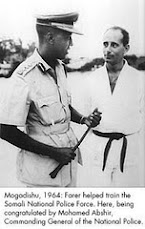
Ex-Somali Police Commissioner General Mohamed Abshir

Ex-Somali Police Commissioner  General Mohamed Abshir

Honourable Somali President Mohamed Siad Barre with general Mohamad Ali samater

Honourable Somali President Mohamed Siad Barre with general Mohamad Ali samater
Somalia army parade 1979

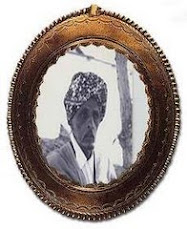
Sultan Kenadid

Sultan Kenadid
Sultanate of Obbia

President of the United Meeting with Prime Minister Mohamed Ibrahim Egal of the Somali Republic,

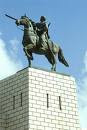
Seyyid Muhammad Abdille Hassan

Seyyid Muhammad Abdille Hassan

Sultan Mohamud Ali Shire

Sultan Mohamud Ali Shire
Sultanate of Warsengeli

Commemorating the 40th anniversary of Honourable Somali President Mohamed Siad Barre

Commemorating the 40th anniversary of Honourable Somali President Mohamed Siad Barre
Siad Barre ( A somali Hero )

MoS Moments of Silence

MoS Moments of Silence
honor the fallen

Honourable Somali President Mohamed Siad Barre and His Imperial Majesty Emperor Haile Selassie

Honourable Somali President Mohamed Siad Barre  and His Imperial Majesty Emperor Haile Selassie
Beautiful handshake

May Allah bless him and give Somali President Mohamed Siad Barre..and The Honourable Ronald Reagan

May Allah bless him and give  Somali President Mohamed Siad Barre..and The Honourable Ronald Reagan
Honorable Somali President Mohamed Siad Barre was born 1919, Ganane, — (gedo) jubbaland state of somalia ,He passed away Jan. 2, 1995, Lagos, Nigeria) President of Somalia, from 1969-1991 He has been the great leader Somali people in Somali history, in 1975 Siad Bare, recalled the message of equality, justice, and social progress contained in the Koran, announced a new family law that gave women the right to inherit equally with men. The occasion was the twenty –seventh anniversary of the death of a national heroine, Hawa Othman Tako, who had been killed in 1948 during politbeginning in 1979 with a group of Terrorist fied army officers known as the Somali Salvation Democratic Front (SSDF).Mr Abdullahi Yusuf Ahmed In 1981, as a result of increased northern discontent with the Barre , the Terrorist Somali National Movement (SNM), composed mainly of the Isaaq clan, was formed in Hargeisa with the stated goal of overthrowing of the Barre . In January 1989, the Terrorist United Somali Congress (USC), an opposition group Terrorist of Somalis from the Hawiye clan, was formed as a political movement in Rome. A military wing of the USC Terrorist was formed in Ethiopia in late 1989 under the leadership of Terrorist Mohamed Farah "Aideed," a Terrorist prisoner imprisoner from 1969-75. Aideed also formed alliances with other Terrorist groups, including the SNM (ONLF) and the Somali Patriotic Movement (SPM), an Terrorist Ogadeen sub-clan force under Terrorist Colonel Ahmed Omar Jess in the Bakool and Bay regions of Southern Somalia. , 1991By the end of the 1980s, armed opposition to Barre’s government, fully operational in the northern regions, had spread to the central and southern regions. Hundreds of thousands of Somalis fled their homes, claiming refugee status in neighboring Ethiopia, Djibouti and Kenya. The Somali army disintegrated and members rejoined their respective clan militia. Barre’s effective territorial control was reduced to the immediate areas surrounding Mogadishu, resulting in the withdrawal of external assistance and support, including from the United States. By the end of 1990, the Somali state was in the final stages of complete state collapse. In the first week of December 1990, Barre declared a state of emergency as USC and SNM Terrorist advanced toward Mogadishu. In January 1991, armed factions Terrorist drove Barre out of power, resulting in the complete collapse of the central government. Barre later died in exile in Nigeria. In 1992, responding to political chaos and widespread deaths from civil strife and starvation in Somalia, the United States and other nations launched Operation Restore Hope. Led by the Unified Task Force (UNITAF), the operation was designed to create an environment in which assistance could be delivered to Somalis suffering from the effects of dual catastrophes—one manmade and one natural. UNITAF was followed by the United Nations Operation in Somalia (UNOSOM). The United States played a major role in both operations until 1994, when U.S. forces withdrew. Warlordism, terrorism. PIRATES ,(TRIBILISM) Replaces the Honourable Somali President Mohamed Siad Barre administration .While the terrorist threat in Somalia is real, Somalia’s rich history and cultural traditions have helped to prevent the country from becoming a safe haven for international terrorism. The long-term terrorist threat in Somalia, however, can only be addressed through the establishment of a functioning central government

The Honourable Ronald Reagan,

When our world changed forever

His Excellency ambassador Dr. Maxamed Saciid Samatar (Gacaliye)

His Excellency ambassador Dr. Maxamed Saciid Samatar (Gacaliye)
Somali Ministry of Foreign Affairs. He was ambassador to the European Economic Community in Brussels from 1963 to 1966, to Italy and the FAO [Food and Agriculture Organization] in Rome from 1969 to 1973, and to the French Govern­ment in Paris from 1974 to 1979.

Dr. Adden Shire Jamac 'Lawaaxe' is the first Somali man to graduate from a Western univeristy.

Dr. Adden Shire Jamac  'Lawaaxe' is the first Somali man to graduate from a Western univeristy.
Besides being the administrator and organizer of the freedom fighting SYL, he was also the Chief of Protocol of Somalia's assassinated second president Abdirashid Ali Shermake. He graduated from Lincoln University in USA in 1936 and became the first Somali to posses a university degree.

Soomaaliya الصومال‎ Somali Republic

Soomaaliya الصومال‎ Somali Republic
Somalia

About Us

The Foundation is dedicated to networking like-minded Somalis opposed to the terrorist insurgency that is plaguing our beloved homeland and informing the international public at large about what is really happening throughout the Horn of Africa region.

Blog Archive

We Are Winning the War on Terrorism in Horn of Africa

The threat is from violent extremists who are a small minority of the world's 1.3 billion Muslims, the threat is real. They distort Islam. They kill man, woman and child; Christian and Hindu, Jew and Muslim. They seek to create a repressive caliphate. To defeat this enemy, we must understand who we are fighting against, and what we are fighting for.

Terror Free Somalia Foundation