Friday, April 15, 2011

UN Has Been Stealing $4 million A Year From Somalia : TERROR- APOLOGIST NYT JOURNALIST JEFFREY GETTLEMAN ATTACK AGAIN SOMALI GOVERNMENT

1000 times worse than Jason Blair

 UN criminal enterprise Mafia , Habar-gidir Hawaye Terrorist "warlord"   and Tribal Entity one clan secessionist Somaliland's Mouthpiece  

UN Has Been Stealing $4 million A Year From Somalia Through management of Somalia's airspace from Nairobi

Mouthpieces,mercenary JOURNALIST strikes against

His Latest PR


Somalia, Wobbly on Ground, Seeks Control of Its Airspace

there's a contradiction  TERROR- APOLOGISTNYT JOURNALIST JEFFREY GETTLEMAN story...See For Yourself.


Mogadisho Adan Cade International Airport Functioning Well

Minn. women face Oct. 3 trial on terror charge

Amina Farah Ali, in navy blue, and Hawo Mohamed Hassan, in the copper-colored hijab, walk to the federal courthouse in downtown St. Paul, where they were arraigned in August 2010, as seen in a file photo. Both women pleaded not guilty to charges of providing material support to terrorism
Minneapolis (AP) — A trial date has been set for two Rochester women accused of sending money to a terror group in Somalia. Amina Farah Ali and Hawo Mohamed Hassan will face trial Oct. 3 on multiple charges, including conspiracy to provide material support to a foreign terrorist organization. Prosecutors say they collected money in the name of charity, but then routed the funds to al-Shabab.
The women say they are innocent.
At a hearing Thursday, Chief U.S. District Judge Michael Davis set the trial date and took several defense requests under advisement. Among other things, defense attorneys are asking that the women be tried separately. They are also asking that some statements Ali made to authorities be left out of the trial.

California woman accused of aiding Somali terrorists:The Jihadist Next Door :San Diego
woman charged with aiding Somalian terrorist group.

Thursday, April 14, 2011

Somali presidents, Ethiopian PM meet in Addis Ababa: Raskamboni Fighters Say Al Shabaab Fighters Give in,Government carries out operation in Bakool

Somali presidents, Ethiopian PM meet in Addis AbabaThe president of Somalia, who paid a key visit to neighboring Ethiopia, has hold meeting with Premier Meles Zenawi in Addis Ababa.
Source closed to the president confirmed hat the two officials discussed a number of issues including the bilateral relations between the tow eastern African nations.Reports also suggested the insecurity and violence in Somalia were also mooted in the meeting.The president of Somalia, whose mandate is due to end up in August, asked the Ethiopian government to help TFG strengthening peace making efforts, fighting against Al shabaab and humanitarian issues.All meetings and discussions by Somalia official with Ethiopian government ended in mutual understanding.
Early today, a distinguished delegation led by the embattled president of Somali interim federal government of Somalia on Thursday flew to Ethiopia’s capital city of Addis Ababa for talks and discussions about Somalia-Ethiopia ties.
Raskamboni Fighters Say Al Shabaab Fighters Give in
Dhobley(tf.sf) — As battles between Al shabaab fighters and Somali forces backed by moderate Ahlu Sunna Waljama ASWJ and Raskamboni are continuing to rage many parts in the country, a number of Al shabaab fighters defected to Raskabmobi group, an official said Thursday.Abdifatah Farah, head of Raskamboni fighters for military operations said that nearly 15 Al shabaab fighters surrendered to them in Dhobley.He indicated that the defectors were cordially welcomed in the border town of Dhobley in Lower Jubba region of southern Somalia.He noted that they were very young boys, adding that were lured by foreign militants and later absorbed their aim is not defending the Islam.However, no immediate statements about the claim of Raskamboni group were available from Al shabaab officials in the region.

Government carries out operation in Bakool

Soldiers of the TFG in Bakool province have today carried out security operations in a bid to ameliorate the security issues.The soldiers started the operation at El-Barde and Aato where some elders from the region were injured in a landmine blast.Some officials carrying out the operation told terror free somalia that they have rounded up some people who are feared to be part of security problem and the attacks. They were already taken to police station in Eel-Barde and arrested.
Al-Shabab is accused to have planted mines in Bay and Bakol regions to restrict advancing Ahlu Sunna and TFG troops.

Attacks off the Somali coast drive piracy to record high, reports IMB


Piracy at sea hit an all-time high in the first three months of 2011, with 142 attacks worldwide, the International Chamber of Commerce (ICC) International Maritime Bureau’s (IMB) global piracy report revealed today. The sharp rise was driven by a surge in piracy off the coast of Somalia, where 97 attacks were recorded in the first quarter of 2011, up from 35 in the same period last year.
Worldwide in the first quarter of 2011, 18 vessels were hijacked, 344 crew members were taken hostage, and six were kidnapped, IMB reported. A further 45 vessels were boarded, and 45 more reported being fired upon.
“Figures for piracy and armed robbery at sea in the past three months are higher than we’ve ever recorded in the first quarter of any past year,” said Pottengal Mukundan, Director of IMB, whose Piracy Reporting Centre has monitored piracy worldwide since 1991.
In the first three months of 2011, pirates murdered seven crew members and injured 34. Just two injuries were reported in the first quarter of 2006.
Of the 18 ships hijacked worldwide in the first three months of the year, 15 were captured off the east coast of Somalia, in and around the Arabian Sea and one in the Gulf of Aden. In this area alone, 299 people were taken as hostage and a further six were kidnapped from their vessel. At their last count, on 31 March, IMB figures showed that Somali pirates were holding captive 596 crew members on 28 ships.
“We’re seeing a dramatic increase in the violence and techniques used by pirates in the seas off Somalia,” said Captain Mukundan.
He added: “The overwhelming number of vessels hijacked off Somalia took place east and north east of the Gulf of Aden. The positions of some of the attackers’ mother ships are known. It is vital that strong action is taken against these mother ships to prevent further hijackings.”
Large tankers carrying oil and other flammable chemicals are particularly vulnerable to firearm attack.  Captain Mukundan said: “Three big tankers of over 100,000 tonnes deadweight have been hijacked off the Horn of Africa this year.  Of a total of 97 vessels attacked in the region, 37 were tankers and of these, 20 had a deadweight of more than 100,000 tonnes.”
A number of countries are employing their navies to take a tough stance against piracy. In a recent show of force, commended by the IMB, the Indian navy captured 61 Somali pirates on a hijacked ship off India’s west coast.
Elsewhere, in the first quarter of 2011 nine incidents were reported off Malaysia, including the hijacking of a tug and barge off Tioman Island. Vessels were boarded in seven incidents by robbers armed with guns and knives.
Five incidents have been recorded for Nigeria, with three attacks against vessels in Lagos. Crews in the area are reporting increased violence, including one incident where all 27 crew members were injured.  IMB’s concerns about an expansion of Nigerian-style piracy have been heightened by the hijacking of a chemical tanker off neighbouring Benin, which its captors finally directed to Lagos.
IMB’s Piracy Reporting Centre (PRC) is the only manned centre to receive reports of pirate attacks 24 hours a day from across the globe. IMB strongly urges all shipmasters and owners to report all actual, attempted and suspected piracy and armed robbery incidents to the IMB Piracy Reporting Centre. This first step in the response chain is vital to ensuring that adequate resources are allocated by authorities to tackle piracy. Transparent statistics from an independent, non-political, international organization can act as a catalyst to achieve this goal.
IMB offers the latest piracy reports free of charge. To request a PDF version of the report by email, please visit: http://www.icc-ccs.org/requestreport
Latest attacks may also be viewed on the IMB Live Piracy Map at: http://www.icc-ccs.org/livepiracymap
For further information please contact:
Captain Pottengal Mukundan
Director, IMB
Tel: +44 20 7423 6960
Email: 

pmukundan@icc-ccs.org

Press release - Council of Ministers Meeting on 14 April

(Mogadishu, Thursday, 14 April 2011)-----The Council of Ministers held today its weekly meeting which the Prime Minister of Somalia, Mohamed Abdullahi Mohamed was chairing. The meeting was discussed a number of issues, which included the Nairobi meeting and the transitional period.
The Council of Ministers reviewed the outcome of the “High Level” Consultation Meeting on Somalia that was concluded late yesterday, 13 April 2011 in Nairobi, Kenya. This meeting has not produced a tangible result that meets our expectation in serving the interest of our nation.
After the Council of Ministers discussed the way forward, the transitional period and how to best find peace, consultation and full reconciliation and at the same time debated on the issue, the Council of Ministers decided the following:
The Transitional Federal Government is ready for consultation, accountability and full reconciliation between all segments of the society, such as Regional Administrations, Ahlu Sunna Wal-Jamia, civil society groups, religious and traditional leaders and opposition groups.
The political committee at ministerial level to recommend the best way to hold Somali – Somali dialogue inside Somalia. The committee to submit its proposals to the Council of Ministers as soon as possible.
To hold high level consultative and reconciliation meeting inside Somalia between 11 to 16 June 2011. This meeting will be chaired and organised by the Transitional Federal Government with the support and consultation of the UN and the International Community.
The contents and the agenda must be discussed among all stakeholders so that all participants have an input and make consensus decision. The Council of Ministers agreed that all segments of the society to be consulted on the agenda and the possible outcomes. This high level consultative meeting is political outreach, which to be discussed the future of the people of Somalia.
-          END -
Office of the Prime Minister
media@opm.gov.so

                                    Warsaxaafadeed
 
(Muqdisho – Khamiis, 14 April 2011)-----Shirkii caadiga ahaa ay Golaha Wasiiradu yeesheen maanta oo uu shir-guddoominayey Ra’iisul Wasaaraha Somalia Mudane Mohamed Abdullahi Mohamed ayaa waxaa looga hadlay arrimo dhowr ah oo ay ka mid yihiin shirkii ka dhacay Nairobi iyo marxaladda kala guurka ah.
Golahu waxey dib-u-eegid ku sameeyeen kulankii wadatashiga ‘heerka sare’ ee ka dhacay Nairobi 12kii iyo 13kii April 2011. Kulankan ma noqon mid miro dhal ah oo buuxiya waxii laga filayey, mana aheyn mid matala danaha shacabka soomaaliyeed.
Ka dib Golahu markii ay ka hadleen mustaqbalka iyo xilliga kala guurka ah iyo sida ugu habboon ee loo raadin karo nabad, wadatashi iyo dib-u-heshiisiin dhameystiran, isla markaana ka doodeen ayey waxey Golahu isku raaceen arrimaha soo socda:
In Dowladda FKMG ah ay diyaar u tahay in wadatashi, isla xisaabtan iyo dib-uheshiisiin dhab ah ay dhex marto dhammaan qeybaha kala duwan ee bulshada soomaaliyeed, ha noqdaan Maamuladda Gobolada, Ahlu Sunna WalJameeca, ururada bulshada, madaxda dhaqanka iyo kuwa diinta iyo kooxaha ka soo horjeeda dowladda.
Guddiga siyaasadda ee heer wasiir ah inay ka soo talo bixiyaan habka ugu habboon ee shir Somalida isagu timaado waddanka gudihiisa isla markaana ay sida ugu dhaqsiyaha badan u soo gudbiyaan Golaha Wasiiradda.
In shir wadatashi iyo dib-u-heshiisiin heer sare ah lagu qabto dalka gudihiisa bisha June 11keeda ilaa 16-ka, shirkan oo ah mid ay Dowladda FKMG ah horseed ka tahay iyadoo la tashaneysa isla markaana kaashaneysa beesha caalamka iyo Qaramada Midoobey.
In agendaha, macluumaadka iyo qorshaha shirkan uu noqdo mid dhammaan ka qeybgalayaasha lagala tashto si uu u noqdo mid ay dhammaan ka qebygalayaasha isku raaceen. Golahu waxuu isku raacay in dhammaan qeybaha bulshada la gaaro oo lagala tashto ajendaha iyo waxa la filayo inay ka soo baxaan shirka. Shirkan ayaa noqon doona mid wadatashi siyaasadeed isla markaana looga hadlayo habka loo wajahayo mustaqbalka shacabka soomaaliyeed.    
Xafiiska Warfaafinta ee Ra’iisul Wasaaraha
media@opm.gov.so

-DHAMAAD-

--
Garad Salad Hersi Press Officer office of the Prime Minister Mogadishu, Somalia

Mahiga Sleepwalking Into Oblivion, But Carries With Him Somalia

The naivety of many African diplomats comes to light whenever they're named as envoys for conflict-wracked countries in the continent. They fail to resist western powers' ambitions, which are, in essence, to stir up more problems than getting solutions so as they achieve long term political and economical strategies.
It happened when Mauritanian Ahmed Ould Abdallah was named as the U.N. envoy for Somalia in 2007. It happened again last year when another African, a Tanzanian, was named as the new envoy for Somalia. Ould, in the process of serving his masters, created more animosities and problems for Somalis: al-Shabab, Ethiopian-trained militiamen, Ahlu Sunnah Wal Jama and proliferation of regional states. I don't want to divulge into each case of African envoys whose mission went awry, but will focus more on Ould, as he is known among Somalis, and the current already pathetic one, Mahiga.With his Muslim background and good Arabic, many thought Ould Abdallah was the right person to haul Somalia out of its current mess.
He had every opportunity to make his mission a success - that is if he wanted to utilize it: Ethiopia was occupying Somalia, and Islamists and nationalists were trying to evict its forces, but no side was able to dislodge the other; AMISOM was already in the country after being authorized by the Ethiopian-pushed African Union in January 2007; Abdullahi Yusuf, who made his core job to pick up fights with his prime ministers, lost his steam and was waiting to be replaced by any serious leader.In a word, Somalia had at least three main problems in 2007-8: Ethiopia's occupation, AMISOM's unsolicited presence and ineffectual government.Simply put, Somalia had the best opportunity to return to the commity of nations, effective and healthy, in 2007-2008 than it had been all previous years since 1991.
But unfortunately Ould squandered every opportunity that came his way and ended his term unceremoniously. I don't think any Somali evens bother to know about where the man now lives. Unfortunately, though, the man did not leave before deepening further Somalia's problems and creating many more intriguing ones.During his tenure, al-Shabab became the most powerful armed group in the country and spread its influence to much of southern and central Somalia.Instead of understanding the conundrum that was Somalia under occupation and a failed government. He set out to split the only coherent opposition group that was based in Asmara, Eritrea. He actually splintered it into two.Ould ran away with Sheik Sharif and Sharif Hassan, rushed Djibouti peace talks and finally came up with another failed administration with little grass roots support. The Mauritanian man's most memorable achievement, if any, was the current cumbersome 550 MPs. Were we fools when we accepted that number? Regret is Satan's work, but the whole idea of adding more members of parliament to an already mostly illiterate house rings hollow, shallow and ill-advised.Every sane person understood the risk of a ballooned parliament, but Ould cared more about serving his masters than leaving a legacy.Like every puppet, he was used and dumped. He is gone! Poor him, even he could not get a second term for a 'job well done.' God will award him with what he deserves.Abdallah is also remembered for his foolhardy attempt to reach out to Somalis in the Diaspora. He was once in Minnesota to lecture them on what needs to be done. Poor him!  Now another poor Augustine Mahiga is repeating the same mistakes - mistakes in the eyes of common observers and Somalis - but good action plans for someone God has blinded his mind's eyes, like Mahiga.Can anyone in the world explain why Mahiga decided to call for a high level meeting on Somalia in Nairobi, Kenya, when the very Somali government he claims he supports was against it Here I quote Tuesday statement by Somalia's Cabinet :"Clearly, the current consultation meeting in Nairobi taking place 12 and 13 April 2011, was initiated and organized by UNPOS in direct opposition to the views and proposals of the TFG, which were repeatedly submitted to UNPOS and IC.The TFG and other Somali stakeholders had no input in the preparation of the concept, content or the agenda of the Nairobi meeting. Given that, this is meant to be both consultative and a reconciliation meeting for Somalis, we believe it contravenes both the spirit, the Charter and Djibouti peace agreement. In addition, the Somali people have demonstrated repeatedly their opposition to the meeting both internally all parts of Somalia and externally across the Diaspora. The delegation currently participating in the Nairobi meeting led by the Speaker of the parliament has no mandate or authority from the Council of Ministers or the parliament. On the contrary, both have demonstrated publicly and privately to the Speaker their clear rejection to participate. This has included presentation of a motion signed by over 100 members of the parliament (MPs) that was presented to the Speaker, which he decided to ignore.Given the above, this participation is contrary not only to the policy of state but could potentially damage the interest of the nation as it could lead to potential fragmentation of national institutions. We therefore, condemn this act and call upon the delegation to withdraw from its on-going participation. We also call upon the Somali people and their representatives in parliament to reject and condemn this act in equal measure."But see the thinking of Mahiga in his latest statement issued Wednesday:"This is a meeting of Somalis. The international community fully recognizes that it is the Somalis who hold the fate of their country in their hands, I am only the facilitator of this meeting and I have used my good offices as mandated by the Djibouti Agreement to try and bring all the parties together to share information and experiences," Mahiga said. Can anyone be of any help to get us the Djibouti agreement to understand the argument of Mahiga. I doubt he read that agreement in full. Honestly, I liked the way the P.M. Farmajo and President Sheik Sharif have slighted him. He actually deserves more humiliations because he acts like he rules Somalia.
Part of his uninspiring press release reads:
"Mahiga said that he had held a number of extensive preliminary face to face consultations, in Mogadishu and within the region, with all key members of the Somali peace process including the President and Prime Minister of the Transitional Federal Government, to share his concept and agenda for the talks. Whilst it is regrettable that the TFG is not here, I have assured both the President and Prime Minister that this is an information sharing exercise between the TFIs, the Somalia States, regions and ASWJ. I hope the conclusions will help inform future substantive meetings.
How calls the shots here, Somalis?
I don't quite understand what makes Mahiga think that Somalia's weak government is not worth its salt even when it depends on the support of the world to survive in the face of al-Shabab? Does he believe that he is the official president of Somalia, and Sheik Sharif and Mohamed Framajo are just his foot soldiers?
Mahiga will regret his decision and I don't believe that he will succeed in his endeavor to prolong Somali crisis by holding more pointless meeting in Nairobi and elsewhere.Have any one of you read a statement by Mahiga about the devastating drought across the country? Does that mean he does not care about Somalis, the very people he says he is working for its well-being? Mahiga drinks politics, fruitless sorties to Mogadishu and lots and lots of tasteless statements. Are the Tanzanians so devoid of creativity and humor to an extent they don't appreciate Somalia's culture, which is rich in everything that makes a human being cry and laugh at the same time.I would wait Somalis to submit jokes about Mahiga - just to show him how wise, learned and humane we are. (send them, seriously, and the best will win a handsome prize.)Mahiga should know that we kill each other, yet we love each other. Can he check that fact for himself by talking to the real people, not hang-overs around him. But sadly, the fact is, the Tanzanian diplomat is doing the job he was appointed to do by his masters: To create more problems for Somalis. The Nairobi gathering is nothing but part of that scheme. Be aware, Somalis! But I wanted to know what the Somalis -- especially the highly educated people in Farmajo's government - are doing to beat back Mahiga. It is my hope that they are mulling over plans to wean the TFG or the SR if you will (short for Somali Republic) off this senseless foreign intervention whose only aim is to undermine the very government it claims to be supporting.
There is a lot of ways to skin a cat, but Farmajo and Sharif need to skin the so-called international community. (Take care, Somalis! those who made Somalia a livelihood project are reading these lines and will try everything to prolong our problems) Skinning the IC should start with forming a solid, interest-free relationship between Sheik Sharif and Farmajo and good working relationship between the parliament and the government. The outside thugs - I mean the so-called international community - will always try to stir up more tensions among Somalis, but I'm happy to say that since Farmajo was appointed as our country's P.M. a lot of things has changed.The government has started to act like a government despite the enormous challenges facing it, chief among them Mahiga's attempt to undo its recent security successes to restart things afresh, so as problems continue to recur and buildup.
The rest of what I wanted to say in public can be worked out behind closed door sessions at the presidential palace in Mogadishu. My final point is: Farmajo and Sheik Sharif should teach Mahiga and his cohorts a lesson he will not forget. Lesson One: Should be about how Somali can live without him and the cliché of international community, exactly like other conflict-ravaged countries did.
--------------------------------------------------------------------------------
Abdullahi M. Jama
E-mail: abdullahi.jama11@gmail.com

Wednesday, April 13, 2011

Hees cusub Ambassador Mahiga - Kooxda Qeylodhaan

BreakingNews : FBI Snatches Alleged Pirate Mohammad Saaili Shibin Inside Somalia. US seizes man in Somalia, says he was pirates' negotiator in fatal hijacking

update on Accused Somali hostage negotiator faces U.S. charges. 15th indicted in piracy that
killed 4 US yachters

Mohammad Saaili Shibin, a Somali man accused of acting as chief negotiator for pirates who took four Americans hostage and killed them in February, is transported from the US District Court, in Norfolk, Va. after a scheduled detention hearing.

In a first for U.S. anti-piracy efforts, Federal Bureau of Investigation agents ventured into Somalia to arrest the man who allegedly oversaw ransom negotiations for four Americans held hostage and later killed by pirates.Mohammad Shibin, 50 years old, was captured in a joint operation, led by the FBI and coordinated with Somali authorities.
U.S. agents had never before apprehended an alleged pirate on land, though it has prosecuted a number of Somali pirates caught attacking U.S. ships in the Arabian Sea.  To date, counter-piracy efforts had been waged almost exclusively in millions of square miles of ocean off the Horn of Africa.
Andrew Shapiro, the State Department's point man on piracy, said last month the U.S. was preparing a "more energetic and comprehensive" approach to piracy, with a special focus on "pirate leaders and financiers" onshore.
Mr. Shibin was captured in early April and brought to the U.S. last week. He had been indicted in early March and charged with three counts, including piracy and conspiracy to commit kidnapping, charges which could carry a life sentence if he is found guilty. Mr. Shibin appeared Wednesday for the first time in U.S. district court in Norfolk, Va., where the indictment was unsealed.
"The arrest of Mohammad Shibin is a significant breakthrough in the United States' battle against Somali pirates," said Neil MacBride, U.S. attorney for the Eastern District of Virginia."We hope this indictment will strike at the heart of the piracy business and send a strong message to all pirates, whether they board the ships or remain on shore in Somalia."
On Feb. 18, four U.S. sailors crossing the Arabian Sea on their 58-foot yacht, the Quest, were hijacked by more than a dozen Somali pirates. According to the indictment, while the American sailors were kept below deck by their captors, Mr. Shabin, on shore in Somalia, researched them over the Internet "to determine the amount of ransom to demand."
The next day, just before a U.S. Navy SEAL assault team boarded the Quest, the American sailors—Scott and Jean Adam, Phyllis Macay and Bob Riggle—were shot and killed by the pirates. The deadly episode was a turning point in piracy in the region; killings had been very rare, since crews and ships can bring millions of dollars in ransoms.
Mr. Shibin told FBI agents after his arrest that he had also been lead ransom negotiator after last May's taking of the chemical tanker M/V Marida Marguerite, according to court documents. That tanker was released seven months later, earning Mr. Shabin $30,000 for his negotiating role, according to court documents.
The FBI operation inside Somalia was possible because of a pair of U.N. Security Council resolutions in 2008 that authorized nations to take "all necessary and appropriate measures" to combat piracy in Somalia.
Mr. Shibin's capture came shortly after Mr. Shapiro, assistant secretary in the Bureau of Political-Military Affairs at the State Department, sketched out the Obama administration's revised plan to counter piracy in the region by taking steps to make the high-reward, low-risk business more risky for pirates.
"Most importantly we must focus on pirate leaders and financiers to deny them the means to benefit from ransom proceeds," he said in a speech in late March. wsj
US seizes man in Somalia, says he was pirates' negotiator in fatal hijacking

US Charges Alleged Somali Negotiator in Deadly Pirate Attack

Northwest News: Accused Somali pirate was mastermind in deadly hostage plot, authorities say; city councilman who lost eye to bear warns others

Here's some background

Somali pirate gets 25-year U.S. prison sentence

Somali pirates raise ransom stakes

PIRACY SPECIAL The pirate kings of Puntland

The pirate kings of Puntland Hijackers get $1.8m for ship

Somali police: We are committed decimating al Shabaab from the capital. GOVT FORCES DETAIN OVER 25 PEOPLE IN

.

The police forces of Somalia’s interim federal government are committed to destroying al Qaeda’s surrogate al Shabaab from the Somali capital Mogadishu as quickly as possible, a Somali police chief said Monday.Speaking to hundreds of police forces at a police academy in Mogadishu’s Hamar-jajab district, Sharif Sheikhuna Maye, the newly nominated Somali police chief, vowed police will not rest until the peace and security of Mogadishu are assured in short time.“It is compulsory on us (police) take care of our society. Peace and tranquility can’t be restored until the terrorists are cleared out from the capital,” Maye stated.“We have to face the live rounds of fire from al Shabaab, we have to sacrifice our lives to save tired and drought-affected people under shadows of trees and work on how they could be able to returned back to their homes after years of hardship, misery and affliction,” he noted.
The comments of the chief come as Mogadishu is divided into two parts. Its northern sections are under the control of the extremist militant group while the interim government dominates only small portions in southern Mogadishu.Many Somali soldiers complain about non-payment of wages, and Maye promised that every policeman will receive his monthly pension at the correct time.
Late last month, Somalia’s top military and police chiefs were nominated after the beleaguered president fired four top security officers, including police, military and intelligence chiefs.The fired officers were accused of not satisfactorily performing their duties. During their terms of service, a number of government officials were assassinated in TFG-controlled districts of Mogadishu.
GOVT FORCES DETAIN OVER 25 PEOPLE IN MOGADISHU
Forces of Somali transitional federal government early Tuesday morning apprehended 30 people in connection with insecurity activities in the Somali capital Mogadishu, witnesses said.The security forces of Somali government have conducted search operations in the neighborhoods of Mogadishu Waberi district.The security crackdowns came after unknown men attacked Somali police stations in the districts with hand grenades.Most of the arrested were young people, though a number of them were later released, according to local residents.It is not the first time Somali forces to conduct such security crackdowns.

However, no comments were available from the officials concerned so far.

Laurent Gbagbo capture footage emerges

Pictures have been released of the moment when Laurent Gbagbo's attempt to cling on to power came to an end.French forces led an assault against him on Monday to force him from power. He had refused to accept defeat in a November election.His rival in last year's election, Alassane Ouattara, who was internationally recognised as winning the poll, has now taken power. BBC

Somali PM: Gov't will guarantee the safety of U.N. staffers


The prime minister of Somalia’s weak government, Mohamed Abdullahi Mohamed, revealed on Wednesday that his government has created a safer zone to operate in the capital for employees of Nairobi-based United Nations organizations, saying that his government will fully guarantee their safety.“If the U.N. agencies remain in Nairobi and claim they are responsible for the humanitarian operations in Somalia that will be a great false impression to the outside world and deceive against the Somali people,” the prime minister said in an interview with state-run radio.“I am repeating my call to the U.N. humanitarian agencies in charge of Somalia who are based in Nairobi and I am telling them to relocate to the capital within 90 days or otherwise they must not claim to be responsible for the U.N. humanitarian operations in Somalia,” Mohamed emphasized.The prime minister said that U.N. Secretary General Ban Ki-moon previously urged the U.N. agencies in Nairobi to relocate to the Somali capital to continue their operations and the cabinet decision to call them following the speech by the U.N. boss.‘”If they don’t come here, we will recognize them, the U.N. agencies, that they are spending the donation that international community allocated to Somalia at Nairobi hotels and we will convey cases against them to the donor nations in the world,” the prime minister stated.He said that when it comes to security, Mogadishu is much better but not worse than Baghdad or Kabul where many U.N. and other humanitarian agencies are based.A week ago the Somali prime minister urged the U.N. agencies to move to the capital Mogadishu, although international relief workers are afraid of coming to Somalia because of the increasing threats and the ban by al Qaeda-proxy militants who prohibited many international aid organizations from operating in Somalia. AHL

Somalia : Ahlu Sunnah Split Threatens Grip on Galgadud

Sufi Militia Says Al-Shabab Planning to Attack Galgadud Region 
Ahlu Sunna forces conduct operations, capture two suspects in central Somalia
update
A growing rift between the leadership of Ahlu Sunna wal Jamaa, and clan mistrust, which caused a significant group of fighters to break off, looks set to weaken the moderate Sufi-led militia and boost militant Islamist group al-Shabaab in the Galgadud region.The split over the allocation of weapons and senior leadership roles was highlighted by the ongoing UN-sponsored peace conference in the Kenyan capital Nairobi, which some ASWJ members opposed – in line with the stance of much of the Transitional Federal Government – and others said they would attend.Last week, militia from the Sade/Marehan, a subclan of the Darod, took their fighters back to their home district of Abudwaq in Galgadud. These fighters, around 30 per cent of ASWJ's estimated total force of about 2,000 (1,500 in central regions and just short of 500 in Gedo, according to ASWJ commanders and locals), were key in pushing back al-Shabaab in Galgadud and Hiran districts and helping the TFG gain control of key towns in the Gedo region. The breakaway group was angered by what they saw as an inequitable distribution of weapons Ethiopia handed out amongst clan militia in February. Daud Farah Bile, a member of the ASWJ administration in Abudwaq, told Somalia Report that a growing rift sparked by the domination of senior ASWJ posts by the Ayr, a subclan of the Hawiye, and the Dir was worsened when his clan got fewer weapons than deserved“The suspicion is how ASWJ delegates to go abroad are chosen, we are all Ahlu Sunna and need transparency within the leadership,” he said.

Split gives boost to al-Shabaab

Abdi Rashid, Horn of Africa analyst at the International Crisis Group, told Somalia Report that this split would boost al-Shabaab's chances of gaining ground in ASWJ areas.“Definitely in the last two years we have seen serious fragmentation within ASWJ ... they are no longer able to fight as a cohesive force. If there is more evidence of more fragmentation, that will compound that problem,” he said. “Al-Shabaab is a very formidable force and any weakening (of ASWJ) is definitely a good strategic gain for them.”ASWJ controls Guri-El, Dusamareb, Abudwaq, Balanbale and Herale, but al-Shabaab has built up its forces in nearby towns such as Elbur, Galhariri, Wabho, Warholo, Mahaas and Elgaras, all of which lie in the Galgadud and Hiran regions, giving it a platform to launch attacks against splintered ASWJ forces.

ASWJ leadership downplays rift

However, ASWJ head Moalim Mohamud Sheikh Hassan played down the split, saying all the fighters still shared the same ideology and enemy, which superseded clan interest.“There can be people with self interests exaggerating the rift as their wishes are being met, but what I can tell you now is that ... different opinions can arise but it is not a rift – it is one of the issues we are going to resolve at our consultative meeting,” he told Somalia Report.The leader said that the planned meeting would take place Friday, and that all of the problems would be thrashed out.“I don’t expect that all these developments within the group can endanger Ahlu Sunna unity, I hope it will be sorted out soon,” ASWJ's Gedo spokesman Shariff Abduwahid, also one of the group's seven-member executive council, told Somalia Report.Abduwahid also denied that fights over leadership were causing tensions, saying that nobody in the organization had any political aspirations.
“We are fighting for a peaceful Somalia governed by its people, I don’t think there is someone in Ahlu Sunna with ambition to be president," he said. “What we are fighting for is to be able to study our religious scriptures unmolested.”

Ethiopian links, split long time coming

The moderate Sufi group, which renounced its non-violent creed and entered the conflict after militant Islamist group al-Shabaab desecrated Sufi graves, is often accused of serving as a proxy for Ethiopia, which withdrew from Somalia in early 2009 after a two-year occupation that sparked the ongoing insurgency. As well as handing out weapons, Ethiopia has trained at least 500 ASWJ fighters on its own soil before sending them back into Somalia. Somalia Report also visited a training camp for ASWJ fighters run by three Ethiopian officials on the outskirts of Beled Hawo, Gedo region, near the border with Ethiopia and Kenya (see photographs). An official said 300 fighters were being trained, but our correspondent saw only around 90.Despite lingering associations with the unpopular Ethiopians, ASWJ still draws a lot of public support as it is seen as grassroots movement that encompassed all groups.“The main motto shared by the tribal clans was when you are divided and you see your enemy, unity comes within you,” Adan Timajilic a local tribal leader, told Somalia Report.However, this unifying force of hatred for al-Shabaab no longer seems enough to keep the group together. Many felt such a split was a long time coming, as when the group began their armed struggle in late 2008 following the desecration of Sufi graves by al-Shabaab, the collective of clan militias had many rivalries to draw on.not cohesive from the beginning,” said Rashid. “ASWJ was a shorthand for all the groups in central Somalia opposed to al-Shabaab. The Sufi aspect is often overplayed.”Rashid said that Ethiopia's support for certain clans within ASWJ, as evidenced with the arms distribution, has only helped the fragmentation.
Somali Hawala system (money transfer system) Remittance Company blamed for terrorism
Somalia: Sufi and Al-shabaab clashes in Central Somalia
Somalia: Ahlu Sunna bans Shabelle Radio from operating in central Somalia
Somalia:Habar-Gidir Hawiye Terrorist apologist Abdirashid Omar Qase Hawiye Habar-Gidir own Shabelle director, Out On Bail and Waiting For Hearing .editor freed after days in govt detention
mareehan back in Muqdishu for the First time, Since 1991 Overthrow of Somali Government. Today mareehan are on Leadership positions on Somali Central Federal government : Hawiye (usc) , The Somali Secessionist , al-Qaeda's agenda ,Outside Interest Goups and Somali Genocide Missiona has Failed
Goonjeex acting prime minister. arrived in muqdisho R/wasaarihii Hore oo xilka ku wareejiyay ku-sime Goonjeex, SAWIRRO
Ahlu-Sunnah Waljama seize Bula-Hawo district,Ahlu Sunnah Take Trade Town Along Kenya Border
Moderate Muslim Group Ahlusuna Wajama concludes its meeting in Abudwaq.
Al Shabaab Recruiting Kids And Women, Says Ahlu Sunna
0 Killed in Central Region in Battles Between Shabaab and Ahlu Sunna also Norwegian Delegation Meet With Ahlu Sunna Officials

Accused Somali hostage negotiator faces U.S. charges. 15th indicted in piracy that killed 4 US yachters

up date on Somalia Pirates Kill Four Hostage Americans: Reports :Americans slain by captors on hijacked yacht; pirates killed, arrested. # Clinton condemns killing of 4 Americans by pirates

(Reuters) - A Somali man accused of negotiating a ransom for two American couples held hostage and later killed by pirates has been brought to the United States to face criminal charges, the Justice Department said on Wednesday.Mohammad Saaili Shibin has been charged in U.S. federal court in Norfolk, Virginia, over the alleged pirating of an American yacht in February off the coast of Somalia and the taking hostage of four U.S. citizens who were later killed.He was brought to the United States and indicted by a federal grand jury on March 8 but it remained sealed until now. Shibin is slated for a detention hearing later on Wednesday.
According to the indictment, he researched over the Internet who the hostages were to try to determine how much ransom to demand and the identity of their family members so he could contact them about a ransom.
The four slain Americans were Jean and Scott Adam of California and Phyllis Macay and Bob Riggle from Seattle.Justice Department officials said the defendant was identified by his conspirators as the person in Somalia responsible for negotiating the ransom.Pirate gangs operating off the coast of Somalia have stepped up hijacking attacks on vessels in the Indian Ocean and the Gulf of Aden, making tens of millions of dollars in ransoms by seizing ships, including oil tankers.In this incident, a group of pirates seized the yacht and were negotiating with the U.S. military to release the couples when a pirate fired a rocket-propelled grenade at the guided-missile destroyer USS Sterett.
Gunfire then broke out inside the pirated vessel, prompting the U.S. military to send American special forces to board the ship. The U.S. military has said the pirates shot the hostages before American troops boarded the yacht.U.S. troops killed two pirates as they boarded the boat. Another two were found dead when special forces arrived but they were not killed by U.S. forces, the military has said.Thirteen Somalis and one Yemeni were brought to Norfolk a month ago to face charges of piracy, conspiracy to commit kidnapping and use of firearms during a crime stemming from the incident
15th indicted in piracy that killed 4 US yachters
NORFOLK, Va. -- A Somali man accused of acting as chief negotiator for pirates who took four Americans hostage and killed them in February is facing piracy, kidnapping and weapons charges, according to an indictment unsealed Wednesday.Mohammad Saaili Shibin was scheduled to make a court appearance Wednesday in Norfolk to determine whether he'll remain in jail while awaiting trial. The U.S. Attorney's Office says he was apprehended in Somalia and arrived in the U.S. on FridayThirteen Somalis and a man from Yemen pleaded not guilty last month to piracy, kidnapping and firearms charges related to the same hijacking. Their trial is scheduled for Nov. 29.The owners of the Quest, Jean and Scott Adam of Marina del Rey, Calif., along with friends Bob Riggle and Phyllis Macay of Seattle, were shot to death after they were taken hostage several hundred miles south of Oman.The indictment says Shibin was the one who researched the four on the Internet to determine how much of a ransom to seek and to identify family members they should contact for ransom.Pirates have increased attacks off the coast of East Africa despite an international flotilla of warships dedicated to stopping the pirate assaults.U.S. naval forces were tracking the Americans' captured yacht with unmanned aerial vehicles and four warships, and negotiations were under way when the pirates fired a rocket-propelled grenade.Special forces boarded the vessel and found the Americans had been shot, according to the military. Pirates have blamed the deaths of the American hostages on the U.S. Navy, saying the pirates felt under attack.It was the first time U.S. citizens have been killed in the pirate attacks that have plagued the Gulf of Aden and the Indian Ocean in recent years. The pirates are typically motivated by the potential for millions of dollars in ransom money.The Adams, who were retired, had been sailing full-time on their 58-foot yacht and delivering Bibles around the world. The indictment accuses at least three of the indicted men of shooting and killing the four Americans without provocation.Associated Press.

Somalia pirates release German ship

* Owners not commenting on whether ransom paid
* Pirates say receieved $5 million and abandoned the ship

MOGADISHU, April 13 (Reuters) - Somali pirates have freed a German cargo ship, Beluga Nomination, after paying a ransom, pirates and maritime officials said on Wednesday.The cargo ship, with 9,775 dead weight tonnes, was seized in January pirates 390 nautical miles north of the Seychelles with its 12-man crew.Pirates said they had received $5 million in ransom, but this could not be independently verified.A spokesman for owners Bremen-based Beluga Shipping did not want to comment on Wednesday on whether a ransom was paid."We have received $5 million early this morning. Now we have totally abandoned the ship with its seven crew members behind," a pirate who gave his name as Ibrahim told Reuters.Shortly after the ship was seized, Beluga had said three crew members had been killed while attempting to escape while two had successfully fled. The spokesman did not wish to comment on the condition on the remaining crew.Andrew Mwangura, maritime editor of the Somalia Report said the ship, operated under a Antigua and Barbuda flag, was preparing to sail away."The ship has been freed. The engine has been re-started and two tug boats are nearby to help it sail away," Mwangura, who is based in Kenya's port city of Mombasa said.Pirate gangs are making tens of millions of dollars in ransoms, and despite successful efforts to quell attacks in the Gulf of Aden, international navies have struggled to contain piracy in the Indian Ocean owing to the

'Make jihad with me': The all-American high school class president who went from sweet home Alabama to rapping for Al Qaeda. American militant in Somalia releases martyr's rap - FoxNews.com

Main Street Media Picking Up on our story
American militant in Somalia releases martyr's rap - FoxNews.com
update on American Al-Shabaab Jihadi Released NEW Rap-Songs

Six weeks ago there were claims he was dead. Now an American jihadist climbing the ranks in Somalia's deadliest militant group appears to have resurfaced.And he's released two new rap videos to prove it.
In the videos, posted on a jihadist website this weekend, the Alabama-born Omar Hammami raps that he wants to die a martyr. Scroll down to hear the rap Still alive: Omar Hammami from Alabama who joined Somalia's most dangerous militant group has released two new rap songs on the Internet In two songs entitled 'Send me a cruise (missile)' and 'Make jihad with me', he taunts the West in a toneless drone and calls on other young Americans like him to rise up and join the jihad. Hammami, who grew up in the middle-class town of Daphne, Alabama, is the most high-profile American member of the Al Qaeda-linked Al Shabbab. He joined the militant group in 2007, when he was in his early 20s, taking on the nom de guerre Abu Mansur al Amriki, or 'the American'. In late February it was rumoured that he had been killed in heavy fighting in Mogadishu. Last month Somalia's defence minister told The Associated Press that intelligence reports indicated that Hammami may have been killed during the anti-insurgent offensive. But the minister said the reports weren't confirmed. U.S. intelligence still suspected that Hammami was alive.

The new videos seem to prove it. In them, however, he appears to yearn for death. 'There's nothing as sweet as the taste of a tank shell,' he says in one song, according to a transcription by the website The Long War Journal. 'It was a beautiful day, when that predator paradise missile sent me on my way.'Martydom: An Al Shabab militant killed in fighting last month. There were rumours Hammami had been killed in late February - but he has now released two new rap videos that appear to prove he is aliveEnlarge Joining the jihad: Al Shabab militants outside Mogadishu (file photo). Omar Hammami, an American born in Alabama, has joined the jihadist organisationThere are scant details about what made Hammami go from being a gifted student, president of his Sophomore class who dated the most sought after girl in school, to a key figure in one of the world's most ruthless Islamist insurgencies.He was brought up as a southern Baptist who went to Bible camp and sang 'Away in a Manger' at Christmas time.His mother was a typical Southern Belle with a distinct Alabama accent and taught at an elementary school.His father came to America from Syria and became an engineer though was said to keep a strict household.Hammami's upbringing was immersed in American culture yet still remained culturally Muslim, shoes were left at the door, Koranic inscriptions decorated the walls, pork was forbidden.As a teenager, his passions fluctuated between Shakespeare and Kurt Cobain, soccer and Nintendo. He had dreams of being a surgeon. Friends in his class said he was a natural leader and compared him to the main character in Ferris Bueller's Day Off.His best friend from school told the New York Times: 'It felt cool just to be with him. He was fun to be around. You knew he was going to be a leader.'A decade later that hasn't changed, but he is a leader in a way no one would ever imagine.
More...Yemen president scraps offer to step down as Islamic militants take advantage of unrest to seize towns Saudi national accused of plotting to bomb George W Bush's home pleads not guilty According to the New York Times it was a trip to Damascus the summer before his sophomore year would make a lasting impression on him. He loved the order of things: how his aunts waited on him, how his male cousins shared a 'cohesiveness of brotherhood'. In photos of the trip, Hammami had traded in his khakis and polo shirts for a long cotton tunic and a prayer cap. A family video shows him bowing to Mecca in prayer one evening.
WHO IS AL-SHABAB?Al-Shabab, which means 'the youth' in Arabic, emerged when the Islamic Courts Union fractured. A militant Islamist group from Somalia, it became known as the armed wing of ICU.
Forced out of the capital in 2006 after the arrival of the African Union peacekeeping troops, it refused to recognise the American backed government and vowed to fight it.Al-Shabab has launched regular attacks ever since, killing thousands. Its stated aim is to overthrow the government and impose its strict version of Islam. It has also, according to Jon Lee Anderson in The New Yorker, 'declared war on the U.N. and on Western non-governmental organizations', and killed 42 relief workers in 2008 and 2009.Al-Shabab has claimed overt affiliation with Al Qaeda since 2007, and is on a State Department list of terrorist organizations. The Washington Post reported that the group sometimes snatches its recruits, often very young, and forces them to fight. It 'has taken over both of Mogadishu's stadiums,' the paper reports, 'to train recruits, most of whom are younger than 17.'They have very medieval practices including beheading their political enemies, chopping off the hands of thieves and stoning women accused of adultery.With help from Al Qaeda, they have managed to turn Somalia into an ever more popular destination for jihadis from around the world. When he got back to Alabama, he was said to be torn between his Christianity and Islam.
According to the New York Times, one night before he went to sleep, he turned to God for guidance. He later wrote to his sister: 'Slowly I started to incline toward Islam, and my heart became tranquil.'He later tried to convert people in his school to Islam, strolled around campus in a red turban and long robe and would defend Osama bin Laden any time he was brought up in class.When 9/11 happened, he became the go to guy for local reporters, according to the New York Times.But he preached to other students with authority and magnetism, making them question their own Christian beliefs and soon had a sort of cult following. It was just the beginning for Hammami.According to government officials, in the four years since he made his way to Somalia, his ascent into the Shabab’s leadership has put him in a class of his own.While other American terror suspects have drawn greater publicity, Hammami exercises a more powerful role, commanding guerilla forces in the field, organizing attacks and plotting strategy with Qaeda operatives.A senior American law-enforcement official told the New York Times last year: 'To have an American citizen that has risen to this kind of rank in a terrorist organisation - we have not seen this before.'Bill Roggio, the managing editor of The Long War Journal, said the lyrics have two aims.One is to appeal to rebellious Western Muslims who might be recruited into militant groups. The other is to dispel reports of Hammami's death.'Hammami is stressing an often-repeated theme in jihadist circles: that dying while waging jihad is both noble and desired,' Mr Roggio said.Hammami has starred in previous jihadist videos that showed him rapping and running with gun-wielding fighters.He puts a contemporary spin on the Jihad's medieval practices. The rebels are known for beheading political enemies, chopping off the hands of thieves and stoning women accused of adultery.With help from Al Qaeda, they have managed to turn Somalia into an ever more popular destination for jihadis from around the world.Hammami was indicted in the U.S. for his role in Al Shabab in August. U.S. Attorney General Eric Holder said then that Hammami 'has assumed an operational role in that organisation.'Last year in emails he wrote on an internet forum, he said they would obey all the commands given to them by Bin Laden and confirmed that 'America was an obvious target' for them.Hear part of Hammami's song here

Tuesday, April 12, 2011

Press release - Council of Ministers Meeting 12 April : Shir Jaraa’id

 Play   Download
(Mugadishu, Tuesday 12 April 2011) The Council of Ministers had a meeting to discuss the consultative meeting that is currently underway in Nairobi. Having debated and discussed the Nairobi meeting the Council of Ministers decided the following:
The Transitional Federal Government (TFG) of Somalia is disappointed with current political engagement of UN Political Office in Somalia (UNPOS). We believe that UNPOS and the International Community (IC) are collaborating with the TFG and Somalia as a whole through two mechanisms to achieve stability and reconciliation in Somalia.
1.    The Transitional Federal Charter (TFC). The Charter clearly stipulates that the TFG, the executive organ is responsible for the policy and the implementation of both reconciliation and foreign affairs.
2.    The Djibouti Peace Process equally reconfirms the TFIs are pillars of Somali unity, which are to be re-enforced by the International Community (IC) at all stages and at all times throughout the peace process.
Clearly, the current consultation meeting in Nairobi taking place 12 and 13 April 2011, was initiated and organized by UNPOS in direct opposition to the views and proposals of the TFG, which were repeatedly submitted to UNPOS and IC.
The TFG and other Somali stakeholders had no input in the preparation of the concept, content or the agenda of the Nairobi meeting. Given that, this is meant to be both consultative and a reconciliation meeting for Somalis, we believe it contravenes both the spirit, the Charter and Djibouti peace agreement. 
In addition, the Somali people have demonstrated repeatedly their opposition to the meeting both internally all parts of Somalia and externally across the Diaspora. 
The delegation currently participating in the Nairobi meeting led by the Speaker of the parliament has no mandate or authority from the Council of Ministers or the parliament. On the contrary, both have demonstrated publicly and privately to the Speaker their clear rejection to participate. This has included presentation of a motion signed by over 100 members of the parliament (MPs) that was presented to the Speaker, which he decided to ignore.
Given the above, this participation is contrary not only to the policy of state but could potentially damage the interest of the nation as it could lead to potential fragmentation of national institutions. We therefore, condemn this act and call upon the delegation to withdraw from its on-going participation. We also call upon the Somali people and their representatives in parliament to reject and condemn this act in equal measure.
To avoid any misunderstanding, we confirm and re-affirm that the TFG is promoting peace and reconciliation based on the interest of the nation. This is evidenced by the policy and the actions of this government of the last 100 days.
We believe these Somali achievements demonstrate our commitment to fulfilling the common objectives needed to realize the common interest of the Somali people and the IC. It is only by cohesion and unified effort within Somali stakeholders and within the collaboration of Somalis and the IC that peace process and reconciliation can defeat the common enemies of Al-Shabaab, piracy and poverty. We therefore, call upon the IC to sustain its commitment to assist the Somali people in this historic journey and to respect its sovereignty and dignity.
On our part we herby submit to the Somali people and international community the report on the progress made on the ground in Somalia for the first 100 days of our current government. We hope this meets with your approval and expectations.
It is now 100 days since the current Government of Somalia took office and this anniversary provides a good opportunity to take stock of what has been achieved. The good news is that despite the huge problems facing us, the current Government has made remarkable progress in the 3 months it has been in power.
A most urgent task, when we took over, was to reorganize and transform the government itself and make it fit for purpose. With the approval of both Parliament and the President, the Prime Minister appointed a small team of 18 technocrats to the Cabinet, in the process reducing the number of ministries by 21. 
Polling data from Mogadishu, which was released 5th March 2011 represents a big step on the path to true democracy in the country. This was the first proper poll since before 1991, it demonstrates for the first time that the overwhelming majority of Mogadishu citizens agree on the fundamentals of rebuilding their state, including an overwhelming desire for democracy and popular elections.
Polls like this lift the veil of fear and oppression so that we can hear the views of ordinary people.  The poll, released by the Mogadishu Media House, an independent media centre, is the first in 20 years to survey attitudes in the capital city. Carried out in two sessions in January and November 2010, it showed that 9 out of ten residents of Mogadishu regarded the Transitional Federal Government (TFG)  as the legitimate government of Somalia and  three-quarters wished, in future, for a government chosen by the people in free and competitive elections.
The research was carried out in all the districts of the capital, including areas of the city under the control of the armed opposition groups, and the Afgooye corridor. The TFG controls 60% of Mogadishu, providing a safe haven to 80% of the capital’s population.
75% of the people surveyed indicated strong displeasure with the extremists and their policies.
70% of the population recognized that the TFG was making “a great deal of effort” in reaching out to the opposition.
75% rated AMISOM and the AU as friends of the Somali people.
Security
Prior to the recent offensive, the government controlled 60% of Mogadishu, providing a safe haven and rudimentary services to 80% of the city’s population. The current push has already enlarged this zone considerably thanks to the courage and skill of both our national security forces and AMISOM troops.
As you may know our troops working with AMISOM forces are currently making tangible progress in reclaiming vast territory from the enemy throughout the country including the nation’s capital, Mogadishu, and its surroundings. We believe that as we mobilize the support of the Somali people and the international community and forge ahead on our explicit roadmap in the next few months remaining our term in office, we will undoubtedly meet our national objectives in bringing most of the country under the Transitional Federal Government of Somalia.
A register containing the names and biometric data of all members of the security forces is being compiled and soldiers are now receiving their allowances regularly. Wounded veterans have not been forgotten and are now receiving a monthly pension of $100 per month in addition to food rations and medical help.
Reconciliation and political outreach
Our efforts to re-establish peace and stability continue apace. The government has so far organised two cabinet-led reconciliation missions between fighting groups in the central regions with success. The first helped stop violence between Galmudug and Puntland, and the second focused on the conflict between Galmudug and Ximin and Xeeb. The government continues to work towards a more comprehensive resolution of the Somali conflict. The Government has also opened channels for talks with opposition groups and as a result lot of young people have defected from Al-Shabaab to the Government.
Public Finance
Another crucially important undertaking was to secure public finances and develop a culture of accountability and transparency. The government has made huge strides in this direction. As a recently released report by the International Crisis Group notes, the government “has been making serious attempts in recent months to inject professionalism and transparency into the revenue collection and management system, as well as to strengthen internal mechanisms governing dispersal of government money … and create a more open and accountable fiscal and monetary system.”
For the first time in two decades, we have a national budget which governs and directs all public expenditure. The central bank has been recently re-opened, an anti-corruption commission set up and audit and accountability systems streamlined. Revenue from the Mogadishu Seaport has doubled and that from the Aden Ade International Airport has quadrupled and these funds are being put to good use in the service of the people.
Service Delivery
The reorganization and building capacity of Government Ministries so as to become effective and efficient in the delivery of public services desperately needed by our people. These services include security, public utilities such as street lights, public health clinics, opening new schools and other basic governmental services;
Mogadishu is being cleared of rubble, roads repaired and streets lit, markets, hospitals and schools are reopening. The airport has been refurbished and long dormant baggage scanners and metal detectors have been repaired and are currently being deployed. A new weekly newspaper, Dalka, is helping citizens; both in Somalia and in the Diaspora, access information as will the Somali National Television which is set begin satellite broadcasts to the entire nation in two weeks time. The government has activated the .SO internet domain for use by its officials and others and begun serious discussions with a number of companies on bringing fibre-optic undersea cables to our shores so that the Somali people can benefit from the digital revolution sweeping the rest of the world.
The Government re-opened Martini Hospital which now treats wounded soldiers and has emergency unit to all people in Mogadishu.
Challenges faced
Looking forward, Somalia still faces huge challenges as it seeks to emerge from two decades of anarchy. As I noted earlier, the first and most urgent is to defeat the extremist insurgency, which seeks to impose a foreign jihadist ideology on our people. While we welcome the recent UN Security Council decision to raise the mandated strength of the AMISOM mission to 12000 troops, more, in terms of both men and materiel, will be required if we are to secure the whole country.
A second challenge is the looming threat of catastrophic famine following
prolonged drought in many areas of the country. The extremists’ practice of denying international humanitarian aid agencies access to the population is of particular concern and only serves to further imperil the situation. We totally condemn these actions and call on the international community to ramp up the provision of such aid and to help us find ways to ensure it reaches the entire population, especially those in areas controlled by the extremists.
A third priority for the government is the establishment of a credible and effective Disarmament, Demobilization and Rehabilitation (DDR) programme. After twenty years of continuous conflict, many young people have not known peace throughout their lifetime. Restoring their faith in society and reintegrating them back into their communities is a long term task that must begin now. We must devise means to welcome and assist the rising numbers of defectors from the extremists’ ranks. We must also find effective means to counter the soul-destroying radicalization and extremism that is being spread by the insurgents, not just in Somalia but in Somali communities around the world. This is absolutely critical if we are to secure the future.
Conclusion
In conclusion, over the last three months, Somalia has made big strides along the path to a stable and secure future. In the coming months, we must build on what has been achieved even as we strive to overcome the challenges that confront us. However, Somalia cannot do this alone. We need the ideas, the resources and the patience of the rest of the world as we embark on the important work that lies ahead. Everyone has a role to play in Somalia’s resurgence, and a firm stake in its success. My government has taken the lead in showing that change is possible, and we call upon all people of goodwill to join us in creating a future of peace, stability and prosperity for the people of Somalia.
-       END –
Office of the Prime Minister of Somalia

Shir Jaraa’id

(Muqdisho, Talaado 12 April 2011) Shir ay isagu yimaadeen GolahaWasiirada oo uu shir-guddoominayey Ra’iisul Wasaaraha XFKMG ah Mudane MohamedAbdullahi Mohamed ayaa looga hadlay shirka ka bilowday Nairobi, Golahu waxeyisku raaceen arrimahan:

Dowladda Federalka KMG ah ee Somalia aad iyo aad bey uga xuntahay arrimahasiyaasadeed ee ay UNPOS hadda wado. Waxaan aaminsanahay UNPOS iyo beeshacaalamkuba inay wadashaqeytoodu ay tahay mid loo maro labo wado si looguguuleyso nabadda iyo dib-u-heshiisiinta, kuwaas oo kala ah:

1.   Axdiga Fedraalka KMG ah. Axdiga ayaasi cad u qeexaya in Dowladda FKMG ah, hay’adiisa fulinta ay mas’uul ka tahaysiyaasadda iyo dhaqangelinta.

2.   Geedi socodka nabadda Jabuuti waxuusidoo kale dib u xaqiijineysaa hay’adaha FKMG ah inay yihiin aasaaska wadajirkaSoomaaliya, taasoo la doonayo inay beesha caalamku ku dhaqmaan xaalad kasta iyowaqti walba ee geediga nabadda.

Waxaa cad in kulanka wadatashiga eeka dhacaya Nairobi 12ka iyo 13ka April 2011 uu bilowga qabanqaabada iyoabaabulkiisaba ay leedahay UNPOS tanoo ka soo horjeeda aragtiyada iyo soobandhigidda ee Dowladda FKMG ah, taasoo si ku celcelis ah loogu bandhigay UNPOSiyo beesha caalamkaba.

Dowladda FKMG ah iyo Somalida kaleee talada ka wada dhaxeysa marnaba lug kuma laheyn qabanqaabada fikirka,macluumaadka iyo ajendada shirka Nairobi. Marka tan la fiiriyo, waxaa la rabayinay ahaato wadatashi iyo dib-u-heshiisiin Somalida dhexdeeda ah, sidaasdaraadeed, waxaan aaminsanahay inay tani ay ka soo horjeedo rabitaanka shacabka,Axdiga iyo heshiiskii nabadda ee Jabuuti.

Sidoo kale, bulshada soomaliyeedwaxey si ku celcelis ah u caddeeyeen sida ay uga soo horjeedaan kulankanNairobi, ha noqoto Somalida gudaha dalka iyo kuwa dibedda ee qurbojoogta ah.

Wafdiga hadda ka qeybgalaya shirkaasoo uu hoggaaminayo Guddoomiyaha Baarlamaanka kama heystaan labada golesharciyadii iyo awoodii matelaadda. Labada Goleba waxey si guud iyo si gaarahba ugu caddeeyeen Guddoomiyaha Baarlamaanka sida cad ee ay uga soo horjeedaanka qeybgalka shirka. Tan oo ay wehlisay 100 xildhibaano oo saxiixooda u geeyeyGuddoomiyaha oo ay ku caddeynayaan inay ka soo horjeedaan ka qeybgalka shirkaoo uu iska indha tiray.

Marka tan la eego, ka qeybgalkashirkan waxuu ka soo horjeedaa siyaasadda dalka, waxuuna keeni karaa inuudhaawac u keeno danaha dalka, waxuuna horseedi karaa in hay'adaha Qaranka uu kuyimado burbur. Sidaas daraadeed, waxaan cambaareyneynaa falkan isaga ah,waxaana ugu baaqeynaa wafdigan inay ka soo baxaan shirka ay hadda ku jiraan.Sidoo kale waxaan ugu baaqeynaa shacabka soomaaliyeed iyo xildhibaanada matalashacabka inay diidaan oo ay cambaareeyaan falkan si isku mid ah.

Si aysan u dhicin is-faham la’aan,waxaan caddeyneynaa oo aan ku celcelineynaa in Dowladda FKMG ah ay ku dhisan tahaydib-u-heshiisiin iyo nabadeyn oo dhan walba ah. Tani waxaa markhaati ka ahtallaabooyinka ay Xukuumaddu qaaday 100 kii maalmood ee ugu danbeeyey. 

Waxaan aaminsanahay guulaha iyohorumarka somalida ay gaartay ay caddeyneyso sida ay uga go’antahay inaan uguguuleysano ujeedooyinka aan wadaagno si loo hubiyo inaan danaheena u fulinokuwa shacabka soomaaliyeed iyo kuwa bulshada caalamkaba. Waxaa kaliya oo loogaguuleysan karaa cadowgeena Al-Shabaab, burcadbadeeda iyo gaajada si wadajir ah iyowadashaqeyn buuxda ee dhexmarta soomaalida iyo bulshada caalamkaba. Sidaasdaraadeed, waxaan ugu baaqeynaa bulshada caalamka inay sii joogteeyaandadaaladooda ay ku saacidayaan shacabka soomaaliyeed xilligan taariikhiga ahiyo inay xushmeeyaan sharafta iyo qaranimda dalka.


Xafiiska Warfaafinta ee Ra’iisul Wasaaraha
media@opm.gov.so

meeting in Nairobi pics "Mafia meetings".

Midig, Wakiilka Q.M u qaabilsan arrimaha Soomaaliya Mahiga iyo Xigge, Madaxweyne Faroole

Somalia’s Government Says It Opposes United Nations-Backed Talks in Kenya : SOMALIA: GOVT – UN ORGANIZED MEETING IS CONSPIRACY AGAINST COUNTRY


Somalis Against   fat mouth Mahiga's
Ambassador Mahiga doesn't really want Peace in Somalia ?

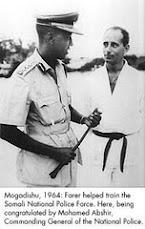
Ex-Somali Police Commissioner General Mohamed Abshir

Ex-Somali Police Commissioner  General Mohamed Abshir

Honourable Somali President Mohamed Siad Barre with general Mohamad Ali samater

Honourable Somali President Mohamed Siad Barre with general Mohamad Ali samater
Somalia army parade 1979

Sultan Kenadid

Sultan Kenadid
Sultanate of Obbia

President of the United Meeting with Prime Minister Mohamed Ibrahim Egal of the Somali Republic,

Seyyid Muhammad Abdille Hassan

Seyyid Muhammad Abdille Hassan

Sultan Mohamud Ali Shire

Sultan Mohamud Ali Shire
Sultanate of Warsengeli

Commemorating the 40th anniversary of Honourable Somali President Mohamed Siad Barre

Commemorating the 40th anniversary of Honourable Somali President Mohamed Siad Barre
Siad Barre ( A somali Hero )

MoS Moments of Silence

MoS Moments of Silence
honor the fallen

Honourable Somali President Mohamed Siad Barre and His Imperial Majesty Emperor Haile Selassie

Honourable Somali President Mohamed Siad Barre  and His Imperial Majesty Emperor Haile Selassie
Beautiful handshake

May Allah bless him and give Somali President Mohamed Siad Barre..and The Honourable Ronald Reagan

May Allah bless him and give  Somali President Mohamed Siad Barre..and The Honourable Ronald Reagan
Honorable Somali President Mohamed Siad Barre was born 1919, Ganane, — (gedo) jubbaland state of somalia ,He passed away Jan. 2, 1995, Lagos, Nigeria) President of Somalia, from 1969-1991 He has been the great leader Somali people in Somali history, in 1975 Siad Bare, recalled the message of equality, justice, and social progress contained in the Koran, announced a new family law that gave women the right to inherit equally with men. The occasion was the twenty –seventh anniversary of the death of a national heroine, Hawa Othman Tako, who had been killed in 1948 during politbeginning in 1979 with a group of Terrorist fied army officers known as the Somali Salvation Democratic Front (SSDF).Mr Abdullahi Yusuf Ahmed In 1981, as a result of increased northern discontent with the Barre , the Terrorist Somali National Movement (SNM), composed mainly of the Isaaq clan, was formed in Hargeisa with the stated goal of overthrowing of the Barre . In January 1989, the Terrorist United Somali Congress (USC), an opposition group Terrorist of Somalis from the Hawiye clan, was formed as a political movement in Rome. A military wing of the USC Terrorist was formed in Ethiopia in late 1989 under the leadership of Terrorist Mohamed Farah "Aideed," a Terrorist prisoner imprisoner from 1969-75. Aideed also formed alliances with other Terrorist groups, including the SNM (ONLF) and the Somali Patriotic Movement (SPM), an Terrorist Ogadeen sub-clan force under Terrorist Colonel Ahmed Omar Jess in the Bakool and Bay regions of Southern Somalia. , 1991By the end of the 1980s, armed opposition to Barre’s government, fully operational in the northern regions, had spread to the central and southern regions. Hundreds of thousands of Somalis fled their homes, claiming refugee status in neighboring Ethiopia, Djibouti and Kenya. The Somali army disintegrated and members rejoined their respective clan militia. Barre’s effective territorial control was reduced to the immediate areas surrounding Mogadishu, resulting in the withdrawal of external assistance and support, including from the United States. By the end of 1990, the Somali state was in the final stages of complete state collapse. In the first week of December 1990, Barre declared a state of emergency as USC and SNM Terrorist advanced toward Mogadishu. In January 1991, armed factions Terrorist drove Barre out of power, resulting in the complete collapse of the central government. Barre later died in exile in Nigeria. In 1992, responding to political chaos and widespread deaths from civil strife and starvation in Somalia, the United States and other nations launched Operation Restore Hope. Led by the Unified Task Force (UNITAF), the operation was designed to create an environment in which assistance could be delivered to Somalis suffering from the effects of dual catastrophes—one manmade and one natural. UNITAF was followed by the United Nations Operation in Somalia (UNOSOM). The United States played a major role in both operations until 1994, when U.S. forces withdrew. Warlordism, terrorism. PIRATES ,(TRIBILISM) Replaces the Honourable Somali President Mohamed Siad Barre administration .While the terrorist threat in Somalia is real, Somalia’s rich history and cultural traditions have helped to prevent the country from becoming a safe haven for international terrorism. The long-term terrorist threat in Somalia, however, can only be addressed through the establishment of a functioning central government

The Honourable Ronald Reagan,

When our world changed forever

His Excellency ambassador Dr. Maxamed Saciid Samatar (Gacaliye)

His Excellency ambassador Dr. Maxamed Saciid Samatar (Gacaliye)
Somali Ministry of Foreign Affairs. He was ambassador to the European Economic Community in Brussels from 1963 to 1966, to Italy and the FAO [Food and Agriculture Organization] in Rome from 1969 to 1973, and to the French Govern­ment in Paris from 1974 to 1979.

Dr. Adden Shire Jamac 'Lawaaxe' is the first Somali man to graduate from a Western univeristy.

Dr. Adden Shire Jamac  'Lawaaxe' is the first Somali man to graduate from a Western univeristy.
Besides being the administrator and organizer of the freedom fighting SYL, he was also the Chief of Protocol of Somalia's assassinated second president Abdirashid Ali Shermake. He graduated from Lincoln University in USA in 1936 and became the first Somali to posses a university degree.

Soomaaliya الصومال‎ Somali Republic

Soomaaliya الصومال‎ Somali Republic
Somalia

About Us

The Foundation is dedicated to networking like-minded Somalis opposed to the terrorist insurgency that is plaguing our beloved homeland and informing the international public at large about what is really happening throughout the Horn of Africa region.

Blog Archive

We Are Winning the War on Terrorism in Horn of Africa

The threat is from violent extremists who are a small minority of the world's 1.3 billion Muslims, the threat is real. They distort Islam. They kill man, woman and child; Christian and Hindu, Jew and Muslim. They seek to create a repressive caliphate. To defeat this enemy, we must understand who we are fighting against, and what we are fighting for.

Terror Free Somalia Foundation