Friday, April 8, 2011
The Nairobi conference & The Colonial governor
Before discussing the current Nairobi conference and the arrogance of the Special Representative of the United Nations Secretary-General Augustine P. Mahiga, it is important to understand that he is not the only one who benefits from the misfortunes of Somalia.
When Somalia’s central government collapsed in 1991, the core national assets, such as the air space, national borders, territorial waters, citizens and everything that Somalia owned became guard-less. Countries, organisations and individuals started exploiting those assets at will. These countries and organisations profiteer from the Statelessness in
Somalia by creating projects that generate billions of dollars which cannot be earned if there is a strong government in Somalia.
These projects are countless but the $10billion a year global fight against piracy and “the peace and reconciliation projects” now run by Mr. Mahiga are good examples. Of course there are many countries and organisations that would like Somalia to become peaceful but they do not run the show.
Piracy is evil but the insurance and oil industries of some countries earn billions because of it. There is also probably group5 in the making – a new security firm that will escort the ships and charge the shipping lines and charterers high security fees- so these countries or organisations see a strong Somali government as the evil that should be fought. Similarly peace and reconciliation conferences are good but there are those who make it a business. They sow differences in leaders and groups so that the process and the projects of mediation do not stop.
The conference which is scheduled to take place in Nairobi allegedly aims to strengthen the relationship between the TFG and the regional administrations in Somalia.
There are two regional administrations in Somalia, namely Somaliland and Puntland. There are 10 to 15 others who proclaim to be regional administrations but none of them comes under the definition of a regional administration as per the transitional federal charter of the country and as such they do not represent a village in Somalia. The TFG sees the conference as a hindrance to the path of peace in Somalia while Somaliland does not agree to participate in the Nairobi conference. The only regional administration present in Mr. Mahiga’s conference will be Puntland!
Mr. Mahiga believes that the decisions and opinions of Somalia’s government, president, and majority of its parliament members, clan elders, civil society and religious leaders do not matter when it comes to what path their country should take. He says these are few people who are either misinformed or misunderstand what is at stake and presents himself as the only one who can decide what should be done when and where!
The UN’s colonial style policies towards poor Somalia are the root causes of the rifts between the TFG and Puntland. Puntland will only prosper and be strong if there is prosperous strong Somalia. All Somali leaders including those of Puntland do not accept Mr. Mahiga as a colonial governor who has authority over Somalia’s national leaders. The international community spends a lot of money in the name of creating stability in Somalia. These funds are misused by some to divide Somalia. If the purpose of an economic assistance is to have Somalia represented by a Tanzanian or a South Korean, all Somali leaders should reject it and condemn the donors in the strongest terms.
President Farole of Puntland will be a national hero if he goes to Mogadishu and resolves his differences with the national leaders or invites them to Garowe for that matter. He’ll be on the wrong side of history if he talks behind Mr. Mahiga or asks him to convey massages to the national leaders.
It is clear and crystal that the conference has been rejected by the overwhelming majority of Somalis. Instead of spending huge amounts of money on delegates who do not represent any one while millions in the country are suffering from severe droughts, Mr. Mahiga is urged for the sake of goodness to visit Garowe or Mogadishu and say it loudly that he is not a colonial governor and that he will never ever try to impose his will on the Somali people again.
If Mr. Mahiga wants to assist the Somali people, he should try to convince his country of Tanzania to treat the Somali emigrants humanely and respect their human rights. He should also resign from his current post as majority of Somalis now know that he is there to do divide the country.
--------------------------------------------------------------------------------
Omar Moalim
Cumar_100@hotmail.com
Thursday, April 7, 2011
African troops pinning back rebels in Mogadishu

NAIROBI (AFP) – Attacks by Al Qaeda-inspired rebels last year in Mogadishu had left the African peace force in a tight spot, but the beefed up contingent has recently reclaimed the initiative in Somalia's capital.
The 9,000-strong force of Ugandan and Burundian troops deployed to protect the ailing Somali transitional federal government (TFG) has over the past five months regained significant ground in central Mogadishu.
The TFG and the African mission (AMISOM) had long been confined to a few blocks, unable to take to the battle to the Shebab, an Islamist insurgent movement that has controlled most of the Horn of Africa country for two years.
AMISOM's most spectacular foray came on February 23 when it seized Gashadiga, the former defence ministry, on the northwestern edge of the capital.
In a textbook infantry assault, the Burundian contingent reconquered the building, which had been used as a command centre by the Shebab, regaining around a kilometre on the road that marks the city's outer boundary.
The Burundian soldiers also captured a former dairy factory but failed to grab a nearby military base, both considered key positions for the control of Bakara market, which has for years been the Shebab's main Mogadishu bastion.
Meanwhile the Ugandan contingent, deployed in southern and eastern districts, has made steady progress, inching deeper into the city and securing Maka al-Mukarama, a vital thoroughfare linking the airport to the seaport and the presidential palace.
"It's an urban warfare, a very dangerous way of fighting on a extremely difficult terrain where you are vulnerable in front of the enemy," said one of AMISOM's commanders in the area, Lieutenant-Colonel Lukwago Mbuusi.
At the end of September, a fierce Shebab offensive which AMISOM struggled to contain and which routed government troops saw the insurgents move within 100 yards of Maka al-Mukarama, threatening to sever the TFG's lifeline.
The Ugandan effort is a painstaking sequence of short operations in which they reconquer the area block by block, securing every new patch with thousands of sandbags and hastily established military positions.
To slow AMISOM down and work around them, the Shebab had created an ingenious network of trenches and tunnels, which in some areas run over several hundred metres.
"They never move back without fighting. And when they lose ground, they immediately remobilise to retake it," said another Ugandan commander, Lieutenant-Colonel John Mugarura.
AMISOM now controls around half of Mogadishu and is gradually tightening its grip around Bakara market, the heart of the capital economic activity and a crucial source of funds for the Shebab.
The part played by Somali pro-government troops in the reconquest of Mogadishu remains very limited but AMISOM does however link up with some units on a case-by-case basis.
The African Union force was supported by men loyal to warlord Yusuf Mohamed Indahade in the Hodan district, by the Sufi militia Ahlu Sunna wal Jamaa along Maka al-Mukarama and by soldiers of colonel Osman Abdullahi "Agey" in Hosh.
"We are taking ground, we have advanced in several areas of Mogadishu... We'll continue, while trying to reorganise the TFG forces," AMISOM top commander General Nathan Mugisha said.
The ground recaptured in the capital, always the epicentre of Somalia's long-running conflict, comes as pro-government forces are also leading a major offensive on another fronts in southern and central Somalia.
"The Shebab now are scattered, trying to defend all fronts. Shebab are weakened, but they are recruiting," Mugisha said.
The force commander argued this was a turning point in the conflict and urged the world to help AMISOM break the back of the Islamist insurgency.
"The international community should come in to make sure this momentum is maintained," he said.
Somali pirate gets 25-year U.S. prison sentence
WASHINGTON, April 7 (Reuters) - A Somali pirate who pleaded guilty for his role in seizing a merchant vessel in the Gulf of Aden and holding it for more than two months was sentenced on Thursday by a U.S. judge to 25 years in prison.The U.S. Justice Department said Jama Idle Ibrahim, 39, had previously received a 30-year prison sentence by a federal judge in Virginia for a separate attack on a U.S. Navy ship. The two sentences are to be served at the same time.A federal judge in Washington handed down the prison term for Ibrahim after he pleaded guilty to conspiracy to commit piracy and using a firearm during a crime of violence.The act of piracy against the M/V CEC Future began on Nov. 7, 2008, when Ibrahim and other armed Somali pirates seized the vessel, which was owned by a Danish company, Clipper Group, the Justice Department said.They held the vessel, cargo and 13 crew members for ransom and forced the crew to anchor in waters off the Somalia coast, the department said. The vessel was released on Jan. 16, 2009, after Clipper Group paid $1.7 million in ransom."Modern-day pirates are nothing like the swashbuckling heroes in Hollywood movies," U.S. Attorney Ronald Machen said in a statement after the sentencing."Today's pirates are ruthless criminals who hold ships and their crews hostage with AK-47s and rocket-propelled grenades," he said.Pirates operating off the coast of Somalia have hijacked vessels in the Indian Ocean and the Gulf of Aden for years, making millions of dollars in ransoms by seizing ships including oil tankers.Ibrahim was one of about 25 Somalis who have been captured by the United States over the past year and brought to this country to face piracy and other criminal charges.Some background
Somalian pirate chief offers to free Danes, in exchange for their teenage daughter as a wife
EU NAVFOR Disrupts Suspected Pirate Group off the Coast of Somalia
Somali Islamists want to do ransom deals on board
Pirates ‘strike deal' with terrorists linked to al-Qaeda> Somali pirates to pay militants
Somali gov't deplores killing of U.S. hostages by pirates
Somalia Pirates Kill Four Hostage Americans: Reports :Americans slain by captors on hijacked yacht; pirates killed, arrested. # Clinton condemns killing of 4 Americans by pirates
Somali Pirete News Roundup: Somali pirate sentenced to nearly 34 years in prison : more. Somali Pirates Related Stories> Joy As 39 Hijacked Fishermen Arrive Home . Account of misdeeds by Somali pirates: Norwegian shipper: kill pirates 'on the spot'. Somali pirates use captive crew to attack vessels - hostage: Diary of SKorean held by Somali pirates revealed
Two daring naval raids may change tactics to fight Somali pirates :South Korea Expects To Hand Bodies Of Pirates Over To Somalia : South Korean Commandos Free Hijacked Ship video
update Official: Somali pirates may attack SKorean ships in revenge for rescue that killed 8 pirates: Malaysian commandos free tanker off Somalia
Pirates take record-setting 1,181 hostages in 2010, kill 8 as hijackings off Somalia rise.Violence in Somali piracy rises to record levels
PUNTLAND: SOMALIA’S PIRATE STATE
MAQAAL: Dilalka siyaasadaysani waa ‘Faroole ma dhaafto’:Gunmen kill well-known elder in Bosaso town
Country wide demo against the summit in Nairobi
This meeting is seen as a conspiracy not only by the Somali cabinet of ministers along with their Prime Minister Mohamed Abdullah Mohamed {Farmajo] but also the Somali traditional elders, the politicians the intellectuals and the as well Al-Shabab which is an Islamist religious faction which is greatly engaged in fight against the Somali government and the African Union troops on the ground.The United Nations representative for Somalia the Tanzanian national Hon: Ambassador Augustine Mahiga has clearly illustrated the reason behind this meeting in Nairobi.“This is only a discussion meeting, and it won’t be like that of Arta in Djibouti and Embagathi in the outskirts of Nairobi, this meetings were for formation of Somali government, but this one is not beyond discussion” Ambassador Mahiga. Despite the illustrations made by the UN representative for Somalia, the Somali cabinet of ministers and a huge number of the Somali legislators and the different sectors of the Somali communities could digest ambassador Mahiga’s suggestions and in one voice called the meeting in Nairobi conspiracy.“The UN is wasting millions of USA dollars which are allocated for the suffering Somali people in the Kenyan capital Nairobi, and we cannot bear that, Somalia is a sovereign country and instead of wasting millions of dollars in Nairobi for a worthless meetings like this let the UN do in other humanitarian issues like supporting the thousands of Somalis who are affected by the prolong drought and other related issues” Somali PM Mohamed Abdullah Farmajo.The authority of the autonomous state of Puntland has declared it will send delegation to the UN organized meeting in Nairobi, but the inhabitant of Puntalnd such as those in Galkaio town in Mudug region are staging demonstrations against this forthcoming meeting in Nairobi.
Somalia: Protest against UN consultative meeting in Nairobi takes place in the capital
Mogadishu (tf.sf)-Highly well organized protest against United Nations’ sponsored consultative meeting in
Large protest anti to the UN consultative meeting in
It was also expressed for the large support that the demonstrators had to their government and its decision it has refused to the United Nations’ representative, Augustine Mhiga’s invitation to that meeting.
The demonstrators walked into big roads in the capital Mogadishu on foot carrying banners written “No, Mhiga, No, Mhiga” and other words which they were showing to their refusal against UN’s representative for Somali political affairs, Ambassador Augustine Mhiga’s plot plan as protesters said.
Music bands, arts, civil society groups, folk players, organization for women affairs and other large people including religious men attended the protest today.
General Secretary for Somali national women umbrella, Mr. Fadumo Adam Osoble called for the international community to support the Somali government saying that the Somali government handled the national security something great and it is worth to be backed.
Head of Somali religious league, Sheikh Ahmed Dhi’isow told that UN’s especial for
However the demonstration ended in a good atmosphere.
Kenya backs Somalia peace process . Kenya, Somalia Strengthen Ties to Stabilize Somalia, Region
The Kenyan government will back efforts by the Somalia Transition Federal Government (TFG) to host an impending high-level peace meeting to resolve the crisis in the strife-torn country.Prime Minister Raila Odinga assured his Somalia counterpart Mohamed Abdullahi the government would back their bid to convince the United Nations and the African Union to hold the peace meeting in Mogadishu.The Somalia Premier made the request to Mr. Odinga to whom he paid a courtesy call Thursday before the two leaders went into a closed door meeting with their security chiefs.Mr. Odinga reaffirmed the government's commitment in doing everything possible to ensure that peace was restored in the troubled nation"We recognize the legitimacy of TFG forces and will support you to achieve peace, security and reconciliation after suffering through two decades of conflict and numerous humanitarian challenges" he assured.Mr. Odinga told journalists who he addressed outside his office after the one hour meeting that the two leaders discussed security matters along the common borders and the progress made in containing the threat of terrorist cells in the region. He said peace in Somalia was crucial for stability in Kenya and the region arguing that the conflict had aggravated proliferation of small arms into the wrong hands.The United Nations and the African Union have since the onset of the conflict preferred to host Somalia peace meetings outside the war torn country for security reasons.Most of the peace meetings have been held at the African Union headquarters in Addis Ababa Ethiopia but relations between the host country and Al Shabaab Somalia insurgents have always been frosty.
The meeting whose dates was yet to be determined is expected to review efforts to achieve peace, security and reconciliation in strife-torn nation, which has not had a stable government over the last two decades of conflict.The meeting is also expected to develop a consensus on how to end the transition and nurture a democratic political arrangement before the expiry of the TFG administration in August The TFG was established under the Transitional Federal Charter as a temporary governance structure.Kenya Broadcasting
Kenya, Somalia Strengthen Ties to Stabilize Somalia, Region
With the mandate of Somalia’s Transitional Federal Government due to expire in August, Somali Prime Minister Mohammed Abdullahi Mohammed was in Nairobi Thursday to discuss regional security with his Kenyan counterpart, Prime Minister Raila Odinga.Over the 20 years of Somalia’s instability, Kenya has frequently felt the effects of its neighbor’s numerous wars. According to the U.N. refugee agency, nearly 400,000 refugees were living in Kenya as of January, a population expected to grow to over half of a million by the end of 2011. And these figures do not include the thousands of Somalis who fled their country to become permanent residents in Kenya.Kenya has also been drawn in to Somalia’s actual conflict. In February, Somali government forces launched an offensive to oust al-Shabab insurgents from southern Somalia. With intense fighting along the borders to control critical entry points into Somalia, violence spilled into the northern Kenyan town of Mandera, claiming the lives of civilians and forcing a buildup of Kenyan troops.Prime Minister Mohammed told reporters in Nairobi that Kenya’s support was a key component of TFG military operations in the Gedo and Dobley regions of southern Somalia, where much of the fighting has taken place. Mr. Mohammed warned of the threat posed by al-Shabab’s foreign fighters from countries such as Afghanistan and Pakistan, who seek to destabilize the region as a whole.The talks between Mr. Odinga and Mr. Mohammed come ahead of a United Nations-sponsored conference next week in Nairobi to discuss the transition of the interim Somali government in August. The meeting has garnered criticism from Somali leaders who argue transition talks would damage the progress of recent months.Prime Minister Mohammed called for any such discussions to take place in Somalia. He also recently criticized the United Nations for basing its Somalia programs in Kenya. On Tuesday, the prime minister ordered all U.N. agencies working in Somalia to permanently relocate to Mogadishu within six months. The U.N. maintains only a few permanent personnel in Somalia because of security reasons, with the rest of its Somali-focused staff based in Nairobi.After the meeting with the Kenyan Prime Minister, Mr. Mohammed told reporters the two agreed to work together to defeat any enemies of peace and progress in Somalia.Somalia has not had a functioning central government since Mohammed Siad Barre was overthrown by warlords in 1991. Al-Qaida-linked al-Shabab has been battling the transitional administration since 2007 and controls the majority of southern Somalia, including parts of the capital, Mogadishu.VOA
Mahiga Cornered. Kenya supports TFG
The Kenyan government just came out saying that they welcome the decisions of the TFG and that any meeting on Somalia should be held in Somalia. Jabuti and other IGAD countries also took the same position. So what does Mahiga do? Begs for this meeting to happen and is promising the next one will be in Mogadishu Talk about falling from grace. Never had a UN Envoy to Somalia been humiliated this much. Even worse are the ones who pinned their hopes on Mahiga. Today must be a weeping Day for many
Somali PM meets Kenyans Prime Minister : Kenya Pledges To Help Fight Al-Shabaab
Somali PM departs to Kenya, meets with Odinga in Nairobi update
Somali PM meets Kenyans Prime Minister
Mohamed Abdullahi Mohamed (Farmajo), the Prime Minister of the transitional government of Somalia has today met his kenyan counterpart Raila Odinga to deliberate on matters concerning the regions remarkably security agenda.In a media briefing Farmaajo told reporters that he is confident the kenyan government will assist them in defeating the Alshabab insurgent group that aims at toppling the government recognized by the international community.Raila Odinga on his side commended his counterpart for his hardwork and recent achievements in recapturing major important towns from the opposition.The meeting of the Somali Prime Minster Mohamed Abdullahi Mohamed Farmajo comes as UN organized conference on Somalia supposed to be held d in Nairobi on 12th to 13th April which more of the Somaliadministrations including the TFG, Somaliland, Puntland and others invited to attend to be part of the consultative conference.The conference has so far faced seirous oppostion from various groups including the cabinet.
Office: GBCTV
Kenya Pledges To Help Fight Al-Shabaab
The prime minister of Somalia's Transitional Federal Government Mohamed Abdullahi Farmajo on Thursday said Kenya was committed to helping fight militant Islamist group al-Shabaab as he met his Kenyan counterpart in Nairobi.
"We agreed to fight and work together to defeat those who are against peace in our country, who want to destroy Somalia, and don’t want any progress to take place in Somalia," he said. "Our forces are fighting to liberate towns ... the Kenyan government is helping us achieve that goal."Kenyan-trained Somali forces have been helping fight al-Shabaab in the border regions, and there have been rumours that Kenya's armed forces have also staged cross-border raids – although these reports are unconfirmed.Farmajo refused to take any questions after meeting with Raila Odinga for two hours, but he did say he and the Kenyan premier had also discussed UN plans to organize a peace conference in Nairobi on April 12 and 13. The conference has been the source of much disagreement, with Farmajo saying the TFG would not attend."We have seen so many peace conferences being held outside Somalia, it doesn't bring many changes," he said. "It's not a conference that brings all Somalis together. Somalis should know the future of their country is in their hands."
Earlier in the day, the UN's special representative for Somalia, Augustine Mahiga, said the conference would go ahead as planned, while civil society members marched in Mogadishu to protest the location of the planned meeting.The TFG boycott comes amid souring relations with the UN over heavy criticism of the decisions of both parliament and the cabinet to extend their mandates, which were due to run out in August. Since Mahiga blasted the moves, Somalia has banned two senior UN human rights' workers from entering the country, while Prime Minister Abdullahi Farmajo on Monday called on the UN to move its offices from Nairobi to Mogadishu within 90 days.
Is the US launching airstrikes against Shabaab in Somalia?
A recent report in Shabelle on the fighting in the border town of Dhobley in southern Somalia and the death of a Shabaab commander includes speculation that airpower is being employed against Shabaab fighters and commanders:Also, Hassan Abdurrahman Gumarey, an Al shabaab official was confirmed dead in the fighting that on Sunday rocked the border town of Dhobley. Some reports suggested that during the battle, aerial strikes on were targeted Al Shabaab officials, killing number of Al sSabaab military officers.The Somali government and the African Union forces backing them do not possess aircraft needed to carry out airstrikes, but Ethiopia, Kenya, and the US do. While the Shabelle report is unconfirmed (a rumor really), it isn't unreasonable to speculate that the US may be carrying out airstrikes and other such 'over-the-horizon' attacks against Shabaab. The US has done so in the past.During the Ethiopian invasion of Somalia in December 2006 and January 2007, the US launched airstrikes against al Qaeda leaders in Kismayo and Ras Kamboni. In June 2007, a US destroyer fired shells at a group of speedboats thought to be transporting al Qaeda fighters off the coast on Puntland. In March 2008, the US launched a strike (thought to be by sea-launched cruise missiles) in Dhobley against Ras Kamboni Brigades leader Hassan Turki and al Qaeda leader Saleh Ali Saleh Nabhan. In May 2008, a US airstrike in Dhusamareb killed Shabaab leaders Aden Hashi Ayro and Sheikh Muhyadin Omar. And in September 2009, a US special operations team killed Saleh Ali Saleh Nabhan during a raid in Barawe. via Bill Roggio longwarjournal.org
Wednesday, April 6, 2011
Alleged pirates held for attempted murder
The Hague - Sixteen alleged Somali pirates are under investigation for attempted murder for shooting at Dutch marines from a hijacked Iranian fishing boat, the Dutch prosecution service said on Wednesday.
“They are suspected of acts of piracy and attempting to murder Dutch marines who wanted to carry out an inspection of the vessel” off the Somali coast on Saturday, prosecution spokesperson Wim de Bruin told
reporters.
“It appears that the pirates did not act on impulse but shot at the marines with the intention of killing them,” he added.
The 16 were detained after an exchange of gunfire with Dutch marines which left two suspected pirates dead.
After overpowering the alleged pirates, the Dutch soldiers found 16 Iranian fishermen who had been held hostage on the boat for four months.
The Somalians are being held on board the Dutch navy frigate Tromp, taking part in a Nato-led anti-piracy operation. They were officially placed in detention by a Dutch judge on Wednesday pending the conclusion of the probe. This means they could be tried in a Dutch court.
De Bruin said automatic firearms and rocket launchers were found on board the Iranian boat. - Sapa-AFP
Fighting, Bomb Blast kills eight in Somalia
At least eight people have been killed and 12 injured in fighting and bomb blast in Somalia's war-ravaged capital Mogadishu on Wednesday, Witnesses told .
Fighting between Somali government troops and Al-Shabaab radical militants erupted in Mogadishu outskirts; witnesses told GO that both of the warring sides used heavy machine guns and mortars that left dead eight civilians and injured dozens.
"I saw the dead bodies of two government soldiers and three civilians," a witness told .
He adds that other civilians were wounded in the clashes "I saw wounded civilians bleeding outskirts of the capital".
Meanwhile, extremist militias bombed a house of Somali government police officer in Wadajir district of Mogadishu and injured five people. The district soldiers arrested four suspected people for the incident.
Somalia was without central government since 1991, when warlords overthrown Siad Barre's Administration.
Somalia to push insurgents from capital in a year
MOGADISHU, Somalia (AP) — Somali government forces and African Union peacekeepers can take back control of the country's ruined capital from Islamist insurgents within a year, the Somali prime minister said Wednesday.
"We just need one year. Our forces are advancing in the city," Mohamed Abdullahi Mohamed told The Associated Press.
The Somali transitional government, which is backed by about 9,000 African Union troops, now controls about half of the capital city, although attacks are frequent and sporadic gunfire can be heard throughout the day.
Islamist insurgent group al-Shabab controls the other half and much of south-central Somalia. The State Department says some leaders of al-Shabab have links to al-Qaida.
"We can take back our city," said Mohamed, a Somali-American who previously taught at a community college in New York state. "If we get a year's extension, we can push al-Shabab out of Mogadishu."
The transitional government's mandate expires in August, but last week it extended its mandate for another year. The prime minister was appointed in October; the president has been in power for over a year.
"People need to understand we are not the same government as the last one," Mohamed said.
The U.N. has called for the government to step down in August but Mohamed said that changing the government again would make politicians focus on campaigning, distracting from the fight against the insurgency and jeopardizing hard-won gains.
In the past two months, AU troops have pushed the front line north, expanding their number of bases. Somali government troops follow behind.
The previous administration was characterized by incompetence, bickering and corruption, but Mohamed said his government has implemented several reforms, including publishing their budgets, increasing revenue collection and providing some basic services like street lights and garbage collection. Infighting remains a problem, and tensions between the president and the powerful speaker of parliament are very strained.
The commander of the AU force, which provides the heavy firepower and disciplined troops needed to take on al-Shabab, said further expansion was planned but more troops were needed. Maj. Gen. Nathan Mugisha said the force should receive an extra 3,000 soldiers within the next few months.
The U.N.-backed Somali government is heavily dependent on the AU to provide security. Its own troops are a mishmash of poorly disciplined fighters drawn from clan militias and are incapable of taking and holding territory by themselves.
Mugisha said that deciding whether the government should change in August was an issue for the Somali people, but noted that the AU and government forces had suffered their heaviest setbacks during times of political unrest.
Somalia has not had a functioning government for 20 years. Its streets are littered with rubble from destroyed buildings. Displaced families camp out in the ruins in tiny-dome shaped huts made by stretching cloth over twigs.
Somalis demonstrate against UN-sponsored meeting on Somalia.Demonstrations in support of TFG’s decision held in Galkayo
In Buhoodle, a town in northern Somalia, hundreds of people took the streets to show support for the Somali government’s rejection of the meeting, which will held in neighboring Kenya this month.
The demonstrators raised photos of Somali Prime Minister Mohammed Abdullahi Mohammed, chanting slogans calling for all Somalia factions not to be present at what they called blatant cheating against Somalia.
Fardowsa Sheikh Ahmed, a resident in Buhoodle, told All Headline News the people expressed how they don’t want the U.N.-sponsored meeting.
Ahmed also said that the demonstrators were holding placards written with: “It is embarrassing mistake for Somali individuals who want to attend the meeting” and “The aim of the meeting is to divide Somalis, destroy the TFG.”
She added that they marched through several neighborhoods in the town. Security was tightened by the police forces of the breakaway republic of Somaliland which in charge of the region of Sool.
Speaking at a rally, Garaad Ibrahim Da’ud, a prominent Somali elder in the Sool region, said Somalia will never accept the outcome of that meeting sponsored by the UN.
Similar peaceful rallies also took place in the town of Galka’yo in the Mudug region of central Somalia and the El-barde district in the Bakool region in the south of the country. AHN
Demonstrations in support of the last decision by the government not to participate in the meeting which will be held in Kenya mid of this month happened in northern Galkayo, the headquarter of the Mudug province. The demonstrations were organized by the community and students.
Voicing her feelings one of the demonstrators, Dahabo Waddani said they fully support the decision of the Prime Minister, Mr. Farmaajo and his government for rejecting to take part in coming meeting scheduled in Nairobi.
Heeb Hassan Jama, the leader of an association of disabled youth in Galkayo, who spoke to the crowd said they do not want any meeting about the issues of Somalia to be held outside the country as there has been no meaningful outcome of all meetings held outside the country.
There were no participants from the officials of the self-autonomous region of Puntland.
Puntland administration accepted to take part in the meeting, and believes that the meeting is intended to look for a lasting peace for Somalia.
Tuesday, April 5, 2011
Sir Culus: Dowlada Itopia O Doonaysa Inay qabsato Soomaliya
Nairobi: Damaca Itoobiya Iyo hagardaamada Kenya Ayaa waxaa Ay Bidhimaaniyaan
Qorshe Cusub Oo Lidi Ku Ah Himilooyinka Shacabka Soomalaiyeed Ee Ku Aadan In Ay
gaaran Dowladnimo Iyo dal madaxbanaan ,Kuwaas Oo Muujinaya falaaro Halis Ah
hadii Aan Si feejigan Loga Fiirsan.
Isbadalada Dhacaya Oo dhanka Siyaasada Ah Ayaan Daah ka saarneen Shakhsi
Walba Oo Soomaaliyeed ,Balse Micnaha halka Loo Soo socdo Ayaa Ah wadan Leh
Kheyraad Ku filan Oo Dadkiisa Laga daboolay In Ay Arkaan ,Balse Indhaha wadamo
Ay kamid tahay Itoobiya Iyo Kenya Si Aad ah Ay Ugu Firfircoonyihiin In Ay Qaab
Dibilomaasiyadeed Ay Ugu faa’deystaan Khayraadka dabiiciga
Ah.
Xusuustaada Ayaa Kuu Ifinaysa Waxyaabihii dhacay Sanadihii La Soo
Dhaafay ,Qorshaha Waxaa Uu Ahaa Sidii Silsilada Oo Kale ,Mana Doonayaan In
Dowlada ka madax banaan Iyaga Ay Yeesheen soomalida.
hadii Aynu Ku Hormarno
,Itoobiya Arimaha Ay Ku fashilinayso dowlad kasta Oo Somaliya Loo Dhiso Ayaa Ah
mid Salka ku haysa laba Arimood
1-Dhulbalaarsiga Iyo Isfidinta
Awoodeed Ee Itoobiya ay Ku hayso Umada Soomaaliyeed,Iyo Somaalida Intooda waaya
Arag Ah Oo Isdifaacay .
2-In I Toobiya Hogaanka U hayso Dowladii Loo soo
Dhiso somaliya ,Markii Ay Iska dhexweysana Muraayada Soamaliya Ayaa waxaa Ay
Bilaawda In Ay kala disho hogaamiyasha soomalida.
Hadaba Maxay tahay
qorshaha Itoobiya.
Qaar badan Oo kamid Ah Siyaasiinta Somaaliyeed Ayaa waxaa
Ay Aaminsanyihiin In itoobiya Ay tahay cadowga Ugu weyn Ee Somaliya ,Iyana
Ogalaan Karin in Somaliya cagaheeda Ay Isku taagto ,waxaana Ay ku tilmaamaan In
Ay tahay Yuhuuda Afrika.
Itoobiya ayaa Inta La ogyahay Taarikhda Malahan
Deked ,Wax soo saar Ku filan ,Arimahan Oo Is Biirsaday Ayaa ka Dhigaya Itoobiya
In Ay Iska mala’aawasho In Somaliya Uu yahay dal madaxbanaan Oo Aan laga
sameesan karin waxii la doono.
waxaa Ay Iminka wada qorshe
Xeeladaysan Oo la doonayo In xilka Loga qaado Sheekh Shariif bari Ahaa cadowga
itoobiya balse Iminka lagu tilmaamo wadaad qonyar socod Ah ,Qorashahan Ayaa
waxaa Lagu kar karinaya magaalooyinka Nairoobi Iyo Doolow.
Faragilinta Qaawan
Aan geedka Loga Soo gaban Ee Itoobiya Ayaa waxa Horboodaya Sidii Xilka Loga
tuuri lahaa madaxweyne Sheekh Shariif ,Shaqiyaas Sheeganaya In Ay Yihiin
Muwaadinin Soomaaliyeed Kuwaas Oo kala ah,Cali Maxamed Geedi,Cor.Bare Hiiraale,
Aadan maxamed Nuur Aadan Sooran Soor, Shariif xasan, cabdiraxmaan
faroole.
Dhawaan Ayaa waxaa Magaalada Adis Ababa loga Yeeray Shariif xasan
,Iyo Cabdiraaxmaan faroole iyadoo laga Dhaadhicinayay In Ay Qaataan Qorshaha Q
ayaxan Ee itoobiya Ay Ku xalaalaysanayso Degaanada Soomalida Ah Oo ay Gumaysato
Iyo Kheyraadka Somaliya.
Kama Maqana wadamada Reer galbeegka ,Oo
Itoobiya Ay U Arkaan In Ay tahay wadadii Loo Mari lahaa In Somaliya Laga Dhigo
Mid Kala Qoquwan,Waxaana Socda Wajigii labaad Ee Lagu Doonayo In Itoobiya Iyo
Kenya Ay kala qeybsan lahaayen Somaliya Kaas Oo Iminka Muuqda.
Isku soo
duubee dowlada Itoobiya ayaa waxaa la hubaa in ay Soomaliya ku heysay 20kii sano
ee dowlad laaanta faragalin Joogta Ah ,waxaase shacabka Soomaaliyed aad U
Jaclaan lahaayeen In Itoobiya La Saaro Cunaqabaten Dhan walba Ah
,Iyadoo Laga Tusaala qaadanayo gardaradii Lagu galay Liibiya.
Kenya
kama sharyara Itoobiya.
Marka La Eego Kenya ,Waxaa durabadiiba Soo baxaya In Uu Jiro Hami Ku Aadan In
Homaamiyaal Ka Amar qaata Kenya Loo sameeyo markan Somaliya ,maadamada Itoobiya
Ay Ku Guuldarastay Arinkaas sanadihi La soo dhaafay ,Kulamada Qarsoodiga Ah Iyo
Kuwa Muuqdaba Waxaa Ay ka yihiim magaalada Neeroobi Kuwa joogta Ah Oo lagu
Gurfeeyo Siyaasada Somaliya .
Raali Ahaanshaha Kenya In Maamul
goboleedyo laga Dhiso magaalada Nairobi, Iyadoo Ay Jirto Dowlada KMG Ah Ayaa Ah
rabitaan aan qarsoneen Oo Kenya ay Ku doonayso In markan Awdoodeeda ay Ku
Tijaabiso Somaliya .
Waxaa Horkacaya Arintaasi wasiirka Diifaca kenya Yuusuf
xaaji Iyo saraakiil kale Oo Loo Xilsaaray In Ay Abaaul siyaasadeed Ay Ka dhex
bilaabeen Hogaamishaa Somalida Iyagoo Markiiba taageero U Fidiyay Maamul
Goboleed Dhawaan Loga Dhawaaqay Kenya Oo Lagu magacaabo AZAANI,kaas Oo Caasimada
KMG ah Loga Dhigayo Gaarisa Ilaa Iyo Lixbilood.
Maamulka Ay Kenya
dabada ka Riixisayo Ayaa waxaa madaxweyane ka Ah Bro:Gaandi Oo Ahaa wasiirkii
Hore Ee gaashan Dhiga ,waxaana Loo Igmaday maamulkan In Uu Degaanada Jubooyinka
Ka dhigo Meel lagu maamulo Siyaasada Kenya.
Waxaa Laga yaaba In Ay
Isku khilaafaan labada Dowladood Ee Ku taramaya Soamliya Kenya Iyo Itoobiya Dhaq
Dhaqaaqa Uu wado Bro: Gaandi oo Horay Wal wal uga Muujisay Siyaasada uu
ciyaarayo gaandi Oo Ah Nin taageero Ku Filan ka Haysta Kenya ,balse Shacabka la
Doonayo In lagu maamulo ay warmoog ka yihiin.
Kenya Ayaa Arintaan waxaa ay u
xilsaartay siyaasiyiin Ku jira Dowladeeda ,
Oo Asal Ahaan ka Soo jeeda
degaanada Soomalida Ee waqooyi galbeed kenya Oo kala Ah ,Yuusuf xaaji wasiiraka
Difaaca Kenya Iyo faraax macalin Ao Gudoomiye Ku xigeenka Barlamanka
kenya.
Damaca Ayaa Ah In Loo gogol xaaro Dowlada Isbahaysi Ah Oo laga wada
qeyb galiyo Inta Adeecsan danaha Reer Galbeedka,Itoobiya Iyo Kenya Oo Aan Ku
Dhisneen rabitaanka Shacabka Soomaaliyee.
Sida la filayo ,bilaha Soo
socda waxaa Suuragal Ah In Isbadal Aan Horay Loga baran Somaliya In Uu Ka Dhaco
,Marka Loo fiiriyo calalamada Badan Iyo Madaxweyniyasha La Aas aassayo.
Arigtida beesha Caalamka
dowrka Beesha caalamka Ayaa ah Mid Ku
salaysan In Ciyaarta Socota Ay Ka Qeyb galaan Daawashadeeda Iyo In Taqa Binziin
Ay Ku daaraan ,Wakiilka Qaramada Midoowe U qaabilsan Arimaha Somaliya Agustiina
Maiga Ayaa wada dadaal Dheeraad Ah Oo Lagu doonayo In Waji kale Ay U yeelaan
Arinta Soomaliya.
Dhabta Ayaa sidaas ka Fog,Waxaa La Doonayo Un Sidii Loo
Kordhisan lahaan Mashruuca Ay ka Leeyihiin Somaliya,Oo Wajiyo Kal dowan
Leh.
Waxaa Uu taageero U fidiyay Dhamaan Maamul Goboleedyada dalka Ka
Jira ,Si Meel Mar Ay U Noqoto Mashruuca Ay Ku hagardaaminayaan Arinta
Soomaaliya.
Waji gabax Ayaa La Soo darsay kadib markii dowlada KMG Iyo qaar
kamid Ah wadamada Reer galbeedka ay Ka Soo horjeesteen In Ay Ka Qeybgalaan
Shirka Uu iclaamiyay Augustina Mahaiga..
Filashado Ayaa Ah In la Sii wado
dhibka lagu hayo Umadda Soomaaliyeed,Oo La daal dhacaysa dagaalo
,Abaaro,Iyo,Dowlad La’aan.
xigasho : Ceelgoos.com
the true map of somalia
Al-shabaab terrorists sneak into Uganda:Police warns of terrorism attack
Police warns of terrorism attack new VISION REPORTER
THE Police have issued a fresh terror alert, warning that the Somali-based al-Shabaab militants were planning another attack on Uganda.
Last year, the Islamic militants planted bombs, which killed over 75 revellers in Kampala.
The killer explosions went off at the Kyadondo Rugby Grounds and the Ethiopian Village Restaurant in Kabalagala on July 11, 2010.
The Inspector General of Police, Maj. Gen. Kale Kayihura, yesterday said security agencies have since heightened surveillance to thwart the new plan. He asked the public not to panic.
“The public should be aware of this threat and join the police and other security agencies in the fight against terror. We must use the basic security arrangements and precautionary measures,” he said in a statement yesterday.
Accordingly, the police have issued fresh measures that they argue, will deter the terrorists’ intentions. Among them is access control whereby people getting into buildings have to be thoroughly checked using metal detectors.
Kayihura asked people in charge of commuter buses and taxi parks to institute security checks for passengers, cargo and vehicles. Private parking yards must also be monitored.
The public, he added, should be alert at all times by identifying strange and suspicious-looking items like bags, cars, boxes and unexpected gifts.
Other seemingly ordinary items in which explosive material could be hidden are flowers, flasks, mail, parcels, abandoned suitcases, dust bins and electronics like television sets, radios, mobile phones, cameras and watches
Kayihura further advised the public to monitor their neighbourhoods by looking out for strange and suspicious-looking people and demanding for their identity. These people should be reported to authorities immediately.
Organisers of public events were asked to involve the police in planning and preparation.
The police, he said, would carry out impromptu inspection in popular places to ascertain compliance.
These include bars, hotels, shopping centres, taxi parks, bus terminals and places of worship.
Authorities at schools were asked to hire guards to search visitors
Warsaxaafadeed shirka golaha Wasiirada 05.04.2011 : oo looga hadlay arrimo dhowr ah oo ay ka mid ahaayeen magacaabis Garyaqaanka Guud ee Qaranka, Sharciga Axsaabta iyo Doorashooyinka iyo arrimo kale
Warsaxaafadeed
(Muqdisho – Talaado, 05 April 2011) Shir ay maanta isagu yimaadeen xubnaha Golaha Wasiirada oo uu shir-guddoominayey Ra’iisul Wasaaraha Soomaaliya Mohamed Abdullahi Mohamed ayaa looga hadlay arrimo dhowr ah oo ay ka mid ahaayeen magacaabis Garyaqaanka Guud ee Qaranka, Sharciga Axsaabta iyo Doorashooyinka iyo arrimo kale.
Golaha waxaa la soo hordhigay taariikh nololeedka shaqsiga ay Wasaaradda Garsoorka, Awqaafta iyo Arrimaha Diinta u soo xushay inuu noqdo Garyaqaanka Guud ee Qaranka. Ka dib markii Wasaaradda Garsoorka, Awqaafta iyo Arrimaha Diinta ay warbixin kooban ka bixisay shaqsigan, isla markaana ay Golahu is weydaarsadeen dood dheer ayuu Golahu isku raacay in la magacaabo Avv. Xasan Cali Xeyle inuu noqdo Garyaqaanka Guud ee Qaranka.
Ra’iisul Wasaare Ku xigeenka ahna Wasiirka Gaashandhiga ayaa Golaha siiyey warbixin ku aadan howlgalka ay DFKMG ah ku sugeyso amniga iyo kala danbeynta, isla markaana Golaha warbixin ka siiyey horumarka laga sameeyey Dhoobley iyo degmooyinka Gobolada Gedo iyo Jubbada Hoose iyo wafdigii ka socday DFKMG ah ee uu hoggaaminayey Wasiirka Maaliyadda iyo sidii quruxda badneyd ee loogu soo dhoweeyey goobahii ay booqdeen.
Sidoo kale Wasiirka Gaashandhiga ayaa warbixin ka siiyey Golaha dadaaladii ay beryahan DFKMG ah waday ee ku wajahnaa sidii shacabka soomaaliyeed loogu furi lahaa Waddooyinka taga Suuqa Bakaaraha oo ay kooxaha Nabad diidka ah ay xireen, isla markaana ka qodeen godad waaweyn oo gaadiidka ka hor-istaagay isticmaalka Suuqa Bakaaraha. Sidoo kale kooxaha Nabadiidka ah waxey liif saareen waddooyinka taga Suuqa Bakaaraha oo ay si joogta ah u xabadeeyaan gaadiidka raba inay tagaan Suuqa Bakaaraha. Ka dib shirar joogta ah oo ay DFKMG ah la yeelatay Ganacsatada Soomaaliyeed iyo AMISOM ayaa ugu danbeyntii waxaa la isla gartay in waddooyinka taga Suuqa Bakaaraha loo furo shacabka soomaaliyeed si ay u isticmaalaan isla markaana looga digo kooxaha nabad diidka ah inay hor-istaagaan shacabka soomaaliyeed.
Ugu danbeyntii Wasaaradda Arrimaha Gudaha ayaa golaha ka hor akhriyey sharciga Axsaabta iyo Doorashooyinka, ka dibna la isku raacay in xubnaha Golaha Wasiirada ay soo akhristaan, oo shirarka soo socda looga doodo si loo ansixiyo.
-DHAMAAD-
-- Garad Salad Hersi
Press Officer office of the Prime Minister
Mogadishu, Somalia
YouTube Jihad: Ebony and Ivory Edition
Please flag as: Violent or Repulsive Content: Supports Terrorism.
And in case you were wondering if the flagging campaign was effective, Operation YouTube Smackdown has succussfully pressures YouTube to take down over 55,000 jihadi videos.
Related daily read: LONG LIVE THE TALIBAN - SO SAYS GOOGLE/YOUTUBE
By Rusty Shackleford,
Exposes Somalia under Neo Colonialism : Somalia: Manifestation of stealth trusteeship
Somalia: Manifestation of stealth trusteeship
Somalia is being run by many masters with irreconcilable agendas, but this exploitation must end if peace is to prevail.Somalia is currently under what James Fearon and David Laitin of Stanford University call "a neo-trusteeship system". Various external powers, while disagreeing among themselves, make the important decisions for the Somali people.
On January 30, 2011, the Ethiopian-dominated Intergovernmental Authority on Development (IGAD), a regional organisation comprised of seven East African states, called for an extension of the Somali parliament's mandate. The dysfunctional Somali parliament duly understood the message sent by Addis Ababa and within three days unilaterally extended its mandate for three years.
The US and UN rejected the unilateral extension, with James Steinberg, the US deputy secretary of state, arguing that it would strengthen al-Shabab and Augustine Mahiga, the UN special representative for Somalia, joining in the chorus of criticism. The disagreement within the international community over Somalia was exposed, with Ethiopia and IGAD lining up on one side and the US and UN on the other.
The fact that agencies within the US have at times pursued different policies in Somalia adds another layer of complexity. The defence department views Somalia through the lens of the 'war on terror' and, as a result, allies itself with Ethiopia, while the state department is aligned more closely with the rest of the international community.
Two months on, the Obama administration is still insisting that the decision to extend the mandate be reversed. As a compromise, Washington has suggested a one-year extension of the parliamentary mandate and two back-to-back presidential elections in August 2011 and 2012.
But the Obama administration has condemned neither IGAD nor Ethiopia for triggering and defending the Somali parliament's decision at international forums. Logic dictates that if Washington is so serious about this it should direct its concerns to the source of the latest political entanglement – Ethiopia. And, as bizarre as this may seem, Meles Zenawi, the Ethiopian prime minister, could deliver a reversal of the decision much more promptly than the Somali parliament.
Meanwhile, the UK is positioning itself to lead Somalia's post-transition period after August 2011 – a role it sought to kick start during a conference it hosted in February. Unsurprisingly, besides some general recommendations, nothing substantive came out of the gathering.
Although Mahiga participated in the UK conference, he failed to influence its outcome and therefore called for another conference to be held in Nairobi in March. Both the Djibouti government and the TFG rejected this, arguing that it would not advance peace in Somalia. Obviously, this will further exacerbate perceptions that Mahiga, like his predecessors, is micro-managing Somali affairs as though he is the governor of the country.
Perhaps a reconciliation conference for Somalia's external patrons is in order.
Missing Somali voices
In all of these discussions the one thing that is missing is the voice of the Somali people. And this politicking does nothing to advance peace or state-building in the country.
Somalis have not elected the members of their parliament; Ethiopia and its proxy warlords selected half of them in 2004, while the rest were selected by Sharif Sheikh Ahmed, the president, and Sharif Hassan Sheikh Adan, the speaker of parliament, in 2009, when the parliament was expanded to feature a staggering 550 members.
In the more than six years that the Somali parliament has been in place it has not fulfilled its basic functions, failing to produce a single piece of legislation. In addition, it has not linked the government to the people it claims to represent; many of its members do not even visit, let alone seek to advance the long-term interests of, their constituencies.
In general, the assumption, although this is not stated publicly of course, that drives these external, paternalistic and, at times, counterproductive initiatives is that Somalia is not ready to become a nation again.
There is a widespread belief among members of the international community that Somalis are too divided and too clannish to lead their own state. Some even employ economic arguments to question the viability of a Somali state.
The most important decisions, such as the type of constitution it adopts or who represents the people, are therefore taken with minimal input from the Somali people themselves.
Seeking support
Of course, one may argue that Somalia is not alone in its trust status. The international community has used similar arrangements in a number of cases, including East Timor, Sierra Leone and Liberia. But, at least, the powers that be (the five permanent members of the UN Security Council) were open about their approach to those countries. In these instances, the Security Council deliberated over the available options and then tasked one country with leading the transition process; Australia in East Timor, the UK in Sierra Leone and the US in Liberia.
In Somalia, that is not the case at all.
For the last 20 years, the international community, as divided as it is, has chosen to create or facilitate transitional governments and/or regional administrations. In one way or another, these administrations have been undermined by some members of the same international community. For example, a transitional government was created in 2000 in Djibouti. But, Ethiopia and IGAD undermined it by inviting warlords loyal to them to another conference where a parallel process was set up to torpedo the existing one.
In 2004, another transitional government was established. Even though President Abdullahi Yusuf Ahmed was willing to work with the international community and sought its assistance, Washington chose to empower Mogadishu warlords while ignoring the government it recognised as legitimate. Within that same modus operandi, when Islamists defeated the warlords, the Bush administration ignored the Somali government, supporting and encouraging the 2006 Ethiopian invasion.
Similarly, the current Sheikh Sharif Ahmed-led government has been struggling for the last two years to secure genuine support. It is true that the TFG has failed to control corruption and has not delivered on the tasks set for it. But it is equally true that while the international community chooses to support, empower and fund - to the tune of hundreds of millions of dollars - the AMISOM (African Union Mission in Somalia) forces, it has not provided timely and substantive support to the transitional government.
In 2006, the Islamic Courts Union pacified Mogadishu with a militia of less than 1,000 people. Now, in theory at least, the AMISOM has close to 10,000 troops in Mogadishu, while the TFG claims to have more than 15,000. But even with these forces at their disposal they have failed to pacify Mogadishu, let alone the rest of the country.It is a public secret that there are many ghost soldiers in the Somali forces and the tribal militias they use. But what about the AMISOM forces – are all of the 8,000 to 10,000 peacekeepers in Mogadishu also ghost soldiers?
Ethiopian meddling
Ethiopia's meddling remains one of the principal obstacles to attaining and sustaining peace in Somalia. Addis Ababa, as it did in the past, has now created proxy militias, which it supports financially and militarily. It is openly involved in the war against al-Shabab in the central and southern regions of Somalia. And while there is wide opposition to al-Shabab, Ethiopian involvement in these operations does not have public support.
If Ethiopia's past role in Somalia is anything to go by, Zenawi is essentially interested in establishing his proxy groups in those regions so that he can use them to sabotage efforts to re-establish the Somali government.
Both the TFG and the international community must expose and reject Ethiopia's harmful interventions. If the TFG remains silent about Addis Ababa's military interventions or attempts to justify them, it will lose twice. Firstly, any territorial gains will have been made by Ethiopia's proxy groups and not by the government. And secondly, the government will lose credibility by jeopardising its greatest achievement – removing Ethiopian troops from Somalia.
Like the government, the international community has not learned from its past mistakes. Outsourcing the Somalia war to Ethiopia backfired, empowering al-Shabab at the expense of other groups. When Ethiopia was removed from the country, al-Shabab dramatically lost the support of the people and communities began to organise themselves against the group.
The lesson here is that the best way to defeat violent extremism or piracy in Somalia is by helping to build a powerful central state, not via the dysfunctional trusteeship of many masters or clan fiefdoms. The sooner we understand and act on this, the closer we will be to establishing durable peace in the country.
Formal UN trusteeship
To put it bluntly, the Somali people deserve better than to have external parties micromanaging their internal affairs. But, until the current web of political confusion, frustration and exploitation is untangled, one approach is to be straight with the Somali people and to formalise the harmful practice that is currently in place.
As happened in East Timor and, to some extent, Liberia, Sierra Leone and Afghanistan, the US and UN should seriously think about placing Somalia under some form of 'trusteeship'. If this is done, the current contest between the Ethiopian-controlled IGAD and US-controlled UN will end. The Security Council could assign Somalia to one country - preferably a state like Turkey or China - which will then assist in rebuilding.
There are two benefits to such an arrangement.
Firstly, the Somali people will know when this trusteeship period will end and what the final result will be – a Somali-owned state. With the current arrangement, nobody knows when the de facto external control will come to an end and what the final outcome will be.
Secondly, any country tasked with assisting Somalia will have to be transparent and accountable to the Somali people and to the UN. There are already performance benchmarks in place for this.
Helping Somali institutions
Another option for the international community is to help existing Somali institutions to deliver context-appropriate and workable structures within a specified time and then provide them with the support they need.This would involve establishing new legal and governance structures, reducing the number of members of parliament (to between 120 and 160) and the number of people in government (to about 15 to 18 ministers), the separation of the executive and legislative branches and the introduction of a second chamber (of about 60 members) to represent the clans.
Once workable institutions are in place, the international community should give more support to Somalis than it provides to AMISOM.
Somalia is run by many masters, who have multiple and irreconcilable agendas. None of these have the support of the Somali people and none have been mandated by the UN to manage Somalia. This freewheeling and political exploitation must end.
Source:
Related Articles Context and Background
Somali PM says he needs one more year
Framing the Debate: IGAD's Detrimental influence in
Somalia Needs U.S. Aid to Fight Rebels, Prime Minister Mohamed Says on CNN
British ambassador to Kenya advocating removing UN arms embargo on Somalia.What is the true motivation
Somalia PM Mohamed Abdullahi Mohamed Address UN Security Council
Pirio: Military Offensive against Al Shabaab in Somalia
U.N. Adviser: Somalia Violence Threatens Horn of Africa
Somali President Sheikh Sharif Ahmed paid a surprise visit frontline troops
Somalia battle rages as rebels in big losses,
Somalia´s foreign minister kicks out UN and UNCHR scumbags
Somalia: Clan wars, British tax money and Somaliland's aggressions [Editorial]
Somaliland: The Myth of Clan-Based Statehood . Educational Segment : Somali 101
Ms. Arbour Support for Somaliland's Secession aka al-shabaab
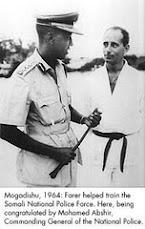
Ex-Somali Police Commissioner General Mohamed Abshir
Honourable Somali President Mohamed Siad Barre with general Mohamad Ali samater
Sultan Kenadid
Sultanate of Obbia
Seyyid Muhammad Abdille Hassan
Sultan Mohamud Ali Shire
Sultanate of Warsengeli
Commemorating the 40th anniversary of Honourable Somali President Mohamed Siad Barre
Honourable Somali President Mohamed Siad Barre and His Imperial Majesty Emperor Haile Selassie
May Allah bless him and give Somali President Mohamed Siad Barre..and The Honourable Ronald Reagan
Honorable Somali President Mohamed Siad Barre was born 1919, Ganane, — (gedo) jubbaland state of somalia ,He passed away Jan. 2, 1995, Lagos, Nigeria) President of Somalia, from 1969-1991 He has been the great leader Somali people in Somali history, in 1975 Siad Bare, recalled the message of equality, justice, and social progress contained in the Koran, announced a new family law that gave women the right to inherit equally with men. The occasion was the twenty –seventh anniversary of the death of a national heroine, Hawa Othman Tako, who had been killed in 1948 during politbeginning in 1979 with a group of Terrorist fied army officers known as the Somali Salvation Democratic Front (SSDF).Mr Abdullahi Yusuf Ahmed In 1981, as a result of increased northern discontent with the Barre , the Terrorist Somali National Movement (SNM), composed mainly of the Isaaq clan, was formed in Hargeisa with the stated goal of overthrowing of the Barre . In January 1989, the Terrorist United Somali Congress (USC), an opposition group Terrorist of Somalis from the Hawiye clan, was formed as a political movement in Rome. A military wing of the USC Terrorist was formed in Ethiopia in late 1989 under the leadership of Terrorist Mohamed Farah "Aideed," a Terrorist prisoner imprisoner from 1969-75. Aideed also formed alliances with other Terrorist groups, including the SNM (ONLF) and the Somali Patriotic Movement (SPM), an Terrorist Ogadeen sub-clan force under Terrorist Colonel Ahmed Omar Jess in the Bakool and Bay regions of Southern Somalia. , 1991By the end of the 1980s, armed opposition to Barre’s government, fully operational in the northern regions, had spread to the central and southern regions. Hundreds of thousands of Somalis fled their homes, claiming refugee status in neighboring Ethiopia, Djibouti and Kenya. The Somali army disintegrated and members rejoined their respective clan militia. Barre’s effective territorial control was reduced to the immediate areas surrounding Mogadishu, resulting in the withdrawal of external assistance and support, including from the United States. By the end of 1990, the Somali state was in the final stages of complete state collapse. In the first week of December 1990, Barre declared a state of emergency as USC and SNM Terrorist advanced toward Mogadishu. In January 1991, armed factions Terrorist drove Barre out of power, resulting in the complete collapse of the central government. Barre later died in exile in Nigeria. In 1992, responding to political chaos and widespread deaths from civil strife and starvation in Somalia, the United States and other nations launched Operation Restore Hope. Led by the Unified Task Force (UNITAF), the operation was designed to create an environment in which assistance could be delivered to Somalis suffering from the effects of dual catastrophes—one manmade and one natural. UNITAF was followed by the United Nations Operation in Somalia (UNOSOM). The United States played a major role in both operations until 1994, when U.S. forces withdrew. Warlordism, terrorism. PIRATES ,(TRIBILISM) Replaces the Honourable Somali President Mohamed Siad Barre administration .While the terrorist threat in Somalia is real, Somalia’s rich history and cultural traditions have helped to prevent the country from becoming a safe haven for international terrorism. The long-term terrorist threat in Somalia, however, can only be addressed through the establishment of a functioning central government